
Choosing the wrong fabric can turn a good product idea into returns, complaints, and missed sales. Olefin fabric looks simple, but buyers should check it carefully.
Olefin fabric is a synthetic fabric made from polypropylene fiber. It is light, strong, water resistant, stain resistant, and cost friendly. It is often used in carpet, upholstery, outdoor products, bags, linings, and some performance clothing, but it also has clear disadvantages.
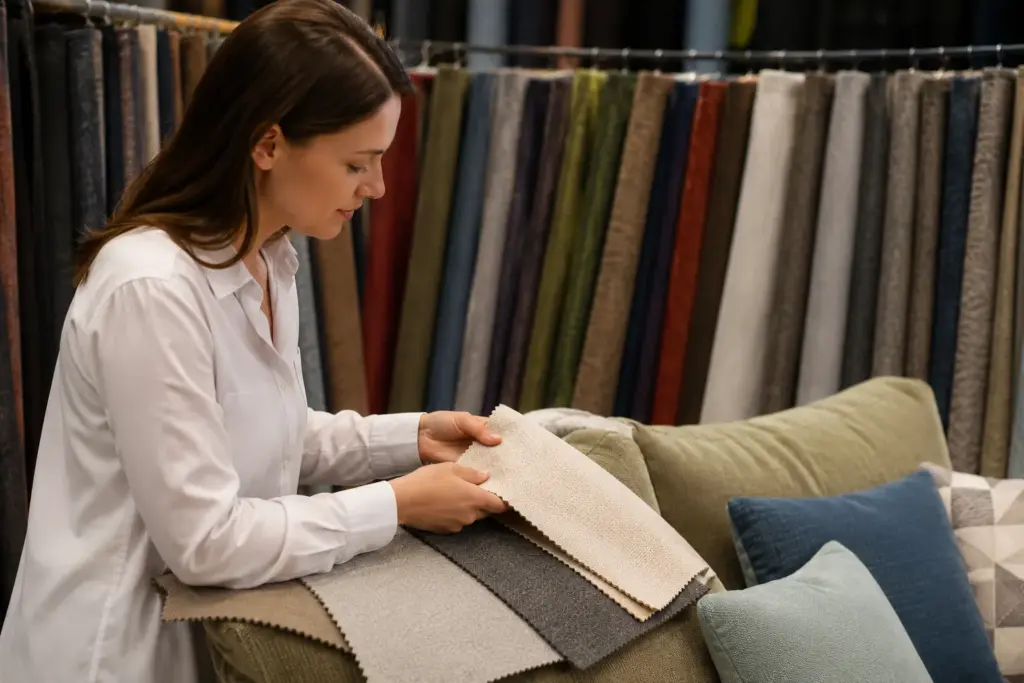
I first paid close attention to olefin cloth when a buyer asked me to compare it with polyester for an outdoor product line. The request looked simple. The buyer wanted a fabric that could resist water, keep color, and still stay within a tight price range. After checking the real use case, I found that olefin was useful, but only when the product design matched its strengths. This is how I still look at olefin today. I do not treat it as a magic material. I treat it as a practical material with limits.
What Is Olefin Fabric and What Does Olefin Meaning Really Cover?
Many buyers see the word olefin and feel unsure. The name sounds technical, and that can create doubt during sourcing talks.
Olefin means a group of synthetic fibers made from polyolefin materials. In fabric sourcing, olefin usually means polypropylene olefin fiber. So, when people ask what is olefin fabric, they usually mean fabric made from polypropylene fiber.
The Basic Definition of Olefin
When I define olefin for buyers, I keep it simple. Olefin fabric is a man-made textile made from polypropylene. Polypropylene is a plastic polymer. It can be melted, pushed through small holes, and turned into long fibers. These olefin fibers can then be woven, knitted, or made into nonwoven fabric.
Some buyers also search “what is olfin” or “definition of olefin.” In most textile talks, they are asking the same thing. They want to know if olefin material is safe, durable, washable, and suitable for their product.
| Search Term | Simple Meaning |
|---|---|
| what is olefin | A synthetic material family |
| olefin fabric | Fabric made from olefin fiber |
| polypropylene olefin | Olefin made from polypropylene |
| what is olefin fiber | A fiber made from polyolefin polymer |
| olefin cloth | Cloth using olefin fiber |
Why Buyers Use Olefin Material
I see olefin used when the product needs low water absorption, good stain resistance, and controlled cost. It is not a luxury fiber. It is a performance and value fiber. For a fashion brand, this matters. A material can look good in a sample, but it must also work in bulk production, transport, storage, and final use.
Olefin fabric is often selected for carpets, upholstery, outdoor furniture fabric, reusable bags, industrial cloth, and some sportswear items. In garment projects, I usually test the hand feel first because some olefin fabrics feel less soft than polyester or cotton blends. So the right question is not only “what is olefin?” The better question is, “Does olefin match the final use of this product?”
What Are the Main Olefin Characteristics Buyers Should Know?
A fabric can pass a first visual check but still fail in real use. Olefin characteristics need to be tested against the product’s daily conditions.
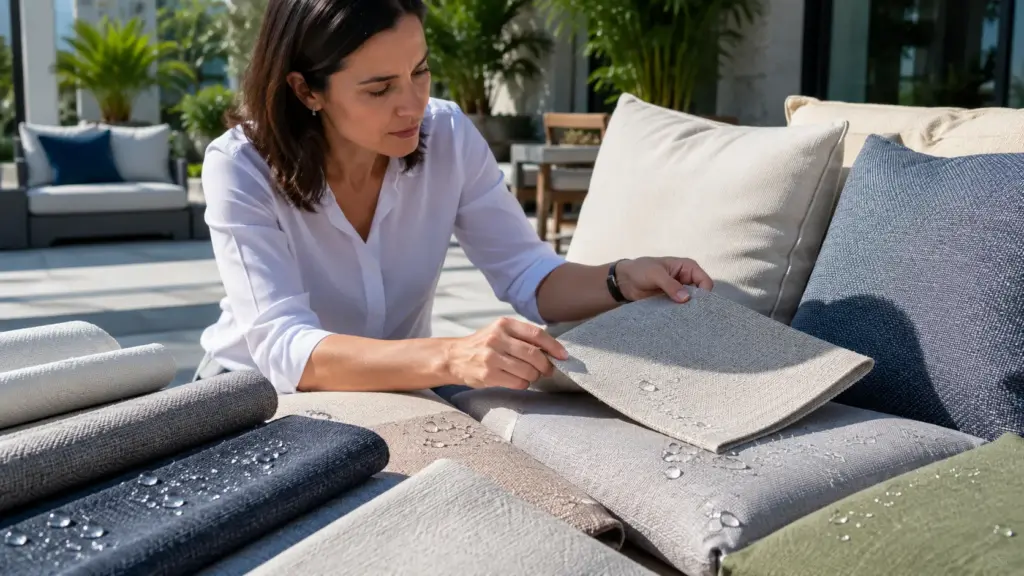
The main olefin characteristics are light weight, water resistance, stain resistance, quick drying, good strength, color resistance, and low moisture absorption. These qualities make olefin useful for carpet, upholstery, outdoor goods, and some functional clothing.
Performance Features in Real Products
In my factory work, I try not to judge a fabric from one small swatch. I ask where the final product will be sold, how it will be washed, how much sun it will face, and what price point the buyer needs. Olefin fabric often performs well when moisture is the main problem. It does not absorb water like cotton. It can dry fast. It can also resist many stains because liquid does not enter the fiber easily.
| Olefin Characteristic | Buyer Benefit | Where It Helps |
|---|---|---|
| Low water absorption | Dries fast | Outdoor cushions, bags, carpets |
| Light weight | Easier to handle | Travel goods, linings, active items |
| Stain resistance | Easier care | Upholstery, rugs, home textiles |
| Good strength | Longer use life | Industrial cloth, carpet backing |
| Color resistance | Better outdoor look | Patio fabric, awnings, covers |
Is Olefin Material Waterproof?
Many buyers ask, “Is olefin material waterproof?” I answer carefully. Olefin fiber itself is highly water resistant, but the final fabric may not be fully waterproof. A woven olefin cloth can still allow water to pass through the gaps between yarns. If the buyer needs true waterproof performance, the fabric may need coating, lamination, or a special construction.
This point is important in sourcing. A sales representative may say “waterproof” too quickly. I prefer to confirm the test standard. For example, a rain jacket, an outdoor sofa cover, and an olefin carpet do not need the same water performance. If Maria, a buyer in Russia, asks me about olefin for a seasonal outdoor line, I would ask for the water pressure test, color fastness test, and abrasion test before confirming bulk production.
What Are the Main Disadvantages of Olefin Fabric?
A low price can hide future problems. Olefin fabric has advantages, but ignoring olefin disadvantages can cause poor reviews after shipment.
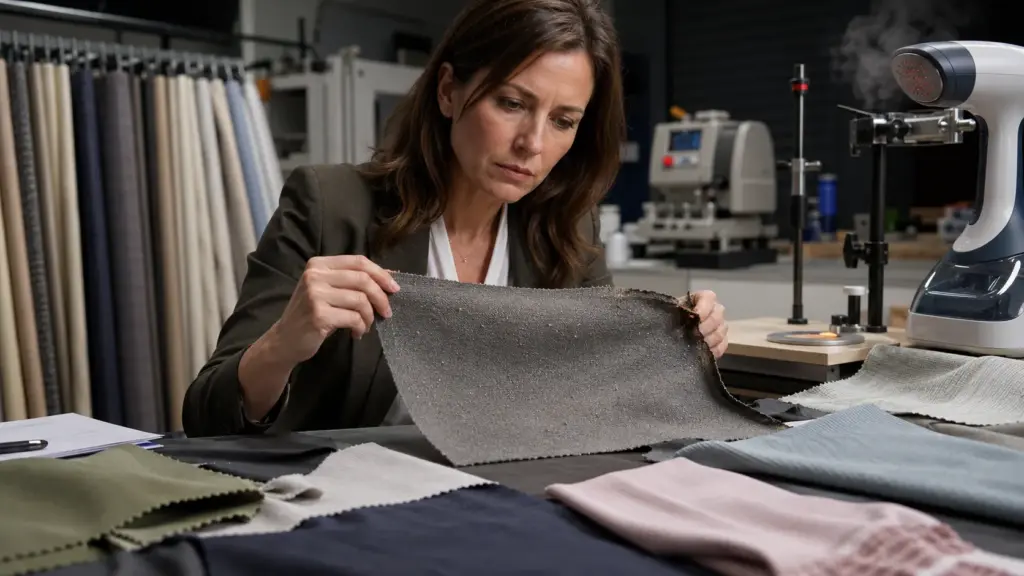
The main disadvantages of olefin fabric are lower heat resistance, possible melting near high heat, limited dyeing options, possible pilling or crushing in some constructions, and a less natural hand feel compared with cotton or premium polyester blends.
The Limits I Check Before Bulk Orders
I like olefin when the buyer understands its limits. The biggest concern is heat. Olefin can melt or deform under high temperature. This matters for ironing, heat transfer printing, drying, and some finishing processes. If a fashion garment needs a sharp pressed look, olefin may not be the best choice. If a logo needs high heat transfer, the factory must test it first.
| Olefin Disadvantage | Why It Matters | Buying Advice |
|---|---|---|
| Lower heat resistance | Can melt or deform | Test ironing and heat press |
| Harder to dye after fiber making | Color options may be limited | Confirm color before yarn stage |
| Less natural touch | May feel synthetic | Check hand feel with buyer sample |
| Oil stain issue | Oil can be harder to remove | Avoid oily-use products |
| Not biodegradable | Waste remains longer | Ask about recycling options |
Olefin Fiber Disadvantages in Clothing
For clothing, olefin fiber disadvantages need extra care. A fabric for carpet can be firm. A fabric for women’s fashion needs drape, comfort, and skin touch. Olefin can work in linings, functional panels, sports accessories, and some outerwear parts. But I would not use it blindly for a soft dress, premium T-shirt, or high-end blouse unless the fabric has been developed for that exact purpose.
The other issue is communication. Some suppliers only say “olefin is cheap and durable.” That is not enough for a serious buyer. I always suggest asking for a test report, care label advice, shrinkage data, color fastness data, and a sample after washing. A small test can save a full season. I have seen buyers lose time because the first sample looked fine, but the bulk fabric did not match the brand’s comfort level.
Does Olefin Fabric Cause Cancer or Is Olefin Fabric Safe?
Safety questions can stop a purchase fast. Buyers often ask about cancer risk because olefin is synthetic and made from plastic-based material.
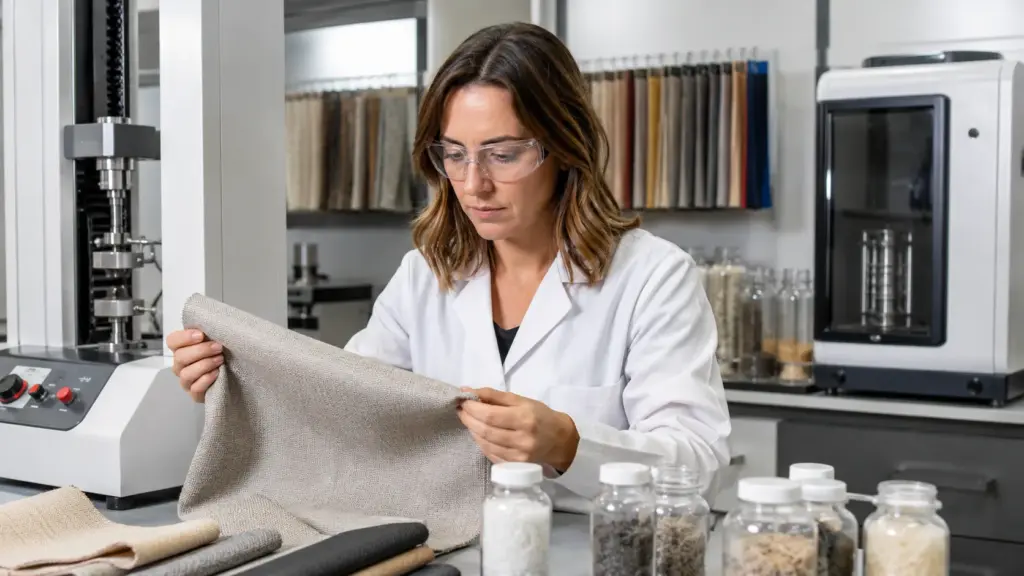
Olefin fabric is generally considered safe for normal textile use when it is made and finished under proper standards. The question “does olefin fabric cause cancer” should be answered through material safety, chemical testing, and certification, not through guesswork.
How I Think About Safety
When a buyer asks, “Is olefin toxic?” I do not give a careless answer. I explain that polypropylene olefin itself is widely used in many products, but the final safety depends on additives, dyes, coatings, flame retardants, and finishing chemicals. The base fiber is only one part of the story. A safe fabric must also have safe processing.
| Safety Question | Practical Answer |
|---|---|
| does olefin fabric cause cancer | Check testing and restricted chemical results |
| is olefin fabric safe | It can be safe when properly produced and certified |
| is olefin toxic | The final risk depends on additives and finishes |
| what is olefin material | It is usually polypropylene-based synthetic material |
| what certificates help | OEKO-TEX, REACH, CPSIA when needed |
Why Certificates Matter for Buyers
Maria once told me that one of her biggest fears was fake certificates. I understand that fear. A document can look professional, but it may not match the real fabric. In my own work, I suggest checking the certificate number, testing lab, product scope, and validity date. I also suggest sending bulk fabric for third-party testing when the order is large or when the product is for children, underwear, or close-skin use.
For olefin products, buyers should pay attention to restricted substances, heavy metals, formaldehyde, azo dyes, and flame-retardant chemicals if these are used. A normal olefin upholstery fabric may have different finishing chemicals than a simple olefin cloth bag. So the safety check must match the final product. I would not tell a buyer to trust only a supplier’s promise. I would ask for a real test report linked to the fabric batch.
What Is Olefin Carpet, Olefin Rug, and Olefin Upholstery Fabric Used For?
Some fabrics are better for homes than for fashion. Olefin is one of the materials that often performs well in carpets and upholstery.
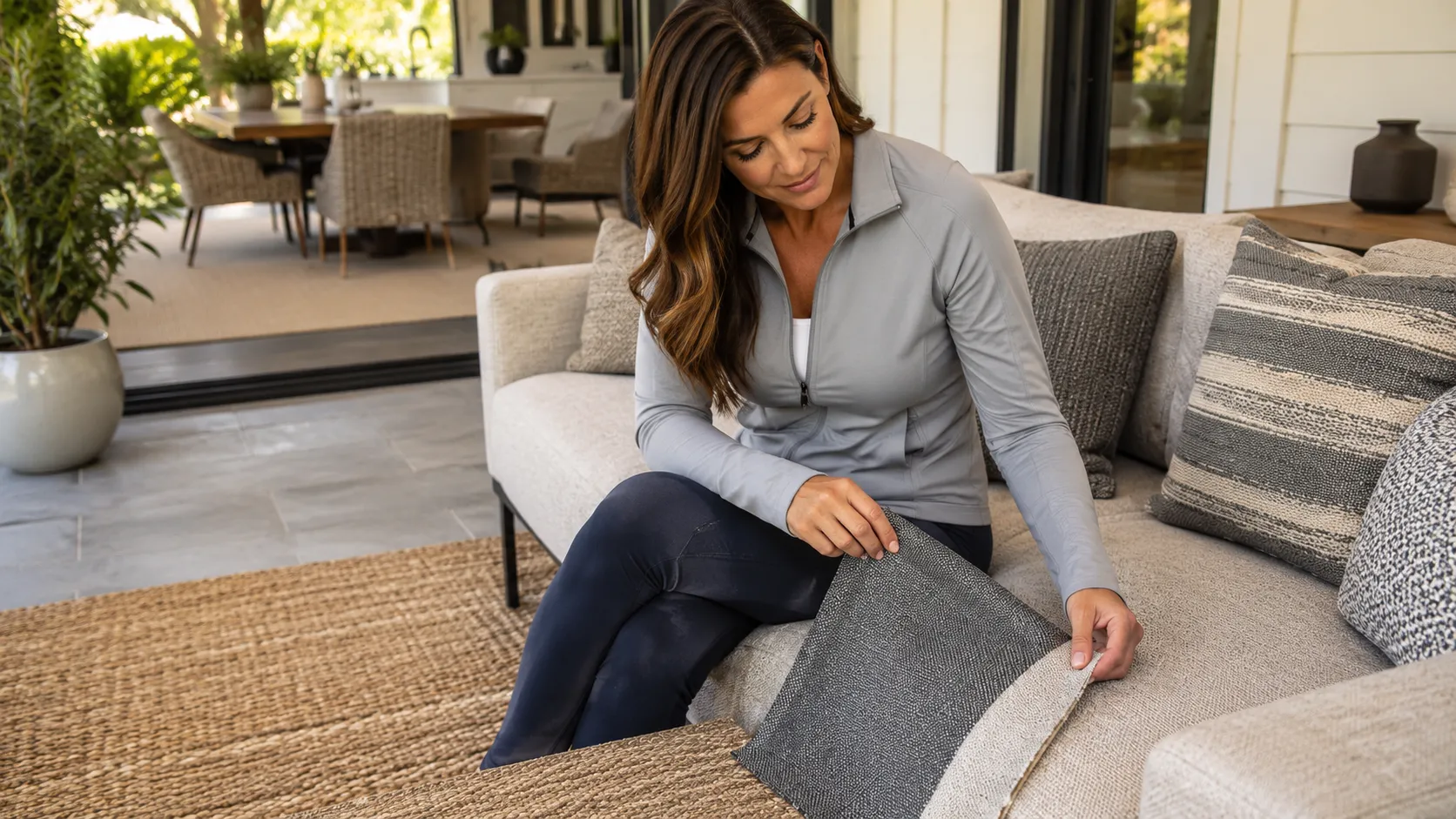
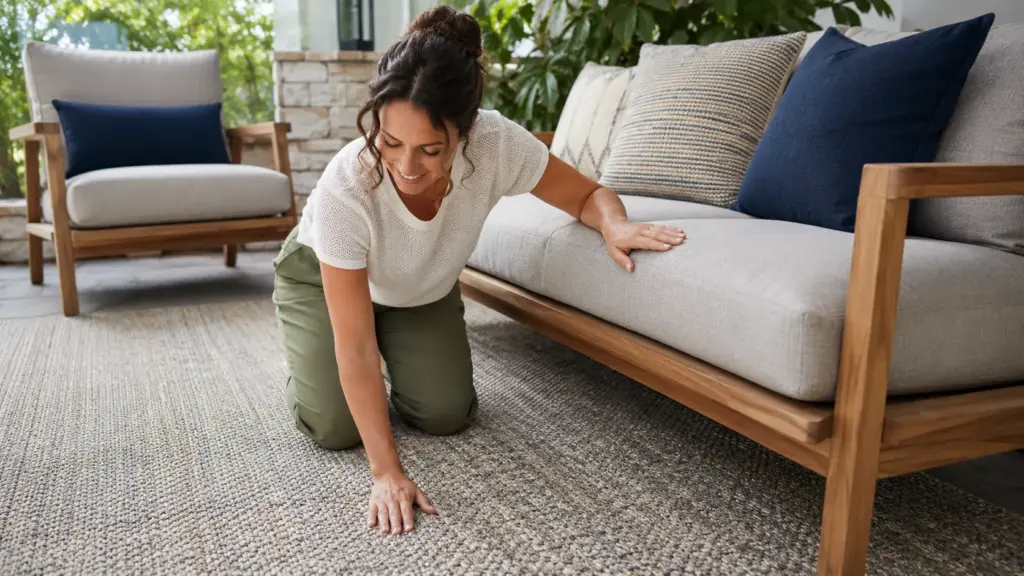
Olefin carpet and olefin rugs are floor products made with olefin fiber. Olefin upholstery fabric is used for sofas, chairs, cushions, and outdoor furniture because it resists moisture, stains, fading, and daily wear in many settings.
Common Olefins Uses
Olefin uses are broad because the material is light, strong, and cost friendly. In home products, it is often used in carpets, rugs, upholstery, mattress covers, cushion covers, and outdoor furniture fabric. In industrial products, it can be used for packaging cloth, filter material, protective covers, and nonwoven items. In fashion supply chains, I see it more often in bags, trims, linings, functional panels, and some sports or outdoor products.
| Product Type | Why Olefin Works |
|---|---|
| What is olefin carpet | A carpet made with olefin fiber for stain resistance |
| What is an olefin rug | A rug using olefin fiber for easy care |
| Olefin upholstery fabric | Useful for furniture and outdoor cushions |
| Olefin fabric by the yard | Bought for small production or sampling |
| Olefin products | Carpets, covers, bags, upholstery, outdoor goods |
Why It Is Popular in Furniture and Home Textiles
Olefin upholstery fabric is popular because it can handle moisture and common stains better than many natural fibers. It is also often more affordable than some premium outdoor fabrics. For wholesale buyers, this matters because price, lead time, and after-sales risk all affect profit.
But I still check the construction. A cheap olefin fabric by the yard may not have the same abrasion resistance as a higher-grade fabric. A rug in a low-traffic room has different needs from a hotel lobby carpet. An outdoor cushion in Norway has different needs from a patio cushion in Saudi Arabia. The material name alone does not decide quality. The yarn, weave, weight, finishing, backing, and test result decide the final product level.
For clothing buyers, this lesson is useful too. Do not buy only by fiber name. Buy by performance target. Olefin can be useful, but only when the fabric construction matches the product.
Olefin vs Polyester Fabric: Which One Should I Choose?
Two fabrics can look close in a showroom but act differently after use. Polyester vs olefin is a common comparison in sourcing.
Olefin vs polyester fabric depends on the end use. Olefin is better for low water absorption and stain resistance. Polyester is usually better for clothing variety, heat handling, dyeing options, soft hand feel, and wider fashion applications.
My Simple Comparison for Buyers
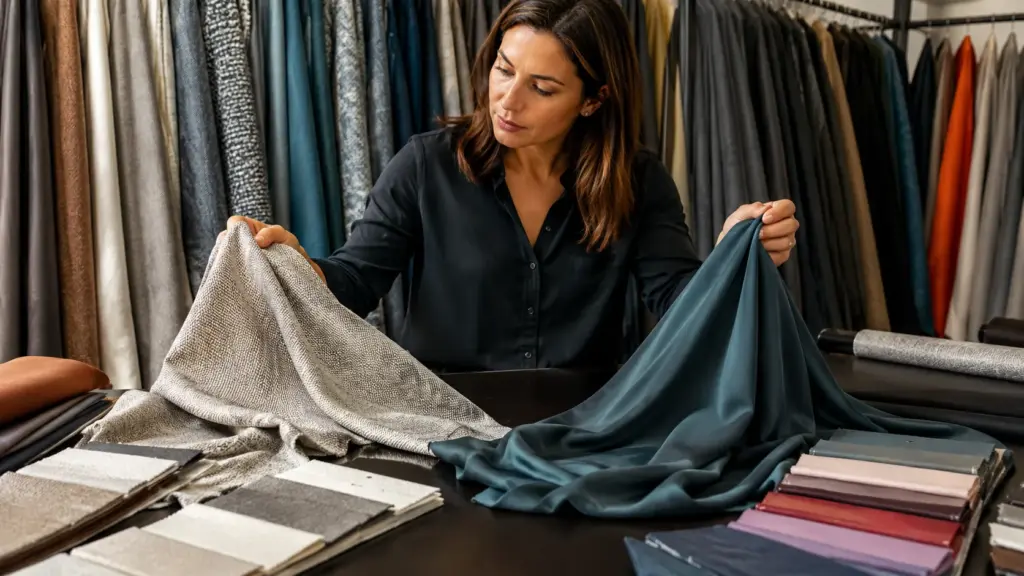
When buyers ask me about polyester vs olefin, I first ask about the product. For fashion clothing, polyester usually gives more design freedom. It can be made into chiffon, satin, fleece, mesh, pongee, taffeta, and many other textures. It can also handle more common garment processes. For upholstery, outdoor cushions, rugs, and carpets, olefin can be very competitive because of its moisture and stain performance.
| Comparison Point | Olefin | Polyester |
|---|---|---|
| Water absorption | Very low | Low, but usually higher than olefin |
| Heat resistance | Lower | Usually better |
| Dyeing flexibility | More limited | Wider options |
| Clothing use | More limited | Very wide |
| Upholstery use | Strong option | Also strong |
| Cost | Often competitive | Wide price range |
How I Would Choose in a Real Order
For a women’s fashion dress, I would usually start with polyester, viscose, cotton blends, or other apparel fabrics before olefin. For a reusable shopping bag, outdoor cushion, rug, or furniture fabric, I would consider olefin early. For sportswear, I would compare the exact olefin fabric with polyester performance fabric because comfort and sweat management matter.
The real mistake is to ask, “Which fabric is better?” That question is too general. I prefer to ask, “Which fabric is better for this product, this market, this care label, this target price, and this delivery date?” A Russian buyer selling private-label home goods may choose olefin for rugs and upholstery. The same buyer may choose polyester for dresses and jackets. Both choices can be correct when the product goal is clear.
What Is the Environmental Impact of Polypropylene Olefin Fabric?
A fabric can be useful and still create waste problems. Olefin’s environmental impact needs a balanced look, not simple praise or simple blame.
Polypropylene olefin fabric has both benefits and problems. It can need less water than some natural fibers and can be recyclable, but it is petroleum-based, not biodegradable, and can stay in the environment if waste is not managed well.

The Positive and Negative Sides
I do not present olefin as a fully green fabric. That would not be honest. It is a synthetic material. It comes from fossil-based resources in most normal production. It does not biodegrade like some natural fibers. This is a serious point for buyers who sell to markets with strong sustainability expectations.
At the same time, olefin can have practical environmental advantages in some cases. It is light. This can reduce shipping weight. It resists moisture and stains. This can help some products last longer. It can also be recycled when the correct collection and recycling system exists.
| Environmental Point | Meaning for Buyers |
|---|---|
| Low water absorption | Less water held in product use |
| Durable performance | Longer product life in some uses |
| Recyclable material | Possible circular use if collected |
| Petroleum-based | Not a natural renewable fiber |
| Non-biodegradable | Waste can remain for a long time |
How I Handle Sustainability Questions
When a buyer asks me whether olefin is sustainable, I do not answer with one word. I ask about the market, the product life, the customer expectation, and the disposal plan. A long-life outdoor cushion fabric may be more reasonable than a short-life promotional product that is thrown away quickly. A recycled olefin option may be better than virgin material when quality and traceability are stable.
For B2B sourcing, the best step is to ask for clear documents. These may include recycled content proof, chemical safety testing, factory audit records, and production control data. I also suggest avoiding overproduction. A “green” fabric still becomes waste if the buyer orders too much or chooses the wrong design. In my view, responsible sourcing means matching material, function, price, and real demand.
How Should Buyers Source Olefin Fabric From China?
A good fabric choice can still fail if sourcing is not controlled. Olefin fabric needs clear samples, test rules, and honest supplier communication.
Buyers should source olefin fabric from China by confirming fiber content, fabric weight, width, hand feel, color fastness, water resistance, abrasion performance, certification, price, lead time, and logistics terms before placing bulk orders.
My Practical Sourcing Checklist
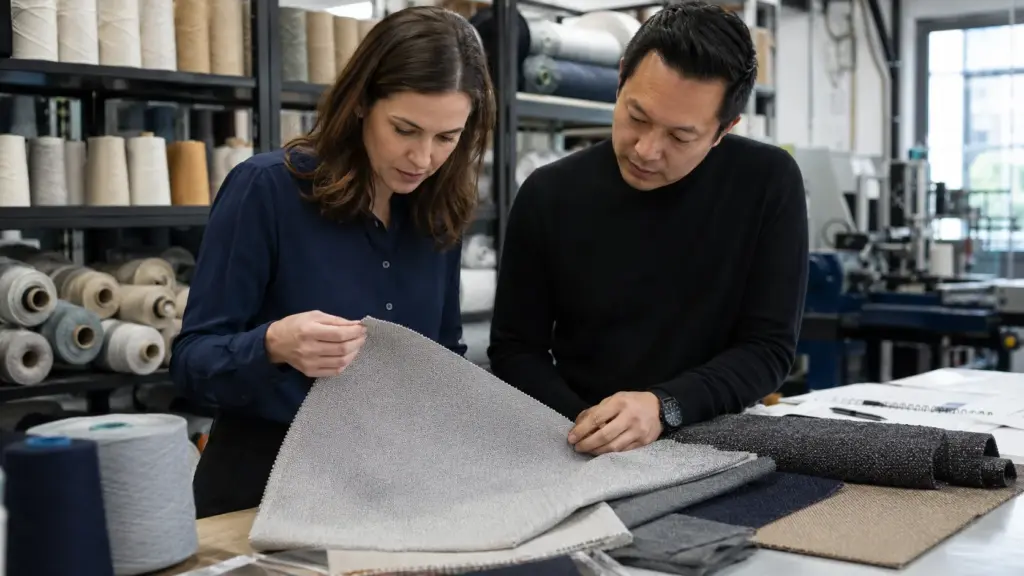
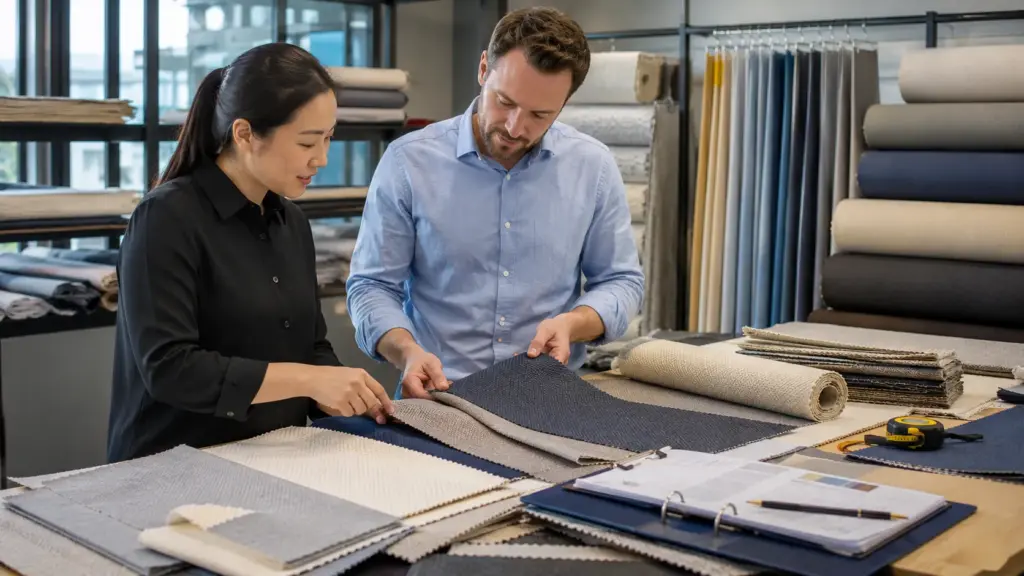
As a clothing manufacturer in China, I have learned that the best orders start with clear details. A buyer may say “I need olefin fabric.” But the supplier still needs to know the end product, fabric weight, color, finish, width, quantity, packing method, and test requirements. Without these details, the price quote may look attractive but become useless later.
| Sourcing Item | What I Ask For |
|---|---|
| Fiber content | 100% olefin or blended olefin |
| Fabric construction | Woven, knitted, nonwoven, or backing |
| Weight and width | GSM and usable width |
| Performance test | Water, stain, abrasion, color fastness |
| Safety proof | OEKO-TEX, REACH, or buyer’s required test |
| Bulk control | Lab dip, pre-production sample, final inspection |
Why Factory Communication Matters
Poor communication is one of the biggest risks in China sourcing. I have seen buyers lose time because the supplier did not explain limits early. For olefin, this may include heat limits, color limits, coating changes, or delivery delays. A confident buyer like Maria may lead the conversation, but she still needs a supplier who answers clearly and does not hide problems.
At Truekung, I prefer to discuss risks before sampling. This makes the order smoother. If olefin is not the best choice, I would rather say it early and compare polyester, nylon, cotton blend, or another material. If olefin is suitable, I would confirm samples, tests, production timing, and logistics before the buyer opens a selling season. In wholesale business, the best fabric is not only the one with good properties. It is the one that arrives on time, passes inspection, and supports profit.
Conclusion
Olefin fabric is practical, strong, and cost friendly, but buyers should match it with the right product, test standard, and supplier control.
Work With Truekung
If you are sourcing olefin fabric, polyester fabric, or custom fashion clothing from China, I can help you compare materials, check samples, control quality, and manage production with clear communication.
Truekung works with brands, wholesalers, and supermarkets around the world. We provide OEM/ODM clothing production, fabric sourcing support, sample development, bulk production, quality control, and export service.
Contact me to discuss your next clothing project.
Lancy Chia
Truekung
Email: [email protected]
Website: https://truekung.com
Views: 169