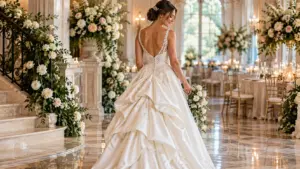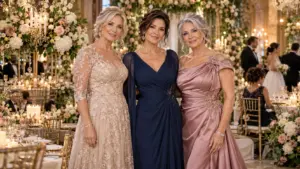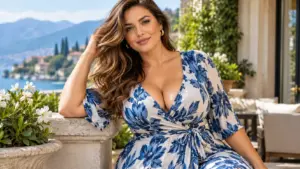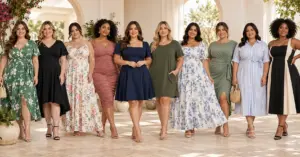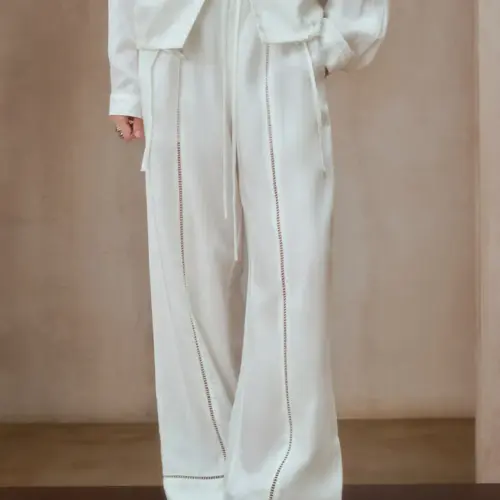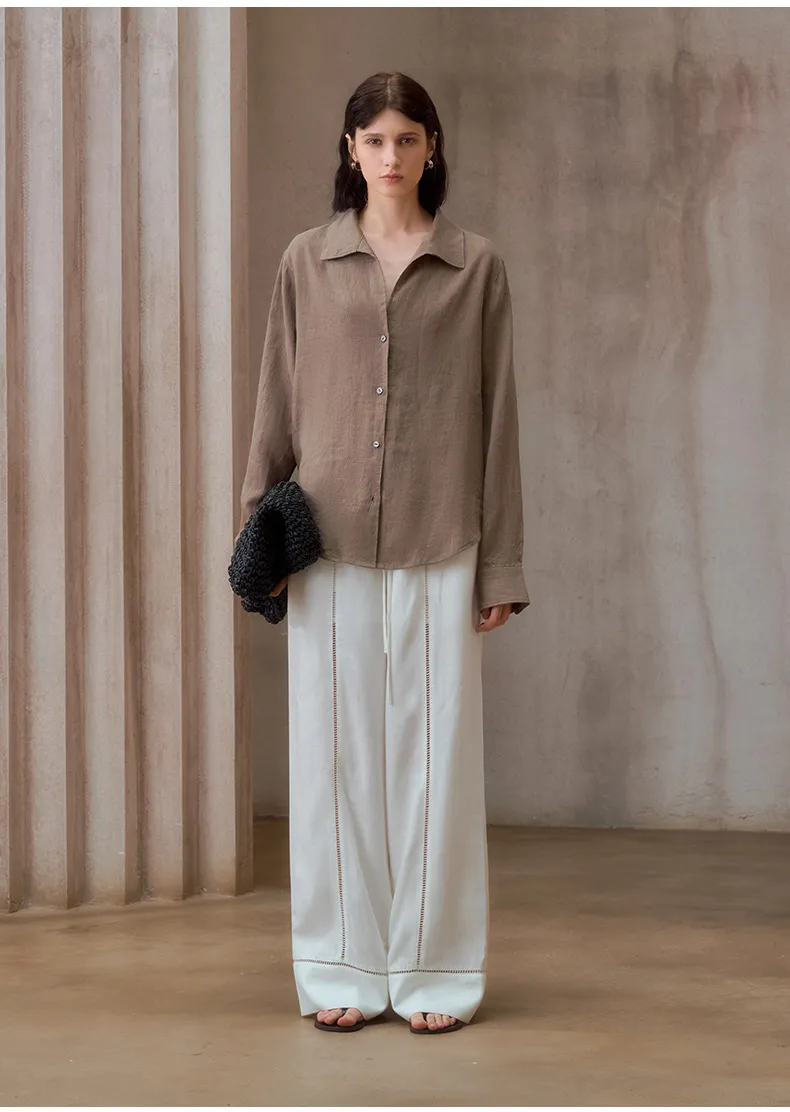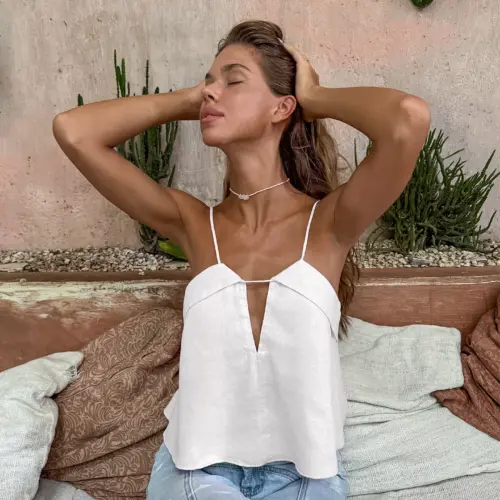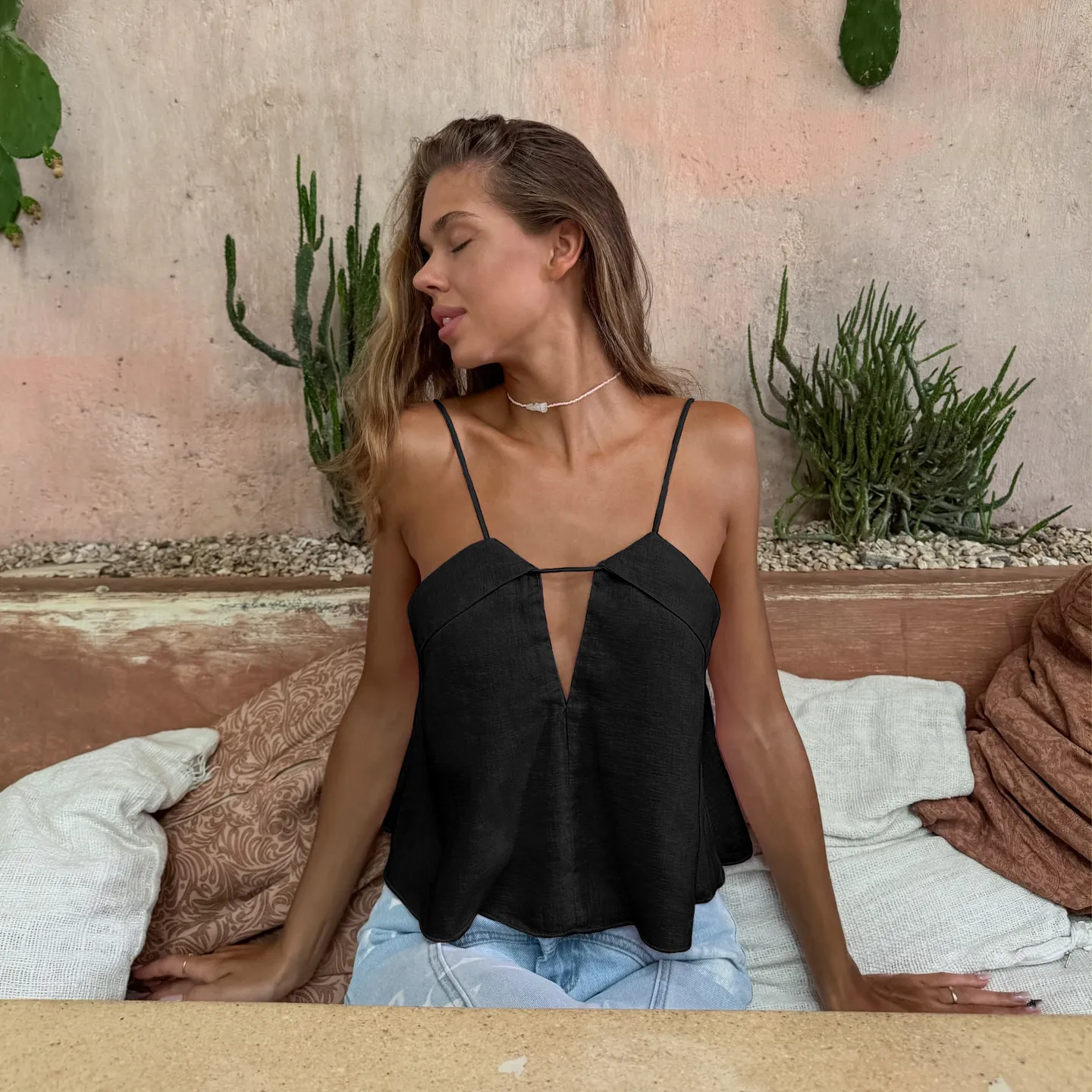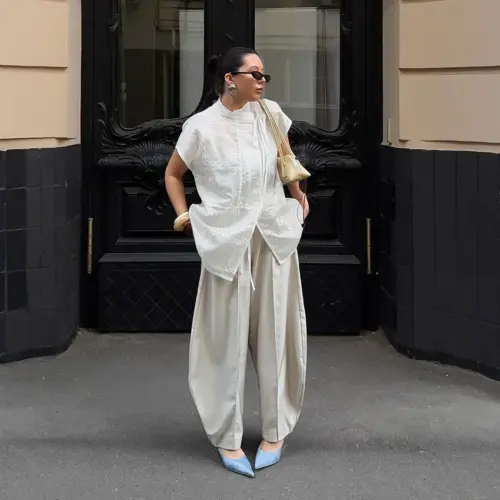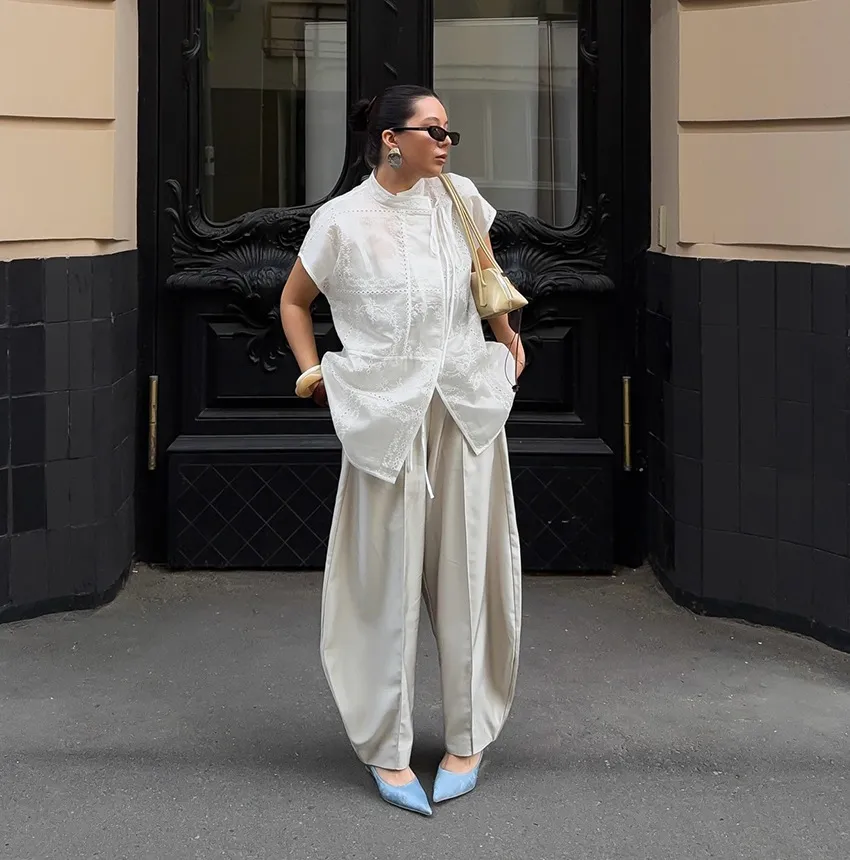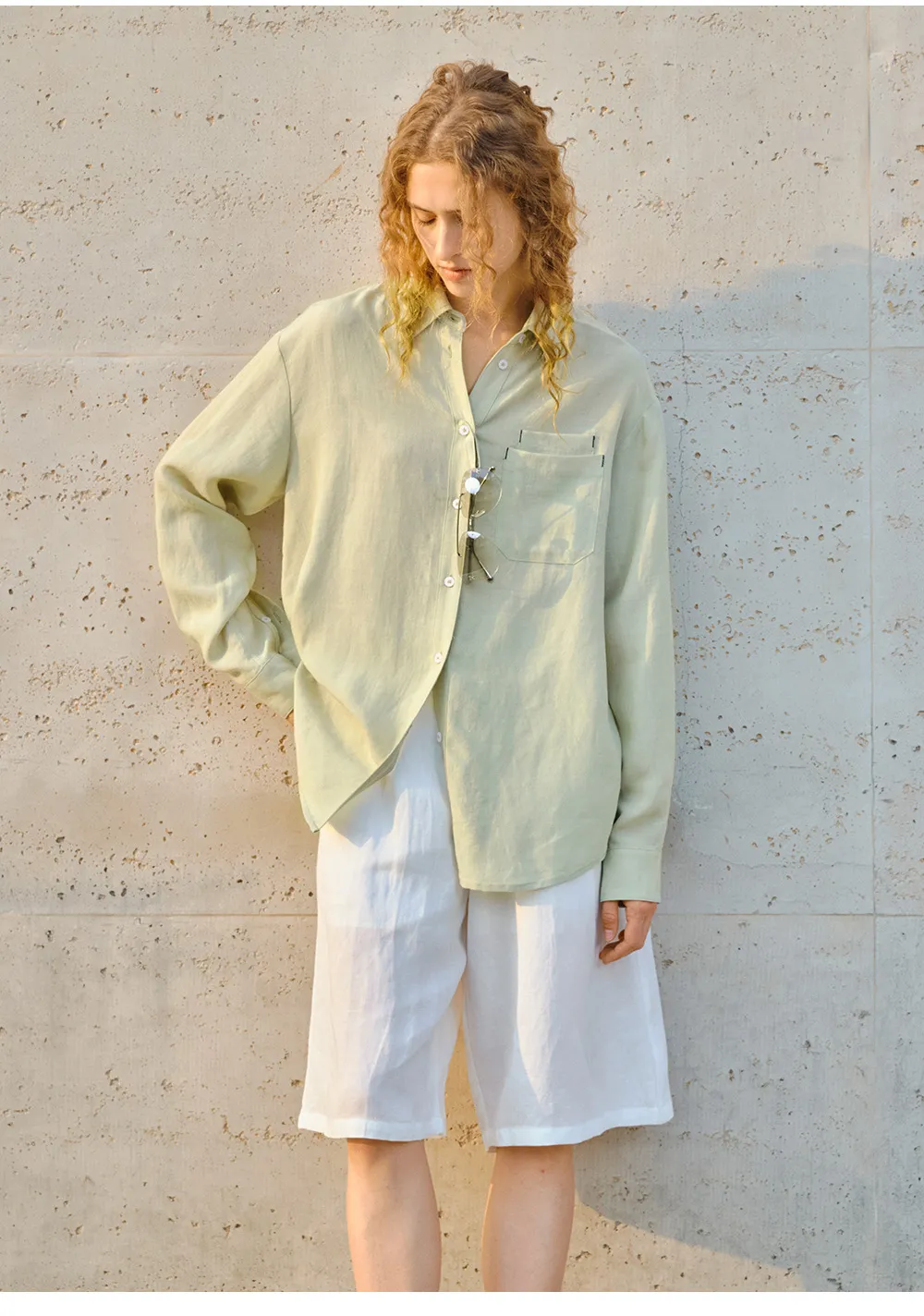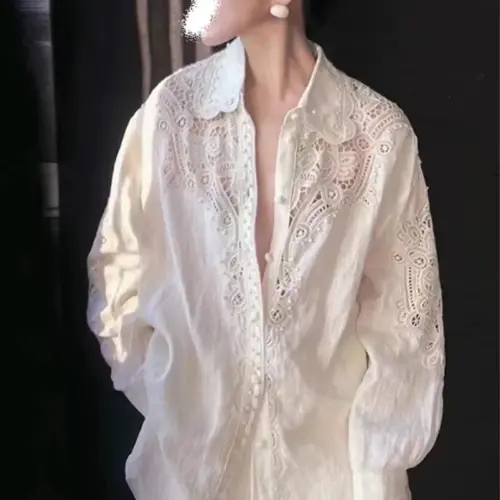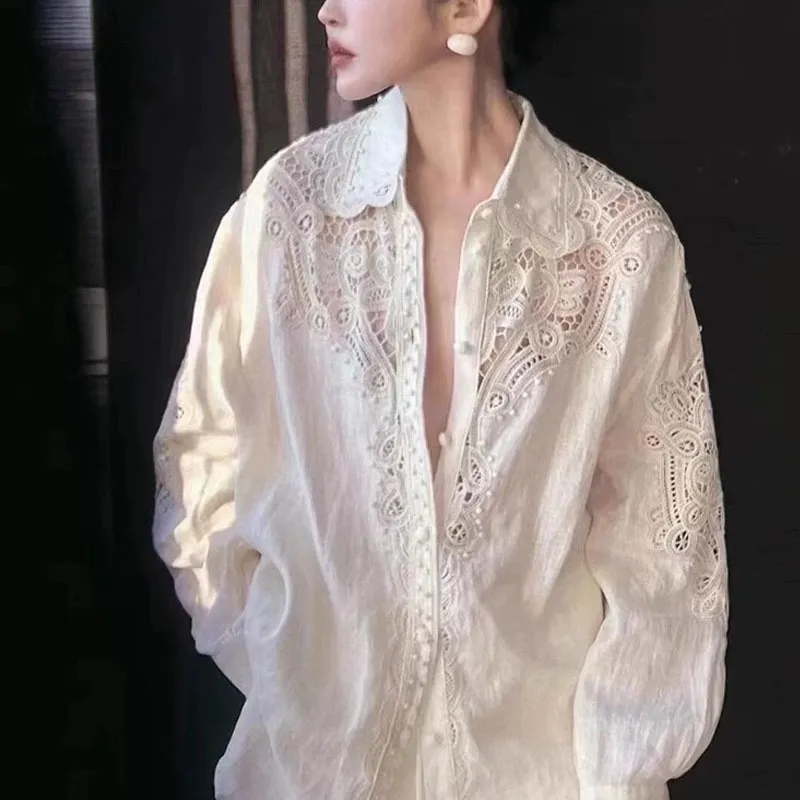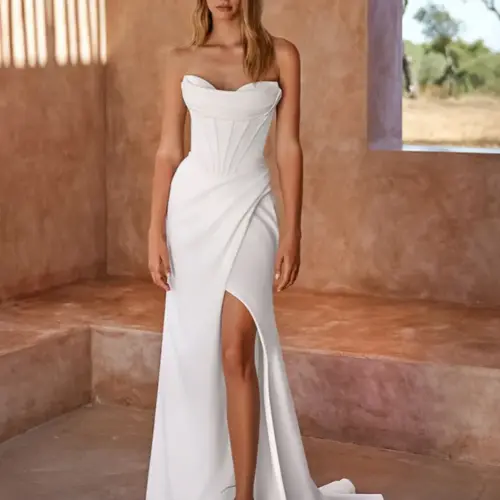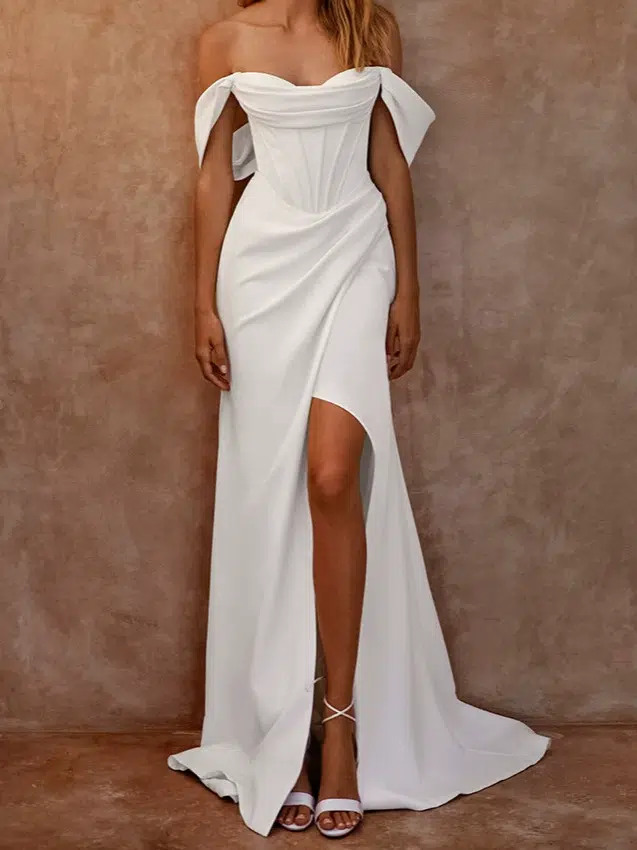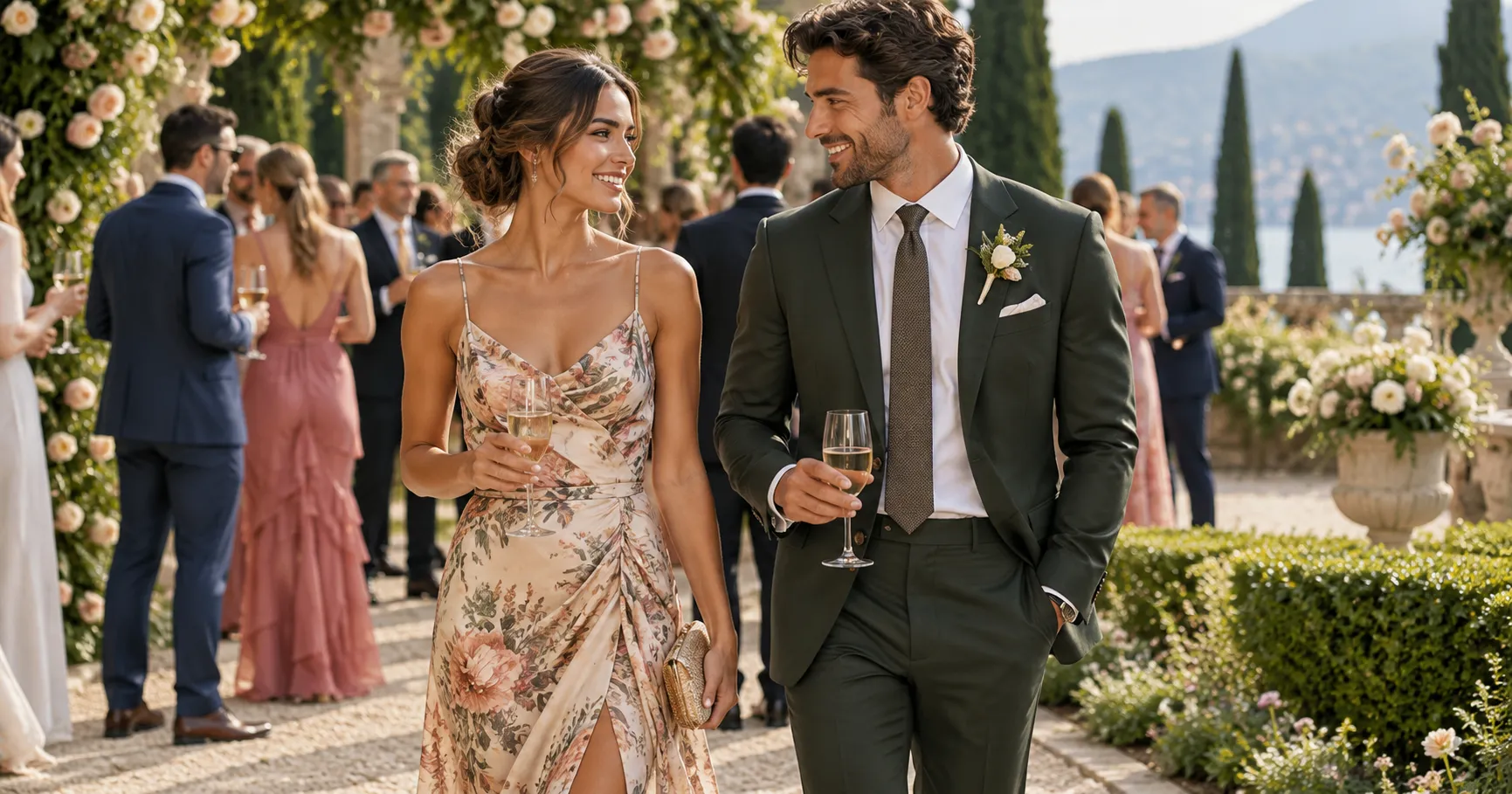

A semi-formal wedding invitation sounds simple, but choosing the right outfit can be confusing. Dress too casually, and you may feel out of place. Dress too formally, and you may stand out for the wrong reasons. The solution is understanding the dress code.
Semi-formal wedding attire means polished, elegant clothing that falls between casual and formal dress. Women can wear midi dresses, knee-length dresses, dressy jumpsuits, or tailored separates. Men can choose suits or blazers with dress trousers. The goal is to look well-dressed without wearing a tuxedo or an elaborate evening gown.
I’m Lancy Chia from Truekung, a clothing manufacturer in China with 20 years of export experience and over 200 workers. We work with overseas clothing brands, wholesalers, and buyers on OEM/ODM manufacturing, sample development, private-label clothing, and bulk production. From my factory perspective, fabric, garment construction, fit, and finishing all influence whether an outfit looks casual, semi-formal, or formal.
Whether you are attending a wedding or developing a wedding guest clothing collection, understanding these differences helps you make better choices. In this guide, I will explain the semi-formal wedding dress code, suitable outfits for women and men, seasonal styling, common mistakes, and practical clothing selection considerations.
What Does the Semi-Formal Wedding Dress Code Actually Mean?
Many wedding guests struggle to understand where semi-formal attire fits between casual and formal clothing. A dress may look elegant in a product photo but feel too casual in person. The same problem happens with men’s suits, shirts, and trousers.
Semi-formal wedding attire is more polished than everyday or smart-casual clothing but less elaborate than traditional formal eveningwear. It usually includes elegant dresses, tailored jumpsuits, suits, blazers, and dress trousers. The wedding time, venue, season, and couple’s expectations help determine the appropriate level of formality.
Why Fabric and Construction Determine Formality
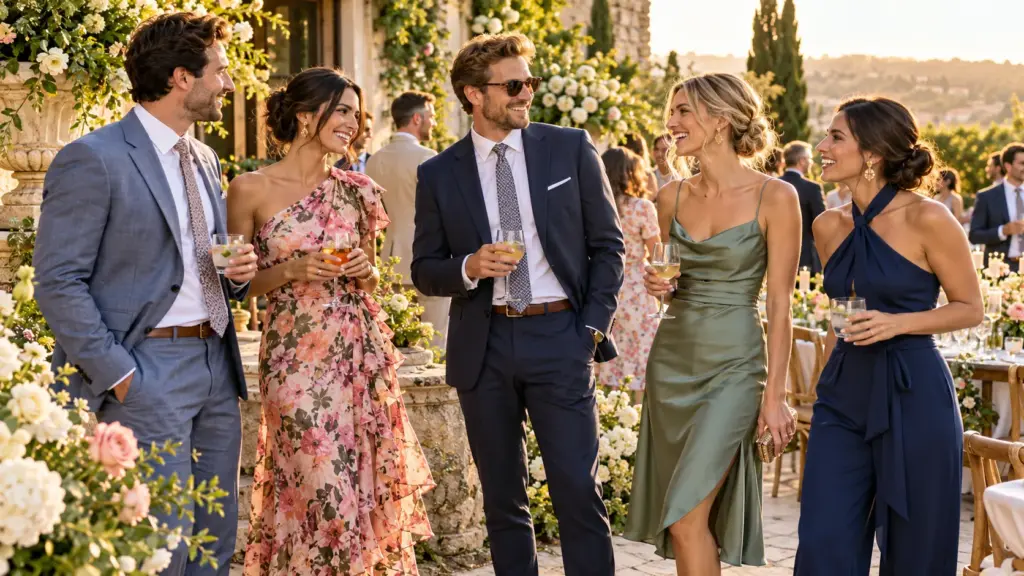
In clothing manufacturing, I often see how two garments with similar designs can create completely different impressions because of their fabric and construction.
Consider two midi dresses. One uses thin cotton jersey with a loose T-shirt-style shape. The other uses a structured crepe fabric, a defined waist, and carefully finished seams. Both dresses may have the same length, but the second usually looks more appropriate for a semi-formal wedding.
Fabric drape is especially important. Crepe, satin, chiffon, and suitable woven blends can create an elegant appearance when the material weight and garment construction are properly matched. A fabric that is too thin may reveal seams or undergarments, while a heavy material may make the dress feel unnecessarily formal.
For men’s semi-formal wear, fabric and fit are equally important. A properly fitted blazer with clean trousers generally looks more refined than an oversized jacket paired with casual pants.
Garment finishing also changes the overall appearance. Uneven hems, poor pressing, puckered seams, and poorly attached linings can make clothing look less polished.
In my factory experience, buyers should evaluate semi-formal clothing by its complete appearance rather than relying only on the product name. A garment labeled “semi-formal” is not automatically suitable for every wedding.
Where Cocktail and Dressy Casual Differ
Another common question is whether cocktail attire and semi-formal attire mean the same thing.
They overlap, but they are not always identical.
Cocktail attire generally encourages a slightly more dressed-up appearance. Women may choose structured cocktail dresses, richer fabrics, or more noticeable accessories. Men usually wear coordinated suits and dress shirts, often with ties.
Semi-formal wedding attire often allows more flexibility. Women can choose simpler midi dresses, wrap dresses, or elegant jumpsuits. Men may wear suits or tailored separates, with ties depending on the event.
Dressy casual is usually one step more relaxed. A polished sundress, coordinated separates, or a casual blazer might work for dressy-casual events, but these choices can look underdressed at a semi-formal wedding if the fabric or styling is too relaxed.
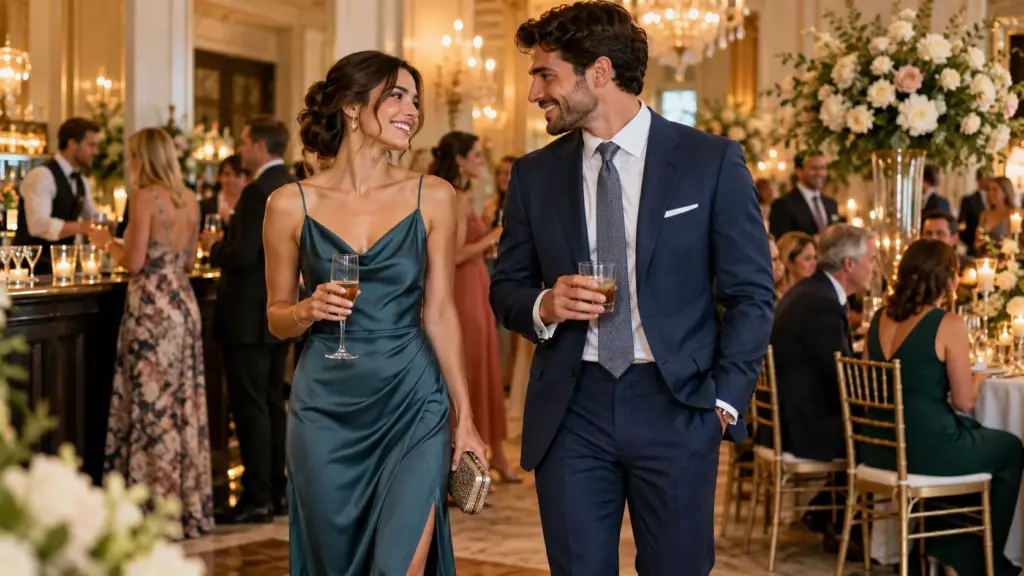
There is no universal rule covering every wedding. For example, an evening semi-formal celebration at a luxury hotel may look dressier than an afternoon semi-formal ceremony in a garden.
Etiquette guidance from The Knot and Emily Post also emphasizes the importance of the occasion, timing, and dress expectations.
My suggestion is to use the invitation as your starting point, then consider the venue and the couple’s preferences before making your final outfit decision.
How to Interpret Different Wedding Dress Codes
| Dress Code | Women’s Outfit Options | Men’s Outfit Options |
|---|---|---|
| Casual | Neat sundress or relaxed dressy separates | Collared shirt and neat trousers |
| Dressy Casual | Elevated dress, jumpsuit, or coordinated set | Blazer with chinos or dress trousers |
| Semi-Formal | Midi dress, elegant knee-length dress, or dressy jumpsuit | Suit or blazer with tailored trousers |
| Cocktail | Refined cocktail dress or sophisticated jumpsuit | Well-fitted suit, often with a tie |
| Formal | Floor-length dress or elegant eveningwear | Dark suit and tie |
| Black Tie | Formal evening gown | Tuxedo |
These categories are general guidelines. Wedding invitations may use the same dress code differently depending on the location and culture.
Choosing Versatility Without Sacrificing Elegance
One advantage of semi-formal clothing is its versatility. A well-designed semi-formal outfit can work for weddings, dinner celebrations, business-related social events, and other special occasions.
However, versatility requires careful design choices.
For example, imagine a clothing brand developing a wedding guest dress collection. The brand is considering two versions of the same midi dress. One has heavy beading, complicated sleeves, and a highly fitted silhouette. The other uses a simple neckline, a comfortable waist shape, and a softly draped fabric.
The decorated version may appeal to shoppers looking for statement occasionwear. However, it can require more complex sewing operations, careful embellishment inspection, and additional handling during packing.
The simpler version may be easier to wear for different events. It can also be more straightforward to develop and manufacture, depending on its construction and fabric.
That does not mean simple clothing is always cheaper. Fabric quality, pattern complexity, lining, and order quantity still affect production costs.
For retail buyers, I suggest evaluating whether a design has enough elegance for a wedding while remaining useful for other occasions.
My decision rule: If an outfit looks suitable for a nice dinner but still polished enough for wedding photographs, it is usually moving in the right semi-formal direction.
What Should Women and Men Wear to a Semi-Formal Wedding?
Choosing a semi-formal wedding outfit involves more than selecting a dress or suit. Poor fit, unsuitable footwear, and incorrect fabric choices can make an otherwise attractive outfit feel uncomfortable or inappropriate.
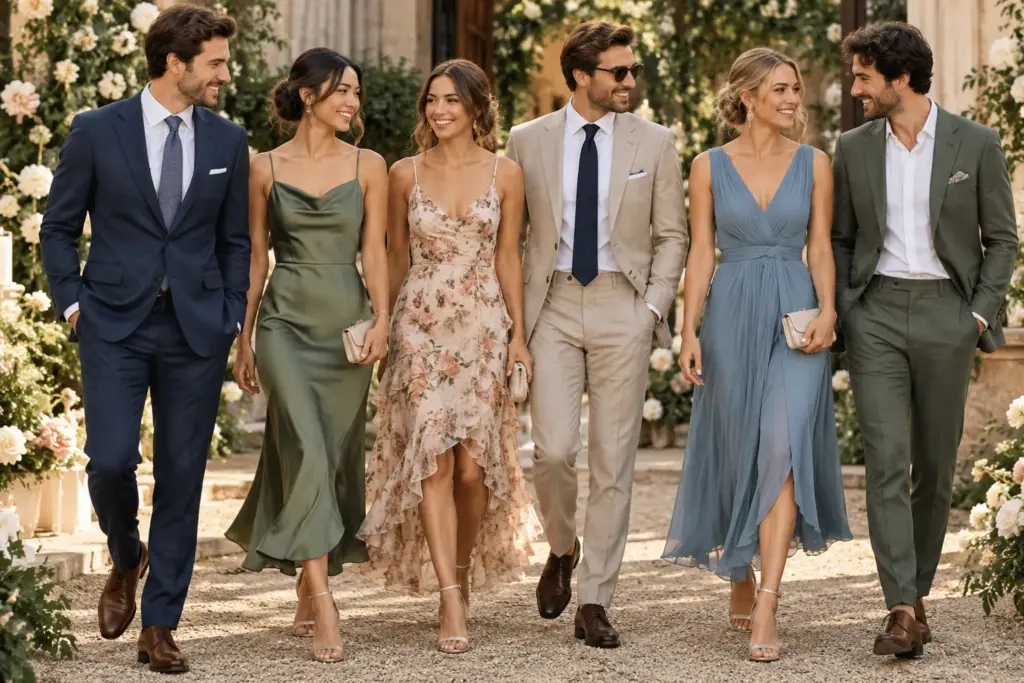
For women, semi-formal wedding guest attire commonly includes midi dresses, knee-length dresses, wrap dresses, tailored jumpsuits, and elegant separates. For men, a well-fitted suit or blazer with dress trousers is a reliable option. Shoes and accessories should complement the outfit without making it excessively casual or formal.
Best Semi-Formal Dress Styles for Women
When shoppers ask what semi-formal attire for women means, I usually recommend starting with dress length, silhouette, fabric, and comfort.
Midi dresses are one of the most flexible options for a semi-formal wedding. Their length offers coverage without creating the appearance of a traditional evening gown. A-line dresses, wrap dresses, and softly fitted silhouettes can work particularly well.
Knee-length dresses are another suitable choice when the design is elegant and the hemline is appropriate for the setting. Very short or highly revealing styles may be less suitable, especially for conservative ceremonies.
A dressy jumpsuit can also work. Look for a tailored waist, clean trouser lines, and a fabric that drapes properly. Wide-leg jumpsuits can create a sophisticated look when the proportions are balanced.
For women who prefer separates, tailored trousers or a refined skirt with an elegant blouse may be appropriate.
From a manufacturing perspective, fit is one of the most important details. Armholes, bust shaping, waist placement, and zipper construction affect how a dress moves and feels.
A beautiful design cannot perform well if the wearer struggles to sit, walk, or dance comfortably.
For semi-formal wedding guest dresses, I suggest choosing pieces that combine a polished appearance with practical movement and suitable coverage.
Men’s Jackets, Trousers, and Footwear Choices
Semi-formal wedding men’s wear is generally simpler than women’s occasionwear, but choosing the right combination still requires attention.
A matching two-piece suit is one of the safest options. Navy, charcoal, and medium gray are versatile choices, while lighter colors can work well for daytime and warm-weather celebrations.
A blazer with coordinated dress trousers is another possibility, particularly for weddings with a more relaxed atmosphere.
The important point is that the jacket and trousers should look intentional together. Combining a structured formal jacket with extremely casual pants can create an unbalanced appearance.
A clean dress shirt is generally appropriate. White, light blue, and subtle patterns can work with many suits. A tie adds formality, but whether it is necessary depends on the invitation and setting.
Shoes should also match the overall outfit. Leather loafers, Oxfords, and Derby shoes are reliable choices. Casual running shoes and flip-flops are usually inappropriate.
In garment production, I pay attention to shoulder fit, sleeve length, trouser construction, and fabric recovery. Poorly fitted jackets can restrict movement, while trousers that wrinkle excessively may quickly lose their polished appearance.
For wedding guests, the safest starting point is a properly fitted suit with a clean shirt and dress shoes. You can then adjust the color and accessories to suit the occasion.
Outfit Details Worth Checking Before Purchase
| What to Check | Why It Matters | What I Suggest |
|---|---|---|
| Dress length | Affects formality and comfort | Start with knee-length or midi styles |
| Fabric transparency | Can create coverage problems | Check garments under natural light |
| Dress lining | Influences comfort and appearance | Check that the lining stays in place |
| Bust and waist fit | Affects movement and silhouette | Compare measurements with the size chart |
| Men’s jacket fit | Changes the appearance of the outfit | Check shoulders, chest, and sleeves |
| Trouser length | Affects proportion and neatness | Make sure hems work with the chosen shoes |
| Footwear | Affects comfort throughout the event | Choose polished shoes suitable for the venue |
| Accessories | Can make an outfit too casual or ornate | Use a few coordinated pieces |
Balancing Personal Style With Wedding Etiquette
Semi-formal wedding attire allows personal expression, but some styling choices can create unnecessary problems.
For women, one common mistake is assuming that more decoration always means a better outfit. Heavy sequins, dramatic trains, or elaborate embellishments may make a dress appear closer to formal eveningwear.
Another mistake is choosing a dress that looks elegant while standing but becomes uncomfortable when sitting or moving.
For example, imagine a brand preparing two semi-formal dress samples. One features a narrow skirt with limited movement. The other has a similar silhouette but includes enough ease or a carefully positioned vent.
The first may photograph beautifully, but the second could be more comfortable for an event involving dinner, walking, and dancing.
This is why I ask clothing buyers to consider both appearance and practical use during sample evaluation.
Color also matters. Wedding guests should generally avoid white, ivory, and bridal-looking shades unless the couple specifically requests them. Guests should also consider cultural or religious expectations.
Men face a similar balance. A bold patterned jacket may express personality, but a simple coordinated suit is often more versatile.
My decision rule: Choose the outfit that meets the dress code first. Add personality through color, texture, shoes, or accessories without sacrificing comfort or drawing attention away from the couple.
How Do Season, Venue, and Wedding Time Affect Semi-Formal Attire?
A semi-formal outfit that works at an indoor evening wedding may feel uncomfortable at an outdoor summer ceremony. Ignoring temperature, location, and event timing can lead to clothing that looks appropriate but performs poorly.
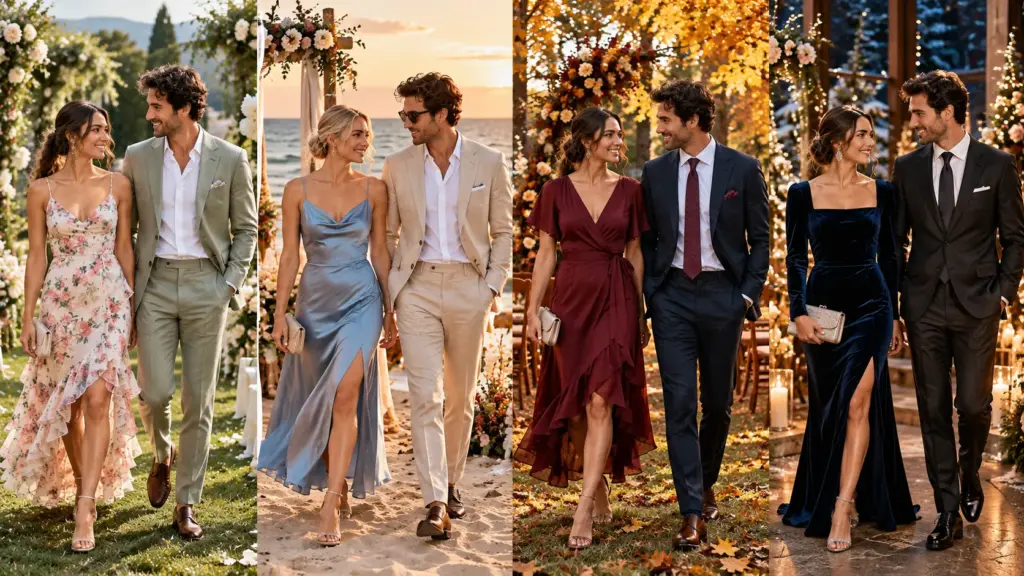
For daytime semi-formal weddings, lighter colors and breathable fabrics are often suitable. Evening celebrations usually support richer colors and more structured clothing. Summer weddings call for comfort and airflow, while winter weddings may require heavier fabrics, layers, and weather-appropriate footwear.
How Seasonal Fabric Weight Changes Comfort
Fabric selection is one of the biggest factors in creating suitable semi-formal clothing for different seasons.
For summer semi-formal wedding attire, breathable fabrics and comfortable construction are particularly important.
Cotton blends, lightweight woven fabrics, linen blends, and certain lightweight crepes can work well, depending on the garment design. Chiffon is also useful for flowing dresses, although it may need a lining to provide sufficient coverage.
Lightweight fabric does not automatically mean comfortable clothing. A dress with several thick synthetic lining layers may feel warm even when its outer fabric appears airy.
For men’s summer wedding attire, lightweight wool, linen blends, and suitable cotton fabrics can provide a balance between appearance and comfort.
Winter semi-formal clothing has different requirements. Heavier crepes, velvet, wool blends, and structured woven fabrics may provide warmth and a richer appearance.
However, excessive fabric weight can make a garment stiff or uncomfortable.
In my factory experience, fabric selection should be reviewed together with pattern construction and garment lining. A material may look beautiful on a hanger but behave differently after cutting and sewing.
I usually ask buyers to evaluate actual fabric samples before confirming an occasionwear collection. Checking drape, opacity, texture, and movement early can prevent expensive changes later.
For wedding guests, checking the fabric composition and lining information before purchasing can help avoid uncomfortable surprises.
Avoiding Venue, Color, and Weather Mistakes
The wedding venue often provides useful clues about the appropriate level of formality.
For example, a semi-formal ceremony at a city hotel may encourage structured dresses, darker suits, and traditional dress shoes.
A garden wedding may allow softer silhouettes, floral prints, and lighter colors. However, delicate high heels can sink into grass, so block heels, wedges, or polished flats may be more practical.
Beach weddings create different challenges. Sand, humidity, and wind affect both clothing and footwear. Flowy dresses, breathable fabrics, and appropriate dressy sandals may offer better comfort.
Religious ceremonies can also require additional consideration. Some venues or traditions have expectations concerning bare shoulders, hemlines, or head coverings.
The time of day changes the outfit as well. Daytime events often work well with soft colors and relaxed elegance, while evening weddings may call for deeper shades, more refined fabrics, and slightly dressier accessories.
One common mistake is choosing clothing only from attractive online photographs without thinking about the event environment.
A long, narrow dress may look beautiful in studio photos but be inconvenient on an uneven outdoor path.
My suggestion is to check three details before purchasing: the ceremony location, the expected weather, and the event schedule. These practical factors can be just as important as the dress code itself.
Seasonal Semi-Formal Wedding Outfit Guide
| Wedding Setting | Women’s Outfit Ideas | Men’s Outfit Ideas | Important Consideration |
|---|---|---|---|
| Spring daytime wedding | Floral midi dress or wrap dress | Light gray or navy suit | Layering for changing temperatures |
| Summer garden wedding | Breathable midi dress or elegant jumpsuit | Lightweight suit or blazer | Airflow and suitable shoes |
| Summer beach wedding | Flowing dress and dressy flat sandals | Lightweight jacket and tailored trousers | Sand, wind, and humidity |
| Fall afternoon wedding | Long-sleeve midi dress or refined separates | Navy or charcoal suit | Temperature changes |
| Winter evening wedding | Velvet or heavier crepe dress | Dark suit with appropriate outerwear | Warmth and comfortable layering |
| Indoor evening wedding | Refined cocktail-length dress or jumpsuit | Dark suit and dress shoes | Venue expectations and accessories |
When Design Trends Create Production Problems
For clothing brands and wholesalers, seasonal semi-formal collections involve an additional challenge: turning attractive designs into garments that can be manufactured consistently.
Consider a buyer developing summer semi-formal wedding guest dresses. The collection includes several colors, fabric types, and decorative details.
The buyer wants variety, but each additional fabric and color can affect material sourcing, minimum order quantities, production scheduling, and inventory planning.
For example, a small order divided across many colors may require separate fabric purchases or dyeing arrangements. Depending on supplier requirements, the cost per garment can increase.
Complex styles may also need additional sample revisions. A dress with delicate shoulder straps, a low back, and a layered skirt requires careful fit evaluation and construction planning.
Quality control is equally important. For wedding guest clothing, I pay attention to seam appearance, zipper operation, lining placement, color consistency, and garment measurements.
These details may seem small, but they can affect customer satisfaction and returns.
Before approving production, brands should confirm fabric availability, size specifications, color standards, packaging requirements, and the delivery schedule.
My decision rule: When planning a semi-formal wedding collection, prioritize designs with proven fit, available fabrics, and manageable production quantities before adding complicated decorative features.
A practical collection with consistent quality is often easier to manage than an oversized assortment with uncertain costs and delivery requirements.
What Should You Prepare Before Contacting a China Clothing Factory?
If you are a fashion brand owner, boutique buyer, wholesaler, or sourcing manager planning a semi-formal clothing collection, clear product information helps a manufacturer understand your requirements.
A clothing factory cannot provide an accurate quotation based only on the description “semi-formal wedding dress.”
The price and production plan depend on the style, fabric, construction, quantity, labels, finishing, and packaging.
I suggest preparing the following information before contacting a supplier.
| Information | Example | Why It Is Needed |
|---|---|---|
| Product | Dress, jumpsuit, blazer, or suit | Confirms factory suitability |
| Photos/tech pack | Reference images, measurements, construction details | Supports pricing and development |
| Fabric | Crepe, satin, chiffon, linen blend, or unknown | Affects cost, MOQ, and timing |
| Sizes | XS–XL or custom size chart | Affects patterns, grading, and consumption |
| Quantity | Units per style and color | Affects MOQ and unit price |
| Market | EU, UK, US, or Australia | Affects sizing and compliance |
| Quality level | Wholesale, mid-range, or premium | Guides materials and workmanship |
| Packaging | Polybag, box, or barcode label | Affects cost and timing |
| Labels | Neck label, care label, size label, hang tag | Affects artwork, MOQ, and cost |
| Deadline | Required warehouse arrival date | Supports production and shipping planning |
| Certificates | Required documents or certifications | Confirms compliance requirements |
| Target price | FOB or delivered price | Helps identify realistic material and construction options |
Why Detailed Specifications Improve Your Quotation
In clothing manufacturing, the same general dress style can have very different production costs.
For example, a simple woven midi dress may require fewer sewing operations than a lined dress with pleats, invisible zippers, and decorative trims.
Fabric consumption also depends on the garment length, fabric width, size range, and pattern layout.
A buyer requesting a quotation should provide as much confirmed information as possible. If the exact fabric is unknown, reference photographs and a target quality level can help the factory suggest alternatives.
It is also important to separate essential requirements from optional preferences.
Essential requirements may include fabric opacity, dress length, fit, color consistency, and delivery deadlines. Optional preferences might include decorative trims, additional colorways, or premium packaging.
This distinction helps the factory explain which changes affect cost, MOQ, sample development, and production time.
For private-label orders, buyers should also confirm brand labels, care instructions, hang tags, packaging artwork, and applicable market requirements before bulk production.
Certificates and compliance documents should be checked according to the actual product and destination market. Buyers should request relevant evidence rather than assume that every supplier holds the same certifications.
Clear communication at the beginning usually leads to more accurate quotations, more realistic timelines, and fewer production misunderstandings.
When Should You Ask Truekung for a Quote?
If you are developing a private-label semi-formal dress collection, wedding guest clothing range, or other women’s fashion products, you can contact Truekung when you have a clear product direction and an estimated order quantity.
At Truekung, we support overseas buyers with OEM/ODM clothing manufacturing, sample development, bulk production, quality control, private-label services, and export coordination.
Our services may suit brands and wholesalers that need customized clothing production, practical factory communication, and support with export orders.
Before confirming an order, we can discuss the proposed design, fabric requirements, quantity, sample needs, packaging, and production expectations. MOQ, pricing, and lead times need to be evaluated according to the actual project.
To discuss your requirements, please send:
- Product photos, design sketches, or tech packs.
- Estimated order quantity for each style and color.
- Your target sales market and size requirements.
- Preferred fabrics and quality expectations.
- Custom labels and packaging requirements.
- Expected delivery schedule and target price.
You do not need to finalize every detail before contacting us. However, providing clear references helps us understand what you want to develop.
Contact Lancy Chia at Truekung:
Email: [email protected]
Website: https://truekung.com
Conclusion
Semi-formal wedding attire should feel elegant, comfortable, and appropriate for the occasion. Consider dress length, fabric, fit, venue, and season before choosing an outfit. For clothing buyers, clear specifications and careful sampling are equally important when developing reliable semi-formal collections.
Views: 0