
I have seen buyers lose margin because they picked the wrong print method. The art looked fine, but the unit cost and lead time did not.
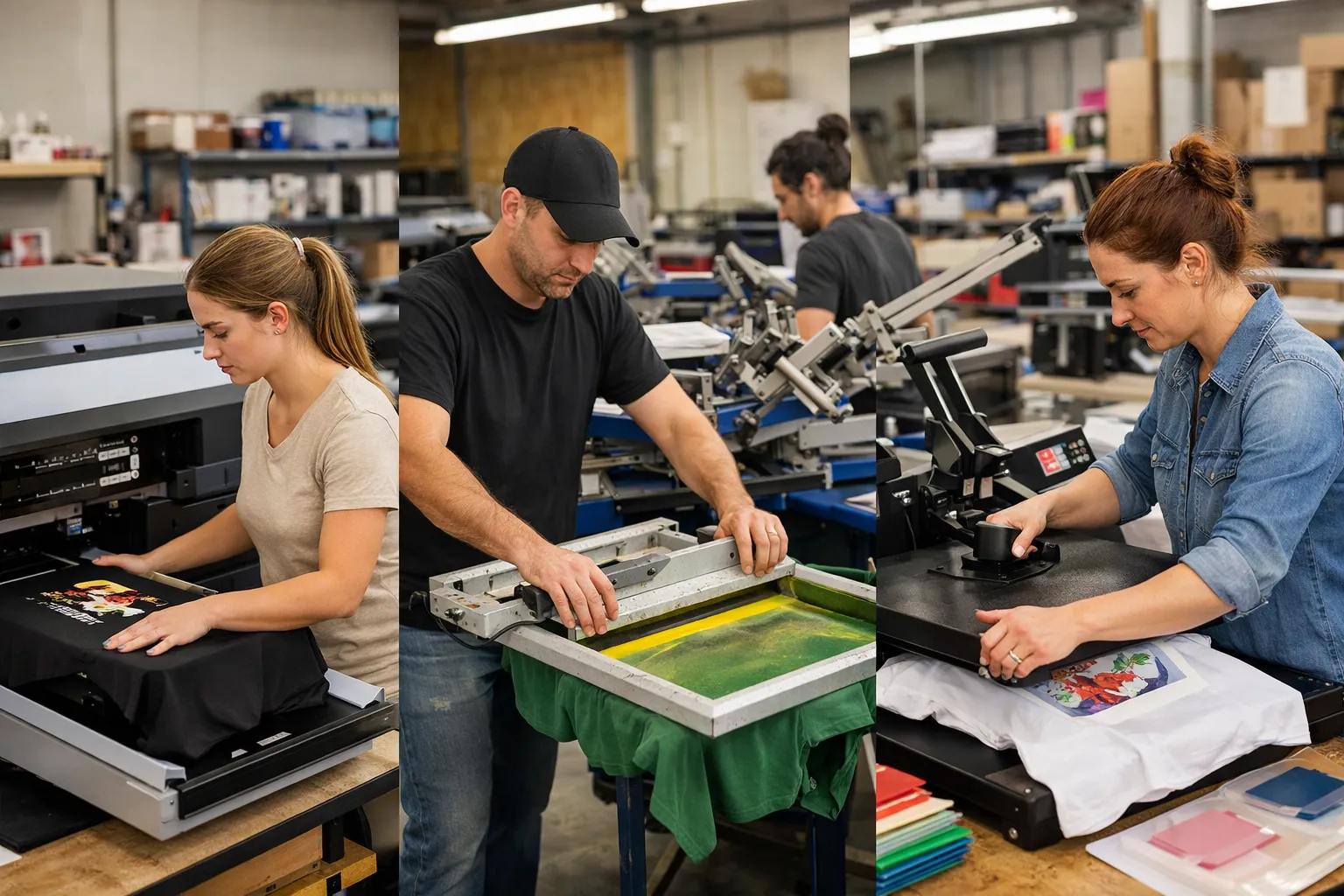
For small orders, DTG and DTF usually win because they need little setup. For medium orders, DTF often balances cost and speed. For large orders, screen printing usually wins because the per-unit cost drops fast once the setup is paid.
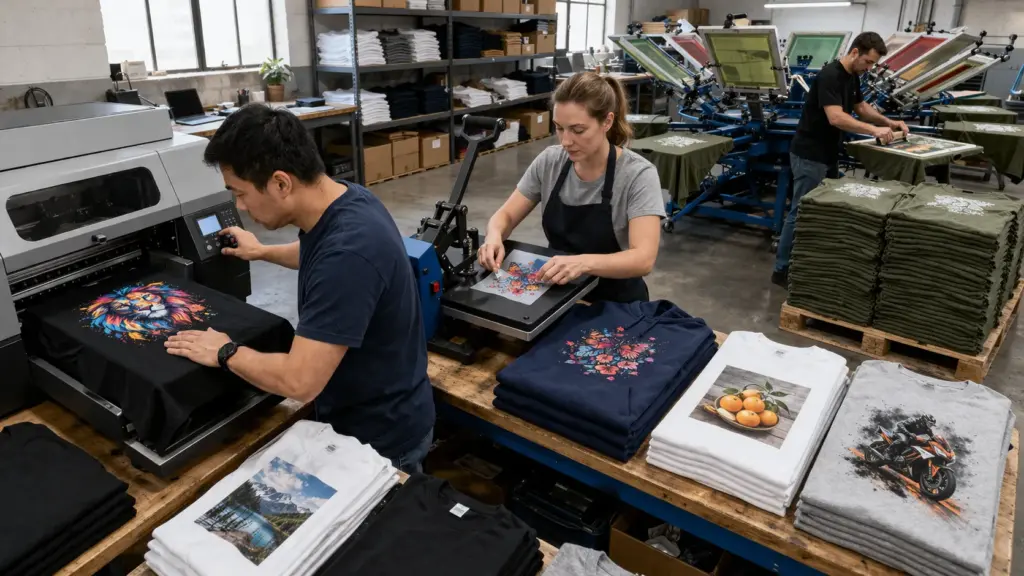
I always start with one question: “How many pieces, and how many repeat orders will follow?” That one answer changes the best method, the risk level, and the final profit. I have watched two orders with the same design end in two very different results, and I do not want you to repeat that pain.
When does screen printing beat DTG for bulk orders?
I have watched a buyer choose DTG for 800 pieces because it felt simple. The buyer paid too much per unit, and the price negotiation turned into a fight.
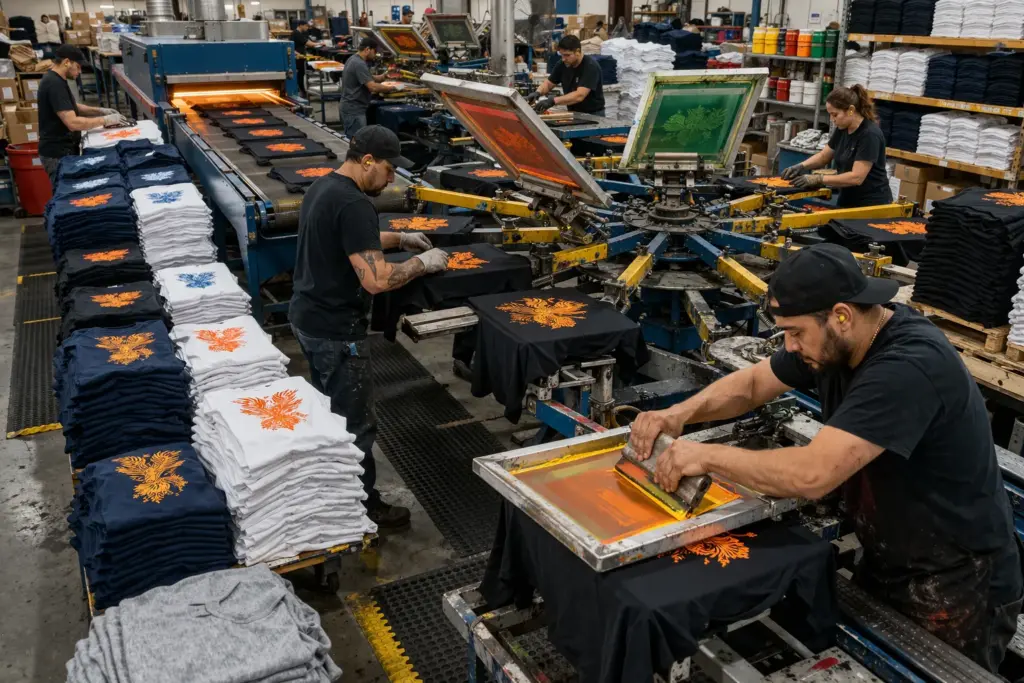
Screen printing is usually the best printing method for bulk clothing when you have stable artwork and enough quantity to spread setup cost. Once you pass the break-even point, screen printing can be the lowest printing cost per unit apparel, with fast production on repeat runs.
What drives the break-even point in real orders?
I treat “screen printing vs digital printing clothing” as a math problem first, and a quality problem second. Screen printing has a fixed setup cost. The setup includes screens, color separation, and press setup time. DTG has almost no setup cost, but it has a higher per-unit cost because every shirt is printed like a single job. That is why DTG vs screen printing looks different at 20 pieces than at 2,000 pieces. I also look at color count and placement count. A one-color chest print breaks even earlier than a six-color front and back print. I remember a buyer like Maria who wanted a low price and strong color. She had 1,200 pieces and only two spot colors. I pushed screen printing, and she later repeated the order in three new colors. The repeat run paid off because the process was stable and fast.
A simple cost model I use for quoting
The numbers below are not a promise. They are a working model I use when I do a fast comparison for buyers. Prices change by country, ink system, and labor, but the shape of the curve stays similar.
| Order size (pcs) | Screen printing (typical) | DTG (typical) | What usually happens |
|---|---|---|---|
| 24 | Setup hurts the unit cost | Higher unit cost, but no setup | DTG often feels cheaper and faster |
| 100 | Setup starts to spread | DTG stays similar | The gap starts to narrow |
| 500 | Low unit cost + speed | DTG stays high | Screen printing usually wins |
| 2000 | Very low unit cost | DTG is rarely competitive | Screen printing is often the default |
When I avoid screen printing even for bulk
I avoid screen printing when the art changes often. I also avoid it when the buyer wants photo detail, soft gradients, or many colors with no compromise. I can do simulated process, but the risk rises and the sampling time grows. I also avoid screen printing when the season is tight and the buyer needs many designs in small quantities. In those cases, I use digital methods, or I split the order by design and method. That is how I keep delivery steady and reduce rework.
Is DTG the better choice for small, detailed, on-demand runs?
I have seen small brands die from inventory. They printed 300 pieces, and they sold 40. The design was good, but the order size was wrong.
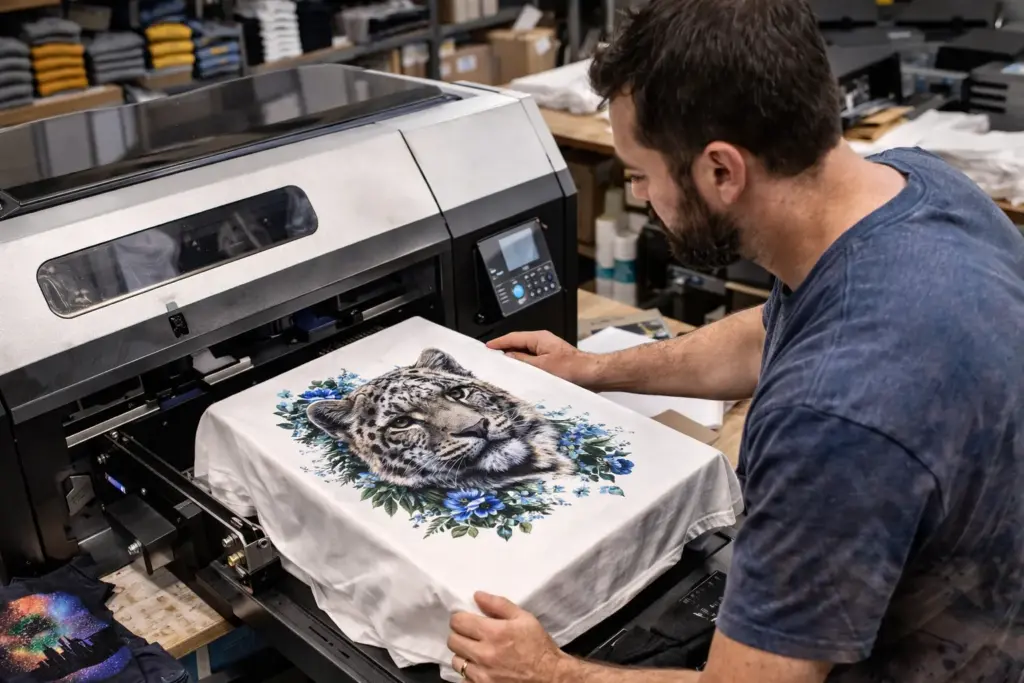
DTG is usually best for small runs and high-detail artwork because it prints directly from the file with minimal setup. If you sell on-demand or you test designs, DTG can reduce risk because you can print only what you need.
What DTG does well, and what it does not
DTG shines when the design has many colors, fine lines, and photo detail. I use DTG when a buyer wants a “no-compromise” look on a few pieces. DTG also fits the workflow of fast sampling. I can print a strike-off without waiting for screens. That matters when a buyer like Maria needs to approve color detail quickly, and she wants to feel the fabric and print hand in one package. But I also set expectations. DTG likes cotton, and it works best on pre-treated garments. DTG on polyester or heavy blends can look dull, and the wash performance can change by ink set and pre-treatment control. I also watch the order mix. If the buyer has 30 designs and 10 pieces per design, DTG can keep the process simple. If the buyer has one design and 600 pieces, DTG can turn into the most expensive path.
I use this table when I explain “DTG vs screen printing” in plain terms. I avoid technical talk because buyers need a decision, not a lecture.
| Need | DTG usually fits when… | Screen printing usually fits when… |
|---|---|---|
| Quantity | Low to medium | Medium to high |
| Artwork | Photos, gradients, many colors | Spot colors, bold shapes, repeatable art |
| Setup time | Very low | Medium to high |
| Repeat orders | Easy, but unit cost stays | Very strong, unit cost drops on repeats |
| Fabric range | Best on cotton | Broad, depends on ink system |
How DTG changes your delivery plan
DTG production speed depends on printer count, operator skill, and curing control. I do not promise a fast bulk timeline on DTG unless I control capacity. I also plan for pretreatment, drying, printing, and curing as a full chain. When I see a buyer push for low unit price and also push for fast delivery, I ask the buyer to choose the priority. I have learned that a clear choice saves the relationship. If the buyer needs speed and scale, screen printing often fits better. If the buyer needs flexibility and detail, DTG often fits better.
Where does DTF fit between DTG and screen printing for apparel?
I have watched buyers get confused by “DTF vs screen printing apparel” because both can look strong on photos. The real difference shows up in cost and fabric range.
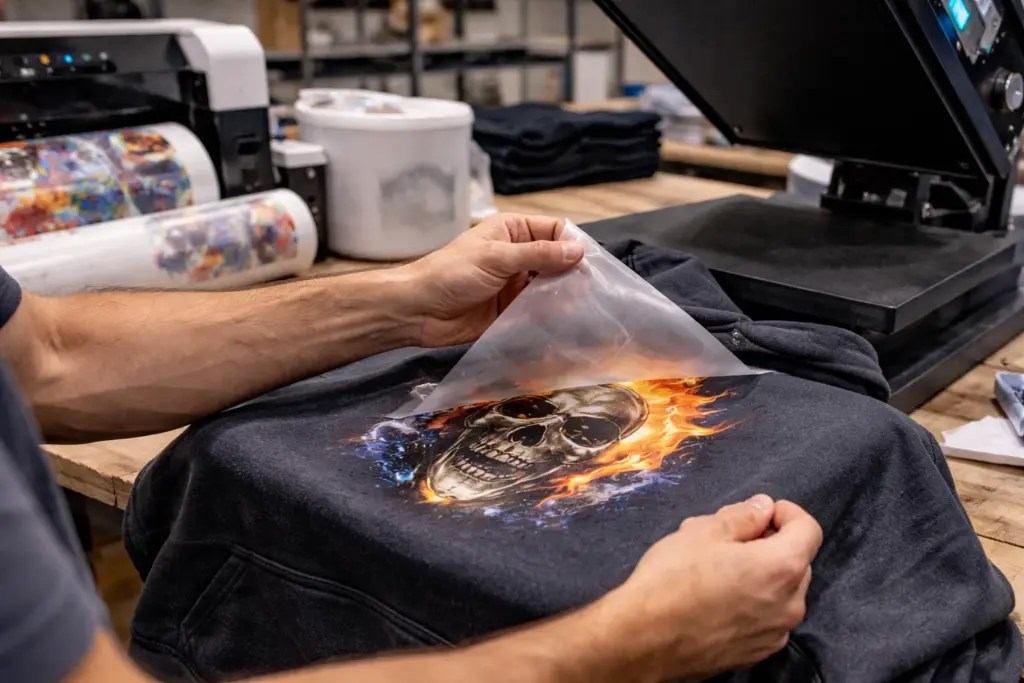
DTF often sits between DTG and screen printing. DTF can handle small and medium orders with lower setup than screen printing, and it can work on more fabric types than DTG. For many buyers, DTF is the practical middle option when they want flexibility and better cost control.
How I explain DTF in one minute
DTF prints the design on a film, adds powder adhesive, and then heat-presses the design onto the garment. I like DTF because I can run many designs without screens, and I can apply the transfers later. That helps when I split production across lines. It also helps when the buyer wants the same design across T-shirts, hoodies, and bags. DTG can struggle on some fabrics, and screen printing can need new setup for each material or placement. DTF gives me a flexible tool, and it can reduce waste on mixed orders. I have used DTF to rescue a tight schedule when a buyer changed artwork late. I printed transfers fast, and I applied them on finished garments without restarting screen prep.
DTF vs DTG printing cost in typical order sizes
I do not sell DTF as “cheaper always.” I sell it as “more predictable for mixed orders.” This table shows how I compare them in quotes.
| Factor | DTG | DTF | Why it matters |
|---|---|---|---|
| Setup cost | Low | Low to medium | Both fit small orders |
| Unit cost curve | Stays fairly flat | Drops with batching | DTF benefits from running transfers in bulk |
| Fabric range | Best on cotton | Wide range | DTF can suit poly blends and outerwear better |
| Hand feel | Soft, ink-in-fiber feel | Can feel like a layer | Feel matters for premium fashion pieces |
| Durability | Good when controlled | Good when applied well | Application pressure and temperature matter |
When I choose DTF over screen printing
I choose DTF when the order has many SKUs and smaller quantities per SKU. I also choose it when the buyer wants a wide fabric range and stable color. I choose it when the artwork has many colors, but the buyer still wants a better unit cost than DTG. I do not choose DTF when the buyer wants the softest feel on lightweight tees, or when the buyer wants the lowest possible cost for a single design in bulk. In those cases, DTG or screen printing can win. I also manage expectations about finish. Some buyers love the clean edges. Some buyers dislike the “patch” feel. I handle that with sampling and wash testing before the buyer commits.
Conclusion
I pick the method by order size, artwork, and repeat potential. DTG fits small and detailed runs, DTF fits mixed and medium runs, and screen printing fits bulk.
Why I Write This
I am Lancy Chia, and I run Truekung in China. I work with more than 200 factory workers, and I support wholesale only. I produce fashion clothes and OEM/ODM programs for brands and supermarkets worldwide. I make women’s fashion, jackets, skirts, dresses, jeans, T-shirts, sweatshirts, down jackets, windbreakers, coats, bags, sportswear, kidswear, and underwear.
I talk to buyers like Maria every week. She cares about quality, and she still needs a competitive price. She also worries about poor communication, late delivery, and fake certificates. I built my process to reduce those risks. I confirm artwork details early. I lock the timeline in writing. I share production checkpoints with photos. I match print methods to order size, so the unit cost stays controlled. I also support logistics planning and payment methods that fit international trade.
If you want a quick recommendation, I can review your order size, fabric, artwork, and target price. I can also suggest a sampling plan that protects your season. You can reach me at [email protected], and you can see my company at https://truekung.com.
Views: 75