A chain store can lose trust fast when one shipment feels perfect and the next one feels cheap. Returns rise, reviews drop, and the buyer gets blamed for problems they did not create.
Chain stores ensure consistent quality by using one clear apparel quality control standard, then checking it at three points: before bulk starts, during bulk, and before shipment. I also lock the standard with a “golden sample,” a factory apparel QC checklist, and basic apparel testing standards.
I learned this the hard way when a “same fabric” reorder arrived and the hand feel changed. The factory said nothing changed. The store felt the change in one touch. I do not let that gap happen again, and I want you to avoid it too.
What Does a Garment Quality Control Process Look Like From Sample to Shipment?
One bad delivery can wipe out the profit of five good ones. The worst part is that the problem often starts early, but the pain shows up late, when the cartons land in your warehouse.
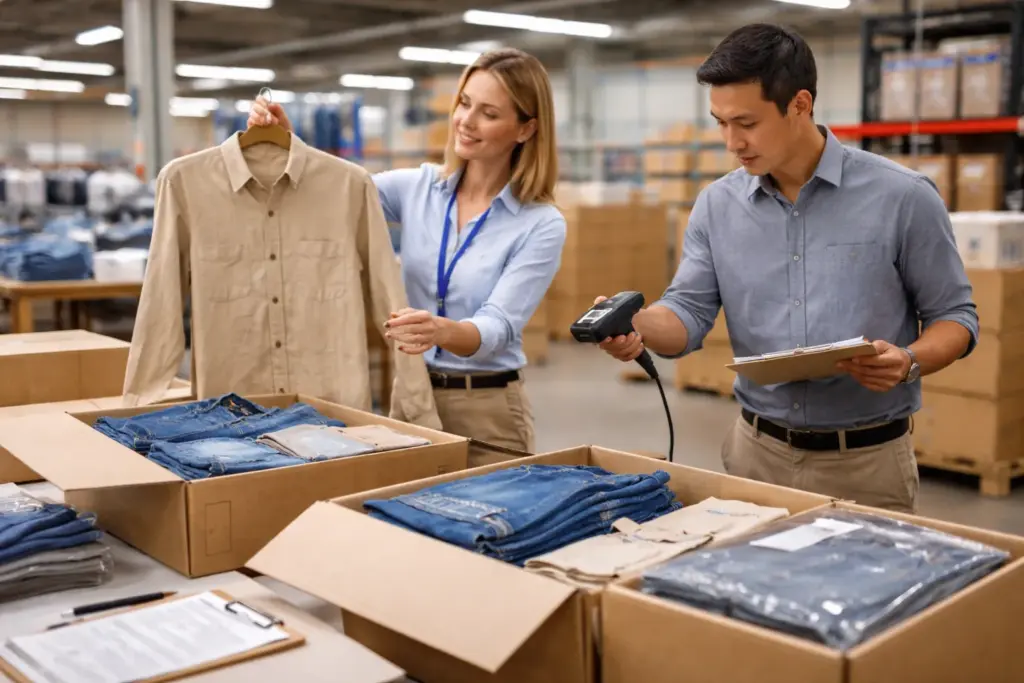
A practical garment quality control process has a simple flow: confirm the standard with a sealed sample, approve bulk materials, check sewing in-line, check finishing and packing, then run a final inspection and testing before loading.
Align the standard before cutting starts
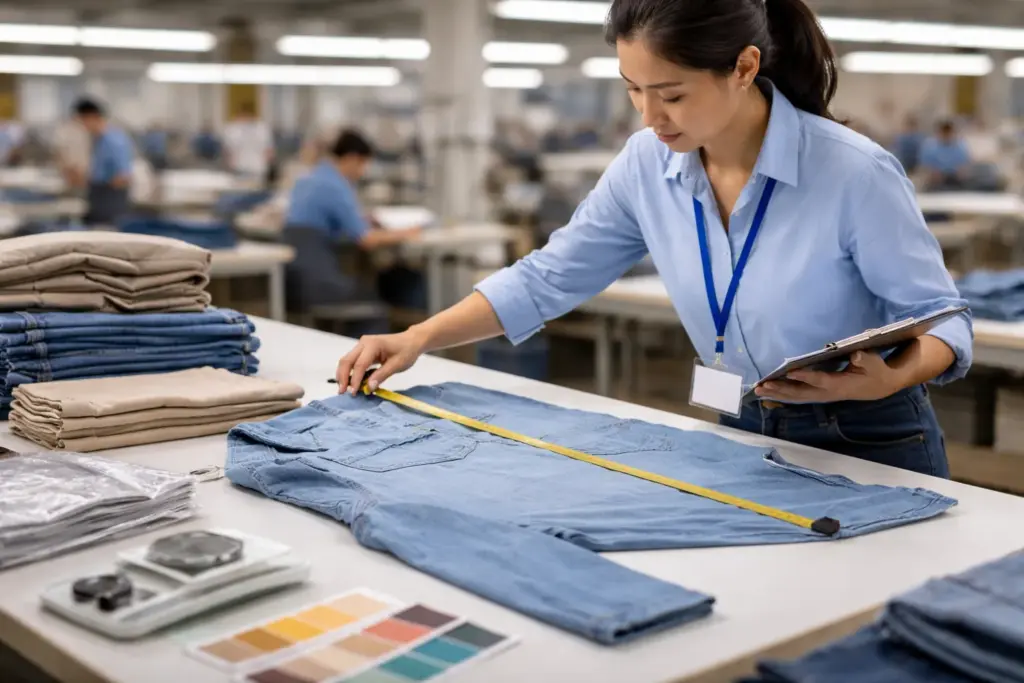
I start with one “golden sample” that I seal with photos, measurements, fabric notes, trims, and stitch density. I also write tolerances that a factory can measure, not feelings like “premium.” I ask the factory to confirm bulk fabric color, weight, and shrinkage before cutting. If the fabric batch changes, I treat it like a new risk, because product consistency in clothing starts with the roll, not the sewing line.
Control during bulk production
I do not wait for the final inspection to discover drift. I set bulk production quality control points: first output check, in-line checks every set number of pieces, and a mid-production audit. I also ask for quick videos from the line. I watch seams, puckering, and label placement. I catch small issues while the operator can still adjust.
Lock quality before shipment
I run final inspection on packed goods, not loose pieces. I also verify carton marks, polybag warnings, and size ratios. If the store needs exact folding, I check it now, because a messy presentation becomes a “quality” complaint in retail.
| QC stage | What I check | Who owns it | What I collect |
|---|---|---|---|
| Pre-production | sealed sample, measurement chart, fabric batch, trim approval | buyer + factory QA | signed spec, photos, lab results |
| In-line | stitching, seams, logo placement, size labels, workmanship | factory QC + my 3rd party | in-line report, defect photos |
| Final | AQL sampling, packing, carton counts, appearance | 3rd party inspector | final report, carton list, pass/fail |
When I run this flow, I stop arguing about opinions. I only talk about evidence. Then the factory can fix problems fast, and the chain store gets the same result across every delivery.
How Do I Build an Apparel QC Checklist Factory Teams Actually Follow?
A checklist can look perfect and still fail in real production. If the checklist is long, unclear, or not measurable, the line will ignore it and the buyer will still get surprises.
I build an apparel QC checklist factory teams follow by keeping it short, measurable, and tied to the sealed sample. I include clear defect examples, pass-fail rules, and a simple way to record results during bulk production.
Build one checklist, not ten
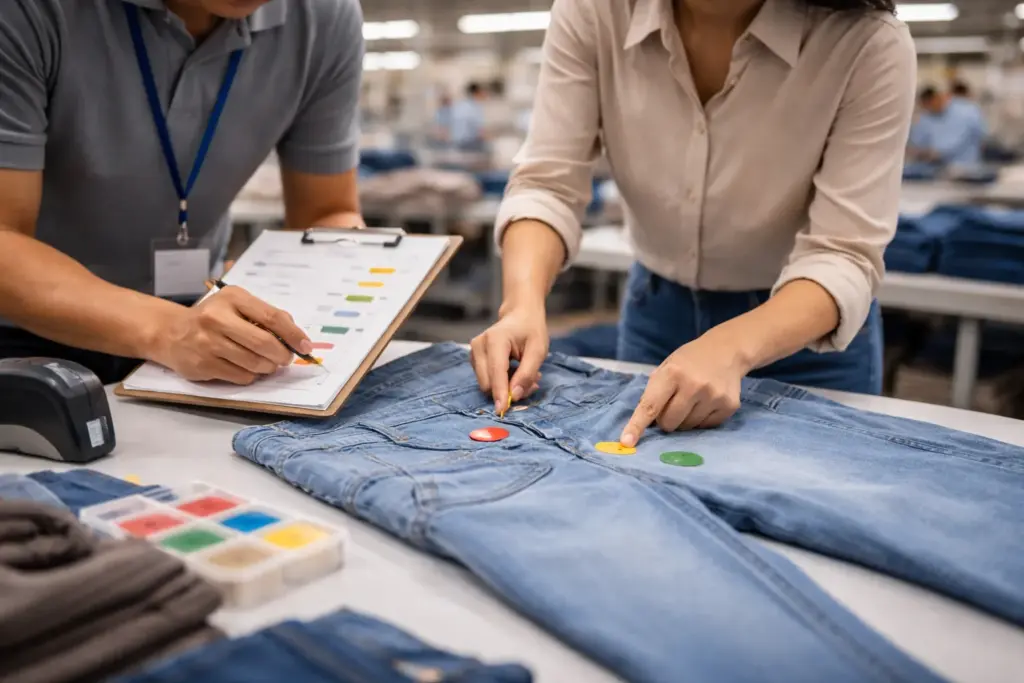
I keep one master checklist for the style. I do not split it into separate documents for cutting, sewing, finishing, and packing. I put the sections in one file so no one can claim they used a different version. I also add photos from the approved sample. A photo ends many debates.
Set measurable tolerances
I write tolerances that match retail reality. I define what I accept on chest width, length, sleeve, and waistband. I define how I measure. I also define shade variation limits by panel and by garment, because color is a top complaint in chain stores. If the factory uses different measuring methods, I lose product consistency in clothing. I do not allow that.
Make it auditable
I ask the factory to mark defects and show rework decisions. I want defect codes, not only “ok.” If I see repeating defects, I ask for root cause and corrective action. This is clothing manufacturer quality assurance in real life. It is not a slogan. It is a loop.
| Checklist section | What I write | How the factory checks | What I accept |
|---|---|---|---|
| Measurements | key points + method + tolerance | measure on flat table, same tape | within tolerance, no bias |
| Workmanship | seam type, SPI, loose threads, puckering | visual + touch under light | no critical defects |
| Trims/labels | zipper, button strength, label position | pull test + position check | secure, aligned, readable |
| Fabric/print | shade, print placement, defects | compare to swatch, light box if possible | no obvious mismatch |
| Packing | folding, polybag, barcode, carton mark | packed sample review | store-ready, correct counts |
I still remember a season when a supplier changed a zipper batch without telling me. The zippers looked the same, but the puller edge scratched hands. My checklist now includes zipper feel and pull test, because I never want that call again.
Which Apparel Testing Standards and Factory Inspection Clothing Steps Prevent Costly Returns?
Some defects are visible in seconds. Some defects hide until the customer washes the garment once. If you only inspect appearance, you miss the defects that create refunds two weeks later.
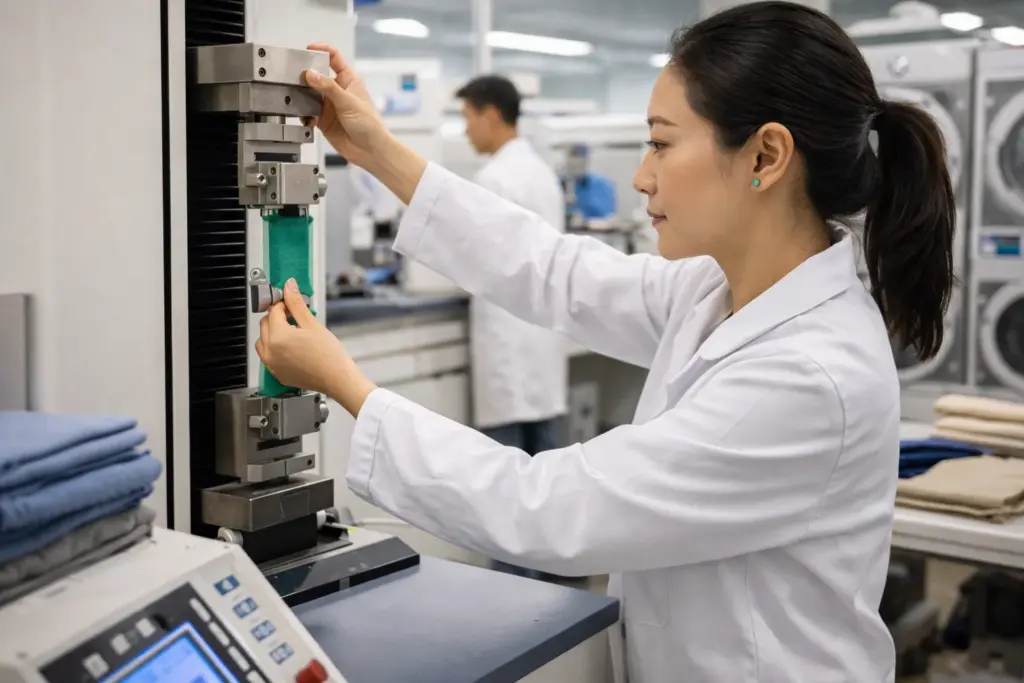
I prevent costly returns by mixing visual inspection with basic apparel testing standards, then using factory inspection clothing visits to verify the factory can repeat the same results in bulk. I focus testing on risk areas like colorfastness, shrinkage, and seam strength.
Use risk-based testing
I do not test everything the same way. I test based on fabric type, print method, and the market. For dark colors, I raise the bar on crocking and wash colorfastness. For knits, I focus on pilling and shrinkage. For kidswear, I focus on small parts and safety. This approach keeps costs controlled, and it protects the biggest risks first.
Run factory inspection clothing visits that match reality
I do not visit only the showroom. I walk the cutting floor, sewing lines, and packing area. I check incoming fabric storage, shade segregation, and needle control. I also ask how they handle rework. If the factory hides rework, it comes back later as mixed quality in the same carton.
Use AQL smartly in final inspection
I use AQL-based sampling for the final check, but I do not treat it like magic. If I see one critical defect, I stop and expand sampling. If I see repeating major defects, I ask for 100% sorting on that defect. I also keep a defect trend sheet across deliveries, because chain store quality is a long game.
| Test or check | What it protects | When I require it | Typical return it prevents |
|---|---|---|---|
| Shrinkage | size stability after wash | new fabric, new mill, new finish | “size changed” complaints |
| Colorfastness | dye transfer and fading | dark colors, prints, denim | staining, fading reviews |
| Seam strength | seam break in wear | stretch fabrics, tight fits | split seams, refunds |
| Pilling | ugly surface after wear | sweaters, brushed knits | “looks old” returns |
| Needle/metal control | safety and compliance | kidswear, sensitive markets | safety claims, recalls |
When I combine bulk production quality control with testing, I reduce surprise. I also reduce conflict. The buyer and the factory can both see the same data, and the store can keep consistent quality across deliveries.
Conclusion
I keep chain store quality consistent by sealing one standard, enforcing it with a clear QC checklist, and checking it with in-line control, final inspection, and risk-based testing.
Why I Write This
I am Lancy Chia from Truekung in China. I run wholesale apparel production with OEM/ODM support. My factory has more than 200 workers, and I have 20 years of export experience. I supply fashion womenswear, jackets, dresses, jeans, T-shirts, sweatshirts, down jackets, windbreakers, coats, bags, sportswear, kidswear, and underwear. I work with brands and supermarkets in markets like the Netherlands, Denmark, Belgium, Norway, the UK, the USA, Germany, Australia, Thailand, Turkey, Italy, Russia, and Saudi Arabia. You can reach me at [email protected], and you can see my work at https://truekung.com.
Views: 74