
Kiedyś myślałem: “bluzy”Wszędzie oznaczało to samo. Potem amerykański Kupujący poprosił o bluzy, a mój zespół je wysłał bluzy z kapturem. Koszt powrotu był bolesny.
W USA “sweatshirt” zazwyczaj oznacza bluzę bez kaptura lub bluzę z okrągłym dekoltem, często z polaru. “Hoodie” (lub “hoody”) to bluza z kapturem, a “zip-up hoodie” ma zamek błyskawiczny. Amerykanie nadal mogą mówić „sweter” w potocznym języku, ale etykiety produktów zazwyczaj odnoszą się do bluzy z kapturem.
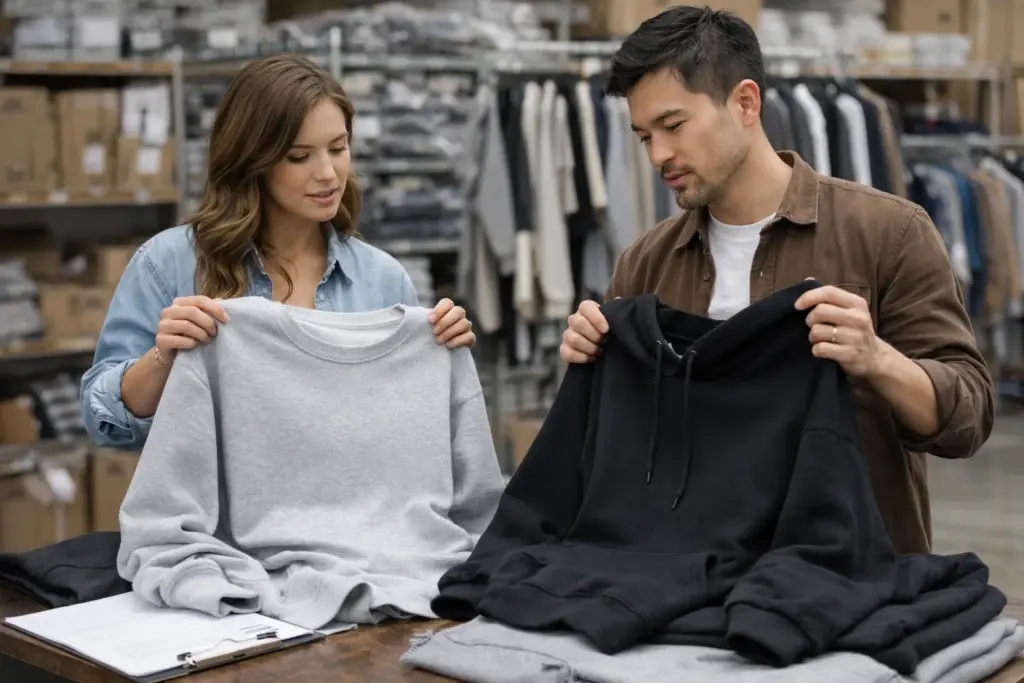
Najtrudniejsze nie jest samo słowo. Najtrudniejsze jest to, gdy słowo zmienia się w linię zamówienia, notatkę z paczki technicznej, nazwę na metce i opis celny. Chcę pokazać Wam proste zasady, których używam, aby kolejne zamówienie nie poszło na marne. Jest też jedna pułapka w nazewnictwie, która wciąż łapie doświadczonych kupujących.
Czy bluza z kapturem to po prostu bluza z kapturem?
Nadal słyszę “koszulka i bluza z kapturem” używane jako jeden zestaw. Potem przychodzi próbka, a kupujący mówi, że kaptur jest nieodpowiedni. Problem zaczyna się od jednego, potocznego słowa.
W amerykańskim języku angielskim “hoodie” to bluza z kapturem. Większość Amerykanów najpierw zrozumie “hoodie”, a dopiero potem „hoody”, a oba określenia oznaczają ten sam element garderoby z kapturem.
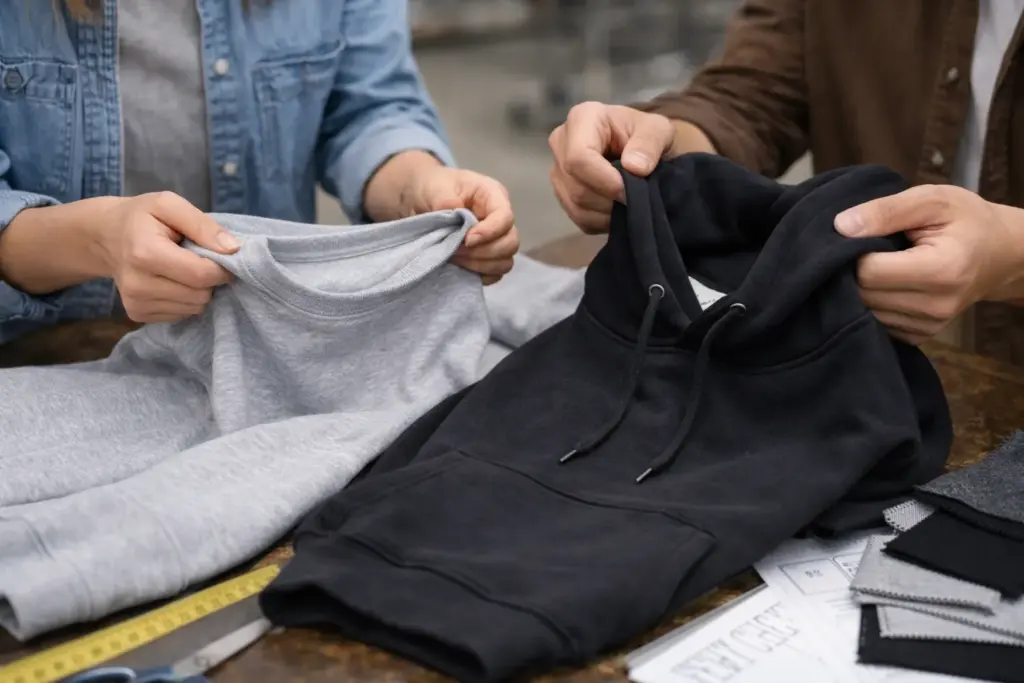
Podstawowe definicje, których używam w arkuszach specyfikacji
Pisząc nazwy produktów w USA, staram się być dosadny. “Bluza” to kategoria podstawowa. “Bluza z kapturem” to wersja z kapturem. “Koszulka z kapturem” lub “koszulka z długim rękawem i kapturem” nie jest bluzą w większości amerykańskich sklepów. Bliżej jej do “koszulki z kapturem” lub “koszulki z długim rękawem i kapturem”. Ta różnica ma znaczenie, ponieważ tkanina Gramatura i drapowanie są różne. Unikam też na metkach określenia “hoody bez kaptura”. Amerykanie mogą szukać tego w internecie, ale nie podoba im się ono jako nazwa produktu. Nazywam to “bluzą z okrągłym dekoltem” lub “bluzą przez głowę”. Kiedy kupujący mówi “sweter z kapturem dla mężczyzn”, zadaję sobie w myślach jedno pytanie: czy chodzi o dzianinę na sweter, czy o materiał na bluzę polarową? W USA “sweter” często oznacza dzianinę, a “hoodie” – polar w stylu bluzy.
Szybka zasada zapobiegająca pomyłkom w kodzie 80%
| Co ma | Jak to zazwyczaj nazywają Amerykanie | Notatki, które umieściłem w moim zeszycie ćwiczeń |
|---|---|---|
| Bez kaptura, sweter | Bluza z okrągłym dekoltem | “bluza bez kaptura damska” tutaj pasuje |
| Kaptur, sweter | Bluza z kapturem | “bluza z kapturem” zależy od kaptura |
| Kaptur + zamek błyskawiczny | Bluza z kapturem zapinana na zamek | Również “kurtka z kapturem” w potocznym języku |
| Bez kaptura i zamka | Bluza rozpinana / kurtka dresowa | “zapinany na suwak bez kaptura” to popularne wyszukiwanie |
Gdy to rozumiem, “amerykański kaptur” i “bluza z kapturem usa” przestają być niejasnymi terminami, a stają się wyraźnymi grupami SKU.
Jak Amerykanie nazywają bluzy bez kaptura?
Spotkałem kupujących, którzy pytali o “sweter bez kaptura”, mając na myśli bluzę z polaru z okrągłym dekoltem. Spotkałem też kupujących, którzy pytali o “kurtkę zapinaną na zamek bez kaptura”, mając na myśli bluzę z zamkiem błyskawicznym. To samo zdjęcie może mieć dwie nazwy.
W USA bluza bez kaptura jest najczęściej nazywana “bluzą z okrągłym dekoltem” lub po prostu “sweatshirt”. Jeśli ma zamek błyskawiczny, często nazywa się ją “bluzą zapinaną na suwak” lub “bluzą z pełnym zamkiem”.”

Nazwy, które widzę na amerykańskich zamówieniach
Najbardziej stabilnym terminem jest “okrągły dekolt”. To jest normalny okrągły dekolt. Jeśli kupujący chce modelować modę, może powiedzieć “pulower” lub “sweter pullover”, ale ja nadal potwierdzam materiał. Dla kobiet widzę “damskie bluzy bez kaptura”, “bluza damska bez kaptura” i “bluza bez kaptura dla kobiet”. Są to frazy wyszukiwania, więc używam ich w tagach ofert, ale zachowuję przejrzystą nazwę produktu: “Damska bluza z okrągłym dekoltem”. Dla mężczyzn widzę “męska bluza bez kaptura” i “męska bluza zapinana na suwak bez kaptura”. W przypadku produktów zapinanych na suwak Amerykanie mówią również “damska bluza z pełnym zamkiem bez kaptura” lub “damska bluza z pełnym zamkiem bez kaptura”. Jeśli wersja z zamkiem wygląda bardziej jak odzież wierzchnia, niektórzy kupujący nazywają ją “bluzą bez kaptura” lub “bluzami bez kapturów”. To nadal jest w porządku, ale na kartonach i dokumentach umieszczam “bluza z pełnym zamkiem”, aby zmniejszyć liczbę pytań celnych.
Jak mapować style na nazwy w arkuszu fabrycznym
| Szczegóły stylu | Najlepsza nazwa produktu w USA | Popularne frazy wyszukiwania kupujących |
|---|---|---|
| Ściągacz przy szyi i ściągacz u dołu | Bluza z okrągłym dekoltem | “bluzy bez kaptura” |
| Zamek błyskawiczny na ćwierć, bez kaptura | Bluza z zamkiem błyskawicznym na ćwierć | “bluza z kapturem zapinana na suwak” (styl, nie nazwa) |
| Pełny zamek błyskawiczny, bez kaptura | Bluza z zamkiem błyskawicznym | “kurtka zapinana na zamek bez kaptura” |
| Długa linia, moda | Sukienka-sweter | “kaptur sukienki” gdy ma kaptur |
Tutaj również pozostawiłem frazę przewodnią “damska bluza rozpinana bez kaptura”, a tytuł pozostał prosty.
Hoody czy hoodie? Jak się to pisze po amerykańsku?
Kiedyś zobaczyłem “hooides” w e-mailu od kupującej. Prawie ją poprawiłem. Potem zobaczyłem tę samą literówkę na zrzucie ekranu z paska wyszukiwania klienta. To mnie czegoś nauczyło.
Amerykanie zazwyczaj piszą “hoodie”. “Hoody” jest zrozumiałe, ale rzadziej występuje w nazwach produktów. Jeśli chcesz uzyskać najbezpieczniejszą pisownię dla rynku amerykańskiego, użyj “hoodie”.”
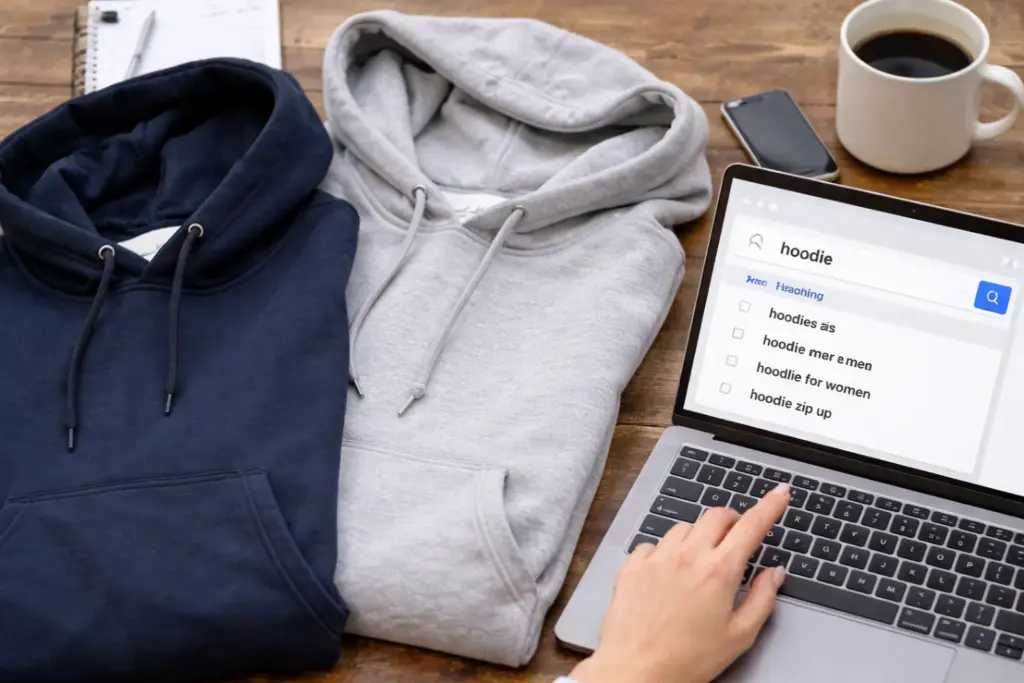
Co robię na etykietach, listach i kartonach
Pisownię traktuję jako narzędzie sprzedaży, a nie jako dyskusję gramatyczną. Na metkach i etykietach wewnętrznych używam słów “hoodie” i “sweatshirt”. W ofertach dodaję również popularne warianty jako słowa kluczowe w tle: “hoody or hoodie”, “hoody vs hoodie” i “how do you write hoodie”. Robię to samo ze słowami “sweatshirt spelling”, a nawet “sweathshirt” lub “sweet shirt”, ponieważ kupujący piszą szybko. Nie umieszczam tych błędów na pierwszej stronie, ale zachowuję je w zestawie słów kluczowych. Kiedy kupujący pyta “zdefiniuj hoodie”, odpowiadam jednym zdaniem: “Bluza z kapturem to bluza z kapturem”. Następnie pytam o zamek błyskawiczny, podszewkę i wagę. Jeśli chcą “sweter z futrzanym kapturem” lub “sweter z kapturem”, sprawdzam, czy jest to podszewka z koziego futra, sztuczne futro na kapturze, czy dzianinowy korpus swetra. W USA słowo “futro” jest używane luźno w potocznym języku, więc przekształcam to w jasną specyfikację materiałową.
Mój krótki przewodnik po pisowni dla mojego zespołu
| Termin | Najlepszy tytuł produktu dla USA | Gdzie nadal używam innych wariantów |
|---|---|---|
| Bluza z kapturem | Tak | Zawsze w tytułach i etykietach |
| Bluza z kapturem | Czasami | Tagi, notatki wewnętrzne, pola wyszukiwania |
| Podkoszulek | Tak | Tytuły, etykiety, kartony, dokumenty |
| Sweter | Zależy | Tylko dzianiny lub luźne rozmowy |
Dzięki temu moja lista “nazw bluz z kapturem” jest przejrzysta, a katalog łatwy do przeglądania.
W jaki sposób zwyczaje regionalne i sezonowe zmieniają nazwę?
Wysyłam do klientów z różnych części USA i wciąż spotykam się z różnymi nawykami. Niektórzy mówią “sweter” na określenie niemal każdej ciepłej bluzy. Inni mówią “pulower”, jakby to była główna kategoria.
Amerykanie zazwyczaj wybierają “bluzę” i “bluzę z kapturem”, ale region i pora roku mogą skłaniać ludzi do wyboru “puloweru”, “kurtki”, a nawet “swetra”.”

Wschodnie Wybrzeże, Zachodnie Wybrzeże i codzienne rozmowy o sklepie
Czasami słyszę “sweter ze wschodniego wybrzeża” od zagranicznych kupujących, którzy poznali to słowo dzięki treściom o modzie ulicznej. W prawdziwym języku zamówień “bluza” nadal wygrywa. Na Zachodnim Wybrzeżu ludzie noszą lżejsze warstwy i mówią o “amerykańskiej letniej bluzie”, co często oznacza lekką bluzę z okrągłym dekoltem z frotte lub cienką “koszulkę z kapturem z długim rękawem”. W niektórych katalogach pojawia się “płaszcz z kapturem” lub “długa kurtka z kapturem”, ale to bardziej kwestia stylu i długości niż kategorii. W B2B utrzymuję stabilną kategorię, a następnie dodaję opis mody: “długa bluza z kapturem zapinana na zamek” lub “bluza z kapturem”. Jeśli kupujący chce “koszulę zapinaną na guziki z kapturem” lub “kurtkę z dołączonym kapturem”, dzielę ją w pakiecie technicznym na dwie części: podstawowy element garderoby i dołączony kaptur lub wkładkę do kaptura. Pozwala to uniknąć niespodzianek związanych z próbkami.
Notatki dotyczące tłumaczeń, które ułatwiają pozyskiwanie transgraniczne
Czasami problem z nazewnictwem nie leży po angielsku. To drugi język kupującego. Oto, co zapisuję w swoich notatkach:
| Prośba o język | Termin potoczny | Co wyjaśnię z powrotem |
|---|---|---|
| “sweatshirt en espanol” | “sudadera” | Z kapturem czy bez? Z zamkiem czy wkładana przez głowę? |
| “bluzy z kapturem po hiszpańsku” | “sudadera con capucha” | Szczegóły dotyczące wagi i podszewki |
| “bluza z kapturem po arabsku” | “الهودي” | Te same środki klarujące, plus terminy klasyfikacji |
Ma to znaczenie, gdy kupujący wyszukuje “hoodie norge” lub “hoodie with long sleeves” i spodziewa się, że na metce będzie nazwa USA. Chcę, aby etykieta była dopasowana do rynku, nawet jeśli wyszukiwanie pochodzi spoza USA.
Wniosek
W Ameryce “bluza” zazwyczaj oznacza bez kaptura, a “hoodie” oznacza z kapturem. Kiedy ograniczam nazewnictwo do jasnych funkcji, zamówienia są realizowane szybciej, a zwroty spadają.
Dlaczego to piszę
Prowadzę Truekung, hurtownię odzieży w Chinach, zatrudniającą ponad 200 pracowników. Produkuję odzież modową i produkty OEM/ODM dla marek i supermarketów na całym świecie, mając 20 lat doświadczenia w eksporcie.
Moje imię: Lancy Chia
Adres e-mail: [email protected]
Strona internetowa: https://truekung.com
Widoki: 277