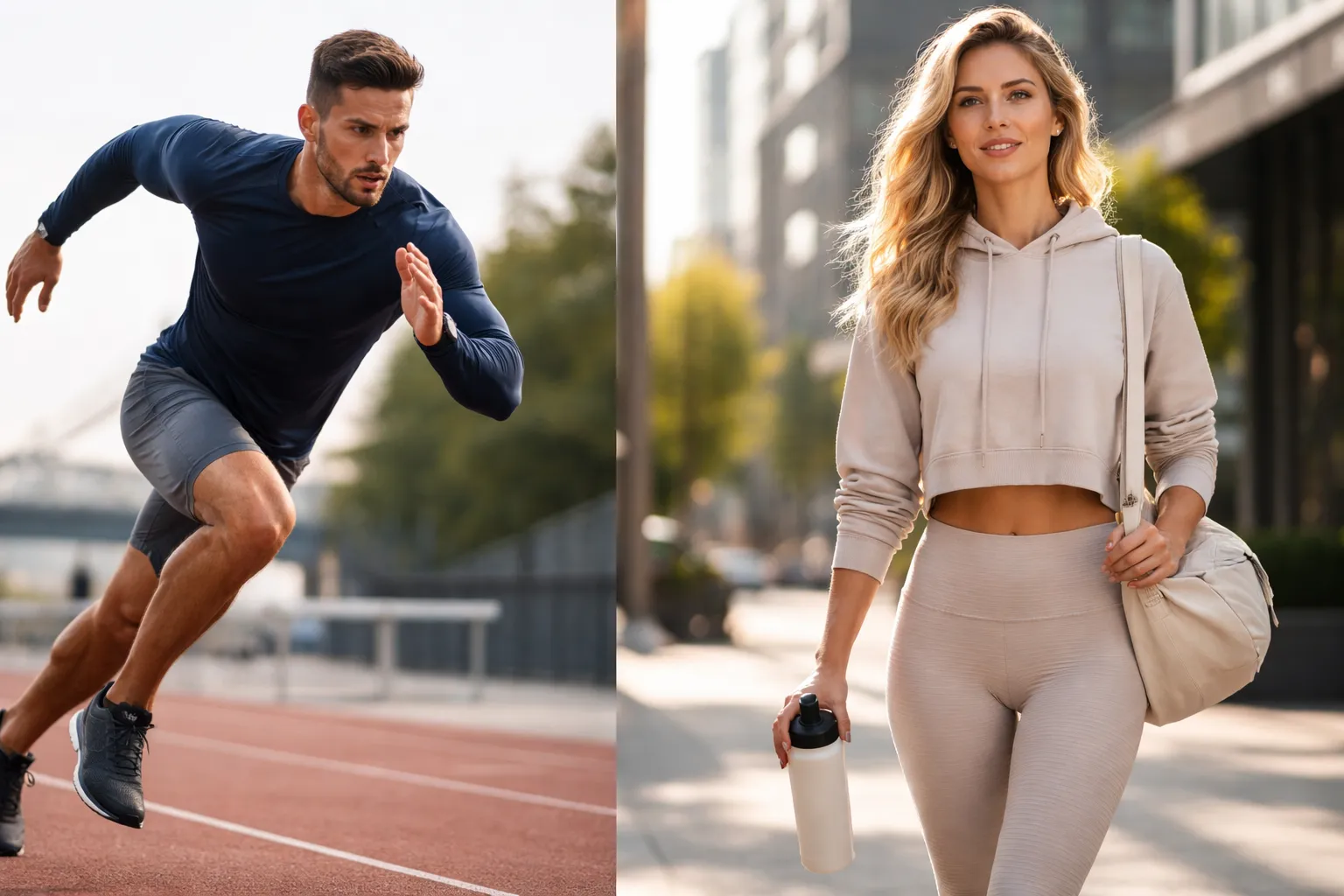


I see buyers lose money when they mix up performance and athleisure. I have watched returns rise fast. I have also seen one clear choice fix a weak season.
Performance sportswear apparel is built for sweat, speed, and strain, so I focus on tests, fit, and fabric specs. Athleisure is built for daily comfort and style, so I focus on hand-feel, drape, and branding. I choose by end-use first, then price, then logistics.

I still remember a buyer who asked me for “high performance sportswear” and then sent me a mood board full of street outfits. I almost made the same mistake by saying yes too fast. I stopped and asked one simple thing: “Where will your customer wear it?” That one line saved the project, and it can save yours too. If I get this wrong, I feel it in delays, claims, and missed seasons, so I treat this decision like a core sourcing step.
What makes athletic performance apparel truly “performance” in real use?
I see many catalogs call everything “performance.” I also see buyers trust that word and then face complaints. I do not want that risk on my production line.
Athletic performance apparel is clothing designed to improve or support sport activity through function, so I look for moisture control, stretch recovery, abrasion strength, and stable sizing after wash. I treat “performance” as measurable specs, not a marketing label.
What I test before I call it sports performance apparel
I treat sports performance apparel like equipment. I ask my team to measure what the wearer will feel after 30 minutes of heat, motion, and friction. I also match the test to the sport, because sportswear competition is not the same in running, tennis, and gym training.
| Spec I check | Why I check it | What often fails |
|---|---|---|
| Wicking and dry time | I want the skin to feel drier | Cheap finishes that wash out |
| Stretch and recovery | I want knees and elbows to hold shape | Fabric that bags after wear |
| Seam strength | I want seams to survive pulls | Weak thread or wrong stitch |
| Pilling and abrasion | I want clean surface after friction | Brushed knits without control |
| Colorfastness | I want stable dye after sweat and wash | Dark colors that bleed |
How I position high performance sportswear on a product sheet
I use simple claims that I can prove. I also avoid vague phrases that sound good but cause disputes. I have learned this from OEM/ODM orders where a buyer’s customer base pushes products hard.
| Claim style | Better for | Example wording I use |
|---|---|---|
| Measurable | High performance apparel | “Dry time under X minutes in lab method” |
| Use-case based | High performance sports and apparel | “Built for interval training and indoor heat” |
| Comfort based | Borderline athleisure | “Soft touch with stable stretch” |
When a buyer like Maria asks for performance apparel brands as a benchmark, I do not argue about names. I ask what the benchmark product does well. Then I copy the function goal, and I avoid copying any protected design. I keep the focus on the specs that win in the field.
When is athleisure the smarter product than performance sportswear?
I see brands chase “high performance sports apparel” because it sounds premium. I also see them sit on stock because the customer only wanted comfort. I do not want you to pay for features your buyer will not notice.
Athleisure is casual wear inspired by sportswear, so I focus on comfort, easy care, and a clean look that works from home to street. I treat athleisure as lifestyle clothing first, and sport clothing second.
How I separate athleisure from high performance sports apparel on the line
I start with the wearer’s day. I picture where they sit, walk, and post photos. Then I decide where to spend the cost.
| Factor | Athleisure focus | Performance focus |
|---|---|---|
| Feel | Soft, smooth, cozy | Cool, dry, supportive |
| Fit | Relaxed, flattering | Locked-in, stable |
| Fabric | Cotton blends, soft poly, brushed knits | Technical poly, nylon blends, elastane control |
| Details | Minimal seams, clean lines | Strategic seams, ventilation, reinforcements |
| Care | Easy wash, low fuss | Care instructions matter more |
What I look for in an athleisure brand logo and trim set
I have seen an athleisure brand logo lift sell-through more than an extra fabric feature. I also see mistakes when logos crack or peel after wash. So I match the decoration method to the fabric and the target price.
| Logo method | Best use | Risk I watch |
|---|---|---|
| Embroidery | Fleece, heavier knits | Stiff hand-feel on thin fabric |
| Silicone / TPU | Leggings, sleek looks | Peeling if heat or glue is wrong |
| Heat transfer | Quick small runs | Cracking after repeated stretch |
| Woven label | Premium casual sets | Scratchy edges if poorly cut |
I also think about channel. If you sell through social, athleisure needs a strong look on camera. If you sell through sport shops, performance sports brands win with proof. I have produced both, and I see the buyer win when the product matches the channel story.
How do I choose materials, MOQ, and suppliers for high performance sportswear vs athleisure?
I run a factory, so I feel the cost of wrong choices early. I also see buyers lose time when a supplier says “yes” to everything. I prefer a clean process that protects delivery.
I choose by defining the end-use, then locking the fabric and trims, then setting QC checkpoints, and only then confirming price and lead time. For high performance sportswear, I put more budget into testing and stability. For athleisure, I put more budget into hand-feel and consistency.
My sourcing checklist for performance sportswear apparel
I treat performance sportswear apparel as higher risk because claims are easy to challenge. I also plan the schedule around lab time, bulk approvals, and size stability checks. When I work with overseas buyers, I keep communication tight because time zones and shipping windows can break a season.
| Step I lock | Performance sportswear | Athleisure |
|---|---|---|
| Fabric approval | Lab dips and function tests | Hand-feel and color match |
| Fit approval | Movement test on body | Mirror fit and comfort |
| QC focus | Seams, stretch recovery, shrinkage | Shade, pilling, stitching neatness |
| Certification risk | Higher, because buyers ask more | Medium, depends on market |
| Common delay | Test redo or fabric re-order | Shade issues or trim delays |
How I think about “best brands for high-performance sportswear” without copying them
I study what leading performance sports brands do, but I do it in a safe way. I focus on construction logic, fabric category, and wear feedback. I do not copy trademark looks. I also tell buyers the truth: a “high performance sportswear” feel costs more, and it needs a tighter tolerance.
| What I benchmark | What I do with it | What I avoid |
|---|---|---|
| Fabric weight and stretch | I match the functional target | I avoid copying unique textures |
| Stitch type and placement | I choose the right stitch for stress | I avoid signature seam maps |
| Customer complaints | I build preventive QC points | I avoid making false claims |
When Maria worries about forged certificates, I show traceable documents from the source and I keep records by order. When Maria worries about delayed delivery, I plan buffers and I confirm fabric lead times before I accept the PO. I have learned that trust is a production asset, and I protect it like inventory.
Conclusion
I make better margins when I treat performance as proven specs and athleisure as daily comfort and branding, and I source each with the right tests, trims, and timelines.
Why I Write This
I am Lancy Chia, and I run Truekung in China. I make fashion clothes for wholesale buyers only. I lead OEM/ODM production with a factory team of over 200 workers. I ship to markets like the UK, USA, Germany, and Australia. If you want to develop athletic performance apparel or athleisure at stable quality and competitive pricing, I can support your next collection. You can reach me at [email protected], and you can find my work at https://truekung.com.
Views: 61


