Rayon is a widely used textile fiber, but do you know how to differentiate its various types? According to the U.S. Federal Trade Commission (FTC) fiber classification, Rayon refers to fibers made from regenerated cellulose molecules, where the hydrogen content in the hydroxyl group does not exceed 15%. It is a general term for cellulose fibers, and its Chinese translation is “人造丝” (Rayon).
Types of Rayon
Rayon fibers are classified into different categories based on their production methods. The main types include:
1. Viscose Rayon (Viscose)
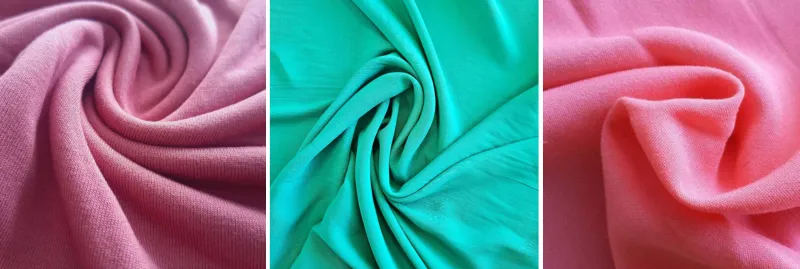
- The most common type of Rayon worldwide, produced using viscose technology.
- It includes:
- Viscose filament (also known as filament rayon)
- Cotton-type rayon
- Wool-type rayon
2. Cupro Rayon (Cupro/Bemberg)
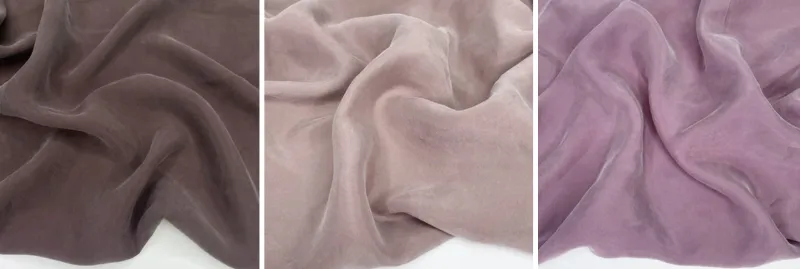
- A more refined high-end Rayon variant.
- Offers a smoother texture and is often used in luxury textiles.
3. High-Wet-Modulus (HWM) Rayon (Polynosic)
- Also known as high-wet-strength Rayon, such as Modal.
- More durable and resistant to shrinkage.
4. High-Tenacity (HT) Rayon
- High-strength Rayon varieties, including Lyocell and Tencel.
- FTC classifies Lyocell as a subcategory of Rayon, but it can also be listed independently as a fiber ingredient.
- Tencel is a brand of Lyocell, which is known for its eco-friendly production.
Among these, Viscose has the lowest production cost, while other types of Rayon are more expensive due to their advanced processing techniques.
Understanding the Labeling of Rayon
- If a fabric is labeled as “Rayon” without specifics, it is usually Viscose Rayon.
- High-end Rayon types (such as Lyocell, Modal, or Cupro) are explicitly named on labels.
- If a customer asks for “Rayon” without specifying the type, it is unlikely they will receive Tencel, as it is considered a premium fiber.
Regional Differences in Naming
- The European ISO fiber classification does not recognize the term “Rayon.” Instead, European labels use “Viscose,” “Cupro,” “Modal,” or “Lyocell.”
- In the U.S., “Rayon” is commonly used, but FTC has allowed the use of the ISO classification, meaning that “Viscose” is also acceptable.
Common Misconceptions About Rayon
1. Viscose Rayon vs. Rayon
- Some mistakenly believe Viscose Rayon is different from Rayon, but they are the same material.
- Another common misconception is differentiating long (filament) and short (staple) fibers as separate materials, when in reality, they are just different forms of the same Viscose Rayon.
- Filament Rayon is often called “Rayon/Viscose Filament”, while staple Rayon is translated as “Rayon” in many markets.
2. Is Modal a Brand or a Fiber?
- Many people believe Modal is a proprietary fiber of Lenzing (Austria).
- However, Modal is actually an ISO fiber classification, meaning any manufacturer can produce it.
- Lenzing was one of the first companies to market Modal, but they do not own exclusive rights to the fiber.
Final Thoughts
Rayon is a versatile fiber used in many applications, but it is essential to understand its different types and classifications. Whether you are choosing between Viscose, Modal, Lyocell, or Cupro, knowing the distinctions will help you make better purchasing and manufacturing decisions.
Views: 370