
A formal dress can look perfect at 6 p.m. and tired by midnight. Sweat, makeup, and pulls add up fast. I use a quick routine to stop damage.
If I treat stains, air out the fabric, and store the dress right, I can keep formal dresses for women smooth, bright, and ready for the next event with less cost.
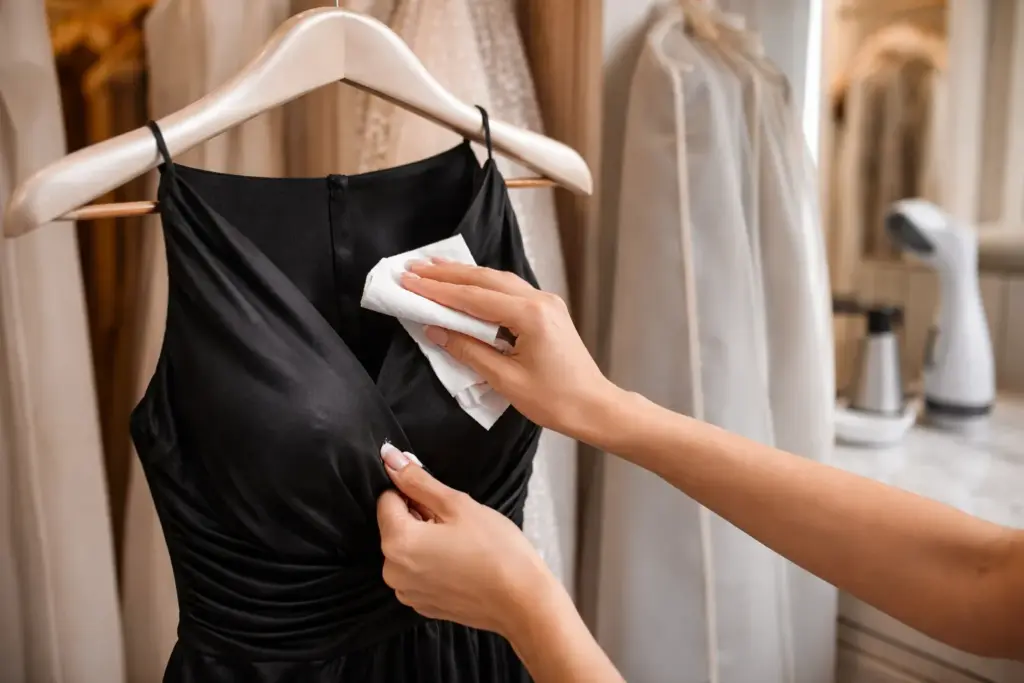
I learned this the hard way when my favorite little black dress outfit came home with a perfume shadow near the neckline and a dull hem that looked “old” in photos. I wanted to ignore it and sleep, but I also wanted that dress to look new again the next time I needed formal attire for women. So I built a simple care habit that starts the same night, and it keeps getting easier the more I repeat it.
What Should I Do Right After I Wear My Dress?
One night can ruin a dress. Perfume, makeup, and sweat sink in. If I wait until morning, stains set. I do three small steps before I sleep.
Right after I wear my ladies dress, I blot marks, let the fabric breathe, and check hems and zippers. This keeps dresses women’s clothing clean and saves on heavy cleaning later.

I start with air, not water
I never rush to soak a formal dress. I first hang it in a clean, dry place with space around it. I open the zipper so air can move inside. I keep it away from sunlight because light can fade color, even on a black dress. I do this even for the dresses I think are “fine,” because sweat can sit in a lining and show up later as a smell.
I treat small marks the gentle way
I keep a white cloth and plain water ready. I dab, and I stop when I see color on the cloth. I do not rub. I do not chase the stain across the fabric. If I see makeup at the collar, I blot from the edge in. If I see a food dot, I lift it, and I let the rest dry.
I check stress points before they become repairs
I look at the underarm seam, the hem, and the zipper area. I also check straps, hooks, and any bead lines. I once missed a loose hook on one of my women gown dresses, and the next wear turned it into a tear. That mistake cost more than a careful two-minute check.
| Quick issue I notice | What I do in 2 minutes | What I avoid |
|---|---|---|
| Light sweat smell | Hang, open zipper, air overnight | Plastic cover right away |
| Makeup at neckline | Dab with damp white cloth | Rubbing, hot water |
| Lipstick or oil dot | Blot, then let dry, then re-check | Using strong soap fast |
| Wrinkles | Steam from distance, inside-out if needed | Pressing hard with iron |
| Loose thread | Tie off lightly or pin for later | Pulling the thread |
How Do I Clean Formal Dresses Without Ruining Them?
Cleaning feels risky when a gown costs real money. I have ruined shine with the wrong soap. Now I follow the label and a fabric test first.
For formal attire for women, I choose dry cleaning for structured pieces, gentle hand wash for simple fabrics, and cold water only when the label allows it.

I read the label like it is a contract
I treat the care label as the rule, not a suggestion. If it says dry clean only, I do not try to “beat the system” at home. If it says hand wash, I still test a hidden seam first. I do this even when the dress is from a brand I trust, like macdougal dresses or mac dougall dresses, because fabric batches can differ and trims can react in a new way.
I match the cleaning method to the fabric and structure
I split my thinking into two questions. First, is the fabric delicate? Second, is the dress built with structure? A satin dress with boning is not the same as a simple crepe shift gown. A beaded bodice does not like agitation. A lined dress can trap soap if I rinse fast. I keep it simple and slow.
I handle stains by type, not by panic
I treat water-based stains, oil-based stains, and protein stains in different ways. I keep my steps small. I test first. I stop early if I see color move. I also accept that some stains need a professional. I once tried to push a stain out of a navy dresss at home, and I made a ring that showed under bright light. That was a lesson I did not need twice.
| Dress type or fabric | Safer default choice | Notes I follow |
|---|---|---|
| Structured bodice (boning, padding) | Dry clean | I point out stress areas to the cleaner |
| Chiffon or georgette | Dry clean or careful hand wash if label allows | I avoid twisting and wringing |
| Satin | Dry clean | Water can spot; I avoid heat |
| Simple crepe, no heavy trim | Hand wash if label allows | Cold water, gentle detergent, flat dry |
| Beaded or sequined | Specialist cleaner | I avoid soaking; glue can loosen |
How Should I Store Dresses and Gowns Between Seasons?
A clean dress can still age fast in storage. Sun fades, dust dulls, and plastic traps smells. I store each piece like I want it to sell itself.
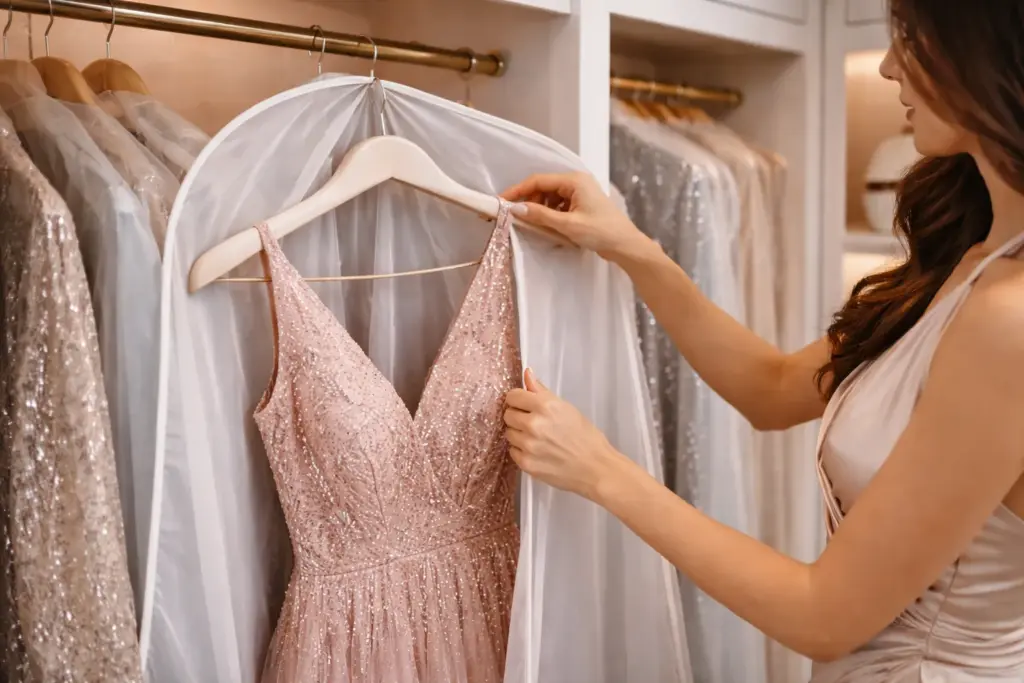
I hang most women gown dresses on padded hangers, cover them with breathable bags, and keep them cool and dry. I fold heavy beaded styles to avoid stretch.
I choose hang or fold based on weight, not habit
I used to hang everything. Then I saw strap marks on a heavy gown. Now I decide by weight and by fabric pull. Light dresses can hang well. Heavy dresses can stretch. I also think about shape. A tight bodice can lose its clean line if it hangs wrong. When I fold, I use acid-free tissue and I pad folds to stop sharp creases.
I protect against dust and smell, but I let fabric breathe
I avoid thin plastic dry-cleaning covers for long storage. They trap moisture and smell. I use breathable garment bags. I keep dresses away from kitchens and away from sunlight. I add a small moisture control pack if my room gets damp. I also keep space between items. When fabrics press together for months, they can pick up color transfer, even between a black dress and a light lining.
I plan for travel the same way I plan for storage
When I pack attire dresses for a trip, I treat it like short-term storage. I turn the dress inside-out if the outer fabric is delicate. I roll soft items around it so nothing sharp hits the fabric. I hang it as soon as I arrive. I steam it lightly, and I let it rest before I wear it.
| Storage situation | What I use | Why it works |
|---|---|---|
| Closet storage (3–6 months) | Padded hanger + breathable bag | Keeps shape, prevents dust |
| Long storage (6–12+ months) | Box + tissue + flat fold | Reduces stretch and crease stress |
| Humid environment | Breathable bag + moisture pack | Lowers mold and odor risk |
| Travel | Garment bag or careful fold with tissue | Prevents hard creases and rub marks |
How Do I Keep Black Dresses Looking Sharp and “New”?
Black looks simple, but it shows every problem. Lint, deodorant, and dull seams stand out. I treat my black dress. like a photo shoot outfit.
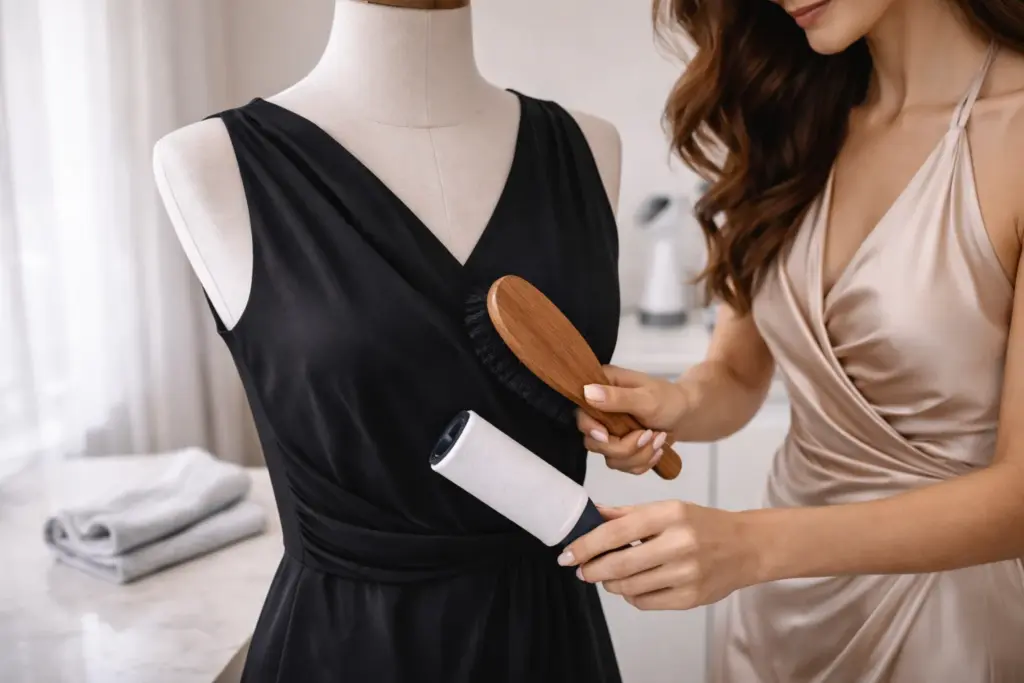
I protect a little black dress outfit by brushing it after wear, steaming it from a distance, and washing with low-alkaline products only when the label says yes.
I fight lint and fade with small tools
I keep a soft brush and a lint roller in my closet. I brush first and I lint-roll second. I do not press a sticky roller on fragile fabrics. I also wash black items inside-out when washing is allowed. I skip strong detergents because they can strip dye. I do not overdry. Heat can dull black fast.
I prevent deodorant lines and collar shine
I let deodorant dry before I dress. If I still get marks, I lift them with a dry cloth first. If I need more, I use a damp cloth and I dab. For shine on seams or hips, I steam lightly and I brush the nap back in place if the fabric has one. I learned this after I wore a black drress to a dinner, then I sat under bright lights, and the shine showed in every photo.
I use “search typo” lists to teach my team and my buyers
I work in dresses ladies and dress clothing every day, so I see how people search. Some people type fast. Some people type on phones. Some buyers search in other languages, like jurken or bvestidos. I keep a simple list so my team can match what people mean, even when they write drsses or drezs. It also helps when a buyer asks about “the dresses” with only a screenshot and a typo.
| What people usually mean | Search variations I often see |
|---|---|
| Black dress | black dresz, black dresss, blaxk dress, blsck dress, bblack dress, boack dress, black drees, black drress, black dresz, black dress., rack dress |
| Little black dress | . little black dress, little blac dress, little blsck dress, little blck dress, little black dess, lbd clothes, lbds attire, lbds clothing |
| Dresses (general) | dresses, dressl, womens dressses, dresses dresses, dresses from, drsses, drezs, sress, dress clothing, dress clothes women |
| Event and season dresses | homiday dresses, soring dress, sring dress, spring dresse, spring dresse, padgent dresses, teen sundresses, shift sundress, shift gown |
| Style and fit words | tightest dresses, sexy dreess, ruched dreas, rouged dress, frok dress, women frok, woman s dress |
| Brands and name searches | macdougal dresses, mac dougall dresses, mac dugal dresses, macdougal dresses, maria lucia honan |
| Language mix | jurken, verstidos, bvestidos, hawaian dress, women drss, wommen dress, woman dresss |
Conclusion
When I clean, dry, and store with care, my dresses stay sharp for years, and I spend less time fixing problems before the next formal night.
Why I Write This
I run Truekung in China, and I focus on B2B wholesale only. I work with a factory team of more than 200 workers, and I bring 20 years of foreign trade clothing production and export work into every order. I make fashion women’s clothing, jackets, skirts, dresses, jeans, T-shirts, sweatshirts, down jackets, windbreakers, coats, fashion bags, sportswear, children’s clothing, and underwear. I support OEM/ODM, and I also supply spot products for re-labeling.
I work with buyers like Maria who care about quality and price at the same time. I build clear quality control steps, I support needed certification, and I keep delivery plans tied to real calendars so seasons do not get missed. If you want to talk about your next dress program, you can reach me at [email protected], and you can see my work at https://truekung.com.
Views: 139