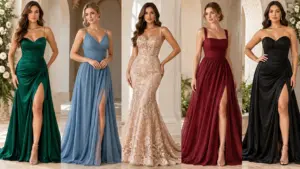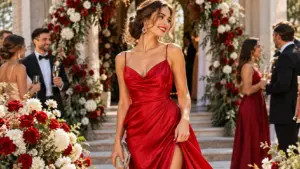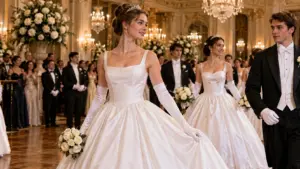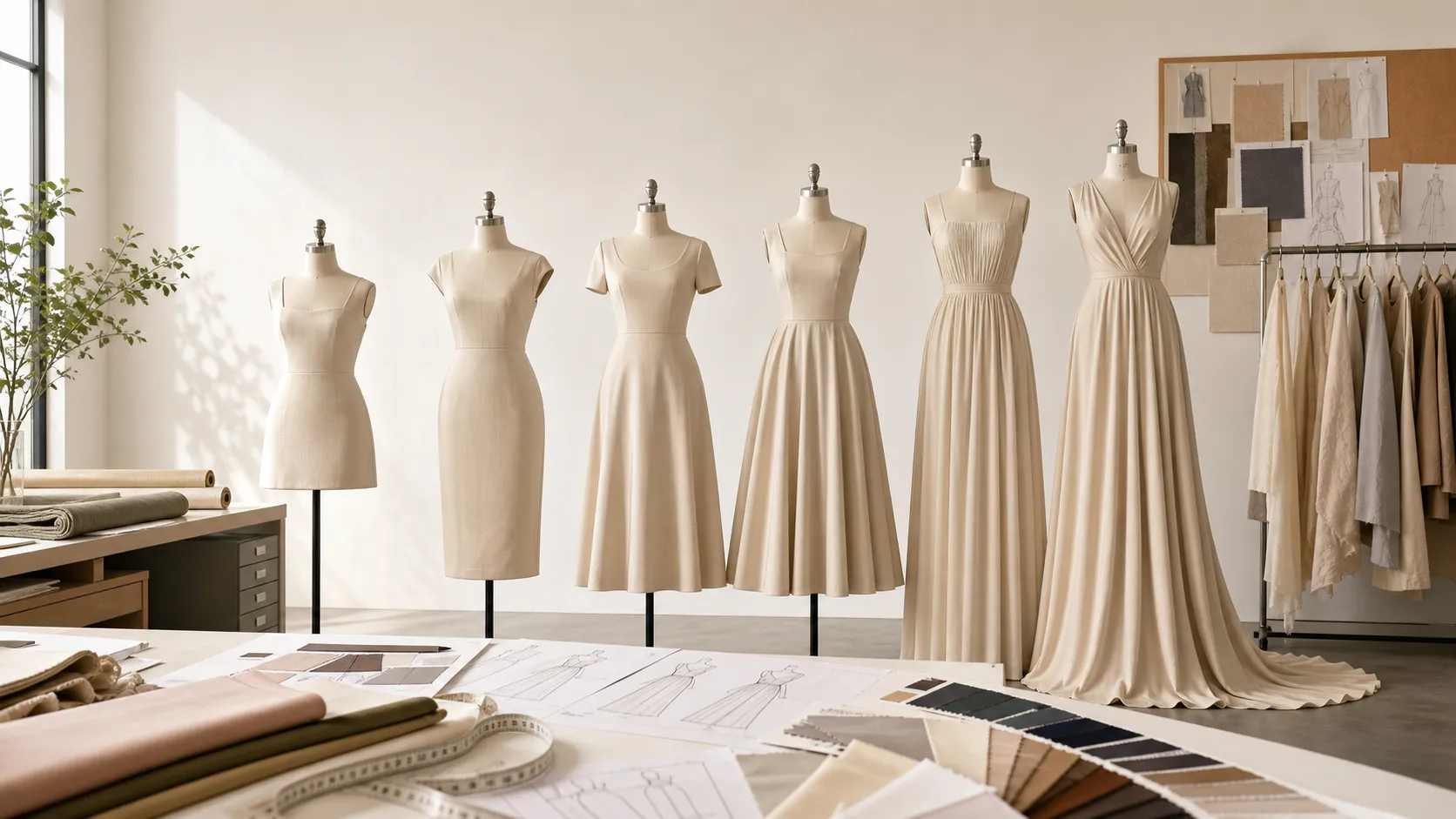

Dress length is more than a styling choice. For fashion brands, it affects fit, pattern balance, fabric consumption, sample approval, size grading, production cost, and customer satisfaction.
A mini dress, midi dress, tea length dress, maxi dress, and floor-length gown may look simple in a product photo, but each length has different production risks. The hemline can change how the body proportion looks, how much fabric is needed, how the garment moves, and whether the final product feels premium or cheap.
This dress lengths guide explains the most common dress length names, how to measure dress length, how to choose the right hemline for different markets, and what brands should confirm before sampling and bulk production.
If you are developing custom dresses for your clothing brand, prepare your target dress length, reference photos, fabric idea, size range, and expected quantity before contacting a manufacturer. Truekung can help with dress pattern development, fabric sourcing, sampling, custom labels, bulk production, quality control, and global shipping.
What Are the Main Types of Dress Lengths?
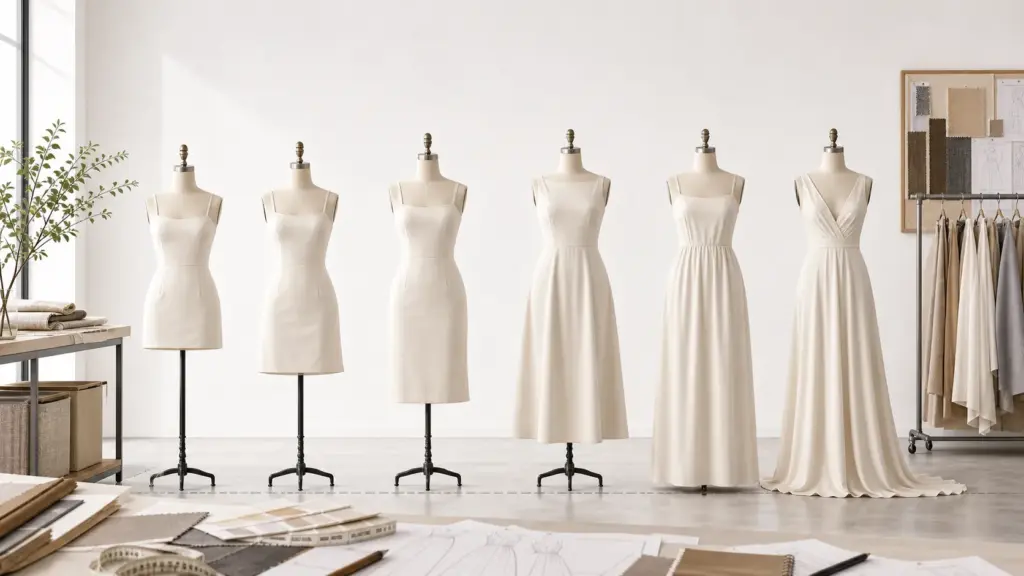
Dress length names usually describe where the hem falls on the body. The most common types include mini, above-knee, knee-length, midi, tea-length, maxi, floor-length, and high-low dresses.
For consumers, these names help with styling. For fashion brands, they are also production references. A “midi dress” is not enough for a factory to make an accurate sample. The tech pack still needs exact measurements in centimeters or inches.
| Dress Length | Where the Hem Usually Falls | Common Use | Production Notes |
|---|---|---|---|
| Mini Dress | Mid-thigh or higher | Party dresses, summer dresses, clubwear, resort styles | Needs careful sitting and movement tests. Stretch fabric, lining, and hem finishing are important. |
| Above-Knee Dress | A few centimeters above the knee | Casual dresses, office dresses, day dresses | Easy to wear and easier to grade than very short mini styles. |
| Knee-Length Dress | Around the knee | Workwear, uniforms, church dresses, modest dresses | Good for mature markets and business collections. Fit balance around waist and hip is important. |
| Midi Dress | Below the knee to mid-calf | Elegant daywear, workwear, occasion dresses | Very sensitive to height and calf position. A few centimeters can change the look. |
| Tea-Length Dress | Mid-calf to above ankle | Wedding guest dresses, formal daywear, vintage styles | Needs good drape and clean hem control. Often works well with structured or flowing fabrics. |
| Maxi Dress | Around ankle length | Resortwear, casual summer dresses, vacation styles | Fabric weight, transparency, and walking ease must be checked. |
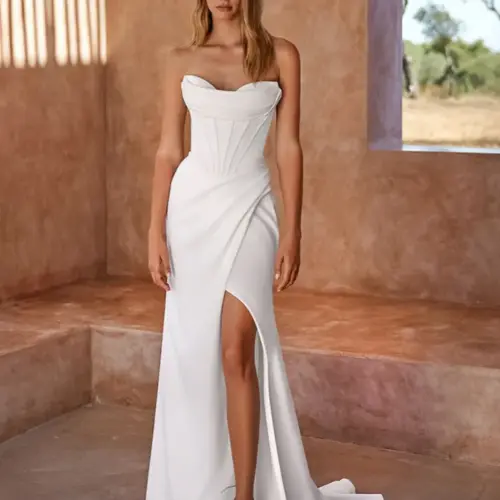
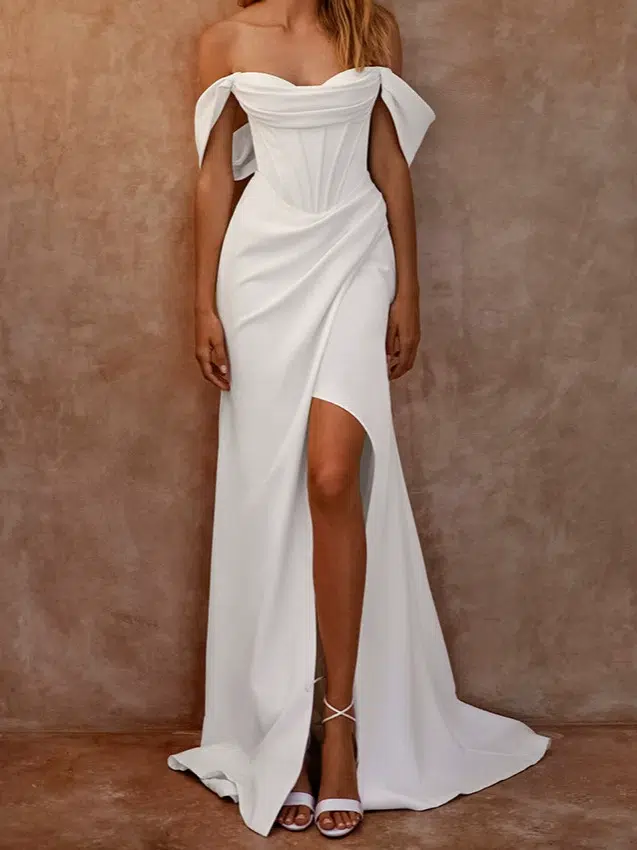
| Floor-Length Dress | Touches or nearly touches the floor | Evening gowns, prom dresses, formal dresses | Must be tested with shoes. Hem allowance, lining length, and train length need confirmation. |
| High-Low Dress | Shorter front, longer back | Evening dresses, party dresses, photo-focused styles | Front and back length must be measured separately. Curve shape needs careful pattern work. |
Dress Length Chart by Height
The table below gives general starting points for dress length. These are not fixed rules. A brand should adjust the length based on the target customer, style, heel height, fabric drape, and fit model.
| Height Range | Mini Dress | Knee-Length Dress | Midi Dress | Tea-Length Dress | Maxi Dress | Floor-Length Dress |
|---|---|---|---|---|---|---|
| 150-157 cm / 5’0″-5’2″ | 78-82 cm | 92-96 cm | 105-110 cm | 120-125 cm | 130-135 cm | 140-145 cm |
| 158-165 cm / 5’3″-5’5″ | 80-84 cm | 94-98 cm | 108-113 cm | 123-128 cm | 133-138 cm | 143-148 cm |
| 166-173 cm / 5’6″-5’8″ | 82-86 cm | 96-100 cm | 111-116 cm | 126-131 cm | 136-141 cm | 146-151 cm |
| 174-180 cm / 5’9″-5’11” | 84-88 cm | 98-102 cm | 114-119 cm | 129-134 cm | 139-144 cm | 149-154 cm |
These numbers are usually measured from the high point shoulder to the hem. For production, the final measurement should be confirmed on a fit model before bulk orders.
How to Measure Dress Length for Production
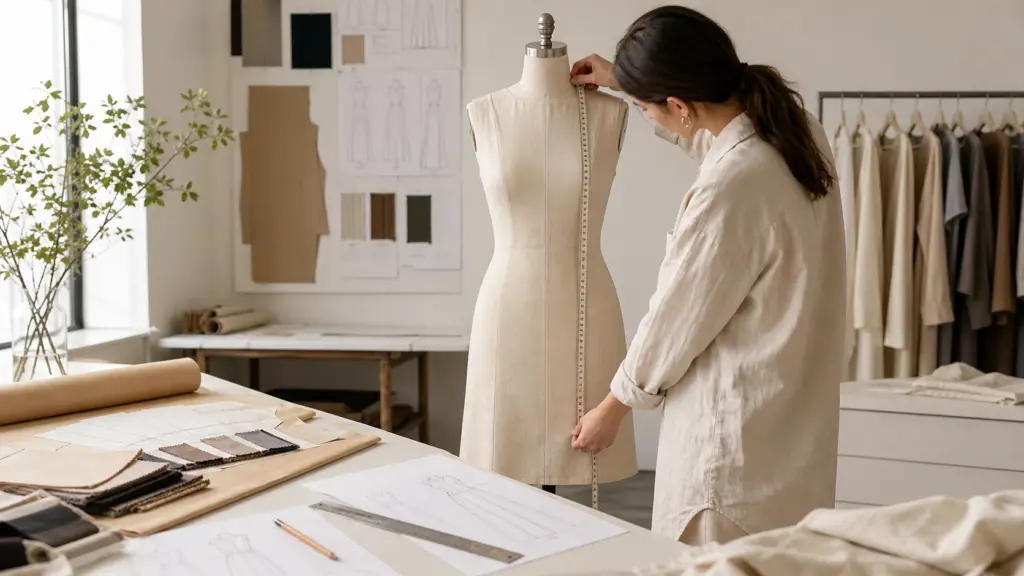
For production, dress length should be measured from a consistent point. The most common method is from the high point shoulder to the hem. This is often called HPS to hem.
Brands should not only write “mini,” “midi,” or “maxi” in a tech pack. These words are useful for style direction, but they are not accurate enough for sampling or bulk production. A clothing manufacturer needs exact measurements.
| Measurement Point | Why It Matters |
|---|---|
| High point shoulder to front hem | Main dress length measurement for most styles. |
| High point shoulder to back hem | Important for back balance and high-low designs. |
| Center front length | Helps check front body proportion and neckline balance. |
| Center back length | Helps check back body proportion and zipper placement. |
| Waist seam to hem | Important for dresses with a waist seam. |
| Lining length | Prevents lining from showing below the outer fabric. |
| Side seam length | Helps check left-right balance and production consistency. |
| Train or back sweep length | Required for gowns and formal dresses. |
For high-low dresses, the front length and back length must be listed separately. For floor-length gowns, the brand should confirm whether the hem should touch the floor, clear the floor slightly, or include a train.
A small difference of 2-3 cm can change the final look, especially for midi dresses and floor-length dresses. That is why measurement tolerance should be clearly written in the tech pack.
Mini Dress Manufacturing Notes
Mini dresses are short, energetic, and popular for partywear, summer collections, resortwear, and clubwear. But they need careful fit testing because the hemline sits high on the leg.
The main production risk is movement. A mini dress may look fine when standing, but it can ride up when the wearer sits, walks, or bends. If the dress is slim fit, the hip width and hem opening must allow enough movement.
Recommended checks for mini dresses:
| Check Point | Why It Matters |
|---|---|
| Sitting test | Prevents the dress from becoming too short when seated. |
| Bend test | Checks coverage and comfort. |
| Hip measurement | Controls tightness around the widest part of the body. |
| Hem opening | Affects walking ease and movement. |
| Fabric recovery | Important for stretch mini dresses. |
| Lining length | Prevents lining from showing or restricting movement. |
Common fabrics for mini dresses include ponte, crepe, satin, rib knit, polyester spandex, denim, cotton blends, and structured woven fabrics.
Knee-Length Dress Manufacturing Notes
Knee-length dresses are often used for workwear, uniforms, modest fashion, church dresses, and mature women’s collections. They are easier to wear than mini dresses and often work well for B2B apparel programs.
The key is balance. If the hem hits directly at an awkward point on the knee, the dress may feel heavy or old-fashioned. If the hem is too tight, walking can become restricted.
For brands, knee-length dresses are practical because they are easier to grade across sizes and easier to adapt for different markets.
Recommended fabrics include crepe, twill, suiting fabric, cotton blends, ponte, stretch woven fabrics, and medium-weight polyester blends.
Midi Dress Manufacturing Notes
Midi dresses are popular because they feel elegant, versatile, and suitable for many occasions. They can be used for workwear, casualwear, wedding guest dresses, dinner dresses, and modest fashion.
The main risk is proportion. A midi dress that hits the widest part of the calf may make the body look shorter or heavier. During sample fitting, the hem may need to move up or down by 2-5 cm depending on the target customer height.
Midi dresses also depend heavily on fabric drape. If the fabric is too stiff, the hem can look bulky. If the fabric is too thin, the dress may lose shape or become transparent.
Good fabric options for midi dresses include viscose, rayon, crepe, satin, chiffon, cotton poplin, linen blends, jersey, and lightweight twill.
Tea-Length Dress Manufacturing Notes
Tea-length dresses usually fall between mid-calf and above the ankle. They are often used for wedding guest dresses, vintage styles, occasionwear, and semi-formal collections.
This length needs clean hem control. If the fabric has too much volume, the dress may look heavy. If the fabric is too soft, the shape may collapse. For structured tea-length dresses, the brand may need lining, tulle, organza, or a shaped skirt construction.
Common fabric options include satin, tulle, chiffon, organza, jacquard, lace, cotton blends, and structured polyester blends.
For production, brands should confirm the skirt volume, lining length, hem finishing, and packing method. Fuller tea-length dresses may need more careful pressing and packing to avoid wrinkles.
Maxi Dress Manufacturing Notes
Maxi dresses are common in resortwear, summer dresses, vacation collections, maternity styles, and casual daywear. They are usually easier to wear than floor-length gowns because they do not need to touch the floor.
The most important production points are walking ease, opacity, shrinkage, and fabric weight. A maxi dress should move naturally without feeling too heavy. If the fabric is too transparent, lining may be needed.
For printed maxi dresses, brands should also check pattern placement and cutting loss. Large floral prints, border prints, and directional prints can increase fabric consumption.
Common fabrics include rayon, viscose, chiffon, georgette, jersey, modal blends, cotton voile, linen blends, and lightweight polyester.
Floor-Length Dress and Gown Manufacturing Notes
Floor-length dresses and gowns are used for eveningwear, prom dresses, bridesmaid dresses, formal events, and occasionwear. These styles need more precise fitting because the hem interacts with shoes and floor movement.
A floor-length dress should usually clear the floor slightly at the front when worn with the intended shoes. The back can be even, slightly longer, or designed with a train.
Before approving a sample, brands should test:
| Test | What to Check |
|---|---|
| Standing test | The hem should look balanced from front, side, and back. |
| Walking test | The wearer should not step on the front hem. |
| Turning test | The skirt should move without twisting. |
| Stair test | The hem should not create a safety issue. |
| Shoe test | The length should match the intended heel height. |
| Lining test | Lining should not hang below the outer fabric. |
Common fabrics for floor-length dresses include satin, chiffon, crepe, velvet, lace, tulle, mesh, sequins, and beaded fabric. These styles often require longer sampling time because lining, weight, train length, and hem finishing must be controlled carefully.
High-Low Dress Manufacturing Notes
High-low dresses have a shorter front and longer back. They are common in eveningwear, partywear, resortwear, and photo-focused collections.
The key production challenge is the curve. The front and back length must look intentional, not uneven. The side transition should be smooth, and both sides should match.
For high-low dresses, the tech pack should include:
| Measurement | Why It Matters |
|---|---|
| Front hem length | Controls the shortest visible point. |
| Back hem length | Controls the longest visible point. |
| Side seam length | Helps balance the curve. |
| Curve depth | Defines how dramatic the high-low effect is. |
| Lining length | Prevents lining from breaking the visual line. |
High-low dresses usually need careful pattern development and sample review. If the fabric is slippery, such as satin or chiffon, the cutting and hemming process must be controlled carefully.
Recommended Fabrics for Different Dress Lengths
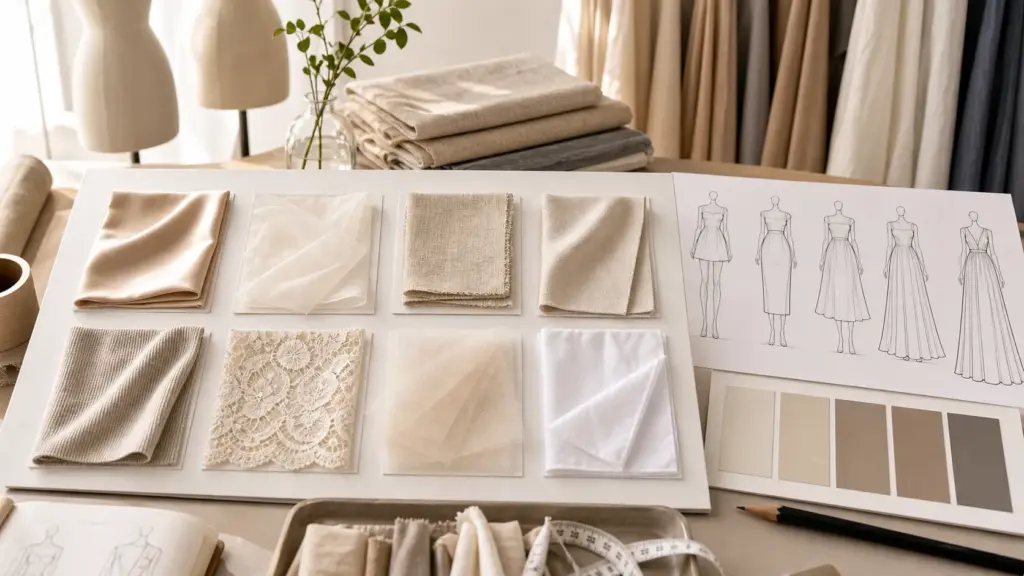
Different dress lengths work better with different fabrics. The right fabric helps the dress keep its shape, move naturally, and meet the target price.
| Dress Length | Recommended Fabrics | Notes for Brands |
|---|---|---|
| Mini Dress | Ponte, crepe, satin, cotton blends, polyester spandex, rib knit, denim, structured woven fabrics | Short silhouettes need clean shape, good recovery, and secure hem finishing. |
| Above-Knee Dress | Cotton poplin, twill, crepe, jersey, linen blends, polyester blends | Suitable for casual, office, and daywear collections. |
| Knee-Length Dress | Crepe, suiting fabric, cotton blends, twill, ponte, woven stretch fabrics | Good for workwear, uniforms, and modest fashion markets. |
| Midi Dress | Viscose, rayon, crepe, satin, chiffon, cotton poplin, linen blends, jersey, lightweight twill | Fabric should have enough drape so the hem does not look stiff at the calf. |
| Tea-Length Dress | Satin, tulle, chiffon, organza, jacquard, lace, structured cotton blends | Often used for wedding, vintage, or occasionwear styles. Lining and hem finishing are important. |
| Maxi Dress | Rayon, viscose, chiffon, georgette, jersey, modal blends, cotton voile, linen blends, lightweight polyester | Breathability, opacity, and walking ease should be checked. |
| Floor-Length Dress | Satin, chiffon, crepe, velvet, lace, tulle, mesh, sequins, beaded fabric | Needs more sampling time because lining, weight, train length, and hem finishing must be controlled carefully. |
Fit and Pattern Development Tips
The same dress length can look different on different body types. For fashion brands, this means the fit model and size grading standard should be confirmed before bulk production.
Mini dresses should be tested for sitting length and movement. The brand should check whether the dress still gives enough coverage after grading to larger sizes.
Knee-length dresses should be checked around the waist, hip, and hem width. If the dress is too narrow at the hem, walking may feel restricted.
Midi dresses should be fitted carefully because the hemline can visually shorten the legs if it falls at the wrong point. The most flattering midi length often falls slightly below the knee or below the widest part of the calf.
Maxi dresses should have enough walking ease. If the hem opening is too narrow, customers may find it hard to walk even if the dress looks good in photos.
Floor-length dresses should be tested with the intended shoe height. The sample should be checked while standing, walking, turning, and climbing a small step.
MOQ, Sampling and Production Timeline
The MOQ for custom dresses depends on the fabric, color, trims, print, embroidery, lining, and construction complexity.
For many custom dress projects, a practical starting MOQ is often around 100-300 pieces per style. However, special fabric, custom dyeing, lace, beading, sequins, custom printing, or complex gowns may require a higher quantity.
Sampling usually takes 7-21 days, depending on fabric availability and sample complexity. A simple knit mini dress may be faster, while a lined chiffon dress, lace dress, structured blazer dress, or floor-length gown may need more time.
Bulk production usually takes 20-45 days after the sample is approved and all materials are ready. If the dress uses custom fabric, special trims, printing, embroidery, or handwork, the production timeline may be longer.
Before bulk production, brands should confirm:
| Item to Confirm | Why It Matters |
|---|---|
| Fabric and color approval | Prevents shade, drape, and hand-feel mismatch. |
| Size chart and grading | Keeps fit consistent across sizes. |
| Final dress length for each size | Prevents unexpected length problems in bulk production. |
| Lining length | Avoids visible lining or uncomfortable wear. |
| Label and packaging details | Helps the product look retail-ready. |
| Quality tolerance | Gives the factory and inspector a clear standard. |
| Shipping method | Affects timeline, cost, and launch planning. |
| Final approved sample | Works as the production reference. |
Dress Length Quality Control Checklist
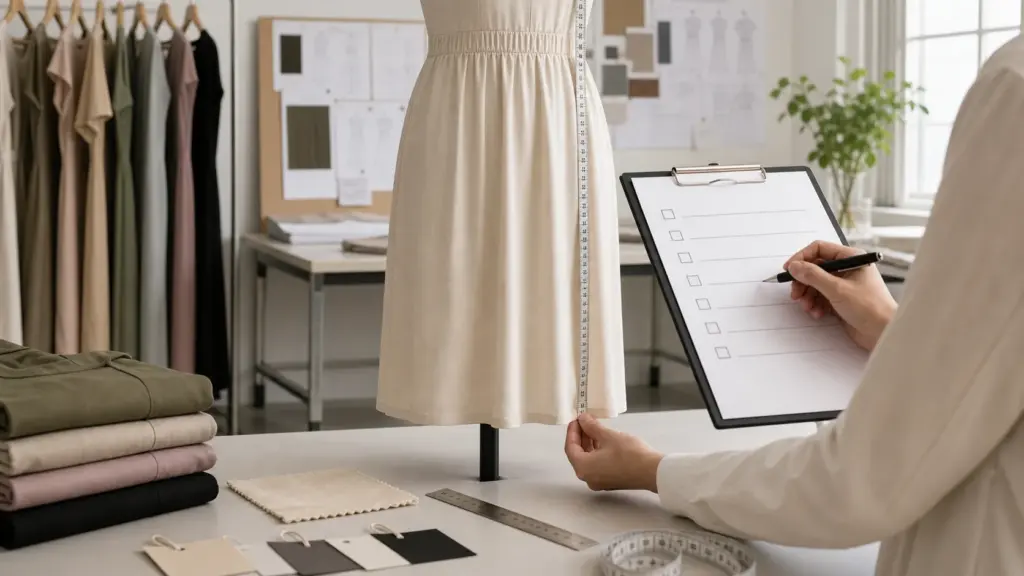
Dress length should be checked during sample approval, pre-production, inline inspection, and final inspection.
Important QC points include:
| QC Point | What to Check |
|---|---|
| High point shoulder to hem | Confirms the main dress length. |
| Front and back length | Important for balance, especially high-low dresses. |
| Lining length | Makes sure the lining does not show unintentionally. |
| Hem shape and symmetry | Keeps the dress clean and balanced. |
| High-low curve | Checks whether the front and back curve is smooth. |
| Hem twisting | Checks whether the hem twists after washing or steaming. |
| Shrinkage | Important for cotton, viscose, rayon, and linen blends. |
| Floor-length fitting | Should be checked with the intended shoe height. |
| Walking and sitting comfort | Prevents customer complaints after launch. |
| Size consistency | Confirms that bulk production matches the approved sample. |
For bulk production, brands should define an acceptable tolerance. For example, a tolerance of plus or minus 1 cm may work for many casual dresses, but more complex formal dresses may need stricter control in visible areas.
Common Dress Length Mistakes Brands Should Avoid
Many dress production problems come from unclear length standards. A style may look good in a sketch, but if the measurement is vague, the sample can easily miss the intended look.
Common mistakes include:
| Mistake | Why It Causes Problems |
|---|---|
| Only writing “midi” or “maxi” in the tech pack | The factory still needs exact measurements. |
| Measuring from the wrong point | Different measurement points create different sample lengths. |
| Ignoring heel height | Floor-length dresses may become too short or too long. |
| Using one length for all sizes without review | Larger sizes may need proportion adjustments. |
| Forgetting lining length | Lining may show below the outer fabric. |
| Ignoring fabric shrinkage | Washed garments may become shorter than approved. |
| Not testing movement | Mini and maxi dresses may fail during sitting or walking. |
Clear measurements, fitting notes, and an approved sample help avoid these problems before bulk production starts.
How Truekung Can Help with Custom Dress Manufacturing
Truekung works with fashion brands, startups, private label businesses, wholesalers, and retailers that need custom dress manufacturing and full-package apparel production.
We can help with fabric sourcing, pattern development, dress sampling, size grading, OEM/ODM production, custom labels, packaging, quality control, and global shipping.
If you are developing mini dresses, midi dresses, maxi dresses, blazer dresses, formal dresses, resort dresses, or floor-length gowns, you can send us your reference photos, tech pack, target quantity, fabric idea, and budget range. Our team can review the project and suggest a practical production plan.
A clear dress length standard helps reduce sampling mistakes, improve fit, control fabric cost, and make bulk production more consistent.
Frequently Asked Questions About Dress Lengths
What is the most common dress length for fashion brands?
Midi and knee-length dresses are common because they work for many markets, including workwear, casualwear, and occasionwear. Mini dresses are popular for party and summer collections, while maxi and floor-length dresses are common for resortwear, eveningwear, and formalwear.
How should a brand choose dress length before sampling?
A brand should consider target customer height, body proportion, market style, dress occasion, fabric drape, and shoe height. It is best to confirm the intended length in centimeters or inches before making the first sample.
What measurement should be used in a dress tech pack?
The most common measurement is high point shoulder to hem. For better accuracy, the tech pack should also include front length, back length, side seam length, lining length, and waist seam to hem if relevant.
Does dress length affect production cost?
Yes. Longer dresses usually use more fabric and may require more lining, more careful cutting, and more complex packing. Formal gowns, high-low dresses, and dresses with trains can also increase sampling and production time.
What is the best fabric for a midi dress?
Midi dresses can use crepe, satin, viscose, rayon, chiffon, jersey, cotton poplin, linen blends, or lightweight twill. The best choice depends on the target silhouette, season, price point, and customer market.
How long does dress sampling usually take?
Dress sampling usually takes 7-21 days, depending on fabric availability, pattern complexity, lining, trims, embroidery, printing, and revisions. A simple dress may be faster, while a formal gown or lined chiffon dress may take longer.
What is a practical MOQ for custom dress manufacturing?
For many custom dress projects, a practical MOQ is around 100-300 pieces per style. The final MOQ depends on fabric, color, trims, customization level, and whether the material is stock fabric or custom-developed fabric.
Can Truekung manufacture custom dresses with low MOQ?
Yes. Truekung supports custom dress manufacturing, sampling, fabric sourcing, labels, packaging, and bulk production for fashion brands. MOQ depends on fabric, color, trims, and design complexity.
Views: 5565