Sizing can feel like a trap. I see women blame their bodies when labels change. That pain grows fast. I want to replace the guesswork with clear facts.
In the US, the average adult woman is about 5’3.5″ tall with an average waist near 38.5″, and research often places the average clothing size around misses 16–18. “Average” describes a group, not a rule for your body.

When I speak with buyers, I hear the same worry. They want one “size average” that solves everything. I used to want that too, so I will show what “average” can do, and what it cannot do.
What is the average size clothing for women in the US, and why do people argue about it?
A buyer asks for “the average woman size,” then a fit sample comes back wrong. That mistake costs time and money. The stress hits the team. I fix it by defining “average” in a simple way.
The average size for women in US is often quoted as misses 16–18, but the number can shift by brand and by how people calculate “average.”
What I mean when I say “average”
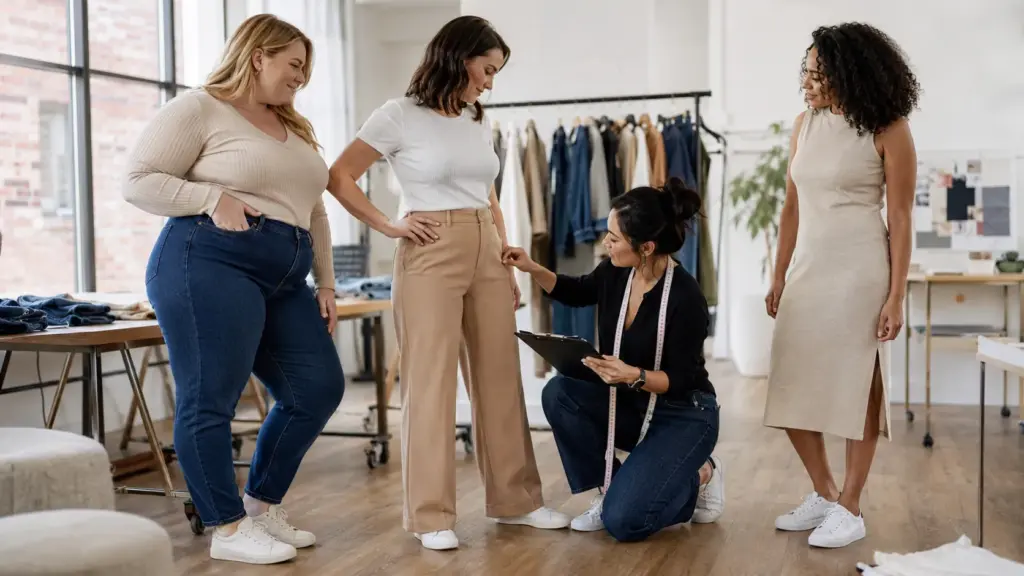
When someone says “what is an average size,” I ask one question first: do they mean mean, median, or mode? Each one can point to a different “average size woman,” even with the same group of people. I keep it practical for production, because my factory needs a clear target.
| Word people say | What it means in plain words | Why it changes “average size” |
|---|---|---|
| Mean | The total divided by the number of people | A few very small or very large sizes can pull it |
| Median | The middle person when you line sizes up | It ignores extremes, so it can feel more “normal” |
| Mode | The most common single size | It can differ from the mean in real markets |
Why “women’s general clothing size” still jumps between brands
I have handled OEM/ODM for many labels. Each label uses its own block, ease, fabric stretch, and fit style. One brand may call a relaxed fit “M,” while another calls the same body “L.” Some brands also use vanity sizing, so the tag looks smaller while the garment stays similar.
So when someone asks “what size is average woman,” I treat it as a starting point, not a finish line. I ask buyers to choose one anchor: bust, waist, hip, and height. Then I build the size chart from that anchor. That is how I reduce returns and reduce angry emails.
What are the average measurements of a woman, and how do height and waist change the fit?
A dress looks perfect on a hanger, then it pulls at the hips. A jacket closes, then it feels tight at the waist. Those problems look like “size,” but they are really “shape.”
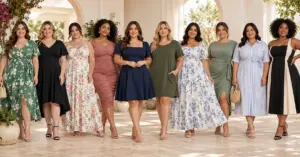
The average size of a woman is not one number. The fit depends on bust, waist, hips, and height, so average women’s measurements must be read as a set.

The baseline I use when buyers ask for “average female body”
When a buyer wants a starting point for “average female body,” I use measured public health data as a reality check, then I adjust for the brand’s customer. In the US, the measured averages for adult women include a height around 63.5 inches and a waist around 38.5 inches. That tells me something important: many “average woman proportions” do not match old fashion assumptions.
How I translate measurements into patterns and QC
I do not guess from a tag. I build from measurements, then I confirm with a fit sample. I also ask the buyer what category matters most. A fitted dress needs different control points than a loose sweatshirt.
Here is the measurement flow I use with teams, because it avoids confusion and helps a buyer like Maria in Russia move fast:
- I ask for the target customer and the product type (dress, jacket, jeans, T-shirt).
- I confirm the key points: bust, waist, hips, shoulder, sleeve, and inseam if needed.
- I create a “ladies measurement size chart” that lists garment measurements and body measurements.
- I make samples in two or three sizes near the middle of the range.
- I lock tolerances for production, so the “normal woman body” fit stays stable.
| Body area | Why it matters | What goes wrong when it is ignored |
|---|---|---|
| Bust | Sets ease across chest and armhole | Armholes bite, buttons gap |
| Waist | Controls comfort in fitted pieces | Zippers pull, seams strain |
| Hips | Controls skirts, pants, fitted dresses | Walking feels tight, hems ride up |
| Height | Controls rise, length, and balance | Knees sit wrong, hems look off |
Is there a perfect size for a woman, or is “normal” a moving target?
I hear this question in two forms. Consumers ask, “what is the perfect size for a woman?” Buyers ask, “what size is perfect for a woman?” Both questions carry pressure. I do not want sizing to hurt people.
There is no single perfect body size women can chase. A healthy body can exist at many sizes, and confidence grows more from fit and comfort than from a number.
What I learned from fit sessions in real life
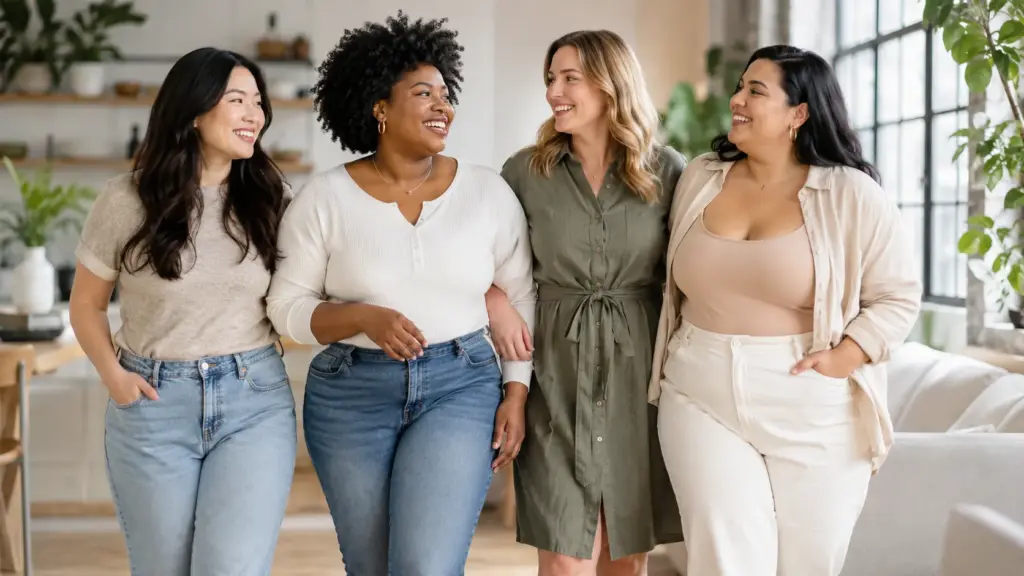
I remember a fit day when we tested the same dress in three bodies. One model had a smaller bust and a wider hip. Another had a fuller bust and a softer waist. The third was tall with a straighter shape. Each one looked “average” in a different way. Each one needed a small pattern change to feel good.
That is why I avoid value words like “good” size and “bad” size. I use simple fit words instead: tight, loose, long, short, high, low. I also remind buyers that “average female size” is a planning tool, not a beauty rule.
A practical way to talk about “average woman” without harming people
When I write product pages for brands, I suggest language that keeps respect:
- I describe garments by measurements and stretch, not by body judgment.
- I show size guidance using real “body measurements of women,” not only a model photo.
- I include photos or notes for different heights, because “average height for women in US” does not describe every customer.
If someone still asks me “what is average size woman” in one line, I answer with care: it depends on the group, and it never defines worth. I keep the work on fit, because fit is something we can control.
How do I plan sizing for European women and global buyers without overstock?
A buyer might sell in the UK, Germany, and the USA in the same season. Another buyer might sell in Russia and also ship to EU neighbors. I see this problem every year. It can break a margin if the size curve is wrong.
European women are not one shape, and the “average sizes” differ by region, so I plan sizing by market data, fit style, and a clear conversion map.
Why “European women” sizing can surprise US-based brands
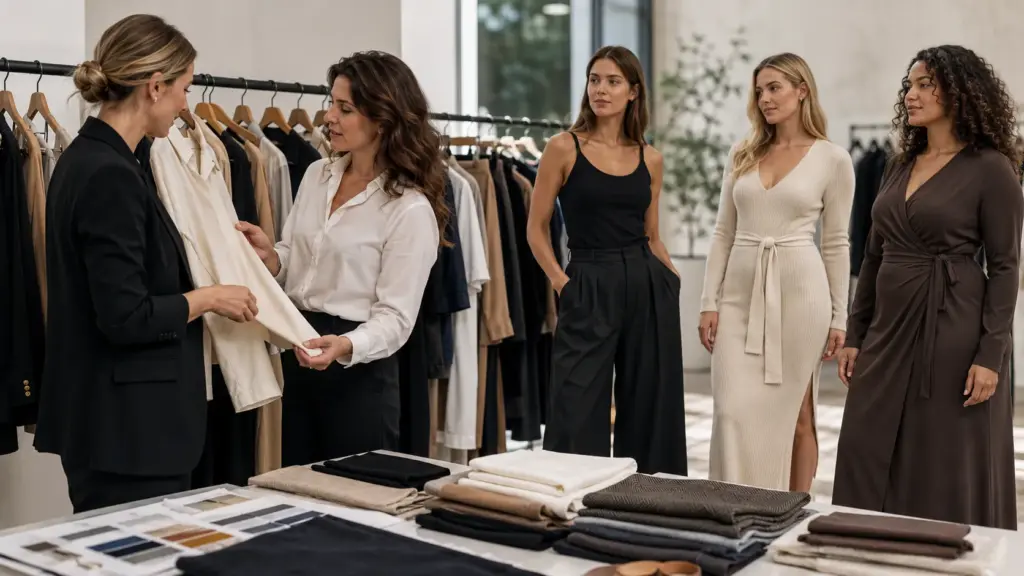
Northern Europe trends taller. Southern Europe trends shorter on average. I see this show up in sleeve length, rise, and overall balance. So I do not treat EU as one block. I also remind buyers that conversions are not exact, because brands build different measurement tables.
Here is a simple conversion reference I use at the start of a project. I treat it as a guide, then I confirm with fit samples:
| US women | UK women | EU women |
|---|---|---|
| 8 | 12 | 40 |
| 10 | 14 | 42 |
| 12 | 16 | 44 |
| 14 | 18 | 46 |
| 16 | 20 | 48 |
What I do with wholesale buyers to reduce size risk
I run a factory in China with over 200 workers, so I care about repeat orders. I want buyers to sell through, because that creates long-term business for both sides. So I use a simple process that fits B2B wholesale:
- I ask for last season’s sell-through by size. If the buyer has it, it is gold.
- I propose a size curve, then I show how it changes with fabric stretch and fit style.
- I suggest a “middle-first” buy: focus on the center, then extend once returns look stable.
- I label cartons by size cleanly, because buyers like Maria often re-label and move fast.
Buyers also ask me, “what is the size of the average man?” I answer in the same way: it depends on brand and category. Many US men’s tops sit around size Large in common charts, but I still ask for target chest and height before I cut fabric. The process stays the same. Clear measurements beat guesswork.
Conclusion
I treat “average” as a planning tool. I do not treat it as a rule. When I build from measurements and real markets, I protect comfort, confidence, and profit.
Why I Write This
I am Lancy Chia from Truekung in China. I run a clothing factory with over 200 workers. I do B2B wholesale only. I provide clothing products and OEM/ODM services for brands and supermarkets worldwide.
If you want help building a size chart, samples, and QC for your next season, you can reach me at [email protected], or visit https://truekung.com.
Views: 297