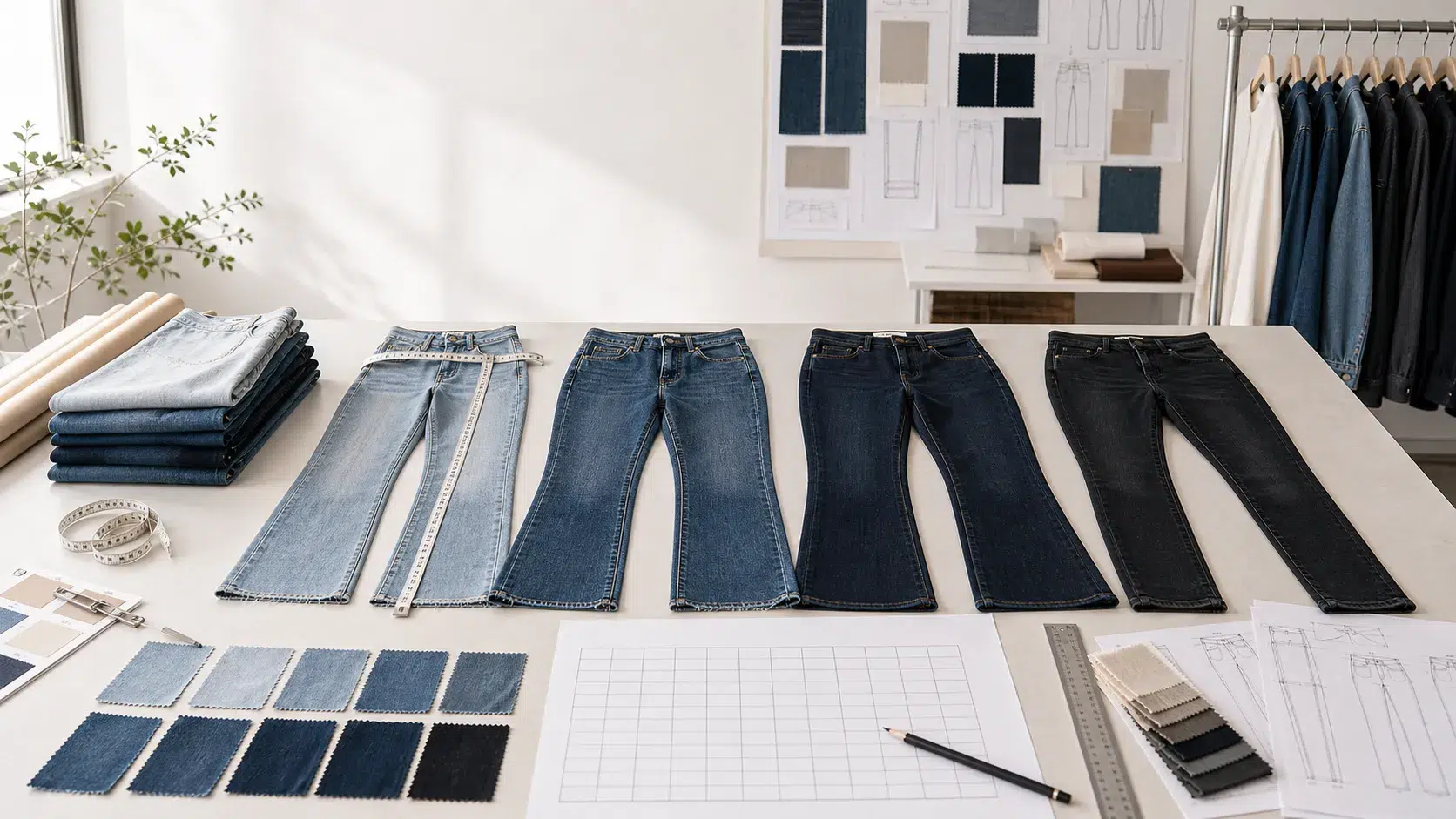


Women’s jeans sizes can be confusing because one number may describe a waist size, a US retail size, or a brand-specific fit. A size 28 in women’s jeans is often close to a US 6, but the final fit depends on waist, hip, rise, inseam, fabric stretch, wash, and brand fit standard.
For shoppers, a women’s jeans size chart helps choose a starting size. For fashion brands, it is also a production tool. If you are developing private label jeans, denim pants, straight-leg jeans, wide-leg jeans, skinny jeans, cargo jeans, or plus-size denim, you need a clear size chart, grading rule, shrinkage allowance, and sample fitting process.
This guide explains women’s jeans sizes 24-34, US size conversions, how to measure waist, hip, rise and inseam, and what brands should confirm before denim sampling and bulk production.
Women’s Jeans Size Chart: 24-34 to US Sizes

The chart below gives a general reference for women’s jeans size conversion. Different brands may use different fit standards, so this should be treated as a starting point, not a final production spec.
| Jeans Size | Approx. US Size | Waist | Hip | Common Fit Note |
|---|---|---|---|---|
| 24 | US 0 | 24 in | 34-35 in | Petite or very slim fit range |
| 25 | US 2 | 25 in | 35-36 in | Common small size |
| 26 | US 2-4 | 26 in | 36-37 in | Can vary by brand and stretch |
| 27 | US 4 | 27 in | 37-38 in | Popular standard size |
| 28 | US 6 | 28 in | 38-39 in | Common fit sample reference |
| 29 | US 8 | 29 in | 39-40 in | Often used for regular fit testing |
| 30 | US 10 | 30 in | 40-41 in | Needs hip and rise review |
| 31 | US 12 | 31 in | 41-42 in | Curvy fit may need more hip ease |
| 32 | US 14 | 32 in | 43-44 in | Plus-size transition range |
| 33 | US 16 | 33 in | 44-45 in | Grading must be reviewed carefully |
| 34 | US 18 | 34 in | 45-46 in | Fit model testing is important |
These measurements are typical references. A rigid 100% cotton denim jean and a stretch denim jean with elastane can feel very different even when the tag size is the same.
What Is a Size 28 in Women’s Jeans?
A size 28 in women’s jeans usually equals about a US size 6. It often fits a waist around 28 inches and hips around 38-39 inches.
However, size 28 is not universal. A high-rise rigid jean may feel tighter at the waist, while a stretch denim skinny jean may feel more flexible. A relaxed straight-leg jean may also fit differently from a slim bootcut jean.
For production, a size 28 is often a useful base size for sample development because it sits near the middle of many women’s denim size ranges.
| Size 28 Check Point | What to Confirm |
|---|---|
| Waist | Is it true 28 in after wash? |
| Hip | Is there enough seat ease? |
| Rise | High-rise, mid-rise, or low-rise changes comfort. |
| Thigh | Important for skinny, slim, and straight fits. |
| Inseam | Must match target market length. |
| Fabric stretch | Rigid and stretch denim need different ease. |
What Size Is 27 in Women’s Jeans?
A size 27 in women’s jeans is usually close to a US size 4. It commonly fits a 27-inch waist and 37-38 inch hip.
For shoppers, size 27 is often a small-to-medium denim size. For brands, it is important to check whether the jean is designed for a slim body, curvy body, petite body, or general market fit.
If the denim has low stretch, customers between sizes may need to size up. If the denim has good stretch and recovery, they may stay true to size.
What Size Is 29, 30 or 31 in Women’s Jeans?
Sizes 29-31 are common middle sizes in women’s jeans. They are often used for regular fit, curvy fit, and everyday denim collections.
| Jeans Size | Approx. US Size | Waist | Hip | Production Note |
|---|---|---|---|---|
| 29 | US 8 | 29 in | 39-40 in | Good for checking regular fit balance. |
| 30 | US 10 | 30 in | 40-41 in | Review waist, hip, thigh and rise. |
| 31 | US 12 | 31 in | 41-42 in | Curvy fit may need extra seat room. |
For production, sizes 29-31 should not simply increase evenly in every area. Waist, hip, thigh, rise, and inseam all need separate grading rules.
What Size Is 32, 33 or 34 in Women’s Jeans?
Sizes 32-34 usually fall into the US 14-18 range. These sizes need extra care in grading because larger sizes do not only need more width. They may also need adjusted rise, back seat shape, thigh room, and waistband curve.
| Jeans Size | Approx. US Size | Waist | Hip | Production Note |
|---|---|---|---|---|
| 32 | US 14 | 32 in | 43-44 in | Check back rise and thigh room. |
| 33 | US 16 | 33 in | 44-45 in | Waistband curve is important. |
| 34 | US 18 | 34 in | 45-46 in | Fit testing is strongly recommended. |
For plus-size or extended-size denim, brands should not only scale up from a smaller sample. A separate fit review may be needed to keep comfort, proportion, and movement consistent.
How to Measure Waist, Hip, Rise and Inseam
Accurate measurement is the foundation of jeans sizing. For both shoppers and clothing brands, waist, hip, rise and inseam are more useful than the size label alone.
| Measurement | How to Measure | Why It Matters |
|---|---|---|
| Waist | Measure around the waistband or natural waist point | Main denim size reference |
| Hip / Seat | Measure around the fullest part of the hip | Controls comfort and seat fit |
| Front Rise | Measure from crotch seam to top front waistband | Affects waist position and comfort |
| Back Rise | Measure from crotch seam to top back waistband | Affects seat coverage |
| Thigh | Measure across the thigh below crotch | Important for slim, straight and wide fits |
| Knee | Measure across knee point | Controls leg shape |
| Leg Opening | Measure hem width | Defines skinny, straight, bootcut or wide leg |
| Inseam | Measure from crotch seam to hem | Controls jean length |
For production, these measurements should be included in the tech pack with tolerance. For example, waist tolerance may be different from inseam tolerance depending on fabric and wash process.
Jeans Fit Types and Size Differences
The same size can fit differently depending on the jean silhouette. A size 28 skinny jean, size 28 straight-leg jean, and size 28 wide-leg jean may all have different garment measurements.
| Fit Type | Main Features | Production Notes |
|---|---|---|
| Skinny Jeans | Close fit from hip to ankle | Needs stretch, recovery and movement testing |
| Slim Jeans | Fitted but less tight than skinny | Thigh and knee measurements are important |
| Straight-Leg Jeans | Similar width from thigh to hem | Easier to fit across markets |
| Wide-Leg Jeans | Loose leg opening and relaxed shape | Fabric drape and inseam length matter |
| Bootcut Jeans | Slight flare below knee | Knee and hem grading must be balanced |
| Flare Jeans | Strong flare from knee to hem | Pattern shape and fabric weight are important |
| Mom Jeans | High rise, relaxed hip, tapered leg | Seat and waist balance are critical |
| Boyfriend Jeans | Relaxed, casual, loose fit | Ease should look intentional, not oversized by mistake |
Brands should define the fit before building the size chart. A “US 6” label does not tell the factory whether the jean should be skinny, straight, relaxed, or wide-leg.
Rigid Denim vs Stretch Denim
Fabric changes fit. A rigid denim jean and a stretch denim jean can use the same size label but require different pattern and grading decisions.
| Denim Type | Common Composition | Fit Impact |
|---|---|---|
| Rigid Denim | 100% cotton | Less forgiving, may need more ease |
| Comfort Stretch Denim | Cotton with 1-2% elastane | More flexible for daily wear |
| Power Stretch Denim | Higher stretch and recovery | Good for skinny and fitted jeans |
| Lightweight Denim | Lower fabric weight | Softer drape, may feel less structured |
| Heavy Denim | Higher fabric weight | More structure, may feel tighter |
| Washed Denim | Washed after sewing or fabric treatment | Shrinkage and hand feel must be checked |
For denim production, brands should test shrinkage, color fastness, seam twisting, and stretch recovery before bulk orders.
Size Grading for Women’s Jeans
Size grading means increasing or decreasing the pattern from one size to another. In jeans production, grading must be handled carefully because different body areas change at different rates.
Important grading areas include:
| Area | Why It Matters |
|---|---|
| Waist | Controls size label and waistband fit |
| Hip / Seat | Prevents pulling and discomfort |
| Front Rise | Affects waist position |
| Back Rise | Affects coverage and movement |
| Thigh | Important for comfort |
| Knee | Controls silhouette |
| Inseam | May need short, regular and long options |
| Leg Opening | Defines final fit shape |
For extended sizes, brands should review the grading rule carefully instead of simply adding the same amount to every measurement.
Denim Wash and Shrinkage Notes
Jeans are often washed, enzyme treated, stone washed, acid washed, tinted, whiskered, or garment dyed. These processes can affect measurements.
A jean may fit correctly before wash but become shorter, tighter, softer, or twisted after wash. That is why denim samples should be reviewed after the intended wash process.
Brands should confirm:
| Item | Why It Matters |
|---|---|
| Fabric shrinkage | Affects waist, inseam and rise |
| Wash standard | Controls color and hand feel |
| Color fastness | Prevents fading and staining issues |
| Seam twisting | Important after washing |
| Stretch recovery | Prevents bagging at knee and seat |
| Measurement after wash | Final production should match approved sample |
For denim, the approved sample should usually be a washed sample, not only a raw sewing sample.
Sample Fitting Checklist for Jeans
Before bulk production, brands should test jeans on the target fit model. The sample should be reviewed while standing, sitting, walking and bending.
| Fit Check | What to Review |
|---|---|
| Waist | Too tight, too loose, or gaping at back |
| Hip / Seat | Pulling, sagging, or tightness |
| Front Rise | Comfort when sitting |
| Back Rise | Seat coverage |
| Thigh | Movement and comfort |
| Knee | Shape and mobility |
| Inseam | Correct length for target market |
| Leg Opening | Matches intended silhouette |
| Pocket Placement | Balanced and flattering |
| Wash Effect | Consistent with design reference |
A clear fit review helps reduce returns, improve customer satisfaction, and keep bulk production consistent.
MOQ, Sampling and Production Timeline
The MOQ for custom jeans depends on denim fabric, wash process, color, trims, hardware, labels, and customization level. For many custom denim projects, a practical MOQ may start around 100-300 pieces per style, but special denim, custom wash, custom hardware, or complex construction may require higher quantities.
Sampling usually takes 10-25 days depending on fabric, pattern, washing, and revisions. Denim may take longer than basic knitwear because wash testing and measurement after wash are important.
Bulk production usually takes 25-50 days after the sample is approved and all materials are ready.
Before production, brands should confirm:
| Item to Confirm | Why It Matters |
|---|---|
| Denim fabric | Weight, stretch and hand feel |
| Wash effect | Final color and surface look |
| Size chart | Controls fit across all sizes |
| Grading rule | Keeps proportions consistent |
| Trim and hardware | Buttons, rivets, zipper and labels |
| Measurement tolerance | Important after washing |
| Packaging | Affects retail and e-commerce presentation |
| Approved sample | Works as production reference |
How Truekung Can Help with Custom Jeans Manufacturing
Truekung works with fashion brands, startups, private label businesses, wholesalers and retailers that need custom clothing manufacturing and full-package apparel production.
We can help with denim fabric sourcing, pattern development, jeans sampling, size chart development, grading, wash review, OEM/ODM production, labels, packaging, quality control and global shipping.
If you are developing women’s jeans, straight-leg jeans, wide-leg jeans, skinny jeans, denim pants, cargo jeans, or private label denim collections, you can send us your reference photos, tech pack, target quantity, fabric idea and size range. Our team can review your project and suggest a practical production plan.
A clear women’s jeans size chart helps reduce sample mistakes, improve fit, lower return rates and make bulk production more consistent.
Frequently Asked Questions About Women’s Jeans Sizes
What is a size 28 in women’s jeans?
A size 28 in women’s jeans is usually close to a US size 6. It often fits a waist around 28 inches and hips around 38-39 inches, but the final fit depends on brand, rise, fabric stretch and silhouette.
What size is 27 in women’s jeans?
A size 27 in women’s jeans is usually close to a US size 4. It commonly fits a 27-inch waist and 37-38 inch hip.
What size is 30 in women’s jeans?
A size 30 in women’s jeans is usually close to a US size 10. It often fits a 30-inch waist and 40-41 inch hip.
What size is 32 in women’s jeans?
A size 32 in women’s jeans is usually close to a US size 14. It often fits a 32-inch waist and 43-44 inch hip.
Why do jeans sizes vary by brand?
Jeans sizes vary because each brand uses its own fit block, target customer, fabric, stretch level, wash process and grading rule. That is why a size 28 can fit differently across brands.
Should I choose jeans size by waist or hip?
Both waist and hip matter. Waist controls the size label, but hip and seat measurements affect comfort, especially for curvy fits, rigid denim and high-rise jeans.
Does stretch denim change sizing?
Yes. Stretch denim can feel more flexible and may allow customers to stay true to size. Rigid denim has less give and may need more ease or a larger size for comfort.
Can Truekung help develop custom jeans size charts?
Yes. Truekung can help fashion brands develop custom jeans size charts, patterns, grading rules, samples, denim wash standards and bulk production plans.
Views: 7862


