
I have watched buyers compare two factory quotes and feel shocked. The numbers look random. The risk feels real. The stress rises when a season deadline is close.
Clothing manufacturing cost varies because each quote hides a different mix of fabric, labor minutes, efficiency, wastage, trim choices, testing, packing, overhead, and risk. When I break these parts into a clear apparel production cost breakdown, the price gaps start to make sense, and I can control them.

I still remember a call where a buyer asked me if one factory was “cheating” because the quote was 28% lower. I said I would open the quote like a suitcase and show what was inside, and I asked her to follow me step by step to the final number.
What is actually inside a clothing manufacturing cost quote?
I often see a quote that looks simple. It shows a unit price and a lead time. It feels like a black box. That black box can ruin margin and timing.
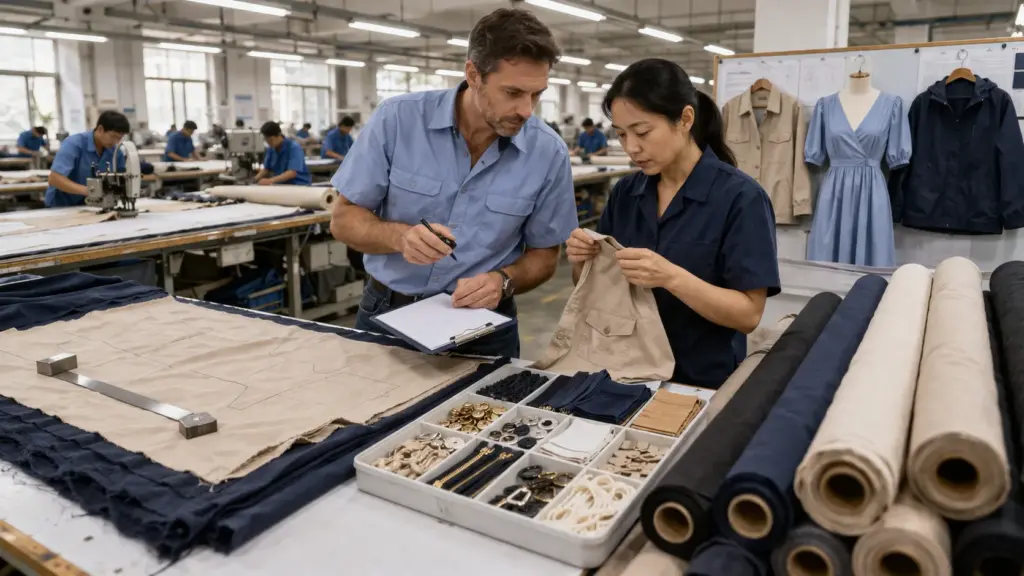
When I read a quote well, I treat it as a garment factory pricing structure made of parts: materials, trims, labor minutes, overhead, compliance, packing, logistics tasks, and risk buffers. If one part is missing or guessed, the quote looks cheaper but it breaks later.
The main cost buckets I use
I use a simple checklist when I compare quotes, because I do not want to argue about “cheap” or “expensive” without proof.
| Cost bucket | What it includes | Why it changes fast |
|---|---|---|
| Fabric | Greige, dyeing, finishing, shrink, wastage | MOQ, width, defects, yield |
| Trims | Zippers, buttons, labels, thread, interlining | Brand spec, plating, test needs |
| Labor | Sewing + cutting + finishing minutes | SMV, line balance, skill level |
| Overhead | Utilities, admin, machines, sampling | Factory scale and season load |
| Compliance | Testing, audits, certificates | Buyer rules and market rules |
| Packing | Polybag, carton, stickers, folding | Retail rules and packing method |
| Risk | Rework, delay buffer, FX buffer | Unclear tech pack, rush time |
The quote format that saves me time
When I ask for a quote, I ask the factory to show both the total and the parts. I also ask which parts are “confirmed” and which parts are “estimated.” I do this because a cost per unit clothing manufacturing number that is built on guesses will change later, and it will change at the worst time.
Why does fabric cost vs labor cost in apparel swing the total so much?
Many buyers focus on sewing cost first. That feels logical because sewing is visible. In most styles I handle, fabric decides the winner, and labor decides the surprises.
Fabric often takes the largest share of clothing manufacturing cost, so small changes in fabric spec can move the final unit price more than big changes in sewing. When I control fabric width, GSM, finishing, and wastage, I control the quote.
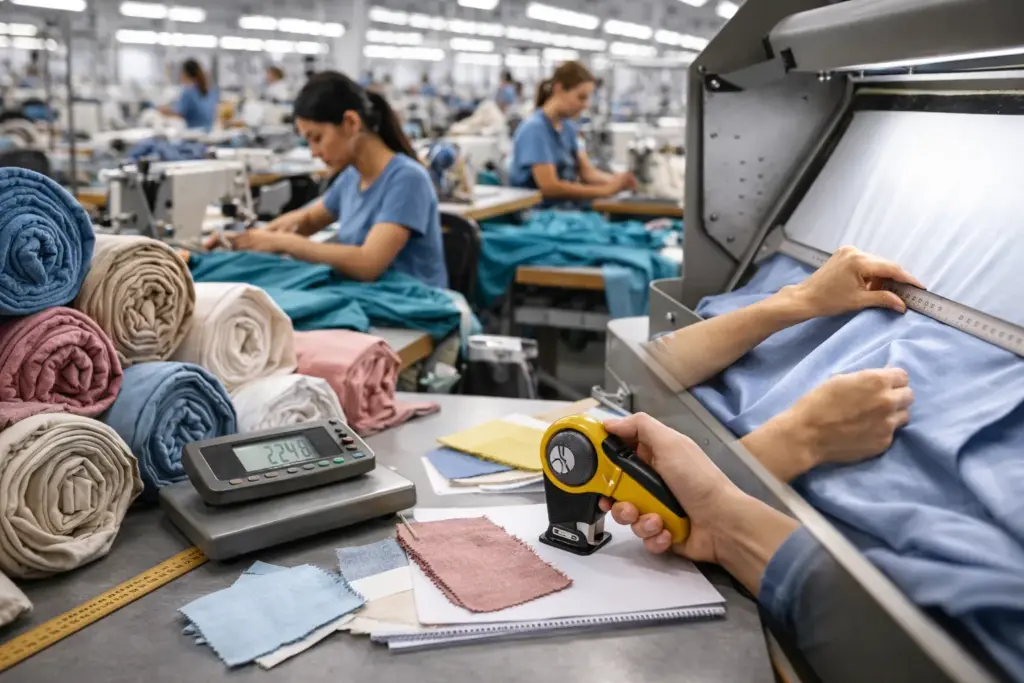
Fabric is not “just fabric”
I once worked on a women’s jacket where the buyer changed the shell from one finish to another finish that looked almost the same on a screen. The quote jumped and she asked why clothing manufacturing is expensive “all of a sudden.” I explained that the finish changed yield and defect rate, and the mill raised the minimum dye lot.
The levers that change fabric cost
I use these levers in my custom clothing cost estimate conversations:
- Width and marker yield: A wider fabric can reduce fabric wastage, but it can also cost more per meter.
- GSM and composition: A 20–40 GSM change can move price and drape and shrink.
- Dyeing and finishing: Special washes, coatings, and sueding add steps and risk.
- MOQ and color count: More colors can mean more dye lots and more leftovers.
- Shrink and skew: Higher shrink needs more allowance, so it needs more fabric.
| Fabric decision | What I check | What it does to cost per unit |
|---|---|---|
| Add a special finish | Mill process steps | Adds process cost and risk |
| Add more colors | Dye lot MOQs | Adds leftovers and surcharge |
| Change width | Marker efficiency | Changes consumption per piece |
| Tight tolerance | Rejection rate | Adds buffer and rework cost |
When two factories quote the “same” style, I often find they assumed different fabric wastage. That alone can explain a large gap.
How do labor minutes and efficiency change cost per unit clothing manufacturing?
Labor cost can look small on paper, but labor drives lead time and quality. Labor also changes a lot between factories because factories run lines in different ways.
Labor cost is not only about wage level. It is about minutes per piece, line balance, rework rate, and factory efficiency. If I compare SMV and expected efficiency, I can predict why two quotes disagree on sewing cost.
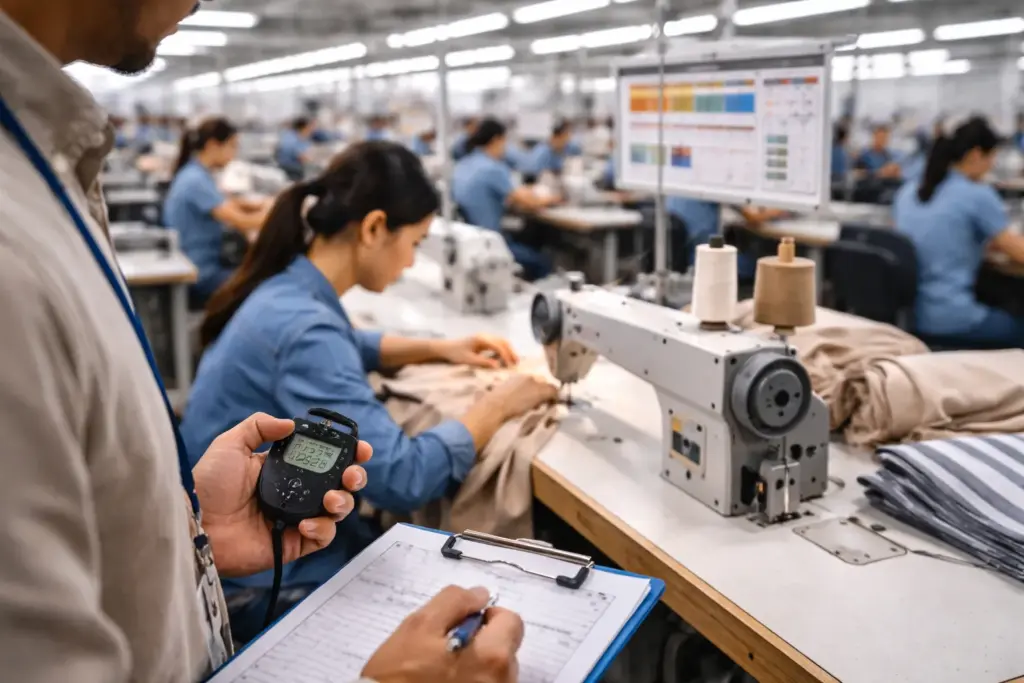
I ask a factory to share the SMV or the operation breakdown. Some factories do not share full details, but many share a summary. When they do, I can see what they assumed.
Why the same style can have different minutes
- Work method: One factory uses folders and jigs. Another factory does not.
- Skill and training: A skilled line needs fewer reworks.
- Batch size: A small run has more changeover time.
- Quality standard: A stricter standard adds inspection time and rework time.
| Labor driver | What I ask | What I look for |
|---|---|---|
| SMV | Total sewing minutes | A realistic minute count |
| Efficiency | Planned % | Stable line or new line |
| Rework | Expected % | Past data or guess |
| Line plan | Output per day | Match to delivery date |
The part buyers miss: factory loading
If a factory is busy, it may price higher because it wants fewer risky orders, or because overtime is expected. If a factory is slow, it may price lower to keep lines running. This is one simple reason why clothing manufacturing is expensive in peak season and cheaper in low season.
I often say the cheapest quote is the one that forgot something. I do not say this to scare anyone. I say it because I have lived through the “later invoice.”
Hidden costs are real costs that some quotes bundle and some quotes ignore, like testing, compliance, special packing, carton rules, metal detection, or extra QA. When I list these items early, I stop surprises and I make quotes comparable.
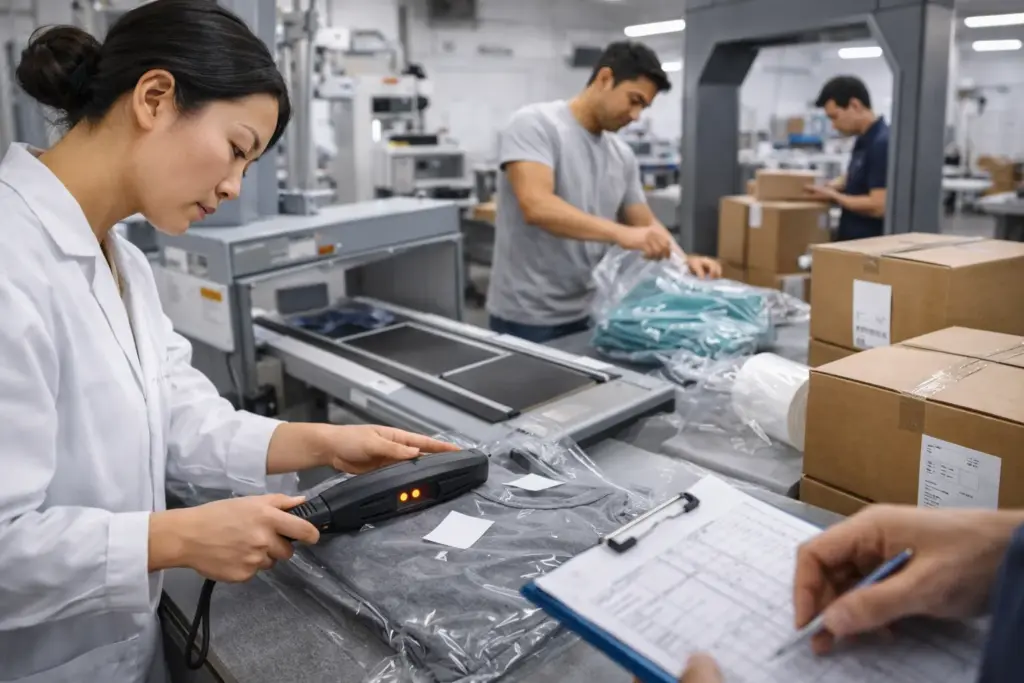
Compliance and testing
If a buyer sells in the EU, UK, or USA, testing rules can matter. Some factories include testing, and some factories assume the buyer pays it. I ask this clearly because forged or unclear certificates are a real pain point in our industry, and I prefer clean and simple proof.
Packing and labeling rules
Retail packing can be expensive. A single extra sticker or an extra fold method can add time and materials. If the buyer needs barcode placement rules, carton marks, or hangers, I want it in the quote.
| Hidden item | Common examples | Why it changes pricing factors |
|---|---|---|
| Testing | Colorfastness, nickel, azo | Lab fees and failed retests |
| Audits | BSCI, SEDEX, custom audit | Audit cost and upkeep |
| Special packing | Hangers, inserts, tissue | Material and labor time |
| Extra QA | Inline + final + AQL | More inspectors and rework |
| Tools | Molds, embroidery program | One-time cost or amortized |
Risk buffers are not “cheating”
If a tech pack is unclear, a factory adds a buffer because it expects changes. If the delivery is rushed, a factory adds a buffer because it expects overtime or air shipment for trims. I see this often in custom clothing cost estimate work. A clear tech pack and a stable approval flow can lower this buffer.
How can I get a custom clothing cost estimate that is accurate and fair?
Many buyers ask me for the “best price.” I understand that. I also want a stable price that will not break when bulk starts.
To get an accurate custom clothing cost estimate, I give the factory clear specs, confirm fabric and trims early, ask for a costed BOM, and confirm the assumptions for MOQ, wastage, testing, and packing. Then I compare quotes line by line, not only by unit price.

The checklist I send before quoting
I use this list because it reduces guesswork and it protects both sides.
Specs I include
- Tech pack with measurements and tolerances
- Fabric spec (composition, GSM, width, finish, color count)
- Trim list (zipper brand level, button finish, label types)
- Stitch and seam requirements
- Packing and carton requirements
- Target order quantity by color and size
- Shipping terms and destination
Questions I ask the factory to answer
| Question | Why I ask it |
|---|---|
| What MOQ did you assume for fabric and trims? | MOQ changes unit cost fast |
| What wastage % did you assume? | This drives consumption |
| Is testing included or excluded? | Avoid later surprise bills |
| Is the quote based on sample or drawing? | Sample can change minutes |
| What is your lead time plan? | Protect season launch |
Where bulk pricing clothing manufacturer logic starts
Bulk pricing is not magic. It comes from better yield, stable lines, and lower changeover loss. I explain this when a buyer expects the sample price to drop by 40% in bulk. I can often reduce price, but I need the right conditions.
| Condition | What I do | What it can improve |
|---|---|---|
| Higher MOQ | Lock fabric price | Lower material cost |
| Fewer colors | Reduce leftovers | Lower wastage |
| Stable repeats | Keep same line setup | Lower labor minutes |
| Early approvals | Reduce rush cost | Lower risk buffer |
When I manage the quote this way, I stop fighting about price and I start building a plan that makes price real.
Conclusion
I trust quotes more when I break them into fabric, trims, labor minutes, overhead, compliance, packing, and risk. Then I can explain gaps, fix assumptions, and protect my launch.
Why I Write This
I run Truekung in China, and I focus on B2B wholesale only. My name is Lancy Chia, and I work with a factory team of more than 200 workers. I have 20 years of experience in foreign trade clothing production and export. I produce fashion women’s clothing, jackets, skirts, dresses, jeans, T-shirts, sweatshirts, down jackets, windbreakers, coats, fashion bags, sportswear, children’s clothing, and underwear. I support OEM and ODM work for brands and supermarkets in the Netherlands, Denmark, Belgium, Norway, the UK, the USA, Germany, Australia, Thailand, Turkey, Italy, Russia, Saudi Arabia, and more. If you want to talk about your next order, you can email me at [email protected], or visit my website at https://truekung.com.
Views: 144