
Your customers want comfort, but they also want function. If your sweatshirt feels heavy, hot, or cheap, they stop buying. I design it to solve that.
Sweatshirts were designed to keep the body warm during activity while still letting sweat move out, so athletes stayed comfortable. Today, I still design sweatshirts for warmth, comfort, easy layering, and daily wear, with fabric and fit doing most of the work.
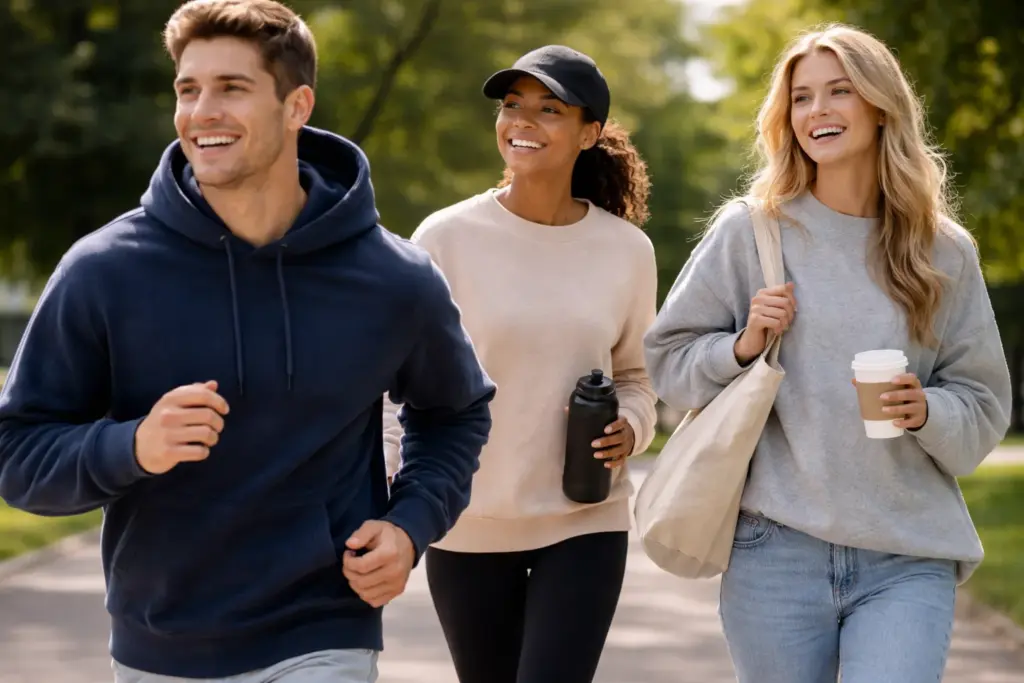
I used to think a sweatshirt was just “a soft top.” Then I started shipping bulk orders to different climates and different customers. One buyer sold to cold, windy cities. Another buyer sold to warm indoor malls. The same style failed in one place and won in another. That is why I now start with the real purpose of the sweatshirt, and I build the details around that purpose, so the product fits the customer’s life and not just a size chart.
Why were sweatshirts first made for sports and training?
People train when it is cold, and they still sweat. A bad top traps sweat, then chills the body. I fix that with warmth plus breathability.
A sweatshirt was made for active use: it adds warmth and comfort, and it helps manage sweat during movement, so the wearer stays steady before, during, and after training.
Warmth that works with motion
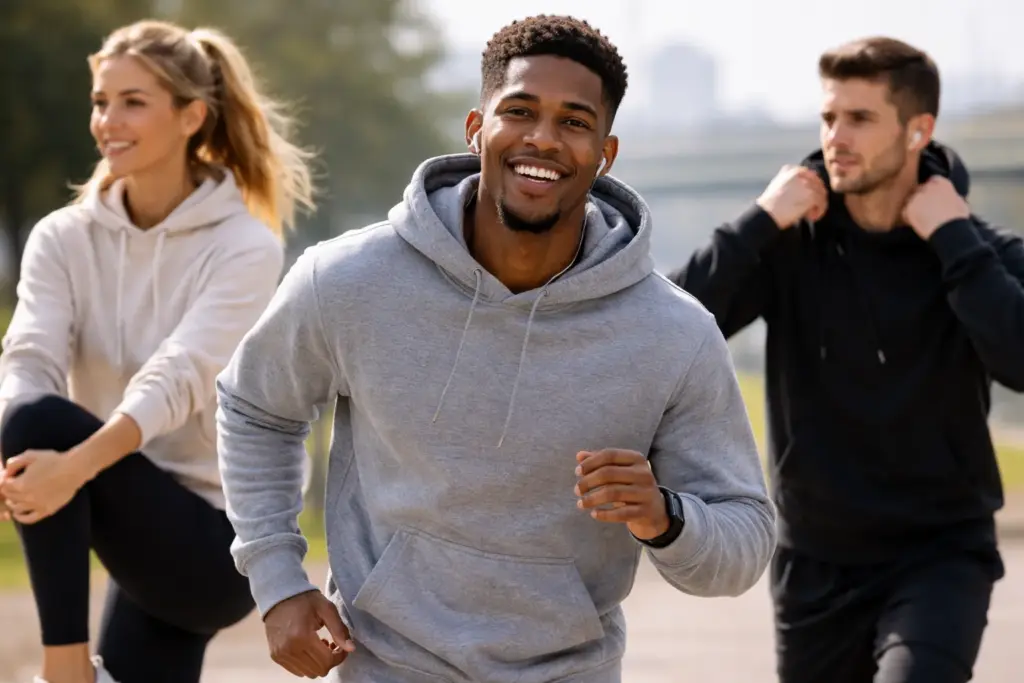
I treat warmth as a system, not a feeling. The body heats up during movement, and the fabric has to hold enough air to keep warmth, but also let moisture move. That is why I often choose fleece or brushed knits for cold seasons, and French terry for mild seasons. I also look at neckline height, cuff tightness, and hem stretch, because these parts control how air moves in and out.
Sweat control without “sports look”
Many buyers want the function, but they do not want a gym look. I usually solve this with fabric choice and inside finish. A clean outside face looks “city,” and a soft inside keeps comfort.
A simple design checklist I use
| Design point | What I check | Why it matters in real wear |
|---|---|---|
| Inside texture | brushed fleece vs loop-back terry | comfort and warmth level |
| Rib at cuff/hem | firm, not loose | keeps shape and blocks wind |
| Neck finish | smooth seam, stable rib | stops rubbing and stretching |
| Shoulder build | set-in vs raglan | changes movement and style |
| Fabric weight | light / mid / heavy | sets season and cost |
When I talk with a buyer like Maria, I ask one question first: “Will your customer wear this while moving, or while sitting?” The answer changes everything, even if the item is still called a sweatshirt, a sweat shirt, or a sudadera.
How do fabric and construction decide what a sweatshirt can do?
Buyers want “soft,” but soft can mean weak. Weak fabric pills, twists, and shrinks. I use fabric weight and stitching to keep softness and keep the shape.
Fabric and construction decide the real job of the sweatshirt: insulation, breathability, durability, and shape retention. When I control these, the sweatshirt stays wearable after many washes and many wears.
Fabric choices I use in bulk orders
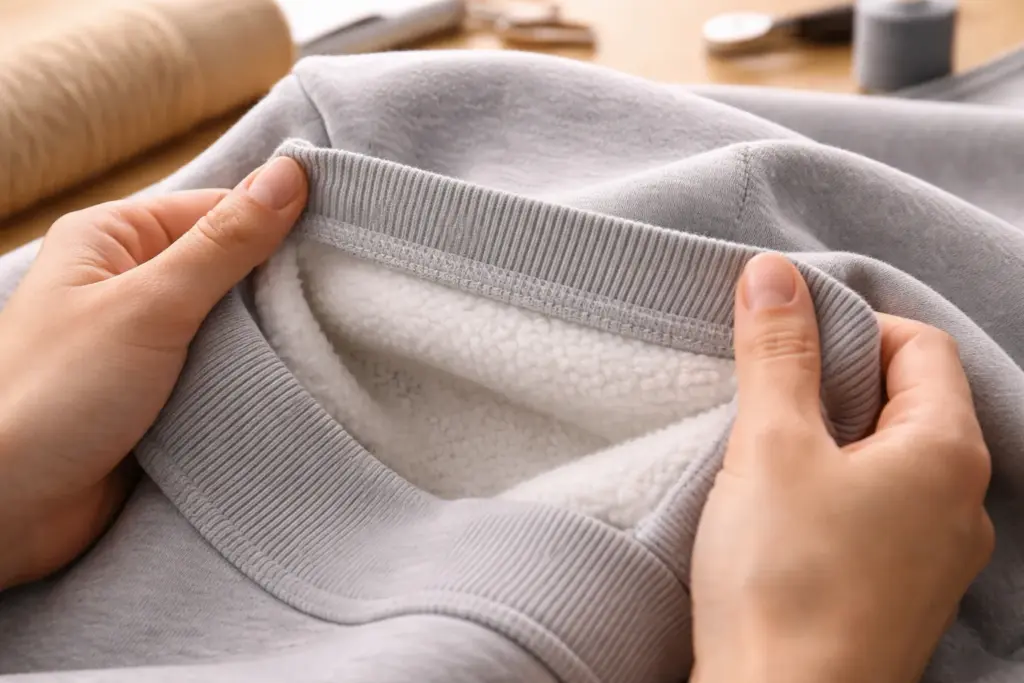
I often explain fabric like this: the outside sells first, and the inside makes repeat sales. A smooth outside prints well and looks neat. A stable inside keeps the hand-feel after washing. I also match fabric weight to the customer’s season and price point. Heavy fabric can feel premium, but it can also feel too warm in indoor retail.
| Fabric type | Feel on skin | Best for | Notes I tell buyers |
|---|---|---|---|
| Cotton fleece | warm, cozy | cold weather, premium feel | soft inside, strong warmth |
| French terry | lighter, dry feel | mild weather, layering | good for “all year” lines |
| Cotton/poly blend | stable, durable | uniforms, frequent wash | helps reduce shrink issues |
| Double-knit / ponte | structured | fashion sweatshirts | clean shape, higher cost |
Construction that buyers can inspect fast
I keep inspection simple so buyers can act fast. I tell them to pull the seam gently and look for gaps. I tell them to stretch the rib and see if it bounces back. I tell them to check if the inside sheds lint. These simple checks catch most factory problems early.
I spend extra time on the parts customers touch the most: neck tape, seam cover, and cuff rib. If these parts fail, the customer feels it every time. A customer does not email the brand about a weak neck seam. The customer just stops buying. I would rather spend a little more time in sampling than pay for returns, rework, or a bad season.
What should B2B buyers check when ordering sweatshirts for women and for global markets?
A buyer can lose a season from late delivery or wrong fit. A buyer can also lose trust from bad labels or fake papers. I reduce risk with clear specs, checks, and simple communication.
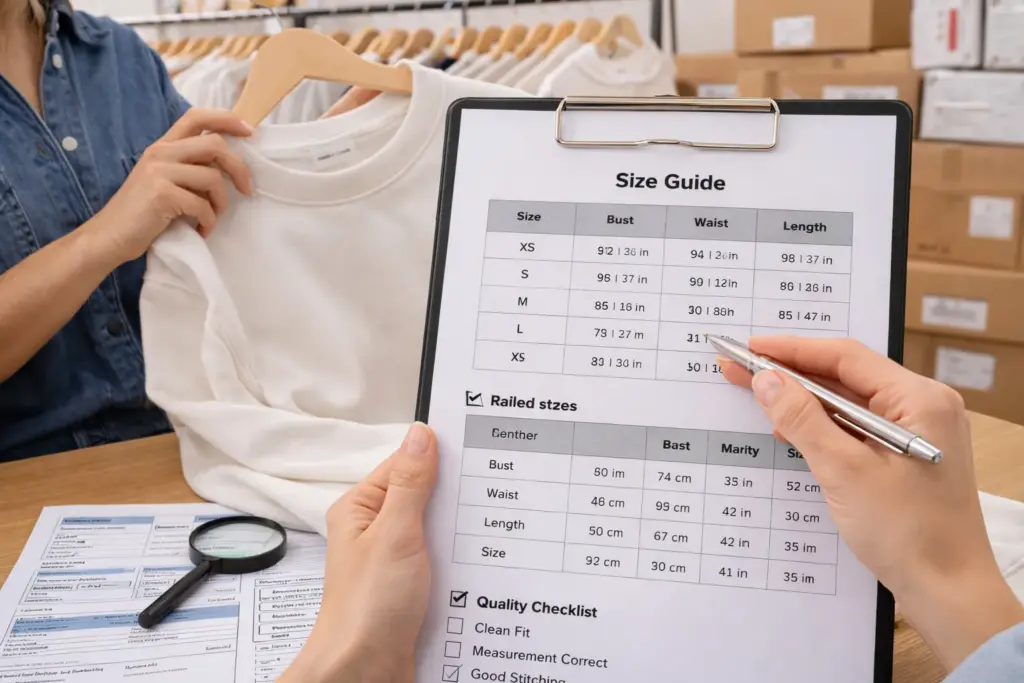
For wholesale orders, a sweatshirt needs clear fit rules, clear size grading, stable quality checks, and clean paperwork. This matters even more for sweat shirt for women lines, since customers judge fit and drape faster.
Fit and grading that match the market
I do not assume one fit works everywhere. I see different tastes in Russia, the UK, and the USA. Some markets want longer body length. Some markets want wider sleeves. Some want a tighter rib hem. I ask buyers for one best-selling reference sample if they have it. If they do not, I propose two fits: a regular fit for mass sales, and a cleaner fit for fashion racks. I also remind buyers that “women’s sweatshirt” is not one shape. A cropped style and a tunic style need different shoulder and armhole balance.
A buyer-facing QC plan I use
| Step | What I provide | What the buyer learns |
|---|---|---|
| Pre-production sample | full spec and fabric swatch | confirms hand-feel and fit |
| Size set | all key sizes | catches grading issues early |
| Inline check | photos + measurements | stops defects before packing |
| Final check | AQL or agreed rules | reduces claims and returns |
| Packing list | carton marks + count | speeds warehouse receiving |
Search language and “typo” reality
I run a factory, but I also read buyer emails and Google terms. I see many spellings for the same product. I keep a list so our listings and tech packs match how people actually search. Some buyers type sweatshirt. Some type sweatshirts. Some type sweat shirts. Some type sweetshirt or swaetshirt by mistake. Some type switsort. Some type sudadera in Spanish. Some type collegepaita in Finnish. I even see weatshirt, swear shirt, and swatshirt.
| Real search terms I see | More variants buyers type | Common typos I still recognize | Extra odd ones that appear |
|---|---|---|---|
| sweatshirt, sweatshirts, what are sweatshirts | sweat shirt, sweat shirts, sweatershirts, sweatershirts | sweetshirt, sweeatshirt, sweatshurt, sweatshurt | switsort, feloa, sweatsgirts |
| sweatshirt for women | sewat shirt, swaet shirt, swear shirt | swaetshirt, swetshirts, sweatshrts | sweatershit, sweartshirt |
| shweatshirt, sweathshirts | seweatshirt, sweatshirys, sweatshirta | sweatshirst, dweatshirt, weatshirt | swetershirt, swetershirt |
I do not add these words to look clever. I add them because missed communication causes missed orders. When a buyer and a factory use different words, small details get lost, and small details decide repeat business.
Conclusion
I design sweatshirts for warmth during activity, comfort in daily life, easy layering, and long wear, and I use fabric, fit, and QC to make that purpose real.
Why I Write This
I run Truekung in China, and I do B2B wholesale only. I work with a factory team of over 200 workers, and I manage OEM/ODM for brands and supermarkets worldwide.
I have 20 years of experience in export clothing. I produce fashion women’s clothing, jackets, skirts, dresses, jeans, T-shirts, sweatshirts, down jackets, windbreakers, coats, fashion bags, sportswear, children’s clothing, and underwear.
I ship to the Netherlands, Denmark, Belgium, Norway, the UK, the USA, Germany, Australia, Thailand, Turkey, Italy, Russia, Saudi Arabia, and more. If you want to talk about your next sweatshirt line, I answer fast and I keep specs clear.
Views: 251