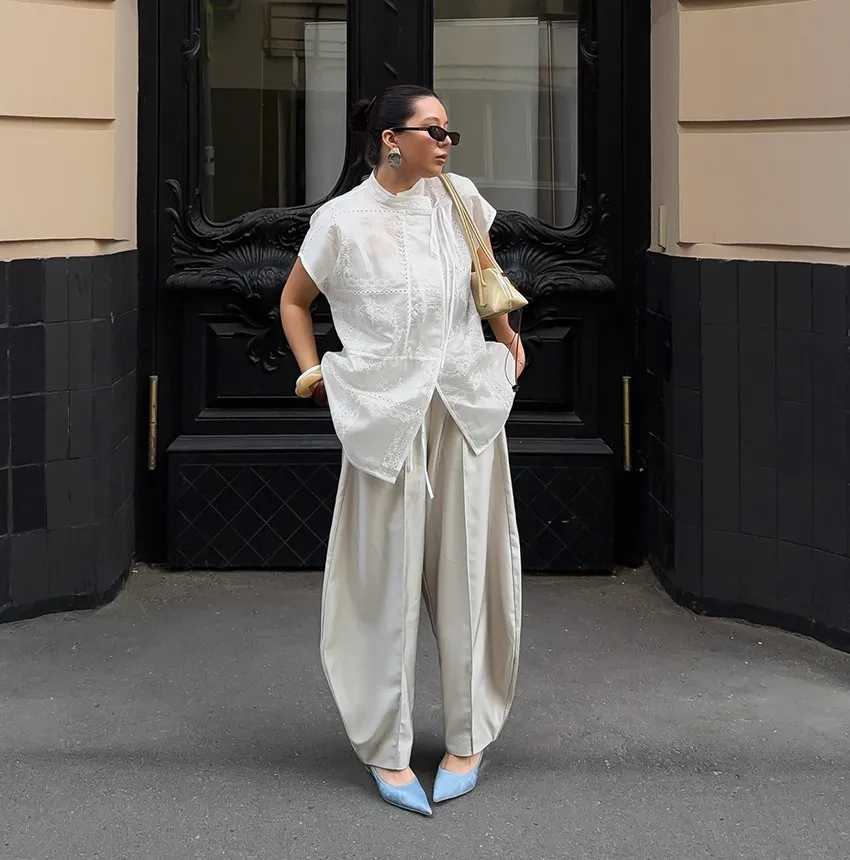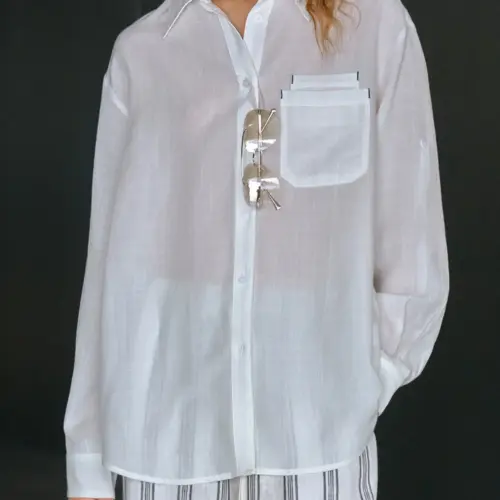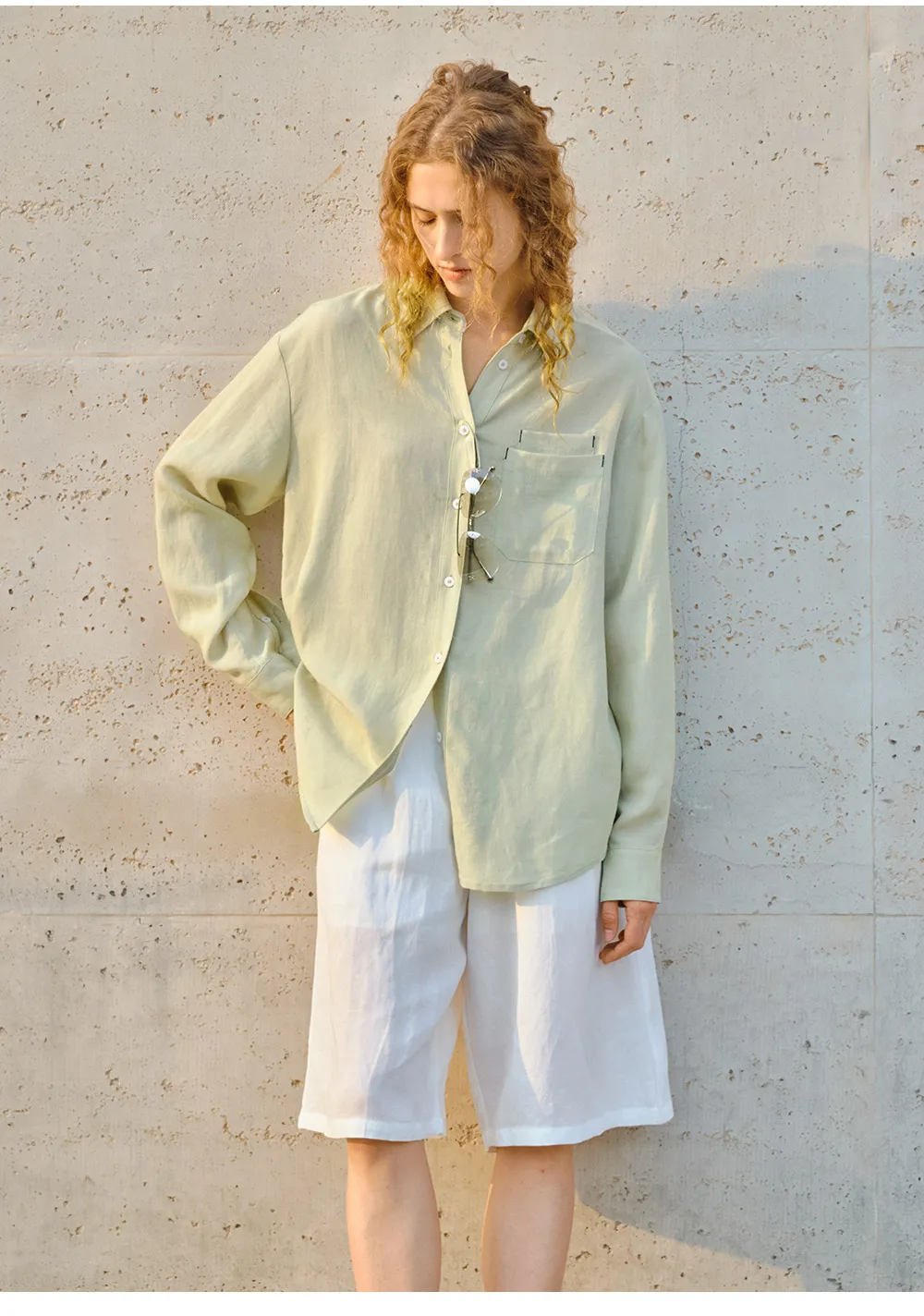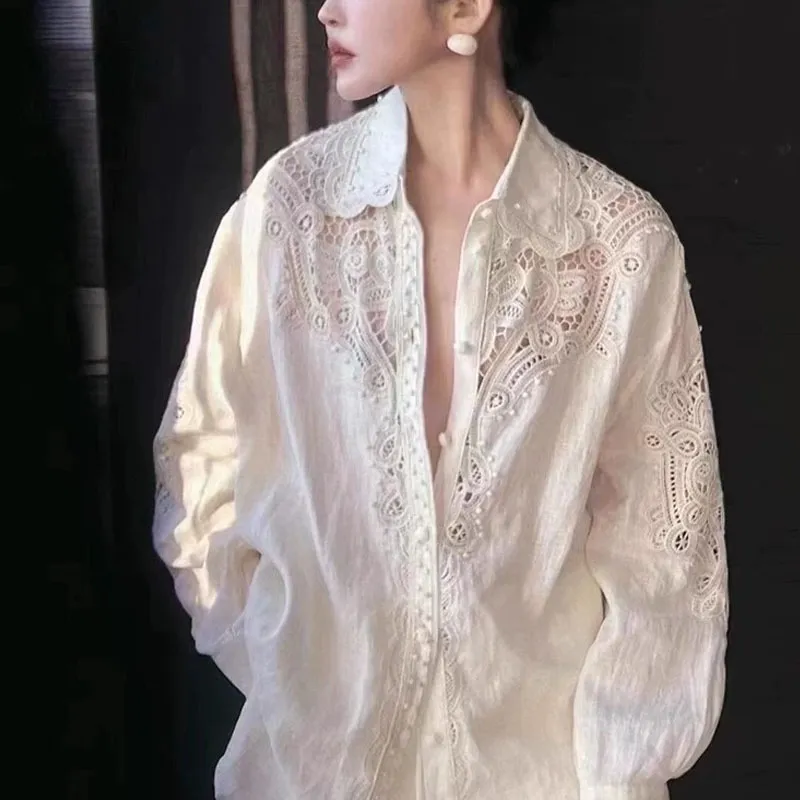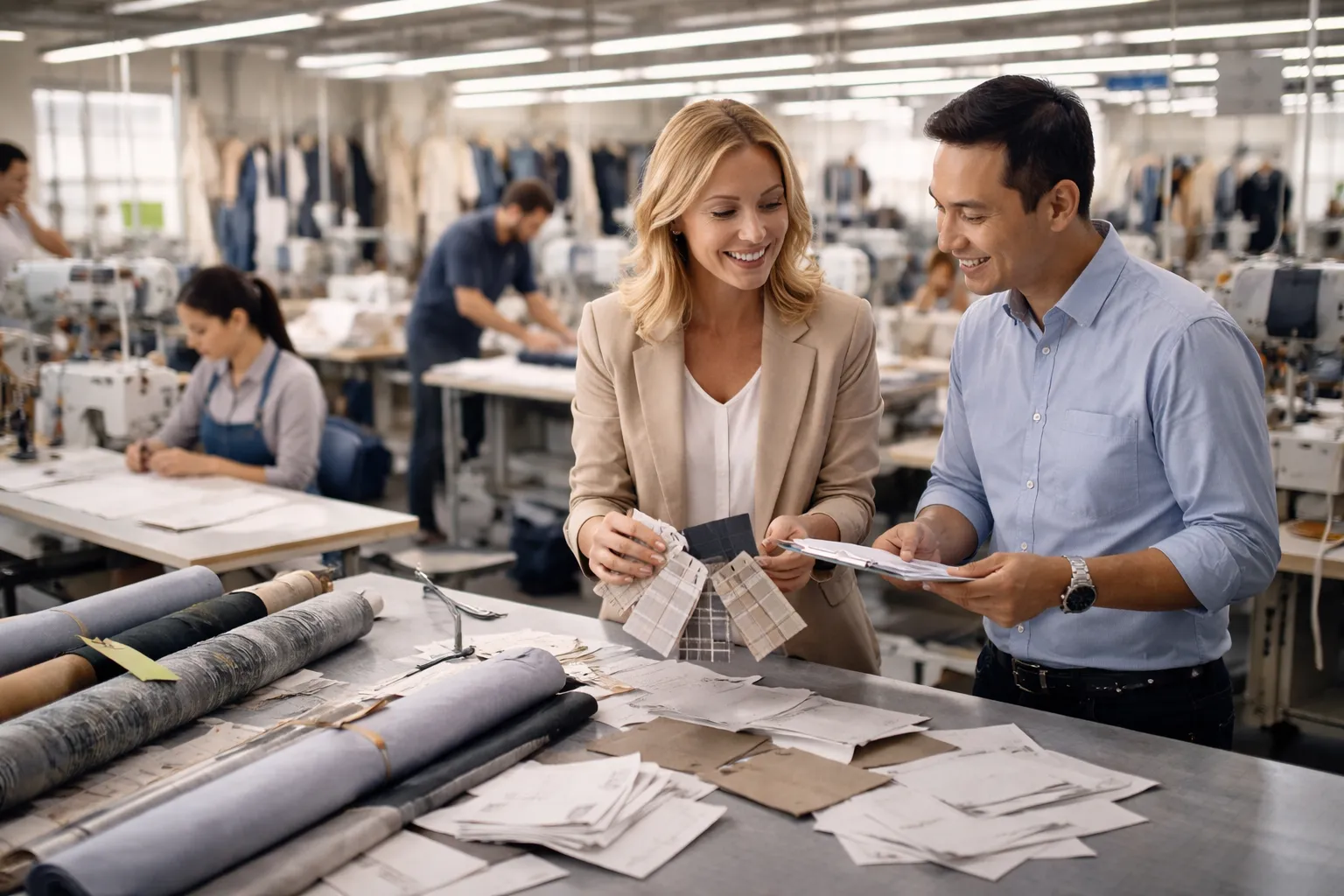

I see brands lose money because they pick the wrong factory model. I hate that feeling. I want you to avoid delays, bad fit, and stock that will not move.
Private label is best when I want speed, lower MOQs, and proven styles from a private label clothing manufacturer. Cut and sew is best when I need a unique fit, a new silhouette, and full control of every detail, and I can pay for samples and time.
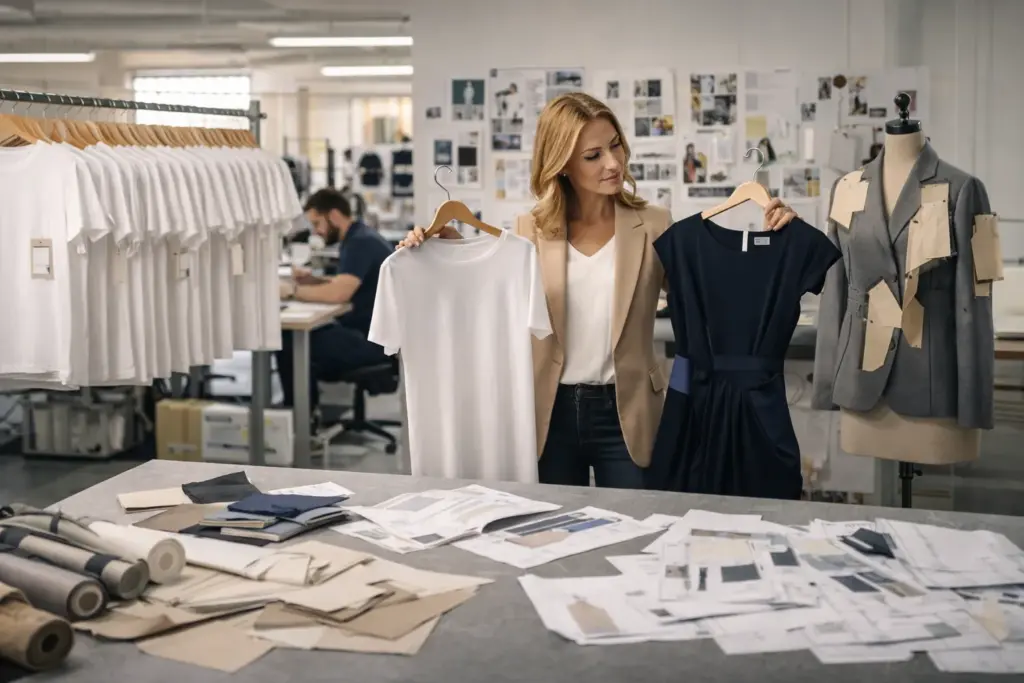
I remember a buyer who wanted “custom” but needed delivery in eight weeks. I asked one question about her sales calendar, and her answer changed the whole plan, and it can do the same for you.
What does “private label” really mean when I work with a private label clothing manufacturer?
Many buyers want fast growth, but they start with slow development. Many buyers feel stuck between quality and speed. I see that stress in calls every week.
Private label means I use existing patterns and proven styles, and I put your brand on them. I can still change key points like fabric, trims, labels, and colors, but I do not start from zero.
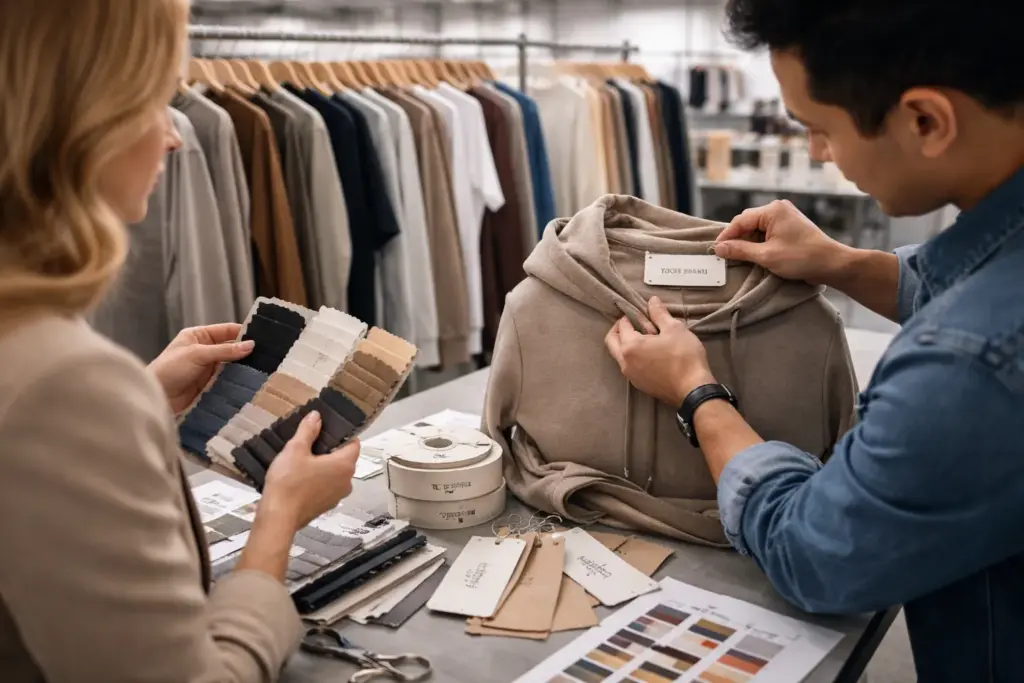
How I explain private label in plain steps
I describe private label as a shorter branded clothing production process. I pick a base style from a factory line. I match it to your target customer. I then add your brand identity through labels, packaging, and small design updates. I also lock quality with clear specs and a pre-production sample.
What I can customize without “reinventing” the product
I can adjust many items without rebuilding the pattern. I can change fabric weight and composition. I can change wash effects and printing. I can change buttons, zippers, and cords. I can change fit within a safe range. I can also add size labeling that matches your market.
A simple decision table I use with buyers
| Choice point | Private label | What it means for me |
|---|---|---|
| Base pattern | Already made | I save development time |
| Fabric choices | Many options | I balance cost and hand feel |
| Branding | Full branding | I build my brand look fast |
| MOQ | Often lower | I test more SKUs |
| Lead time | Usually shorter | I hit the selling season |
When Maria from Russia asks me for “private label clothing vs custom clothing,” I ask what she wants to test first. I often suggest private label for her first drop in a new category. I like that path because it protects her cash while she learns what sells.
What is cut and sew manufacturing in apparel, and why does it cost more?
Some brands want a signature fit, but they choose a shortcut. Some brands want to stand out, but they use the same blocks as everyone else. I see brands pay twice when they do not decide early.
Cut and sew manufacturing in apparel means I develop or modify a pattern, I cut fabric from rolls, and I sew the garment from parts. I build the product piece by piece. I also test fit and construction through multiple samples.
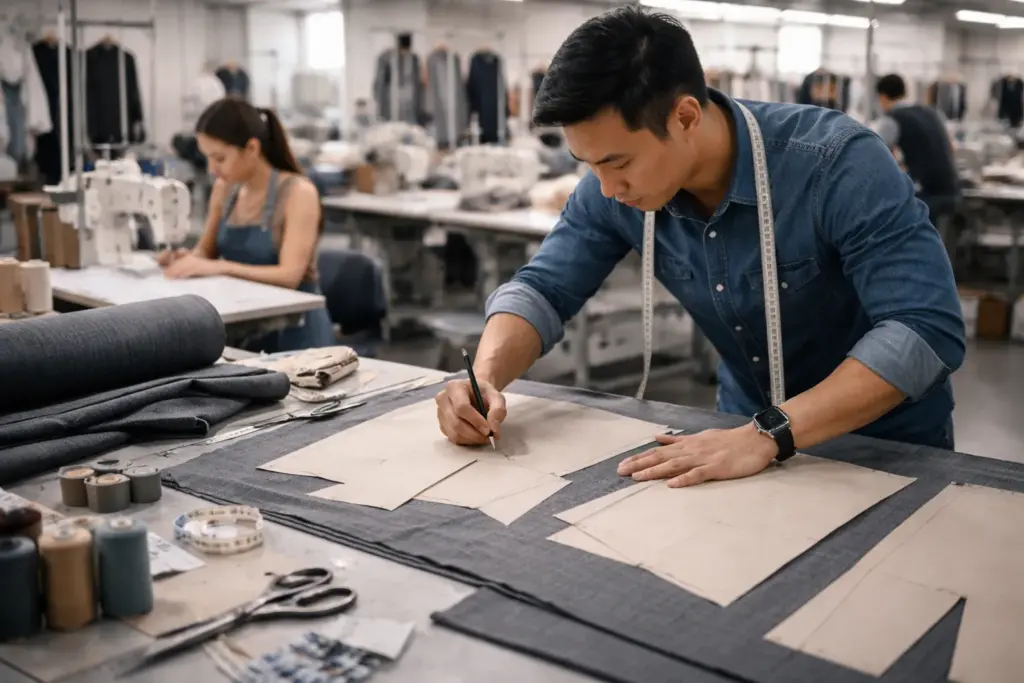
What I do during custom clothing development steps
I start with a tech pack or a reference sample. I create a pattern or modify a block. I make a first sample. I run a fit session. I correct the pattern. I confirm fabric shrinkage and color fastness. I then make a size set sample. I finally approve a pre-production sample before bulk.
Why the cost is higher
Cut and sew needs time from skilled pattern makers. Cut and sew needs more sampling rounds. Cut and sew needs more meetings and clearer specs. Cut and sew also creates more risk if the brand changes its mind late. I price that risk into the work.
A table that shows where the money goes
| Cost driver | Cut and sew impact | What I do to control it |
|---|---|---|
| Pattern making | Higher cost | I reuse blocks when possible |
| Sampling rounds | More rounds | I set a clear sample plan |
| Fabric testing | More required | I test early on bulk fabric |
| Fit approvals | More time | I schedule fixed review dates |
| Small mistakes | More expensive | I use a tighter QC checklist |
I once worked with a brand that wanted a new jacket shape with a special collar. I warned them that the collar would need extra sampling. They agreed, and the final product sold well. I also saw a similar brand rush the same idea, and they shipped late, and they missed winter.
Private label vs cut and sew clothing: how do I compare them for real business goals?
Many buyers compare only price per piece. Many buyers forget time and risk. I watch brands win when they compare the whole system.
Private label vs cut and sew clothing is a choice between speed and control. Private label gives me a faster path to market with stable fit. Cut and sew gives me a unique product that can defend my brand, but it needs time and clear decisions.

I compare by five business goals
I look at timeline, cash flow, and brand uniqueness. I also look at quality risk and reorder speed. I ask how many SKUs you want. I ask how many colors you need. I ask if you need a new fit that your customer cannot find elsewhere.
What happens inside the factory
Private label uses an existing workflow. My line already knows the sewing steps. My QC team already knows the weak points. Cut and sew needs new SOPs. Cut and sew needs new sewing training for tricky parts. Cut and sew also needs more checks in early production.
| Goal | Better choice | Reason |
|---|---|---|
| Launch fast | Private label | I skip most development time |
| Test many styles | Private label | I keep MOQs and risk lower |
| Unique fit and shape | Cut and sew | I control pattern and grading |
| Strong brand story | Cut and sew | I build a “why this product” |
| Fast reorders | Private label | I repeat proven construction |
I tell buyers that the right choice depends on their calendar. I also tell them that the right choice depends on their content plan. A unique cut and sew product needs strong photos and clear fit content. A private label product needs strong styling and price strategy.
White label vs private label clothing: what mistakes do I see buyers make?
Many buyers use “white label” and “private label” like they are the same. Many buyers then get surprised by limits. I do not want that surprise to hit your launch.
White label means I sell a ready product with minimal changes, and I usually only add your logo and packaging. Private label means I still start from a factory base style, but I allow more changes in fabric, trims, and details, so your product feels more like “yours.”
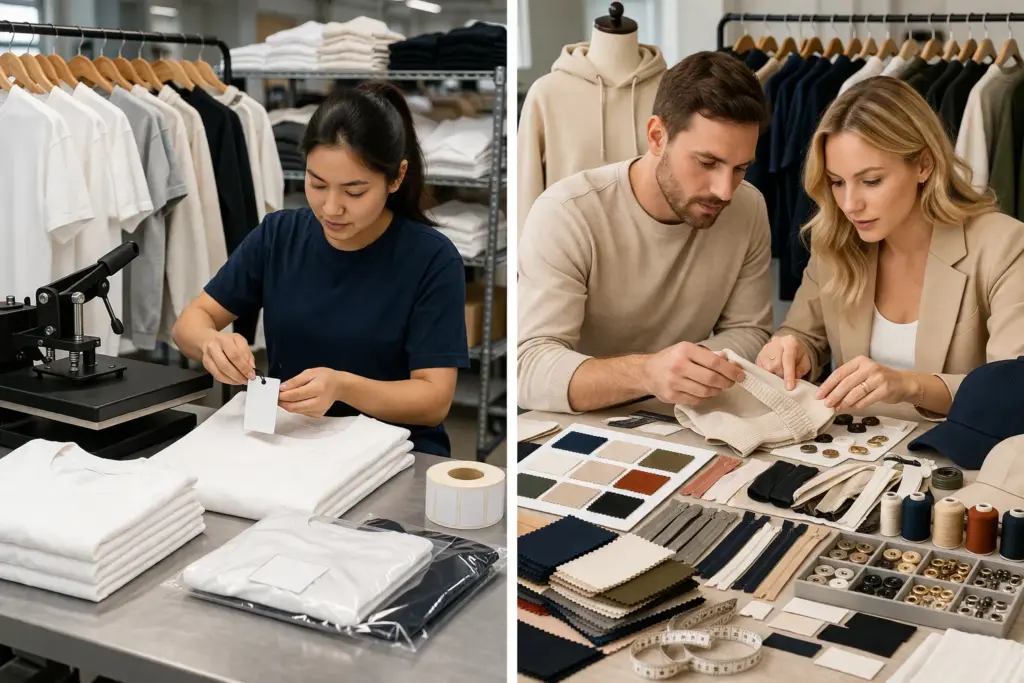
Where white label fits best
White label works when you need speed above all else. White label works when your market accepts basic designs. White label works when you want to test a channel. I often see it in small online shops and corporate orders.
Where private label is safer for long-term brands
Private label gives me more room to protect my margins. Private label lets me move away from the “same as everyone” look. Private label also lets me plan a consistent brand line, because I can keep the same fit and update details each season.
A clear table that prevents confusion
| Item | White label | Private label |
|---|---|---|
| Design change room | Very limited | Medium to high |
| Fabric options | Often fixed | Many choices |
| Branding | Labels and pack | Labels, pack, and details |
| Differentiation | Low | Medium |
| Typical use | Quick test | Build a brand line |
I had a buyer who asked for white label but wanted a special wash, custom zipper puller, and unique lining print. I told her that she wanted private label, not white label. She changed the plan early, and she saved weeks.
How do I choose between a custom apparel manufacturer vs private label for my next season?
Many brands pick a model based on emotion. Many brands then blame the factory when the plan breaks. I prefer a simple checklist that keeps the plan stable.
A custom apparel manufacturer vs private label choice is about your brand edge and your operating skill. If I can manage tech packs, fit feedback, and longer lead times, cut and sew can build a stronger product moat. If I need cash-friendly testing and fast delivery, a private label clothing manufacturer is the safer move.
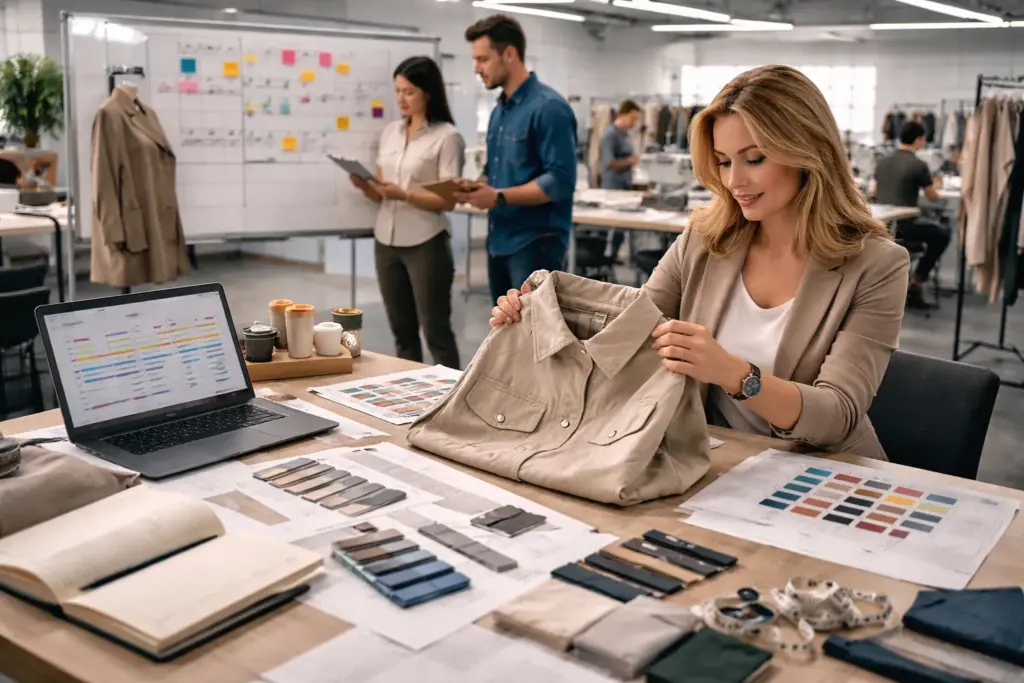
My checklist before I recommend a model
I ask about your selling season and your shipping method. I ask about your target price and your quality level. I ask about your size range and fit requirements. I ask if you have a tech designer or a clear tech pack. I ask how many revisions you can handle without stress.
A practical “two-track” plan I often use
I often run private label for cash flow SKUs. I then run cut and sew for hero pieces. This method keeps newness in the line. This method also keeps the factory workload stable. It also keeps your buyers confident because you deliver basics on time.
A structured table for final choice
| Your situation | Best model | Why it works |
|---|---|---|
| First season in a new market | Private label | I reduce risk and move fast |
| You have strong design DNA | Cut and sew | I build a signature product |
| You need certification control | Cut and sew | I track materials and process |
| You need fast repeats | Private label | I reorder with less rework |
| You want both growth and identity | Mixed plan | I protect cash and build brand |
I run Truekung in China, and I work with brands that sell in Europe, the UK, and the USA. I see that the best brands do not chase “perfect.” They chase “on time and on brand.” I can help you do that when you pick the right apparel manufacturing methods from the start.
Conclusion
I choose private label for speed and safer testing. I choose cut and sew for unique fit and full control. I match the model to my season plan and cash plan.
Why I Write This
I am Lancy Chia from Truekung. I run a clothing factory with over 200 workers in China. I provide OEM/ODM and wholesale supply for brands and supermarkets worldwide. If you want to talk, I reply at [email protected] and I share more at https://truekung.com.
Views: 74