
I see many new brands panic when a factory quotes a big number. They fear stock, cash pressure, and slow sales. That fear can push them into a bad first order.
You can negotiate a clothing manufacturer MOQ by linking it to factory cost drivers, offering a smarter product mix, and using phased production so you buy less inventory while the factory still earns a stable margin.

I still remember my first “real” negotiation where I tried to win by only asking for a lower MOQ. I sounded brave, but I was not solving the factory’s problem. If you keep reading, you will see the moves that lower MOQ and also lower your inventory risk.
What do I need to know before I negotiate a clothing manufacturer MOQ?
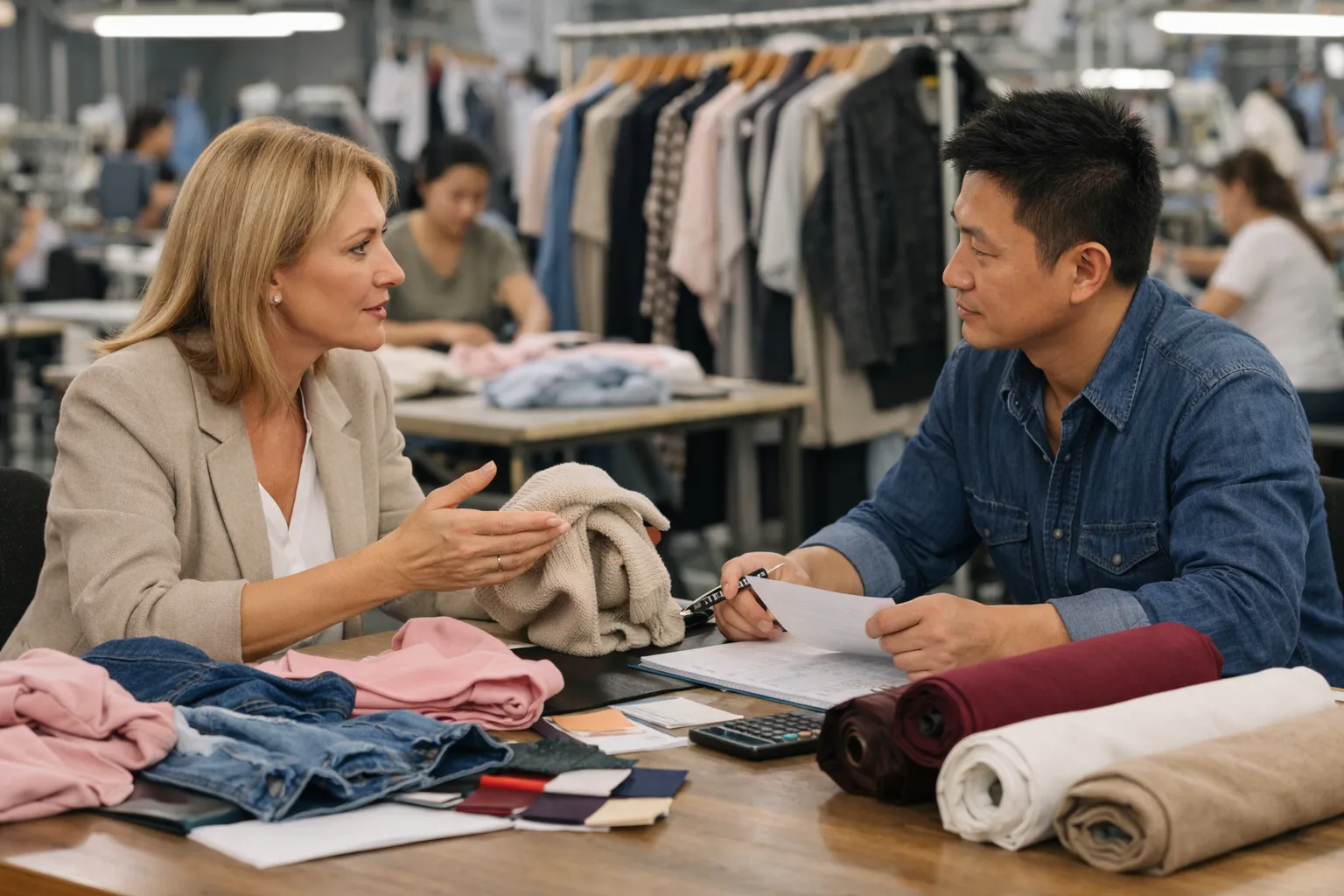
MOQ talks feel like a fight when I do not know what the number is protecting. I have seen buyers push hard, then get a “yes,” and then face delays and quality issues. That is a different kind of risk.
Before you negotiate MOQ, map what the factory must pay for setup, materials, and line planning, then decide which parts you can simplify for the first order so the factory can accept a smaller run without losing money.
What MOQ really covers
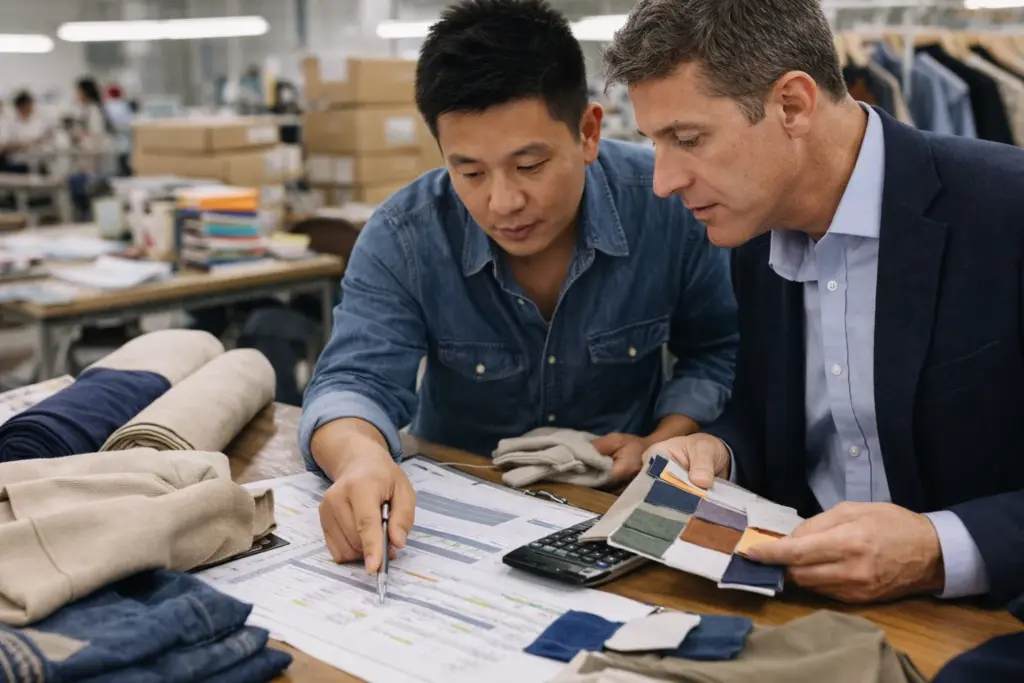
MOQ is not only about profit. It is also about waste and planning. When I talk to a factory team, they often worry about these items first:
- Fabric and trim minimums from their suppliers
- Cutting waste when the marker is not efficient
- Line change time, sampling time, and QC setup
- Packing materials and carton minimums
- Shipping and payment risk for small buyers
What I prepare before I ask for a lower MOQ
I do better when I show that I understand the production flow. I bring a clear tech pack, a size chart, and a strict color plan. I also pick one base fabric and one base trim set. When I do that, I can ask for “reduce MOQ clothing production” in a way that sounds fair. I also set my own inventory risk clothing brand limit. I decide the maximum units I can hold for 90 days.
| Cost driver | Why it pushes MOQ up | What I change for a first order |
|---|---|---|
| Fabric minimums | Mill wants bigger yardage | Use in-stock fabric or one common fabric |
| Dye lots | Small dye lots cost more | Use stock colors or fewer colors |
| Line setup | Time is fixed cost | Keep the same style details across SKUs |
| Trims | Supplier MOQs | Use common buttons, zippers, labels |
| QC and packing | Setup time | Use standard packing and fewer pack ratios |
When I know these points, I can talk like a partner. That tone matters, even with confident buyers like Maria, because the factory can sense if the request is grounded in real constraints.
How can I negotiate MOQ with a clothing manufacturer using cost and process levers?
Many founders ask me “how to negotiate MOQ with clothing manufacturer” and they only bring one lever: pressure. Pressure can work once, but it can also raise hidden costs. I prefer levers that reduce risk on both sides.
To negotiate MOQ, I trade reduced complexity for smaller quantities, offer a style and color plan that keeps the line stable, and use price steps so the factory earns more per unit at lower volume while I avoid buying excess inventory.

Lever 1: Build a “one body, many looks” plan
I often start with one proven block and one fabric. Then I create variations with prints, labels, and small details. This is where small batch production benefits show up. The factory cuts once, and the sewing line repeats the same steps. That lowers their fear. It also helps me test demand with less stock.
Lever 2: Use price steps instead of begging for a favor
I say it directly: “If I buy fewer units, I can pay a bit more per unit.” This frames apparel production cost per unit as a math problem, not an ego problem. Many low MOQ clothing manufacturers for startups will accept this if the margin is clear and the workflow stays simple.
Lever 3: Split the order in a factory-friendly way
I do not split in a way that creates chaos. I split by what the factory can reuse. For example, I keep fabric and trims the same, and I split sizes or prints. That keeps procurement clean.
| Negotiation lever | What I offer | What I ask for | Why it works |
|---|---|---|---|
| Price steps | Higher unit price at lower qty | Lower MOQ | Factory protects margin |
| Shared materials | One fabric, shared trims | Smaller run per style | Factory reduces sourcing pain |
| Simple color plan | 1–2 colors first | Lower color MOQ | Less dye risk |
| Clean tech pack | Fast approvals | Shorter lead time | Less rework cost |
| Deposit and terms | Clear payment plan | Reserve line time | Factory lowers credit risk |
I also talk about the second order on day one. I say what would trigger reorder. If sell-through hits a target, I reorder fast. That makes the first order feel like the start, not a one-time event.
What small order clothing production strategy keeps inventory risk low after the first deal?
A small first order can still create inventory risk if I choose the wrong SKU mix. I have seen brands win a low MOQ and still lose cash because they bought too many sizes, too many colors, and too many styles at once.
A safe small order clothing production strategy is to test demand with a tight SKU set, use staged production or partial shipment, and set reorder rules so you scale only the winners while you exit slow styles fast.
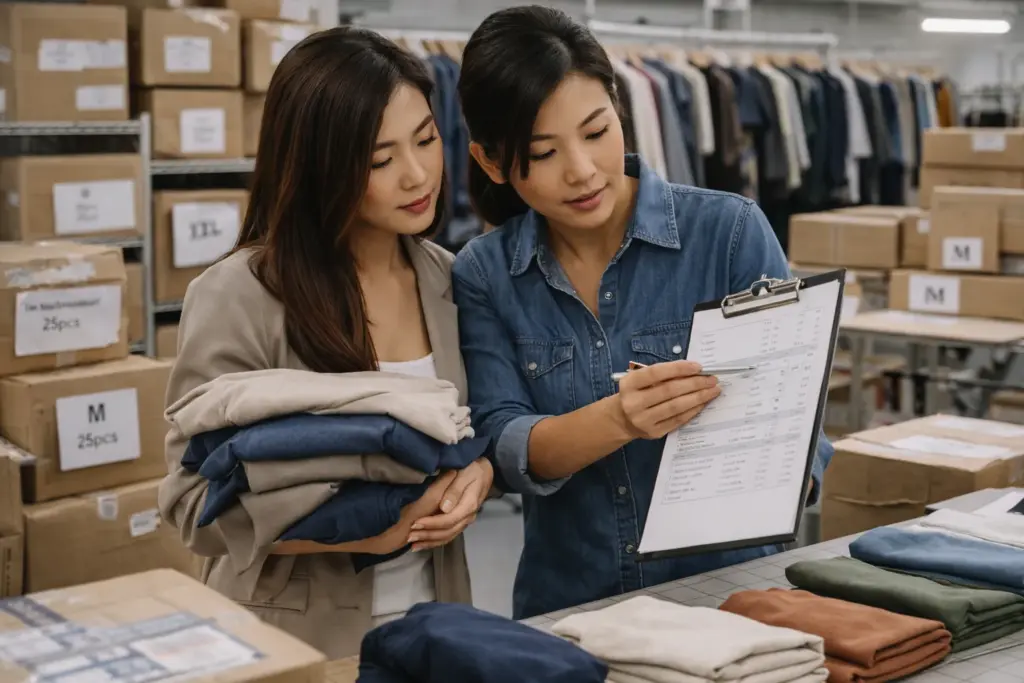
Keep the SKU set narrow and logical
For a first order, I pick a hero style and one support style. I keep size runs realistic. I use real sales data if I have it, and if I do not, I start with a conservative curve. This is how I reduce MOQ clothing production without creating a messy warehouse.
Use staged production to cut risk
If the factory agrees, I set a staged plan:
- Stage A: produce the minimum for launch
- Stage B: reserve capacity for fast reorder
- Stage C: optional add-on if sales are strong
This way, I still look serious to the factory. I also protect my cash. If I sell fast, I unlock Stage B. If I sell slow, I stop after Stage A.
Make quality and compliance part of the MOQ deal
When MOQ goes down, the factory might be tempted to rush. I protect myself with clear inspection points and certificate checks. Maria’s pain point about forged certificates is real in this industry. So I build simple controls into the plan.
| Risk area | What can go wrong | My control for a first order |
|---|---|---|
| Inventory | Too many slow SKUs | 80/20 focus on hero styles |
| Quality | Inconsistent stitching | Pre-production sample + inline checks |
| Compliance | Wrong or fake docs | Verify certificates and lab reports |
| Delivery | Missed season | Lock materials early, confirm schedule |
| Cash | Overstock and slow turns | Stage A/B plan and reorder rules |
When I run this playbook, I do not need to gamble. I can start small, learn fast, and still keep the factory motivated to support me.
Conclusion
I negotiate MOQ by removing complexity, paying fairly for small runs, and using staged production, so I protect both factory margin and my inventory risk.
Why I Write This
I am Lancy Chia from Truekung in China. I run wholesale clothing production with OEM/ODM support, and I help brands balance MOQ, cost per unit, and delivery without taking on unsafe inventory.
Views: 84