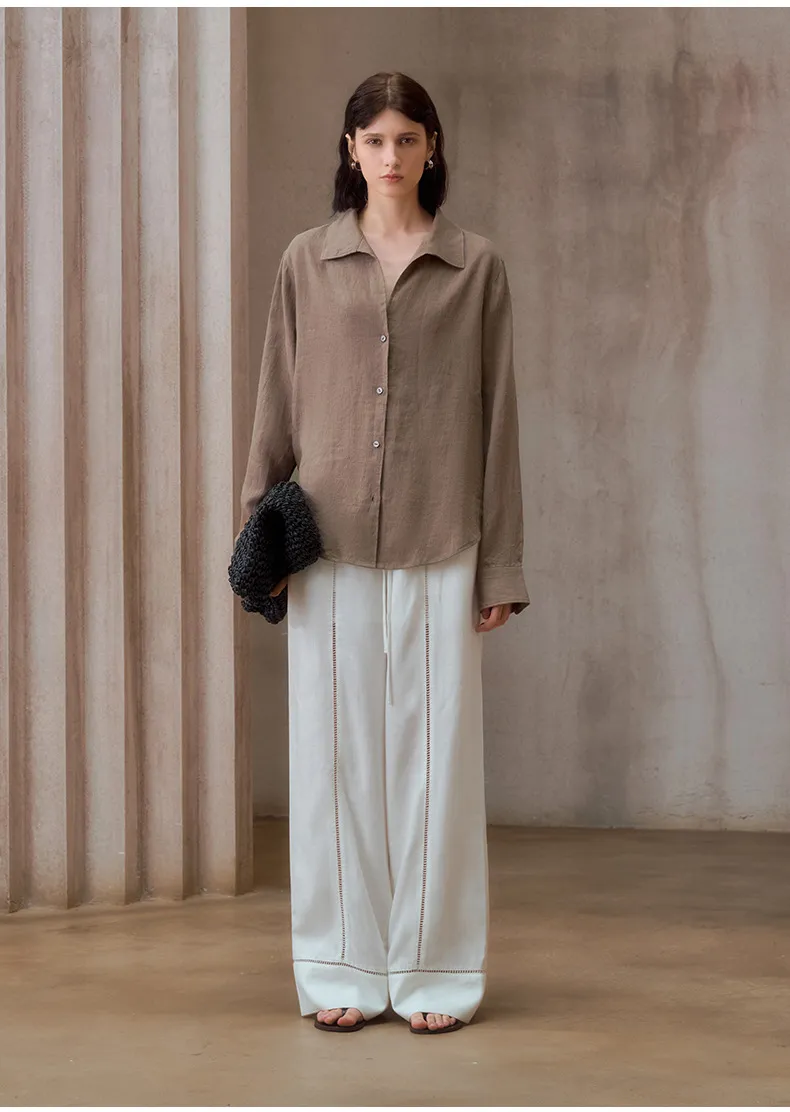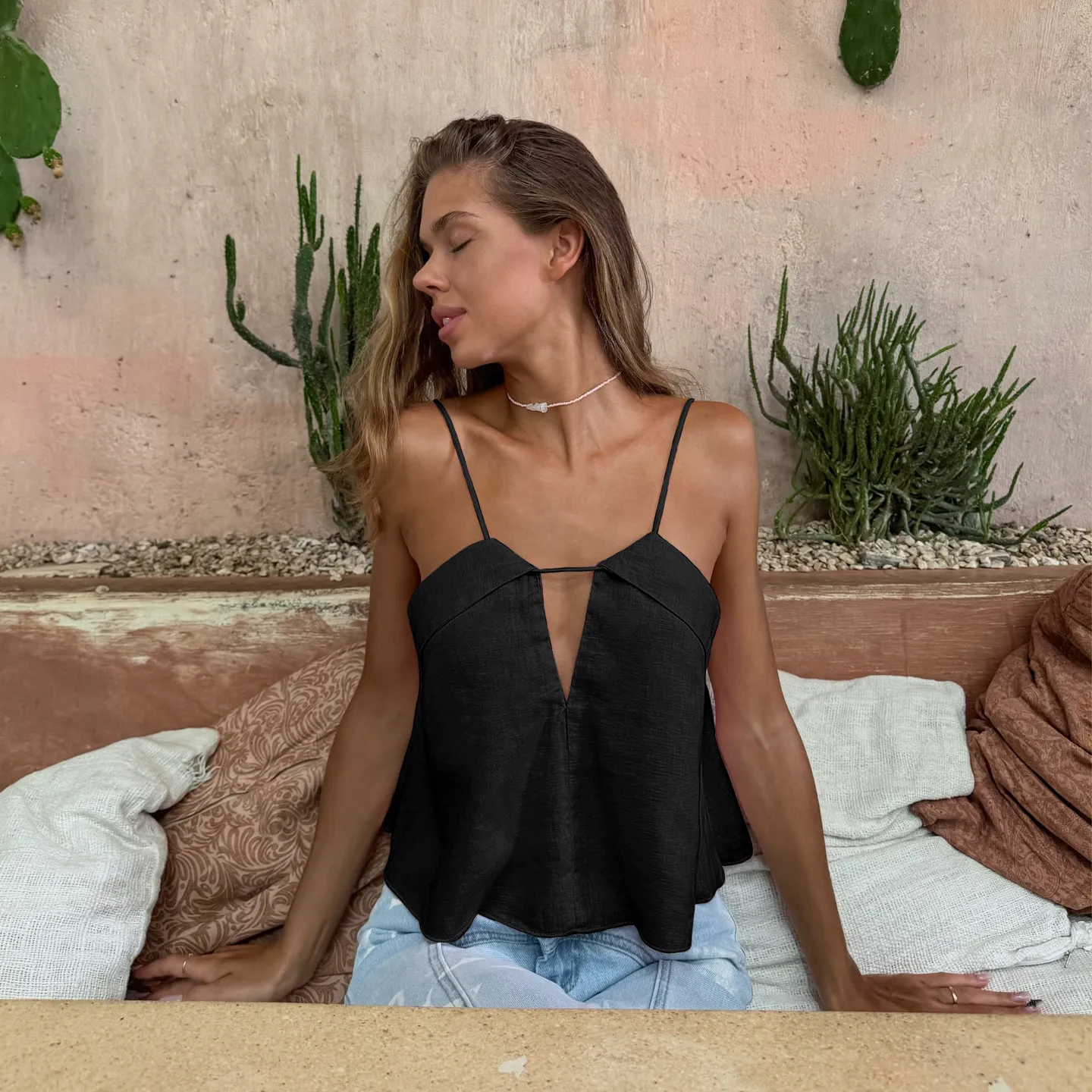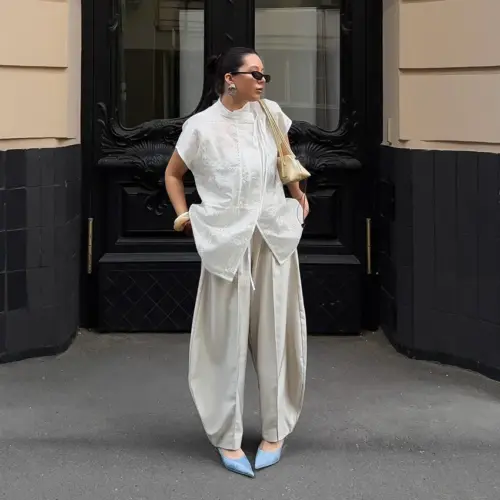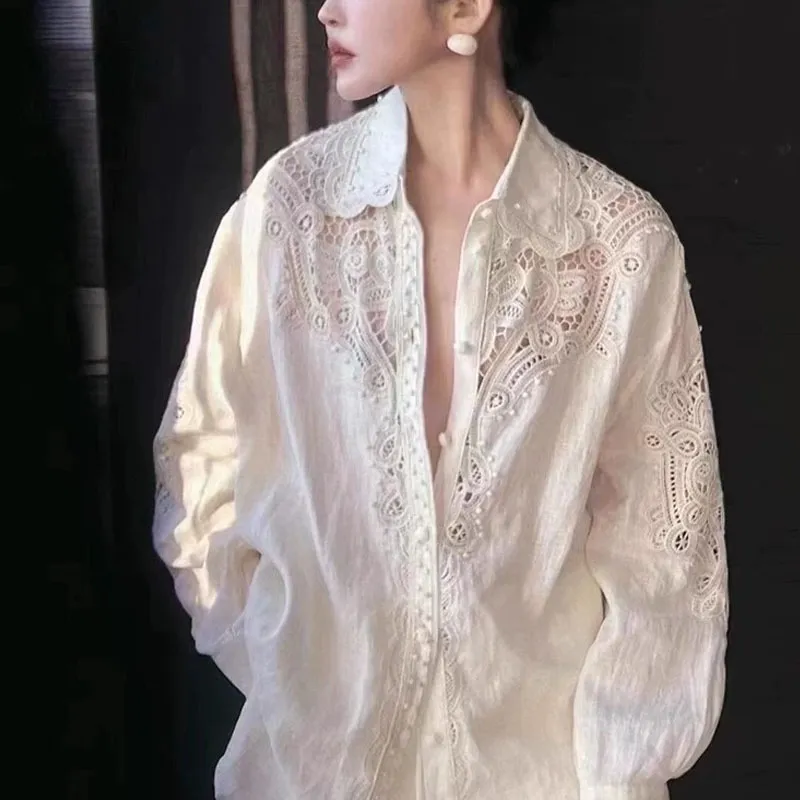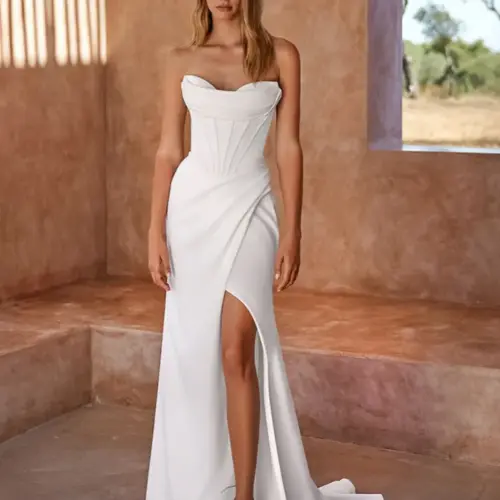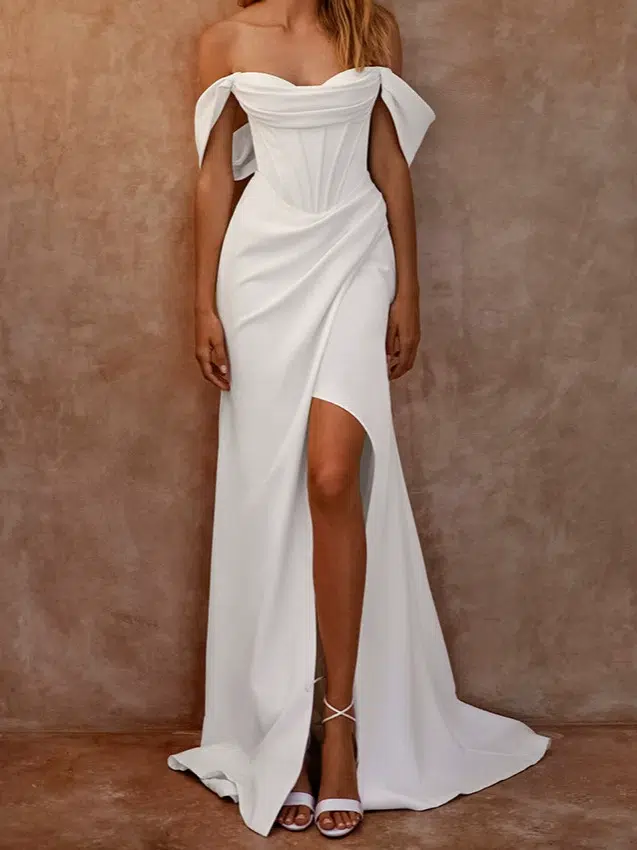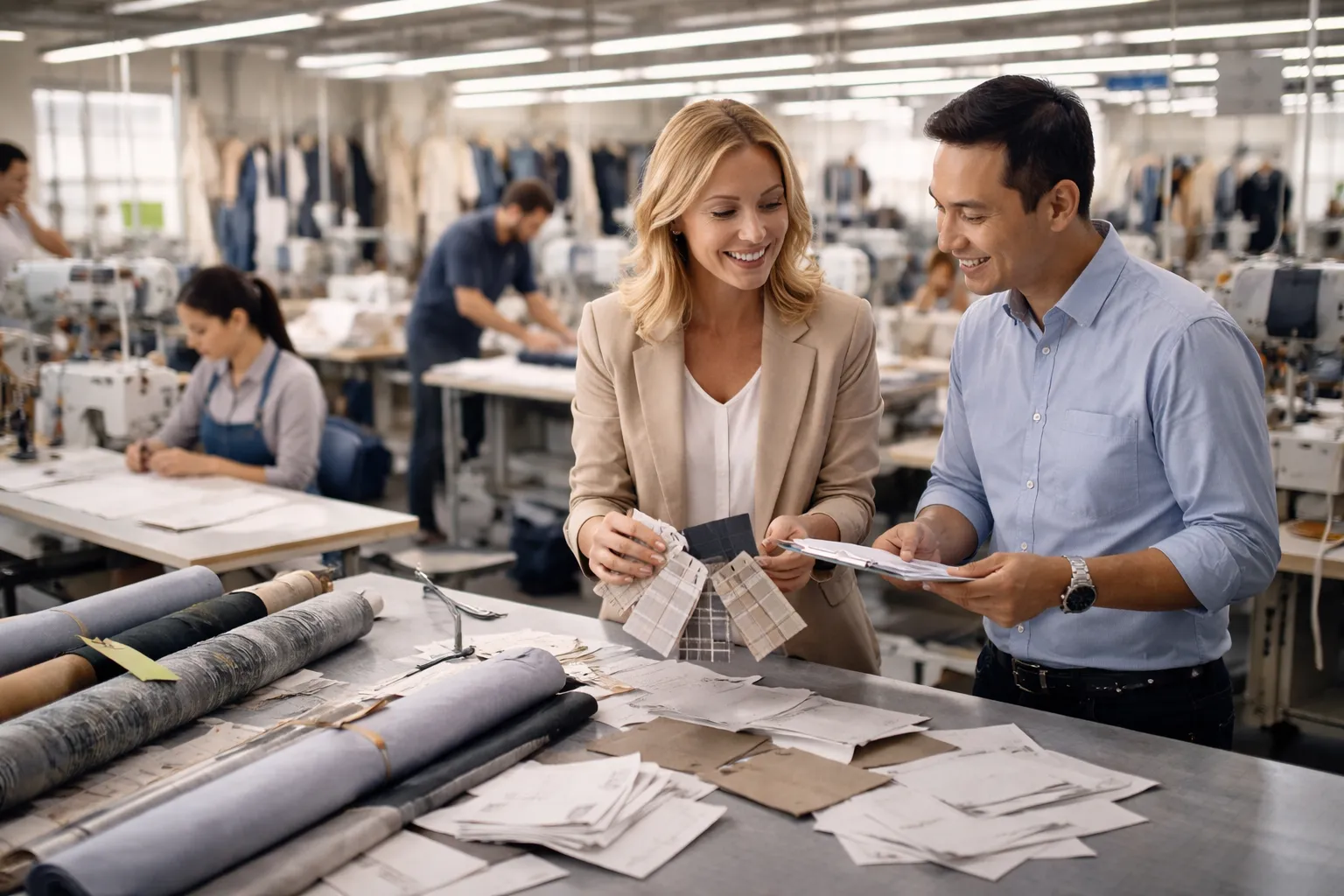

Ich sehe, wie Marken Geld verlieren, weil sie die falsche Wahl treffen. Fabrik Modell. Ich hasse dieses Gefühl. Ich möchte, dass Sie Verzögerungen, schlechte Passform und Ladenhüter vermeiden.
Eigenmarke ist am besten geeignet, wenn ich Schnelligkeit, niedrigere Mindestbestellmengen und bewährte Modelle von einem Private-Label-Bekleidungshersteller benötige. Zuschneiden und nähen Am besten eignet es sich, wenn ich eine einzigartige Passform, eine neue Silhouette und die volle Kontrolle über jedes Detail benötige und mir Muster und Zeit leisten kann.
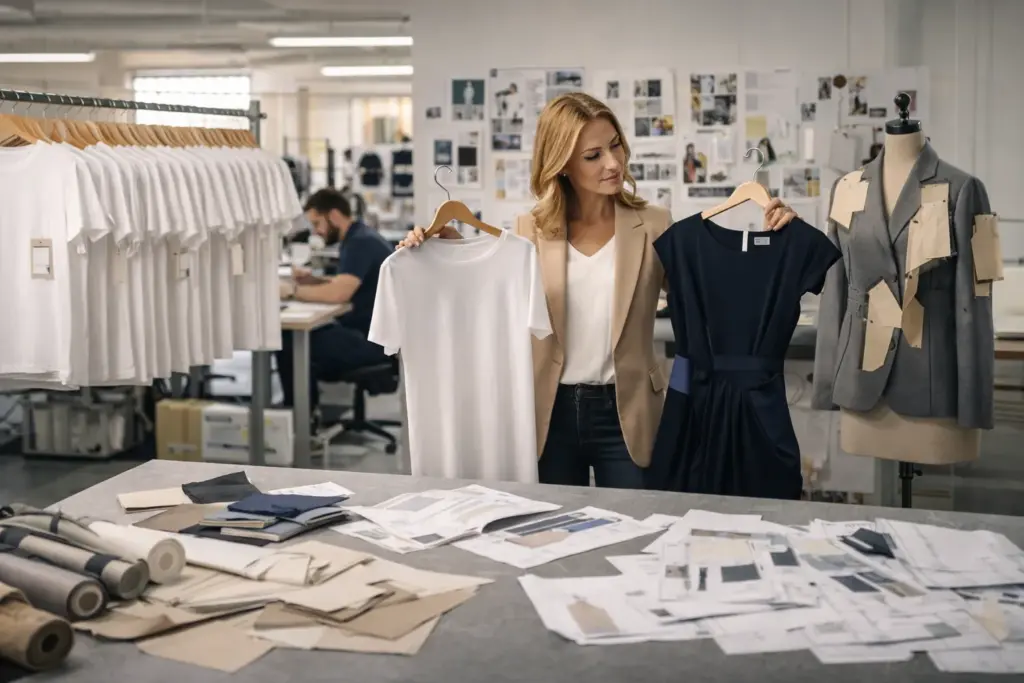
Ich erinnere mich an eine Kundin, die eine Sonderanfertigung wollte, aber die Lieferung innerhalb von acht Wochen benötigte. Ich stellte ihr eine Frage zu ihrem Verkaufskalender, und ihre Antwort veränderte den gesamten Plan – und das kann auch für Sie der Fall sein.
Was bedeutet “Private Label” genau, wenn ich mit einem Private-Label-Bekleidungshersteller zusammenarbeite?
Viele Käufer wünschen sich schnelles Wachstum, beginnen aber mit einer langsamen Entwicklung. Viele fühlen sich zwischen Qualität und Geschwindigkeit hin- und hergerissen. Diesen Stress erlebe ich jede Woche in meinen Telefonaten.
Private Label bedeutet, dass ich bestehende Schnittmuster und bewährte Designs verwende und sie mit Ihrem Logo versehe. Wichtige Details wie Stoff, Borten, Etiketten und Farben kann ich weiterhin anpassen, aber ich fange nicht bei null an.
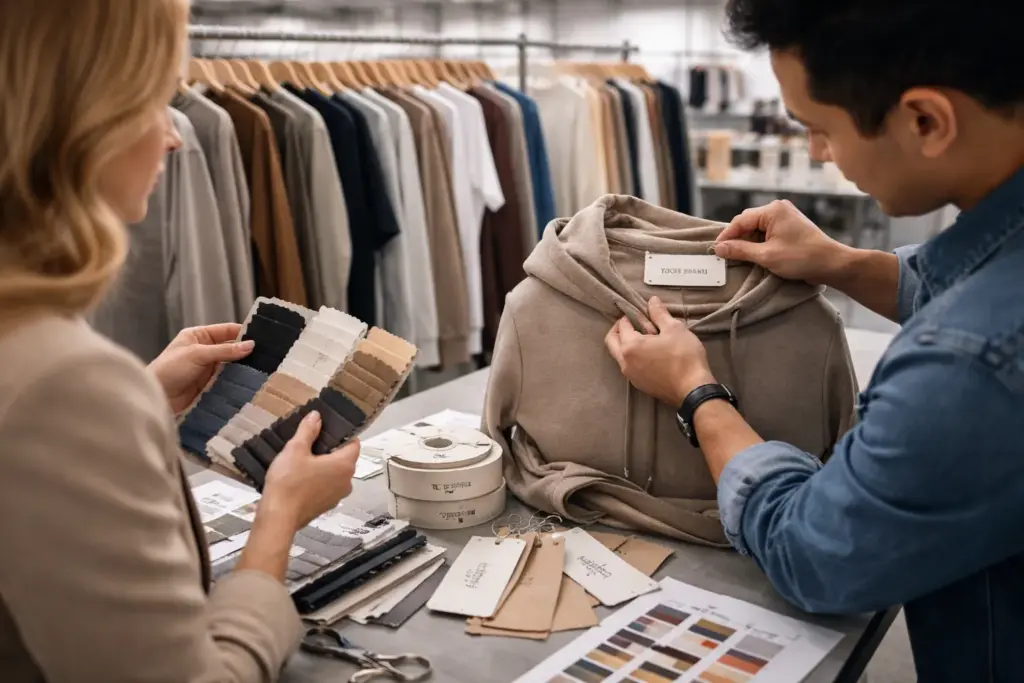
Wie ich Private Label in einfachen Schritten erkläre
Ich beschreibe Private Label als einen kürzeren Produktionsprozess für Markenkleidung. Ich wähle ein Basismodell aus dem Sortiment und passe es an Ihre Zielgruppe an. Anschließend integriere ich Ihre Markenidentität durch Etiketten, Verpackung und kleinere Designanpassungen. Um die Qualität zu sichern, lege ich klare Spezifikationen fest und fertige ein Vorproduktionsmuster an.
Was ich anpassen kann, ohne das Produkt “neu zu erfinden”.
Ich kann viele Details anpassen, ohne das Schnittmuster neu erstellen zu müssen. Ich kann Stoffgewicht und -zusammensetzung ändern. Ich kann Wascheffekte und Drucke anpassen. Ich kann Knöpfe, Reißverschlüsse und Kordeln austauschen. Ich kann die Passform innerhalb eines sicheren Rahmens verändern. Ich kann auch Größenetiketten hinzufügen, die zu Ihrem Markt passen.
Eine einfache Entscheidungstabelle, die ich mit Käufern verwende
| Entscheidungspunkt | Eigenmarke | Was es für mich bedeutet |
|---|---|---|
| Grundmuster | Bereits hergestellt | Ich spare Entwicklungszeit |
| Stoffauswahl | Viele Optionen | Ich wäge Kosten und Haptik ab. |
| Branding | Vollständiges Branding | Ich baue mein Markenbild schnell auf |
| MOQ | Oft niedriger | Ich teste weitere Artikelnummern. |
| Lieferzeit | Normalerweise kürzer | Ich bin mitten in die Verkaufssaison geraten. |
Wenn Maria aus Russland mich nach “Eigenmarkenkleidung vs. Maßanfertigung” fragt, frage ich sie, was sie zuerst testen möchte. Oft empfehle ich ihr für ihren ersten Launch in einer neuen Produktkategorie eine Eigenmarke. Ich finde diesen Weg gut, weil er ihr Kapital schützt, während sie herausfindet, was sich gut verkauft.
Was versteht man unter Konfektionierung und Nähen in der Bekleidungsindustrie, und warum ist diese Methode teurer?
Manche Marken wollen eine unverwechselbare Passform, wählen aber den einfachen Weg. Andere wollen sich abheben, verwenden aber die gleichen Schnittmuster wie alle anderen. Ich sehe immer wieder, dass Marken doppelt zahlen, wenn sie sich nicht frühzeitig entscheiden.
Die Konfektionierung von Bekleidung bedeutet, dass ich ein Schnittmuster entwickle oder anpasse, Stoff von der Rolle zuschneide und das Kleidungsstück aus einzelnen Teilen zusammennähe. Ich fertige das Produkt Stück für Stück an. Außerdem überprüfe ich Passform und Verarbeitung anhand mehrerer Muster.
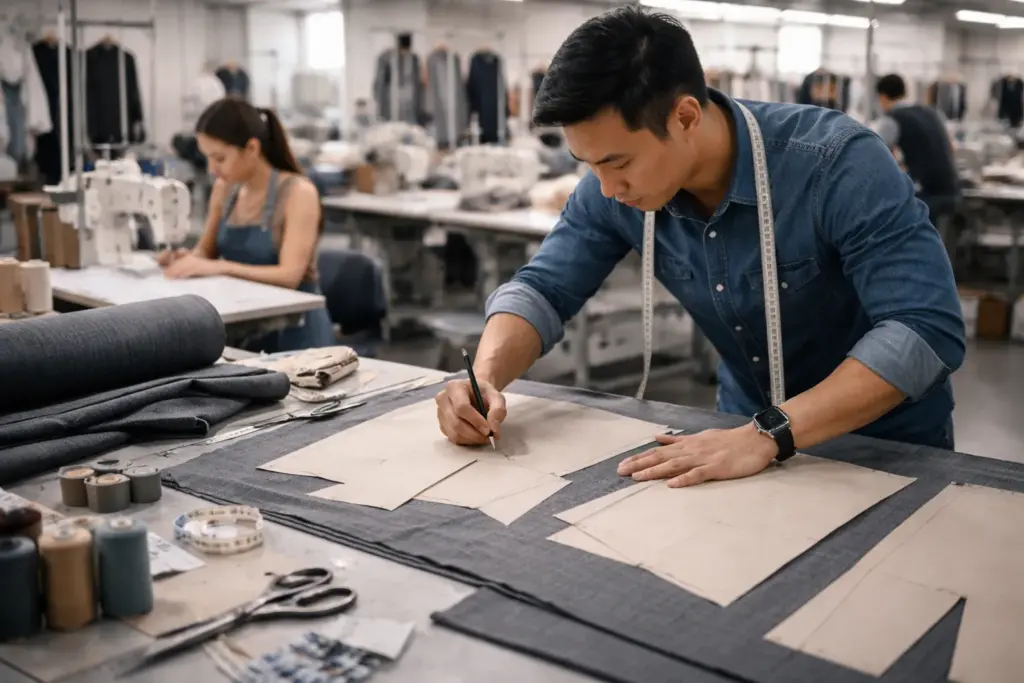
Was ich während der Entwicklungsschritte für maßgeschneiderte Kleidung tue
Ich beginne mit einem technischen Datenblatt oder einem Referenzmuster. Ich erstelle ein Schnittmuster oder passe einen Schnittblock an. Ich fertige ein erstes Muster an. Ich führe eine Anprobe durch. Ich korrigiere das Schnittmuster. Ich prüfe das Einlaufen des Stoffes und die Farbechtheit. Anschließend fertige ich ein Muster in allen Größen an. Schließlich gebe ich ein Vorproduktionsmuster vor der Serienfertigung frei.
Warum die Kosten höher sind
Zuschnitt und Nähen erfordern Zeit von erfahrenen Schnittmachern. Es sind mehrere Probedurchgänge nötig. Außerdem sind mehr Besprechungen und präzisere Spezifikationen erforderlich. Zuschnitt und Nähen bergen auch ein höheres Risiko, falls die Marke kurzfristig ihre Meinung ändert. Dieses Risiko kalkuliere ich in die Arbeitskosten ein.
Eine Tabelle, die zeigt, wohin das Geld fließt
| Kostentreiber | Schnitt- und Nähwirkung | Was ich tue, um es zu kontrollieren |
|---|---|---|
| Schnittmustererstellung | Höhere Kosten | Ich verwende Blöcke nach Möglichkeit wieder. |
| Probenahmerunden | Weitere Runden | Ich habe einen klaren Musterplan erstellt. |
| Stoffprüfung | Mehr erforderlich | Ich teste frühzeitig an großen Stoffmengen. |
| Passformfreigaben | Mehr Zeit | Ich plane feste Überprüfungstermine ein. |
| Kleine Fehler | Teurer | Ich verwende eine strengere Qualitätskontrollliste. |
Ich habe einmal mit einer Marke zusammengearbeitet, die eine neue Jackenform mit einem besonderen Kragen wollte. Ich wies sie darauf hin, dass für den Kragen zusätzliche Muster benötigt würden. Sie stimmten zu, und das Endprodukt verkaufte sich gut. Ich habe auch eine ähnliche Marke erlebt, die dieselbe Idee überstürzte, zu spät lieferte und den Winter verpasste.
Eigenmarken vs. Konfektionskleidung: Wie vergleiche ich sie im Hinblick auf reale Geschäftsziele?
Viele Käufer vergleichen nur den Preis pro Stück. Viele vergessen dabei Zeitaufwand und Risiko. Ich beobachte, wie Marken dann erfolgreich sind, wenn sie das gesamte System berücksichtigen.
Eigenmarkenkleidung im Vergleich zu Konfektionskleidung ist eine Entscheidung zwischen Geschwindigkeit und Kontrolle. Eigenmarken ermöglichen mir einen schnelleren Markteintritt mit gleichbleibender Passform. Konfektionierung hingegen liefert mir ein einzigartiges Produkt, das meine Marke schützt, erfordert aber Zeit und klare Entscheidungen.

Ich vergleiche anhand von fünf Geschäftszielen
Ich prüfe Zeitplan, Cashflow und Markeneinzigartigkeit. Außerdem berücksichtige ich Qualitätsrisiko und Nachbestellgeschwindigkeit. Ich frage nach der gewünschten Anzahl an Artikeln (SKUs) und Farben. Ich frage auch, ob Sie eine neue Passform benötigen, die Ihre Kunden nirgendwo anders finden.
Was geschieht im Inneren der Fabrik?
Eigenmarken nutzen einen bestehenden Arbeitsablauf. Meine Produktionslinie kennt die Nähschritte bereits. Mein Qualitätskontrollteam kennt die Schwachstellen. Für den Zuschnitt und die Konfektion werden neue Standardarbeitsanweisungen (SOPs) benötigt. Für den Zuschnitt und die Konfektion sind neue Nähschulungen für knifflige Teile erforderlich. Außerdem sind in der frühen Produktionsphase mehr Kontrollen notwendig.
| Ziel | Bessere Wahl | Grund |
|---|---|---|
| Schnell starten | Eigenmarke | Ich überspringe den größten Teil der Entwicklungszeit. |
| Viele Stile ausprobieren | Eigenmarke | Ich halte die Mindestbestellmengen und das Risiko niedriger. |
| Einzigartige Passform und Form | Zuschneiden und nähen | Ich kontrolliere Schnittmuster und Gradierung. |
| Starke Markengeschichte | Zuschneiden und nähen | Ich erstelle eine “Warum dieses Produkt?”-Strategie.” |
| Schnelle Nachbestellungen | Eigenmarke | Ich wiederhole: bewährte Konstruktion |
Ich erkläre den Käufern, dass die richtige Wahl von ihrem Zeitplan abhängt. Außerdem weise ich sie darauf hin, dass die richtige Wahl auch von ihrer Content-Strategie abhängt. Ein exklusives, genähtes Produkt benötigt aussagekräftige Fotos und klare Beschreibungen der Passform. Ein Eigenmarkenprodukt erfordert ein überzeugendes Styling und eine stimmige Preisstrategie.
White-Label- vs. Private-Label-Bekleidung: Welche Fehler beobachte ich bei Käufern?
Viele Käufer verwenden “White Label” und “Private Label” fälschlicherweise als dasselbe. Viele sind dann von den Einschränkungen überrascht. Ich möchte Ihnen diese Überraschung bei Ihrem Produktlaunch ersparen.
White Label bedeutet, dass ich ein fertiges Produkt mit minimalen Anpassungen verkaufe und in der Regel nur Ihr Logo und Ihre Verpackung hinzufüge. Private Label bedeutet, dass ich zwar auch mit einem Standardmodell arbeite, aber mehr Änderungen an Stoff, Verzierungen und Details zulasse, damit sich Ihr Produkt individueller anfühlt.“
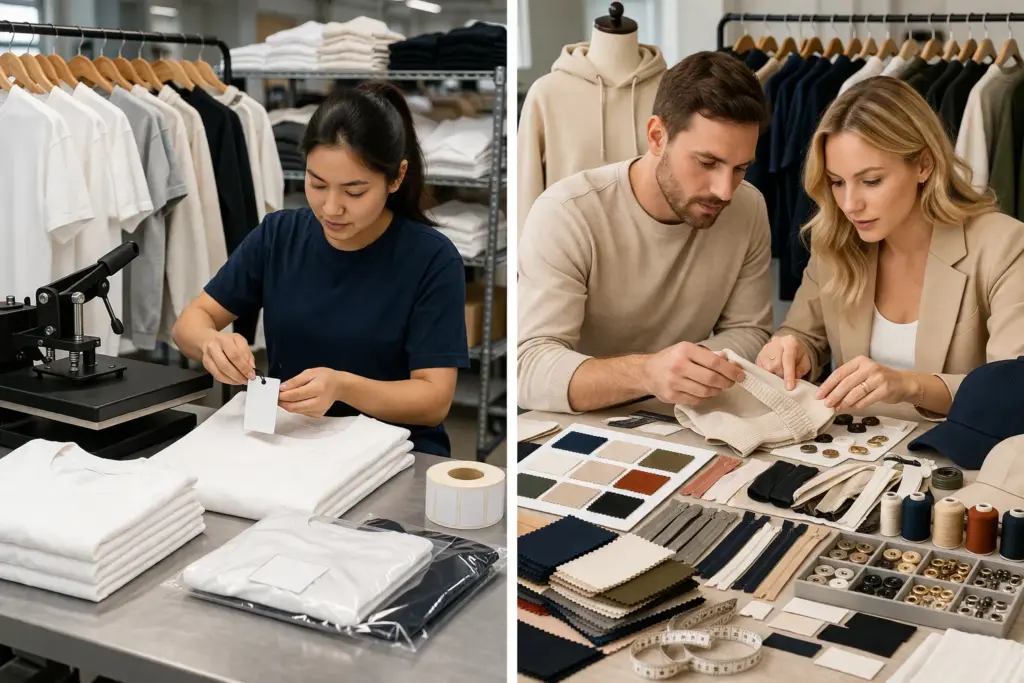
Wo White Label am besten passt
White Label eignet sich, wenn Geschwindigkeit oberste Priorität hat. White Label ist geeignet, wenn Ihr Markt einfache Designs akzeptiert. White Label ist geeignet, wenn Sie einen Vertriebskanal testen möchten. Ich sehe es häufig bei kleinen Online-Shops und Firmenbestellungen.
Wo Eigenmarken für langfristige Marken sicherer sind
Eigenmarken bieten mir mehr Spielraum, meine Gewinnmargen zu sichern. Sie ermöglichen es mir, mich vom Einheitslook abzuheben. Außerdem kann ich mit Eigenmarken eine konsistente Markenlinie planen, da ich die Passform beibehalten und Details jede Saison aktualisieren kann.
Eine übersichtliche Tabelle, die Verwirrung vermeidet
| Artikel | White Label | Eigenmarke |
|---|---|---|
| Umkleideraum im Design | Sehr begrenzt | Mittel bis hoch |
| Stoffoptionen | Oftmals behoben | Viele Möglichkeiten |
| Branding | Etiketten und Verpackung | Etiketten, Verpackung und Details |
| Differenzierung | Niedrig | Mittel |
| Typische Verwendung | Schnelltest | Entwickeln Sie eine Markenlinie |
Eine Kundin wollte zwar eine Eigenmarke, wünschte sich aber eine spezielle Waschung, einen individuell gestalteten Reißverschlussanhänger und ein einzigartiges Futtermuster. Ich erklärte ihr, dass sie eine Private Label-Ware und keine Eigenmarke wolle. Sie änderte ihre Pläne frühzeitig und sparte dadurch Wochen.
Wie entscheide ich mich für einen Hersteller von maßgeschneiderter Bekleidung oder für eine Eigenmarke für die nächste Saison?
Viele Marken wählen ein Modell aus emotionalen Gründen. Viele geben dann dem Hersteller die Schuld, wenn der Plan nicht aufgeht. Ich bevorzuge eine einfache Checkliste, die für Stabilität sorgt.
Die Entscheidung zwischen einem Hersteller für individuelle Bekleidung und einer Eigenmarke hängt von Ihrer Markenpositionierung und Ihren operativen Fähigkeiten ab. Wenn ich technische Spezifikationen, Passform-Feedback und längere Lieferzeiten bewältigen kann, bietet die Fertigung in Eigenregie einen stärkeren Wettbewerbsvorteil. Benötige ich hingegen kostengünstige Tests und eine schnelle Lieferung, ist ein Hersteller für Eigenmarken die sicherere Wahl.
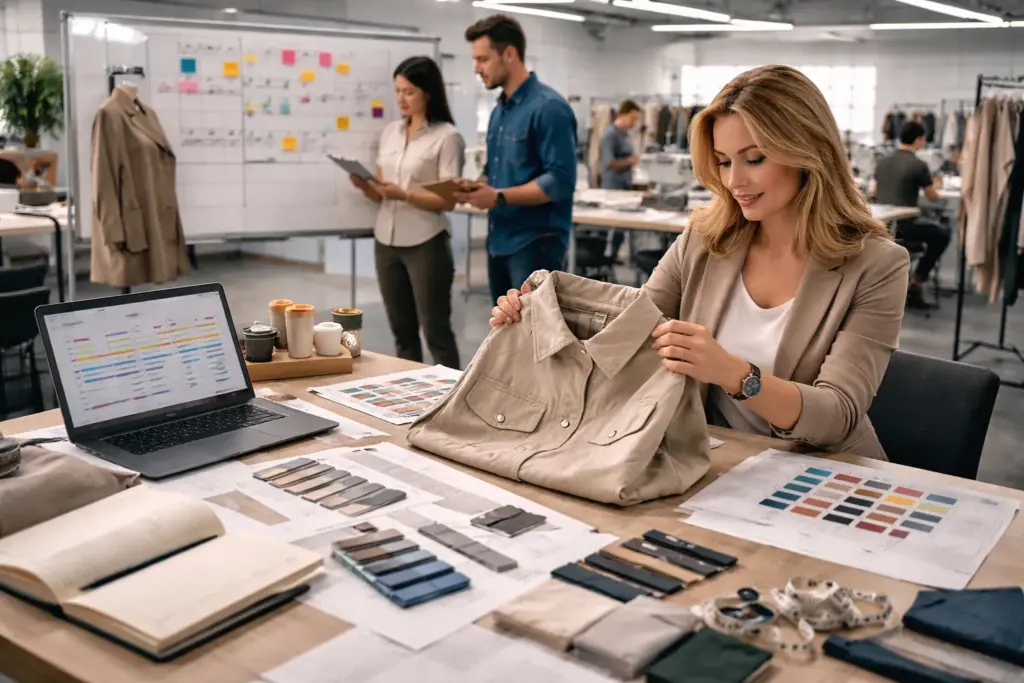
Meine Checkliste, bevor ich ein Modell empfehle
Ich frage nach Ihrer Verkaufssaison und Ihrer Versandart. Ich frage nach Ihrem Zielpreis und Ihrem Qualitätsstandard. Ich frage nach Ihrem Größenangebot und den Anforderungen an die Passform. Ich frage, ob Sie einen technischen Designer oder ein detailliertes technisches Datenblatt haben. Ich frage, wie viele Korrekturschleifen Sie problemlos bewältigen können.
Ein praktischer “Zwei-Gleis”-Plan, den ich oft verwende
Ich produziere häufig Eigenmarken für Artikel mit hohem Cashflow. Die wichtigsten Artikel lasse ich dann zuschneiden und nähen. So bleibt das Sortiment aktuell und die Auslastung der Fabrik stabil. Außerdem stärkt diese Methode das Vertrauen der Einkäufer, da die Basisartikel termingerecht geliefert werden.
Eine strukturierte Tabelle für die endgültige Auswahl
| Ihre Situation | Bestes Modell | Warum es funktioniert |
|---|---|---|
| Erste Saison in einem neuen Markt | Eigenmarke | Ich reduziere das Risiko und handle schnell |
| Du hast eine starke Design-DNA | Zuschneiden und nähen | Ich entwickle ein unverwechselbares Produkt. |
| Sie benötigen eine Zertifizierungskontrolle. | Zuschneiden und nähen | Ich verfolge Materialien und Prozesse |
| Du brauchst schnelle Wiederholungen. | Eigenmarke | Ich bestelle neu, um weniger Nacharbeit zu haben. |
| Sie wollen sowohl Wachstum als auch Identität | Gemischter Plan | Ich schütze Bargeld und baue eine Marke auf. |
Ich leite Truekung in China und arbeite mit Marken zusammen, die in Europa, Großbritannien und den USA verkaufen. Ich habe festgestellt, dass die besten Marken nicht nach “Perfektion” streben, sondern nach “termingerechter und markenkonformer Lieferung”. Ich kann Ihnen dabei helfen, dies zu erreichen, indem Sie von Anfang an die richtigen Produktionsmethoden für Ihre Bekleidung auswählen.
Fazit
Ich wähle Eigenmarken für schnellere und sicherere Tests. Ich entscheide mich für individuelle Anfertigungen für eine einzigartige Passform und volle Kontrolle. Ich stimme das Modell auf meinen Saison- und Budgetplan ab.
Warum ich das schreibe
Ich bin Lancy Chia von Truekung. Ich leite eine Bekleidungsfabrik mit über 200 Mitarbeitern in China. Wir bieten OEM/ODM-Produktion und Großhandel für Marken und Supermärkte weltweit an. Bei Interesse erreichen Sie mich unter [email protected]. Weitere Informationen finden Sie auf unserer Website: https://truekung.com.
Ansichten: 74