
If you have ever sent the same clothing design to several factories, you may have received very different quotes.
One factory may quote a hoodie at $12.50 per piece. Another may quote $18.00. A third factory may say they need more information before giving a final price.
This can be confusing, especially for startup brands. But in clothing manufacturing, different quotes do not always mean one factory is expensive and another factory is cheap. Often, the factories are quoting based on different assumptions.
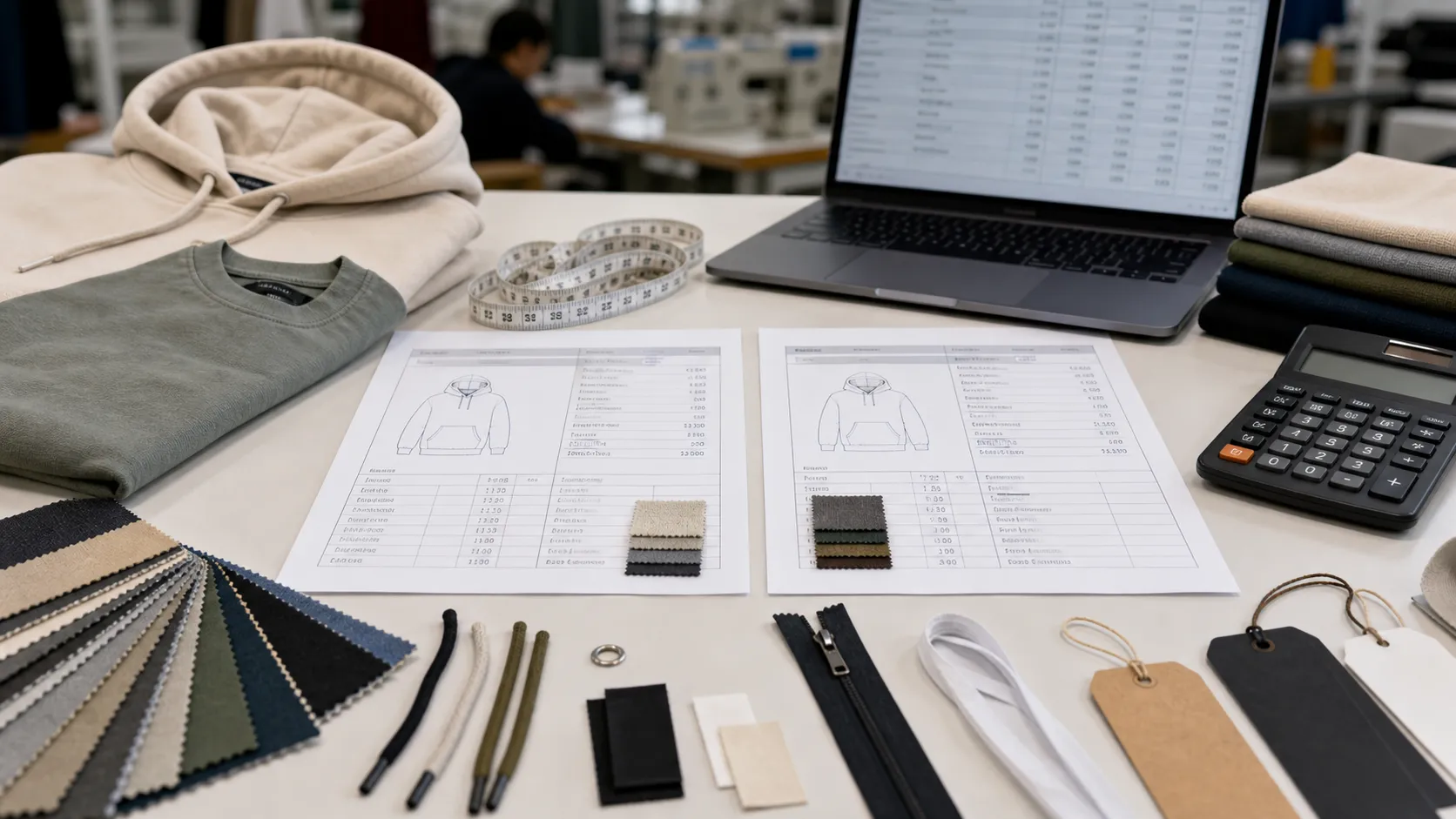
Clothing factory quotes vary because of fabric, order quantity, garment complexity, printing or embroidery, labels, packaging, quality standards, lead time, and what is included in the quote.
To compare quotes correctly, you need to understand what each factory is actually pricing.
A Lower Quote Is Not Always the Same Product
Two quotes can look like they are for the same hoodie, but they may not include the same fabric, trims, workmanship, or packaging.
For example, one factory may quote based on:
- 280 gsm fleece
- Stock black fabric
- Simple screen print
- Standard drawcord
- No custom label
- Basic poly bag
Another factory may quote based on:
- 420 gsm heavyweight fleece
- Custom dyed fabric
- Front embroidery
- Back puff print
- Custom woven neck label
- Branded hang tag
- Individual barcode sticker
- Stricter quality inspection
Both factories may be quoting “a custom hoodie,” but the real product is not the same.
That is why comparing only the final unit price can be misleading.
1. Fabric Type and Fabric Quality
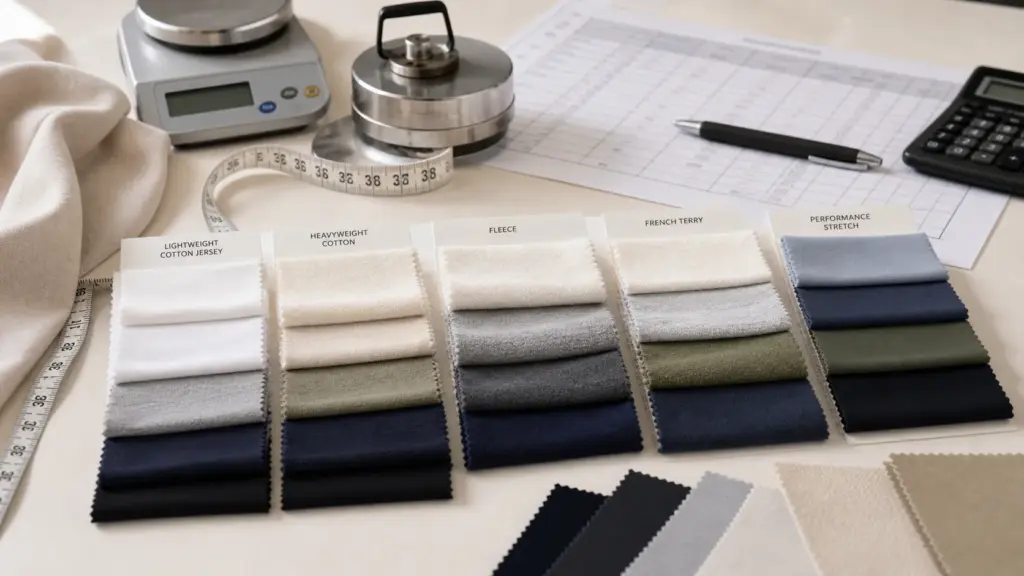
Fabric is usually one of the biggest cost factors in clothing manufacturing.
A basic cotton T-shirt, heavyweight streetwear hoodie, stretch activewear legging, and technical jacket all require different materials. Even within the same product category, fabric choices can change the quote significantly.
Fabric cost is affected by:
- Fiber composition
- Fabric weight
- Yarn quality
- Knitting or weaving method
- Stretch and recovery
- Shrinkage control
- Dyeing method
- Finishing treatment
- Color fastness
- Fabric supplier MOQ
For example, a 180 gsm cotton jersey T-shirt will not cost the same as a 260 gsm heavyweight cotton T-shirt. A regular polyester fabric will not cost the same as a nylon-spandex performance fabric for activewear.
If one factory quotes with stock fabric and another quotes with custom fabric, the prices will also be different.
Before comparing quotes, ask each factory:
- What fabric composition is included?
- What is the fabric weight?
- Is it stock fabric or custom fabric?
- Is the fabric dyed, washed, brushed, or specially finished?
- Is the quoted fabric suitable for my target market?
2. Order Quantity and MOQ
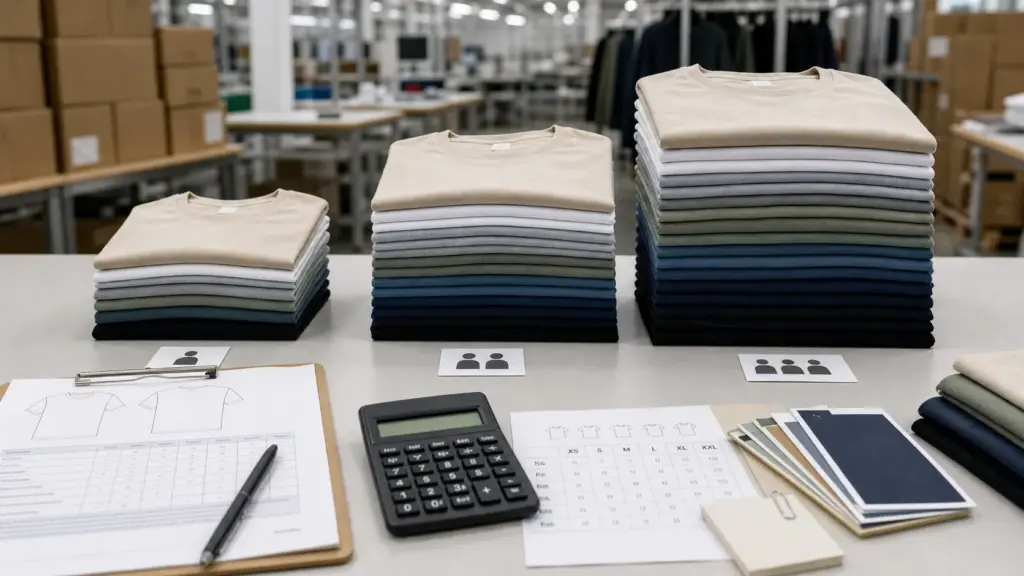
Order quantity has a direct effect on unit price.
A small order usually has a higher unit price because the factory still needs to prepare fabric, patterns, cutting, sewing, printing, quality control, and packing. These preparation costs are spread across fewer pieces.
A larger order usually gives the factory more efficiency. Fabric purchasing, cutting, sewing line setup, printing setup, and packing can be organized more smoothly.
This is why a quote for 100 pieces may be much higher per piece than a quote for 1,000 pieces.
MOQ also matters because suppliers behind the factory may have their own minimums. Fabric mills, label suppliers, zipper suppliers, packaging suppliers, and printing workshops may all require minimum quantities.
If your order quantity is low, the factory may need to use stock fabric or simpler trims to keep the project practical.
When requesting a quote, do not only ask:
“How much is this hoodie?”
Ask instead:
“Please quote this hoodie at 100 pcs, 300 pcs, and 500 pcs.”
This helps you see how quantity changes the price.
3. Garment Complexity
A simple garment costs less to produce than a complex one.
A basic T-shirt may have only a few pattern pieces and sewing operations. A jacket may include lining, zipper, pockets, panels, snaps, drawcords, cuffs, and more quality checks.
Garment complexity can include:
- Number of pattern pieces
- Number of panels
- Pocket construction
- Lining
- Rib details
- Zippers
- Buttons or snaps
- Elastic bands
- Special seams
- Contrast fabric
- Washing or finishing
- Difficult sewing areas
Every additional detail adds time. In garment production, time affects labor cost.
For example, a hoodie with a basic kangaroo pocket is different from a hoodie with zip pockets, double-layer hood, applique logo, custom drawcord tips, and contrast stitching.
If your design has many special details, the quote will be higher than a simple version of the same product.
4. Printing, Embroidery, and Decoration
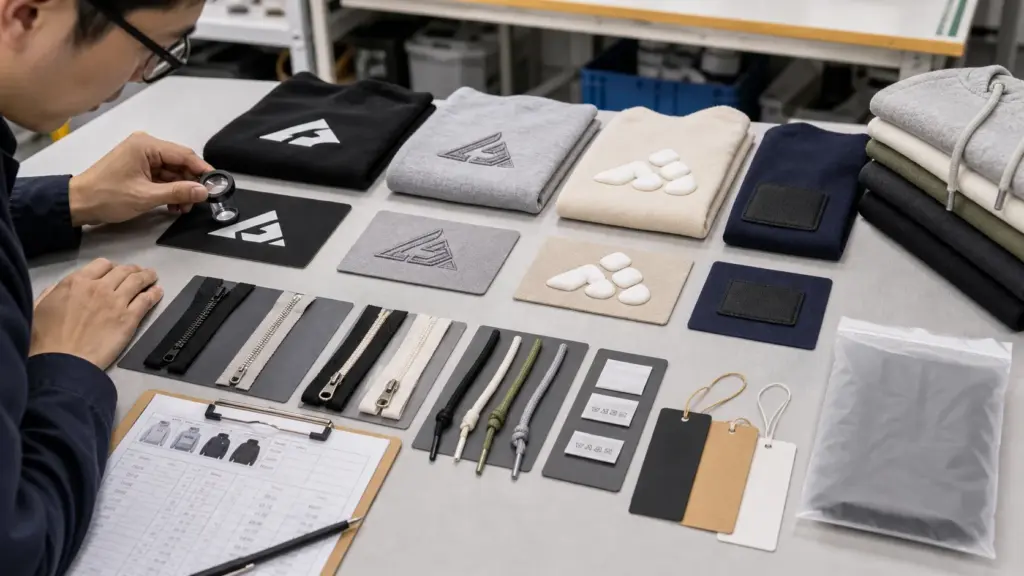
Decoration is another major reason quotes vary.
Common decoration methods include:
- Screen printing
- Digital printing
- Heat transfer
- Sublimation
- Embroidery
- Puff print
- Applique
- Woven patch
- Rubber patch
- Silicone logo
- Washing effect
- Distressing
Each method has different setup costs, labor requirements, minimum quantities, and sample results.
A one-color chest print is usually much cheaper than large back embroidery. A small woven label is very different from a custom rubber patch. Puff print, applique, and multi-position embroidery can increase both sample cost and bulk production cost.
The quote also depends on:
- Artwork size
- Number of colors
- Number of logo positions
- Stitch count for embroidery
- Print coverage area
- Whether special testing is needed
- Whether the technique suits the fabric
When comparing quotes, make sure each factory is quoting the same logo method.
5. Pattern Making and Fit Development
Some factories include pattern making in the quote. Others charge it separately.
If your garment requires a custom fit, the factory may need to create a new pattern, adjust measurements, grade sizes, and revise the sample after fitting.
This development work takes time and skill.
A factory using a standard pattern may quote lower, but the fit may not match your brand. A factory building a custom pattern may quote higher, but the result may be better for long-term production.
Fit development is especially important for:
- Activewear
- Streetwear
- Jackets
- Dresses
- Pants
- Fitted tops
- Plus-size garments
- Performance garments
If fit matters to your brand, do not compare a standard-pattern quote with a custom-pattern quote as if they are the same service.
6. Labels, Trims, and Packaging
Labels and trims may look small, but they can change the quote.
These items may include:
- Neck labels
- Care labels
- Size labels
- Hang tags
- Barcode stickers
- Woven patches
- Zippers
- Buttons
- Drawcords
- Metal tips
- Elastic bands
- Poly bags
- Cartons
- Retail packaging
One factory may include custom labels and packaging in the unit price. Another may quote only the garment without branding items.
This creates a big difference when you compare quotes.
Packaging also affects labor. Folding, bagging, sticker placement, size sorting, and carton packing all take time.
Before accepting a quote, ask:
- Are neck labels included?
- Are care labels included?
- Are hang tags included?
- Is individual packaging included?
- Are barcode stickers included?
- Are cartons included?
- Are custom trims included?
A quote is only useful when you know what is included.
7. Quality Standard and Inspection
Quality control can also affect price.
A factory with stricter quality management may charge more because it spends more time checking fabric, measurements, stitching, printing, packing, and final goods.
Quality checks may include:
- Fabric inspection
- Color checking
- Measurement checking
- Stitching inspection
- Print or embroidery inspection
- Shrinkage testing
- Packing inspection
- Final random inspection
A lower quote may not include the same level of inspection. That can create problems later, such as size inconsistency, loose threads, poor print durability, color variation, or incorrect packing.
For export orders, stable quality is usually more important than saving a small amount per piece.
A cheap quote can become expensive if you later need rework, replacement, discounts, or refunds.
8. Lead Time and Urgency
Urgent orders can cost more.
If you need samples or bulk production very quickly, the factory may need to adjust its production schedule, arrange overtime, use faster material sourcing, or prioritize your order.
This can increase cost.
Normal production planning gives the factory more flexibility. Rush orders reduce flexibility and increase risk.
If your timeline is tight, tell the factory early. Do not assume every quote includes rush production.
Ask:
- What is the normal sample lead time?
- What is the normal bulk production lead time?
- Is this quote based on standard production or urgent production?
- Will the price change if the order is urgent?
9. Factory Type and Service Scope
Not every supplier provides the same service.
Some suppliers are sewing factories. Some are trading companies. Some are full-service manufacturers that help with sourcing, sampling, pattern making, production, quality control, and export.
A full-service manufacturer may quote higher because more work is included. A sewing workshop may quote lower because the buyer needs to manage more details separately.
For example, one supplier may include:
- Fabric sourcing
- Pattern making
- Sample development
- Production management
- Labels and packaging
- Quality control
- Export support
Another supplier may only quote cutting and sewing.
These two quotes are not directly comparable.
Before choosing a factory, understand what service you actually need.
10. What Is Not Included in the Quote
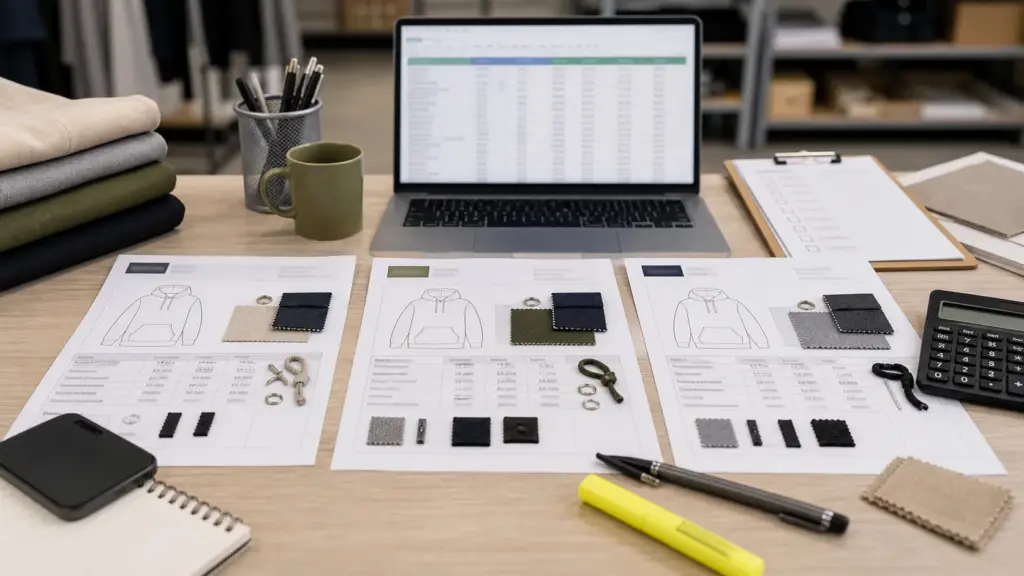
Sometimes the biggest price difference is not in what is included, but in what is missing.
A quote may not include:
- Sample cost
- Pattern making
- Size grading
- Custom fabric development
- Custom dyeing
- Labels
- Hang tags
- Packaging
- Testing
- Quality inspection
- Shipping
- Duties or taxes
- Payment fees
- Revisions
This is why buyers should never accept a one-line quote without clarification.
A one-line quote like “$9.80 per piece” is not enough.
A useful quote should explain what fabric, quantity, logo method, labels, packaging, and production terms are included.
How to Compare Clothing Factory Quotes
When you receive quotes from different factories, compare them line by line.
Use this checklist:
- Product style
- Fabric composition
- Fabric weight
- Fabric source
- Order quantity
- MOQ per style
- MOQ per color
- Size range
- Logo method
- Number of logo positions
- Pattern making
- Sample cost
- Bulk unit price
- Labels
- Trims
- Packaging
- Quality control
- Lead time
- Shipping terms
- Payment terms
If one quote is much lower than the others, ask why.
It may be a good offer, but it may also mean the factory is using cheaper fabric, excluding labels, quoting a simpler logo method, or assuming a lower quality standard.
Questions to Ask Before Choosing a Factory
Before deciding which quote to accept, ask the factory:
- What fabric is included in this quote?
- What is the fabric weight and composition?
- Is this based on stock fabric or custom fabric?
- What logo method is included?
- Are labels and packaging included?
- Is sample cost included?
- Is pattern making included?
- What is the MOQ per style and per color?
- What is the estimated sample lead time?
- What is the estimated bulk production lead time?
- What quality control process is included?
- What could cause the final price to change?
These questions help you avoid hidden cost and misunderstanding.
Example: Why Two Hoodie Quotes Are Different
Here is a simple example.
Factory A quotes $11.80 per hoodie.
The quote includes:
- 280 gsm stock fleece
- One-color screen print
- Standard drawcord
- No custom neck label
- Basic poly bag
- Standard factory fit
Factory B quotes $17.60 per hoodie.
The quote includes:
- 420 gsm heavyweight fleece
- Custom dyed fabric
- Front embroidery
- Back puff print
- Custom woven neck label
- Care label
- Hang tag
- Branded poly bag
- Custom oversized fit
- More detailed quality inspection
At first, Factory A looks cheaper. But the two factories are not quoting the same product.
If your brand wants a premium heavyweight streetwear hoodie, Factory B may actually be the more accurate quote.
If your brand wants a simple low-cost hoodie, Factory A may be more suitable.
The right quote depends on your product positioning.
Quote Request Template
Use this template when asking factories for comparable quotes:
Hi, we would like to request a quote for a custom clothing order.

Product type: Oversized hoodie
Fabric: Cotton fleece, around 400 gsm
Color: Black
Logo: Front embroidery, 8 cm wide; back screen print, 28 cm wide
Labels: Custom neck label and care label
Packaging: Individual poly bag
Size range: S-XL
Quantity: Please quote 100 pcs, 300 pcs, and 500 pcs
Target market: US streetwear brand
Sample needed: Yes
Timeline: Sample within 2-3 weeks if possible

Please confirm what is included in the quote, including fabric, logo method, labels, packaging, sample cost, bulk lead time, and MOQ.
This helps each factory quote the same product, making comparison much easier.
Final Thoughts
Clothing factory quotes vary because garment production has many cost drivers. Fabric, quantity, construction, logo method, trims, packaging, quality control, lead time, and service scope all affect the final price.
The lowest quote is not always the best quote. The best quote is the one that matches your real product requirements, quality expectations, and business plan.
If you want an accurate clothing manufacturing quote, send complete product details to TrueKung, including your design, fabric preference, quantity, logo method, label needs, packaging requirements, and timeline. Our team can help review your project and provide a clearer quote for sampling and bulk production.
Views: 386