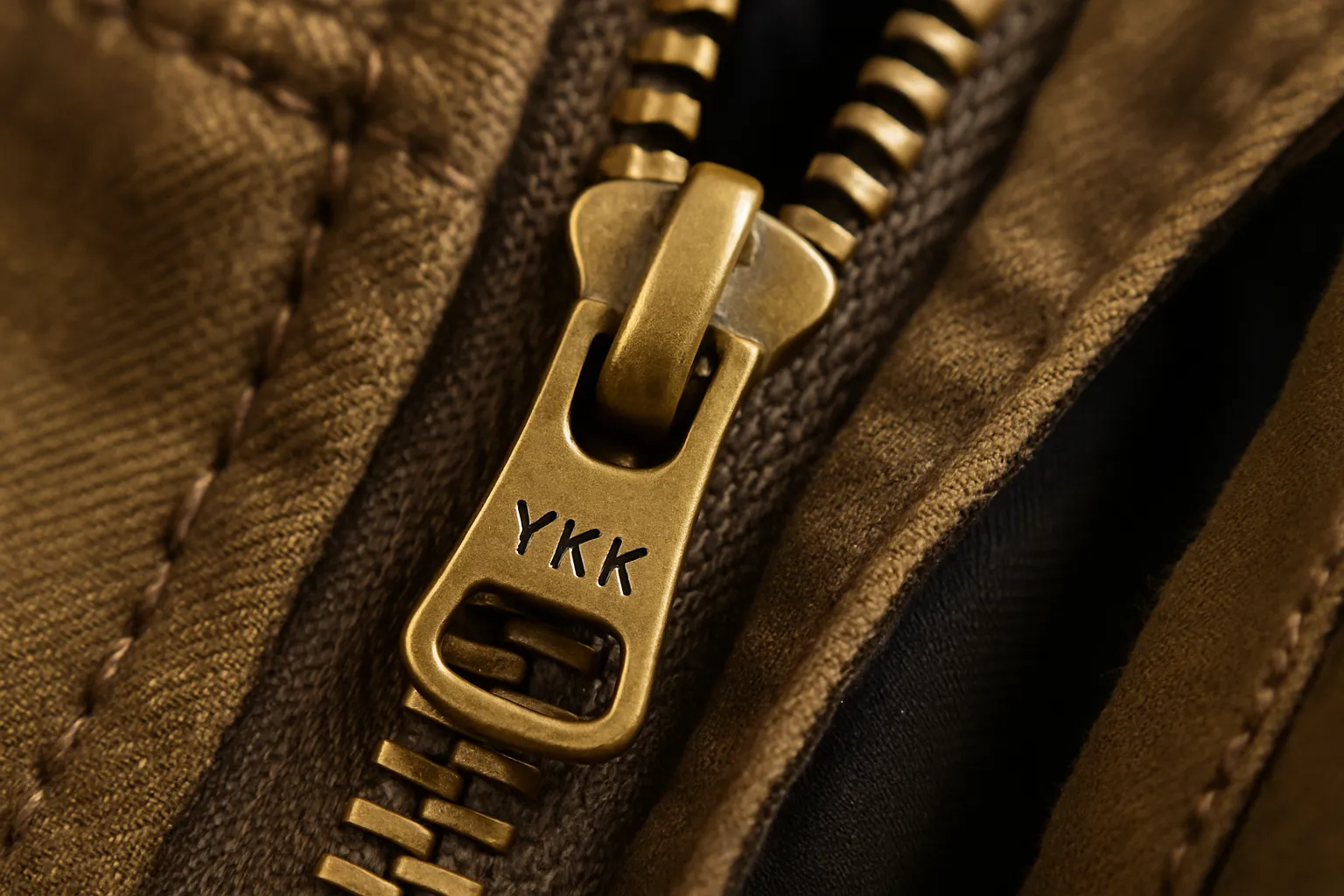

You unzip your jacket every morning—yet you may never think about the letters “YKK.” What if those simple three letters make a big difference in quality?
YKK stands for Yoshida Kogyo Kabushikikaisha, a Japanese firm renowned for making zippers. They dominate the market thanks to tight control over production, high material standards, and long‑lasting zippers.

I used to ignore zipper brands until one broke during a busy week. Then I found out what YKK is—and why it matters for everyone in clothing, bags, even shoes. Let’s explore.
Why Are YKK Zippers Everywhere?
You press a coat closed—zip zips—but most coats, bags, jeans, even tents use “YKK.” It’s not by accident. The difference shows up in small moments.
YKK zippers are everywhere because the company controls the full process—from metals/plastics to assembly—and ensures reliability, durability, and widespread availability.

YKK’s ubiquity comes from a few clear strategies. First, vertical integration: YKK doesn’t just assemble the zipper; they make the metal, the sliders, the pullers, the fabric tapes. That means fewer weak links in production. Second, quality control: zippers are tested for strength, resistance to corrosion, smoothness, and durability. Third, global reach: with factories in many countries, YKK can serve brands everywhere and reduce delays. Fourth, innovation: they offer different kinds of zippers (metal, coil, Vislon, invisible, waterproof, etc.) to fit different uses. Because of all that, you see “YKK” stamped on zippers not as a fad, but as a mark of reliability.
What Makes YKK Zippers Better Than Others?
Maybe you got a cheap zipper in a bargain jacket and it failed fast. With YKK, the small parts are better made. It shows—very soon.
YKK zippers outperform many others because of materials (metal and plastic that resist rust and wear), tight machining tolerances, and rigorous testing. They jam less, last longer.
Let’s break down what gives YKK its edge, side by side with what alternatives sometimes lack:
| Feature | YKK Strengths | Common Weaknesses in Others |
|---|---|---|
| Materials | High‑grade metals and plastics; resistant to corrosion, wear | Cheaper metals can rust or deform; plastics may degrade under UV or stress |
| Manufacturing Precision | Tight tolerances, good finish; parts fit exactly so slider moves smoothly | Small misalignments cause snags or uneven teeth, more friction or breaks |
| Variety | Multiple zipper types (coil, Vislon, invisible, metal) for different uses | Lower cost makers may offer fewer types; sometimes only one kind for many uses |
| Global Availability & Support | Factories and distribution in many places; spare parts, pullers, etc., more accessible | Harder to source replacement parts or consistent quality in remote areas or from small makers |
Because of these, companies (including fashion brands, bags, outerwear, sports gear) choose YKK to reduce returns, customer complaints, and damage to their reputation.
Are There Different Types of YKK Zippers?
Not all YKK zippers look or behave the same. If you use a zipper in rain gear vs. jeans, you’ll need different type.
Yes, there are many kinds of YKK zippers: metal for jackets/denim; coil (nylon) for backpacks; Vislon (plastic molded) for water resistance; invisible or specialty designs for style or specific needs.
Here are some of the main YKK zipper types and when each is best:
| Type | Best For | Pros | Trade‑Offs |
|---|---|---|---|
| Metal | Jeans, leather jackets, heavy coats | Strong, classic look, durable | Heavier, slower to wash/dry, higher cost |
| Coil (Nylon) | Backpacks, tents, light apparel | Flexible, light, works well when curved | Less strong under big loads, possible heat sensitivity |
| Vislon (Plastic Molded) | Outdoor gear, rainwear | Good water resistance, durable in corrosive environments | Bulkier look, less “snap” feel compared to metal |
| Invisible | Fashion items, dresses, fine clothing | Hidden zipper teeth; better aesthetics | More delicate; may not last harsh use |
| Specialty (Waterproof, Fire‑resistant, Reversible) | Technical gear, safety gear, design specialties | Fulfills unique requirements | Higher cost, more complex manufacturing |
I’ve handled apparel lines where choosing the wrong zipper type raised defect rates by 5‑10%. Matching zipper type to product use is not optional—it affects customer satisfaction and returns.
Conclusion
YKK letters on a zipper mean more than branding: they signal quality, consistency, and performance you can trust in many uses.
Views: 875


