
Too many men’s coats look “fine” on a hanger but fail at sell-through. That hurts cash flow and makes reorders risky. I have been there, and it is avoidable.
If I need a clear plan, I start with 20 proven types of coats and jackets for men, then I match each one to climate, price point, and brand story so my assortment stays focused and profitable.
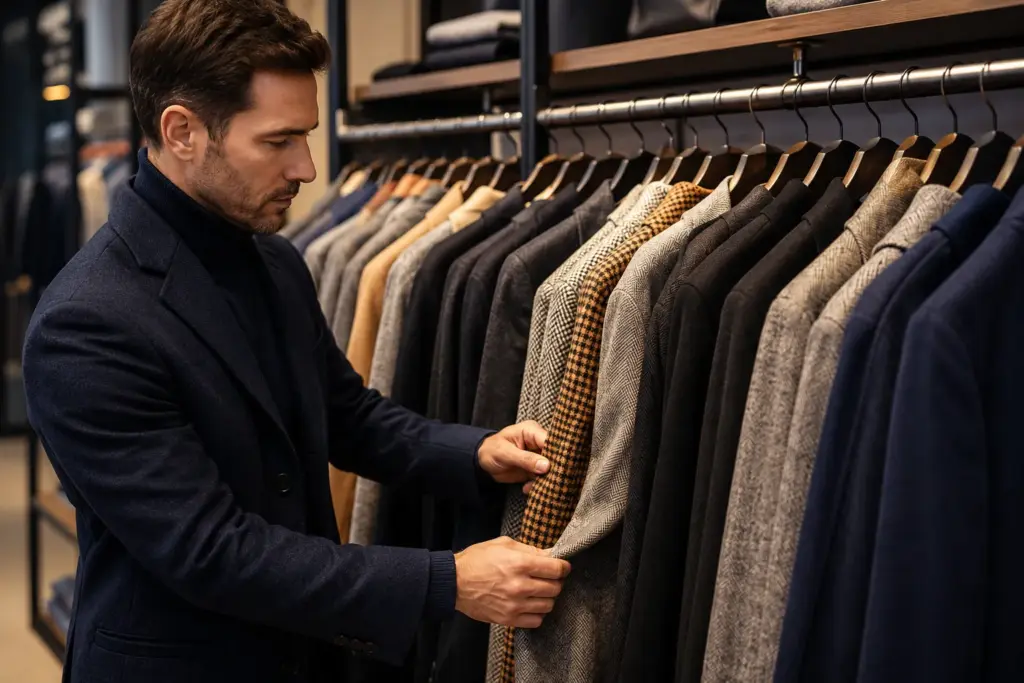
I still remember a season when I tried to carry every coat style at once. The line looked “complete” but it was not clear. Buyers got tired, and my best items got hidden. So I now build my range like a map, and if you keep reading, I will show the simple map I use and the checks that stop expensive mistakes.
How do I separate long dress coats from casual jackets?
When I mix categories, I lose control of pricing and messaging. Then the customer gets confused, and the store team cannot explain the difference. That is how a “good” collection becomes slow.
I separate men’s coats by function first: dress coats for formality and structure, and jackets for casual movement and layering. This helps me price correctly, choose fabrics that match use, and avoid making one product try to do everything.
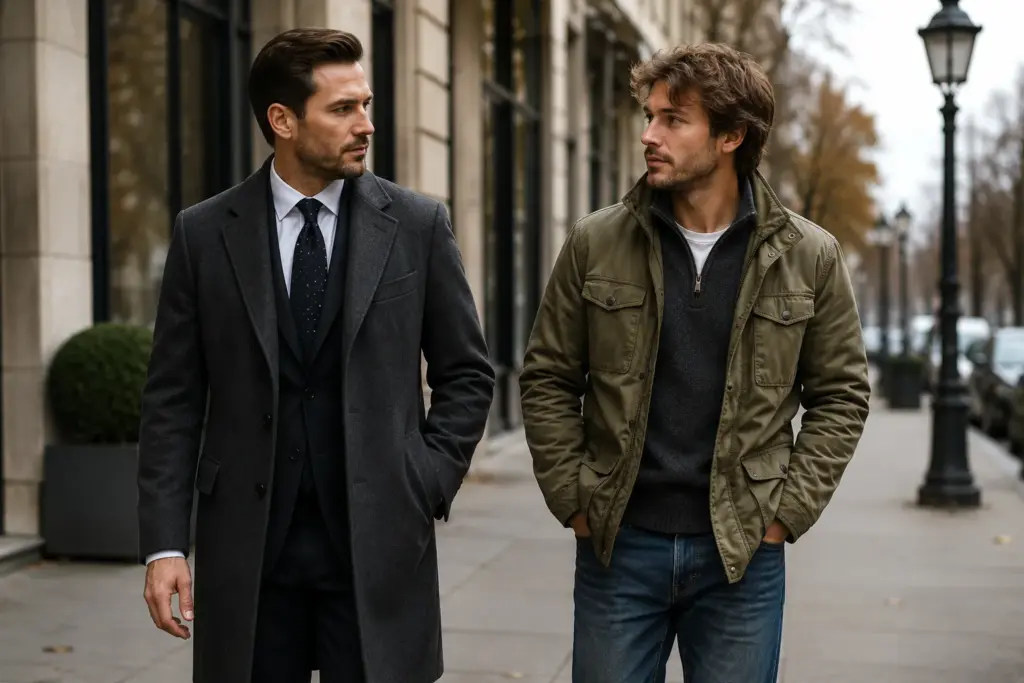
A simple map of coat types
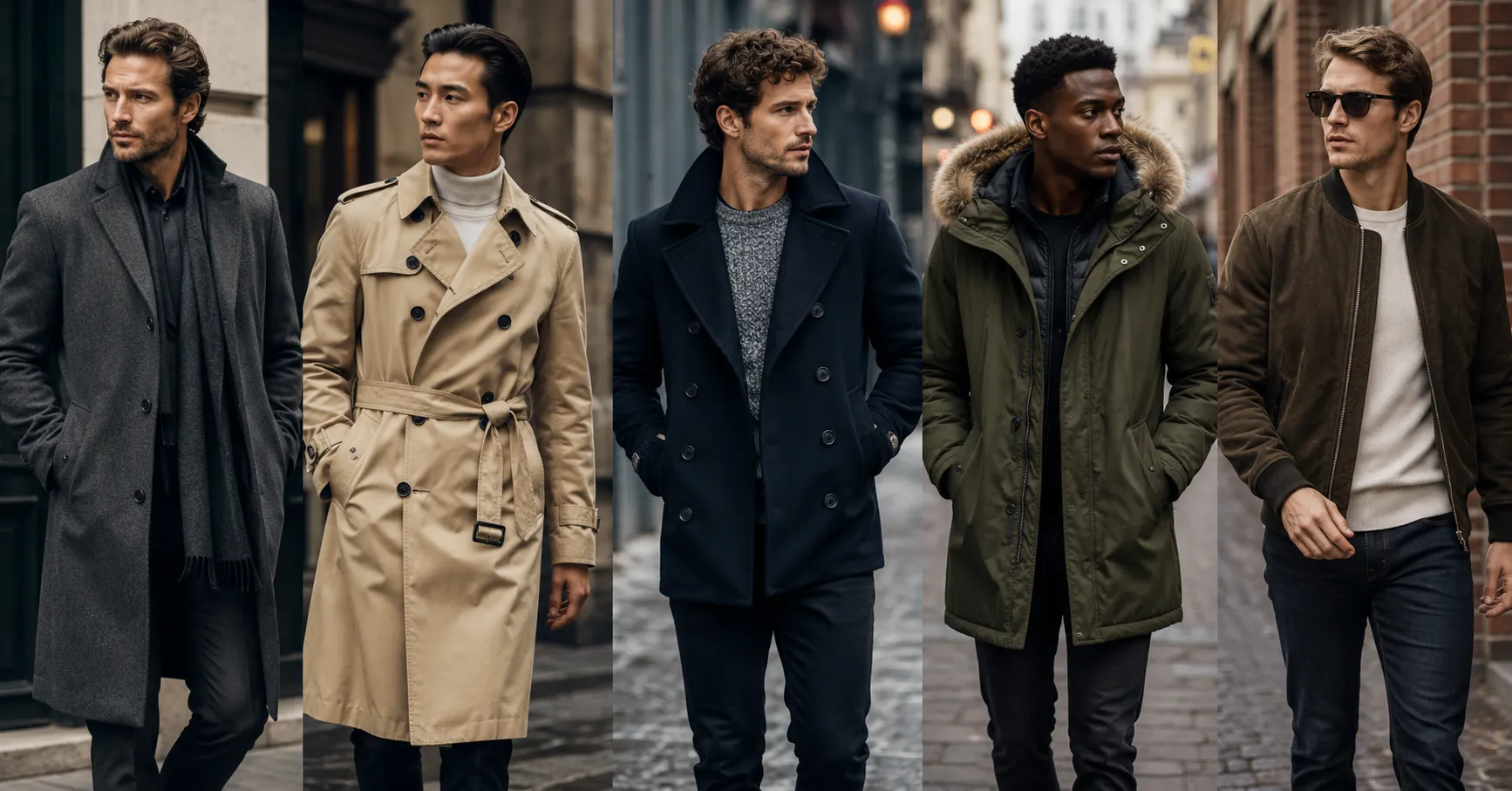
When I build an assortment, I start by naming the coat types in plain language. This is also helpful for SEO because people search “types of coats,” “kinds of coats,” “coat names,” and “types of coats men” in many ways. I also keep a short list of the “hero” items that feel like a masculine coat, because those styles are easy to sell and easy to explain. Here is the 20-piece map I use. It covers coat varieties from formal to rugged, and it includes long coat types and winter staples.
| # | Type of coat | Best use | Key look | Notes for buyers |
|---|---|---|---|---|
| 1 | Over coat (Overcoat) | Formal + cold | Long, structured | Classic mens overcoat styles |
| 2 | Mens topcoat (Topcoat) | Business | Sleek, lighter | A mens dress coat option |
| 3 | Chesterfield | Formal | Clean, minimal | Easy “masculine coat” story |
| 4 | Ulster coat | Cold + formal | Heavy lapels | Strong in wool blends |
| 5 | Polo coat | Smart casual | Belted or roomy | Works as a stylish mens coat |
| 6 | Trench coat | Rain + city | Belt, storm flap | Always sells when fit is right |
| 7 | Mac / Raincoat | Rain | Simple, straight | Good for “coat for formal” too |
| 8 | Car coat | Driving + casual | Mid-length | Clean “coat for men style” |
| 9 | Peacoat | Cold + casual | Double-breasted | A known “coat name” globally |
| 10 | Duffle coat | Cold + casual | Toggles, hood | Youth-friendly, easy story |
| 11 | Parka | Deep winter | Hood, pockets | Strong for types of winter coats men |
| 12 | Puffer coat / jacket | Winter | Quilted volume | Works as coats for men stylish |
| 13 | Down jacket | Winter | Light warmth | Needs good fill and QC |
| 14 | Field jacket (M-65) | Transitional | 4 pockets | Rugged masculine coat vibe |
| 15 | Waxed jacket | Wet + casual | Matte finish | Good margin when done well |
| 16 | Bomber jacket | Casual | Rib trims | A top “types of jackets male” item |
| 17 | Harrington jacket | Smart casual | Stand collar | Clean “men coat styles” |
| 18 | Denim jacket | Casual | Denim | Great layering item |
| 19 | Leather jacket | Fashion | Leather feel | Also for “different types of fancy coats for men” |
| 20 | Varsity jacket | Street | Contrast sleeves | Works for teenage and youth |
The buyer rule I follow
I treat “mens dress coats” as anything that can sit over tailoring and still look sharp. I treat “different styles of mens jackets” as anything that feels easy and moves fast for daily wear. If a product sits in the middle, I force a decision with details: lapel shape, shoulder structure, and fabric weight. That one choice makes product photos cleaner, product names clearer, and returns lower. It also helps when customers ask, “what are the long jackets called?” because I can answer with confidence: if it is formal and long, it is usually an overcoat or topcoat, not just a long jacket men item.
Which masculine coat styles sell best in cold weather markets?
When I guess winter demand, I overbuy heavy styles and underbuy layering pieces. Then I get stuck with bulky stock, and my best sellers run out too early.
In cold markets, I sell best when I balance three groups: heavy winter coats for warmth, mid-weight coats for daily wear, and simple insulated jackets that look modern and pack well.
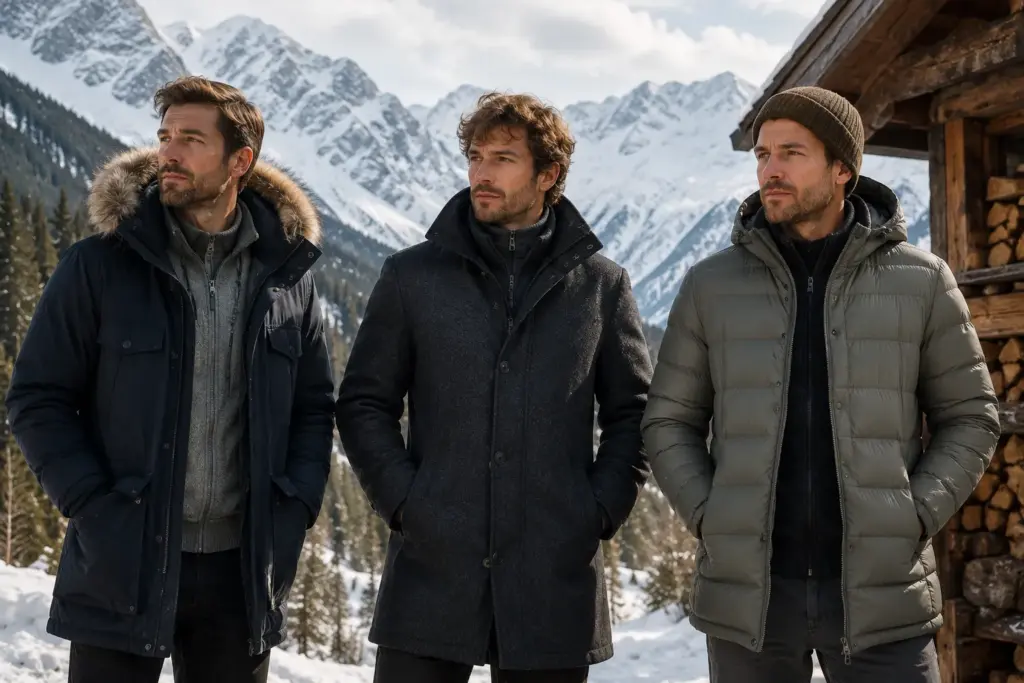
What I stock first for winter
For winter, buyers often search “types of mens winter coats,” “types of winter jackets for men,” and “types of mens winter jackets.” I translate those searches into a plan that stores can act on. I like to stock one long option, one hooded option, and one light insulated option. This makes the range feel complete without being messy. I also think about how the product ships. A huge parka takes space, but a puffer packs down and saves freight costs. That matters in wholesale.
| Climate need | Best coat types | Why it sells | Risk to manage |
|---|---|---|---|
| Deep cold | Parka, Ulster, Overcoat | Warmth + “hero” look | Bulk and long lead times |
| Wet cold | Trench, Raincoat, Waxed jacket | Practical and clean | Seam sealing and fabric testing |
| City winter | Topcoat, Peacoat, Puffer | Easy styling | Fit consistency across sizes |
| Travel | Down jacket, Puffer | Light and warm | Fill quality and leakage |
The quality checks I never skip
I learned this the hard way: winter products fail in the small parts. Zippers break, lining tears, and down leaks. So I set clear standards before sampling. I define temperature use, fabric weight, and trim grade. I also push for stress tests on seams and pocket openings. This is where a “thread coat” problem shows up, meaning weak stitching or loose threads that make a product look cheap. When I solve these early, my mens nice coats get fewer complaints, and buyers reorder faster. Cold-weather success is not only about warmth. It is about trust.
What are the long jackets called, and how do I pick the right length?
When I pick length by feeling, I miss the target customer. Then a mens long coat looks “off,” and the whole story breaks, even if fabric is good.
Long coats for men usually fall into clear names: topcoat and overcoat for formal wear, and long casual coats like trench, duffle, and parka for daily use. I pick length by body proportions, climate, and what the buyer wears under it.
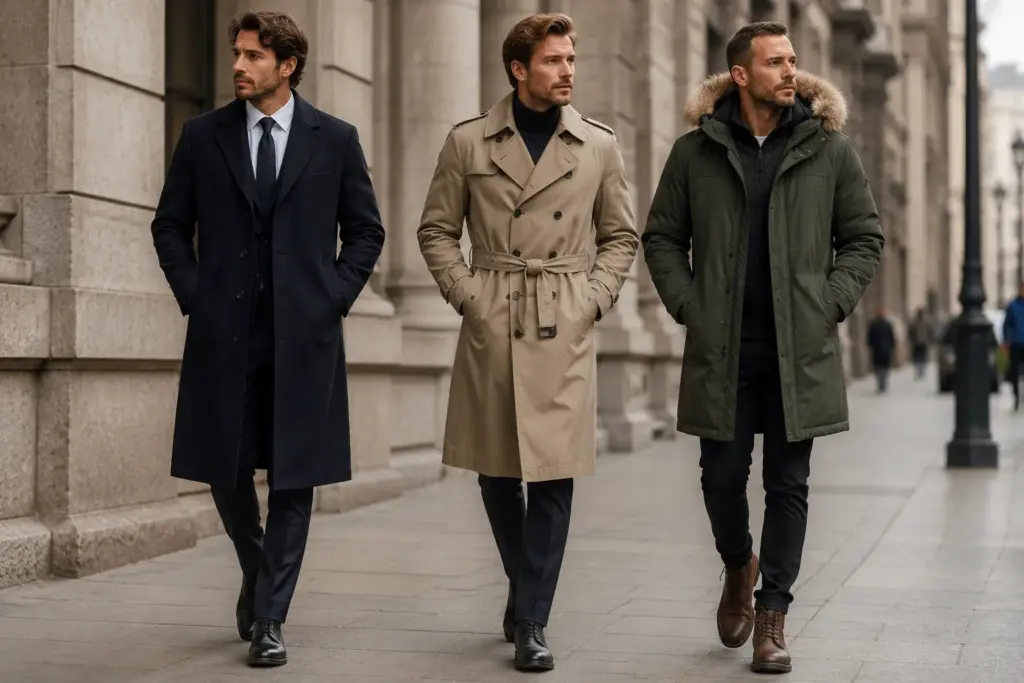
A practical answer to “what is a long coat called?”
People ask this in many ways, like “what are those long coats called,” “what is a long coat called,” “what are the long jackets called,” and “long coat types.” I answer it in simple terms. If the coat is tailored and worn over a suit, it is a topcoat or overcoat. If it has a belt and rain details, it is a trench. If it has toggles, it is a duffle. If it is insulated with a hood, it is often a parka. That sounds basic, but it keeps product pages clean and helps customers search.
How I decide coat mens long vs mid-length
Length is not only style. It changes movement, warmth, and fit issues. For guys long coats, a longer hem adds warmth and presence, but it can feel heavy and it can limit steps. For a long jacket men item, I watch the pocket placement and the zipper length. Bad placement makes the coat feel cheap, even if the fabric is premium.
| Length group | Typical hem | Best for | Common types |
|---|---|---|---|
| Short | Above hip | Driving, casual | Bomber, Harrington, Varsity |
| Mid | Hip to mid-thigh | Daily wear | Car coat, Peacoat, Field jacket |
| Long | Knee and below | Formal, cold | Overcoat, Topcoat, Ulster, Trench |
I also decide how “masculine” the coat should look. A masculine coat usually has stronger shoulders, a cleaner front, and deeper pockets. That shape sells well for men’s coat styles in many markets. When I get this right, the product looks expensive even before the customer touches it.
How can I source different types of fancy coats for men without quality risks?
When I add “fancy” styles, I can lose control. Trims get inconsistent, factories cut corners, and late delivery kills the season. That is the fastest way to lose a buyer like Maria.
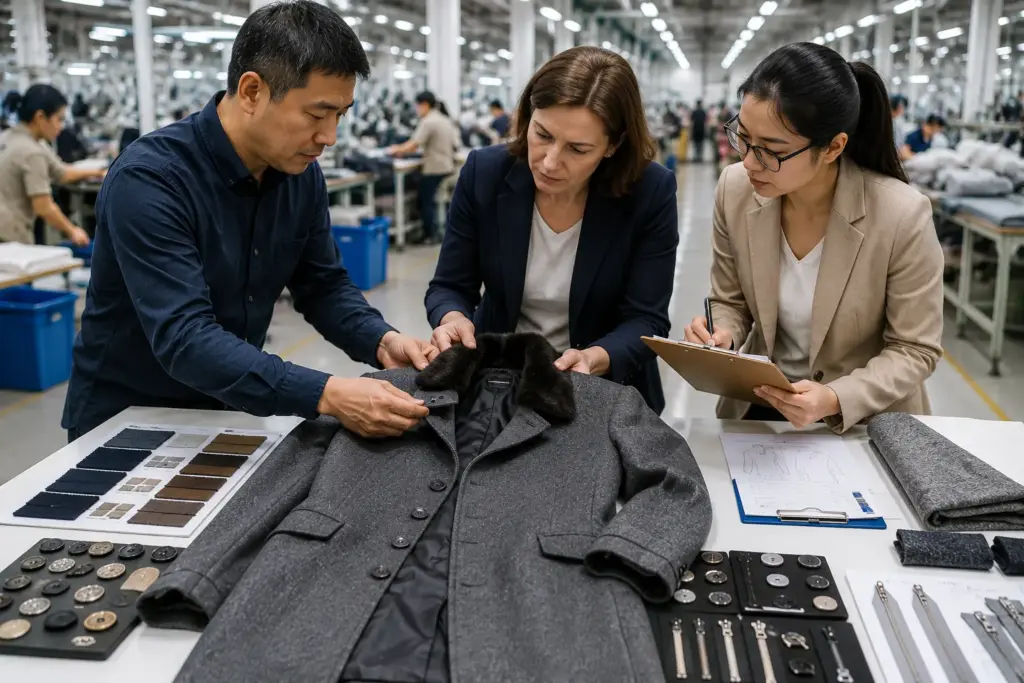
I source different types of fancy coats for men by locking three things early: a clear tech pack, a fixed trim standard, and a test plan for fabric and construction. This lets me add fashion details while keeping delivery and quality stable.
What “fancy” really means in production
Fancy does not have to mean risky. It often means one of these: special fabrics, special trims, special shape, or special branding. Examples include a velvet collar on a mens dress coat, contrast piping on a men’s dress coat, or a leather-look detail on a trench. It can also mean limited colors and special buttons for dress coats for men. Each one adds steps, so I plan them like a checklist, not like a mood.
| Fancy element | Where it fails | How I control it | What I ask in sampling |
|---|---|---|---|
| Premium buttons | Color mismatch | Approved standard card | Button pull and wash test |
| Special lining | Wrinkles and tearing | GSM and yarn spec | Abrasion test and seam check |
| Branding labels | Wrong placement | Placement template | Photo proof before bulk |
| Tailored shape | Fit drift | Graded size set | Fit review on 3 key sizes |
The B2B steps that protect my season
I always protect delivery first. I set a calendar that includes sample time, material booking, and pre-production approval. I also set a simple rule for changes: no “small tweaks” after materials are booked. That is how delays start. I also protect certification and documents. If a factory cannot support needed testing and paperwork, I do not push it. It is not worth it. I prefer a steady supplier for mens coat types, even if the price is not the lowest. A stable supplier helps me scale coat varieties across markets, and it helps me keep payment terms and logistics smooth. When I do OEM/ODM, I keep communication tight with one owner on each side. That removes the “poor communication” pain fast, and it makes the whole run safer.
Conclusion
I pick men’s coats with a clear map, a climate plan, a length rule, and strict sourcing checks, so my assortment stays simple, strong, and easy to reorder.
Why I Write This
I am Lancy Chia from Truekung in China. I run a factory with more than 200 workers. I focus on B2B wholesale only, and I provide clothing products and OEM/ODM services. I have 20 years of experience in foreign trade clothing production and export. I produce fashion women’s clothing and also menswear items like men’s coats, jackets, and long coats for men. I work with brands and supermarkets across markets like the Netherlands, Denmark, Belgium, Norway, the UK, the USA, Germany, Australia, Thailand, Turkey, Italy, Russia, and Saudi Arabia. If you want to develop mens coat styles with stable quality control, clear certification support, and reliable delivery, you can reach me at [email protected], and you can learn more at https://truekung.com.
Views: 92