
Every season I see men buy the wrong coat, then feel cold, bulky, or overdressed. That mistake looks small, but it wastes money and kills confidence.
Start with purpose, then pick a coat type, then lock the fit and length. If you match weather, outfit formality, and body shape, the “perfect coat” becomes a clear choice, not a gamble.
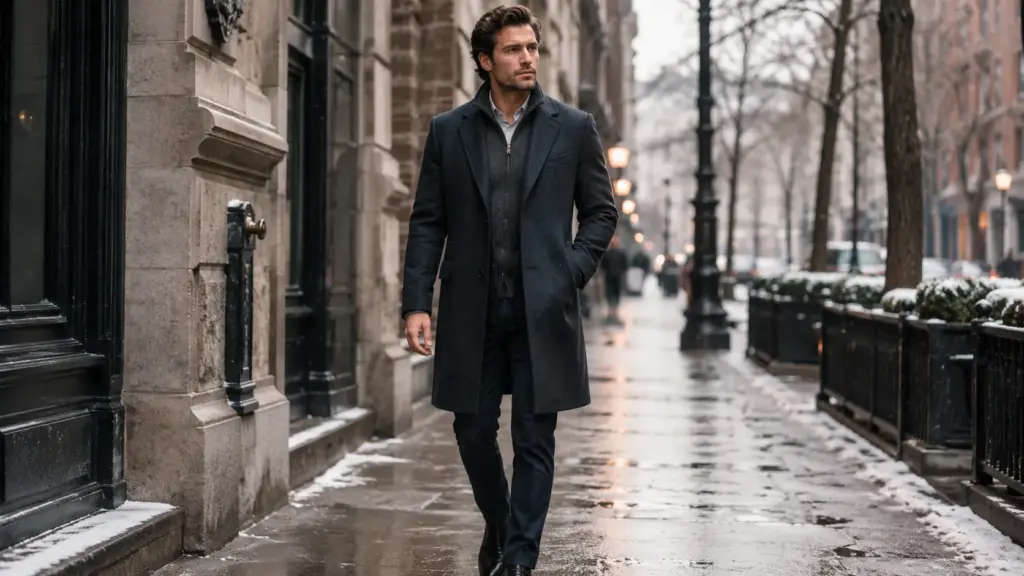
I still remember a buyer call where a “best man coat” request turned into five samples, three returns, and one angry store manager. I do not want that for you. If you keep reading, I will turn coat shopping into a simple checklist you can use today.
What Is a Pea Coat, and Why Do Peacoats Keep Selling?
A lot of men want a coat that looks sharp, but they fear looking too formal. That fear pushes them into random “long jacket men” picks that never feel right.
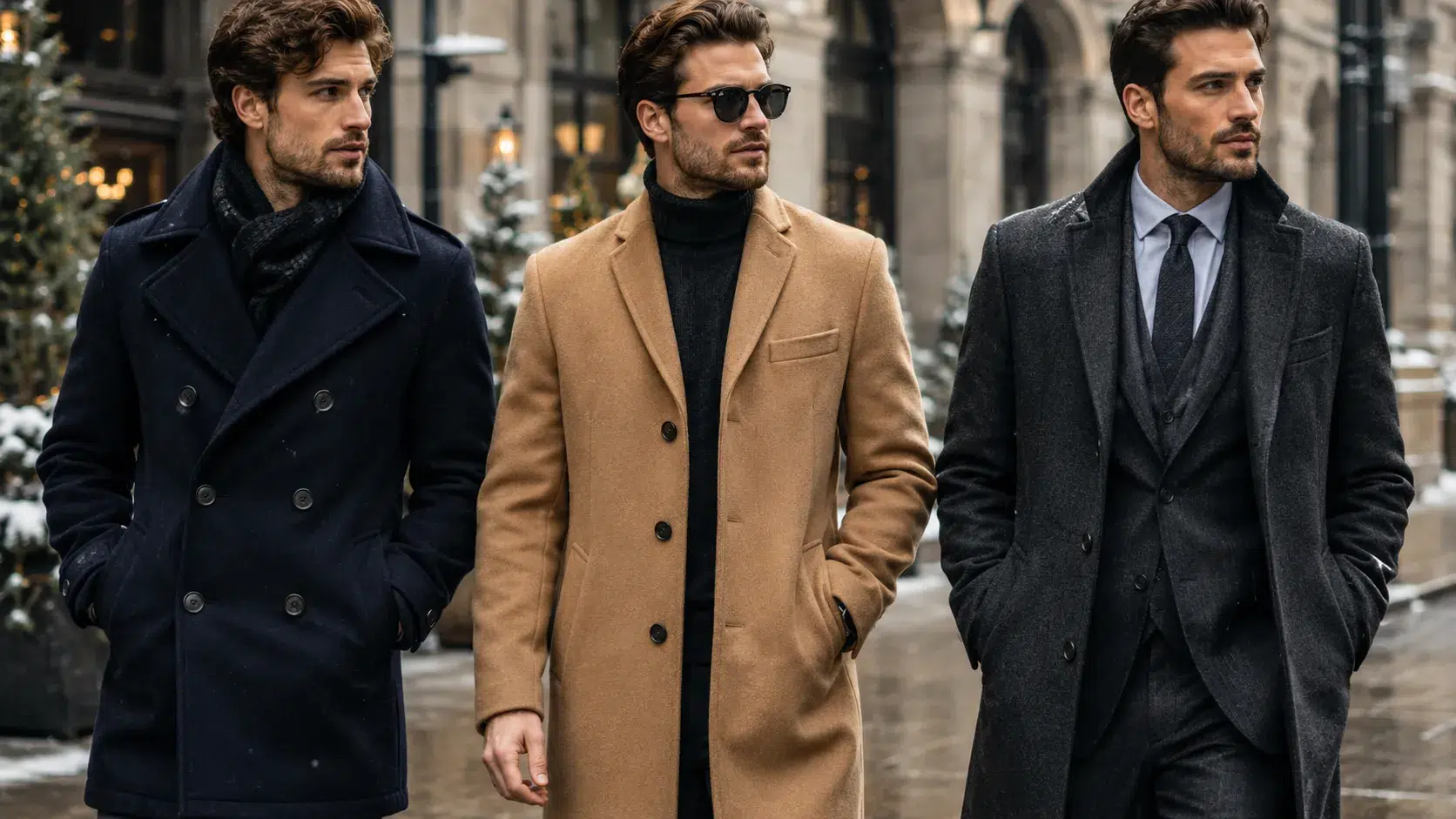
A peacoat is a short, warm, double-breasted coat with a naval history. It works for smart casual and business casual, and it flatters most men because it frames the chest and shoulders.
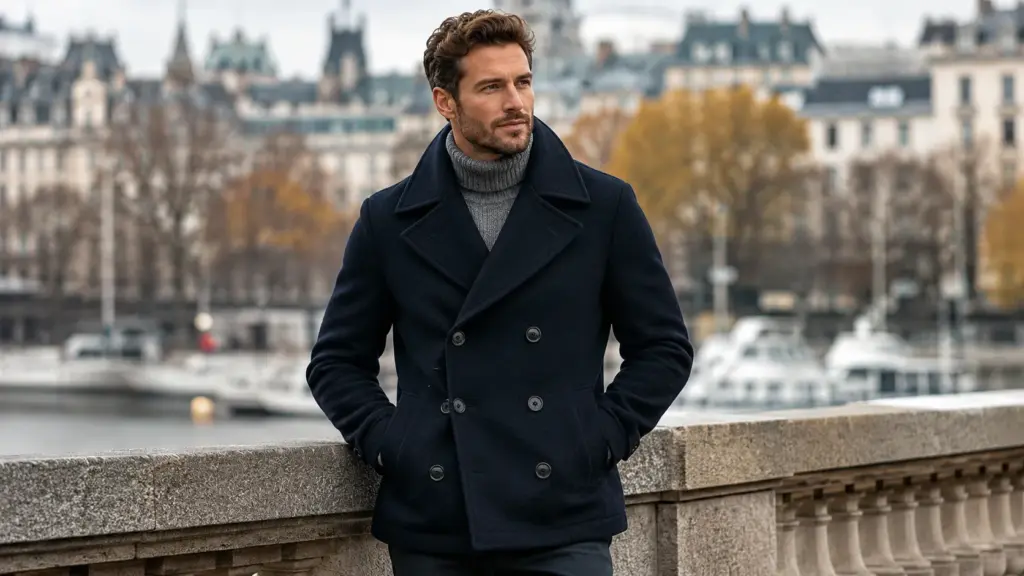
Define peacoat in plain words
When someone asks me “define peacoat” or “whats a pea coat,” I answer in one line. A pea coat (also written as peacoat, peacoats, p coat, pcoat, pcoat) is a hip-length wool coat, usually double-breasted, built for wind and cold. The wide lapels and the tight neck area help block air.
When I recommend a pea coat
I recommend a pea coat when the man needs one coat to cover many outfits. I also recommend it when the brand wants a strong winter item that is easy to sell on a rack. A pea coat feels “right” with jeans, chinos, and even a suit in many cities.
Pea coat details that matter to buyers
I often see buyers focus on buttons first. I do the opposite. I check the cloth and structure first, then buttons.
| Checkpoint | What I look for | Why it matters |
|---|---|---|
| Fabric weight | Medium to heavy wool blend | Warmth and drape |
| Front build | Clean chest, stable edges | Shape stays after wear |
| Collar | Stands up without folding | Wind protection |
| Button stance | Sits at mid chest | Better balance on body |
Common search terms and typos I see in emails
I keep a small list because buyers and shoppers type fast. I do not judge it. I just use it to understand intent.
| People mean “peacoat” but write | Notes |
|---|---|
| pecoat, peicoat, peacost, peatcoat | Common typo forms |
| pracoat, peacoar, peacoay, peacout, peakcoat | Often from mobile typing |
| p coat, pcoat, peacoat top | Short forms |
Pea Coat or Topcoat, and What About Overcoats?
Many men stand in front of a mirror and ask “pea coat or topcoat?” Then they buy based on one photo. Then the coat fights their outfits or weather.
A topcoat is a lighter overcoat for mild cold and dressy outfits, while an overcoat is often heavier and longer for colder weather. A peacoat is shorter, sportier, and great for daily wear.
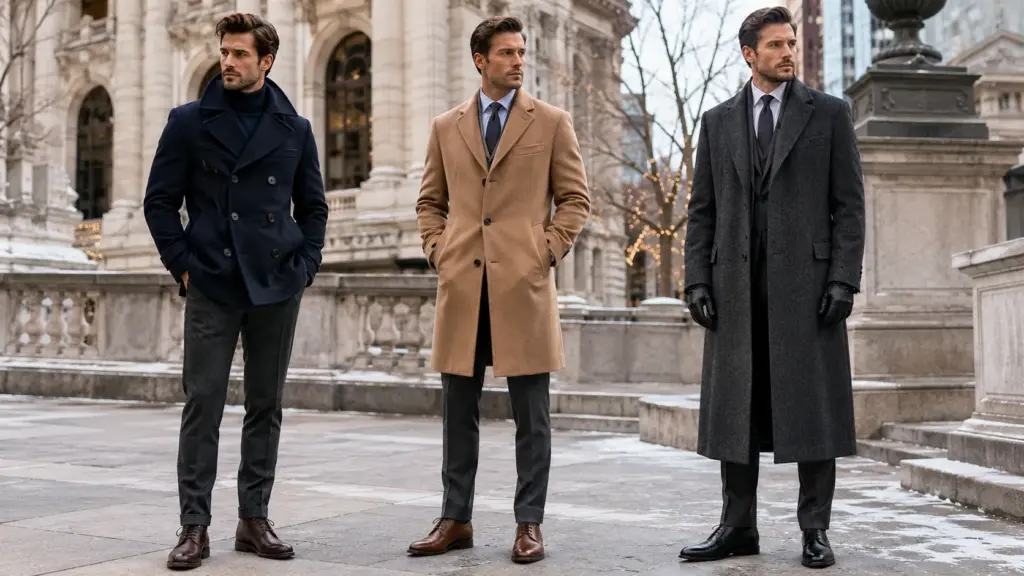
Topcoat vs overcoat vs peacoat in one view
When my client asks for “overcoat for men,” I ask where it will be worn and with what outfit. Then the choice becomes simple.
| Coat type | Typical length | Best with | Best season |
|---|---|---|---|
| Peacoat | Hip to upper thigh | Knitwear, denim, chinos | Cold + wind |
| Topcoat | Mid thigh to knee | Suits, office outfits | Cool to mild cold |
| Overcoat | Knee to below knee | Suits, formal looks | Cold winter |
Single breasted overcoat vs double-breasted choices
Some brands only want a clean, modern line. In that case I often push a single breasted overcoat. It reads simple, and it layers well. A double-breasted coat looks bold, but it needs the right body and shoulder. If the customer base includes many body types, I keep the double-breasted range smaller.
Car coat vs overcoat vs peacoat
I get “car coat vs overcoat” questions each winter. A car coat is usually shorter than an overcoat, often mid thigh, made for sitting and moving. It is easy for drivers and commuters. It is also easier for retailers because returns drop when movement feels good.
| Use case | Best choice | Reason |
|---|---|---|
| Driving and commuting | Car coat | Less bulk when seated |
| Business suit in cold | Overcoat | Better coverage |
| Daily street wear | Peacoat | Strong shape, easy styling |
Trench coat vs topcoat decisions
A trench coat is not the same as a topcoat. A trench is often cotton or blended fabric, and it is made for rain and wind. A topcoat is often wool, and it is made for cool air and clean lines. When I build an assortment, I treat trench as “wet weather hero” and topcoat as “office hero.”
How Should a Coat Fit, and What Coat Length Works Best?
A coat can be high quality, but it still fails if it fits wrong. I see men with coat sleeves too short, shoulders too tight, and backs that pull. That ruins the look fast.
A coat should sit clean on the shoulders, allow a sweater under it, and close without pulling. For length, pick shorter for casual movement, and longer for warmth and formal outfits.
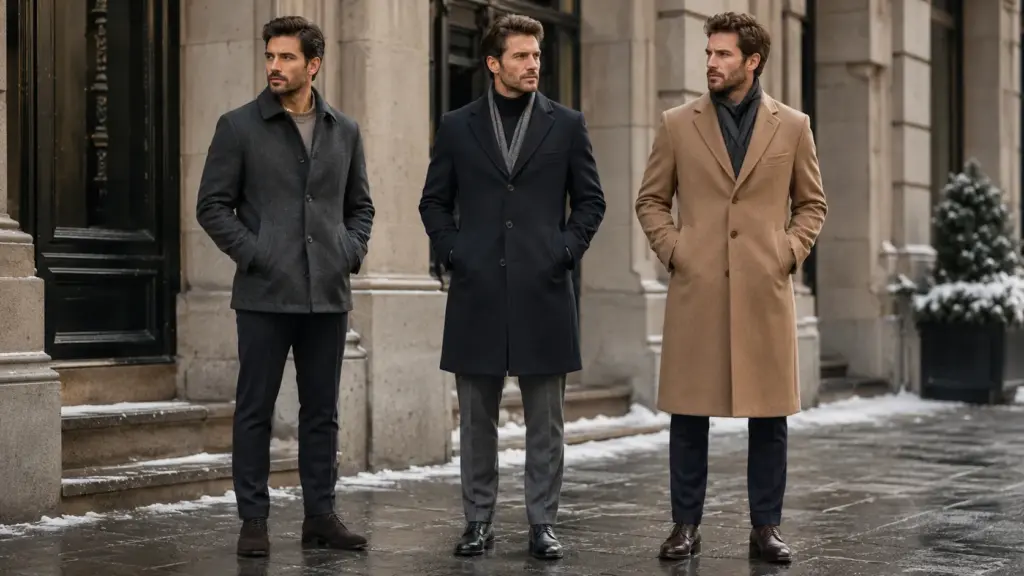
My simple fit checklist
I use the same checklist in my factory sampling room and in store visits. I use it because it cuts debate.
| Area | Good fit sign | Bad fit sign |
|---|---|---|
| Shoulders | Seam sits at shoulder edge | Dents or overhang |
| Chest | Buttons close flat | X-shaped pull lines |
| Armhole | High enough to move | Lifts whole coat up |
| Sleeve | Covers shirt cuff | Too short or too long |
| Back | Smooth when arms forward | Tight lines across back |
Coat length and body balance
People ask “coat length” like there is one answer. I treat it as balance. A shorter coat can make legs look longer. A longer coat adds warmth and looks more formal. I often tell men to stand straight and check where the hem hits.
| Length name (common talk) | Where it hits | Works best for |
|---|---|---|
| Short | Hip | Casual, travel, daily wear |
| 3/4 coat mens | Mid thigh | Office + movement |
| Knee length | At knee | Formal, cold weather |
| Long | Below knee | Very cold, dramatic look |
Coat to wear over a dress or formal outfit
Yes, I also get “coat to wear over a dress” or “coat over formal dress” questions from buyers who sell to couples and events. For men, the close match is simple. If a man wears a suit or tux style outfit, I push a topcoat or overcoat with a clean front. For evening events, I avoid too many pockets and loud stitching. I keep the shape calm so the suit stays the star.
Coat for snow and real winter
When the customer asks “coat for snow” or “jacket snow,” I switch the talk from style to survival. Wool is warm, but wet snow can break comfort. In that case I suggest either a wool coat with a strong lining and a tighter weave, or a down option for deep winter. I also watch the collar and cuff areas, because wind leaks there first. If the city has ice rain, a trench coat alone is not enough, so I pair it with layers.
Conclusion
I choose the perfect men’s coat by matching use, then type, then fit and length. That order saves money, reduces returns, and makes the coat feel right.
Why I Write This
I am Lancy Chia from Truekung in China. I run a factory with over 200 workers. I make fashion clothing, and I support OEM/ODM for brands and supermarkets. I focus on clear communication, stable quality, and on-time delivery. If you want to build a men’s coat line, I can help you pick coat styles, fabrics, and fits that your customers will keep wearing.
Views: 68