I know jumpsuits save time, but the choices feel endless. That confusion kills speed and profit. I will break it down with clear names, fits, fabrics, and buying tips.
The 20 key jumpsuit types split into five groups: classic silhouettes, fit-led cuts, work and utility forms, season-and-fabric picks, and statement styles. Use these names on tech packs and POs to avoid mistakes.

I want you to scan fast, pick what you need, and place firm orders. I use simple names and tables. I also add small price and QC notes from factory floors. Keep reading and bookmark this.
Straight-Leg Jumpsuit: the true all-rounder?
I see buyers freeze because options look similar. That delay hurts margin. A clean straight-leg solves confusion and covers most dress codes without risk.
Choose a straight-leg when you want balanced ease, steady sell-through, and fast repeats. It works across sizes, fabrics, and seasons with minimal alteration.

How I lock the straight-leg block and cost
I keep one mid-rise straight-leg block as my base. I run it in denim, twill, and ponte for year-round flow. I fit the rise while seated, because rise errors cause returns. I standardize pocket bags to hold a phone. I use a medium-length center back zipper for easy on-off, or a side zip in wovens with less give. I book volume to reduce CM. I press front crease only for office lines. I cut a pilot of 60 pieces and watch try-on notes. I protect hem allowance so stores can adjust length.
| Detail | Spec |
|---|---|
| Rise | Mid, 28–30 cm (size M) |
| Leg opening | 40–46 cm |
| Pocket bag | 17 cm min |
| Zipper | 50–55 cm |
Wide-Leg Jumpsuit: when you need drape?
Too much shape can scare a customer. A wide-leg gives flow, comfort, and a long line. It sells well in photos and videos.
Use a wide-leg with soft fabrics like viscose or Tencel. High rise and a defined waist make the silhouette clean and flattering.

My fit tricks that reduce returns
I balance a high rise with a shaped waistband. I keep hip ease generous, then control the waist with darts or elastic back. I test floor sweep to avoid dirty hems. I add belt loops for flexibility. I choose breathable lining when needed. I press the leg panels on a wide board to prevent twist after wash. I request bulk rolls from the same dye lot to avoid color shade mismatch. I always include a short length option for markets with lower average height.
| Risk | Fix |
|---|---|
| Hem drag | Offer two inseams |
| Waist gape | Elastic back panel |
| Drape collapse | Interline waistband |
| Shine marks | Use press cloth |
Tapered Jumpsuit: smart without stiffness?
Shoppers want sharp lines but easy movement. A tapered leg gives that balance. It reads polished, not strict.
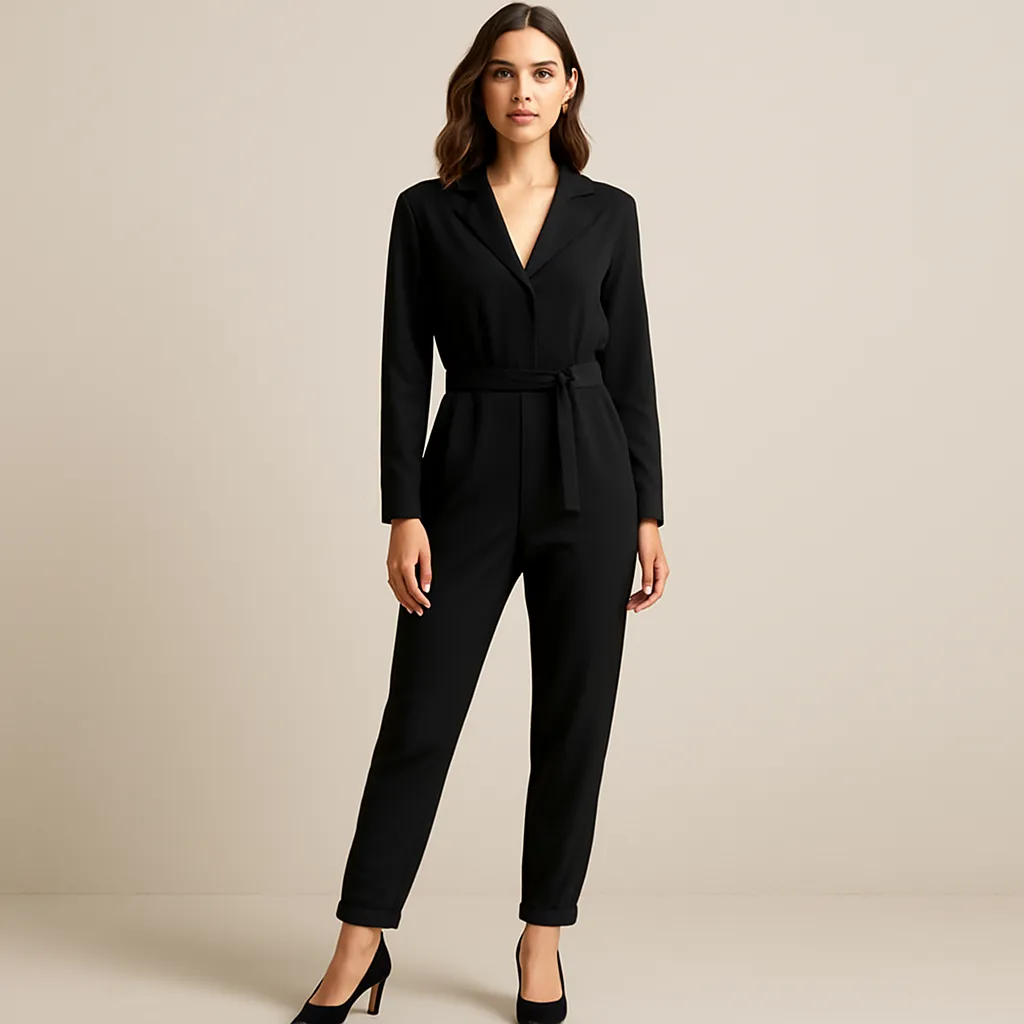
Pick a tapered cut for office and casual. Use a pegged ankle and a mid-rise waist. Add elastic at back to widen the fit window.
The pattern notes that keep it clean
I pinch the knee to shape the taper, then keep calf ease for sitting. I spec an ankle opening that clears most shoes. I place the crotch point slightly forward to remove drag lines. I love ponte and stretch twill here. I use bartacks at pocket corners. I fit with a tucked shirt to check rise. I add a small pleat at front for comfort in larger sizes. I keep seam allowances at 1 cm to speed sewing while holding strength.
| Point | Target |
|---|---|
| Ankle opening | 28–32 cm |
| Knee ease | +3–4 cm over body |
| Back waist elastic | 4 cm width |
| Pocket bag angle | 15–20° |
Cropped Jumpsuit: summer speed without risk?
I see stores miss heat waves. A cropped length moves faster in warm months and reduces fabric cost.
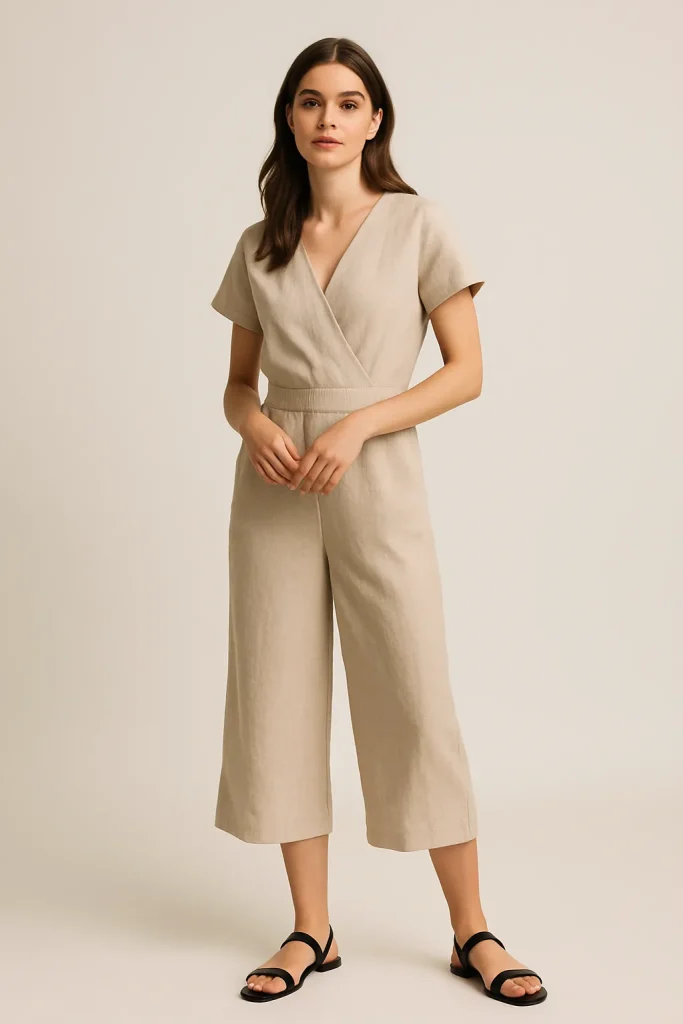
Choose a calf-length or above-ankle cut in linen, chambray, or light twill. Make inseam options by region to respect modesty rules.
How I stop length complaints
I set two lengths: petite and regular. I label the outseam on hangtags so shoppers can predict fit. I add adjustable straps on sleeveless bodies. I pre-wash fabric to lock shrinkage. I edge-bind the hem to avoid flare after wash. I avoid heavy hardware that drags the line. I test with sandals and sneakers to see break points. I keep the armhole tight enough to hide bras.
| Spec | Range |
|---|---|
| Outseam | 88–96 cm |
| Hem width | 44–52 cm |
| Shrinkage | ≤3% |
| Strap adjust | +3 cm |
Wrap Jumpsuit: can one style fit many bodies?
Fit fear kills conversions. A wrap bodice hides midsections and adjusts across shapes.
Use a true wrap or faux wrap with a hidden snap. Add modesty reinforcement at the bust and a stay-stitch at the neckline.

The small stitches that make big wins
I sew a hidden snap at the crossover to stop gaping. I bind the neckline to keep its curve. I add belt loops high enough to lift the waist visually. I test twist and reach so the wrap stays flat. I mark the tie length clearly in the tech pack. I avoid heavy rings that bruise during wear. I line the front bodice in light fabrics. I keep the wrap depth different by size to keep coverage.
| Issue | Solution |
|---|---|
| Bust gape | Hidden snap |
| Curling edge | Stay tape |
| Tie slip | Bar-tacked loops |
| Uneven wrap | Size-graded depth |
Belted Jumpsuit: instant shape with low cost?
Customers want a waist without complex tailoring. A belt does the job fast and cheap.
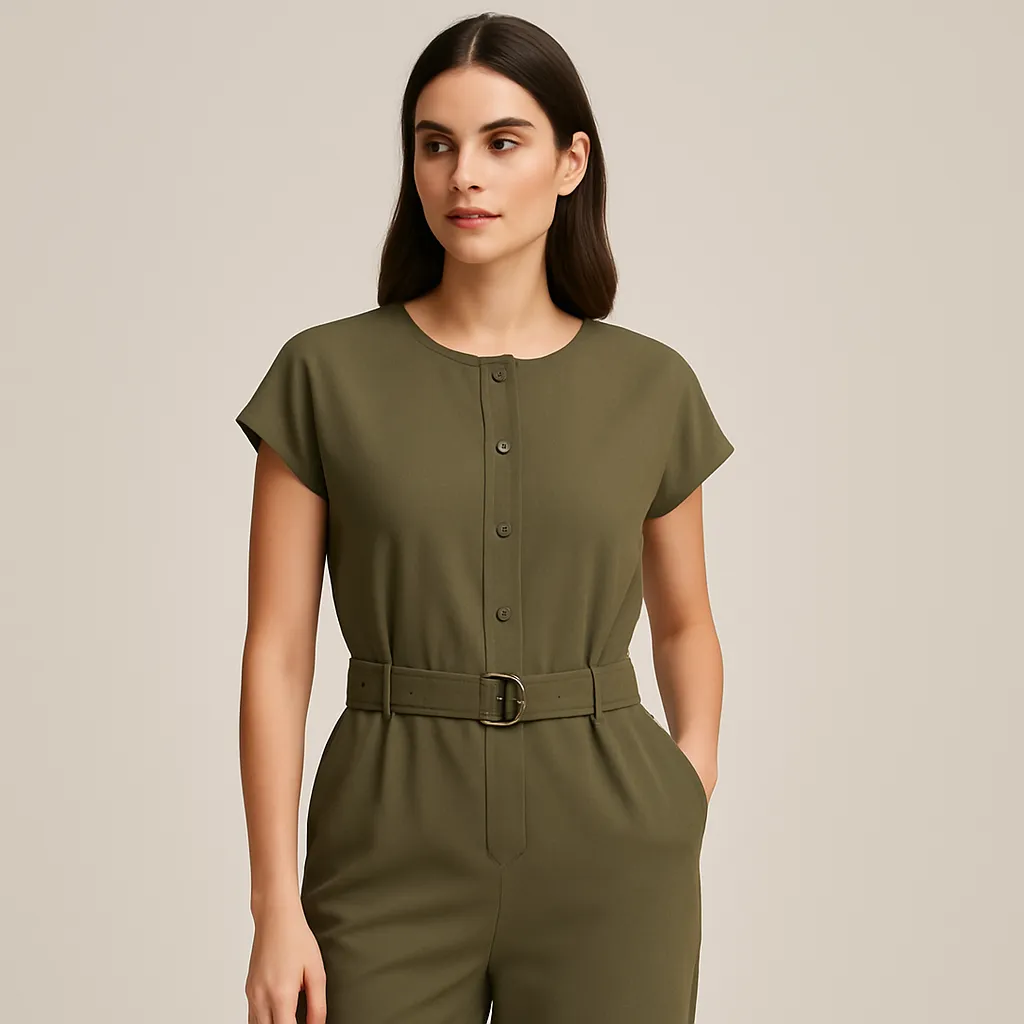
Choose a removable sash or a D-ring belt. Reinforce belt loops with bartacks and double-stitch seams near stress points.
Why belted blocks are range heroes
I can sell one belted block to many shops. A belt lets a buyer adjust fit on the floor. I use self-fabric belts to control cost. I add one spare belt in the master pack for damaged cases. I position loops slightly forward to prevent belt creep. I test laundering so the belt does not twist. I grade belt length with size. I keep the buckle lightweight for comfort.
| Component | Spec |
|---|---|
| Loop height | 6–7 cm |
| Bartack length | 8–10 mm |
| Belt width | 3–4 cm |
| Spare belt | 1 per 50 pcs |
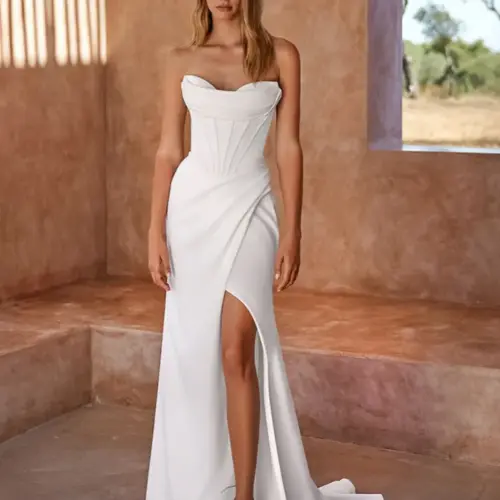
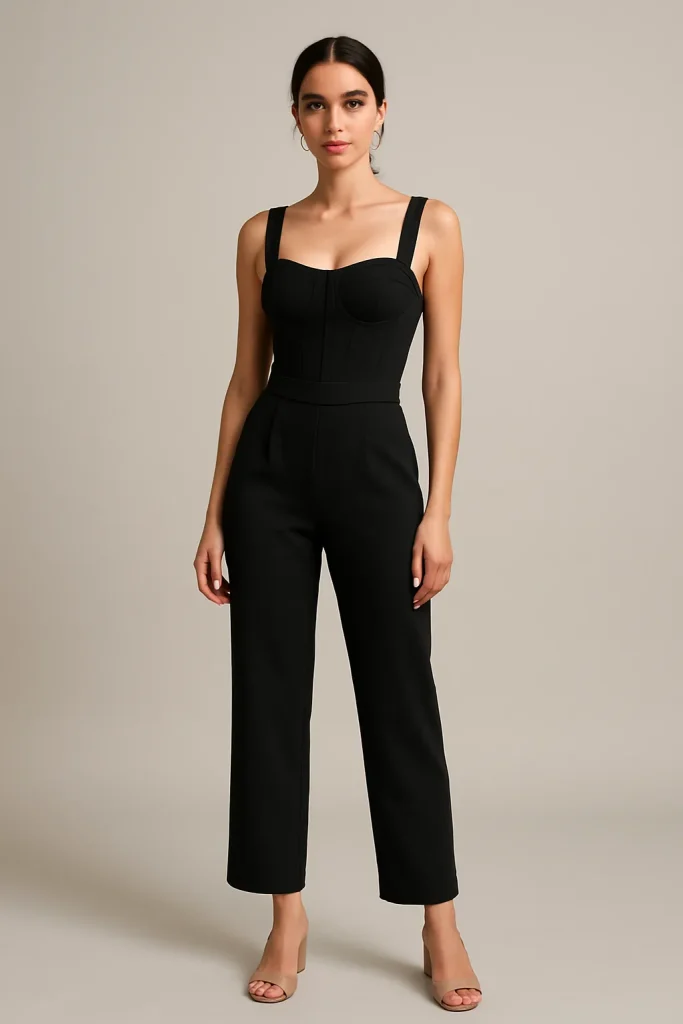
A corset look feels premium, but bad boning snaps. That drives returns and bad reviews.
Use light boning, proper lining, and strong seams. Fit at bust and waist with paneling, not only elastic.
How I build structure without pain
I select spiral steel or high-grade plastic boning. I stitch channels with tight spacing. I line with breathable fabric. I add a modesty panel behind the zipper. I test sit and reach with arms up to check stab points. I bar-tack at ends of boning. I curve the top edge for comfort near the underarm. I always include a fit note on the hangtag.
| Check | Target |
|---|---|
| Boning ends | Covered |
| Lining | Soft, breathable |
| Zipper | Smooth pull |
| Panel symmetry | Verified |
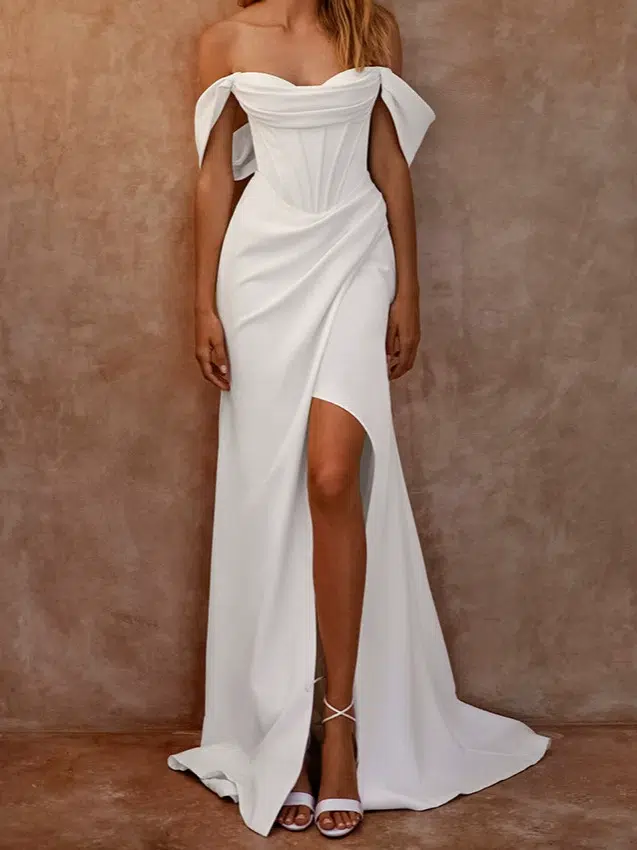
Off-Shoulder Jumpsuit: party-ready without wardrobe slips?
Off-shoulder styles look clean, but arms must still lift. Poor elastic ruins the night.
Use stable elastic around the neckline and clear elastic tape at edge. Run a raise-arm test before sealing the pattern.

My anti-slip checklist
I set elastic in channels, not top-stitched directly, to improve comfort. I add silicone strip when needed. I shape the neckline so it sits on the bicep, not mid-shoulder. I keep sleeve volume balanced to avoid pulling. I add a small back zip for ease. I advise strapless bras in PDP copy. I test recovery after five arm lifts.
| Risk | Control |
|---|---|
| Neckline drop | Silicone strip |
| Elastic fatigue | High-recovery elastic |
| Pulling at arm | Reduce sleeve volume |
| Skin irritation | Soft binding |
Boiler Suit: does rugged ever go out?
Workwear sells each year. A boiler suit is the anchor. It feels strong and honest.
Choose heavy twill, double-needle seams, and metal zippers. Keep pockets functional and secure.
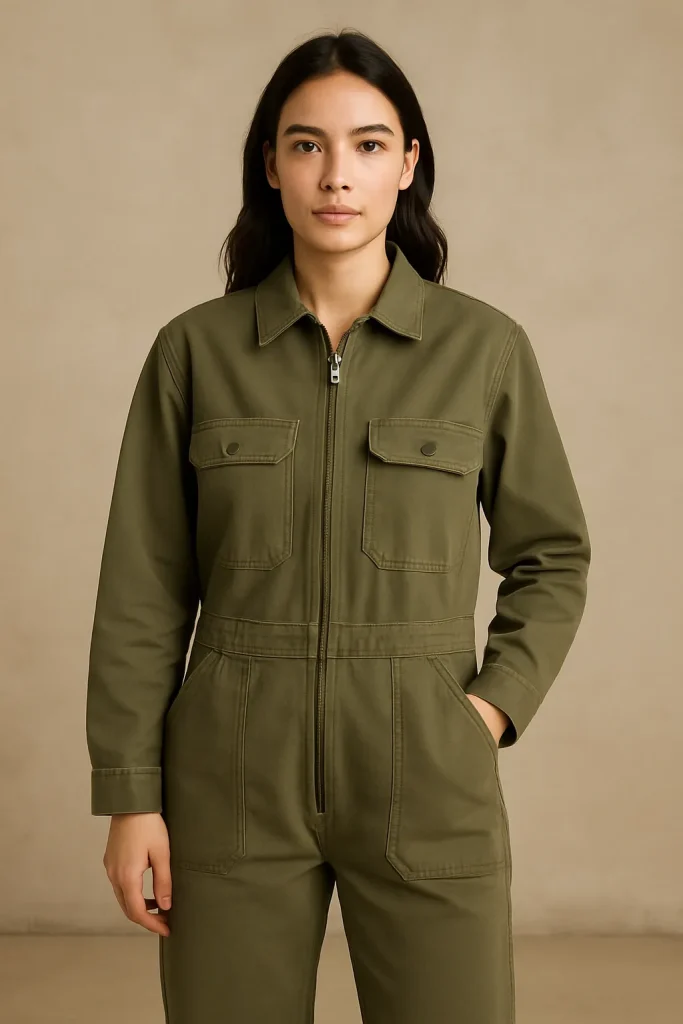
The durability choices buyers can feel
I pick 260–300 gsm twill. I use metal zipper tape with a guard. I reinforce pocket edges. I add an action back pleat for reach. I set sleeve width for layering. I heat-seal size labels to stop itching. I test elbows and knees with kneel-and-reach motions. I wash-test for color loss. I offer unisex grading where needed.
| Part | Spec |
|---|---|
| Fabric | 260–300 gsm |
| Stitch | Double-needle |
| Zipper | Metal |
| Action back | Yes |
Mechanic Suit: tougher trims and clean lines?
The mechanic suit reads iconic. It must survive rough use and still look sharp on display.
Use sturdy drill fabric, snap buttons, and reinforced knees if target markets demand it.
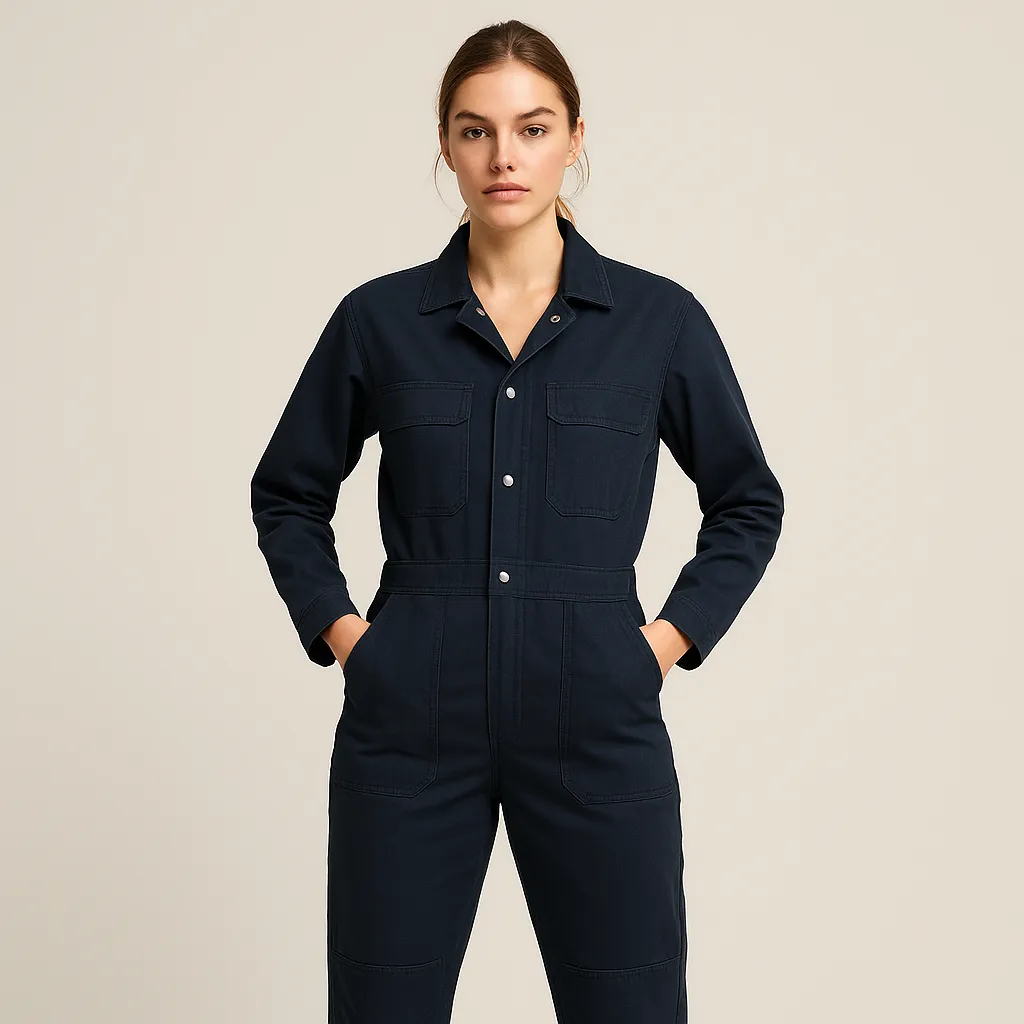
How I design for hard work and style
I switch to drill at 280–320 gsm. I choose branded snaps for trust. I bar-tack at pocket corners. I consider knee patches for automotive shops. I place chest pockets low enough to avoid chin contact when zipped. I lock-in sleeve placket width for gloves. I keep shrinkage tight with sanforization or controlled pre-wash. I supply spare snaps in the trims pack.
| Feature | Value |
|---|---|
| Fabric | 280–320 gsm drill |
| Closures | Snaps |
| Knees | Optional patch |
| Shrinkage | ≤2.5% |
Cargo Jumpsuit: utility without bulk?
Extra pockets sell, but ballooning ruins shape. Placement is everything.
Use flat patch cargo pockets sized for phones. Keep pocket bag depth controlled and secure with flaps or zippers.
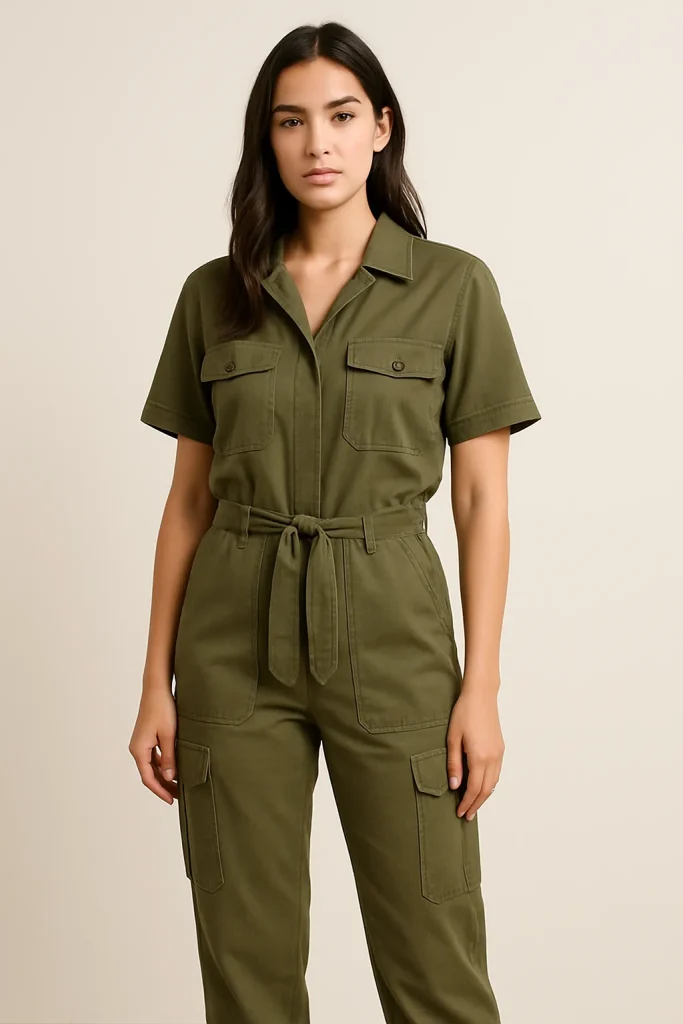
My pocket rules that protect silhouette
I size pocket bags to 17–18 cm. I position thigh pockets slightly forward for access. I add bellows only when fabric is light. I stitch bartacks at the top corners. I use narrow flaps to reduce bulk. I double-check pocket symmetry on PPS. I keep side seams straight to avoid twist after wash. I add a D-ring for keys when asked.
| Spec | |
|---|---|
| Phone pocket | 17×9 cm |
| Thigh pocket | Forward set |
| Closure | Flap or zip |
| Bartacks | 4 corners |
Zip-Front Utility: speed in fitting rooms?
Shoppers hate wrestling with closures. A long front zip solves the pain and speeds try-ons.
Run a two-way zipper for convenience. Add a chin guard and secure the bottom with a bartack.
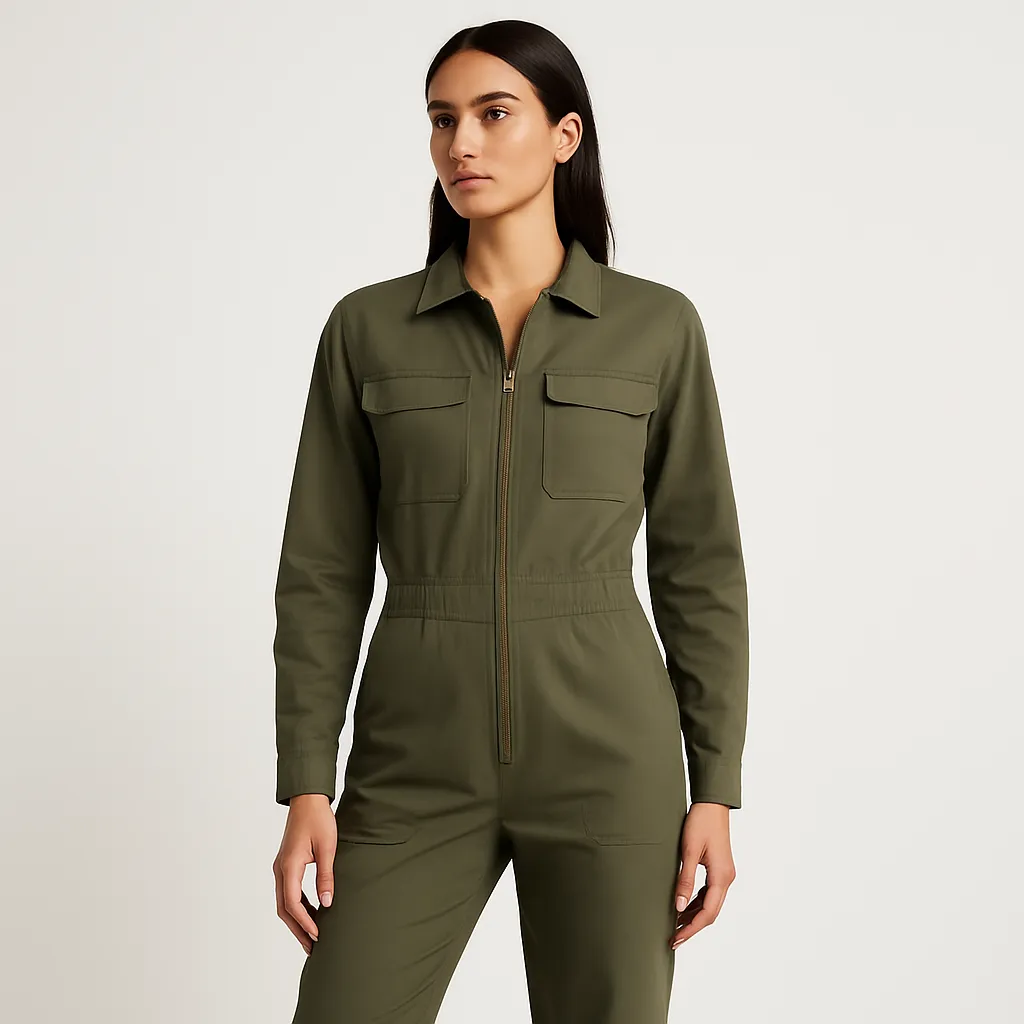
Why stores love this block
I watch fitting room time. Zip-front wins. I keep the puller easy to grip. I choose branded zippers for trust. I add an internal facing to protect skin. I test zipper ripple with steam and pressing. I use stopper at hem to prevent pop. I place the start point high enough to sit without digging.
| Detail | Target |
|---|---|
| Zipper length | 55–65 cm |
| Puller | Large |
| Facing | Yes |
| Chin guard | Yes |
Linen Jumpsuit: heat hero with honest wrinkles?
Linen breathes and sells in hot months. Wrinkles are part of the charm if built right.
Pick mid-weight linen or blends. Pre-wash fabric, control seam grin, and celebrate texture in PDP copy.
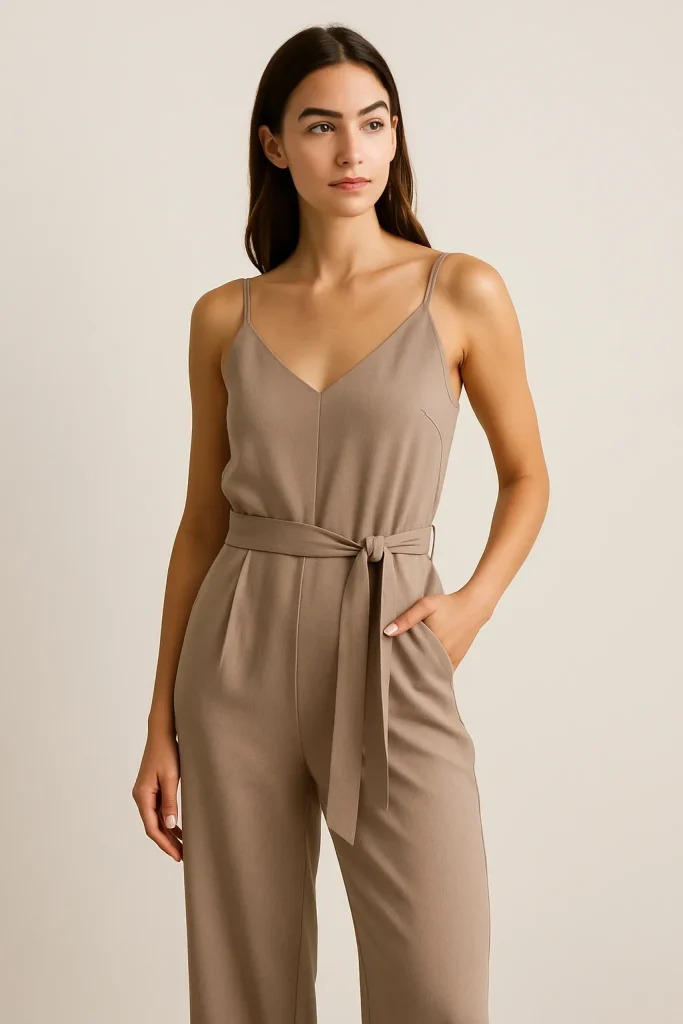
My heat-ready checklist
I select 180–220 gsm linen or linen-viscose. I pre-wash to fix shrinkage. I use French seams where possible. I bias-bind armholes to reduce rub. I test twist with a 360° hang. I add coconut or corozo buttons for a natural look. I include a steam-care tip on the label. I set side slits for airflow where modest.
| Factor | Range |
|---|---|
| Weight | 180–220 gsm |
| Shrinkage | ≤3% |
| Seams | French or clean |
| Care | Steam, hang dry |
Denim Jumpsuit: structure that lasts?
Denim gives shape and a long life. The look is timeless across markets.
Choose 10–12 oz denim for balance. Control shrinkage, test seated rise, and add sturdy zippers or snaps.
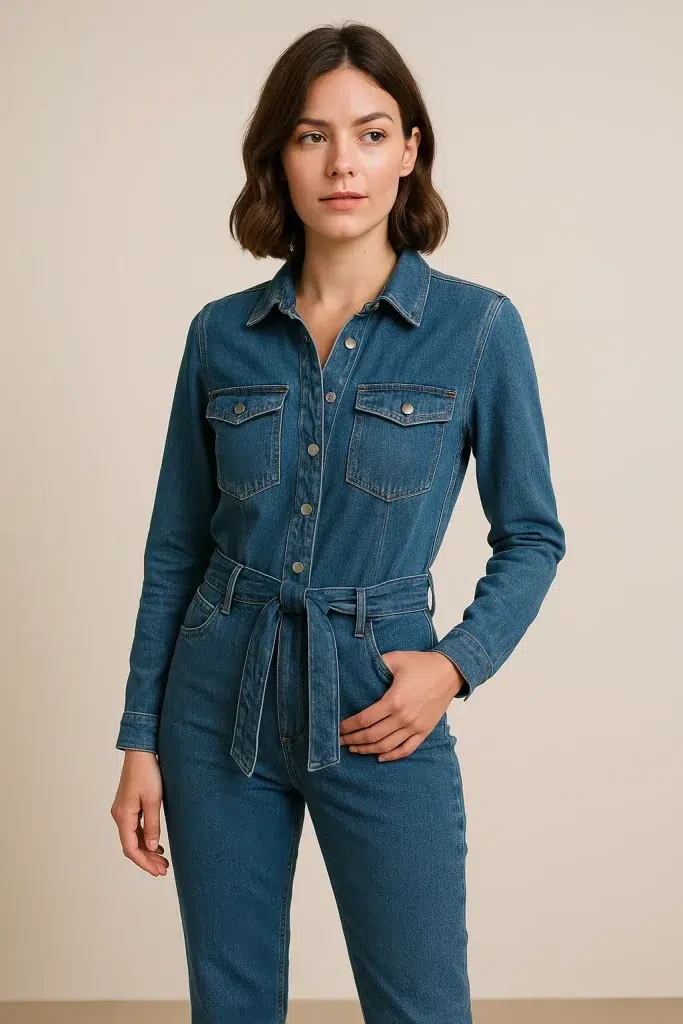
Notes from many denim lines
I test crocking on dark indigo. I pre-wash for comfort. I add elastic back waist for range without losing structure. I double-needle yokes and seams. I check knee bend marks and adjust thigh ease. I keep pocket bags in twill to resist wear. I offer a washed black and a mid-blue. I place brand trims where they will not scratch.
| Item | Spec |
|---|---|
| Fabric | 10–12 oz |
| Stitch | Double-needle |
| Hardware | Metal zip or snaps |
| Colorways | 2–3 core |
Knit Jersey Jumpsuit: travel-friendly and soft?
Travelers want comfort and easy care. Jersey jumpsuits pack small and move well.
Use medium-weight jersey with recovery. Tape the neckline, stabilize shoulder seams, and control hem flare.
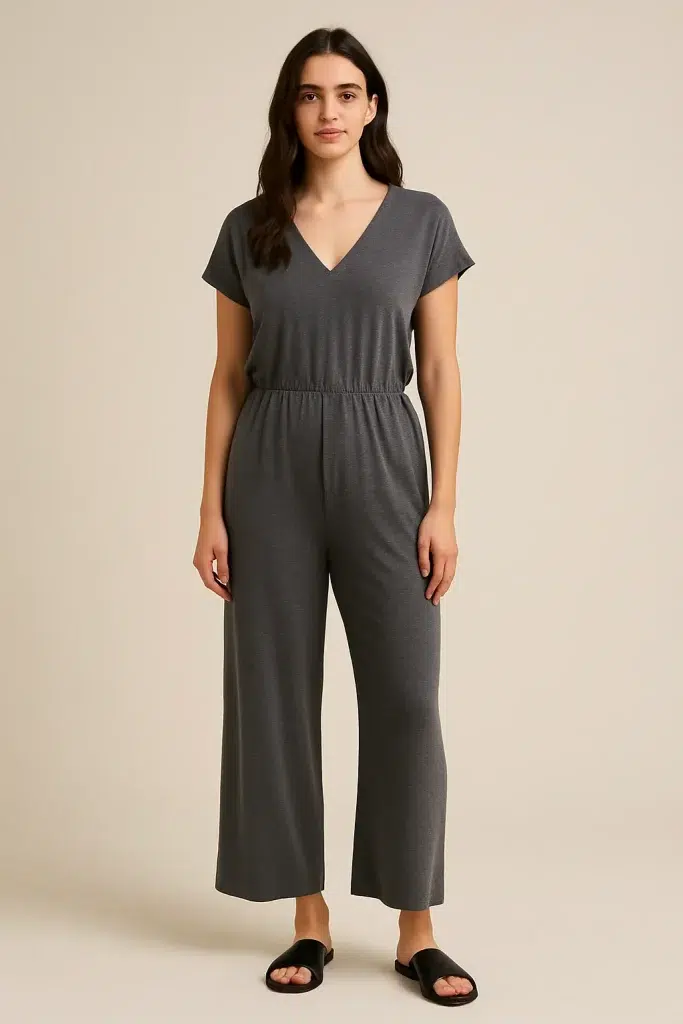
How I keep jersey from drooping
I choose 220–260 gsm jersey with elastane content. I tape shoulders to stop stretch. I bind necklines to keep shape. I use coverstitch hems for comfort. I test knee bagging. I add elastic waist channels for fit. I include pockets but secure them so they do not pull. I write simple care on labels: cold wash, line dry.
| Spec | Value |
|---|---|
| GSM | 220–260 |
| Elastane | 4–6% |
| Shoulder tape | Yes |
| Hem | Coverstitch |
Satin Jumpsuit: shine without snags?
Satin looks rich, but it marks easily. Pressing and handling matter more than usual.
Pick a heavier satin or a matte-sheen crepe-back. Line where needed and press with a cloth only.
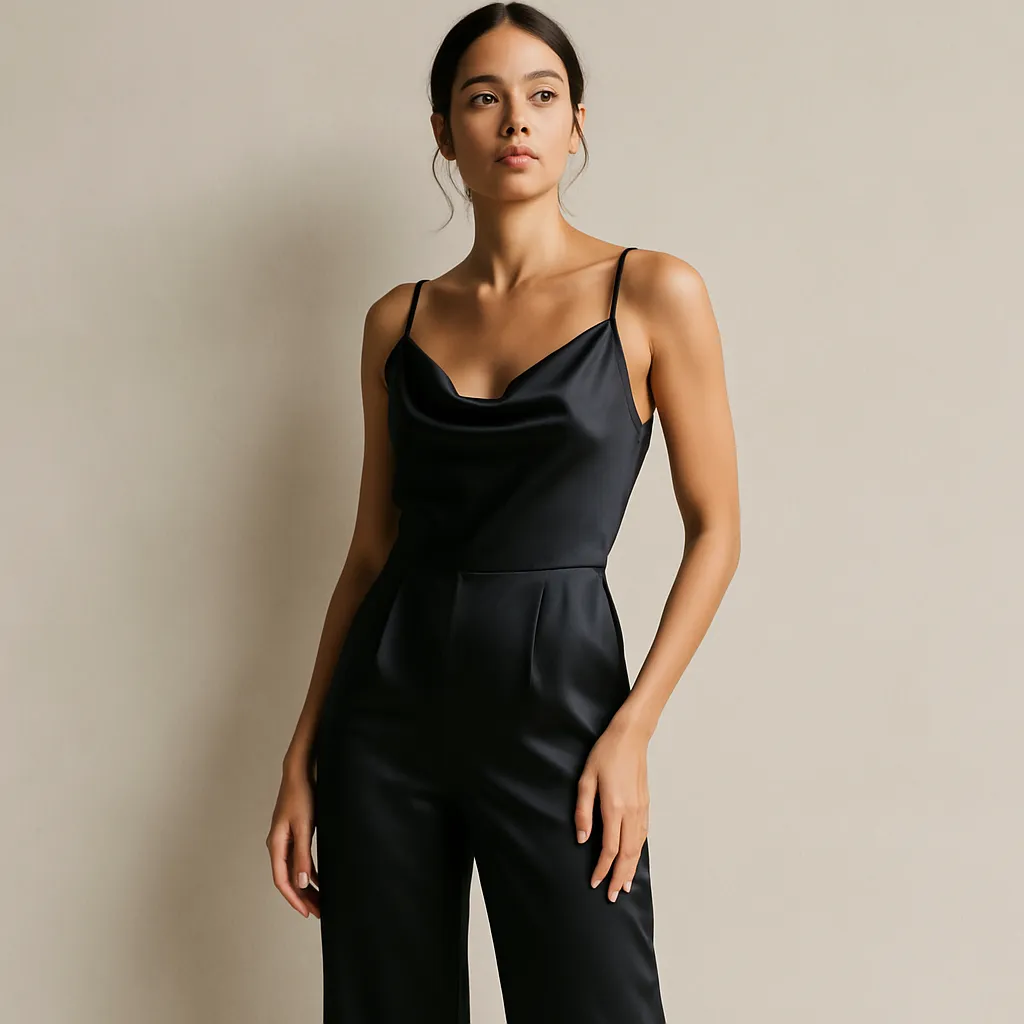
How I protect finish and fit
I choose 180–220 gsm satin for weight. I cut with sharp blades to prevent fraying. I press inside-out with a cloth. I avoid bulky seams on the waist. I add lingerie straps on cami tops. I request careful packing with tissue. I test hanger marks with a day hang. I tone down hardware to keep it elegant.
| Concern | Control |
|---|---|
| Water marks | Dry press |
| Snags | Smooth worktops |
| Seam grin | Use matching thread |
| Hanger dents | Wide hangers |
One-Shoulder Jumpsuit: clean lines with secure hold?
Asymmetry sells in photos. The strap must stay put during movement.
Reinforce the strap, add clear elastic at neckline, and test arm lifts. Keep the bodice stable.
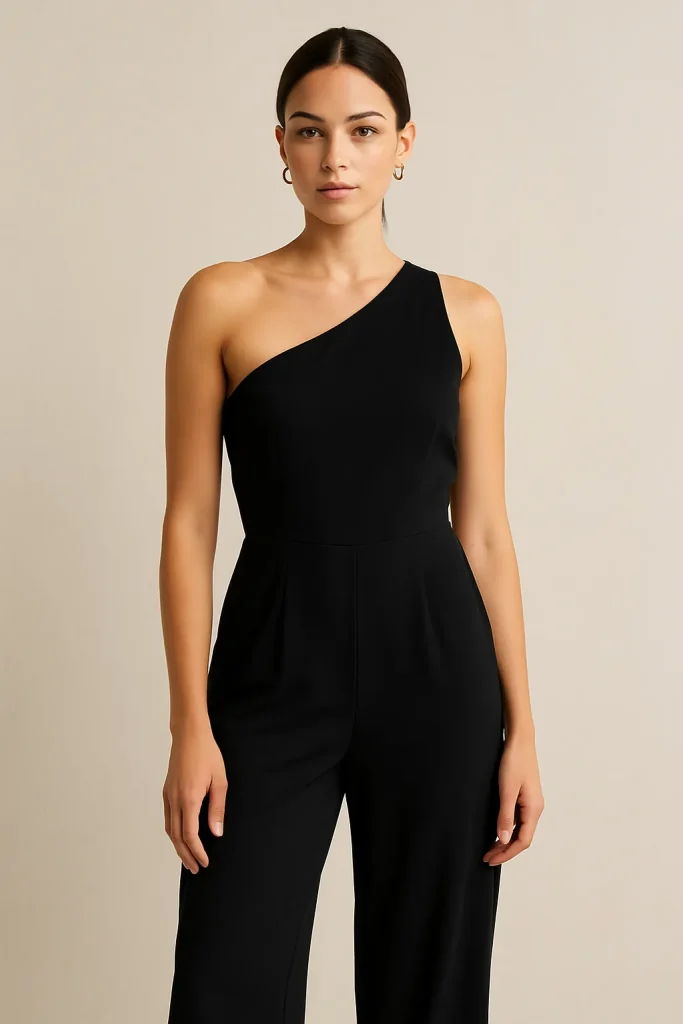
I run stay tape along the top edge. I widen the strap near the shoulder. I place darts for bust shape. I add a side zip to keep lines clean. I line the bodice to hide seams. I test with different bras. I ask for a fit video from the sample room. I set tolerance tight for strap length.
| Detail | Target |
|---|---|
| Strap width | 3–4 cm |
| Neck tape | Clear elastic |
| Side zip | 40–45 cm |
| Lining | Full bodice |
Halter Neck Jumpsuit: flattering and adjustable?
A halter neck flatters many bodies. The back view sells the look.
Use a tie or button closure. Support the neckline with interfacing and test for neck comfort.

My comfort-first halter setup
I interface the neckline lightly. I round the edge to prevent digging. I add a small elastic insert behind the neck for give. I check gaping at the armhole. I move the bust dart if needed. I finish edges cleanly to avoid rubbing. I include a spare button. I write neck fit tips on PDP.
| Part | Spec |
|---|---|
| Closure | Tie or button |
| Interfacing | Light |
| Back view | Highlighted |
| Spare button | Yes |
Sequin or Beaded Jumpsuit: sparkle that survives the night?
Sparkle sells fast but breaks fast if built wrong. A soft lining saves the day.
Use fine mesh backing for embellishment, line the body, and secure with tight stitch length.
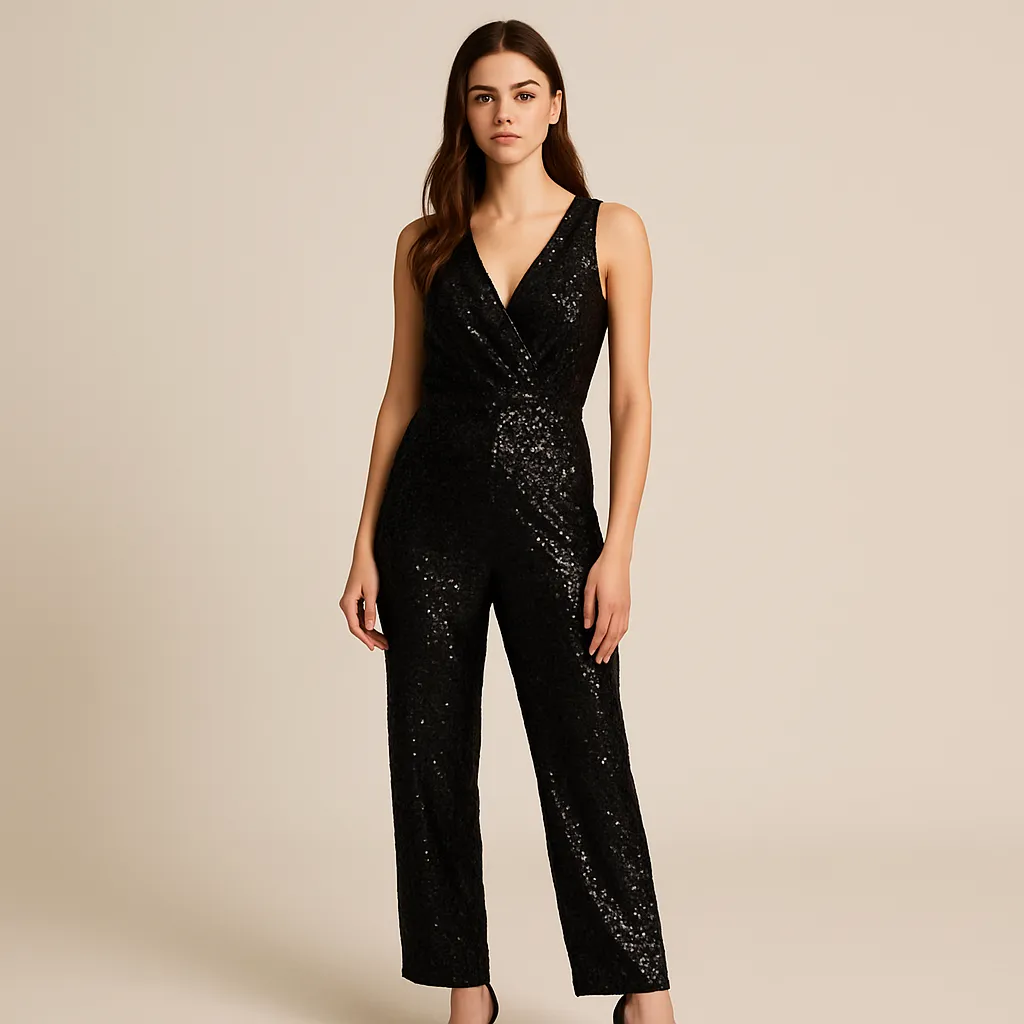
The comfort and quality rules I follow
I use soft tricot or satin lining. I secure sequins with lockstitch and short length. I tape seams where beads cross. I remove beads at seam allowance to avoid needle breaks. I add a spare bead pack. I warn customers about delicate care. I test snag with a purse chain. I choose invisible zips only if the fabric supports it.
| Control | Action |
|---|---|
| Lining | Full body |
| Stitch | Short, locked |
| Bead-free seam | 6–8 mm |
| Spare beads | Included |
Printed or Patterned Jumpsuit: bold without chaos?
Prints catch eyes, but mismatched seams look cheap. Matching is non-negotiable.
Approve strike-offs early. Match CF and side seams. Keep scale correct for body size.
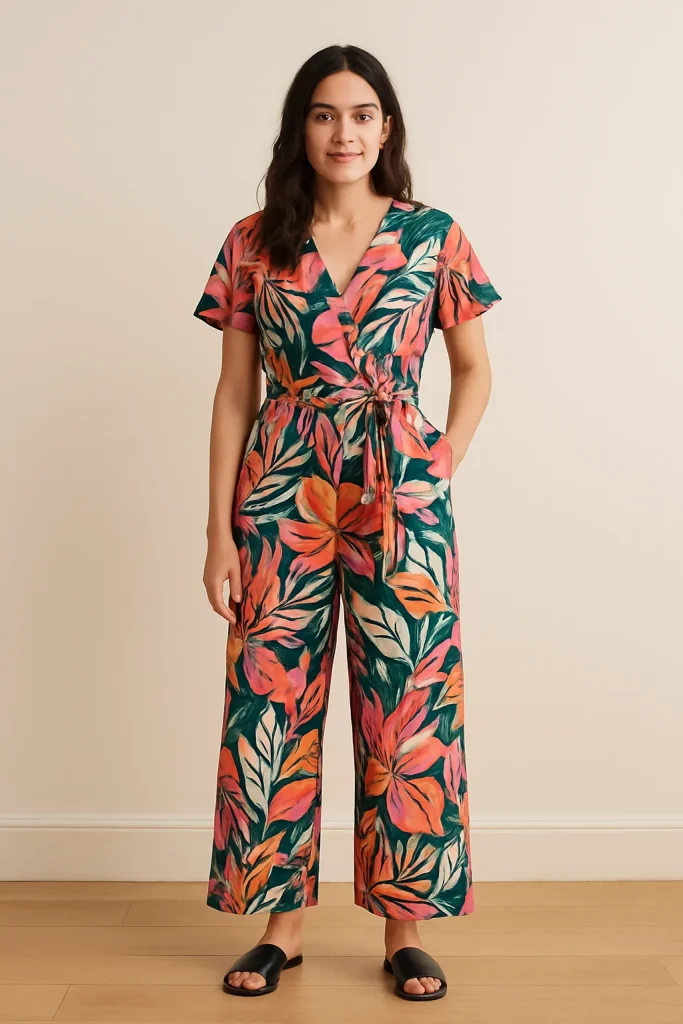
My print control playbook
I request three strike-offs. I choose a scale that flatters the torso. I center motifs away from sensitive areas. I mark match points on the pattern. I balance print with solid belts. I avoid heavy seam lines through faces or logos. I test colorfastness. I share a photo map with the sewing line so placement is clear.
| Step | Tool |
|---|---|
| Strike-off | 3 rounds |
| Match points | Marked |
| Placement map | Photo guide |
| Colorfast | Tested |
Fit-Led: Off-Shoulder Wrap Hybrid for events?
Some markets want both romance and security. A hybrid wrap with off-shoulder sleeves works.
Use an off-shoulder wrap bodice with hidden snap and elastic neckline. Test arms-up motion and secure the cross-over.
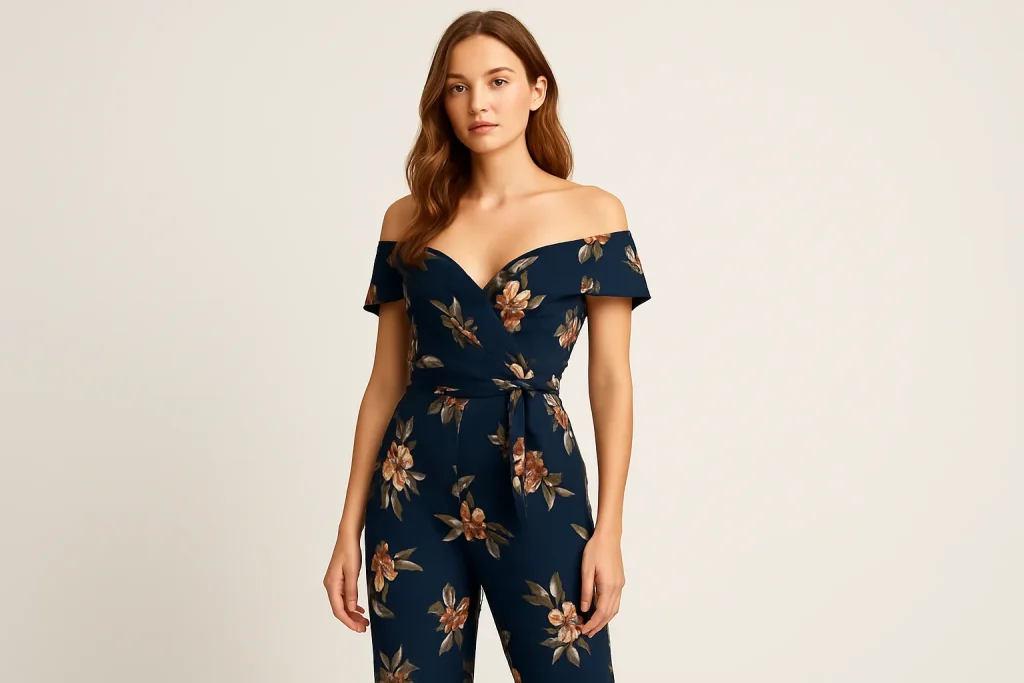
Why I pitch this to occasion buyers
I build the wrap to sit flat. I add silicone tape to sleeves. I cut the neckline to rest on the upper arm. I keep the waist seam clean. I pair with a tapered leg to balance volume. I place a snap at the bust. I line the bodice to smooth. I write a try-on tip for customers.
| Element | Spec |
|---|---|
| Sleeve | Off-shoulder |
| Neckline | Elastic + silicone |
| Closure | Hidden snap |
| Leg | Tapered |
Utility: Zip-Front Cargo Hybrid for street?
Street buyers want function and speed. A zip-front body with slim cargo pockets wins.
Combine a long front zipper with flat thigh pockets. Keep hardware light to protect drape.
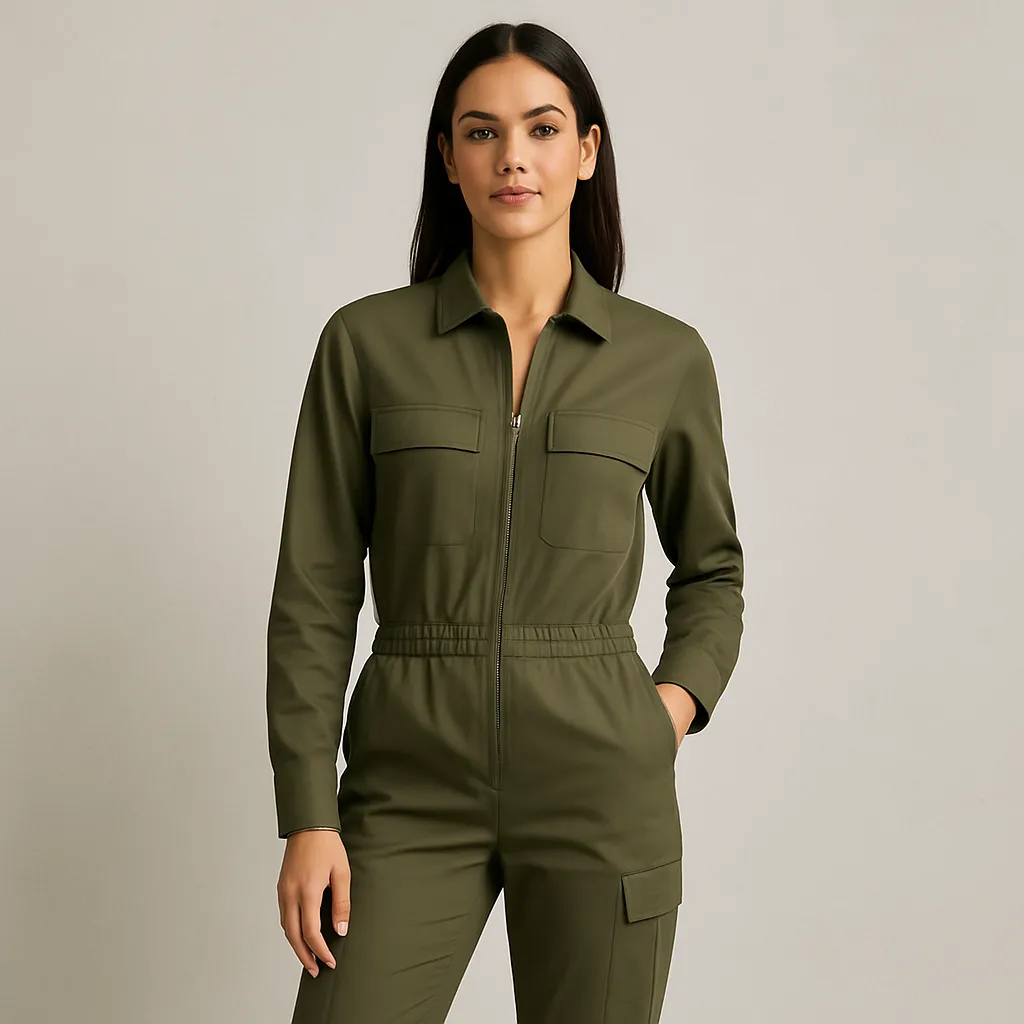
How I keep it sleek
I choose mid-weight twill. I size cargo pockets for phones. I place pockets forward. I keep the leg straight. I add a chin guard. I reinforce zipper base. I offer short and regular inseams. I add a back pleat for reach. I test with a backpack to see rub points.
| Part | Target |
|---|---|
| Fabric | 200–240 gsm |
| Pockets | Flat, 17×9 cm |
| Zipper | Two-way |
| Inseams | 2 options |
Statement: One-Shoulder Wide-Leg for photos?
Photos drive traffic. This combo wins lookbooks and windows.
Pair a one-shoulder bodice with flowing legs. Balance the strap and add a hidden side zip.
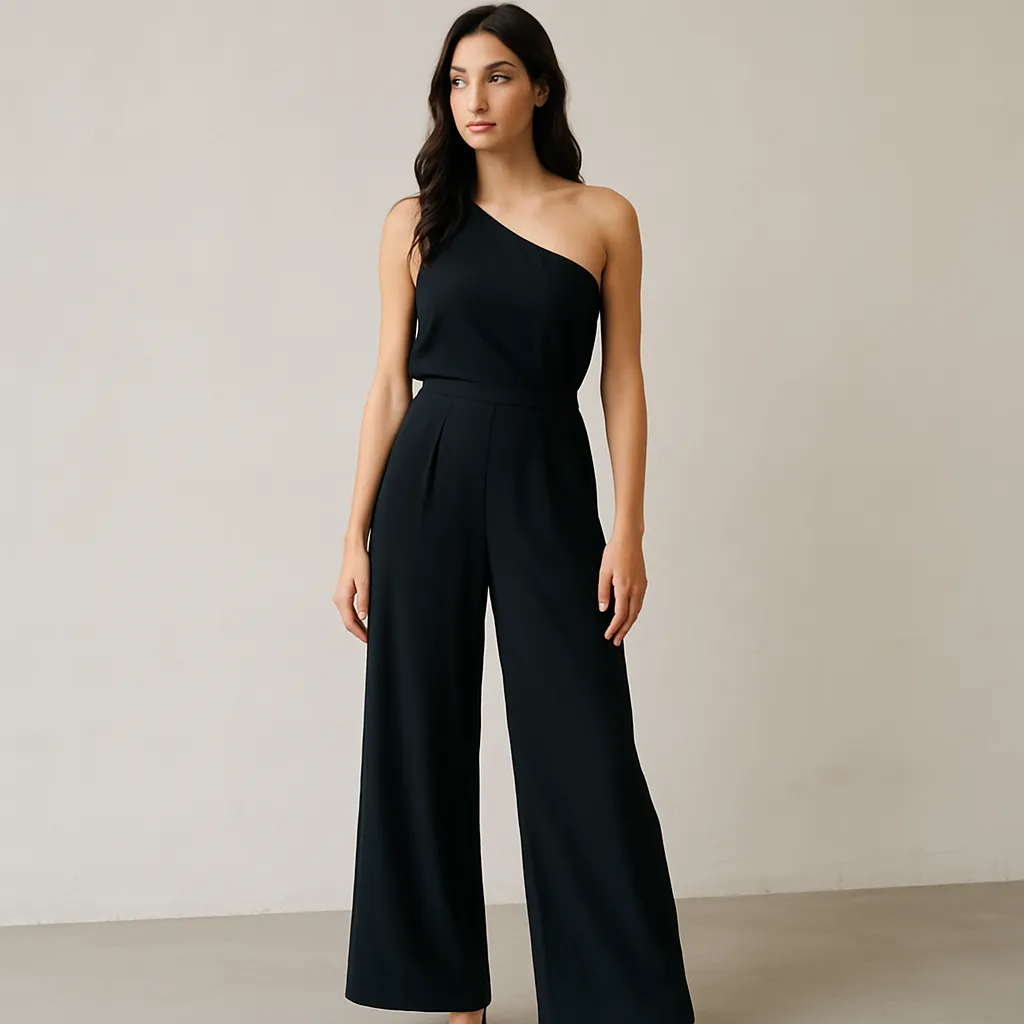
The styling and build I use
I keep the waist snug and the leg fluid. I choose viscose or crepe. I add a belt option. I press the leg for a clean line. I set a bodice lining. I adjust strap length by size. I shoot side-profile photos. I include a short video clip for drape.
| Area | Choice |
|---|---|
| Fabric | Viscose/crepe |
| Zip | Side, 45–50 cm |
| Belt | Optional |
| Lining | Bodice |
Classic: Straight-Leg Denim for all-year?
One block that never sleeps is straight-leg denim. It anchors many ranges.
Run a mid-rise straight-leg in 11 oz denim. Add elastic back only in larger sizes if needed.
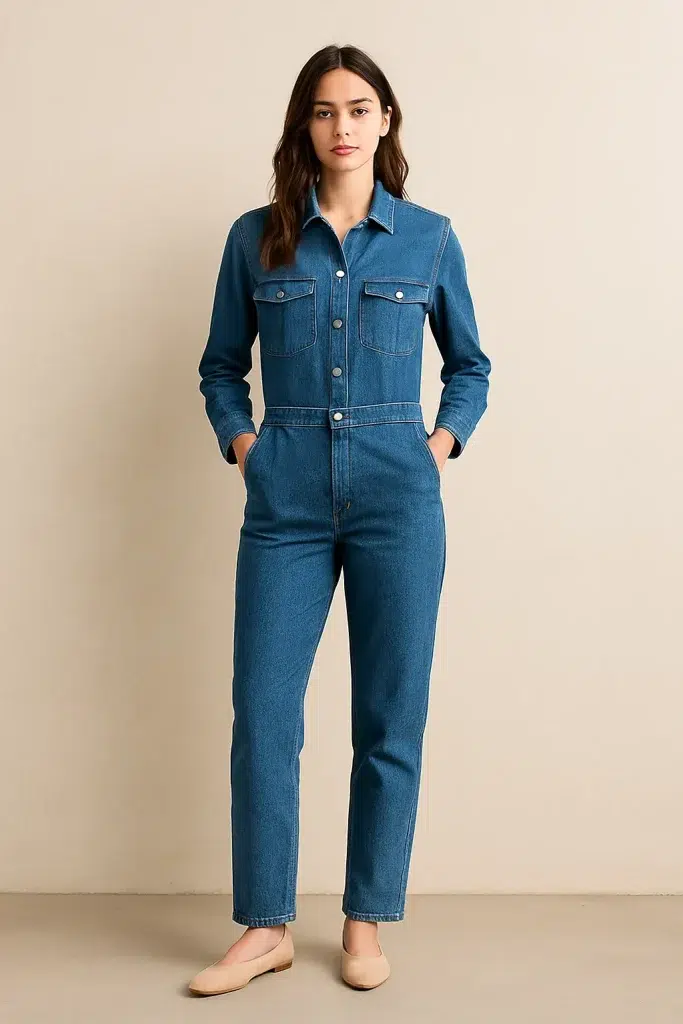
My evergreen setup
I offer mid-blue, washed black, and ecru. I double-needle seams. I test seated rise. I pre-wash for comfort. I reinforce pockets. I avoid bulky hardware at the waist. I keep grading modest to hold shape. I write easy care in PDP.
| Colorways | Notes |
|---|---|
| Mid-blue | Sanded |
| Black | Low-crock |
| Ecru | No optical brightener |
Fit-Led: Belted Knit for travel?
A belted knit jumpsuit is a travel favorite. It flatters and packs small.
Use 240 gsm jersey with a removable belt. Tape shoulders and bind necklines.

Why it sells week after week
I keep the leg straight or light flare. I include pockets but stabilize openings. I add belt loops to stop loss. I coverstitch hems. I label clear care. I size from XS to XXL. I offer two lengths. I style with sneakers for photos.
| Spec | Value |
|---|---|
| GSM | 240 |
| Belt | Self-fabric |
| Pockets | Stabilized |
| Lengths | 2 options |
Statement: Printed Wide-Leg for resort?
Resort buyers want color and motion. Printed wide-leg wins in sun.
Use breathable viscose with a placed print or an all-over. Match seams and keep scale big but balanced.
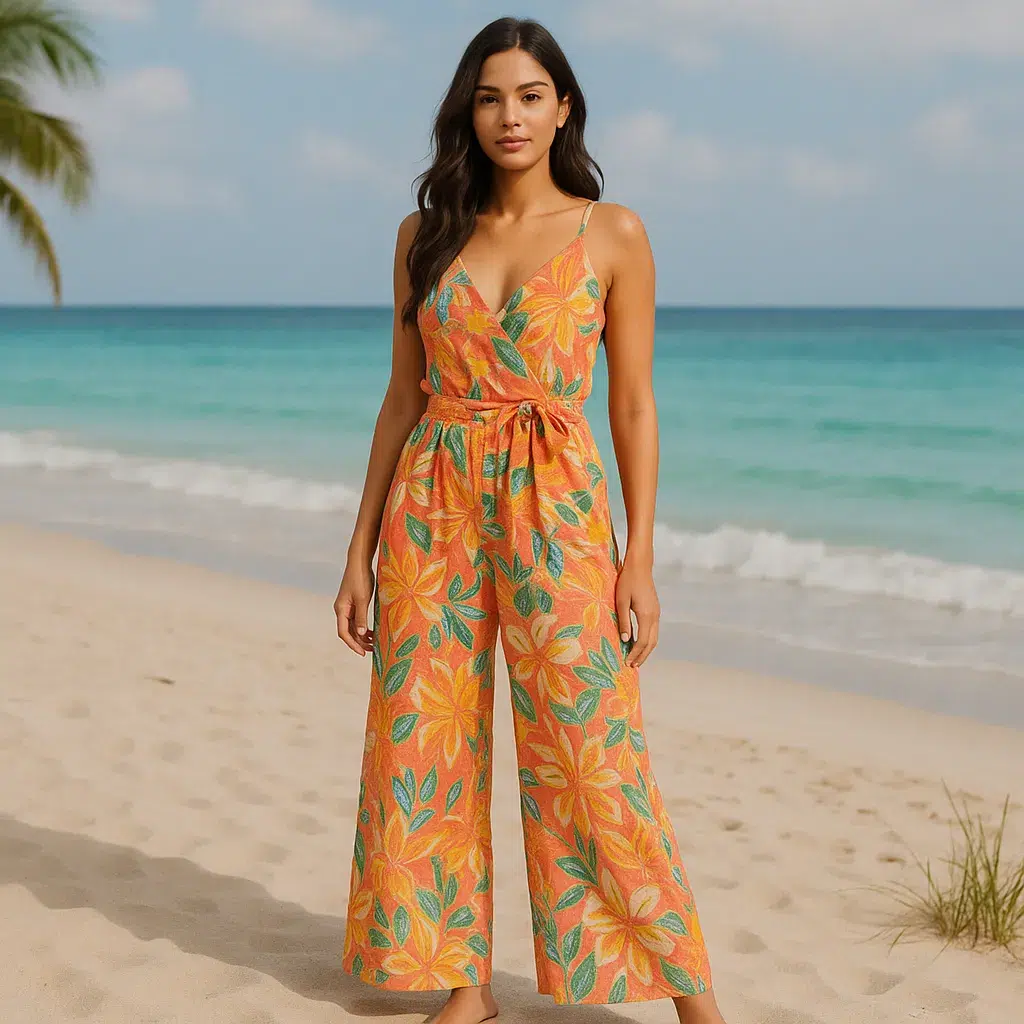
What I check before bulk
I approve three strike-offs. I test cling in humidity. I add a lining if the base is light. I keep the waist subtle. I photograph outdoors. I control shrinkage with gentle pre-wash. I add a self belt to tame volume.
| Print Step | Action |
|---|---|
| Scale | Torso-friendly |
| Matching | CF + sides |
| Strike-offs | 3 rounds |
| Care | Cool wash |
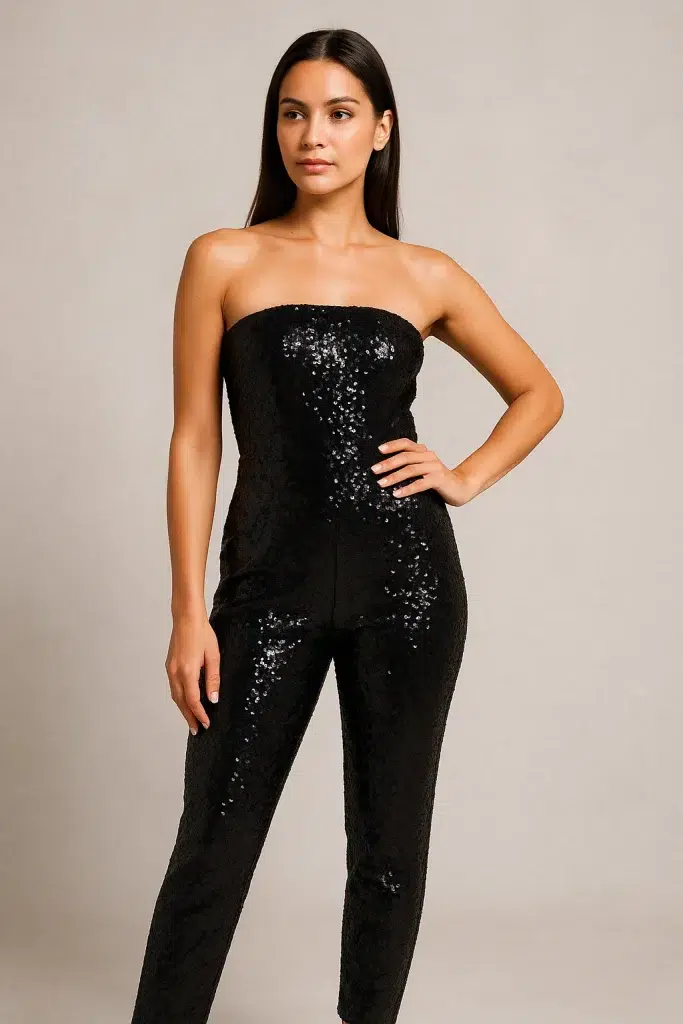
Statement: Sequin Tapered for holiday?
Holiday floors need sparkle that moves. A tapered leg keeps elegance.
Pick a stretch sequin or sequin on mesh with lining. Keep seams smooth and avoid bulky joins.
My no-snag build
I remove sequins from seam allowances. I line with soft knit. I secure hems with blind stitch if fabric allows. I carry a spare bead pack. I shoot in low light to show shine. I note delicate care. I test zipper glide.
| Control | Spec |
|---|---|
| Seam allowance | Bead-free |
| Lining | Soft knit |
| Zipper | Coil |
| Care | Delicate |
Conclusion
These twenty jumpsuit types cover core, trend, work, fabric, and statement needs. Use the names, fit checks, and tables. Place clear POs and lock repeat winners fast.
Why I write this
My Name: Lancy Chia
My email: [email protected]
Link to my website: https://truekung.com
Brand Name: Truekung
Country: China.
Products: fashion clothes
Business model: B2B, Wholesale only
Status: The factory has more than 200 workers. We provide clothing products and OEM/ODM services to different brands and supermarkets around the world. We have 20 years of experience in foreign trade clothing production and export. The main products are: fashion women‘s clothing, jackets, skirts, dresses, jeans, T-shirts, sweatshirts, down jackets, windbreakers, coats, fashion bags, sportswear, children’s clothing, underwear.
Main export countries: Netherlands, Denmark, Belgium, Norway, UK, USA, Germany, Australia, Thailand, Turkey, Italy, Russia, Saudi Arabia, etc.
Views: 690