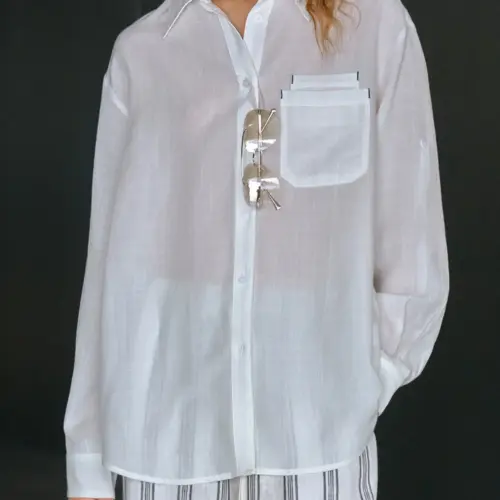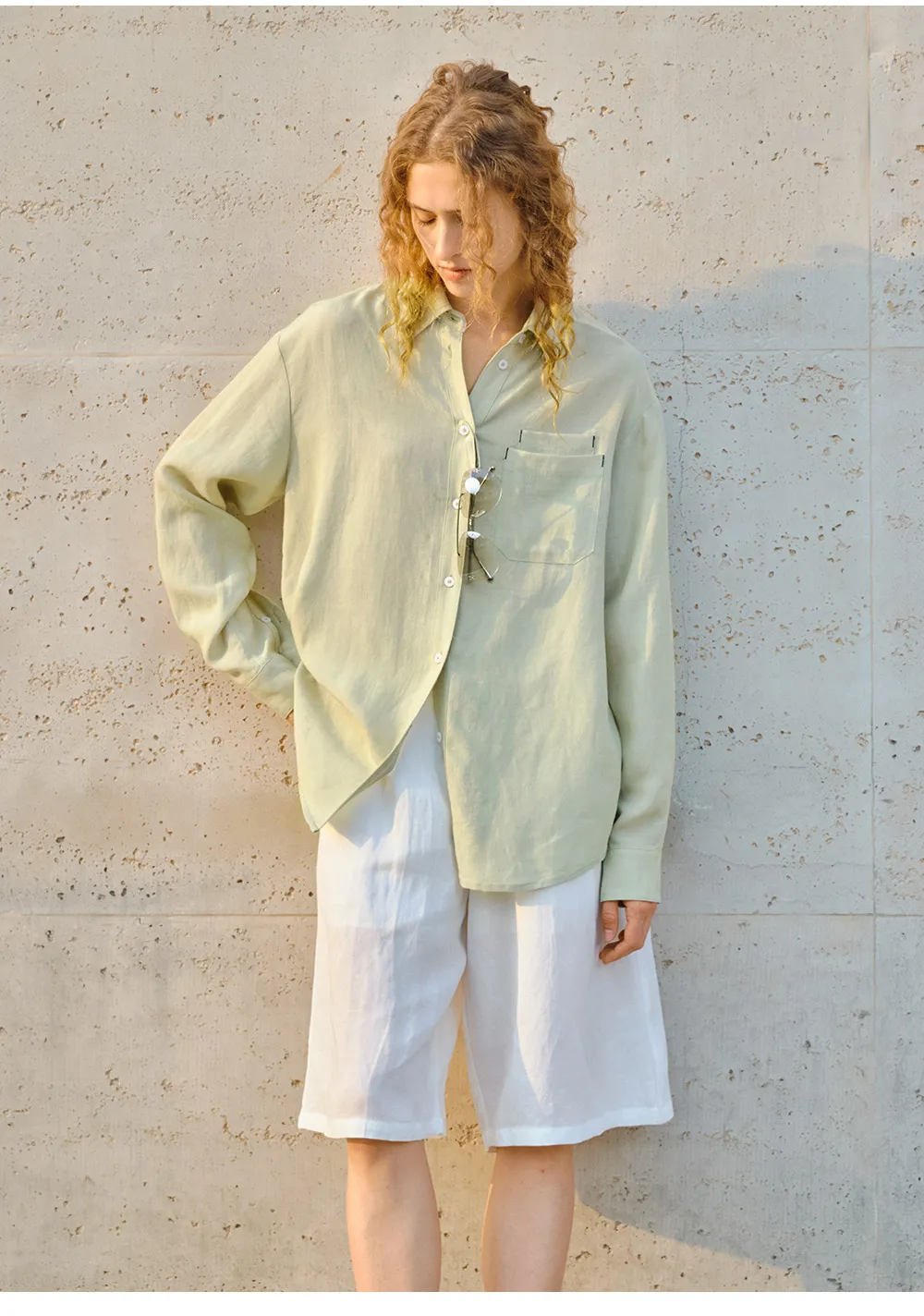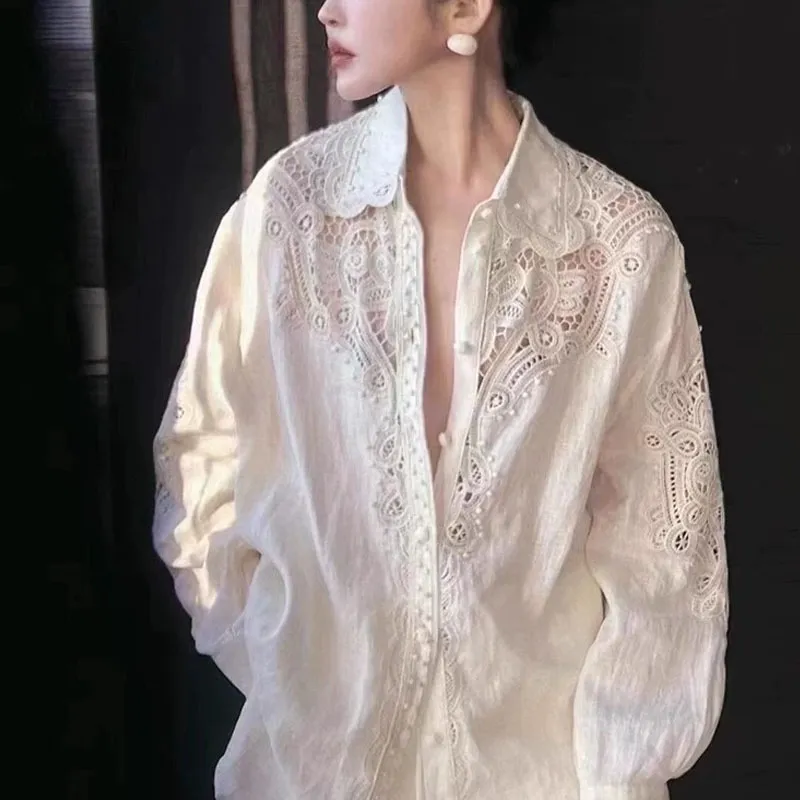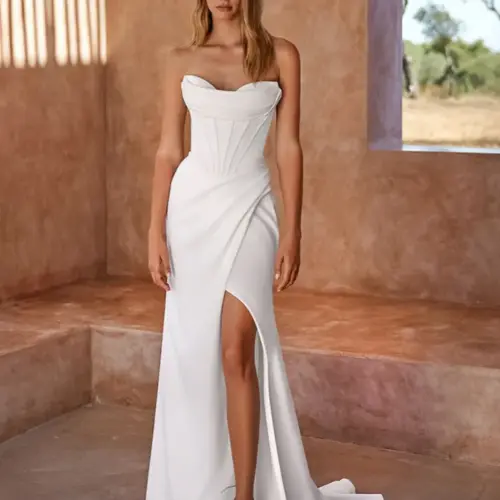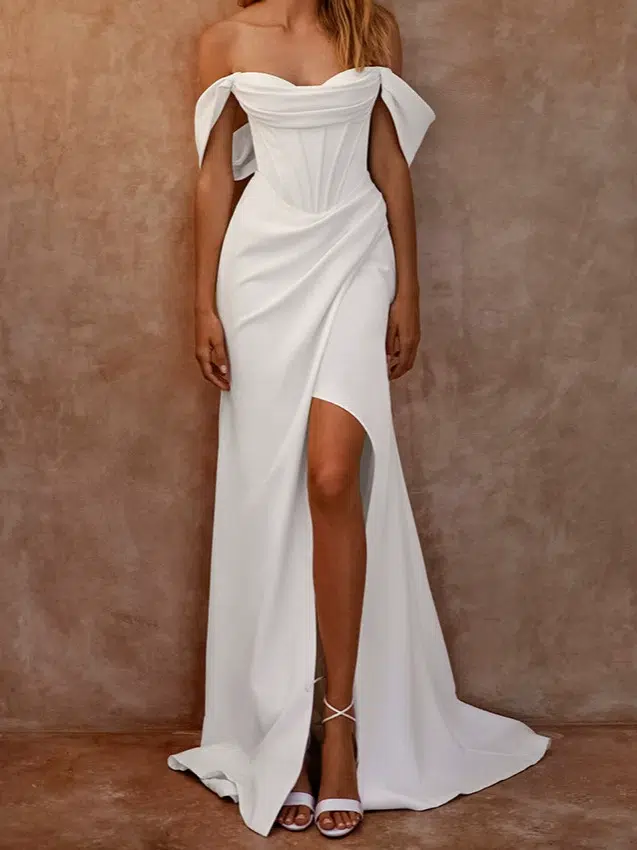

De keuze voor de verkeerde kledingfabriek kan een koper een heel seizoen kosten. Ik heb goede ontwerpen zien mislukken omdat... productie was vanaf dag één onduidelijk.
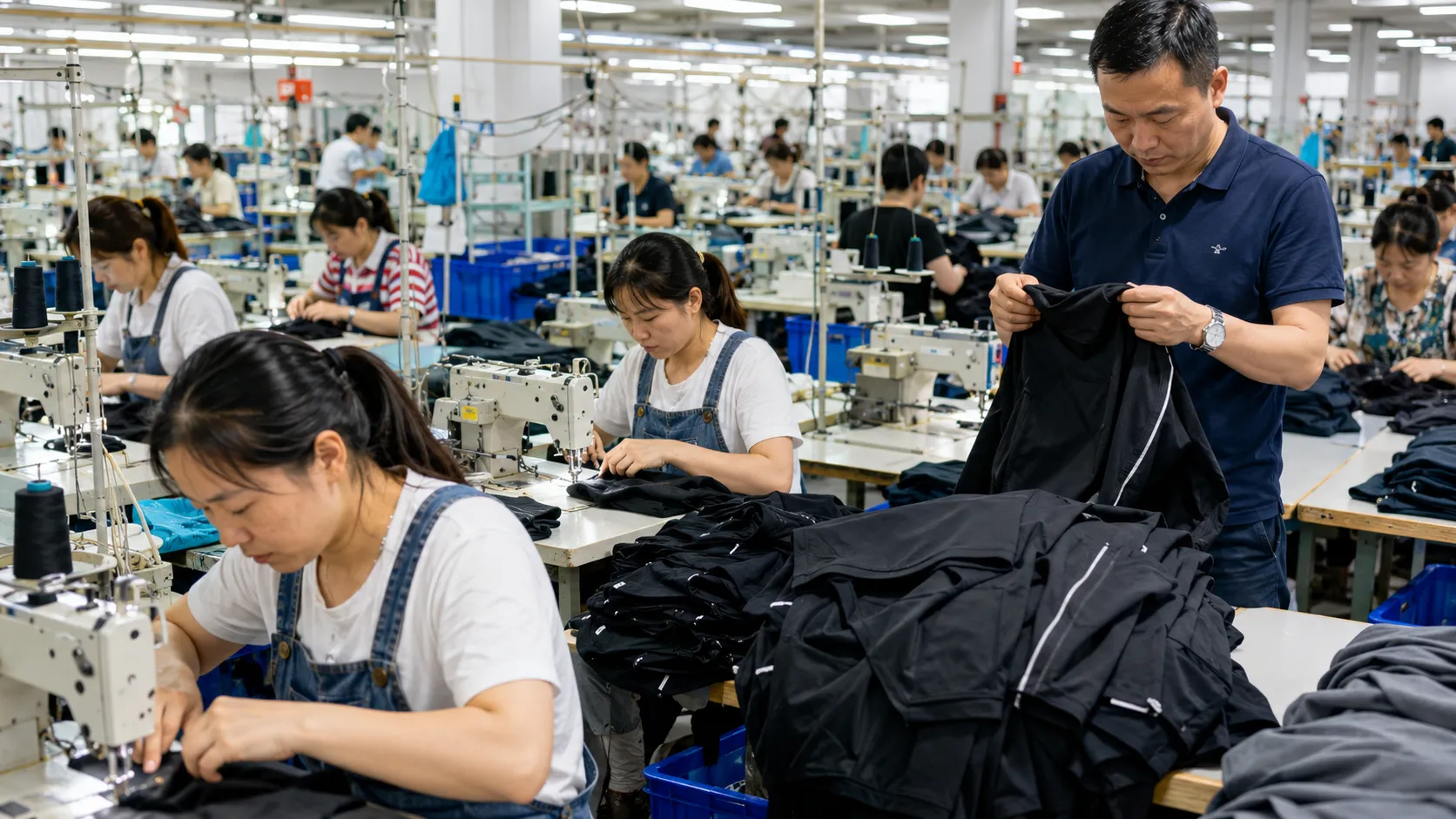
Een kledingfabriek is een productielocatie waar stof wordt verwerkt tot afgewerkte kleding. Het houdt zich bezig met patroonontwerp, snijden, naaien, enzovoort., kwaliteitscontrole, Het verzorgen van de afwerking, verpakking en verzending voor merken, groothandels, detailhandelaren en private labels.
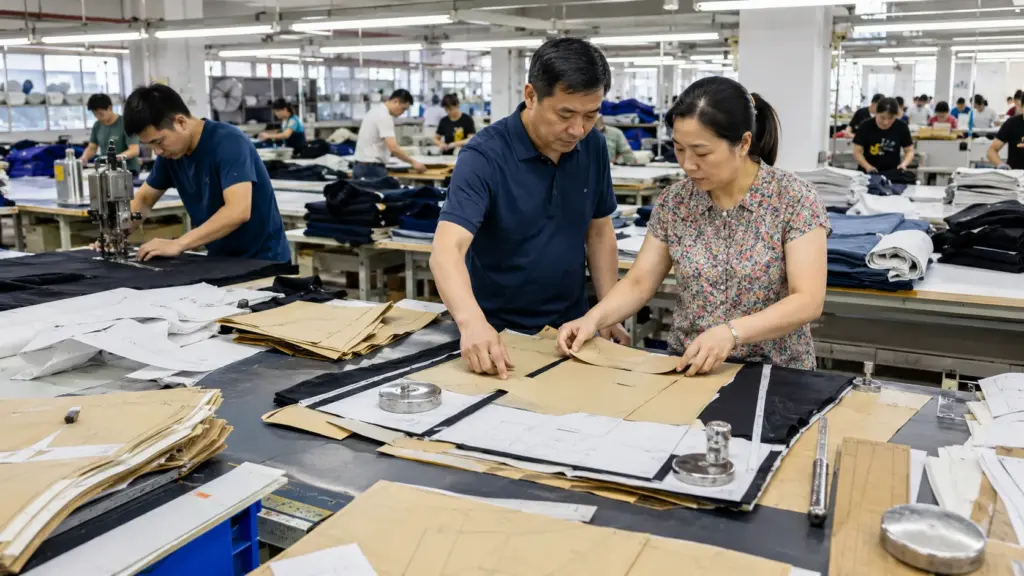
Als ik met inkopers zoals Maria uit Rusland praat, hoor ik vaak dezelfde vraag als eerste. Ze vraagt niet alleen: "Wat is een kledingfabriek?" Ze wil ook weten wat er binnen de fabriek gebeurt, wie de kwaliteit controleert en hoe een fabriek haar verkoopseizoen kan beschermen. Dit is de echte waarde van inzicht in de kledingindustrie voordat je een bestelling plaatst.
Wat doet een kledingfabriek eigenlijk?
Een koper ziet misschien alleen monsters en dozen. Het echte werk vindt plaats tussen die twee punten, en dat verborgen werk bepaalt of er winst of verlies wordt gemaakt.
Een kledingfabriek verwerkt stoffen en fournituren tot afgewerkte kledingstukken. Het bedrijf kan de productie van proefmonsters, massaproductie, kwaliteitscontrole, etikettering, verpakking en exportondersteuning verzorgen. kledingmerken En groothandelaren.
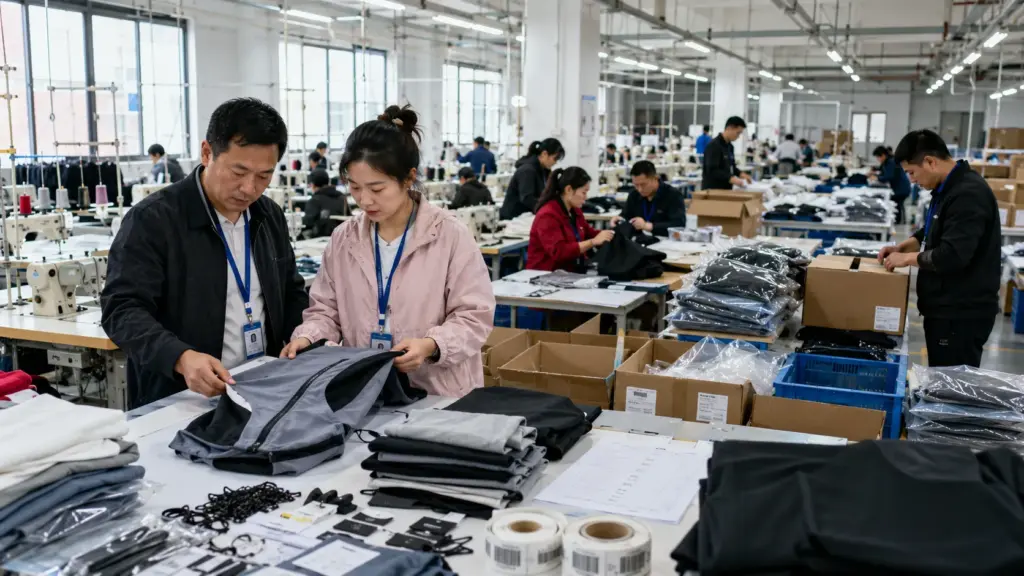
Het belangrijkste werk in een kledingfabriek
Een kledingfabriek is meer dan alleen een ruimte vol naaimachines. Het is een compleet systeem. In mijn fabriekswerk zie ik elke bestelling door talloze kleine controles gaan. Eén zwakke schakel kan de hele zending beïnvloeden. Een simpel T-shirt lijkt misschien eenvoudig, maar het vereist nog steeds het juiste stofgewicht, maatvoering, naaispanning, krimpbeheersing, kleuraanpassing, naaldcontrole en verpakkingsvoorschriften.
| Fabrieksstap | Wat het betekent | Waarom dit belangrijk is voor kopers |
|---|---|---|
| Productontwikkeling | Een idee of technisch plan omzetten in een voorbeeld. | Het bevestigt de stijl, pasvorm en prijs voordat een grote bestelling wordt geplaatst. |
| Stoffen inkoop | Het juiste materiaal vinden en testen. | Het heeft invloed op het gevoel in de hand, de prijs, de krimp en de levertijd. |
| Patroonvorming | Het vormgeven van elk kledingstukonderdeel | Het bepaalt de pasvorm en de consistentie van de maat. |
| Snijden | Stof knippen volgens een patroon | Het heeft gevolgen voor de stofverspilling en de nauwkeurigheid van metingen. |
| Naaien | Alle onderdelen samenvoegen tot een afgewerkt kledingstuk. | Het beïnvloedt de sterkte, het uiterlijk en het comfort. |
| Kwaliteitscontrole | Het controleren op defecten tijdens en na de productie. | Het vermindert retourzendingen en klachten van kopers. |
| Afwerking | Strijken, draadjes afknippen, labels aanbrengen | Het maakt kledingstukken klaar voor de verkoop. |
| Inpakken en verzenden | Verpakken volgens de regels van de koper en exportvoorbereiding. | Het zorgt ervoor dat goederen schoon, compleet en verkoopbaar aankomen. |
Daarom zeg ik altijd tegen kopers dat ze een kledingfabriek moeten beoordelen op het productieproces, niet alleen op de prijs. Een lage offerte zegt weinig als de leverancier geen controle heeft over de stof, de maat, het naaien en de levering.
Wat is de kledingindustrie?
Veel kopers gebruiken de woorden kledingfabriek en kledingindustrie door elkaar. Ze zijn verwant, maar niet hetzelfde.
De kledingindustrie is de hele keten die zich bezighoudt met het ontwerpen, ontwikkelen, produceren, verkopen en distribueren van kleding. Een kledingfabriek is een belangrijk onderdeel van deze grotere kledingsector.
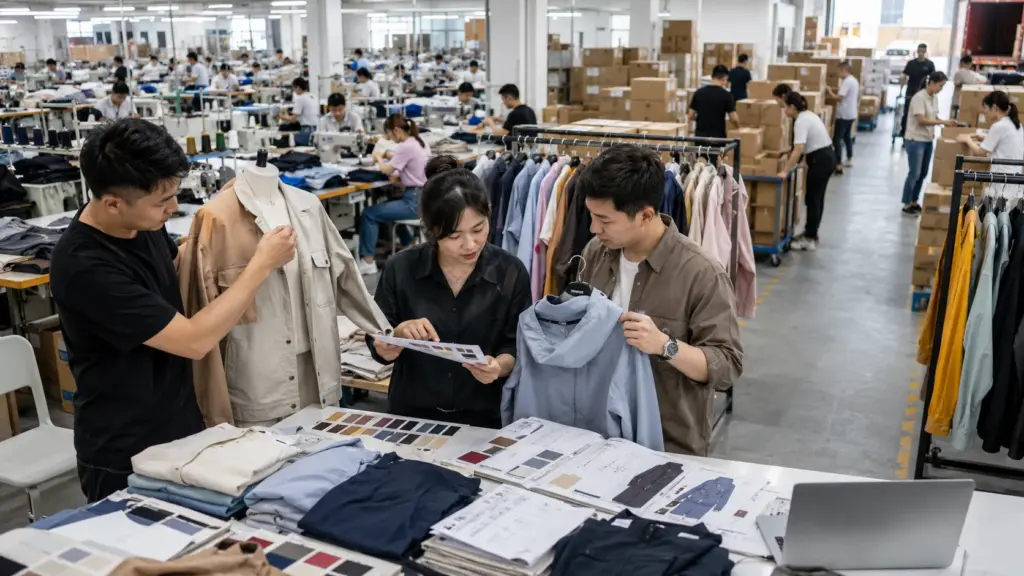
Hoe de kledingindustrie werkt
Om de kledingindustrie eenvoudig te definiëren, zou ik zeggen: het is de volledige handel rondom kleding. Het begint met vezels en stoffen. Het gaat verder met de kledingproductie. Het eindigt bij merken, supermarkten, groothandels, webshops en de eindklant. Deze keten lijkt van buitenaf eenvoudig, maar elk onderdeel kent zijn eigen risico.
| Onderdeel van de kledingindustrie | Gemeenschappelijk werk | Kopersrisico |
|---|---|---|
| Textielfabriek | Maakt stof van garen of vezels. | Stofvertragingen, kleurverschil, verkeerde samenstelling |
| Kledingfabriek | Produceert afgewerkte kleding | Slechte afwerking, verkeerde maat, late levering |
| Handelsmaatschappij | Verbindt kopers en leveranciers. | Minder controle over de productie als er geen transparantie is. |
| Merk of groothandel | Verkoopt producten op de markt. | Gemist seizoen, onverkochte voorraad, retourzendingen van klanten |
| Logistiek bedrijf | Vervoert goederen over grenzen heen | Douanevertraging, documentfout, extra kosten |
Een textielfabriek en een kledingfabriek zijn ook verschillend. Een textielfabriek maakt meestal stof. Een kledingfabriek gebruikt stof om kleding te maken. Sommige grote modebedrijven kunnen beide processen combineren, maar de meeste kopers willen nog steeds elke stap controleren.
Voor B2B-kopers draait de kledingindustrie niet alleen om stijl. Het gaat ook om timing, kosten, certificering, betalingsvoorwaarden en vertrouwen. Ik heb samengewerkt met kopers die hun markt zeer goed kennen, maar die zich toch onzeker voelen over de Chinese toeleveringsketen. Dat is normaal. De beste manier om risico's te beperken, is door samen te werken met een fabriek die elke stap in begrijpelijke taal uitlegt en waar nodig bewijs levert.
Welke soorten kledingfabrieken zijn er?
Niet elke kledingfabriek is gericht op dezelfde koper. Een fabriek die goedkope standaard T-shirts produceert, is misschien niet geschikt voor het maken van jurken op maat.
De belangrijkste soorten kledingfabrieken zijn onder andere naai- en snijfabrieken, breifabrieken, weeffabrieken, denimfabrieken, bovenkledingfabrieken, ondergoedfabrieken, sportkledingfabrieken en private label-fabrieken.
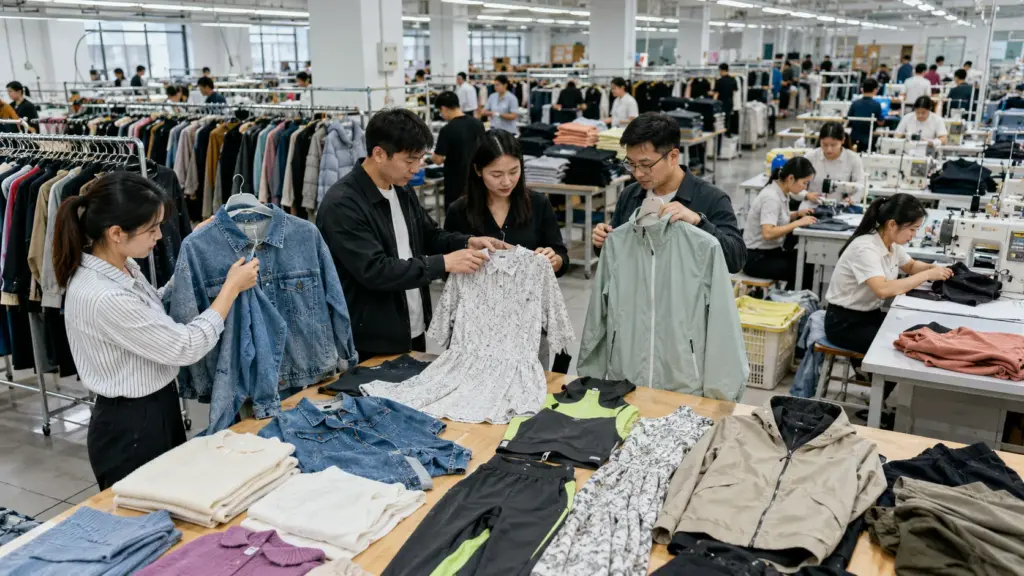
Het juiste fabriekstype kiezen
Wanneer kopers zoeken naar "locatie kledingfabriek" of "modefabrieken", kijken ze vaak eerst naar de prijs en het land. De prijs is belangrijk, maar het type fabriek is nog belangrijker. Een fabriek die gespecialiseerd is in donsjassen, is misschien niet zo goed in jurken. Een fabriek die gespecialiseerd is in jurken, is misschien niet zo goed in naadloos ondergoed. Elke categorie vereist andere machines, werknemers, kennis van stoffen en kwaliteitsnormen.
| Fabriekstype | Het beste voor | Belangrijkste zaken om te controleren |
|---|---|---|
| Snij- en naaifabriek | T-shirts, sweatshirts, vrijetijdskleding | Naaikwaliteit, krimp van de stof, dagelijkse capaciteit |
| Geweven kledingfabriek | shirts, jurken, rokken, broeken | Patroonnauwkeurigheid, afwerking van de naden, strijkkwaliteit |
| Denimfabriek | jeans, spijkerjassen, spijkerrokken | Waseffect, kleurechtheid, maatcontrole |
| Fabriek voor bovenkleding | jassen, mantels, windjacks, donsjassen | Vullingscontrole, kwaliteit van de rits, waterdichte details |
| Sportkledingfabriek | leggings, tops, trainingspakken | Rekherstel, naadsterkte, stofprestaties |
| Kinderkledingfabriek | kinderkleding | Veiligheidscontroles, naaldcontrole, trimtesten |
| Fabriek voor private label-producten | merken in eigendom van kopers | Etikettering, verpakking, ondersteuning bij maatwerkontwerp |
| Leverancier van kleding op voorraad | snelle heretiketteringsbestellingen | Nauwkeurigheid van de voorraad, beschikbaarheid van kleuren en maten |
Mijn ervaring is dat serieuze kopers moeten vragen om foto's van eerdere producties, voorbeeldgegevens, inspectieprocessen en exportervaring. Een echte kledingfabriek moet kunnen uitleggen wat ze wel en niet kunnen produceren. Deze eerlijkheid beschermt beide partijen.
Wat gebeurt er voordat de massaproductie van kledingstukken begint?
Veel leveringen lopen vertraging op voordat de productie überhaupt begint. Het probleem begint vaak met onduidelijke monsters, gebrekkige stofgoedkeuring of ontbrekende verpakkingsdetails.
Voordat de massaproductie van start gaat, moet een kledingfabriek de technische specificaties, stof, fournituren, maattabel, voorbeeld, prijs, levertijd, kwaliteitsnorm, labels, verpakkingsmethode en betalingsvoorwaarden bevestigen.
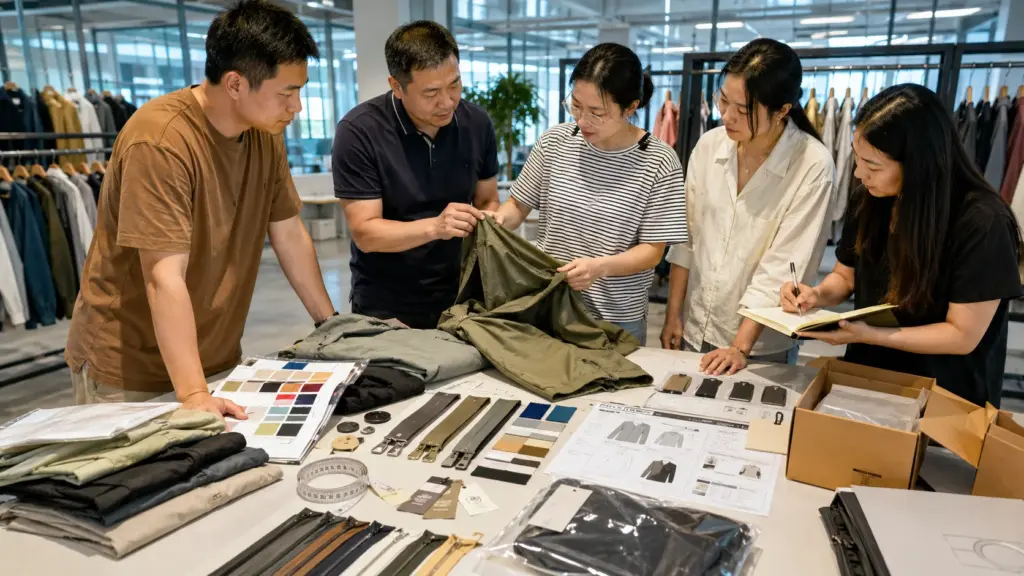
De preproductiefase
Ik beschouw de pre-productiefase als de veiligheidssluis van elke bestelling. Als deze fase niet goed is, wordt de bulkbestelling riskant. Een koper kan een foto sturen en om een snelle prijsopgave vragen. Dat is prima voor een eerste gesprek. Maar vóór de productie heeft de fabriek precieze informatie nodig. De fabriek heeft de samenstelling van de stof, het GSM-gewicht, het maatbereik, de kleur, het ontwerp, de fournituren, de labelbestanden, de verpakkingsdichtheid en het land van bestemming nodig.
| Preproductieartikel | Wat de koper moet bevestigen | Wat de fabriek moet leveren |
|---|---|---|
| Technisch pakket | Stijldetails, maattabel, constructie | Haalbaarheidsstudie en kostencommentaar |
| Stof | Samenstelling, gewicht, kleur, gevoel in de hand | Stofstaaltje en testresultaat indien nodig |
| Sierlijsten | Ritsen, knopen, kant, elastiek, trekkoorden | Trimkaarten en leveranciersopties |
| Steekproef | Pasvorm, afwerking, afmetingen | Tegenmonster of pre-productiemonster |
| Etikettering | Merklabel, wasvoorschriften, hanglabel | Correcte plaatsing en materiaalsuggestie |
| Verpakking | Plastic zak, karton, verhouding, barcode | Verpakkingsmodel en details van de doos |
| Tijdlijn | Verkoopseizoen en leveringstermijn | Productieplan en realistische doorlooptijd |
In deze fase wordt ook de kwaliteit van de communicatie zichtbaar. Als een verkoper geen duidelijke antwoorden geeft, moet de koper vaart minderen. Goede fabrieken stellen gedetailleerde vragen. Ze doen dit niet om de bestelling ingewikkeld te maken, maar om fouten in de massaproductie te voorkomen.
Hoe controleert een kledingfabriek de kwaliteit?
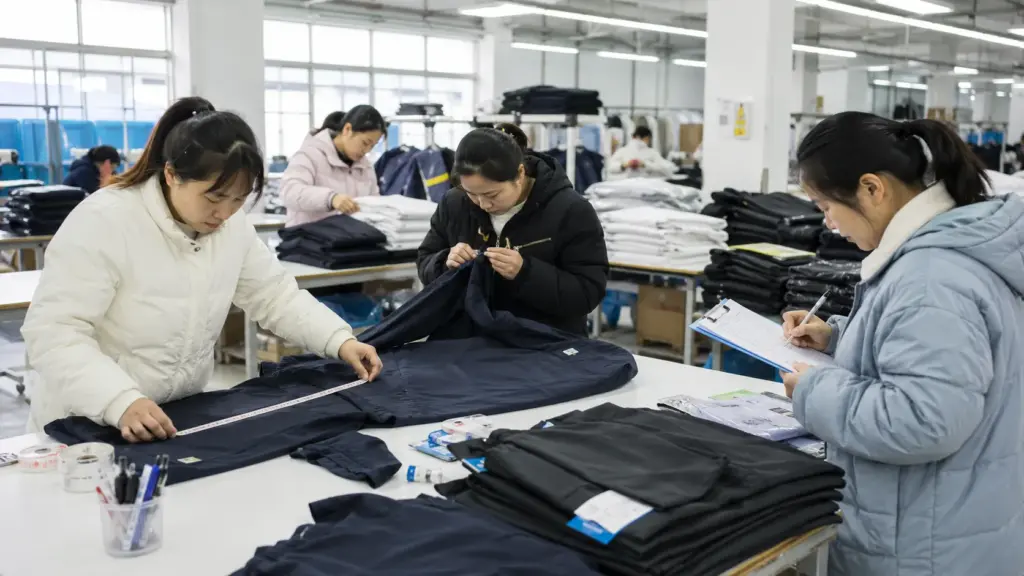
Kwaliteit is niet iets dat pas bij de eindinspectie aan het licht komt. Het moet in elke fase worden ingebouwd, van de stof tot de verpakking.
Een kledingfabriek waarborgt de kwaliteit door middel van stofinspectie, tussentijdse inspectie, maatcontroles, naaicontroles, eindinspectie, naaldcontrole, verpakkingscontroles en duidelijke defectnormen.
De ware betekenis van kwaliteitscontrole
Veel kopers zijn tegelijkertijd kwaliteits- en prijsbewust. Dat begrijp ik. In de groothandel in kleding kan één klein defect een groot probleem worden als het zich herhaalt in duizenden stuks. Kwaliteitscontrole gaat niet alleen over het vinden van defecte kledingstukken. Het gaat erom herhaalde fouten in een vroeg stadium te voorkomen.
| QC-fase | Wat wordt gecontroleerd? | Veelvoorkomend probleem gevonden |
|---|---|---|
| Stoffeninspectie | Gaten, vlekken, kleurverschil, breedte | Stofdefecten en kleurvariatie |
| Snijinspectie | Patroonrichting, maatlagen, stofcombinatie | Verkeerd snijden of stofverspilling |
| Inline-inspectie | Naaien, meten, draadspanning | Open naden, overgeslagen steken, ongelijkmatig naaiwerk |
| Tussenliggende inspectie | Halfafgewerkte kledingstukken | Herhaalde bouwfouten |
| Eindinspectie | Afgewerkte kledingstukken vóór het inpakken | Maatfouten, vlekken, losse draden |
| Naalddetectie | Risico op gebroken naald | Veiligheidsrisico, met name voor kinderkleding |
| Verpakkingsinspectie | Etiketten, doosmarkeringen, verhoudingen, barcode | Onjuiste verpakking of gemengde maten. |
Ik heb gezien dat kopers hun vertrouwen verloren omdat een leverancier prachtige monsters leverde, maar zwakke bulkgoederen. Daarom adviseer ik altijd een duidelijk goedgekeurd monster en een schriftelijke kwaliteitsnorm. Een goede kledingfabriek zou inspectie moeten verwelkomen. Ze zou niet bang moeten zijn voor controles door de koper. Als een leverancier inspectie weigert of valse certificaten verstrekt, moet de koper dat als een serieuze waarschuwing beschouwen.
Hoeveel verdient een kledingfabriek?
Sommige kopers stellen deze vraag omdat ze willen weten of de prijs eerlijk is. Het antwoord hangt af van de categorie, de omvang van de bestelling, de arbeidskosten, de materiaalkosten en het managementniveau.
Een kledingfabriek verdient geld met de productiemarge, niet met de volledige verkoopprijs. De winst varieert afhankelijk van het producttype, de orderhoeveelheid, de efficiëntie, de stofkosten, de arbeidskosten, de overheadkosten en het percentage defecten.
Waarom de fabrieksprijs niet alleen de arbeidskosten omvat
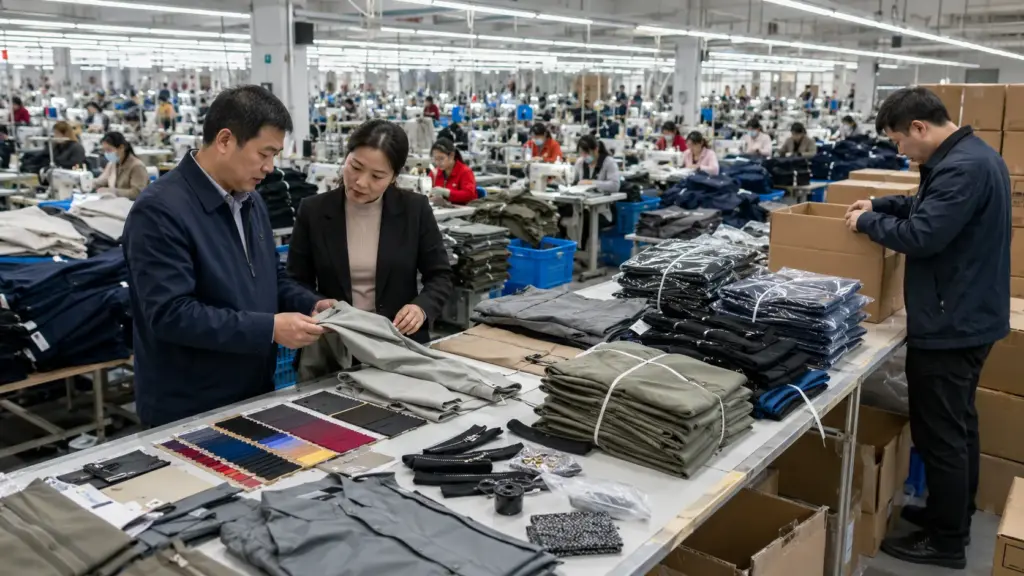
Als een koper vraagt: "Hoeveel verdient de kledingfabriek?", leg ik meestal eerst de kostenstructuur uit. De fabrieksprijs omvat niet alleen de arbeidskosten voor het naaien. Het omvat stof, fournituren, snijden, naaien, afwerking, kwaliteitscontrole, verpakking, management, machinekosten, huur, elektriciteit, afval en soms exportdiensten. Na aftrek van al deze kosten houdt de fabriek een winstmarge over.
| Kostendeel | Wat het inhoudt | Waarom het verandert |
|---|---|---|
| Stof | Hoofdmateriaal en voering | Stofsoort, gewicht, marktprijs |
| Sierlijsten | Knoppen, ritsen, elastiek, labels | Kwaliteitsniveau en maatwerkontwerp |
| Werk | Knippen, naaien, strijken, inpakken | Stijlmoeilijkheid en lokaal loon |
| Fabriekskosten | Huur, energie, machines, beheer | Fabrieksomvang en efficiëntie |
| Kwaliteitskosten | Inspecties, herstelwerkzaamheden, testen | Kopersnorm en defectpercentage |
| Verpakking | Plastic zakken, kartonnen dozen, barcodes | Regels voor de detailhandel en de verzendmethode |
| Marge | Fabriekswinst | Orderstabiliteit en productierisico |
Een kleine bestelling met veel kleuren en maten kost meestal meer per stuk. Een stabiele, terugkerende bestelling geeft de fabriek doorgaans meer ruimte om een concurrerende prijs te bieden. Daarom adviseer ik kopers om samen de streefprijs, het bestelplan en het kwaliteitsniveau te bespreken. Een fabriek kan op slimme manieren kosten besparen, maar mag dat niet doen door slechte stoffen te verbergen of inspecties over te slaan.
Wat is de kledingfabriek in GTA 5 Online?
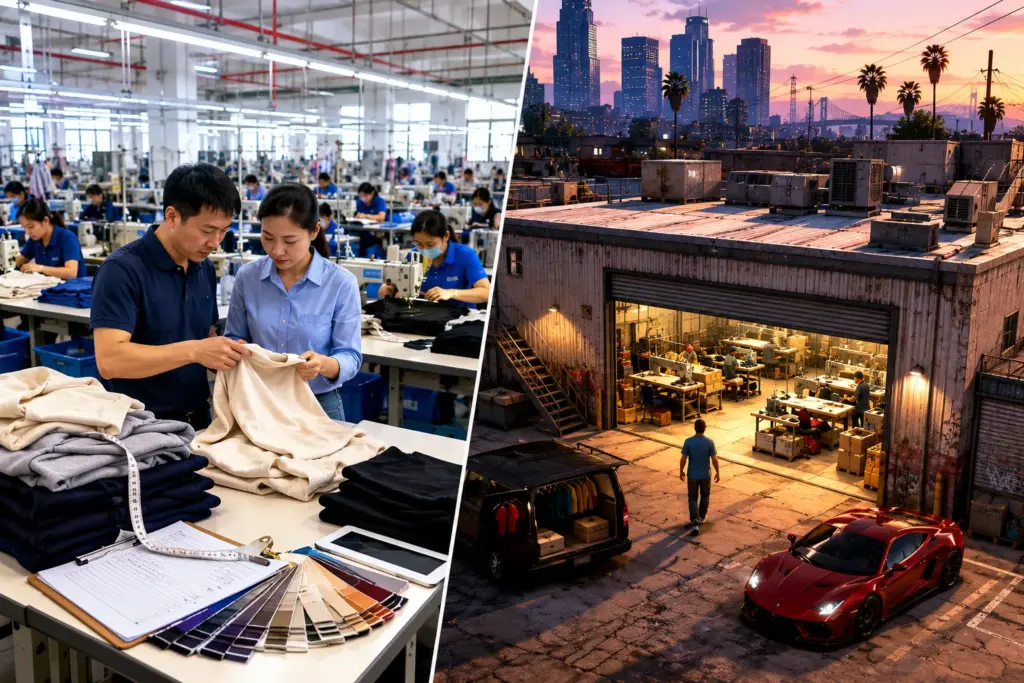
Sommige zoekers gebruiken de term 'kledingfabriek' vanwege GTA, en niet vanwege echte kledingproductie. Dit kan verwarring in de zoekresultaten veroorzaken.
In GTA 5 Online verwijst de term 'kledingfabriek' naar een locatie in het spel of een bedrijfspand. In het echte leven is een kledingfabriek een productiefaciliteit voor de vervaardiging van kleding.
Betekenis van Real Factory versus betekenis van het spel
De zoekterm "wat doet de kledingfabriek in GTA" is anders dan "wat is een kledingfabriek" in de kledingindustrie. De GTA-vraag gaat over een gamefunctie. De zakelijke vraag gaat over de daadwerkelijke productie van kleding. Ik benadruk dit verschil omdat veel mensen online naar beide zoektermen zoeken.
| Zoekterm | Betekenis | Beste antwoord |
|---|---|---|
| Wat is een kledingfabriek? | Echte kledingproductie | Een plek waar stof wordt verwerkt tot afgewerkte kleding. |
| Wat is een kledingfabriek? | Dezelfde betekenis in de echte zakenwereld | Een fabriek voor het grootschalig produceren van kleding. |
| Wat is de kledingfabriek in GTA 5 Online? | Spelgerelateerde betekenis | Een locatie of object in GTA Online |
| Wat doet de kledingfabriek in GTA? | Spelfunctie vraag | Het heeft betrekking op de gameplay, niet op de kledingproductie. |
| kledingproductiefabriek | Reële productieterm | Een fabriek die de kledingproductie beheert. |
| Kledingfabriek in Portland | Locatiegebaseerde zoekopdracht | Een zoekopdracht naar een lokale fabriek of merk in Portland. |
Voor kopers is het belangrijkste punt simpel. Een echte kledingfabriek wordt beoordeeld op productcategorie, productiecapaciteit, kwaliteitscontrole, communicatie, certificaten en leveringsprestaties. Een virtuele locatie in een game heeft niets te maken met de werkelijke herkomst. Als je een kledingmerk wilt opbouwen of kleding in bulk wilt inkopen, heb je een leverancier nodig die echte samples, echte productielijnen en echte exportgegevens kan laten zien.
Hoe kunnen kopers een betrouwbare kledingfabriek kiezen?
Een lage prijs lijkt in eerste instantie aantrekkelijk. Maar een late levering, een verkeerd etiket of een vals certificaat kunnen veel meer kosten dan de korting.
Kopers dienen een kledingfabriek te kiezen door te letten op productervaring, communicatiesnelheid, kwaliteit van de monsters, kwaliteitscontrolesysteem, certificaten, productiecapaciteit, leveringsgeschiedenis, betalingsvoorwaarden en exportkennis.
Mijn praktische checklist voor kopers
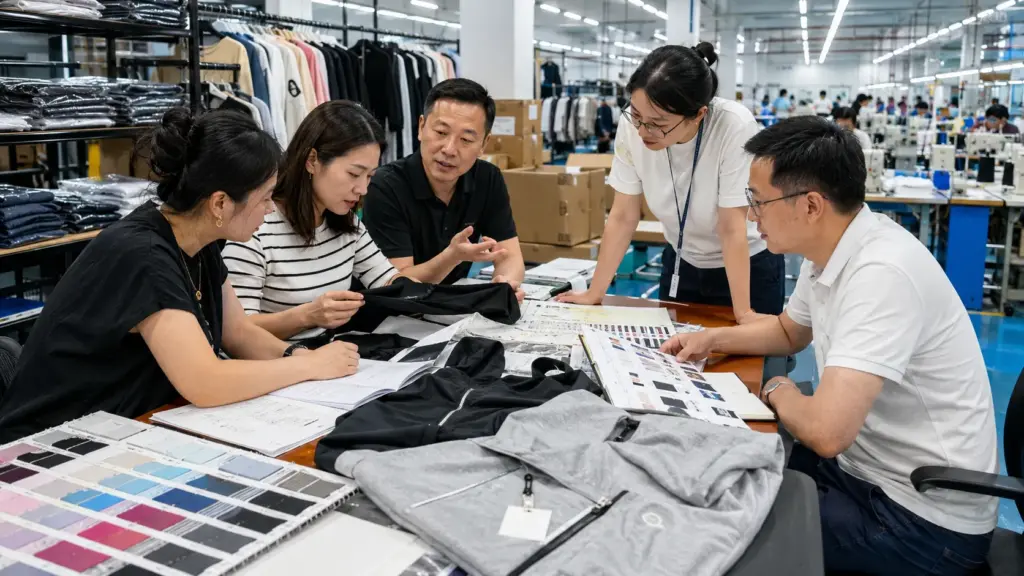
Wanneer ik met buitenlandse kopers werk, probeer ik de kant van de fabriek duidelijk te maken. Ik weet dat veel kopers uit Europa, Rusland, het Verenigd Koninkrijk, de VS en Australië tegelijkertijd waarde hechten aan kwaliteit, prijs en levertijd. Ze willen geen lange verhalen. Ze willen duidelijke antwoorden en gegarandeerde bestellingen.
| Wat te controleren | Goed teken | Waarschuwingsbord |
|---|---|---|
| Product komt overeen | De fabriek heeft al eerder soortgelijke producten gemaakt. | De fabriek zegt ja tegen elke categorie. |
| Mededeling | Duidelijke antwoorden met foto's en documenten. | Trage reacties en vage beloftes. |
| Steekproeven | Het voorbeeld komt overeen met het ontwerp en de maattabel. | Het voorbeeld wijkt af van het verzoek. |
| Kwaliteitscontrole | De fabriek legt de inspectiestappen uit. | De fabriek zegt dat een inspectie niet nodig is. |
| Certificaten | Documenten kunnen worden geverifieerd. | Leverancier stuurt onduidelijke of valse bestanden. |
| Levertijd | De planning omvat de stof en de productie. | Leverancier belooft ongekende snelheid |
| Prijs | De kostendetails zijn logisch. | De prijs is zonder reden veel te laag. |
| Exportondersteuning | De fabriek begrijpt de documenten en de verpakking. | De fabriek heeft weinig ervaring met exporteren. |
Een betrouwbare fabriek produceert niet alleen kleding. Ze helpt de koper ook om fouten te voorkomen. Ze laat de koper weten wanneer een stof kan krimpen. Ze waarschuwt wanneer een kleur kan afgeven. Ze legt uit wanneer de levertijd te krap is. Dit soort eerlijkheid is erg belangrijk voor groothandelaren die stabiele verkoopseizoenen nodig hebben.
Conclusie
Een kledingfabriek maakt van stof verkoopbare kleding, maar de beste fabriek waarborgt ook de kwaliteit, levertijd, kosten en het vertrouwen van de koper.
Bent u klaar om uw volgende modebestelling te laten produceren door een betrouwbare Chinese kledingfabriek? Neem contact met mij op via [email protected] of bezoek https://truekung.com om de mogelijkheden voor OEM/ODM-kledingproductie met Truekung te bespreken.
Weergaven: 104