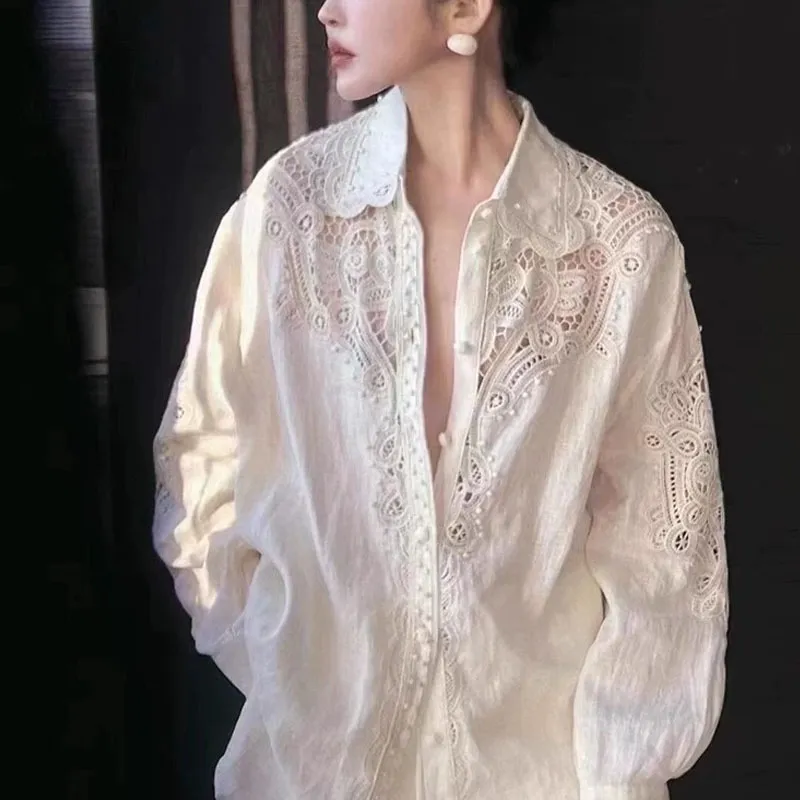
I have watched buyers lose time and money because they order the wrong jacket type. It looks “almost the same” on photos. Then the fit and use feel wrong in stores.
A blazer is a standalone jacket with more flexible styling, a suit jacket is made to match suit trousers in the same fabric, and a sports coat is a more casual jacket with textured fabrics and patterns that are meant to mix with other pants.

I still remember a bulk order where the client said “send blazer quality.” The sample was a suit jacket. It was beautiful, but it failed the use case. Buyers wanted mix-and-match. If you keep reading, I will show how I separate them fast, even when a supplier’s listing is vague.
What is a blazer, and why do people confuse it with a suit jacket?
I often see “blazer” used as a catch-all word on marketplaces. That creates stress for buyers. The photos look formal. The buyer expects easy styling. Then the jacket arrives and acts like a suit piece.
A blazer is a jacket that can stand alone and still look sharp, while a suit jacket is designed as one half of a matched suit. The fastest clue is whether the fabric and color are meant to match a specific trouser.

The “matching trouser” test
When I check a product page, I ask one question first: “Is there a matching trouser in the same fabric lot?” If yes, it is almost always a suit jacket. If no, it leans blazer or sport coat. This matters because suit fabric is chosen to look consistent as a set. A blazer does not need that strict matching rule.
Buttons, structure, and how it wears
A classic blazer often has metal buttons, but I never treat that as a rule. Many modern blazers use horn or plastic. What I look at is structure. A blazer can be structured, but it usually feels more flexible than a suit jacket. The armhole, chest canvas, and shoulder padding can vary. A suit jacket is more controlled because it must keep the suit line clean.
Quick buyer checklist
| Check point | Blazer | Suit jacket |
|---|---|---|
| Matching trousers in same fabric | Not required | Required for “true suit” |
| Typical use | Business casual, smart casual | Formal business, events |
| Fabric feel | Often mid-weight, can be textured | Often smoother worsted |
| Styling | Mix with chinos/jeans | Best with suit trousers |
In my own workflow, I label tech packs clearly as “blazer (separate)” or “suit jacket (matched set).” That one line prevents disputes later. If a buyer like Maria wants price advantage but hates rework, this is the easiest place to be strict.
Sport coat vs blazer: how do I tell them apart in 10 seconds?
I have seen buyers argue about the words “sport coat” and “sports jacket” for days. The real pain is not the word. The pain is wrong fabric choice for the customer’s market and season.
A sport coat is usually more casual than a blazer and often uses more texture, pattern, and heavier or more “outdoor” fabrics. A blazer is often cleaner and closer to office-ready, even when worn without matching pants.

Start with fabric and pattern
When I pick up a jacket and feel it, sport coat is often the first thing that comes to mind if it has texture. Think tweed, herringbone, hopsack, flannel, corduroy, or visible slubs. Patterns are common too: checks, windowpane, houndstooth, plaids. A blazer can have texture, but it usually stays calmer so it works in more business settings.
Look at pockets and casual details
Sport coats often use patch pockets, ticket pockets, or softer construction. Some have elbow patches, although that is more of a style theme than a strict rule. A blazer can also use patch pockets, but the overall “clean office” vibe is stronger in most blazer programs.
How I map use cases for buyers
| Buyer situation | Better choice | Why |
|---|---|---|
| Wants a jacket for denim + knitwear | Sport coat | Texture + casual harmony |
| Wants one jacket for office + dinner | Blazer | Cleaner line, more versatile |
| Wants pattern to stand out on racks | Sport coat | Checks and weaves sell visually |
| Wants uniform look for staff | Blazer | Easier to keep consistent |
In production, the sport coat also changes sourcing. Texture fabrics can have higher shrink risk and more color variation between lots. I plan extra fabric buffer. For a buyer who sells across multiple cities, that planning prevents “batch A looks different from batch B” complaints.
Can I wear a suit jacket as a blazer or sport coat without looking odd?
I get this question from buyers and also from end customers. They want to reduce SKUs. They want flexibility. But the outfit can look “off” in a way people cannot explain.
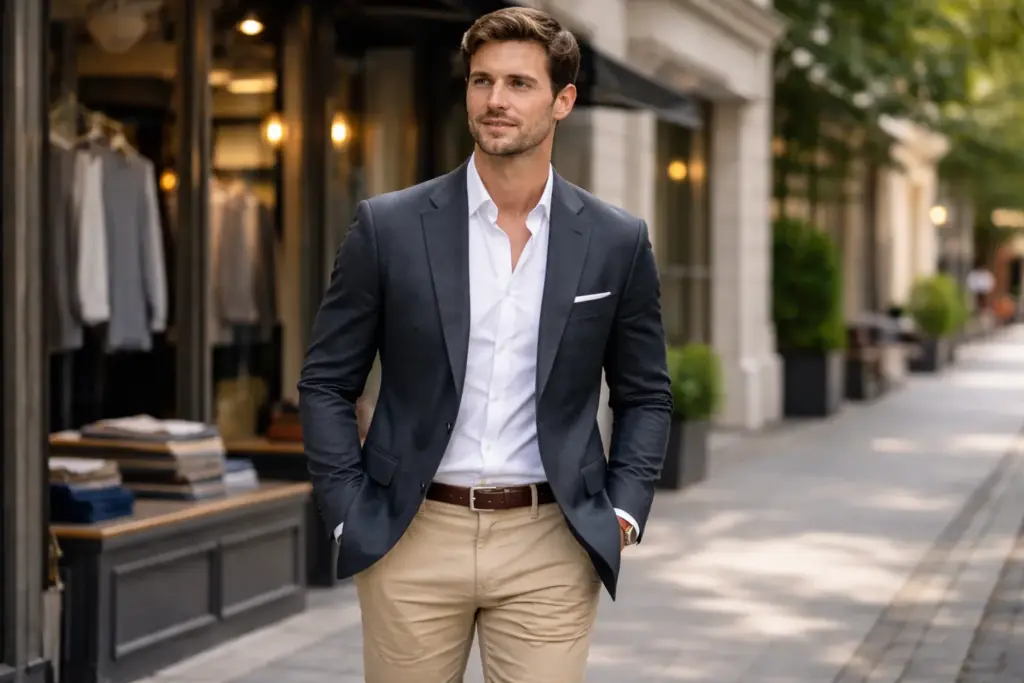
You can wear a suit jacket as a blazer sometimes, but it depends on fabric, shine, and construction. If the suit jacket is too smooth, too formal, or too shaped, it will look like a broken suit when paired with casual pants.
The “broken suit” risk
The biggest risk is the fabric. Many suit jackets use fine worsted wool with a clean surface. Under bright store lighting, it can look shiny next to chinos or jeans. That contrast makes people think the trousers are missing. I have seen returns happen for this reason alone, even when fit is perfect.
What makes it work
If the suit jacket fabric is more matte, slightly textured, or has a pattern, it can work as a separate more easily. Also, softer shoulders and less severe waist suppression help. Dark navy is the easiest color to re-style, but only if the fabric does not scream “boardroom suit.”
Practical rule set I use when advising buyers
| Suit jacket feature | Can it act like a blazer? | My note |
|---|---|---|
| Matte fabric, light texture | Yes, often | Pair with grey or beige trousers |
| High-shine worsted | Rarely | Looks like missing suit pants |
| Strong pinstripe | Usually no | Too “set” and too formal |
| Soft construction | Better | Reads as relaxed separate |
| Hard structured shoulder | Harder | Feels too corporate with denim |
When I develop collections for wholesale, I separate “suit program” and “separates program” at the beginning. That way, the factory patterns, interlining, and fabric sourcing stay consistent. This also reduces the risk of certificate or material mismatch because each program has its own testing plan and BOM.
Conclusion
A blazer is a flexible standalone jacket, a suit jacket belongs to a matched set, and a sport coat is the most casual and textured option for mixing with many pants.
Why I write this
I’m Lancy Chia from Truekung in China. I run a clothing factory with more than 200 workers, and I focus on B2B wholesale only. I provide clothing products and OEM/ODM services for brands and supermarkets worldwide, with 20 years of foreign trade production and export experience.
I produce fashion women’s clothing and many jacket categories, including blazers, suit jackets, sport coats, coats, windbreakers, down jackets, and more. I export to the Netherlands, Denmark, Belgium, Norway, the UK, the USA, Germany, Australia, Thailand, Turkey, Italy, Russia, Saudi Arabia, and other markets.
If you want help defining your jacket category clearly for your next order, you can reach me at [email protected], and you can also visit my website at https://truekung.com.
Views: 220