I have watched sampling drag on for weeks because the factory guessed details. The delays hurt launch dates, cash flow, and trust. That pain adds up fast.
A better tech pack cuts weeks off sampling because it removes guessing. It gives clear specs, measurements, construction notes, and approval rules, so the first sample is closer to “sellable,” not “just a try.”

I still remember a season when I thought my sketch was “clear enough,” and then the first sample came back with the wrong collar and a different pocket shape, and I had to explain everything again.
What Should I Put in a Tech Pack So My Factory Gets It Right the First Time?
I have seen one missing detail turn into three rounds of samples. The factory then asks many questions. I then answer too late. The cycle repeats.
I put only what the maker needs to build the garment without guessing: accurate measurements, graded points, materials, trims, construction notes, and clear approval standards for fit and workmanship.
What I include before I ask for Sample #1
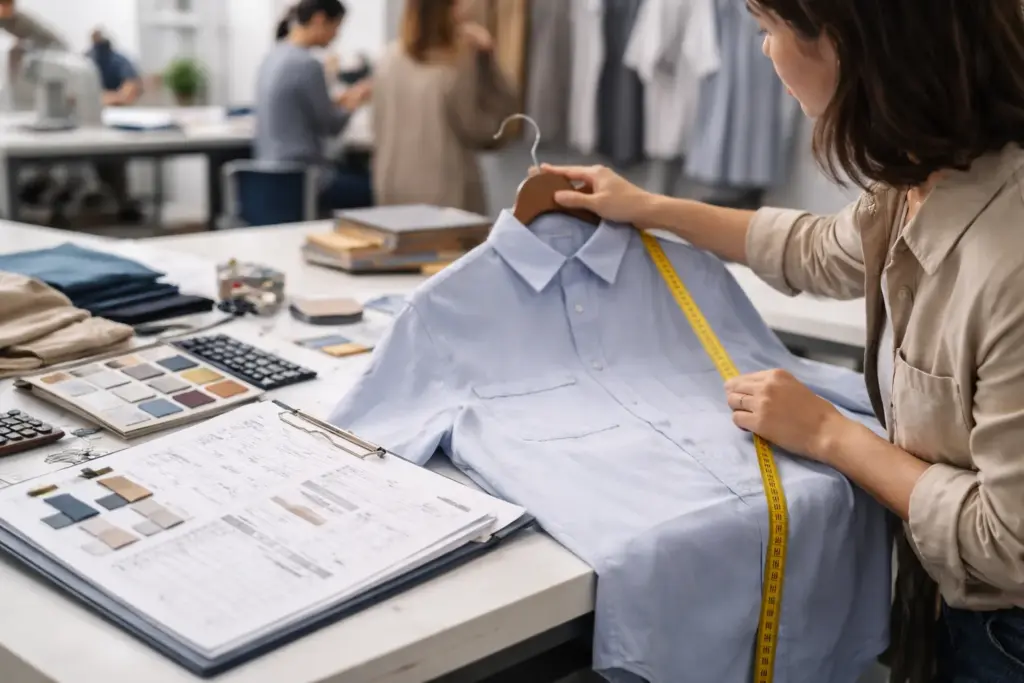
I build my tech pack like a “build sheet,” not a mood board. I start with a flat sketch front and back. I label every seam and panel. I add a callout for each detail that can change cost or fit. I then write a short BOM with exact names, colors, and supplier codes when I have them. I also add trim placement and size, like zipper length and button size. I always add a measurement chart with POM (points of measure) and how to measure. I also add a graded spec if I plan multiple sizes. If I do not have grading yet, I still note the base size and the fit intent, like “relaxed” or “slim.”
What I force myself to answer in writing
I add a simple “tolerance” rule. I also add the quality rules that stop arguments later, like stitch density and seam allowance. I add a packaging note if it changes the sample, like “fold line must not crush print.”
| Tech Pack Item | What I write | Why it saves time |
|---|---|---|
| Flat sketches | Front/back with callouts | The maker stops guessing shapes |
| BOM | Fabric, trims, labels, thread | The factory avoids wrong sourcing |
| Measurement chart | POM + method + tolerance | Fit feedback becomes objective |
| Construction notes | Seam type, allowance, stitch | Sewing matches my intent |
| Artwork files | Placement + size + color | Prints stop shifting each round |
| Approval rules | Pass/fail points | Decisions get faster |
When I do this, I notice the factory asks fewer “basic” questions. The factory then spends time on making, not asking. I also spend time on selling, not correcting.
How Do I Run a Sampling Timeline That Does Not Slip Every Season?
I used to accept “we will try our best” as a plan. I then got a late sample, and I missed a selling window. That mistake cost me more than a rush fee.
I run sampling like a short project: I set dates, I define who approves what, and I lock changes after each stage, so I do not reopen old decisions every week.

The sampling stages I follow, even for simple styles
I break sampling into clear steps. I start with a “prototype sample” if the style is new. I then move to a “fit sample” once the shape is close. After fit, I do a “PP sample” (pre-production) when I want factory-level workmanship and packing. I do not mix goals. If I ask for fit changes during PP, I create chaos. I also keep feedback in one place. I use one PDF or one thread. I avoid sending notes in five messages. I also mark each comment as either “must change” or “nice to have.” That simple label saves days.
The rules that stop endless rounds
I set a limit on revisions. I usually plan for two rounds for simple knit tops and three rounds for tailored jackets. If we hit the limit, I decide to either accept, or redesign, or change the factory. I also set response times. I reply within 24 hours on weekdays because time zones are real. I also ask the factory to confirm my changes in their own words. That step catches mistakes early.
| Stage | Goal | Typical output | My “no-go” trigger |
|---|---|---|---|
| Prototype | Confirm design shape | Rough sample, basic trims | Wrong silhouette |
| Fit sample | Lock fit + POM | Correct size, closer fabric | POM off beyond tolerance |
| Size set (optional) | Confirm grading | All sizes or key sizes | Grade breaks balance |
| PP sample | Confirm bulk method | Correct trims, labeling, pack | Workmanship not stable |
When I follow this, I stop “floating” decisions. I also stop changing the target. The factory then moves faster because the target stays still.
How Do I Use a Tech Pack to Protect Quality, Cost, and Trust?
I have met buyers like Maria who care about quality and price at the same time. I also know how fast trust breaks when one side feels misled. I use the tech pack to keep trust steady.
I use the tech pack as a contract for expectations: it locks materials, workmanship, tests, and cost drivers, so the factory quotes correctly and I can check quality without arguments.

I make cost drivers visible, so quotes match reality
I highlight the parts that change cost. I mark special stitches, bonded seams, and high-needle-count fabrics. I mark washing, distressing, and garment dye. I also mark accessories that look small but cost big, like custom zipper pulls. When I share this early, the quote becomes stable. The factory also avoids “surprise” charges after sampling. I also add a clear labeling plan. If I want private labels, I list label types, sizes, and placements. If I want re-labeling on stock, I note what must be removed and what must stay.
I add simple QC and compliance notes that stop risky shortcuts
I add my inspection points, like seam strength, shade matching, and measurement checks. I also note what certificates matter for my market. I do not write “all certificates needed.” I name them, or I attach buyer requirements. I also state that documents must be real and verifiable. I have seen forged papers in this industry, so I do not leave that vague. I ask for lab reports when it is needed. I also add carton marks and packing ratio if it affects bulk.
| Risk area | What I add to the tech pack | What it prevents |
|---|---|---|
| Fabric shade | Shade band approval rule | Color drift in bulk |
| Shrinkage | Wash method + max shrink | Fit change after wash |
| Trims | Photo + spec + supplier code | Wrong zipper/button |
| Workmanship | Stitch type + SPI + tolerance | Weak seams, returns |
| Compliance | Named tests + doc rules | Fake or missing papers |
| Packing | Fold, bag, carton marks | Damaged goods, delays |
When I treat the tech pack like a shared “single source of truth,” I see fewer fights. I also see fewer delays. I also feel calmer because each change has a place and a reason.
Conclusion
A tech pack that removes guessing, sets checkpoints, and locks cost and quality rules can cut weeks off sampling and protect launch dates and trust.
If you want a sample checklist like this to use as a reference, you can contact us anytime.
Why I Write This
I am Lancy Chia from Truekung in China. I run a wholesale-only apparel factory with over 200 workers and 20 years of export experience. I support OEM/ODM and private label across women’s fashion, outerwear, denim, knitwear, sportswear, and more. I work with brands and supermarkets worldwide. You can reach me at [email protected], and you can see more at https://truekung.com.
Views: 89