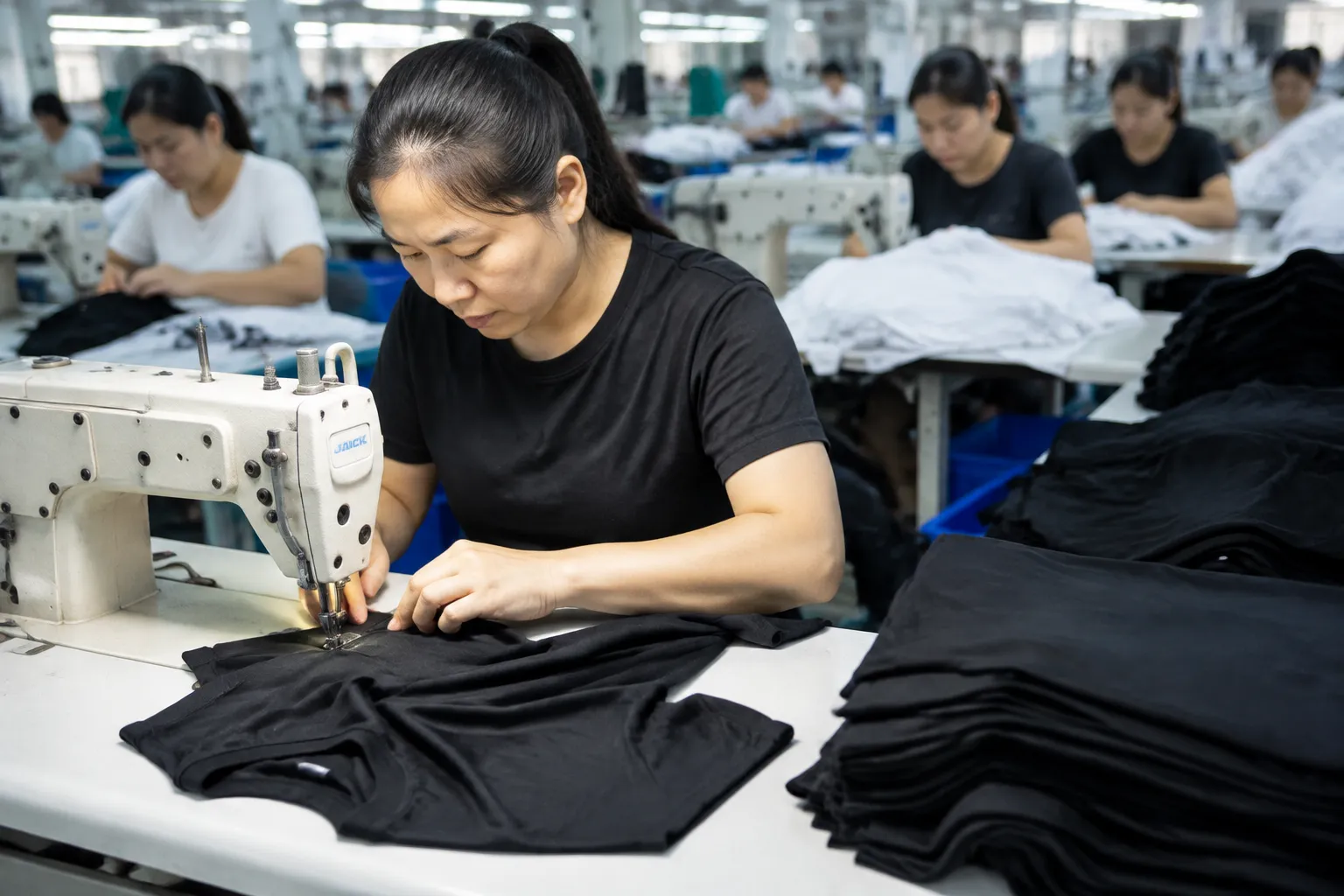


Many buyers ask how to make a custom tshirt, but they often focus only on the design. A wrong fabric choice, unclear sample request, or poor factory communication can increase cost and delay delivery. The solution is understanding the full production process before placing an order.
To make a custom T-shirt, you need to prepare the design, choose fabric and production methods, develop a sample, confirm quality details, and work with a reliable clothing factory for bulk production.

I am Lancy Chia from Truekung. In my factory experience, I have worked with overseas buyers who need OEM/ODM clothing production, private label fashion products, and wholesale apparel support. A custom T-shirt looks simple, but production involves many decisions about fabric, printing, sizing, quality control, packaging, and shipping.
In this guide, I will explain how to make a custom T-shirt from a factory perspective. I will cover design preparation, production steps, cost factors, supplier selection, and common mistakes buyers should avoid.
How Do You Design a Custom T-Shirt Before Production?
Many new brands start with an idea but do not know how to turn it into a production-ready product. A simple design problem can create sampling delays and extra costs. A clear development process helps avoid mistakes.
Before production, you should prepare the T-shirt concept, artwork, fabric preference, size requirements, printing method, and quality expectations. A factory uses this information to create an accurate sample and quotation.
Factory View
When a buyer asks how to make a custom tshirt, I usually explain that production starts before cutting fabric. The first step is product planning.
A factory needs to understand:
- T-shirt style and target market
- Fabric composition and weight
- Fit preference
- Color requirements
- Printing or embroidery details
- Label and packaging needs
- Order quantity
For example, a streetwear brand may need an oversized cotton T-shirt with a heavy fabric feel. A supermarket buyer may need a basic promotional T-shirt with a lower cost target. These two products have different fabric choices, construction methods, and pricing.
Fabric selection is one of the first important decisions. Common options include cotton, polyester, cotton blends, and recycled fabrics. The fabric weight, softness, shrinkage control, and color performance all affect the final product.
For private label T-shirts, buyers should also prepare branding details such as neck labels, hangtags, care labels, and packaging requirements.
Buyer Risk
Many buyers send only a logo and ask for a price. This creates problems because the factory does not know the final product standard.
I have seen buyers lose time because they only explain the design idea but do not provide details about:
- The expected fabric feeling
- The target selling price
- The market position
- The required delivery date
A factory may produce a sample that looks acceptable but does not match the buyer’s expectation.
Practical Check
| What to Check | Why It Matters | What I Suggest |
|---|---|---|
| T-shirt reference photos | Helps explain style direction | Send similar products you like |
| Fabric requirement | Affects price and quality | Confirm composition and weight |
| Artwork file | Affects printing quality | Provide clear vector files if possible |
| Size chart | Prevents fitting problems | Confirm measurements before sample |
| Target market | Influences product choice | Tell the factory your customer group |
Dive Deeper
Designing a custom T-shirt is a balance between creativity and production reality. Many new clothing brands focus on artwork first, but factories look at the complete product structure.
In my factory experience, a good T-shirt design must consider fabric behavior, sewing method, printing limitations, and production cost. For example, a large printed graphic may look attractive, but the printing method can change the cost significantly. Screen printing works well for larger quantities, while digital printing may be more suitable for smaller orders or complex artwork.
The same design can have different prices depending on fabric selection. A 100% cotton T-shirt with premium finishing will cost more than a basic cotton-polyester blend. Buyers need to decide whether they compete on price, quality, or design value.
My suggestion is to prepare a clear product brief before contacting a factory. The more information a buyer provides, the easier it is for the factory to suggest the right fabric, production method, and price level. A serious clothing supplier should explain these choices instead of only giving a low price.
How Does a Clothing Factory Make Custom T-Shirts?
Many buyers understand the design stage but do not know what happens inside a factory. Without understanding production, it is difficult to judge supplier ability and delivery promises.
A clothing factory makes custom T-shirts through several steps: fabric sourcing, pattern making, sample development, cutting, sewing, printing or embroidery, quality inspection, packaging, and export preparation.
Factory View
Custom T-shirt manufacturing usually starts after the sample approval stage.
The factory process normally includes:
- Fabric confirmation
- Pattern development
- Sample making
- Buyer approval
- Bulk fabric preparation
- Cutting
- Sewing
- Decoration process
- Quality control
- Packing and shipment
At Truekung, we pay attention to communication during each stage because small mistakes can become expensive during bulk production.
For example, before cutting bulk fabric, the factory should confirm:
- Approved sample
- Final size chart
- Color standard
- Label placement
- Printing position
This looks small, but it can affect delivery.
For custom apparel production, sampling is a key step. A sample allows the buyer and factory to check fitting, construction, appearance, and workmanship before large production begins.
Buyer Risk
The biggest risk is choosing a supplier that promises fast production without explaining the process.
Some suppliers may skip detailed sample confirmation or use different materials during bulk production. This can create quality problems.
Common issues include:
- Different fabric feeling from sample
- Wrong printing position
- Uneven stitching
- Incorrect measurements
- Color differences
A low quotation is not always a good deal if the buyer needs to spend extra time fixing problems.
Practical Check
| What to Check | Why It Matters | What I Suggest |
|---|---|---|
| Sample approval process | Confirms production standard | Approve all details before bulk order |
| Production timeline | Controls delivery risk | Ask for realistic lead time |
| QC procedure | Protects product quality | Confirm inspection points |
| Communication speed | Reduces mistakes | Choose a responsive supplier |
Dive Deeper
The difference between a trading company and a real factory often appears during production communication. A factory understands how fabric, sewing, and finishing affect the final product.
I usually ask buyers to check how a supplier explains production problems. A professional supplier should tell you why a problem happens and how they will solve it.
For example, if a buyer requests a very soft oversized T-shirt at a low price, the factory needs to explain the trade-off. A heavier fabric, special washing process, or premium cotton may increase cost and production time.
A good decision rule is simple: if a supplier only talks about price but cannot explain fabric, sample, QC, and delivery details, the buyer should be careful.
Custom T-shirt production is not only about making a product. It is about creating a repeatable product that can be produced again with stable quality.
How Much Does It Cost to Make Custom T-Shirts and Choose a Supplier?
Cost is one of the first questions buyers ask, but the cheapest supplier is not always the most suitable choice. The real cost depends on many production factors.
The cost of making custom T-shirts depends on fabric, quantity, design complexity, printing method, customization level, packaging, and shipping requirements.
Factory View
When buyers request a quotation, I look at more than the T-shirt design.
Important cost factors include:
- Fabric type
- Fabric weight
- Order quantity
- Number of colors
- Printing method
- Sewing details
- Labels and packaging
- Quality requirements
MOQ also affects pricing. Larger orders usually allow factories to control material purchasing and production efficiency better. Small orders may have higher unit costs because setup costs are spread across fewer pieces.
For private label T-shirts, buyers should also consider development costs such as samples, custom labels, and special packaging.
Buyer Risk
Many buyers compare only the unit price. This can create problems later.
A very low price may mean:
- Lower fabric quality
- Limited customization
- Weak QC control
- Longer correction time
- Poor communication
I have seen buyers choose suppliers based only on price and later spend more money because the products did not meet their market expectations.
Practical Check
| What to Check | Why It Matters | What I Suggest |
|---|---|---|
| Complete quotation | Avoid hidden costs | Ask for detailed pricing |
| MOQ requirement | Affects investment | Match quantity with business stage |
| Sample cost | Shows development process | Confirm before starting |
| Shipping terms | Affects final cost | Discuss logistics early |
Dive Deeper
Choosing a custom T-shirt supplier is a business decision, not only a purchasing decision. Buyers should consider whether the supplier can support future growth.
A small brand may start with one T-shirt style, but later need more colors, new designs, jackets, hoodies, or other clothing categories. A factory that understands development and production can become a long-term partner.
My suggestion is to compare suppliers based on communication quality, production knowledge, and quality control, not only price.
A serious clothing supplier should explain the reason behind the quotation. If the price is higher, the supplier should explain whether it comes from better fabric, stronger construction, more detailed QC, or more customization.
What Should You Prepare Before Contacting a China Clothing Factory?
A clear inquiry helps the factory provide a more accurate price, timeline, and production suggestion.
| Information to Prepare | Example | Why the Factory Needs It |
|---|---|---|
| Product category | Custom T-shirt | Understand production requirements |
| Reference photos or tech pack | Similar styles or drawings | Confirm design direction |
| Fabric | 100% cotton, 240gsm | Calculate material cost |
| Size range | S-XXL | Prepare pattern and grading |
| Quantity per style/color | 500 pcs per color | Estimate production plan |
| Target market | USA, Europe, Australia | Suggest suitable standards |
| Quality level | Basic or premium | Match production method |
| Packaging | Polybag, carton, tags | Calculate final cost |
| Labeling | Brand labels and care labels | Prepare customization |
| Delivery deadline | Required shipment date | Plan production schedule |
| Certificates | Required market documents | Check feasibility |
| Target price | Expected cost range | Suggest suitable options |
A clear inquiry helps the factory give a more accurate price, timeline, and production suggestion.
When Should You Ask Truekung for a Quote?
If you already have a product idea, reference samples, brand requirements, or a wholesale plan, it is a good time to contact Truekung.
Truekung supports buyers who need OEM/ODM clothing production, private label fashion products, stable export communication, and practical factory support.
You can contact me at:
Conclusion
Learning how to make a custom tshirt helps buyers control quality, cost, and delivery. With clear preparation and factory communication, your T-shirt idea can become a reliable product for your market.
Views: 119


