
I have seen buyers lose money because a “factory” was only a trading office and the quality fell apart after the first order. That pain is real, and it is avoidable.
You can find reliable private label clothing manufacturers in China by verifying the factory, checking product fit with a small sample order, and locking quality and delivery into clear documents before you pay any deposit.
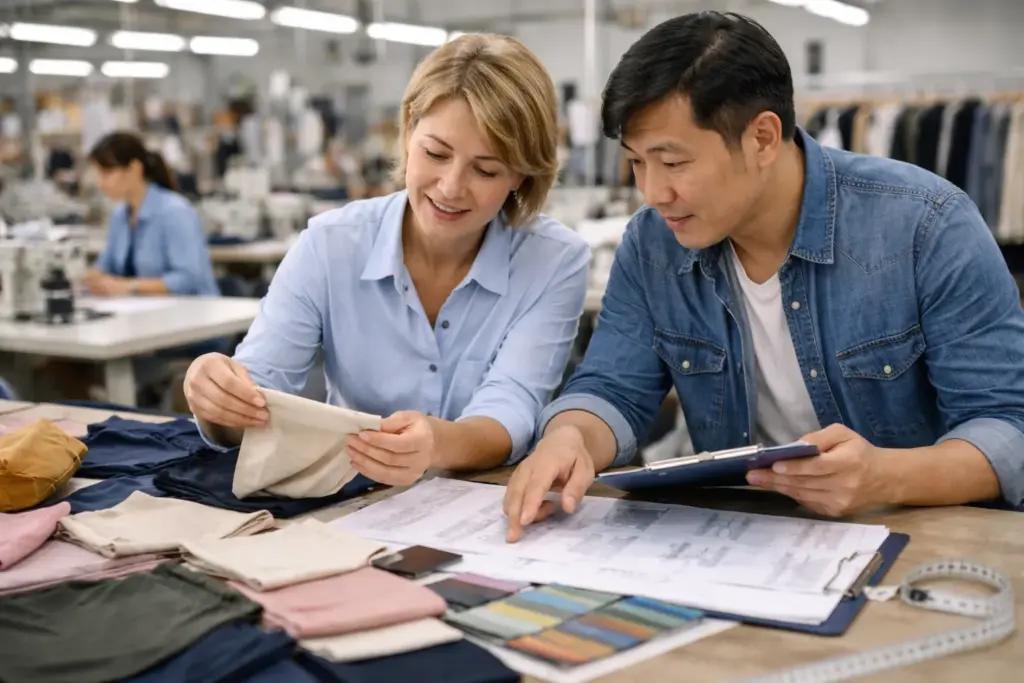
If you keep reading, I will show you the exact steps I use to filter factories fast, protect my brand, and stop “surprises” that show up only after production starts.
How can I tell if a “manufacturer” is a real factory in China?
I have watched buyers trust glossy photos and quick replies, and then they find out the supplier cannot control sewing lines or delivery dates. That mistake hurts, and it can cost a whole season.
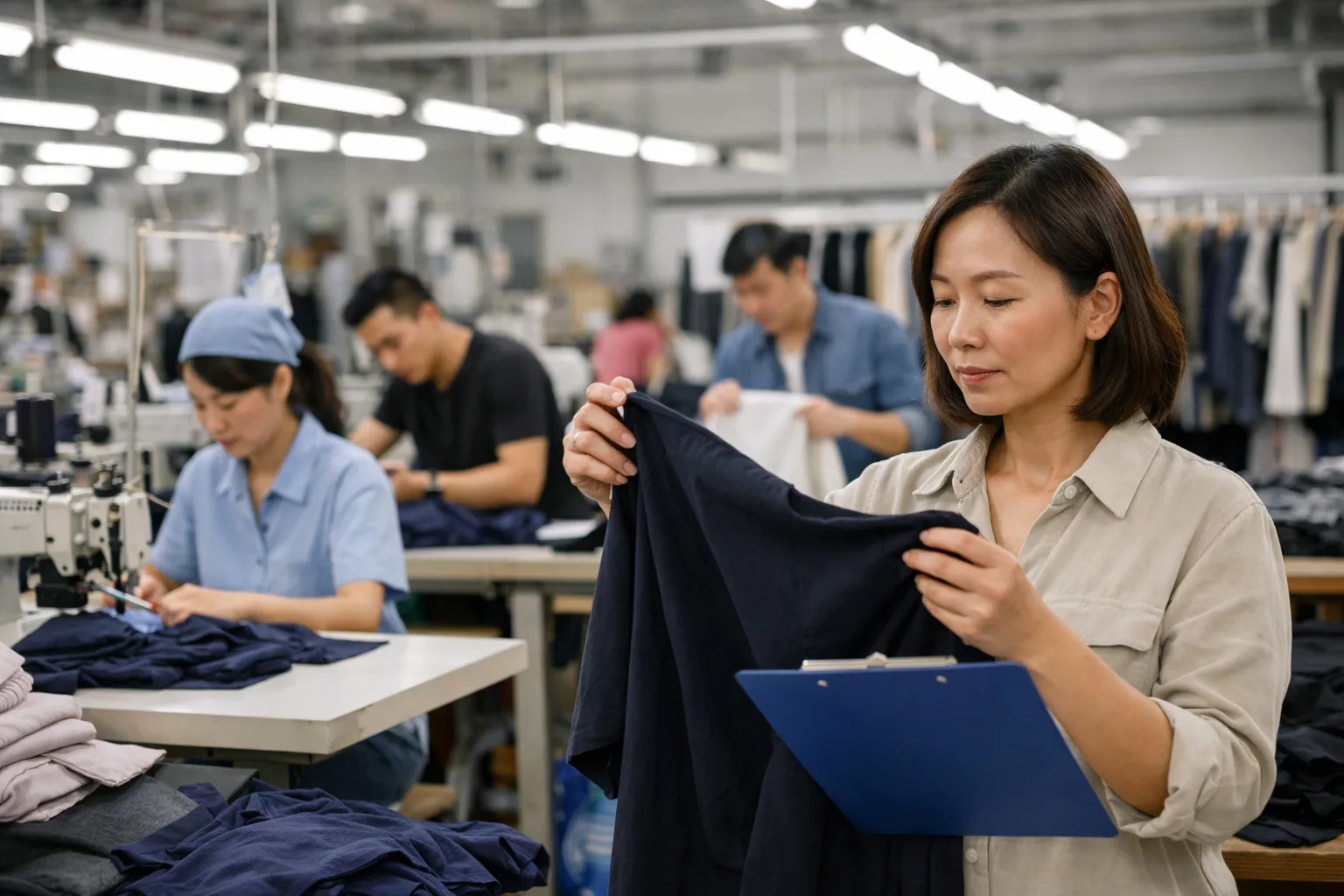
A real factory will prove it with a business license match, clear workshop evidence, stable processes, and direct answers about capacity, fabric sourcing, and quality checks, not only sales talk.
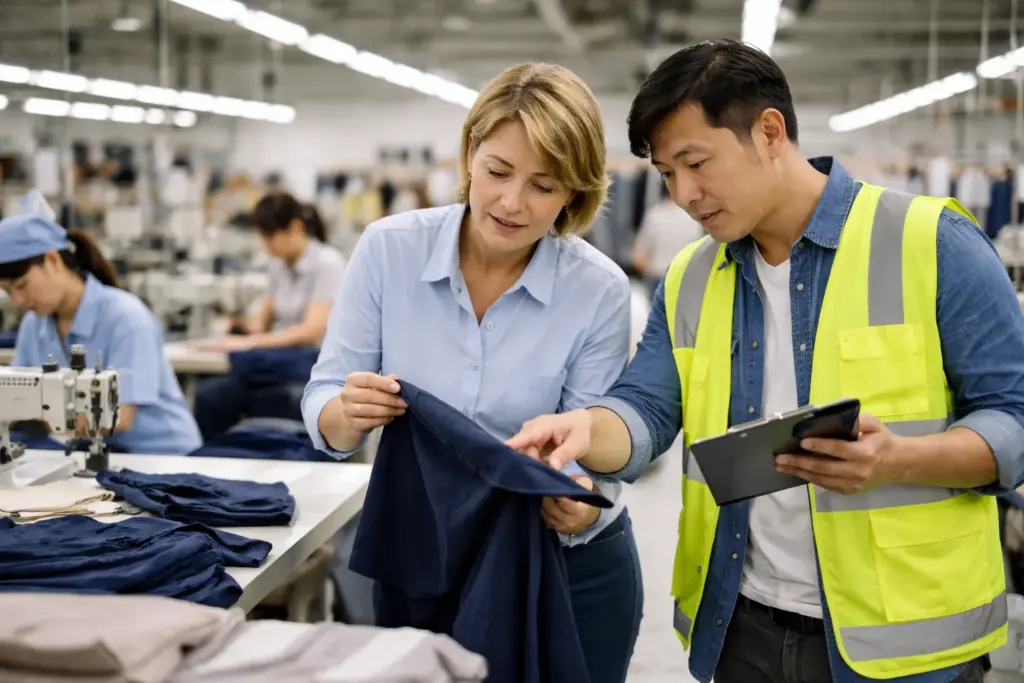
Start with proof, not promises
When I screen a private label partner, I treat it like hiring a key employee. I do not trust a single document alone. I ask for a set of proofs that match each other. I also ask the same question twice in different ways. If the answers change, I slow down. One time, I spoke with a confident buyer from Russia who led the talk from the first minute. She moved fast and pushed for a low price. I asked her to pause and do one more check. That one check saved her from paying a deposit to a trading office that had no sewing line.
What I ask for in the first 48 hours
Here is a simple checklist I use. It helps me filter suppliers before samples.
| Check item | What I ask for | What I look for | Red flag |
|---|---|---|---|
| Company identity | Business license + registered address | Name matches bank account and invoice | “Use another company to receive payment” |
| Factory proof | Workshop video with date + team intro | Cutting, sewing, QC, packing shown | Only office shots and stock photos |
| Capacity | Monthly output by category | Numbers match line count and workers | Vague answers like “no limit” |
| Core products | Main styles and fabrics | Focus and repeatability | “We make everything” |
| Client type | Brands, supermarkets, B2B | Stable, long-term buyers | Only one-time small orders |
Ask questions that reveal control
I ask about fabric lead time, dye lot control, shrinkage tests, and how they handle size grading. I also ask who owns the pattern files and who approves the pre-production sample. A real manufacturer will answer in a calm way and show process. A weak supplier will avoid details and push me to “just place order first.”
My simple rule for private label
If the supplier cannot show me how they control fabric, fit, and final inspection, then the price does not matter. A cheap order that arrives late or fails inspection is always the most expensive order.
What documents do I need before I place a private label clothing order?
I have seen orders go wrong because the buyer and the factory used different “versions” of the same idea. The buyer wanted a premium feel, but the factory shipped a basic fabric. Both sides thought they were right.
You need a clear tech pack, a sample approval record, a written quality standard, and a production schedule that links payment to milestones, so your private label order stays consistent from sample to shipment.

Build a paper trail that the factory must follow
In private label, your documents are your control system. I learned this the hard way on an early jacket order. I approved a sample, but I did not record the exact fabric code and stitching details. In bulk, the hand feel changed. The factory said the fabric was “similar.” That word “similar” is dangerous. Now I write everything down and I attach photos with marks.
The four documents that protect you the most
These are the items I prepare before I pay any deposit:
| Document | What it should include | Why it matters |
|---|---|---|
| Tech pack | Measurements, grading, BOM, fabric codes, stitching, labels, packaging | It turns your idea into production instructions |
| Sample approval sheet | Date, version, comments, photos, signed confirmation | It stops “we changed it” arguments |
| Quality standard | AQL level, defect list, seam tolerance, color tolerance, wash test rules | It defines pass or fail in simple terms |
| Production plan | Milestones: fabric in-house, PP sample, cut date, sewing start, final inspection, ship date | It makes delivery measurable |
Use milestones to control risk
I tie payments to events. I do not pay only by calendar dates. For example, I link the second payment to fabric arrival proof and PP sample approval. I link the final payment to a passed inspection report and packing list. This is simple, and it changes behavior. A factory that can meet milestones is usually a factory that can deliver.
Keep wording simple and measurable
I avoid soft words like “high quality” or “nice fabric.” I use numbers and clear checks. I write “fabric weight 220gsm ± 10gsm” or “shade must match lab dip under D65 light.” I also define what happens if the factory misses the ship date. I keep it fair, but clear.
A private label tip that saves time
If you sell to supermarkets or need steady repeat orders, I suggest making one “master spec” for each product line. Then every new season is a controlled update, not a full restart. This is how I keep production stable across many countries and many buyer styles.
How do I control quality and delivery when I manufacture private label clothing in China?
I have seen buyers approve a sample, then disappear until the goods arrive. That gap is where mistakes grow. Quality drops, and the ship date slips, and nobody warns you early.
You control quality and delivery by setting checkpoints during production, using clear inspection standards, and keeping communication strict with weekly updates that include photos, measurements, and risk flags.
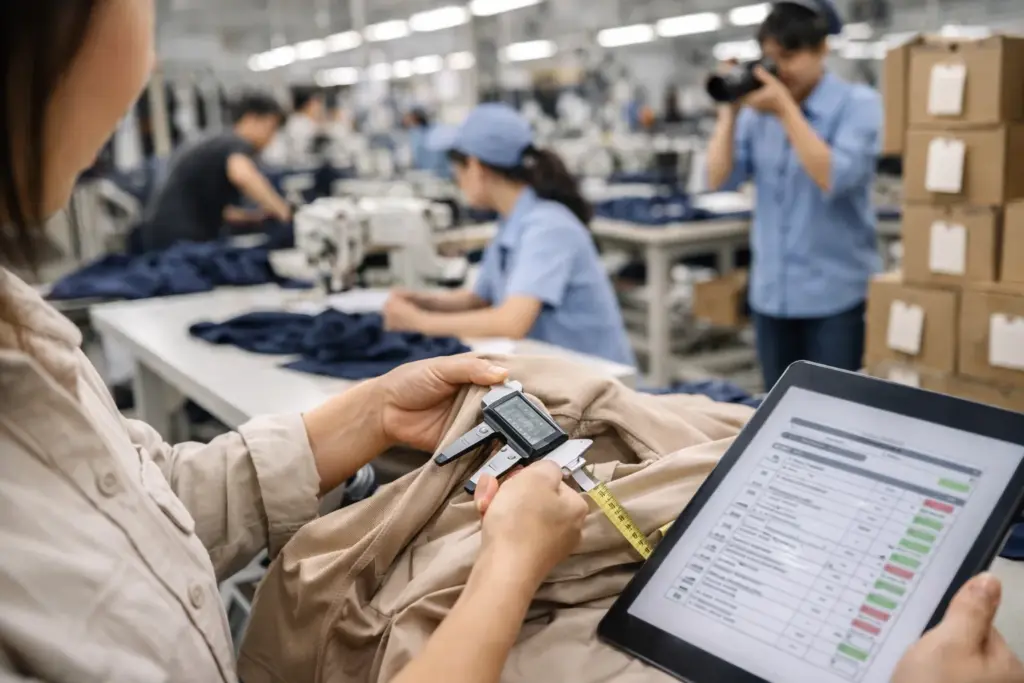
Control is a system, not a feeling
I treat production like a timeline with gates. If a gate is not passed, I do not move to the next step. Many buyers, like a strong company owner I once worked with, love speed. I respect speed. I also know speed without control creates returns and chargebacks. So I build a rhythm that keeps things moving and keeps the factory honest.
The checkpoints I use for most private label orders
Here is the structure I follow. It works for dresses, jackets, T-shirts, and more.
| Stage | What I check | Proof I request | Common risk |
|---|---|---|---|
| Fabric in-house | Color, weight, defects, shrinkage | Roll photos, test notes, fabric codes | Wrong shade or wrong composition |
| PP sample | Fit, construction, labels, packaging | PP sample photos + measurement sheet | Bulk made from old version |
| Inline sewing | Stitch, seam strength, key points | Line photos, 5 pcs measurement | Size drift and skipped steps |
| Pre-final | Random check, appearance, packing | Inspection report + defect list | Last-minute rushing |
| Final packing | Carton marks, qty, polybags | Packing video + carton list | Wrong sizes mixed |
How I communicate so nothing is missed
I ask for one update every week. The update must have three parts: progress numbers, photo evidence, and problems. I keep it simple. I tell the supplier to show me “what can break the ship date.” If they hide problems, I will find them at the end, and both sides lose.
Protect yourself from certificate and compliance issues
Some buyers have a real fear here because they have seen forged certificates. I do not rely on one PDF sent by email. I ask for the original issuing body, the scope, and the validity dates. I also match the factory name on the certificate with the legal name on the license and the contract. If I need higher confidence, I use third-party tests on the actual fabric and trims from the bulk order, not only from the sample. This step costs money, but it can protect a whole brand.
Delivery is a chain, so I map the chain
Many delays do not happen in sewing. They happen in fabric, trims, booking space, or customs paperwork. I ask early about fabric lead time and trim lead time. I also confirm the shipping terms, the port, and the booking plan. I prefer to lock the ship window in writing. If a key date changes, I want to know it the same week, not the last day.
Conclusion
I find reliable factories by verifying proof, locking specs into documents, and running production with clear checkpoints, so my private label orders stay on quality and on time.
Why I Write This
I run Truekung in China, and I help brands and buyers produce wholesale fashion clothing with OEM/ODM support.
Name: Lancy Chia
Email: [email protected]
Website: https://truekung.com
Views: 90