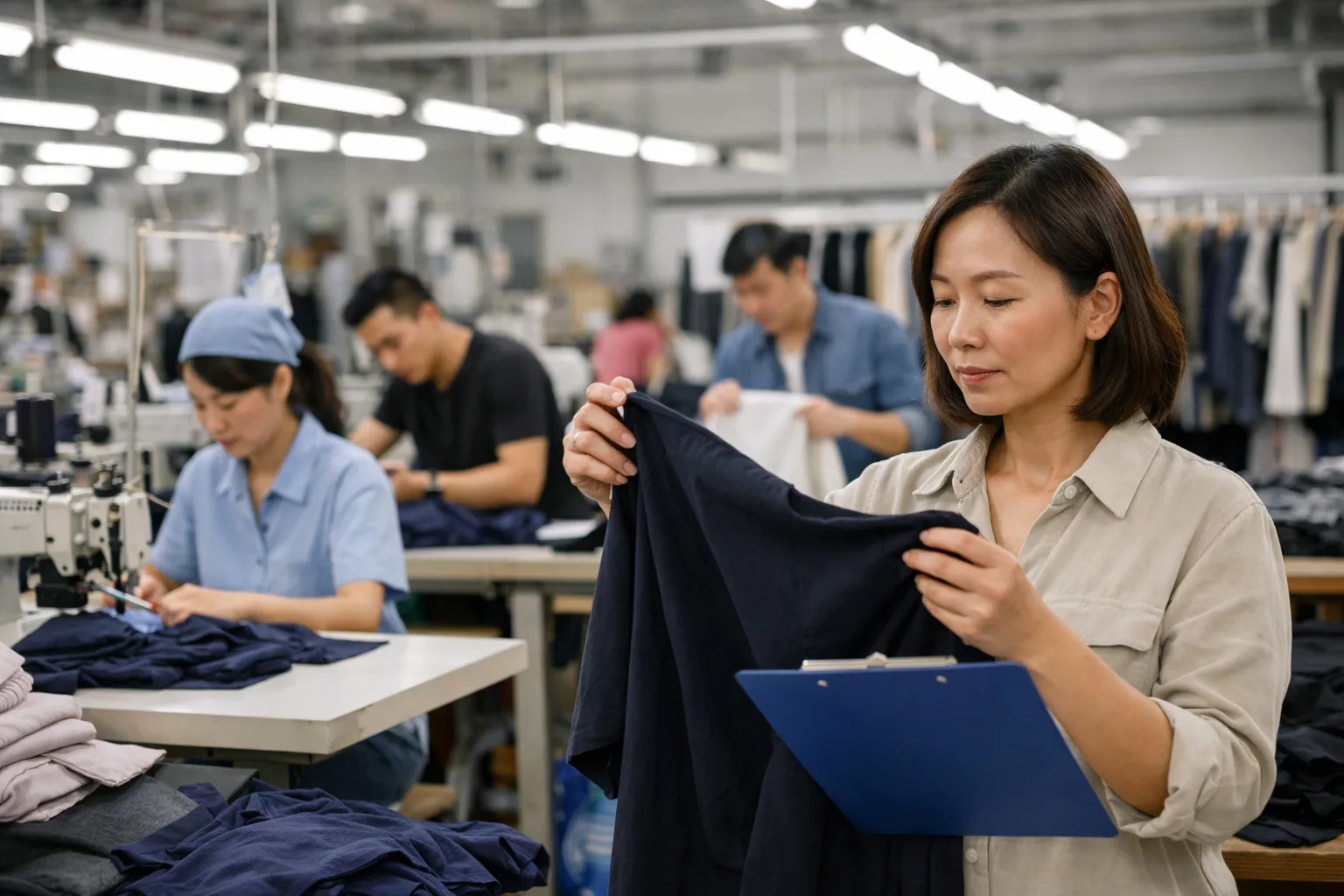

J'ai vu des acheteurs perdre de l'argent à cause d'un “usine” n’était qu’un bureau de commerce et le qualité Tout s'est effondré après la première commande. Cette souffrance est bien réelle, et elle est évitable.
Vous pouvez trouver des informations fiables marque privée Nous sélectionnons les fabricants de vêtements en Chine en vérifiant l'usine, en contrôlant la coupe du produit avec une petite commande d'échantillons et en consignant clairement la qualité et la livraison dans des documents précis avant tout versement d'acompte.
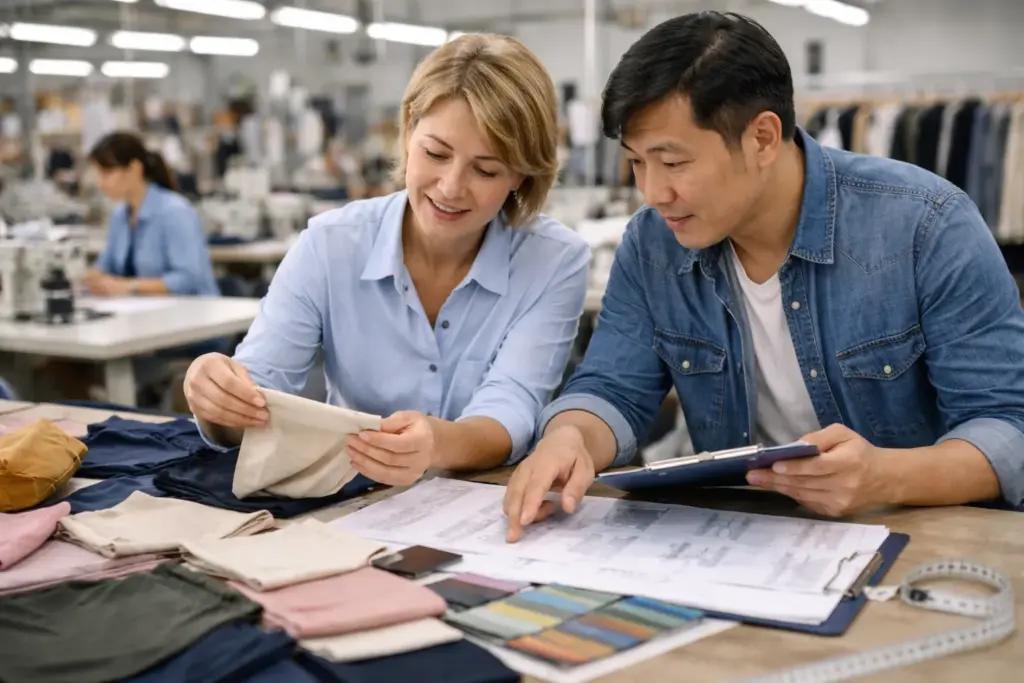
Si vous continuez à lire, je vous montrerai les étapes exactes que j'utilise pour sélectionner rapidement les usines, protéger ma marque et éviter les “ surprises ” qui ne surviennent qu'après le début de la production.
Comment savoir si un “ fabricant ” est une véritable usine en Chine ?
J'ai vu des acheteurs se fier à des photos alléchantes et à des réponses rapides, pour ensuite découvrir que… fournisseur On ne peut pas contrôler les chaînes de couture ni les dates de livraison. Cette erreur est préjudiciable et peut compromettre toute une saison.
Une véritable usine le prouvera par une licence commerciale valide, des preuves claires concernant l'atelier, des processus stables et des réponses directes sur la capacité de production, l'approvisionnement en tissus et les contrôles de qualité, et non par de simples discours commerciaux.
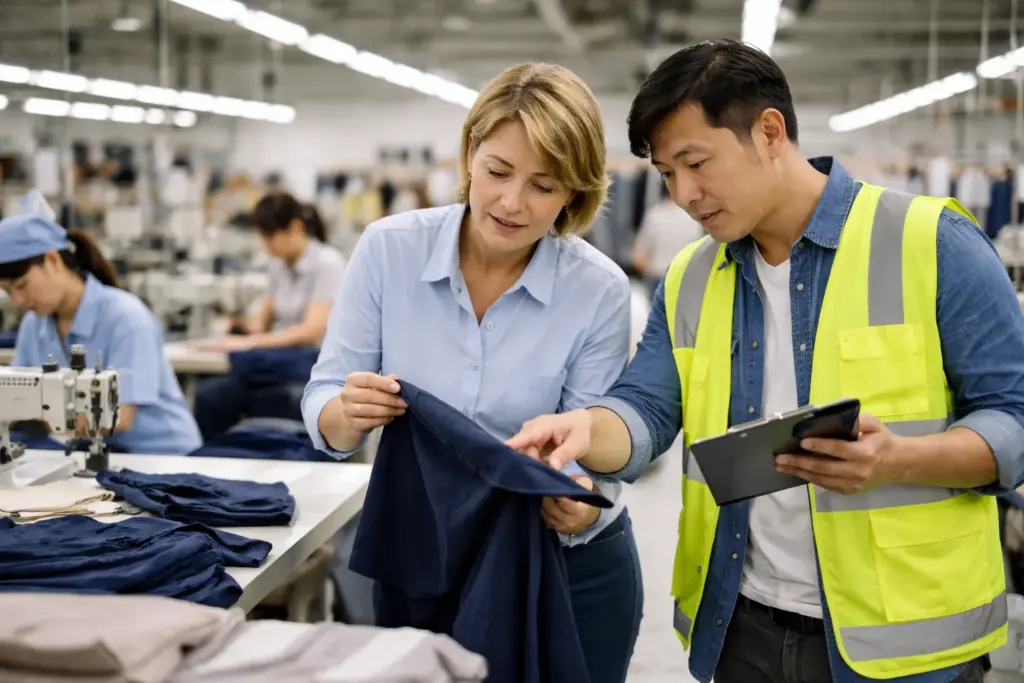
Commencez par des preuves, pas par des promesses.
Lorsque je sélectionne un partenaire de marque privée, je procède comme pour le recrutement d'un collaborateur clé. Je ne me fie pas à un seul document. J'exige plusieurs épreuves concordantes. Je pose également la même question à deux reprises, de manières différentes. Si les réponses divergent, je prends mon temps. Une fois, j'ai discuté avec une acheteuse russe très sûre d'elle qui a mené la conversation dès le début. Elle était pressée et insistait pour obtenir un prix bas. Je lui ai demandé de faire une pause et de procéder à une dernière vérification. Cette simple vérification lui a évité de verser un acompte à une société de négoce qui n'avait aucune chaîne de production.
Ce que je demande dans les premières 48 heures
Voici une simple liste de contrôle que j'utilise. Elle m'aide à sélectionner les fournisseurs avant même de recevoir des échantillons.
| Vérifier l'élément | Ce que je demande | Ce que je recherche | Drapeau rouge |
|---|---|---|---|
| Identité de l'entreprise | Licence commerciale + adresse enregistrée | Le nom correspond au compte bancaire et à la facture. | “ Utilisez une autre société pour recevoir le paiement ” |
| Épreuve d'usine | Vidéo de l'atelier avec date et présentation de l'équipe | Découpe, couture, contrôle qualité, emballage (présentés) | Uniquement des photos de bureau et des photos d'illustration |
| Capacité | Production mensuelle par catégorie | Les chiffres correspondent au nombre de files d'attente et aux travailleurs | Des réponses vagues comme “ aucune limite ” |
| Produits de base | Principaux styles et tissus | Concentration et répétabilité | “ Nous fabriquons tout ” |
| Type de client | Marques, supermarchés, B2B | Acheteurs stables et à long terme | Commandes ponctuelles de petite taille uniquement |
Posez des questions qui révèlent le contrôle
Je me renseigne sur les délais de livraison des tissus, le contrôle des bains de teinture, les tests de rétrécissement et la gestion des tailles. Je demande également à qui appartiennent les fichiers des patrons et qui approuve l'échantillon de pré-production. Un fabricant sérieux répondra calmement et détaillera le processus. Un fournisseur peu scrupuleux évitera les détails et me poussera à “ passer commande immédiatement ”.”
Ma règle simple pour les marques privées
Si le fournisseur ne peut pas me démontrer comment il contrôle le tissu, la coupe et l'inspection finale, le prix n'a aucune importance. Une commande bon marché qui arrive en retard ou qui échoue à l'inspection est toujours la commande la plus coûteuse.
De quels documents ai-je besoin avant de passer une commande de vêtements de marque privée ?
J'ai vu des commandes tourner au fiasco parce que l'acheteur et l'usine utilisaient des “ versions ” différentes d'une même idée. L'acheteur voulait un rendu haut de gamme, mais l'usine a livré un tissu basique. Chacun était persuadé d'avoir raison.
Vous avez besoin d'un dossier technique clair, d'un enregistrement d'approbation d'échantillon, d'une norme de qualité écrite et d'un calendrier de production qui lie le paiement aux étapes clés, afin que votre commande de marque privée reste cohérente de l'échantillon à l'expédition.

Constituez une documentation que l'usine devra suivre.
En marque blanche, vos documents sont votre système de contrôle. J'en ai fait l'amère expérience lors d'une commande de vestes. J'avais approuvé un échantillon, mais sans noter le code exact du tissu ni les détails de couture. À la production en série, le toucher était différent. L'usine a déclaré que le tissu était “ similaire ”. Ce terme “ similaire ” est trompeur. Désormais, je note tout et je joins des photos annotées.
Les quatre documents qui vous protègent le plus
Voici les éléments que je prépare avant de verser un quelconque acompte :
| Document | Ce que cela devrait inclure | Pourquoi c'est important |
|---|---|---|
| Dossier technique | Mesures, gradation, nomenclature, codes de tissus, coutures, étiquettes, emballage | Cela transforme votre idée en instructions de production. |
| Exemple de fiche d'approbation | Date, version, commentaires, photos, confirmation signée | Cela met fin aux arguments du type “ nous l'avons changé ”. |
| Norme de qualité | Niveau AQL, liste des défauts, tolérance des coutures, tolérance des couleurs, règles des tests de lavage | Elle définit la réussite ou l'échec en termes simples. |
| Plan de production | Étapes clés : réception du tissu, échantillon de pré-production, date de coupe, début de la couture, inspection finale, date d’expédition | Cela rend la livraison mesurable |
Utiliser les étapes clés pour maîtriser les risques
Je lie les paiements à des événements. Je ne paie pas uniquement en fonction des dates du calendrier. Par exemple, je lie le deuxième paiement à la réception de l'épreuve de tissu et à l'approbation de l'échantillon de pré-production. Je lie le paiement final à la validation du rapport d'inspection et du bon de livraison. C'est simple et cela change les pratiques. Une usine capable de respecter les échéances est généralement une usine capable de livrer.
Utilisez un langage simple et mesurable.
J'évite les expressions vagues comme “ haute qualité ” ou “ joli tissu ”. J'utilise des chiffres et des coches claires. J'écris “ grammage du tissu : 220 g/m² ± 10 g/m² ” ou “ la teinte doit correspondre à l'échantillon de laboratoire sous une lumière D65 ”. Je précise également la procédure à suivre si l'usine ne respecte pas la date d'expédition. Je reste juste et transparent.
Une astuce pour marque privée qui vous fait gagner du temps
Si vous vendez aux supermarchés ou avez besoin de commandes régulières, je vous suggère de créer un cahier des charges principal pour chaque gamme de produits. Ainsi, chaque nouvelle saison constitue une mise à jour progressive, et non une refonte complète. C'est ainsi que je maintiens une production stable dans de nombreux pays et face aux exigences variées des acheteurs.
Comment puis-je contrôler la qualité et la livraison lorsque je fabrique des vêtements de marque privée en Chine ?
J'ai vu des acheteurs approuver un échantillon, puis disparaître jusqu'à la réception de la marchandise. C'est pendant ce laps de temps que les erreurs s'accumulent. La qualité chute, la date de livraison est repoussée et personne ne vous prévient à temps.
Vous contrôlez la qualité et les délais de livraison en définissant des points de contrôle pendant la production, en utilisant des normes d'inspection claires et en maintenant une communication rigoureuse grâce à des mises à jour hebdomadaires comprenant des photos, des mesures et des indicateurs de risque.
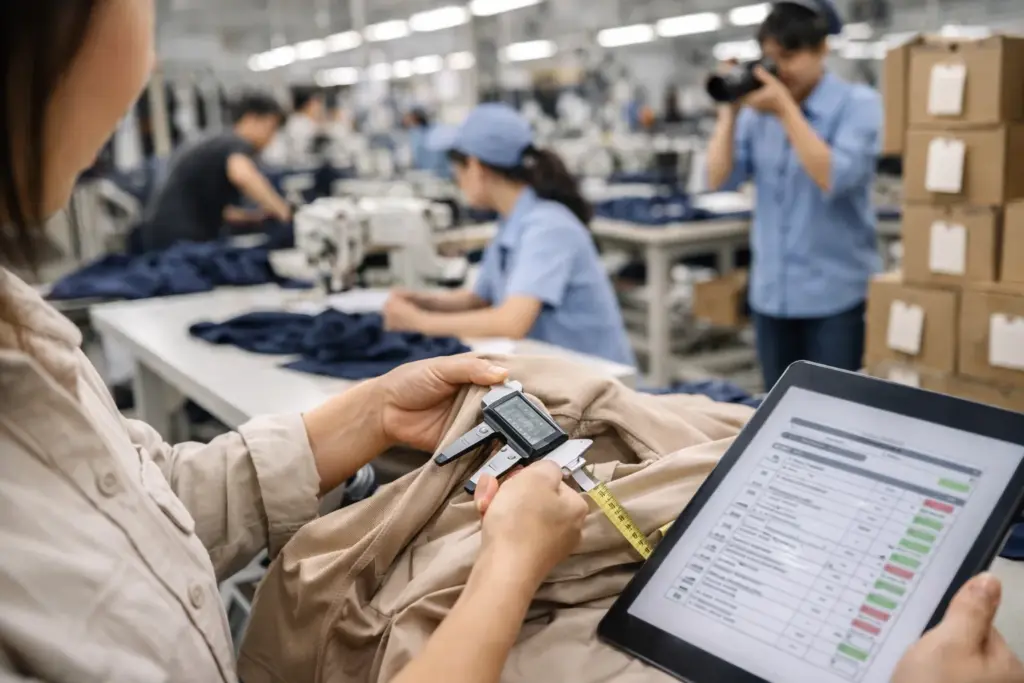
Le contrôle est un système, pas un sentiment.
Je conçois la production comme un calendrier jalonné de points d'étape. Si un point n'est pas franchi, je ne passe pas à l'étape suivante. De nombreux acheteurs, à l'instar d'un chef d'entreprise dynamique avec lequel j'ai collaboré, apprécient la rapidité. Je la respecte également. Je sais aussi qu'une rapidité sans contrôle engendre des retours et des refacturations. C'est pourquoi j'instaure un rythme qui assure la fluidité des opérations et la fiabilité de l'usine.
Les points de contrôle que j'utilise pour la plupart des commandes de marque privée
Voici la structure que je suis. Elle fonctionne pour les robes, les vestes, les t-shirts, et bien plus encore.
| Étape | Ce que je vérifie | Preuve que je demande | Risque commun |
|---|---|---|---|
| Tissus fabriqués en interne | Couleur, poids, défauts, rétrécissement | Photos des rouleaux, notes de test, codes des tissus | Mauvaise teinte ou mauvaise composition |
| Échantillon PP | Ajustement, confection, étiquettes, emballage | Photos d'échantillons PP + fiche de mesures | Production en série à partir de l'ancienne version |
| Couture en ligne | Point de couture, solidité des coutures, points clés | Photos au trait, 5 mesures | Dérive de taille et étapes sautées |
| Pré-finale | Contrôle aléatoire, aspect, emballage | Rapport d'inspection + liste des défauts | Course de dernière minute |
| Emballage final | Marques de carton, quantité, sacs en polyéthylène | Vidéo d'emballage + liste des cartons | Tailles incorrectes mélangées |
Ma façon de communiquer pour que rien ne soit oublié
Je demande un compte rendu hebdomadaire. Ce compte rendu doit comporter trois éléments : les chiffres d’avancement, des photos à l’appui et les problèmes rencontrés. Je reste simple. J’exige du fournisseur qu’il m’indique ce qui pourrait retarder la livraison. S’il dissimule des problèmes, je les découvrirai à la fin, et nous serons tous les deux perdants.
Protégez-vous des problèmes de certification et de conformité
Certains acheteurs craignent réellement ce genre de situation, ayant déjà vu des certificats falsifiés. Je ne me fie pas à un simple PDF envoyé par courriel. Je demande systématiquement l'organisme émetteur d'origine, le périmètre de la certification et les dates de validité. Je vérifie également que le nom de l'usine figurant sur le certificat correspond bien à la dénomination sociale indiquée sur la licence et le contrat. Pour une sécurité accrue, je fais réaliser des tests par un organisme tiers sur les tissus et les accessoires de la commande en gros, et non pas seulement sur un échantillon. Cette étape représente un coût, mais elle protège efficacement l'image de marque.
La livraison est une chaîne, je cartographie donc cette chaîne.
De nombreux retards ne sont pas liés à la confection, mais plutôt au tissu, aux fournitures, à la réservation d'espace ou aux formalités douanières. Je me renseigne très tôt sur les délais de livraison du tissu et des fournitures. Je confirme également les conditions d'expédition, le port et le plan de réservation. Je préfère confirmer la date d'expédition par écrit. Si une date importante change, je veux en être informée dans la semaine, et non au dernier moment.
Conclusion
Je trouve des usines fiables en vérifiant les preuves, en consignant les spécifications dans des documents et en gérant la production avec des points de contrôle clairs, afin que mes commandes de marque privée restent de qualité et livrées à temps.
Pourquoi j’écris ceci
Je dirige Truekung en Chine, et j'aide les marques et les acheteurs à produire des vêtements de mode en gros avec un support OEM/ODM.
Nom : Lancy Chia
Email : [email protected]
Site web : https://truekung.com
Vues : 90