
I keep hearing “Madewell is better,” but I also see endless new drops and deep promos. That mix can confuse buyers who want style without hidden costs.
Madewell looks like “slower” fast fashion: higher prices and better basics than ultra-fast brands, but frequent releases and scale still create waste and supply-chain risk.
I have worked in clothing production for years, so I always ask the same question before I trust a brand story: what happens in materials, factories, and timing. If I follow that path, I can see what Madewell does well, and what it still avoids saying.
Is Madewell fast fashion, or just “fast enough” to feel like it?
Buying a “better” brand feels safe, so I want it to be true. Then I see constant newness, and I remember how fast newness turns into returns and waste.
Madewell can act like fast fashion because it refreshes product often and runs on volume, even if it moves slower than ultra-fast brands and sells more “classic” items.
Why I judge “fast fashion” by behavior, not price
When I talk with buyers like Maria, we do not define fast fashion by price. We define it by speed, volume, and how easily a brand can replace a style. Madewell’s marketing puts weight on “made to last” basics, like madewell basic tees and denim staples. I get why that works. In my factory world, a “basic” can still be made on a fast cycle if a brand is chasing constant sell-through and weekly site updates.
Here is the quick checklist I use when I audit a brand from the outside:
Tertiary headings: Fast-fashion signals I look for
- Drop rhythm: lots of small “capsules” between seasons.
- Promo rhythm: constant sales that push quick buying.
- Style turnover: many SKUs that rotate fast, even if silhouettes look classic.
- Inventory pressure: heavy returns, discounting, and outlet flow.
| Signal I look for | What it means in real production | What it often causes |
|---|---|---|
| Frequent small drops | Shorter planning windows and more reorders | More air shipping, more mistakes |
| Many promos and “t shirt sale” moments | Margin is protected by cost squeezing | Fabric downgrades, rushed QC |
| “Trend denim” cycles | More washes, more chemical and water risk | Higher impact in dyeing and finishing |
| Constant new SKUs online | More sampling and more dead stock | More waste and more liquidation |
My practical take on Madewell’s “pace”
Madewell is not the fastest player. It is not Shein speed. Still, it is built as a big, omnichannel retailer with the ability to refresh often and sell at scale. That means I treat it as “fast fashion, just better packaged.” When I review madewell clothes, I do not only touch the fabric. I also look at how the brand trains customers to buy again soon. That habit is the true engine of fast fashion.
Also, if you search “madewell store near me” or even “madewell nesr me,” you can see how the store network supports the same cycle. It becomes easy to buy, return, and rebuy. That convenience is not evil, but it does push volume.
If you want to shop Madewell with less harm, the best move is simple: buy fewer pieces, and buy pieces you will wear for years. Denim that fits, a jacket that holds shape, and knits that do not pill fast. I would rather buy one pair and wear it 120 times than buy three pairs on a rotating promo schedule.
Is Madewell an ethical company, and is J.Crew fast fashion too?
I have met too many buyers who got burned by pretty certificates and vague promises. So when I hear “ethical,” I ask, “ethical compared to what, and proven how?”
Madewell and J.Crew are part of the same corporate family, and both still face common “big retail” ethics gaps like limited wage transparency and incomplete supply-chain disclosure.
How I separate “ethical intent” from “ethical proof”
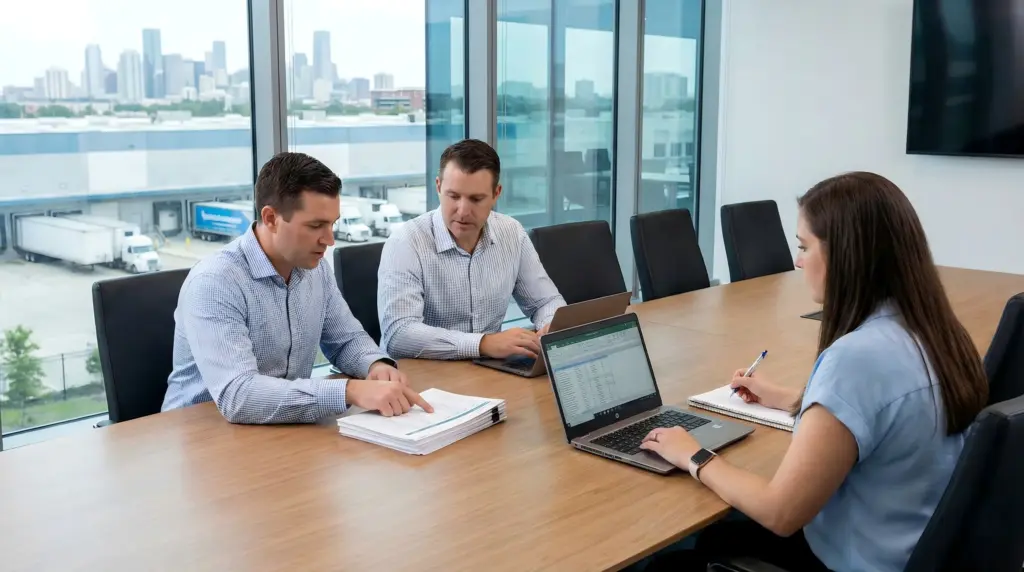
I run a B2B clothing business, so I see how ethical claims are built. A brand can fund programs, publish policies, and still avoid the hardest part: paying living wages and showing full supplier lists. I am not saying Madewell does nothing. I am saying “ethical company” needs evidence that reaches the factory floor, not only the website.
Here is the exact structure I use when I compare brands like Madewell and J.Crew:
Tertiary headings: What “ethical” means in a supply chain
- Wages: not only legal minimum, but living wage progress.
- Hours and safety: real enforcement and real remediation.
- Transparency: public supplier lists, audit outcomes, and timelines.
- Grievance systems: worker voice that is safe and trusted.
- Purchasing practices: stable orders and fair lead times.
| Ethics area | What I want to see | What I often see instead |
|---|---|---|
| Wages | Living wage plan, milestones, and coverage | Code of conduct and audits only |
| Transparency | Supplier list and country-by-country data | Broad claims without names |
| Factory accountability | Remediation results and timelines | “We require” language |
| Purchasing fairness | Fewer last-minute changes | Rush requests and cancel risk |
Where Madewell seems stronger, and where it still looks “retail normal”
Madewell has highlighted programs around denim and circularity. That can be helpful. Still, third-party raters have criticized the brand for not going far enough, especially on wages and broader impact. I use those ratings as a signal, not as the final truth, because ratings only reflect public info. If a brand does not publish details, it will score poorly. That is the brand’s choice.
So, is jcrew fast fashion? In my view, yes, because it is a mainstream retailer that relies on seasonal merchandising plus constant promos, and it shares the same “big retail” operating model. Madewell is often positioned as the cooler sibling, but the supply-chain structure is still close.
Also, let’s answer the question people type directly: is madewell an ethical company, and is madewell ethical? I call it “partly.” It shows some programs and some policies. It still does not look like a fully ethical company when I use strict standards. I would not call it “clean.” I also would not call it “the worst.” It sits in the middle, which is where most mall brands sit.
Is Madewell sustainable, and is Madewell a luxury brand?
Many shoppers think “higher price” means “more sustainable” or even “luxury.” Then they open the fiber label and see blends, synthetics, and dry-clean notes.
Madewell is not a luxury brand; it is a mid-range retailer with some sustainability programs (especially denim and resale), but its overall footprint still depends on scale and materials choices.
I treat “sustainable” as three linked systems
When I advise buyers, I say sustainability is not one claim. It is a chain. If one link is weak, the whole chain is weak.
Tertiary headings: The three links that matter most
- Materials: cotton type, recycled content, viscose sourcing, leather tanning.
- Manufacturing: dye houses, water use, chemical controls, audits.
- End of life: repair, resale, recycling, and what happens to returns.
| Sustainability link | The easiest “green” story | The harder reality test |
|---|---|---|
| Materials | “Organic cotton” on a few items | Share of total volume and verification |
| Manufacturing | “Audited factories” | Results, remediation, and chemistry control |
| End of life | “Recycling program” | Where it goes, and how much is reused |
What Madewell does that I think is real progress
Madewell has pushed denim programs, including trade-in and resale paths, and it partners with programs that recycle denim into insulation. I like this because it matches how denim waste actually behaves. Denim is heavy. It is easy to collect. It is also easy to reuse if it still has life.
I also pay attention to climate targets. Some brands set targets, and nothing happens. When targets are validated by a science-based framework, it is a stronger signal than a simple promise.
Still, I keep my feet on the ground. Resale and recycling do not cancel out overproduction. They reduce harm at the edges. The main lever is still “make less, sell less, waste less.” A big retailer can improve, but it will always fight its own growth engine.
The “luxury” question, answered in plain language
Is madewell a luxury brand? No. Luxury brands control scarcity, craftsmanship, and production volumes in a different way. Madewell is built for accessibility, broad sizing, wide distribution, and frequent merchandising. It can feel premium if you compare it to ultra-cheap brands. That does not make it luxury.
People also search for stores and neighborhood signals when they ask this, like madewell glendale americana, madewell ann arbor, madewell chestnut, madewell city creek, madewell northpark, madewell southdale mall, madewell aventura, madewell third ave, madewell the grove, madewell walnut street philadelphia, and madewell newbury street boston. Those locations can feel upscale. Still, store address does not change supply-chain ethics. It only changes the shopping mood.
How I shop Madewell in a more sustainable way
If I am buying from Madewell, I do four simple things:
- I check fiber content first, not the photo.
- I buy fewer items, and I avoid “just because it is on sale.”
- I use resale or trade-in when it makes sense.
- I focus on pieces with long wear potential, like denim, a solid jacket, and knitwear that holds shape.
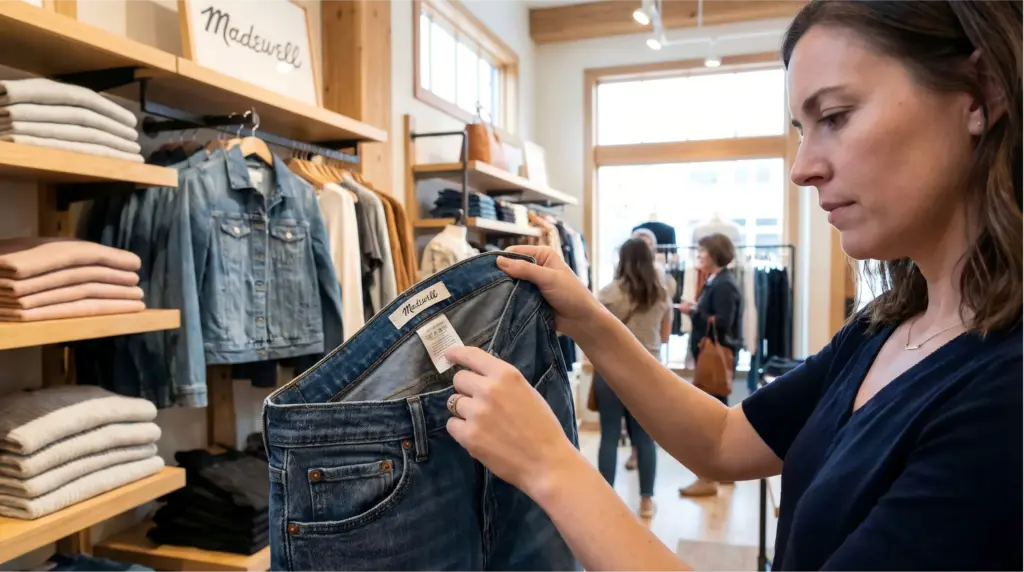
And yes, I also check the small details people mention in madewell clothes review posts. I look at seam density, pocket bags, zipper brands, and shrink risk. If I am eyeing a specific item like the madewell norris sweater tank, I treat it like any other knit: I check pilling risk and care needs before I buy.
Finally, if you are getting lost in brand searches, you are not alone. People type made well, madwel, madwell, madwewell, madeweel, madewel, and even madeswell. The spelling changes. The core question stays the same: will this piece last, and was it made with respect for people and planet?
Conclusion
Madewell sits between fast fashion and truly slow brands. I see real steps in denim and resale, but I still treat it as mid-range retail that must improve on transparency and wages.
Why I Write This
I am Lancy Chia from Truekung in China. I run a factory with more than 200 workers. I support brands and supermarkets with wholesale clothing and OEM/ODM services. I focus on stable quality, clear communication, and on-time delivery. If you want to talk sourcing, you can email me at [email protected], or visit truekung.com.
Views: 223