I have seen buyers waste money on a suit that looks fine on a hanger but looks wrong on the body. That mistake feels small, then it follows you into every meeting.
A quality suit is not “the most expensive suit.” It is the suit that fits your role, your wear frequency, and your risk tolerance for fabric and construction. For most people, the smart spend is the lowest price that still gives stable fit, durable cloth, and easy tailoring.

I like this question because it is not only about suit cost. It is about regret. If you keep reading, I will show you how I decide a suit budget in a way that stays calm under pressure.
What is the real average suit price, and why does it swing so much?
I often hear “how much is a suit” like there is one right number. That idea causes stress. It also makes people buy based on fear.
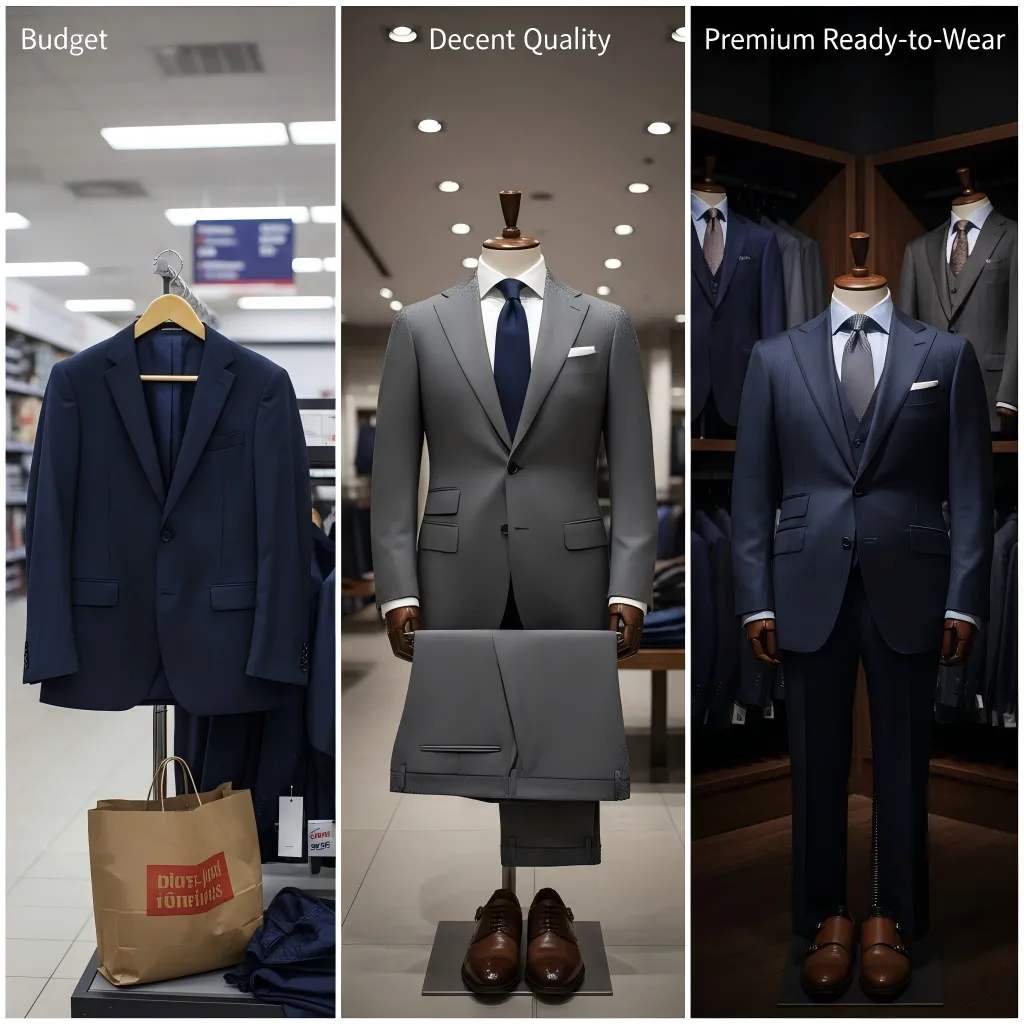
The average cost of a suit swings because cloth, construction, brand markup, and alterations are priced very differently. A cheap suit can start near $150–$300, a solid “decent suit” often lands around $400–$900, and premium ready-to-wear can run $1,000–$3,000+.
The four price levers I check first
When I break down average suit price, I look at the parts that actually cost money to make, not the parts that cost money to market.
| Price Lever | What it is | What you feel | What I do to control it |
|---|---|---|---|
| Fabric | Wool, wool blends, or synthetics | Comfort, drape, breathability | I prefer 100% wool or wool-rich for a formal suit |
| Construction | Fusing vs half-canvassed vs full-canvassed | Shape over time, how it ages | I pay more here if the suit is for weekly wear |
| Fit + Alterations | Pattern and tailoring time | How “expensive” it looks | I budget alterations like a fixed cost |
| Brand + Retail | Store overhead and marketing | The logo tax | I compare similar builds across stores |
What this means in real buying
If someone asks me “how much should a suit cost,” I answer with usage. If you wear it twice a year, do not chase a $2,000 suit. If you wear it every week, a $700–$1,200 suit with good cloth and clean tailoring can be cheaper per wear than a $300 suit that dies early. I also remind people to price the whole outfit: the mens suit jacket fit, the trousers, the shirt, and the shoes. A suit that costs less but forces extra fixes is not actually less.
When should I choose off-the-rack, made-to-measure, or custom tailoring?
I have watched buyers jump to “custom suit” because it sounds safer. Then they get a bad first pattern and lose time. Time is also money.
Off-the-rack is best when your body matches common sizes and you need speed. Made-to-measure is best when you need pattern adjustments without full bespoke. Custom or bespoke suits make sense when fit issues are complex or when the suit is a core business uniform.

How I compare options without getting emotional
I treat each path like a risk trade.
| Option | Typical spend | Best for | Main risk | How I reduce risk |
|---|---|---|---|---|
| Off-the-rack (OTR) | $200–$900 | Fast needs, simple bodies | Shoulder fit limits | I choose the best shoulders, then tailor the rest |
| Made-to-measure (MTM) | $500–$1,500 | Better fit, controlled choices | Inconsistent pattern or measuring | I do a fit check in person and keep notes |
| Custom / Bespoke | $2,000–$8,000+ | Hard fits, long-term uniform | Long lead time, costly mistakes | I start with one suit, not a full wardrobe |
My “fit first” rule that saves budget
The shoulder and collar decide if a suit looks correct. If those are wrong, even expensive cloth looks cheap. That is why I say: do not buy a suit because the discount looks good. Buy because the frame looks right. Then pay for alterations and move on. Many people ask “how much does a tailored suit cost.” I answer: it depends on how wrong the starting fit is. Simple hem and waist work may be $30–$120. More complex jacket work can be much more. This is why I prefer a stable base even if the ticket price is higher.
How do I shop smart at a suit store without overpaying?
I have worked in apparel long enough to know how easy it is to get pushed into a bundle. You walk in for “a men’s business suit” and walk out with extra items you do not need.
To avoid overpaying, I walk into any suit store with a plan: pick the use case, pick the fabric target, check construction, then negotiate around timing and alterations. This works at mens suit stores near me, online, and chains alike.
Where I would look, depending on the goal
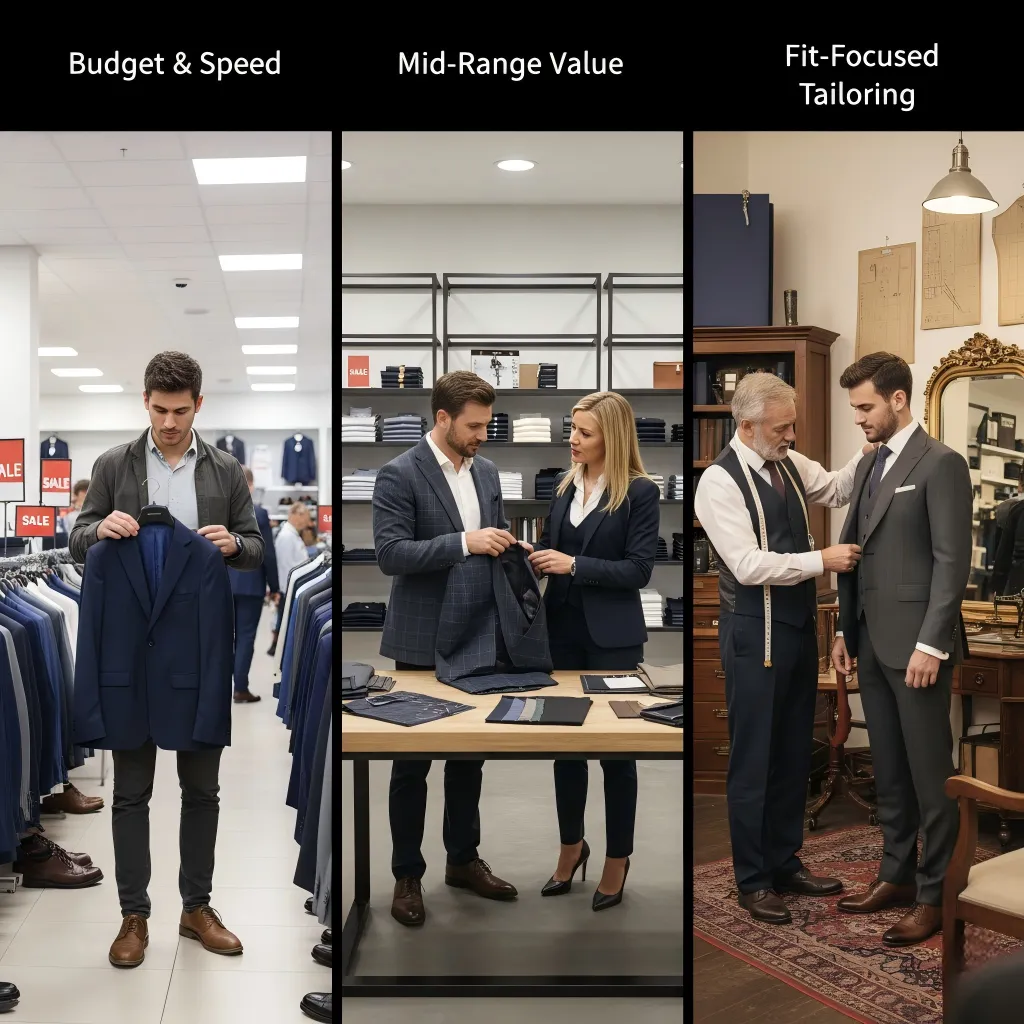
People search “where to buy a suit near me” or “suit shop near me” because they want certainty. I prefer a short list by scenario:
- Budget and speed: big chains and department stores. This is where you see JCPenney mens suits, Macy’s sales, and sometimes good deals that match “where to get affordable suits.”
- Best value mid-range: focused mens suits brands and modern retailers. This is where many buyers compare “suitsupply prices” or look at similar suit apparel clothing.
- Fit-focused: local tailors or MTM studios. This is where you pay for pattern work, not only a label.
I also get questions like “is Men’s Wearhouse expensive” or “men’s wearhouse suit prices.” My view is simple: they can be fine if the fit service is good and the deal matches your use. Some buyers also compare “Jos A Bank vs Men’s Wearhouse.” I do not treat it as a winner-takes-all. I treat it as: who can deliver correct shoulders, clean sleeve length, and reliable delivery before your event.
My checklist before I pay
I use a plain checklist that works for a formal suit, a casual suit, and even a bold color like a royal blue suit:
- Cloth feel and recovery: pinch it, release it, see if it springs back.
- Jacket front: does it ripple? If yes, it will not improve with wear.
- Button stance and lapel: does it fit your torso length, not only the trend.
- Trouser seat and thigh: comfort first, because stress tears cloth.
- Alterations plan: I ask what can be done and what cannot.
If I need a wedding suit near me or I am buying for a deadline, I ask for the delivery date in writing. I learned that late delivery ruins the whole value equation, even when the suit cost looks “good.”
What should women and men look for differently when buying suits?
I sell into many markets, and I have seen the same mistake in both mens suits and women’s suits. People chase style first, then fight fit later.
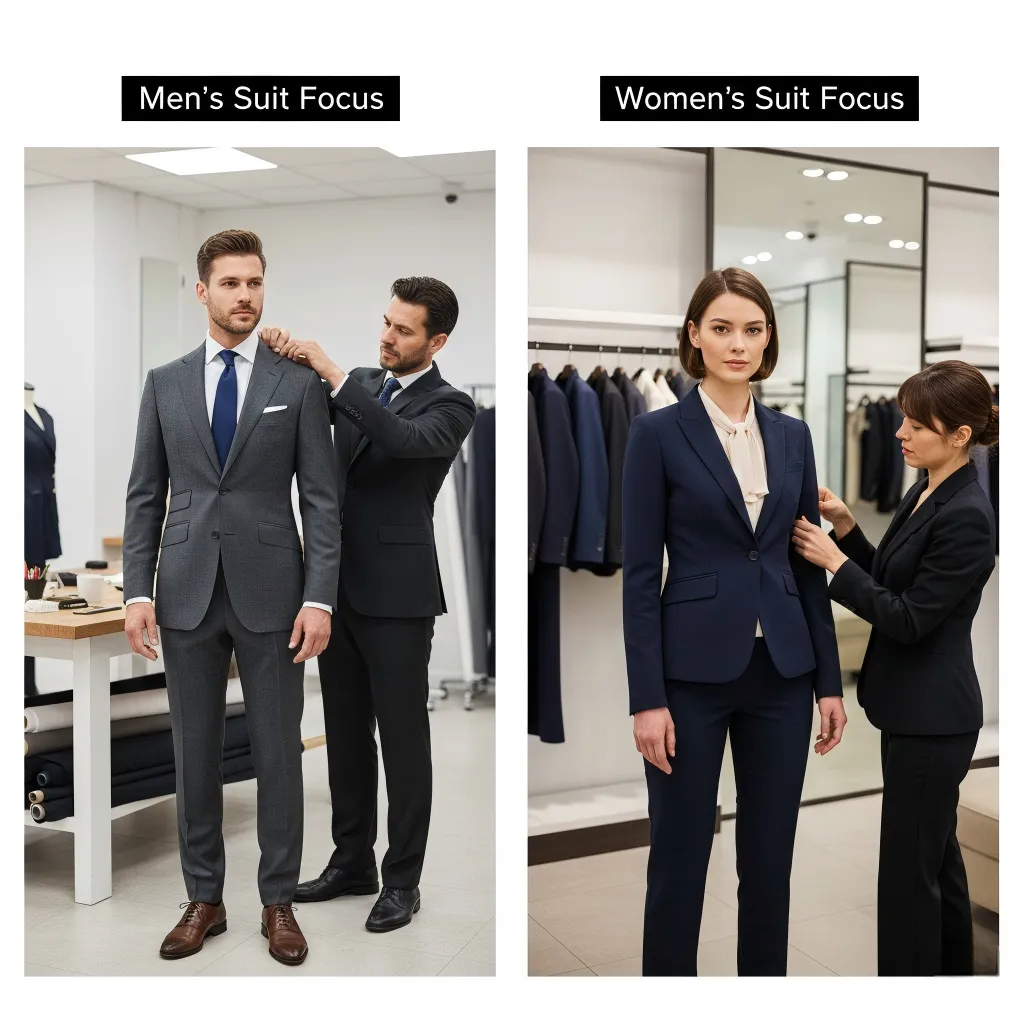
Men and women both need correct shoulder fit and balanced proportions, but women’s suit shopping often needs more focus on hip-to-waist shaping, bust accommodation, and blouse layering. Men’s suits often need more attention on jacket length, collar roll, and trouser break.
How I simplify suit buying for different bodies and roles
For men, I start from the jacket because it sets the silhouette. I check mens suit jacket length, shoulder line, and collar contact. If the collar floats, the suit will look tired even on day one. For women, I start from movement and layering. Many womens suits are sold as a clean set, but real workdays include sitting, typing, and wearing a blouse. A suit set for women must allow that range without pulling.
Here is how I guide choices without overthinking:
| Buyer need | Men’s suit focus | Women’s suit focus | What I recommend |
|---|---|---|---|
| Office daily wear | Durable wool, easy pressing | Wrinkle resistance, comfortable waist | Wool-rich blends that keep shape |
| Client meetings | Clean lapel, stable shoulder | Sharp waistline, neat sleeve | Mid-weight wool, solid colors |
| Events and photos | Color control, shine control | Proportion and neckline | Avoid overly shiny cloth |
| Fashion edge | Pattern and cut | Cut and styling | Add one bold piece, not a full gamble |
I also see niche asks like a camo suit or very flashy suits clothes for parties. I treat those as separate from “quality suit” spending. If it is a one-time costume choice, I cap the budget and accept trade-offs. If it is for real business, I keep it simple and let fit do the talking.
Conclusion
I spend on fit and construction first, then cloth, then brand. A “good suit” is the lowest-cost suit that stays sharp for your real life.
Why I Write This
I run Truekung in China. I make apparel suits and fashion clothes for B2B wholesale buyers. My factory has over 200 workers, and I provide OEM/ODM for brands and supermarkets worldwide. I have 20 years of export production experience across women’s clothing, jackets, skirts, dresses, jeans, T-shirts, sweatshirts, down jackets, windbreakers, coats, bags, sportswear, kidswear, and underwear. If you want to talk about suit apparel clothing quality control, lead time, and reliable documentation, you can reach me at [email protected] or visit https://truekung.com.
Views: 339