
The wrong cuff can ruin a sharp look. The right cuff can lift it fast. I explain the French cuff in plain words.
A French cuff is a double-length dress shirt cuff that folds back and closes with cufflinks, not buttons. It looks clean, formal, and structured. Choose it for suits, tuxedos, and sharp smart-casual outfits.

I see many buyers mix up cuff types. I want you to decide fast. I show the differences, how to wear them, and when they work best.
What is a French cuff shirt?
Bad news: many people say “French cuff” but mean any fancy cuff. That causes mistakes. Good news: the real thing is simple once you see it.
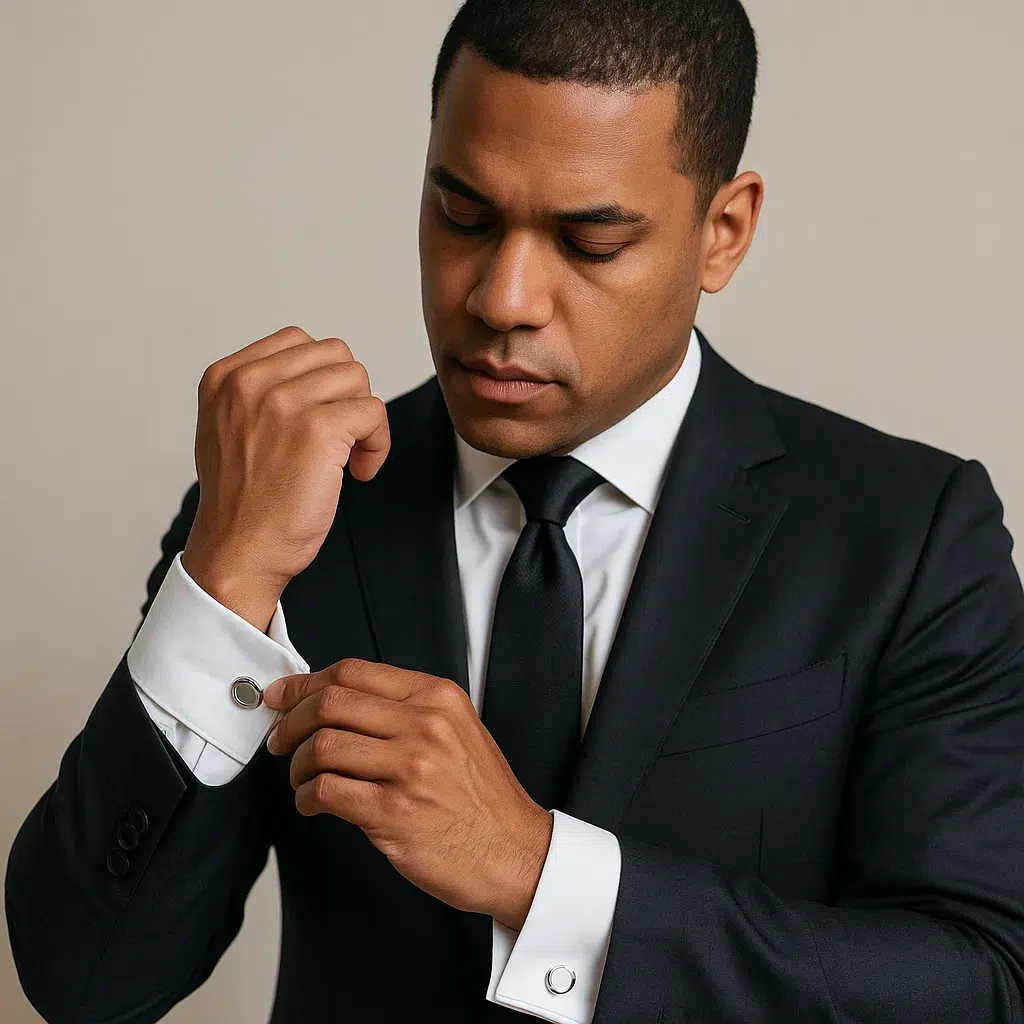
A French cuff dress shirt has a long cuff that you fold back and fasten with cufflinks. It has no sewn-on button to close the cuff. The fold creates a clean edge and a stronger shape.

Dive deeper
A shirt with French cuffs has what many tailors call a “double cuff.” You fold the French cuff back on itself, align the holes, and fix it with cufflinks. This is not a barrel cuff. A barrel cuff is the common button cuff with one or two buttons on the edge. Some shirts use convertible cuffs. These cuffs have both a button and a cufflink hole, so you can switch styles. There are also single link cuffs, seen on formal shirts, which fasten with links but do not fold back as deep as double cuffs.
Types of shirt cuffs
| Cuff type | Closure | Structure | Typical use |
|---|---|---|---|
| French (double) cuff | Cufflinks only | Fold-back, crisp | Suits, tuxedos, events |
| Barrel cuff | Buttons | Simple, flexible | Daily office, casual |
| Convertible cuff | Button or cufflinks | Versatile | Travel, mixed dress codes |
| Single link cuff | Cufflinks | Single layer | Classic formalwear |
This structure is why a French cuff looks bold on the wrist and shows cufflinks well.
French cuff vs barrel cuff: which should I choose?
You need a fast rule. You want style without risk. I keep it simple.
Pick French cuffs for formal events or when you want a statement. Pick barrel cuffs for everyday wear and low maintenance. Convertible cuffs work when you need both in one shirt.

Dive deeper
Both cuff types can look sharp, but they speak different things. A French cuff dress shirt reads formal. It pairs well with a suit, a French cuff suit, or a tuxedo shirt. It frames a watch and shows cufflinks. A barrel cuff shirt reads practical. It slips under a jacket sleeve easily and needs no cufflinks. If you want one shirt for many cases, try a convertible cuff. It has a button and a cufflink hole. You can dress it up or dress it down.
Decision guide
| Situation | Better choice | Why |
|---|---|---|
| Black-tie or tuxedo | French cuff | Tradition, cufflinks required |
| Board meeting | French cuff or barrel cuff | Depends on culture; French for impact |
| Travel and long days | Barrel or convertible | Easy, fewer parts to forget |
| Creative smart-casual | French cuff with subtle links | Express style without a tie |
| Very slim jacket sleeves | Barrel cuff | Less bulk at the wrist |
Think about care too. French cuffs need links and careful ironing. Barrel cuffs are simple and fast.
How do I wear a French cuff shirt and cufflinks?
You see the shirt. You see the cufflinks. You worry about the fold. I show the steps.
Fold the cuff back, align the two holes, push the cufflink through from outside to inside, lock it, and keep the edges flush. The smooth edges should kiss, not overlap.

Dive deeper
Lay your arm flat. Fold the French cuff back so the finished edges meet. Match the holes. For toggle cufflinks, push the post through both holes with the decorative face on the outside. Flip the toggle to lock. For chain links or silk knots, guide the chain or elastic through both holes. The two cuff edges should line up neatly and stay parallel. If the cuff flares, move the link one hole tighter if your shirt has extra holes. For a regular dress shirt with only button cuffs, you can fake a “faux French cuff.” Fold the barrel cuff back once, line up the buttonholes, and pass a silk knot through. This is not perfect, but it works in a pinch. Keep the sleeve length right. The cuff should show about 1–1.5 cm under a jacket sleeve.
Quick reference
- Cufflink types: toggle, chain, silk knot, stud.
- Common mistakes: edges crossed, link reversed, cuff too loose.
- Care: remove links before washing; press the fold with light steam.
When should I wear French cuffs—with suits, tuxedos, or jeans?
I often hear one worry: “Are French cuffs only for tuxedos?” My answer is clear.
Wear French cuffs with suits and tuxedos by default. You can wear them with dark jeans and a blazer for smart-casual, if the links are simple and the shirt is clean and fitted.

Dive deeper
French cuff shirts shine with formal looks. A white dress shirt with cufflinks under a navy or charcoal suit looks strong. A tuxedo shirt, like a classic pleated front, almost always uses French cuffs. For black tie, use studs and simple links. Still, you can wear French cuffs with jeans if you keep balance. Use dark, clean denim, a neat belt, and a tailored jacket. Choose silk knots or small metal links. Skip large novelty designs. Black dress shirts with French cuffs can work for night events, but the fit must be precise. In daylight, a mens white French cuff shirt is safer. If you want less bulk, pick rounded French cuffs. If you like a sharper line, try a mitered French cuff. Both keep the same function and fit.
Style pairings
| Outfit | Shirt | Cufflinks | Note |
|---|---|---|---|
| Tuxedo | White French cuff | Stud set | Classic rule |
| Business suit | Light blue/white | Metal or silk knots | Clean and calm |
| Smart-casual | White or pale stripe | Silk knots | Works with dark jeans |
| Evening black suit | Black French cuff | Subtle matte links | Keep it minimal |
How wide should a French cuff be? What about cuff length and corners?
Fit at the wrist is small but important. A few millimeters change comfort and look.
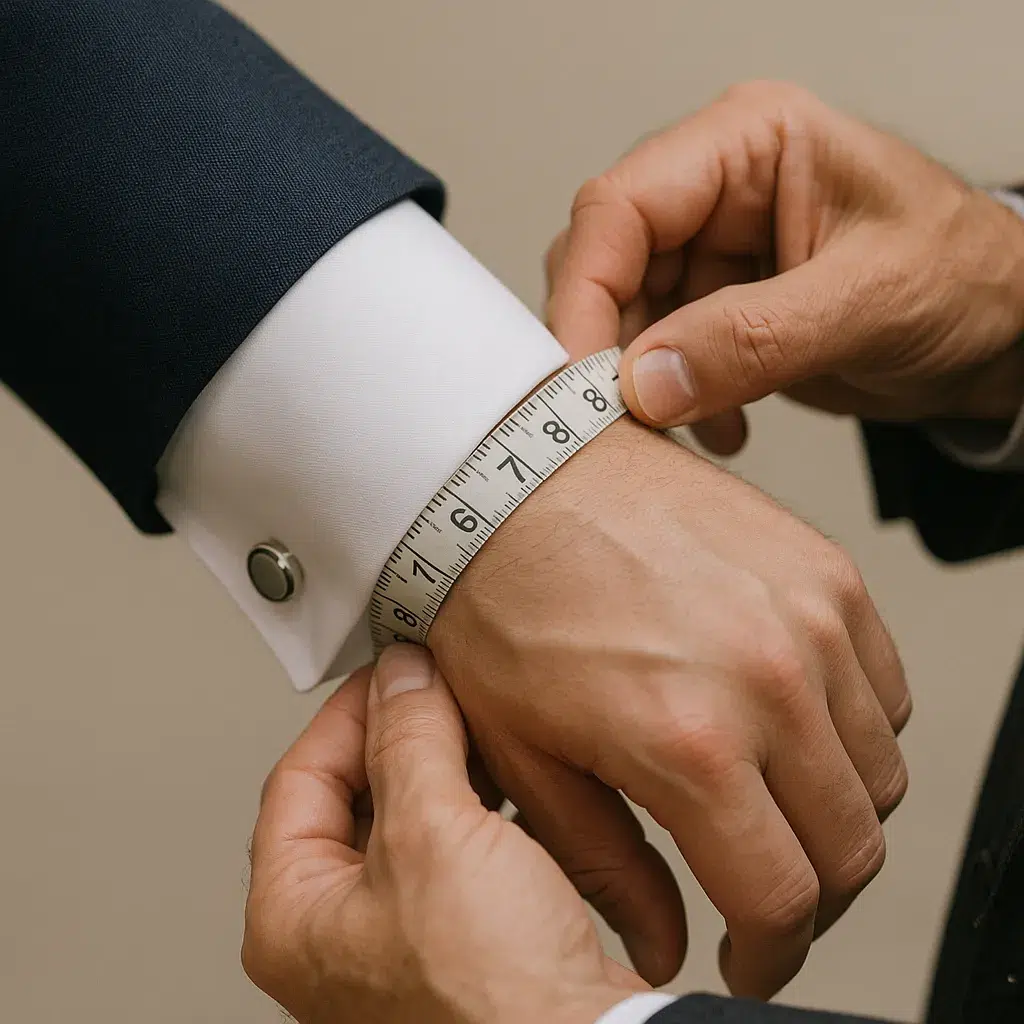
Ask your tailor to size the French cuff so it closes cleanly without stress. The closed cuff should fit a finger inside. Choose rounded or mitered corners based on your jacket style.
Dive deeper
Cuff length is the unfolded depth of the cuff piece. A typical French cuff uses a longer piece than a barrel cuff because it folds back. After folding, the visible depth should sit balanced with your watch and jacket sleeve. If the cuff is too long, it bunches and hits the hand. If it is too short, it hides under the sleeve. I ask tailors to allow a finger of ease when the cuff is closed with links. The hole placement matters too. A closer inner hole can pull the cuff tighter. A farther hole gives more ease. Corner styles change the mood. Rounded corners feel softer and slide under slim sleeves. Mitered corners look sharp and graphic. You can add embroidered cuffs for branding or initials. Keep the thread color low-contrast for business shirts. For heavy watches, ask for a touch more ease on the left cuff.
Tailor checklist
- Ease: one finger under closed cuff.
- Hole position: adjust for watch side.
- Corners: rounded for narrow sleeves, mitered for edge.
- Interlining: firm, not stiff; avoids collapse.
Which shirts take cufflinks and which fits work best?
Not every dress shirt accepts cufflinks. I test the placket and the cuff design first.
French cuff shirts and single link cuff shirts take cufflinks by design. Convertible cuffs also take cufflinks. Regular barrel cuffs need a “faux” fold or a tailor to add holes.
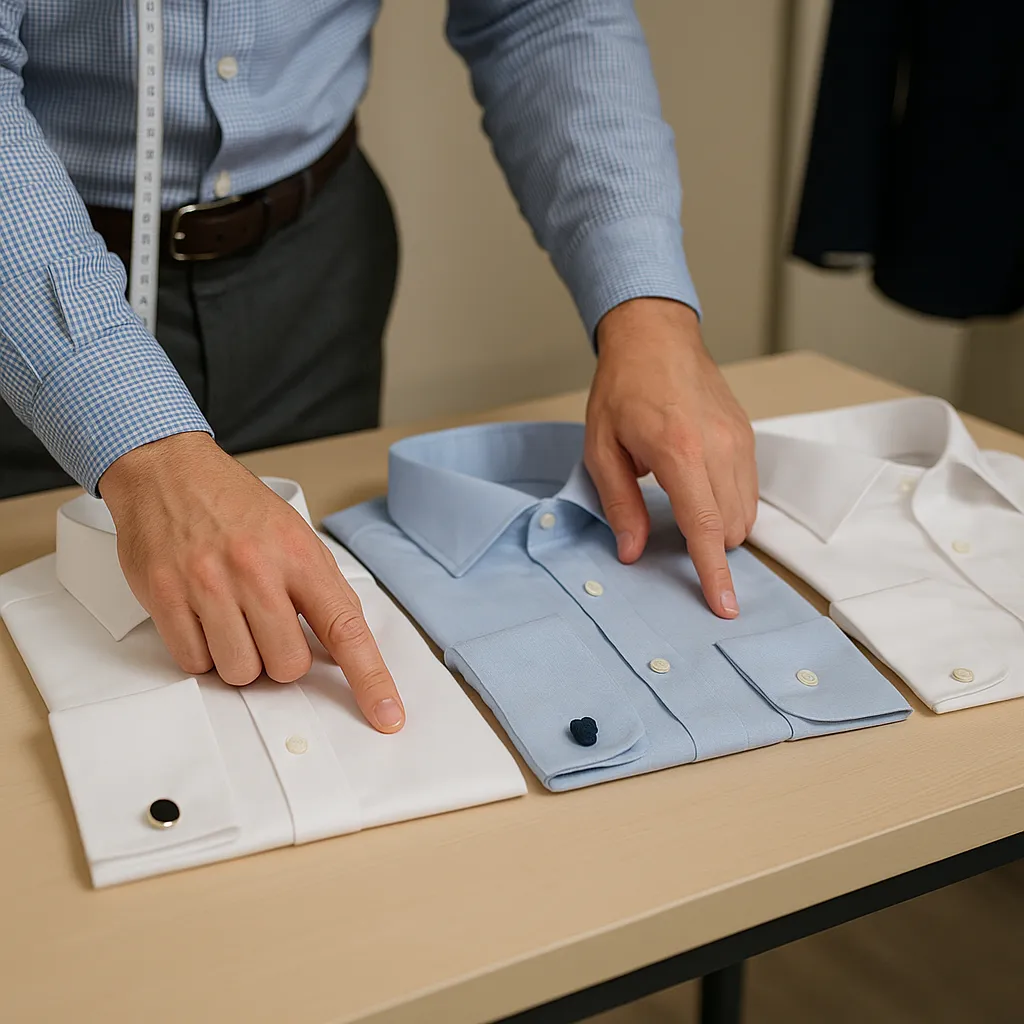
Dive deeper
If you want a clean, ready solution, buy mens French cuff shirts. Mens white French cuff dress shirts are the easiest base for suits and events. Slim fit French cuff shirts work under tailored jackets because extra fabric does not bunch at the forearm. Classic fits work for larger builds and for comfort. Some buyers choose a French cuff shirt men can wear with a French cuff suit for full dress. Others want shirts with French cuffs men can wear without a tie. Both can look good if the collar stands well. If you need flexibility, pick dress shirts with convertible cuffs. These have a button and a link hole. For fashion, a flowy sleeve shirt with cufflink sleeves can work for women’s blouses and some runway looks, but keep it neat for business. If you try a black cuffed shirt, watch lint and contrast with the jacket. Keep links small.
Fit and fabric guide
| Goal | Fit | Fabric | Comment |
|---|---|---|---|
| Formal, sharp lines | Slim fit | Poplin or twill | Smooth under a suit |
| Classic comfort | Regular fit | Oxford or twill | More room, still clean |
| Evening impact | Slim fit | Sateen | Shine, use subtle links |
| Casual-smart | Regular fit | Oxford | Works with jeans and blazer |
How many cufflink styles do I need, and what is their purpose?
A box full of links looks nice. You only need a few to start strong.
Own two pairs: one simple metal pair and one set of silk knots. Add more only when outfits demand it. The purpose of cufflinks is to close the cuff and add a small accent.

Dive deeper
Cufflinks replace buttons on French cuffs. They fasten the layers and set the gap. The purpose of cufflinks is function first and style second. For business, choose a plain metal pair in silver or steel. They match watches easily. For travel or quick changes, keep silk knots in your bag. They are light and cheap, and they work with shirts that take cufflinks. For tuxedos, use a stud set with matching links. Avoid huge novelty designs for work. If you want logos or initials, keep them small. If you need to put cufflinks on a regular dress shirt, fold the cuff once and run a silk knot through the buttonholes. This is a stopgap. A tailor can add a clean link hole to a barrel cuff shirt, but that makes it a convertible cuff, not a true French cuff.
Starter set
- Metal pair: plain, oval or round.
- Silk knots: white and navy.
- Stud set: for tuxedo shirt options.
- Travel case: small, zip, holds two pairs.
Conclusion
French cuffs are simple: fold, link, and show a clean edge. Choose them for formal looks, then use them for smart-casual with care.
Why I write this
My Name: Lancy Chia
Email: [email protected]
Website: https://truekung.com
Brand: Truekung
Country: China
Products: fashion clothes
Business model: B2B, Wholesale only
Status: Our factory has more than 200 workers. We provide clothing products and OEM/ODM services to brands and supermarkets worldwide. We have 20 years of export experience. Main products: fashion women’s clothing, jackets, skirts, dresses, jeans, T-shirts, sweatshirts, down jackets, windbreakers, coats, fashion bags, sportswear, children’s clothing, underwear.
Main export countries: Netherlands, Denmark, Belgium, Norway, UK, USA, Germany, Australia, Thailand, Turkey, Italy, Russia, Saudi Arabia, etc.
Views: 1940