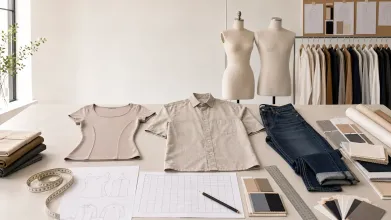


Converting women’s clothing sizes to men’s can be confusing because men’s and women’s garments are built on different body measurements, fit standards, and pattern blocks.
A women’s medium does not always equal a men’s medium. A women’s size 10 does not always equal a men’s 32 waist. The answer depends on the product type, body measurements, brand fit, fabric stretch, and intended silhouette.
For shoppers, a conversion chart can help find a starting size. For fashion brands, the process is more serious. If you are developing unisex clothing, gender-neutral apparel, oversized streetwear, uniforms, activewear, or private label basics, you need more than a simple size conversion. You need a clear size chart, fit standard, grading rule, and sample review process.
This guide explains how to convert women’s clothing sizes to men’s, what measurements matter most, and what brands should confirm before custom clothing production.
Women’s to Men’s Clothing Size Conversion: Quick Chart

The chart below gives a general starting point. It should not be used as a final production size chart. Different brands use different fit standards, so exact measurements should always be checked.
| Women’s Size | Approx. Men’s Size | Approx. Men’s Chest | Approx. Men’s Waist | Notes |
|---|---|---|---|---|
| Women’s XS / 0-2 | Men’s XS | 34-36 in | 28-30 in | May still be wider in shoulder and straighter in waist. |
| Women’s S / 4-6 | Men’s S | 36-38 in | 30-32 in | Common starting point for fitted or slim men’s styles. |
| Women’s M / 8-10 | Men’s M | 38-40 in | 32-34 in | Often works for relaxed tops, but pants need waist and hip checks. |
| Women’s L / 12-14 | Men’s L | 40-42 in | 34-36 in | Men’s garments may have more shoulder width and less waist shaping. |
| Women’s XL / 16-18 | Men’s XL | 42-46 in | 36-40 in | Best confirmed by actual body and garment measurements. |
| Women’s XXL / 20-22 | Men’s XXL | 46-50 in | 40-44 in | Grading and ease should be reviewed carefully. |
This chart is only a reference. The best way to convert women’s sizes to men’s is to compare body measurements and garment measurements, not only letter sizes.
Why Women’s and Men’s Sizes Are Different
Women’s and men’s clothing sizes are not just different labels. They are usually built from different pattern blocks.
Women’s clothing often considers bust, waist curve, hip shape, shoulder width, and body contour. Men’s clothing usually has a straighter torso, broader shoulder, longer sleeve, lower hip curve, and different rise in pants.
That means a women’s size and a men’s size can look similar on a chart but fit very differently on the body.
| Area | Women’s Clothing | Men’s Clothing | Production Impact |
|---|---|---|---|
| Shoulder | Usually narrower | Usually wider | A converted top may feel too wide or too tight at the shoulder. |
| Bust / Chest | Bust shaping may be included | Straighter chest block | Darts, ease, and front width need review. |
| Waist | More waist shaping | Straighter waist | Unisex styles may need less shaping. |
| Hip | More hip allowance | Less hip curve | Pants and fitted garments need careful hip checks. |
| Sleeve | Often shorter and narrower | Often longer and wider | Sleeve length and armhole depth need adjustment. |
| Pants Rise | Varies by style and body shape | Often longer front/back rise | Jeans and trousers need separate fitting. |
For custom clothing production, brands should not simply relabel women’s sizes as men’s sizes. A proper fit review is needed.
How to Convert Women’s Tops to Men’s Sizes
For tops such as T-shirts, hoodies, sweaters, shirts, and jackets, the most important measurements are chest, shoulder width, body length, sleeve length, and hem width.
A women’s medium may be close to a men’s small or medium depending on the style. If the men’s garment is relaxed or oversized, the wearer may need to size down.
| Women’s Top Size | Approx. Men’s Top Size | Best For | Fit Notes |
|---|---|---|---|
| Women’s XS | Men’s XS or XXS | Slim T-shirts, fitted tops | Men’s shoulder may still be wider. |
| Women’s S | Men’s XS or S | T-shirts, shirts, lightweight hoodies | Check shoulder and sleeve length. |
| Women’s M | Men’s S or M | Relaxed tops, sweatshirts, unisex styles | Men’s M may feel boxier. |
| Women’s L | Men’s M or L | Oversized tops, jackets, hoodies | Check body length and sleeve length. |
| Women’s XL | Men’s L or XL | Relaxed streetwear and outerwear | Men’s fit may be wider but less shaped. |
For fashion brands, the safest method is to build a garment measurement chart. Body size labels are useful for shoppers, but production needs actual garment specs.
Key measurements for tops:
| Measurement | Why It Matters |
|---|---|
| Chest width | Controls the main body fit. |
| Shoulder width | Affects comfort and visual proportion. |
| Body length | Determines whether the style feels cropped, standard, or oversized. |
| Sleeve length | Men’s sleeves are often longer. |
| Armhole depth | Affects mobility and comfort. |
| Hem width | Controls straight, fitted, or boxy shape. |
How to Convert Women’s Pants and Jeans to Men’s Sizes
Pants and jeans are harder to convert than tops because women’s and men’s bottoms use different waist, hip, rise, and thigh proportions.
A women’s size 10 is often roughly close to a men’s 30-32 waist, but this is only a starting point. The hip, rise, thigh, and inseam can change the final fit.
| Women’s Pants Size | Approx. Men’s Waist Size | Notes |
|---|---|---|
| Women’s 0-2 | Men’s 26-28 | Check hip and rise carefully. |
| Women’s 4-6 | Men’s 28-30 | May fit slim men’s jeans or trousers. |
| Women’s 8-10 | Men’s 30-32 | Common conversion range, but hip fit may differ. |
| Women’s 12-14 | Men’s 32-34 | Check thigh and seat measurement. |
| Women’s 16-18 | Men’s 36-38 | Grading needs careful review. |
| Women’s 20-22 | Men’s 40-42 | Fit model testing is recommended. |
For pants production, do not rely only on waist size. A women’s pant and a men’s pant with the same waist can still fit differently because of hip shape, rise, and thigh room.
Important pants measurements:
| Measurement | Why It Matters |
|---|---|
| Waist | Main size reference for men’s pants. |
| Hip / seat | Often the biggest difference between women’s and men’s fit. |
| Front rise | Controls waist position and comfort. |
| Back rise | Affects seat coverage and movement. |
| Thigh | Important for jeans, trousers, and joggers. |
| Knee | Affects slim, straight, or relaxed fit. |
| Leg opening | Controls silhouette. |
| Inseam | Determines length. |
For custom pants manufacturing, brands should confirm whether the product is slim fit, straight fit, relaxed fit, wide leg, cargo, jogger, or oversized. Each fit needs a different grading rule.
Women’s to Men’s Shoe Size Conversion
Shoe size conversion is different from clothing size conversion, but many people search for both. As a general rule, women’s US shoe sizes are about 1.5 sizes larger than men’s US shoe sizes.
| Women’s US Shoe Size | Approx. Men’s US Shoe Size |
|---|---|
| 5 | 3.5 |
| 6 | 4.5 |
| 7 | 5.5 |
| 8 | 6.5 |
| 9 | 7.5 |
| 10 | 8.5 |
| 11 | 9.5 |
| 12 | 10.5 |
This is only a general guide. Shoe width, brand standard, and foot shape can affect the final fit.
For apparel brands, clothing size conversion should be handled separately from footwear sizing.
Size Conversion for Unisex Clothing
Unisex clothing is not simply men’s sizing with a different label. A good unisex fit needs a clear target customer and fit intention.
For example, a unisex T-shirt may use a men’s block with adjusted length and shoulder width. A unisex hoodie may keep a relaxed body but reduce sleeve length. A unisex trouser may need a more balanced rise and hip shape.
Common unisex clothing categories include:
| Product Type | Common Fit Approach | Production Notes |
|---|---|---|
| T-Shirts | Boxy or relaxed fit | Check shoulder width and body length. |
| Hoodies | Oversized or relaxed fit | Sleeve length and rib hem need review. |
| Sweatpants | Relaxed fit | Waistband, rise, hip, and inseam need testing. |
| Jackets | Slightly oversized fit | Shoulder, sleeve, and body length are critical. |
| Uniforms | Functional fit | Comfort, movement, and size range are important. |
| Streetwear | Oversized fit | Fit balance matters more than size labels. |
If your brand wants to launch unisex clothing, the best approach is to develop a custom size chart instead of directly converting women’s sizes to men’s sizes.
Manufacturing Notes for Fashion Brands
For fashion brands, size conversion should be used as a starting point, not a production rule.
A factory needs a complete size specification before sampling. If the size chart is unclear, the first sample may look very different from the brand’s expectation.
Before production, brands should prepare:
| Item | Why It Matters |
|---|---|
| Target market | US, EU, UK, Japan, Korea, and other markets use different sizing habits. |
| Fit type | Slim, regular, relaxed, oversized, cropped, or unisex. |
| Base size | The sample size used for first development. |
| Body measurement chart | Helps define target customer body size. |
| Garment measurement chart | Guides actual factory production. |
| Grading rule | Controls how each size increases or decreases. |
| Fit model feedback | Helps confirm comfort and proportion. |
| Fabric stretch | Affects ease, recovery, and final fit. |
A cotton T-shirt, stretch activewear top, woven shirt, denim jean, hoodie, and tailored jacket cannot use the same conversion logic. Each product type needs its own fit review.
Body Measurements vs Garment Measurements
One common mistake is mixing body measurements and garment measurements.
Body measurements describe the wearer’s body. Garment measurements describe the finished clothing. The difference between them is called ease.
For example, if a body chest measurement is 38 inches, the garment chest may be 40 inches, 42 inches, or even 46 inches depending on the intended fit.
| Fit Type | Typical Ease | Example |
|---|---|---|
| Slim fit | Low ease | Close to body shape. |
| Regular fit | Moderate ease | Comfortable everyday fit. |
| Relaxed fit | More ease | Looser body and sleeve. |
| Oversized fit | High ease | Wider shoulder, chest, and length balance. |
For brands, this is important because two garments can have the same size label but completely different garment measurements.
Fabric Stretch and Size Conversion
Fabric affects size conversion. A stretch fabric can fit more body types, while a rigid woven fabric needs more accurate measurement and ease.
| Fabric Type | Size Conversion Impact |
|---|---|
| Cotton jersey | Allows more flexibility in T-shirts and casual tops. |
| Rib knit | Stretches well but needs recovery testing. |
| Denim | Rigid denim and stretch denim fit very differently. |
| Woven cotton | Needs accurate chest, shoulder, and waist measurement. |
| Polyester spandex | Common for activewear and fitted styles. |
| Fleece | Often used for hoodies and sweatpants with relaxed fit. |
| Suiting fabric | Needs more precise pattern and tailoring. |
For custom clothing production, fabric stretch, shrinkage, and recovery should be tested before bulk production.
Size Grading Tips for Brands
Size grading means increasing or decreasing the pattern from one size to another. It is one of the most important parts of apparel production.
If grading is not handled well, a size small may fit well, but size XL may become too long, too wide, too tight at the hip, or unbalanced at the shoulder.
Key grading points:
| Product | Important Grading Areas |
|---|---|
| T-Shirts | Chest, shoulder, body length, sleeve length, hem width |
| Hoodies | Chest, shoulder, sleeve, rib hem, hood size |
| Shirts | Neck, shoulder, chest, sleeve, cuff |
| Pants | Waist, hip, rise, thigh, knee, inseam, leg opening |
| Jackets | Shoulder, chest, sleeve, armhole, body length |
| Dresses | Bust, waist, hip, length, shoulder, sleeve |
For unisex or cross-gender sizing, grading should be reviewed carefully because the body proportions may be different from a standard men’s or women’s size block.
Sample Fitting Checklist
Before bulk production, brands should test samples on the target fit model or model group. This is especially important for unisex clothing or any product based on women’s-to-men’s size conversion.
| Fit Check | What to Review |
|---|---|
| Shoulder | Does the seam sit in the intended position? |
| Chest | Is there enough ease for movement? |
| Waist | Is the garment too shaped or too straight? |
| Hip | Does the garment pull or feel loose? |
| Sleeve | Is the length correct for the target customer? |
| Rise | For pants, is the front and back rise comfortable? |
| Inseam | Is the length suitable for the market? |
| Movement | Can the wearer sit, walk, bend, and raise arms? |
| Wash test | Does the garment shrink or twist after washing? |
A clear sample fitting process reduces returns, improves customer satisfaction, and helps the factory keep bulk production consistent.
MOQ, Sampling and Production Timeline
MOQ depends on fabric, color, trims, print, embroidery, labels, and customization level. For many custom clothing projects, a practical starting MOQ is around 100-300 pieces per style, but special fabrics, custom dyeing, or complex construction may require higher quantities.
Sampling usually takes 7-21 days depending on fabric availability, pattern complexity, and revisions. Bulk production often takes 20-45 days after the sample is approved and all materials are ready.
For size conversion or unisex clothing projects, brands should allow time for fit review and size grading. A rushed size chart can cause major issues in bulk production.
Before production, confirm:
| Item | Why It Matters |
|---|---|
| Base sample size | Defines the first development size. |
| Full size chart | Guides production across all sizes. |
| Fit standard | Slim, regular, relaxed, oversized, or unisex. |
| Fabric approval | Confirms stretch, shrinkage, and hand feel. |
| Grading rule | Keeps sizes consistent. |
| Label size names | Prevents customer confusion. |
| Packaging and barcode | Important for retail and e-commerce. |
| Final approved sample | Works as the production reference. |
How Truekung Can Help
Truekung works with fashion brands, startups, private label businesses, wholesalers, and retailers that need custom clothing manufacturing and full-package apparel production.
We can help with size chart development, pattern making, fabric sourcing, sample development, size grading, OEM/ODM production, labels, packaging, quality control, and global shipping.
If you are developing unisex clothing, gender-neutral apparel, oversized streetwear, custom T-shirts, hoodies, pants, jackets, uniforms, or private label basics, you can send us your reference photos, tech pack, target quantity, fabric idea, and size range. Our team can review your project and suggest a practical production plan.
A clear size chart helps reduce sampling mistakes, improve fit, lower return rates, and make bulk production more consistent.
Frequently Asked Questions About Women’s to Men’s Size Conversion
Is a women’s medium the same as a men’s medium?
Not always. A women’s medium and a men’s medium may have similar body size ranges, but the garment shape can be very different. Men’s clothing usually has wider shoulders, a straighter waist, and longer sleeves.
What is a women’s size 10 in men’s pants?
A women’s size 10 is often close to a men’s 30-32 waist, but this is only a rough guide. Hip, rise, thigh, and inseam measurements should also be checked.
How do I convert women’s tops to men’s sizes?
Start by comparing chest, shoulder width, body length, and sleeve length. A women’s medium may be close to a men’s small or medium depending on the brand and fit.
Can a brand use men’s sizing for unisex clothing?
Yes, but it should be adjusted. Many unisex garments start from a men’s block, but shoulder width, sleeve length, body length, and fit balance may need changes for a broader customer group.
Why do converted sizes still fit differently?
Converted sizes can fit differently because men’s and women’s clothing use different pattern blocks. Fabric, stretch, ease, shoulder shape, waist curve, and hip measurement all affect the final fit.
Should brands use body measurements or garment measurements?
Brands should use both. Body measurements define the target customer, while garment measurements tell the factory how to make the product. The difference between them is the wearing ease.
What is the best way to create a unisex size chart?
The best way is to define the target fit, choose a base size, test samples on fit models, and create a custom grading rule. Directly converting women’s sizes to men’s sizes is usually not enough for production.
Can Truekung help develop custom size charts?
Yes. Truekung can help fashion brands develop custom size charts, patterns, samples, grading rules, and bulk production standards for men’s, women’s, and unisex clothing.
Views: 13178


