I know the stress of turning a sketch into sales. Delays eat margins. Quality slips hurt trust. I built a simple, clear process that removes guesswork and keeps me accountable.
My process moves from design brief to tech pack, to pre-production proofing, to disciplined bulk production, and to documented shipping. I keep clocks, checklists, and proofs at every step. You get predictable lead times, consistent quality, and clean paperwork.
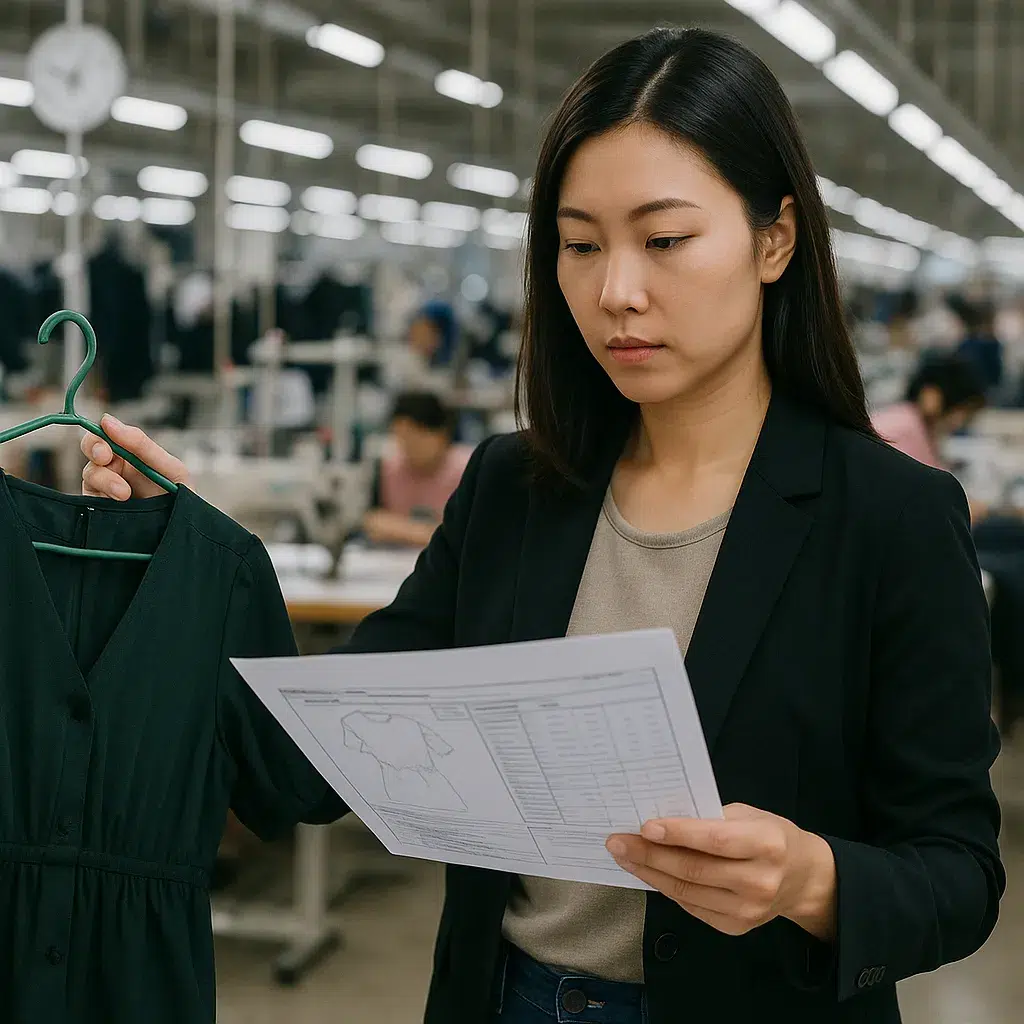
I keep you reading with one promise. I run the same routine every time. I show proof at each stage. You never need to guess where your order stands.
How do I turn a sketch into a tech pack?
Rough ideas waste time in sampling. Missing details lead to weak fits and returns. I front-load clarity. I turn your vision into a tech pack that factories can build.
I translate your sketch into a complete tech pack in plain English and metric. I lock measurements, materials, grading, stitching, trims, and packaging. I confirm costs and MOQ before a single sample.

Dive deeper
I start with your brief. I write what the product must do. I note target price, size curve, and season. I add a simple story. That helps my pattern team align. Then I build the tech pack. I include clear flats, stitch callouts, and seam allowances. I set a base size. I grade with the size curve you sell most. I lock a fabric spec with tolerance for shrinkage and torque. I list trims with backup options in case one item goes short.
I also plan risk controls. I add a testing plan for colorfastness, shrinkage, and pilling. I define pass/fail limits. I attach labels and packaging rules. I write the carton mark and barcode location. I confirm the Incoterm and payment term before sampling. This simple plan saves days later. You see everything before we cut a swatch.
Tech pack checklist
| Section | What I include | Why it matters |
|---|---|---|
| Fit & grading | Base size, POM list, grade rules | Fewer returns, faster approvals |
| Materials | Fabric spec, trims with alternates | Avoid shortages and last-minute changes |
| Stitch & construction | SPI, seam types, reinforcement points | Stronger garments, repeatable output |
| Testing plan | Lab tests with limits | Objective quality gates |
| Packaging & labels | Polybag, barcode, carton mark | Smooth warehousing and audits |
| Commercial | MOQ, price brackets, terms | No surprises before PO |
How do I control fabric and trims before bulk?
Bad fabric ruins perfect patterns. Late trims stall sewing lines. I remove these risks first. I test and book materials early with proof.
I pre-qualify mills, run lab tests, and book fabric only after approval. I lock trim suppliers with A/B options. I share test reports and counter samples so you approve what we will actually ship.

Dive deeper
I ask mills for recent bulk lots. I test shrinkage, colorfastness to wash and rub, and GSM variance. I check shade bands under D65 and TL84 light. I also wash-test for spirality on knits. I make a pre-cost using current yarn prices. If fabric passes, I book yarn dye or greige with a time buffer. If not, I switch to the approved alternate. For trims, I avoid single points of failure. I source two zipper vendors and two label houses. I keep die-lines on file with your brand rules. I confirm lead times with written SLAs.
I send you a material approval pack. It includes lab reports, swatches, and photos. I add a short note in plain words: pass or fail, and why. When you sign off, I bulk-book. I then mark a materials readiness date. Only then do I schedule cutting. This avoids idle lines and late color mismatches.
Material control table
| Item | Test/Proof | Pass limit | Action if fail |
|---|---|---|---|
| Shrinkage (warp/weft) | AATCC 135 | ≤ 3% | Relax finish or change spec |
| Colorfastness to wash | ISO 105-C06 | ≥ 4 | Adjust dye or change lot |
| Pilling (knits) | ASTM D3512 | ≥ 3.5 | Switch yarn blend |
| Zipper strength | Pull test | ≥ spec | Move to alternate vendor |
| Label ink | Rub test | No smudge | Change ink process |
How do I keep production on time?
Schedules slip when no one owns the clock. I put the plan on one page. I check it daily. I show you proof with photos and counts.
I run a critical path with dated gates: PP sample, size set, TOP, inline AQL, and final AQL. I post daily WIP, output, and defects. I fix problems fast with small pilots before full speed.

Dive deeper
I start with a pilot of 50–100 units. I confirm needle, thread, and machine settings. I track minute values for each operation. I balance lines to hit the target output per hour. I watch first-pass yield. If FPY drops, I pause and retrain. I use inline AQL to find defects at the source. I measure the top three defects by count: open seam, skip stitch, or shade-off. I set a 24-hour fix plan with the line chief.
I report with simple numbers. I share WIP, hourly output, and DHU. I attach photos of the bundle tickets and the piles. I also share videos when a new operation starts, like bar-tack on pockets. You see real progress, not promises. I hold a daily call if volume is high or if the season window is tight. I always keep a recovery plan with overtime options noted in advance.
Production control snapshot
| Gate | Proof I share | Typical timing |
|---|---|---|
| PP sample approved | Photos + spec sheet | Day 0 |
| Size set approved | Measurements vs. POM | Day 3–5 |
| Pilot run | FPY and DHU report | Day 6–7 |
| Inline AQL | Defect map, fixes | Day 8–20 |
| TOP sample | From bulk line | Day 15–22 |
| Final AQL | 2.5 or as agreed | Ship week |
How do I ship fast with fewer risks?
Shipping creates hidden delays. Bad paperwork blocks customs. Weak packing damages goods. I fix these early and write everything down.
I plan packing, labels, and carton marks at tech-pack stage. I pick the best Incoterm for your cash and risk. I book space early. I share photos and documents before the truck leaves.

Dive deeper
I choose the Incoterm with you. If you want price control and can handle customs, I suggest FOB. If you want door delivery with less hassle, I can quote DDP through partners. I lock packaging early. I use strong cartons, right fit, and correct ply. I add edge protection for heavy denim. I weigh and measure master cartons to avoid freight surprises. I also check drop-test where needed.
I prepare documents in advance. I draft the invoice and packing list from the BOM. I add HS codes and material breakdowns. I prepare COO and test reports if you need them. I send a pre-alert pack with photos of labels and cartons. You can check everything before we seal. I book space two weeks ahead in peak season. For air, I give you options with transit times. I always keep a split-shipment plan if the season is closing.
Incoterms quick view
| Term | Who owns risk earlier? | Who handles customs? | Good for |
|---|---|---|---|
| FOB | Buyer after vessel loading | Buyer at destination | Experienced importers |
| CIF/CFR | Seller to port of arrival | Buyer at destination | Balance cost and control |
| DDP | Seller to your door | Seller | New markets, less hassle |
How do I protect you from fake certificates and poor communication?
Paper can lie. Emails can hide facts. I fight both with real checks and clear talk. I keep a record you can audit.
I verify labs and certificates with issuers. I watermark reports and link them to PO numbers. I run simple, scheduled updates with photos, numbers, and next steps. I keep all files in one folder.

Dive deeper
I do not trust a PDF alone. I call the lab or use its portal to check report numbers. I match buyer, style, and PO in the report. I tie each file to the PO in a shared folder. I watermark the report with the PO and date. I also keep a test summary in a simple table. If a supplier sends a suspect certificate, I stop and re-test. I accept the delay to protect the brand.
For communication, I keep one rhythm. I send a weekly summary with three parts: what we finished, what is in progress, and what risks we see. I add three photos minimum and two numbers: output and DHU. I keep updates short and honest. If we will miss a date, I say it at once and propose a fix, like overtime or air for a split.
Update rhythm
| Day | What I send | Why it helps |
|---|---|---|
| Monday | Plan for the week, materials status | Sets focus |
| Wednesday | WIP, output, top defects | Mid-course correction |
| Friday | Achieved vs. plan, next week | Closure and prep |
Conclusion
I run one clear process. I show proof at each gate. You get on-time delivery, steady quality, and calm seasons.
Why I write this
My Name: Lancy Chia
My email: [email protected]
Link to my website: https://truekung.com
Brand Name: Truekung
Country: China.
Products: fashion clothes
Business model: B2B, Wholesale only
Status: The factory has more than 200 workers. We provide clothing products and OEM/ODM services to different brands and supermarkets around the world. We have 20 years of experience in foreign trade clothing production and export. The main products are: fashion women’s clothing, jackets, skirts, dresses, jeans, T-shirts, sweatshirts, down jackets, windbreakers, coats, fashion bags, sportswear, children’s clothing, underwear.
Main export countries: Netherlands, Denmark, Belgium, Norway, UK, USA, Germany, Australia, Thailand, Turkey, Italy, Russia, Saudi Arabia, etc.
Views: 60