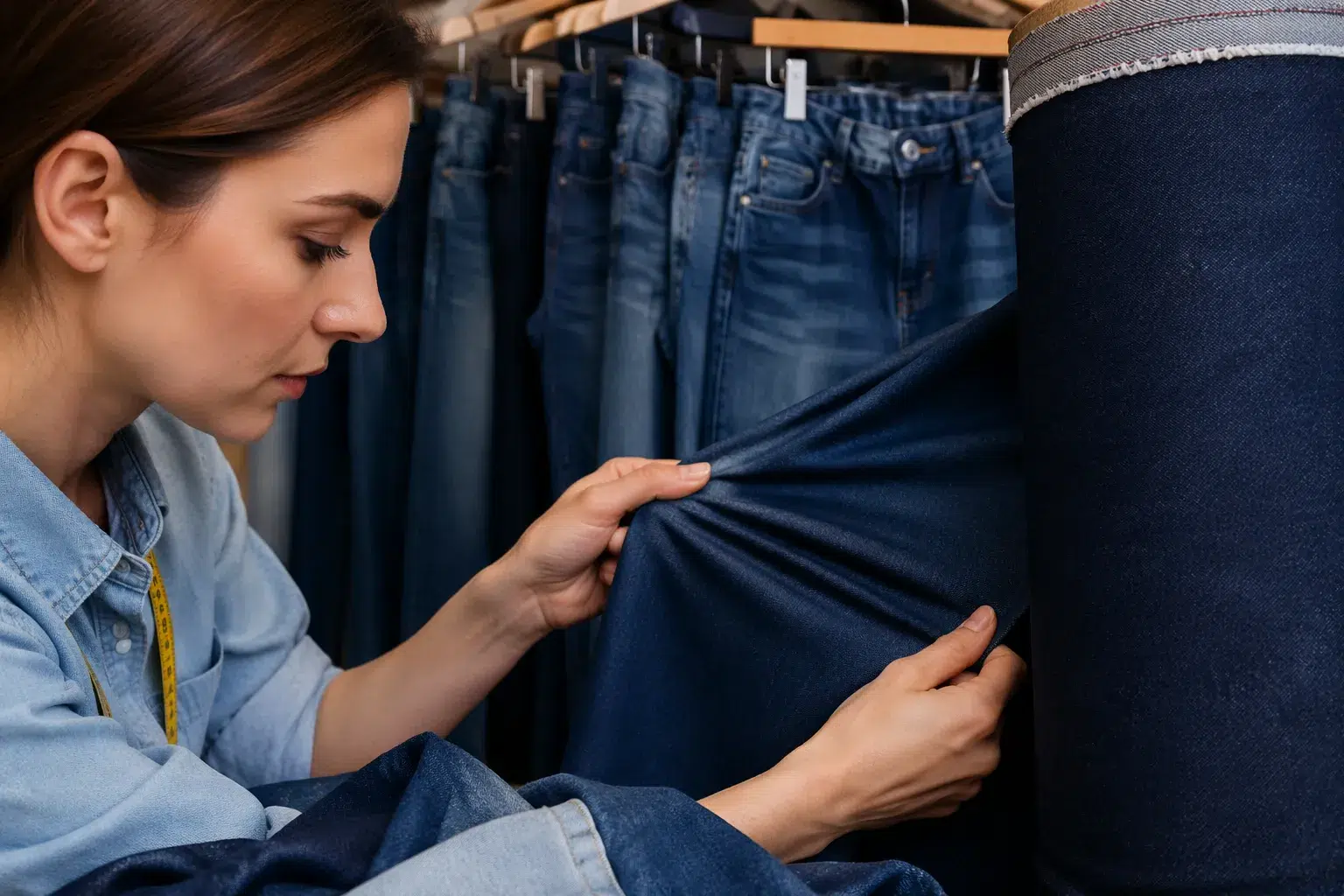


Я часто встречаю покупателей, которые оказываются в тупике, когда на этикетке указано “эластомультиэстер”, потому что это звучит как новая химическая проблема. Но это не так. Это... потягиваться выбор волокна.
Эластомультиэстер — это эластичный материал., полиэстерВолокно на основе полиэстера, состоящее из двух или более полиэфирных компонентов, благодаря чему пряжа обладает встроенной эластичностью и способностью восстанавливать форму. Оно используется в джинсовой ткани и брюках, обеспечивая сохранение формы с меньшим “провисанием”, чем многие обычные эластичные смеси.

Когда я только начинал экспортировать эластичный деним, я понял, что даже одна маленькая строчка на бирке может повлиять на количество возвратов, отзывы и повторные заказы. Поэтому, если вы продолжите читать, вы узнаете, как я оцениваю эластомультиэстер в реальных оптовых партиях, а также на то, каких ловушек я избегаю.
Эластомультиэстер — это просто другое название полиэстера?
Когда покупатель видит надпись “эластомультиэстер”, первое, что приходит в голову, это то, что поставщик скрывает за причудливым названием обычный полиэстер. Я понимаю это, потому что плохие этикетки существуют, и они обходятся дорого.
Эластомультиэстер по-прежнему относится к семейству полиэфиров, но это не “обычная полиэфирная пряжа ПЭТ”. Это многокомпонентное полиэфирное волокно, которое ведет себя как эластичная пряжа, поскольку компоненты по-разному реагируют на тепло и создают стабильную извитость.
Что на самом деле означает это слово на этикетке?
На практике эластомультиэстер представляет собой общее название волокна Используется для обозначения особого типа эластичного волокна на основе полиэстера. На рынке ЕС вы можете встретить термин “эластомультиэстер”. На рынке США вы можете встретить аналогичный термин подкласса, например, “эластерелл-п”, для похожих многокомпонентных эластичных полиэстеров. Я обращаю на это внимание, потому что это одно и то же. ткань В разных странах может потребоваться разный язык маркировки.
Почему у него "встроенная" эластичность
Известным примером является волокно типа Т400, в котором два разных полиэстера объединены внутри одного волокна. После термофиксации волокно приобретает волнистость, обеспечивающую эластичность и восстановление формы без использования только спандекса. Именно поэтому некоторые фабрики продают пряжу “эластомультиэстер Т400” для джинсовой и саржевой ткани.
| То, что вы видите | Что это обычно сигнализирует в производстве | Что я проверяю оптом |
|---|---|---|
| “Эластомультиэстер” на этикетке по уходу за изделием. | Многокомпонентное эластичное полиэфирное волокно | Растяжение %, рост % и восстановление после мытья |
| “Т400” в технических характеристиках ткани | Фирменная или технологически определенная пряжа из эластомультиэфира. | Термостойкость, риск изменения оттенка и образование катышков. |
| “Эластерелл-п” на американском лейбле | Схема наименования эластичного многокомпонентного полиэстера в США | Соответствие маркировке и единообразное раскрытие информации о волокнах. |
Как я это объясняю покупательнице, такой как Мария
Я придерживаюсь простого подхода: это эластичное волокно на основе полиэстера Цель — обеспечить сохранение формы. Если вы хотите джинсы Эластомультиэстер – один из таких материалов, который на ощупь напоминает хлопок, но не растягивается в области колена к полудню.
Эластомультиэстер растягивается и сжимается подобно эластану?
Некоторые покупатели ожидают, что эластомультиэстер будет вести себя как спандекс, поэтому они разочаровываются, когда эластичность кажется “меньшей”. Другие покупатели ожидают, что эластичность полностью исчезнет, поэтому они удивляются, когда брюки хорошо сидят. И то, и другое легко исправить, если правильно определить цель.
Эластомультиэстер обеспечивает умеренную эластичность с хорошим восстановлением формы, в то время как эластан обеспечивает большую эластичность с более мягким возвратом в исходное положение. Усадка в большей степени зависит от базового волокна, например, хлопка, и от отделки.
Растяжка: то, что я вижу в джинсах и брюках.
В джинсовой ткани я часто вижу такие сочетания, как... 92% хлопок / 6% эластомультиэстер / 2% эластан. Эта комбинация обычно обеспечивает комфорт, эластичность и коррекцию формы. Эластомультиэстер способствует восстановлению формы, а эластан обеспечивает свободу движений. Если производитель пытается полностью исключить эластан, тактильные ощущения меняются, поэтому я предупреждаю об этом заранее.
Уменьшение размеров: что на самом деле является его причиной?
Многие спрашивают: “А эластомультиэстер дает усадку?” Я отвечаю вопросом: “Что еще входит в состав ткани?” Если ткань богата хлопком, то хлопок может дать усадку, если изделие не было должным образом предварительно обработано для предотвращения усадки. Сам эластомультиэстер разработан таким образом, чтобы оставаться стабильным после правильной термообработки, но изделие все равно сохраняет все свойства ткани.
Простой контрольный список для поиска поставщиков, который я использую.
Я не полагаюсь на название. Я полагаюсь на тесты и контроль процессов.
| Вопрос | Чем я занимаюсь при отборе проб | Что я требую до начала производства |
|---|---|---|
| Достаточно ли оно эластичное? | Измерьте растяжение и восстановление формы основы и утка. | Установите целевой диапазон и утвердите образцы для лабораторных анализов, а также оцените тактильные ощущения. |
| Выпадет ли из упаковки? | Тест на износостойкость и тест на рост после сидения | Требуются ограничения по росту и стандарты стирки. |
| Оно уменьшится в размерах? | Тест стирки с сушкой в реальных условиях, как при обычной стирке. | Контроль процесса санфоризации, термофиксации и припуска на рисунок. |
| Не разойдутся ли швы? | Стресс-тест тазобедренного и ягодичного суставов | Подберите нить, плотность плетения на дюйм (SPI) и тип шва в соответствии с уровнем растяжения. |
Моё правило из реальной жизни
Если клиенту нужна "суперэластичность", я увеличиваю концентрацию эластана. Если ему нужна "фиксация формы", я увеличиваю концентрацию эластомультиэстера (и улучшаю отделку). Если же ему нужно и то, и другое, я смешиваю компоненты и тестирую, пока количество возвратов не уменьшится.
Является ли эластомультиэстер воздухопроницаемым, безопасным и подходящим для джинсов и брюк?
Именно на этом этапе решается, оставит ли покупатель ткань или откажется от нее. Люди спрашивают: пропускает ли она воздух, токсична ли она, водонепроницаема ли она, качественная ли она, безопасна ли она. Я отношусь к этим вопросам как к вопросам о товаре, а не к химическим спорам.
Эластомультиэстер обычно используется, потому что он помогает брюкам и джинсам сохранять форму, а также может быть комфортным при правильной структуре ткани. Воздухопроницаемость и водонепроницаемость зависят от всей ткани в целом, а также от наличия мембраны или покрытия.
Дышащий или теплый?
Название волокна не гарантирует воздухопроницаемости. Плотная саржа будет ощущаться теплее, чем ткань с открытым переплетением, даже при одинаковом содержании волокна. При отборе образцов на фабрике я обращаю внимание на плотность (GSM), плотность переплетения и отделку. Эластомультиэстер можно использовать в тканях, хорошо отводящих влагу, но это не волшебство. Если ткань тяжелая и плотная, она все равно будет казаться теплой.
Водонепроницаемый?
Эластомультиэстер сам по себе не является “водонепроницаемым”. Водостойкость обычно обеспечивается водоотталкивающей пропиткой (DWR), покрытием или мембраной. Если ваш покупатель хочет “водонепроницаемые брюки”, речь идет, по сути, о ламинировании и конструкции швов, а не только о составе волокна.
Токсично или безопасно?
Я избегаю пугающих формулировок, потому что они сбивают с толку покупателей. Эластомультиэстер — это синтетическое волокно на основе полиэстера, используемое в обычных цепочках поставок одежды. Проблемы безопасности в одежде обычно связаны с ограничениями на использование красителей, лимитами на формальдегид или плохим контролем отделки, поэтому я уделяю особое внимание проверке на соответствие стандартам и отслеживаемости фабрик. Если у покупателя чувствительная кожа, я также обращаю внимание на состав отделки и смягчителя.
Почему бренды продолжают это использовать
Я вижу, что эластомультиэстер используется в джинсовой ткани, а также в “городских брюках” и “брюках с пятью карманами”, потому что он помогает одежде выглядеть аккуратно после носки. Некоторые крупные бренды даже указывают высокое содержание эластомультиэстера в определенных тканях для брюк, что говорит о том, что они стремятся к простоте в уходе и стабильной форме.
| Цель покупателя | Почему эластомультиэстер помогает | Что мне еще предстоит контролировать |
|---|---|---|
| “Джинсы, которые сохраняют форму” | Высокая степень извлечения и низкая вероятность образования мешков | Баланс рисунка, отделка и рецепт стирки |
| “Офисные брюки, которые не мнутся быстро” | Стабильная структура и устойчивость | Плотность ткани, использование смолы и тактильные ощущения. |
| “Комфорт без ощущения резины” | Умеренная эластичность, не содержит только спандекс. | Целевые показатели растяжения, проектирование швов и сортировка по размерам. |
| “Повышенная износостойкость” | Прочность и износостойкость, характерные для полиэстеров. | Риск образования катышков, стойкость цвета и воздействие высоких температур. |
Мой главный критерий для оптового покупателя
Если вам нужен классический комфорт хлопка, хлопок по-прежнему лидирует по тактильным ощущениям. Если вы хотите иметь стройный силуэт в течение всего дня, эластомультиэстер вам поможет. Если вам нужна максимальная эластичность, эластан по-прежнему остается лучшим вариантом. В большинстве моих самых продаваемых программ оптовой продажи используется сочетание различных материалов, потому что покупатели в первую очередь ценят комфорт, но они делают повторные заказы, когда посадка остается стабильной.
Заключение
Эластомультиэстер — это эластичное волокно на основе полиэстера, которое помогает джинсам и брюкам растягиваться и восстанавливать форму. Он считается “хорошим”, если ткань, отделка и результаты испытаний соответствуют реальным потребностям покупателя.
Почему я это пишу
Меня зовут Ланси Чиа, я из компании Truekung в Китае. Я занимаюсь оптовой продажей одежды для бизнеса (B2B) и предоставляю услуги OEM/ODM. На моей фабрике работает более 200 человек, и у меня 20-летний опыт экспорта. Я производлю женскую одежду, куртки, юбки, платья, джинсы, футболки, толстовки, пуховые куртки, ветровки, пальто, сумки, спортивную одежду, детскую одежду и нижнее белье. Я осуществляю доставку в Нидерланды, Данию, Бельгию, Норвегию, Великобританию, США, Германию, Австралию, Таиланд, Турцию, Италию, Россию, Саудовскую Аравию и другие страны. Если вы хотите обсудить эластомультиэстеровый деним, брюки из эластичной саржи или программы по созданию стабильного кроя для вашего бренда, вы можете связаться со мной по адресу [email protected].
Просмотров: 825


