The wrong women’s peacoat wastes money and winter warmth. I fix that. I share how I source, fit, and deliver the right wool peacoat women actually wear.
Choose a women’s peacoat by fabric (80–100% wool), weight (550–800 gsm), double-breasted construction, and a fitted block that matches your size chart. Confirm QC steps and delivery milestones with the factory.

I speak as a factory partner who ships to stores that cannot miss a season. I work with buyers who need a black peacoat womens style one week and a navy pea coat womens run the next. I keep the language simple. I keep the process clear. I lay out the steps I use with my own clients, from fabric testing to fitted womens peacoat sizing, so you can copy them and avoid risk.
What is a women’s peacoat today?
Cold bites. Shelves fill with styles that look similar. Confusion grows.
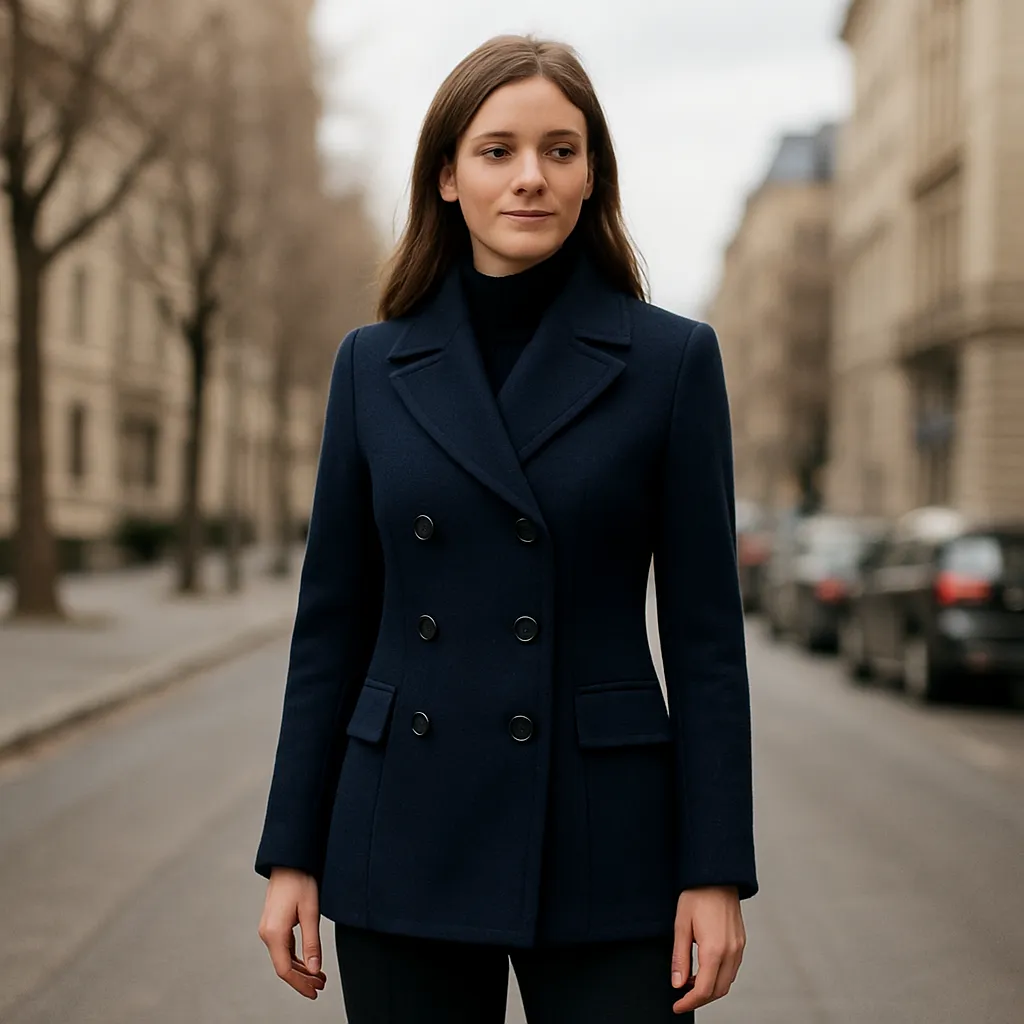
A women’s pea coat is a short, double-breasted wool coat with broad lapels, usually hip-length, built to block wind. Today it comes in tailored, fitted, and long variants.
Dive deeper
I use three fast checks when I brief a pattern maker. First, I check the block: a classic pea jacket womens shape hits mid-hip; a women’s long peacoat drops to mid-thigh. Second, I check the build: double-breasted overlap of 10–12 cm keeps wind out; horn or melamine buttons must be cross-stitched. Third, I check the shell: a women’s wool peacoat needs dense twill or melton; blends can reduce pilling and weight. I also check pocket bags, collar roll, and fusible quality. When a client asks “what is a pea coat women’s?” I show these points, then we pick navy, black, or camel first, because these colors lead sell-through. Below is the quick map I share in kickoff calls.
Peacoat vs. other coats
| Style | Typical Length | Front | Best Use | Notes |
|---|---|---|---|---|
| Women’s peacoat | Hip to mid-thigh | Double-breasted | Daily winter | Warmth + mobility |
| Overcoat | Knee+ | Single/Double | Formal | Heavier, layered |
| Trench | Knee | Double, belted | Wet seasons | Lighter, cotton blend |
Which wool and weight make winter peacoats work?
Winter hits calendars, not guesses. Bad fabric means returns and bad reviews.
Pick melton or heavy twill in 80–100% wool at 550–800 gsm. Add 10–20% nylon or cashmere for strength or handfeel. Test pilling, colorfastness, and shrinkage.
Dive deeper
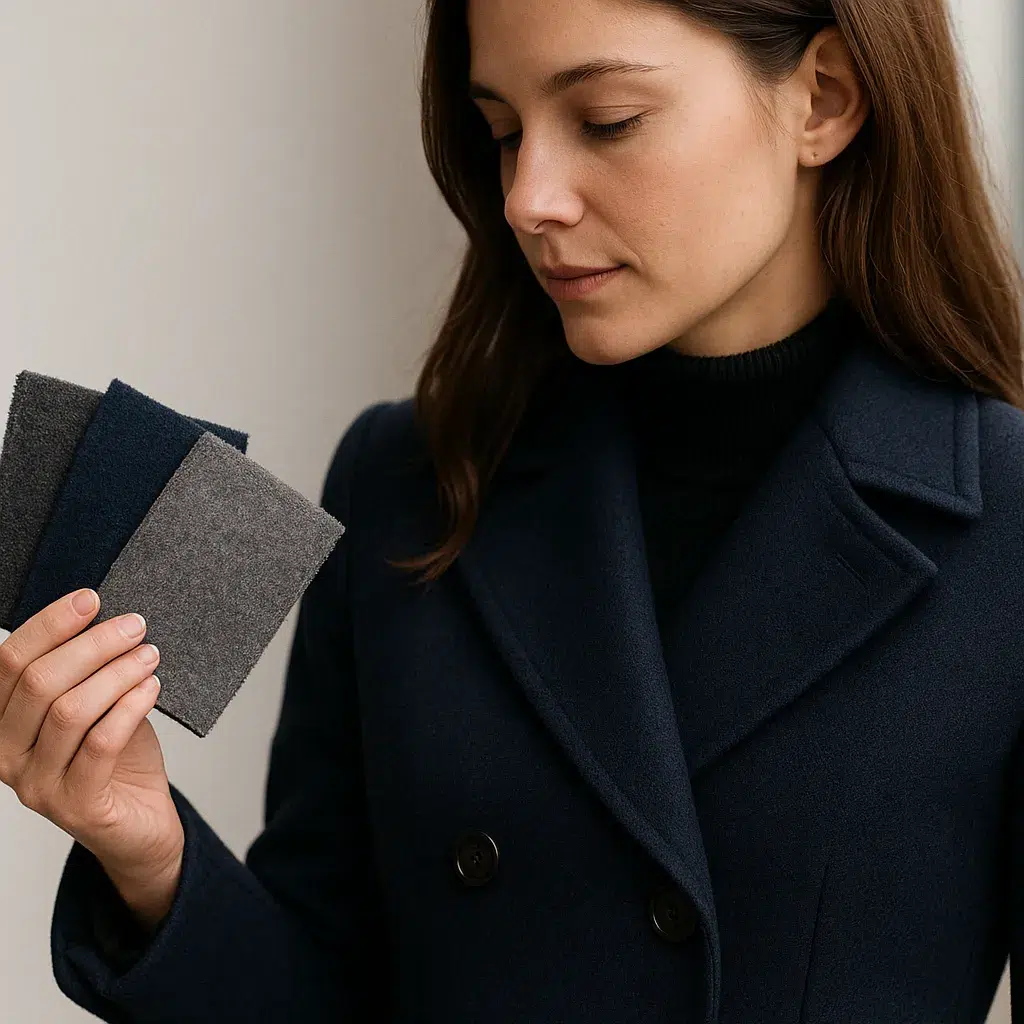
I build fabric choice around climate and price bands. For “winter peacoat women” in cold cities, I spec wool melton at 680–750 gsm with tight finish. For “women’s peacoat sale” targets or entry lines, I use 50–70% wool blends near 550–620 gsm to keep margins. I ask mills for test cards and I run pilling (Martindale), dimensional stability, and colorfastness to rubbing and sweat. A “womens wool pea coat” that pills in week two is a lost customer. I line with 100% recycled polyester or viscose and add a thin interlining for drape. For “black pea coat womens” I choose solution-dyed or high fastness dyes to avoid seam shading. If a buyer requests “designer pea coat womens” or “custom peacoat,” I propose cashmere-blend tops (5–10% cashmere) and horn buttons. When a client needs “women’s pea coats on sale,” I maintain structure but adjust pocketing and trims to protect the look.
Fabric options I use
| Segment | Shell Composition | GSM Range | Handfeel | Why I pick it |
|---|---|---|---|---|
| Core | 80–90% wool, 10–20% nylon | 600–720 | Dense, smooth | Durable, wind-blocking |
| Premium | 90–100% wool, 0–10% cashmere | 650–780 | Rich, soft | Luxury feel, warmth |
| Value | 50–70% wool, 30–50% poly/viscose | 550–640 | Lighter | Price point, volume |
How do I nail fit and length in a fitted peacoat?
Shoppers leave when sleeves pull and hips bind. Fit is the first review.
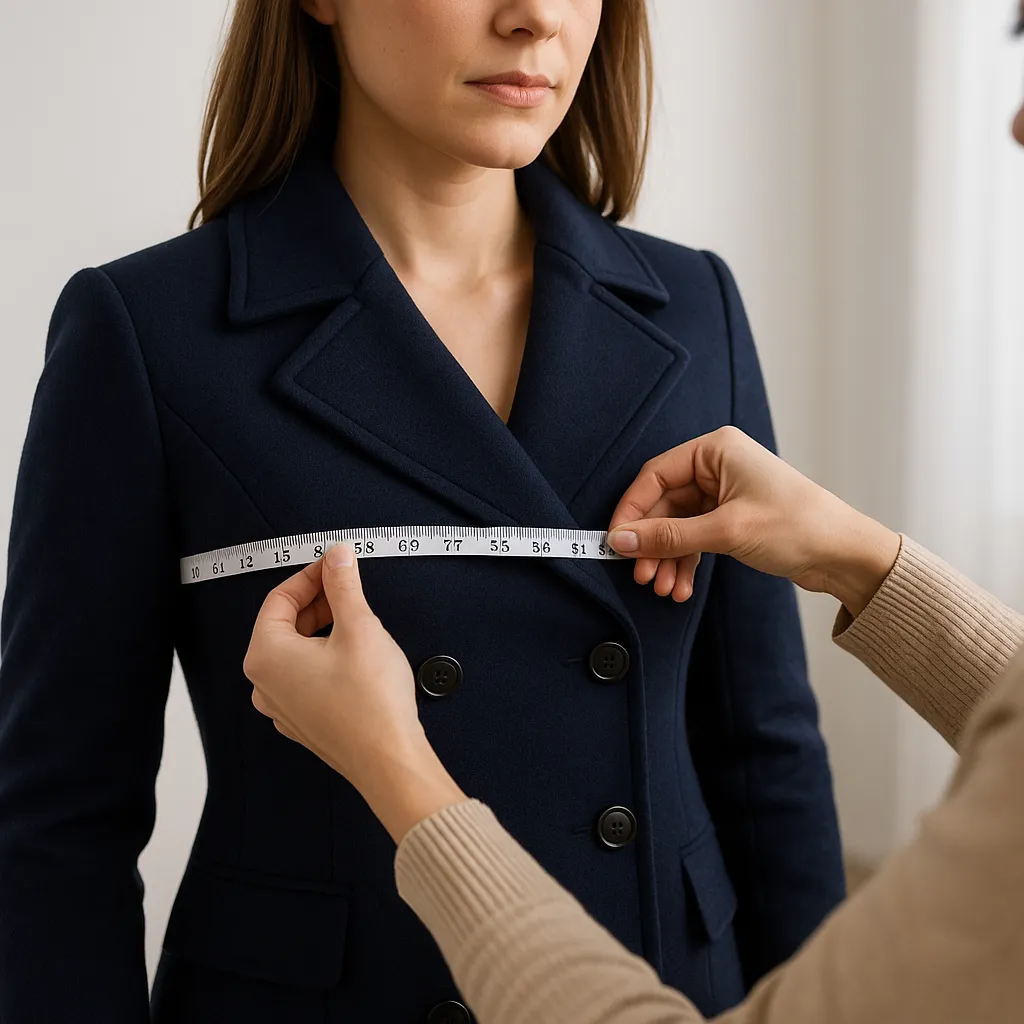
Measure shoulders, bust, hip, sleeve, and back length. Use a fitted peacoat womens block with 8–10 cm ease at bust and graded sleeve lengths across sizes.
Dive deeper
I start every “women’s peacoats” program with a base size try-on. I ask for your core customer data by region. Northern buyers often want longer sleeves and more bust ease. For a “fitted womens peacoat,” I reduce body ease but keep shoulder mobility with a two-piece sleeve and higher armhole. I confirm the button stance so the overlap covers sweaters. I run a movement test: sit, lift, and cross arms. I mark the balance so the lapels sit flat, even on a “womens dress pea coat.” For long pea coats for women, I add a back vent. For petite edits, I shorten body and sleeve, not only hem. For plus sizes, I add across-back width and move pockets for comfort. I also spec separate graded sleeve lengths so fewer shoppers visit tailors.
Length and body map
| Body Priority | Best Length | Notes | Typical Use |
|---|---|---|---|
| Mobility | Hip | Classic pea jacket womens | Commute |
| Warmth | Mid-thigh | Long pea coats for women | Colder cities |
| Dressy | Mid-thigh, clean front | Fitted pea coat | Work, events |
How do I control quality, certificates, and on-time delivery?
Bad QC, fake papers, and late ships kill seasons. I stop that early.
Set a milestone calendar, audit certs, and lock AQL inspections. Use pre-PP, PP, inline, and final checks. Tie payments to passed gates.

Dive deeper
I keep control with four gates: pre-PP sample, PP sample, inline inspection, and final inspection. I verify ISO 9001 for systems and OEKO-TEX or equivalent for fabrics. I never accept scanned certificates without number checks and issuing body contacts. For a “women’s wool pea coat,” I confirm fiber content with third-party tests on bulk rolls. I set AQL levels with you, usually 2.5 for major defects. I record button pull tests, seam strength, and color bleeding on dark colors like “navy pea coat womens” and “black peacoat women.” I use a production tracker that lists cutting, sewing, washing (if any), and finishing dates. I book vessels or air space once PP passes, not later. I accept LC, TT, or OA with insurance, but I link balances to passed finals. This is how I ship “winter women’s peacoat” orders in time.
Sample timeline I propose
| Week | Milestone | What I check | Payment/Sign-off |
|---|---|---|---|
| 0–1 | Tech pack & costing | Specs, trims, target FOB | PO sign |
| 2–3 | Pre-PP sample | Fit, fabric hand, color | 30% deposit |
| 4–5 | PP sample | Buttons, lapel roll, stitching | Bulk go |
| 6–8 | Inline AQL | Seams, sleeve set, labels | Corrective actions |
| 9–10 | Final AQL & tests | Pilling, pull tests, cartons | Balance, ship |
Conclusion
Pick dense wool, confirm fit on base sizes, lock QC gates, and tie payments to milestones. This turns peacoats for women from a risk into a reliable winner.
Views: 148