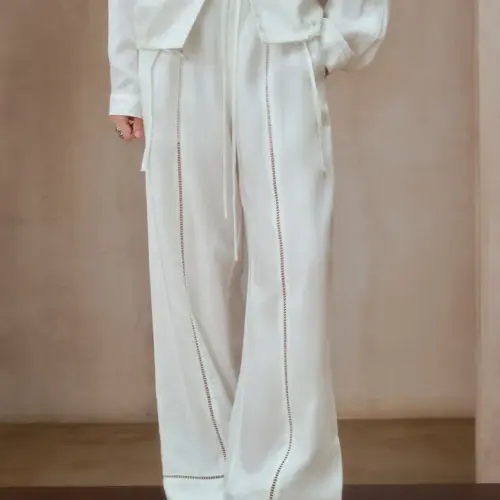
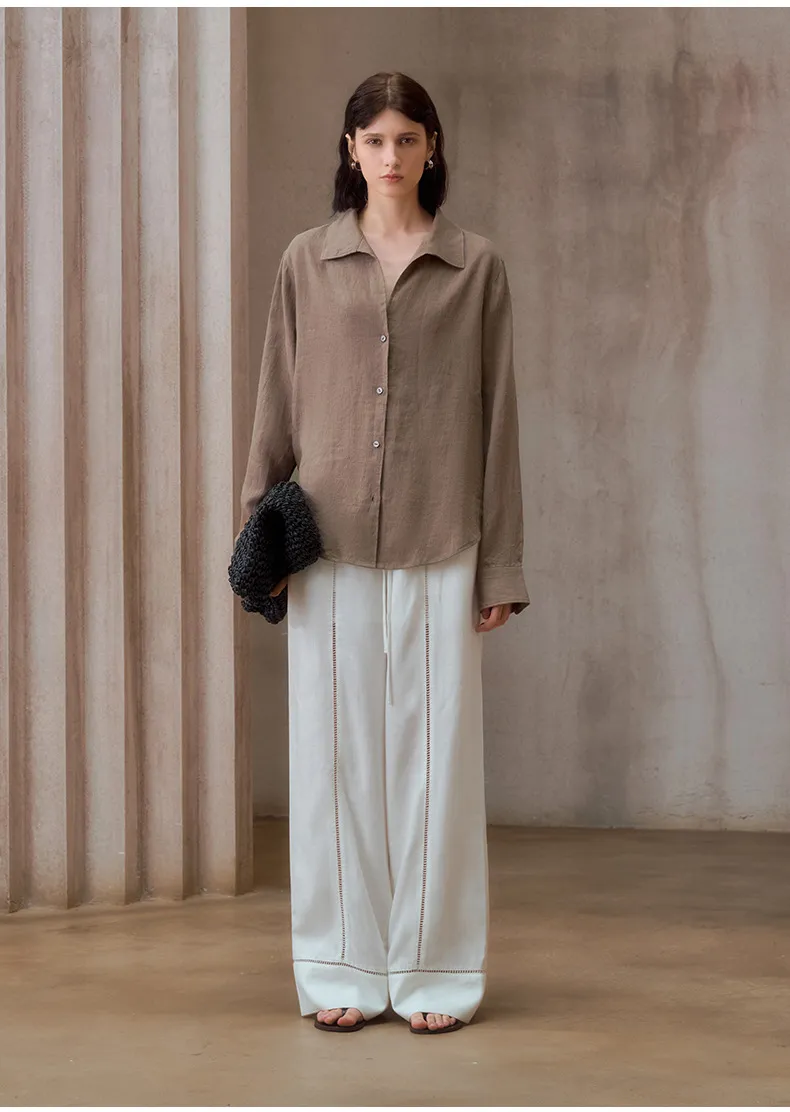
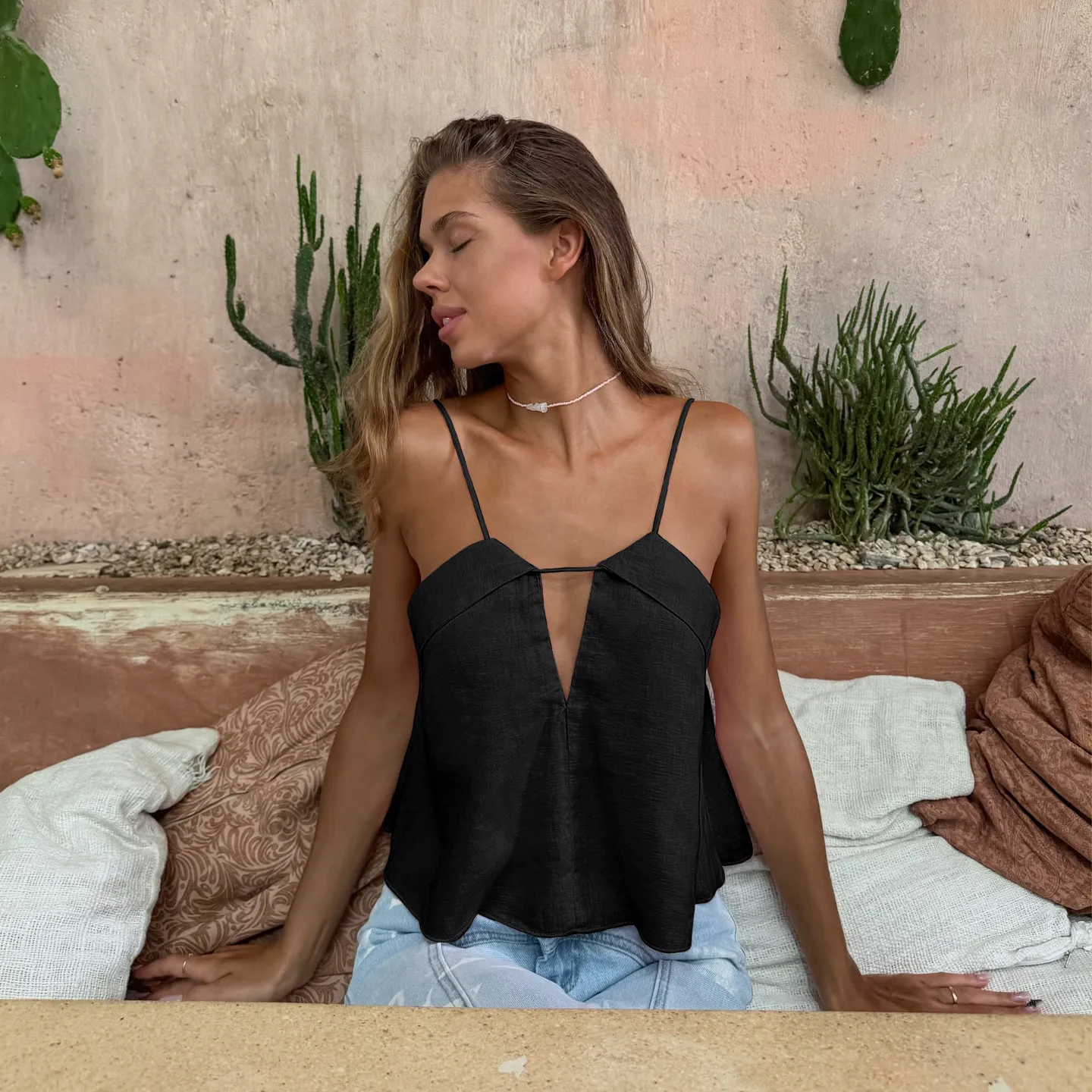
Gemiste seizoenen beginnen met slechte monsters. Wanneer uw technisch pakket Als het nog niet klaar is, kun je nog weken kwijt zijn aan wachten. Ik zie het vaak gebeuren en het doet pijn.
Ja, een fabriek kan uw ontwikkeling bevorderen steekproef Zonder een compleet technisch dossier, maar alleen als je duidelijke minimale input geeft: referentiefoto's, afmetingen, stofvoorkeuren en de gewenste pasvorm. Ik beschouw het eerste sample als een verkennende test, waarna ik de specificaties vastleg in een eenvoudig technisch dossier voordat ik met de massaproductie begin.
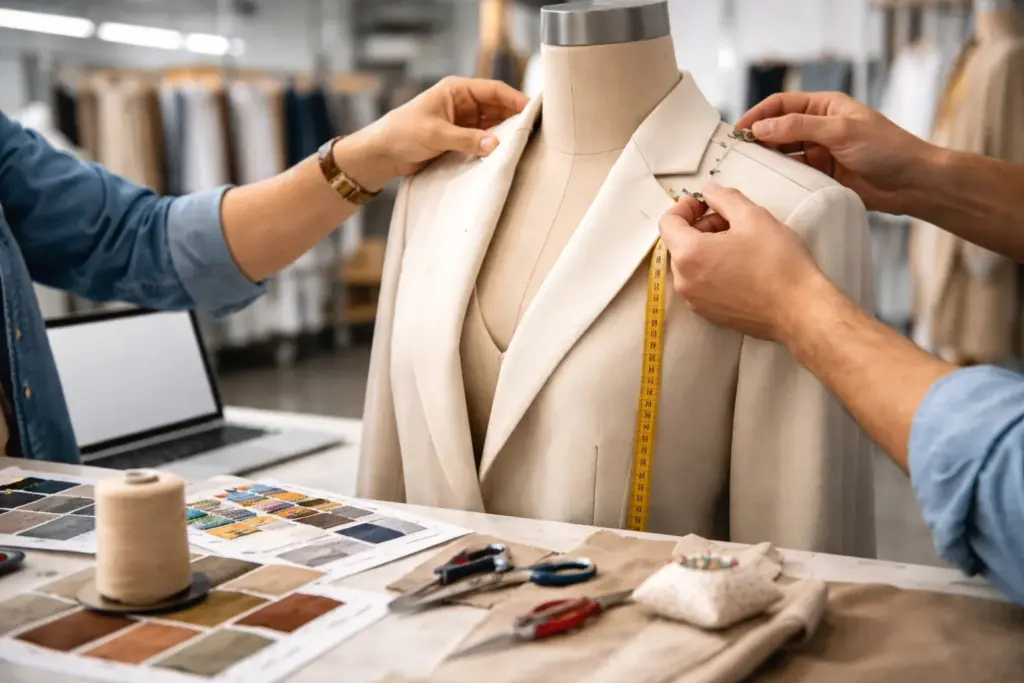
Ik wil dat je snel vooruitgang boekt, maar ik wil ook dat je 's nachts goed slaapt. Ik kan met beperkte informatie al beginnen met het ontwikkelen van kledingmonsters, en dat doe ik ook vaak, maar de eerste keuzes bepalen uiteindelijk de kosten en de kwaliteit, dus lees vooral verder.
Wat kan ik in plaats van een compleet technisch dossier opsturen om te beginnen met de ontwikkeling van kledingmonsters?
Een leeg technisch dossier kan een project stilleggen. Een rommelig WhatsApp-gesprek kan dat ook. Ik heb een beknopt overzicht van de feiten nodig, anders ga ik gissen, en gissen kost geld.
Je kunt beginnen met het maken van proefmodellen zonder een technisch specificatiepakket als je een compact "startpakket" aanlevert met duidelijke foto's, streefmaten, stofspecificaties en een pasvorminstructie. Ik gebruik dat startpakket om het eerste prototype te maken en zet het vervolgens om in een basis technisch specificatiepakket voor een kledingfabrikant, voordat er revisies plaatsvinden.
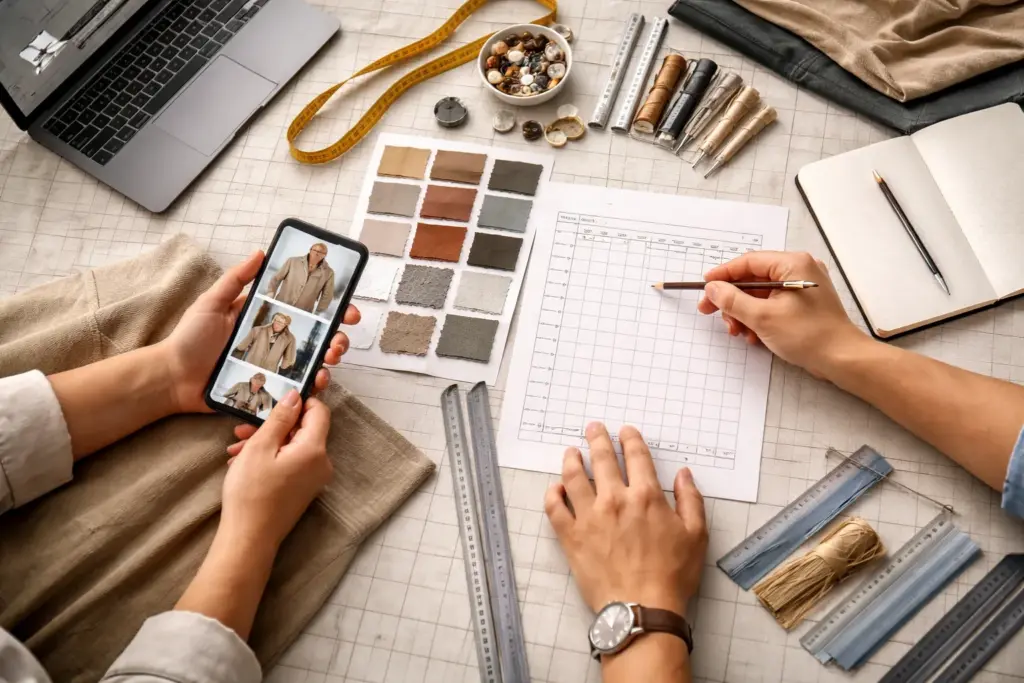
Het minimale startpakket dat ik vraag
Als een inkoper me vraagt: "Kun je kleding maken zonder technisch specificatiepakket?", zeg ik ja, maar ik zeg er ook bij: ik heb voldoende informatie nodig om blinde vlekken te voorkomen. Ik heb ooit met een inkoper gewerkt die slechts één foto van de voorkant stuurde. Ik kon wel een sample maken, maar de pasvorm paste niet bij haar merk. We verloren een ronde. Daarna gebruikte ik een simpele checklist en het volgende sample was bijna perfect. Diezelfde checklist gebruik ik nog steeds, zelfs voor ervaren inkopers zoals Maria, die snel handelen en het gesprek leiden.
Dit is wat ik je vraag op te sturen voordat ik de stof ga knippen:
| Item | Wat ik van jou nodig heb | Waarom het belangrijk is bij steekproeven |
|---|---|---|
| Referentieafbeeldingen | Voorkant, achterkant, binnenkant, close-ups | Ik kan de naden, biezen, de vorm van de zakken en de voering zien. |
| Doelgroep + aansluiting | “Ontspannen,” “slank,” “oversized,” met lichaamsbasis | Pasvorm bepaalt het patroon en het draagcomfort, niet alleen de maataanduidingen. |
| Kernmetingen | Borstomvang, lengte, schouderbreedte, mouwlengte, zoom, taillehoogte | Ik kan een eerste patroon ontwerpen zonder te hoeven gokken. |
| Stoffen doel | Vezels, gewicht, elasticiteit, gevoel in de hand | De stof beïnvloedt de valling, krimpt en maakt verschillende stikkeuzes mogelijk. |
| Trimlijst | Ritssluitingstype, knoopgrootte, label, hangtag | Trimmen beïnvloedt de doorlooptijd en het kwaliteitsrisico. |
| Bouwinstructies | Naadtype, doorstikbreedte, voering, tussenvoering | De naaistappen bepalen de kosten en het uiterlijk. |
| Kleurrichting | Pantone of een fysiek staaltje | Kleurafstemmingen werken niet wanneer woorden in plaats van cijfers worden gebruikt. |
| Voorbeelddoel | “Alleen passen,” “fotovoorbeeld,” “verkoopvoorbeeld” | De afwerkingsgraad beïnvloedt de tijd en de prijs. |
Hoe ik van jouw starterspakket een eerste proefexemplaar maak
Ik behandel het eerste sample alsof het de ontwikkeling van een kledingprototype is. Ik maak iets dat je kunt aanraken, meten en beoordelen. Ik begin met een patroon gebaseerd op je belangrijkste maten en gewenste pasvorm. Als je exacte stof niet op voorraad is, kies ik de meest geschikte stof die ik heb. Ik noteer elke aanname die ik maak. Ik stuur je een duidelijke lijst met aannames en foto's. Ik doe dit omdat kopers een hekel hebben aan verrassingen. Ik doe dit ook omdat de volgende stap is om de aannames één voor één te schrappen, totdat we een stabiele specificatie hebben die geschikt is voor massaproductie.
Als u snelheid wilt, vraag ik u om aan te geven wat voor u het belangrijkst is. Sommige kopers willen precies de juiste uitstraling. Sommige kopers willen precies de juiste pasvorm. Sommige kopers willen precies de juiste stof. Ik kan op één of twee punten inzetten, maar ik kan niet op alle drie tegelijk inzetten in de eerste ronde zonder extra kosten en tijd. Wanneer u mij uw prioriteiten vertelt, kan ik het sample zo plannen dat uw winstmarge behouden blijft.
Hoe verloopt het proces voor het ontwikkelen van kledingmonsters als er details ontbreken?
Ontbrekende details verlengen de testcyclus. Een lange cyclus kost het hele seizoen. Ik heb gezien dat kopers een volledige lanceringsperiode misliepen omdat het team te laat kleine wijzigingen doorvoerde.
Het ontwikkelingsproces voor kledingmonsters werkt nog steeds zonder een volledig technisch dossier, maar ik hanteer strengere controlepunten: ik documenteer aannames, bevries de pasvorm eerder en leg de specificaties vast in een eenvoudig technisch dossier na het eerste of tweede monster.
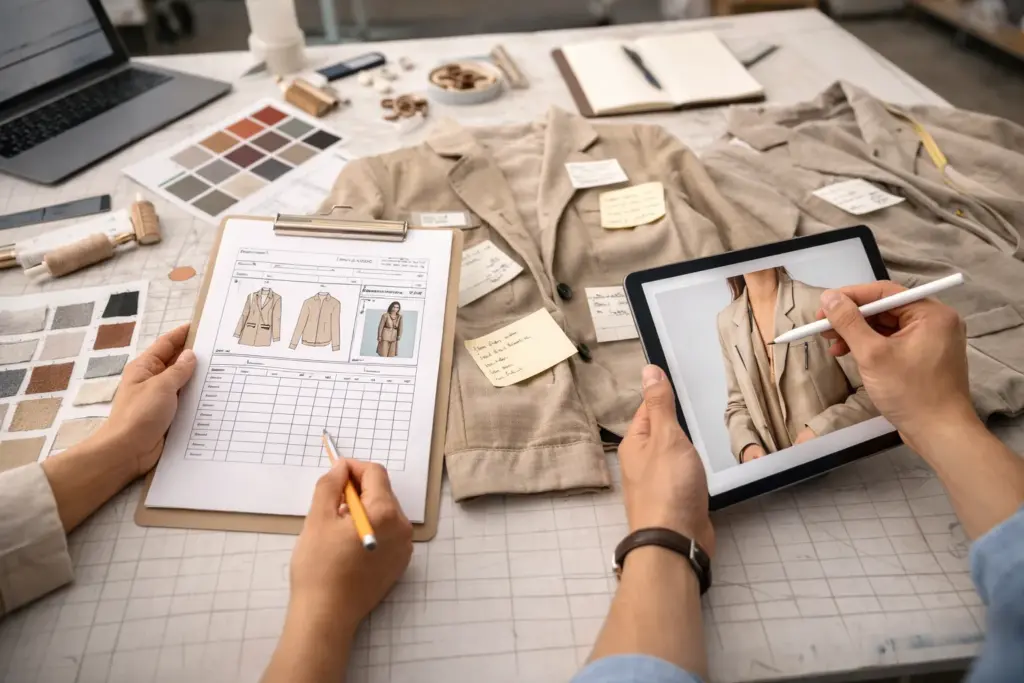
Dit is de voorbeeldworkflow die ik gebruik als je technische documentatie onvolledig is.
Ik gebruik een stapsgewijs proces zodat je kunt zien waar de tijd naartoe gaat. Ik gebruik het ook om te voorkomen dat mijn team problemen verbergt. Ik voer dit proces uit in Truekung omdat we groothandelklanten bedienen en zij hebben behoefte aan consistente kwaliteit.
1) Ik stem het doel van het sample af. Ik vraag of dit sample bedoeld is voor de pasvorm, de foto, de kostenberekening of de goedkeuring van de koper.
2) Ik ontwerp het patroon. Ik gebruik uw basismaten, uw referentiemateriaal en mijn patroonbibliotheek.
3) Indien nodig zorg ik voor vervangend materiaal. Ik geef aan wat vervangend materiaal is en wat definitief is.
4) Ik maak het eerste proefexemplaar. Ik voer de basisafwerking uit en voorzie het van een duidelijk etiket.
5) Ik meet en registreer de gegevens. Ik stuur een meetgrafiek van het daadwerkelijke monster.
6) Ik verzamel jullie opmerkingen. Ik vraag jullie om aan te geven wat “moet veranderen” en wat “wenselijk is om te veranderen”.”
7) Ik herzie en actualiseer een specificatieblad. Dit vormt de basis voor het technische pakket dat door kledingfabrikanten gebruikt kan worden.
Waar ontbrekende details de grootste vertragingen veroorzaken.
Bij het maken van proefmonsters van kledingstukken zonder technische specificaties ontstaan de grootste vertragingen meestal door beslissingen die schriftelijk vastgelegd moeten worden. Ik zie deze punten steeds weer terugkomen:
| Ontbrekend detail | Wat gebeurt er? | Wat ik doe om het te voorkomen |
|---|---|---|
| Het begrip 'fit' is vaag. | Het proefstuk "ziet er goed uit", maar voelt verkeerd aan. | Ik vraag om een vergelijkbaar merk, stijl en maat. |
| Het gewicht van de stof is onbekend. | Draping verandert en de maat verschuivingen | Ik vraag naar GSM en rek % of een staaltje. |
| Specificaties voor stiksels en naden ontbreken. | De sierstiksels zien er goedkoop of ongelijkmatig uit. | Ik stel twee opties voor, inclusief foto's en prijsopgave. |
| Tolerantie is niet gedefinieerd. | De hoeveelheid varieert te veel. | Ik heb een standaardtolerantie ingesteld en vraag u deze te bewerken. |
| De eisen met betrekking tot etikettering en naleving zijn onduidelijk. | Herwerk het aan het einde. | Ik vraag naar markten en verplichte etikettering. |
Hoe ik het vertrouwen behoud wanneer kopers zich zorgen maken over kwaliteit en certificaten.
Sommige kopers vertellen me dat ze bang zijn voor vervalste certificaten. Ik begrijp die angst. Ik heb kopers ontmoet die er de dupe van zijn geworden. Ik pak dit aan met procedures, niet met beloftes. Ik deel wat we hebben en wat we niet hebben. Ik leg ook uit hoe we de gegevens verifiëren. Als een koper een stofproef nodig heeft, raad ik een onafhankelijke partij aan om de testen uit te voeren. Als een koper fabrieksaudits nodig heeft, ondersteun ik dat met documenten en, indien mogelijk, met bezoeken ter plaatse. Ik wil niet dat een project mislukt omdat het vertrouwen op het laatste moment is geschaad. Een onvolledig technisch dossier brengt al risico's met zich mee, dus ik verminder die risico's op andere gebieden. Ik zorg er ook voor dat de communicatie helder en transparant is. Ik stuur na elk monster één samenvattend bericht met duidelijke foto's, afmetingen en open vragen. Ik doe dit omdat slechte communicatie een van de snelste manieren is om een seizoen te verliezen.
Wanneer moet ik stoppen met het testen zonder technisch pakket en er zelf een bouwen?
Snelle proefnemingen kunnen spannend aanvoelen. Maar ze kunnen ook problemen aan het licht brengen. Als je steeds van idee verandert, zal je bulkbestelling je daar later de rekening voor presenteren.
Je moet stoppen met het maken van samples zonder technisch specificatiepakket zodra de pasvorm en het silhouet goed zijn, omdat het volgende risico inconsistentie in de massaproductie is. Ik maak een eenvoudig technisch specificatiepakket direct na de eerste goedkeuringen, zodat het verschil tussen de sample en de massaproductie klein blijft.
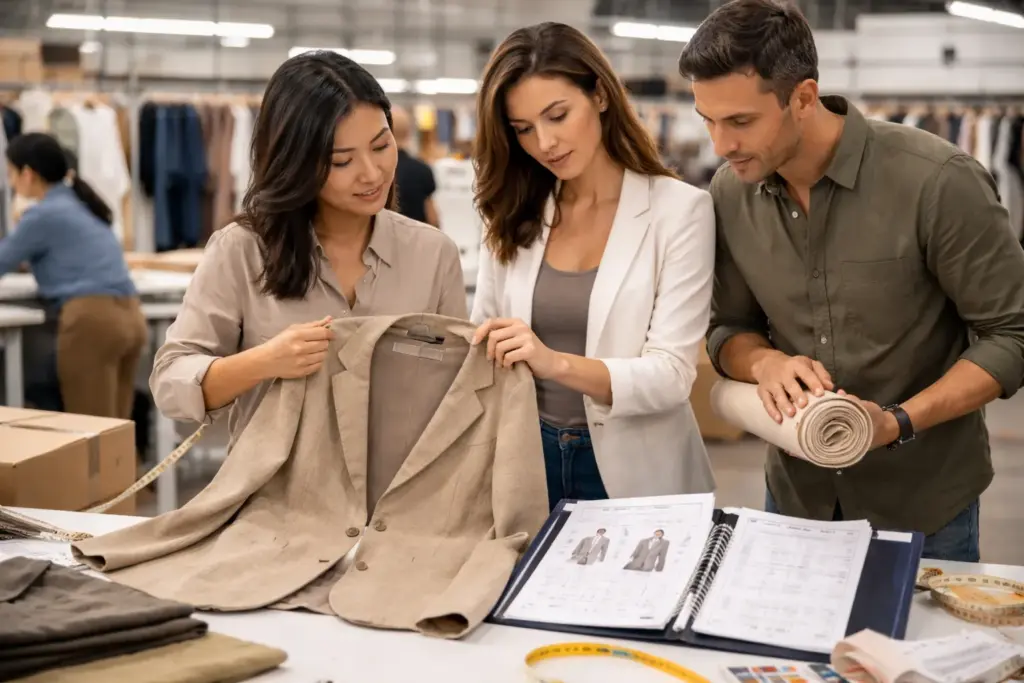
Op het moment dat ik aandring op een technisch pakket, zelfs een simpel pakket, zal ik het niet accepteren.
Ik heb geen ingewikkeld document nodig. Ik heb één betrouwbare bron van informatie nodig. Ik heb talloze geschillen gezien die begonnen met één ontbrekende regel. Een koper zei "strakke manchetten" in de chat. Mijn team las het als "smalle manchetopening". De koper bedoelde "sterke elastische spanning". Het sample zag er prima uit. Maar de bulk voelde verkeerd aan. Dat was het moment waarop ik leerde dat het belangrijk is om de intentie te volgen, niet alleen de cijfers.
Dit is de aanpak die ik hanteer: zodra je het pasmodel en de hoofdrichting van de stof hebt goedgekeurd, stoppen we met "gissen". Dan gaan we over naar "controlemodus". Voor de controlemodus is een technisch specificatiepakket nodig, zelfs als dat kort is.
Hoe ik samen met kopers, die beginnen met schetsen, een praktisch technisch pakket samenstel.
Sommige kopers vragen me hoe ze een technisch pakket moeten maken, terwijl ze alleen een schets hebben. Ik houd het simpel. Ik bouw het stap voor stap op. Ik probeer geen handboek te schrijven. Ik beschrijf wat de naailijn nodig heeft.
| Technische specificaties | Wat ik erin opneem | Wie gebruikt het? |
|---|---|---|
| Stijloverzicht | Platte schets, foto's, toelichtingen | Patroon, naaien, kwaliteitscontrole |
| BOM (stuklijst) | Stof, voering, versieringen, labels, garen | Inkoop, kostenteam |
| Metingsspecificatie | POM-lijst, gesorteerde maten, tolerantie | Patroon, QC |
| Bouw | Steektype, naadtype, SPI, doorgestikte steek | Naaileider |
| Kunstwerken en etiketten | Plaatsing, grootte, bestandsformaat | Drukwerk, verpakking |
| Verpakking | Plastic zak, karton, vouwmethode | Magazijn |
Ik voeg ook een lijst toe met dingen die ik niet wil veranderen. Daarop zet ik 3 tot 5 items die je stijl bepalen. Bij een jasje kan dat bijvoorbeeld de vorm van de schouders, de kraag en het type rits zijn. Bij een jurk kan het de halslijn, de taille en de zoombreedte zijn. Deze lijst is handig als je haast hebt en er nog kleine wijzigingen insluipen.
Hoe een technisch pakket uw bulkproductie beschermt
In de groothandel zit het echte geld in massaproductie. Monstername is een hulpmiddel, niet het doel op zich. Wanneer de specificaties vaststaan, kan ik de kwaliteitscontrole trainen met echte cijfers. Ik kan een inspectieplan opstellen. Ik kan krimp- en waseffecten beheersen. Ik kan ook nauwkeuriger prijzen. Veel kopers willen concurrerende prijzen, maar ook een stabiele kwaliteit. Een technisch specificatiepakket ondersteunt beide. Het vermindert herwerk. Het vermindert afval. Het vermindert discussies. Het helpt je ook om fabrieken eerlijk te vergelijken, omdat je hetzelfde bestand naar twee leveranciers kunt sturen en de werkelijke kosten kunt vergelijken.
Ik heb nog steeds respect voor snelheid. Ik vertraag je niet met papierwerk voor het eerste prototype. Ik voeg alleen papierwerk toe als het je seizoen en je winstmarge redt. Dat is het punt waarop "kledingontwerp naar productie" daadwerkelijke productie wordt, en niet slechts ideeën.
Conclusie
Ik kan wel beginnen met het testen zonder een compleet technisch pakket, maar ik heb wel een degelijk starterspakket, duidelijke controlepunten en een eenvoudig technisch pakket nodig voordat ik in bulk ga produceren, zodat de kwaliteit constant blijft.
Waarom ik dit schrijf
Ik ben Lancy Chia van Truekung in China. Ik run een fabriek met meer dan 200 werknemers. Ik richt me uitsluitend op B2B-groothandel en bied OEM/ODM-diensten aan voor merken en supermarkten. Ik heb 20 jaar ervaring met de export van modekleding. Ik produceer dameskleding, jassen, rokken, jurken, jeans, T-shirts, sweatshirts, donsjassen, windjacks, mantels, tassen, sportkleding, kinderkleding en ondergoed. Ik lever aan Nederland, Denemarken, België, Noorwegen, het Verenigd Koninkrijk, de VS, Duitsland, Australië, Thailand, Turkije, Italië, Rusland, Saoedi-Arabië en meer. Wilt u een kledingmonster ontwikkelen met een concreet plan? Stuur dan een e-mail naar [email protected] of bezoek https://truekung.com.
Weergaven: 77