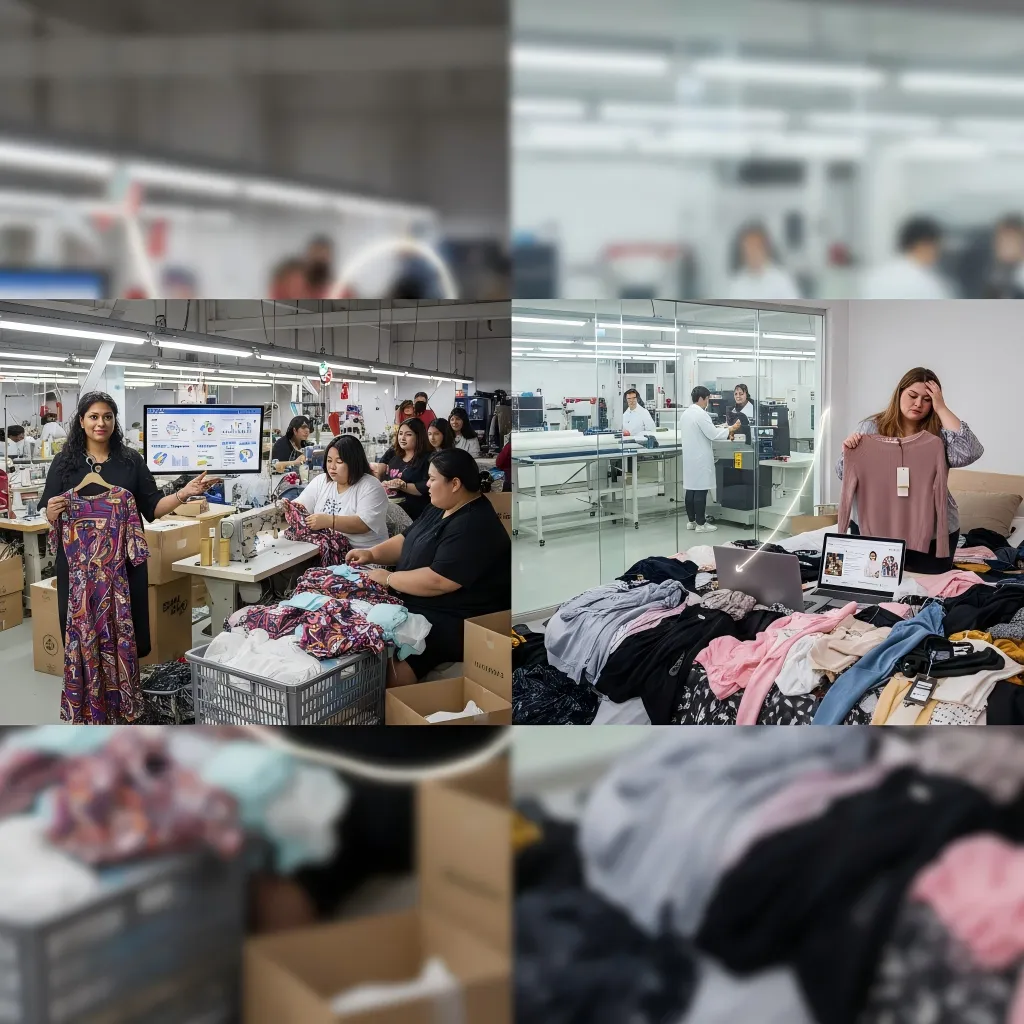

I see low prices and endless new styles, and I feel that pull. Then I see the hidden costs. I want to show you what Cider Curve really signals.
Yes, Cider Curve looks and behaves like fast fashion, and I do not see enough public proof for strong ethical or sustainability claims. I judge it by transparency, labor standards, materials, and end-of-life plans, not by marketing. In this post, I explain my checklist and how I compare Cider with Shein.
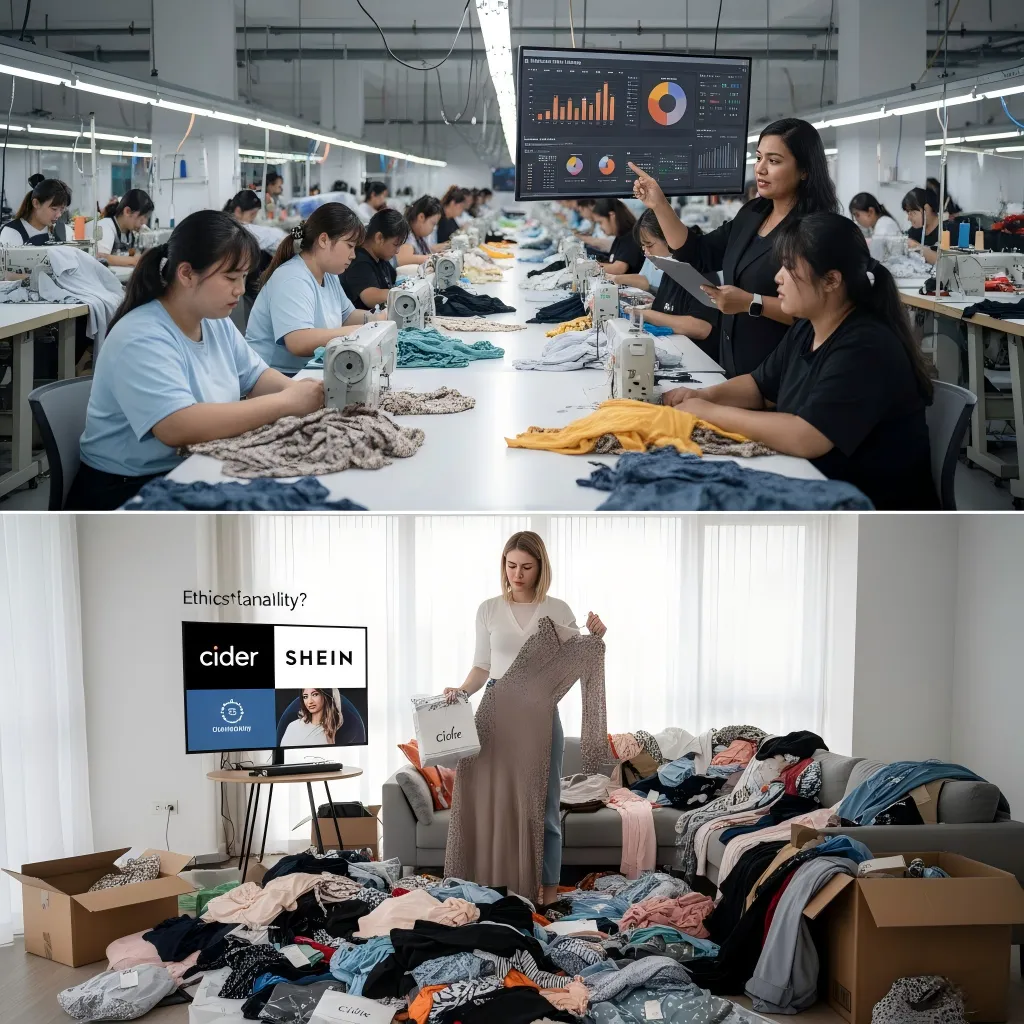
I get why this topic feels messy. I sell clothing for a living, and I still want clear lines. I will keep it practical, and I will share the signals I watch so you can decide with your own values.
Why do I call Cider Curve “fast fashion” when it looks size-inclusive?
Cheap clothes can feel like freedom. Then the fabric pills, and the fit shifts after washing. I have seen how speed and low cost usually create those problems.
Fast fashion is not about body inclusivity. Fast fashion is about speed, volume, and constant newness, even when quality and accountability cannot keep up. Cider runs frequent drops and trend-led collections, and that matches the fast fashion pattern I watch for.
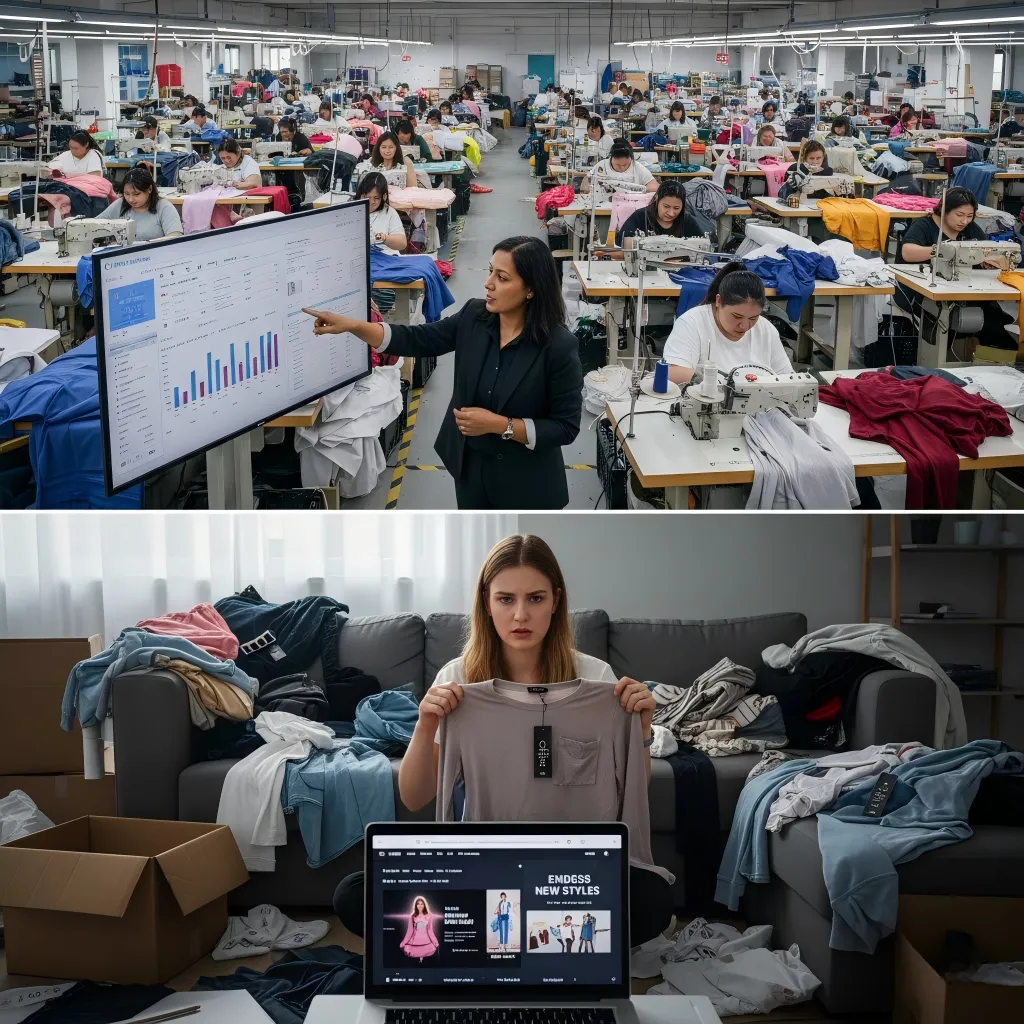
What “fast fashion” looks like from my factory desk
I run production in China, so I see the real constraints. A brand can push price down, but something must give. The brand can cut time for sampling. The brand can reduce fabric testing. The brand can skip deeper audits. The brand can pressure factories on lead times. None of this guarantees harm, but the risk rises fast when the business model depends on constant new items.
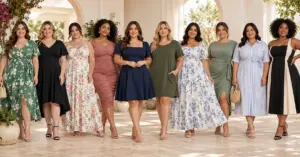
Cider Curve adds an important thing: more sizes and more styles for plus-size shoppers. I respect that need because many buyers tell me they feel ignored. Still, inclusive sizing does not prove fair pay, safe factories, or lower-impact fabrics. It only proves that the product range includes more bodies. One InStyle reviewer even said the brand has a strong plus-size selection and listed sizes up to 4XL, while still naming the ethical concern as “fast fashion.”
The “fast fashion signals” checklist I use
| Signal I watch | Why it matters to me | What I look for as proof |
|---|---|---|
| New styles drop constantly | It pushes overbuying and short product lifecycles | Public product cadence, SKU volume, and inventory strategy |
| Very low prices across many categories | It can squeeze wages, testing, and durability | Cost breakdown, wage programs, and quality standards |
| Trend-first marketing | It pushes “wear once” behavior | Repair guidance, care guides, and durability claims with tests |
| Big synthetic mix in many items | It often means microplastic shedding and fossil inputs | Clear fiber data, recycled content proof, and chemical policies |
| Little end-of-life planning | It shifts waste to the shopper | Take-back, resale, repair, or recycling programs |
When someone asks me “is cider fast fashion,” I do not answer by vibe. I answer by the signals above. Cider and Cider Curve hit many of them, so I treat them as fast fashion in practice.
Is Cider ethical when it comes to workers and transparency?
I hear “ethical brand” every day in buyer meetings. Then I ask for factory lists, audits, and wage standards. Many brands go quiet at that point.
I do not see enough public evidence that Cider meets a strong ethical standard across its supply chain. Ratings and deep dives point to limited transparency, unclear coverage of audits, and no clear living wage commitment, so I cannot call it an ethical brand with confidence.
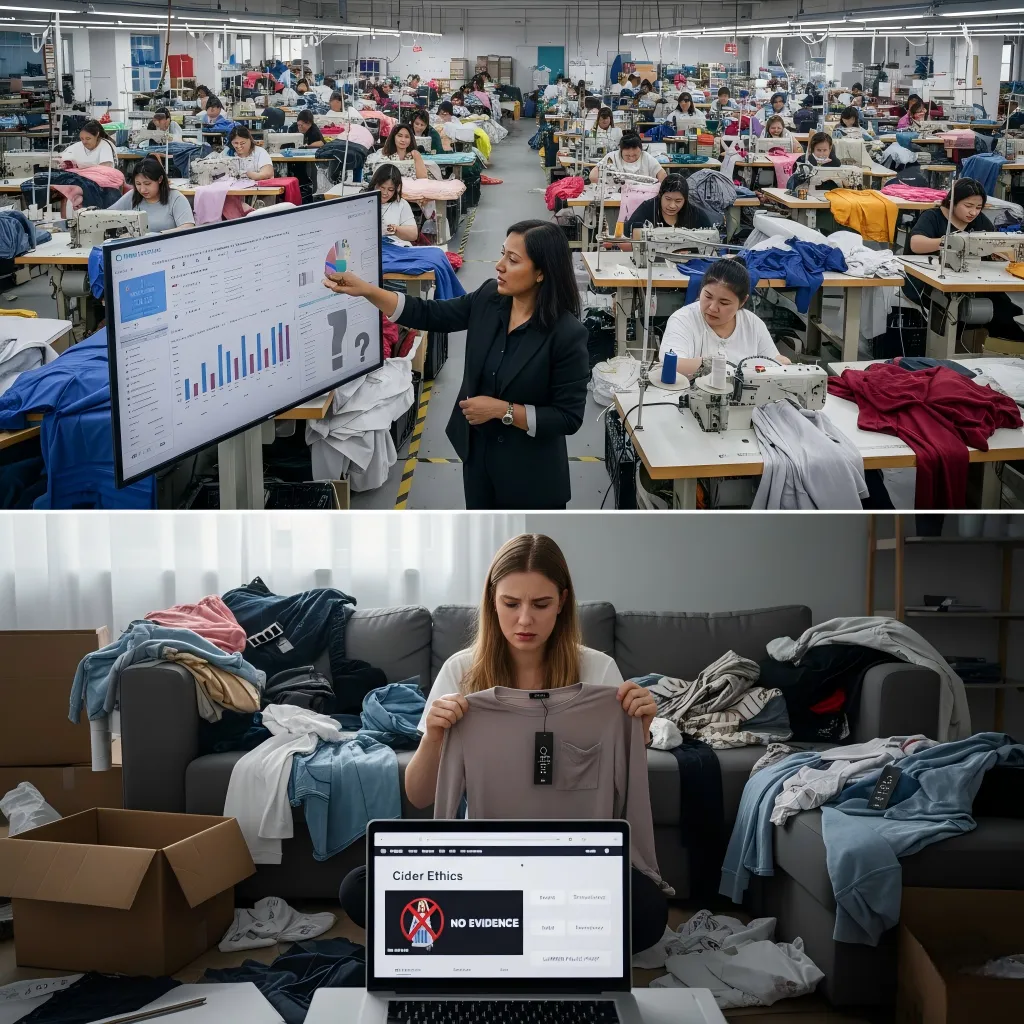
What “ethical” means to me in plain factory terms
I use a simple definition. Ethical means a brand can show who makes the product, how it checks safety, and how it prevents wage abuse. A buyer like Maria does not need perfect factories, but she needs proof that the brand has a system and it works.
When I audit my own supply chain, I track these basics:
- named factories (not just “we work with partners”)
- third-party audit types and dates
- corrective action results, not only certificates
- wage approach (minimum wage is not the same as living wage)
- overtime rules and peak-season controls
Good On You’s review of Cider says the brand gets the lowest overall rating and flags “no evidence” in several labor areas, including living wage coverage. A separate deep dive focused on Cider Curve says the curve line does not publish supplier lists or clear third-party audit evidence, so outsiders cannot verify conditions. I treat that gap as the core ethical problem, because I cannot inspect what I cannot see.
A verification table I use with buyers
| Brand claim | Proof I ask for | Risk if proof is missing |
|---|---|---|
| “We audit factories” | Audit standard (SMETA, BSCI, etc.), scope, and follow-up actions | Audits may be partial, old, or only “pass/fail” paperwork |
| “We pay fairly” | Living wage plan, wage benchmarks, and grievance channels | Workers may stay at legal minimums with heavy overtime |
| “We are transparent” | Full Tier 1 list, plus key mills for high-volume fabrics | Problems hide in the “unknown” part of the chain |
| “We care about safety” | Fire safety checks, building compliance, training records | Safety becomes reactive after incidents |
| “We protect workers’ rights” | Worker hotlines, union stance, remedy examples | Issues get buried when workers fear retaliation |
If someone searches “is cider an ethical brand” or “is cider clothing ethical,” I think they really want this: can I trust the system behind the garment. Right now, I do not see enough public system-level proof to say yes.
Is Cider more ethical than Shein, and what should I do if my budget is tight?
People compare Cider and Shein because both feel cheap and trendy. Then people feel stuck, because the budget is real. I respect that pressure.
Cider and Shein both sit inside the same fast fashion structure, and Good On You rates both at the lowest level overall. That means I do not frame this as “good vs bad.” I frame it as “less bad in some areas, but still not ethical enough.”
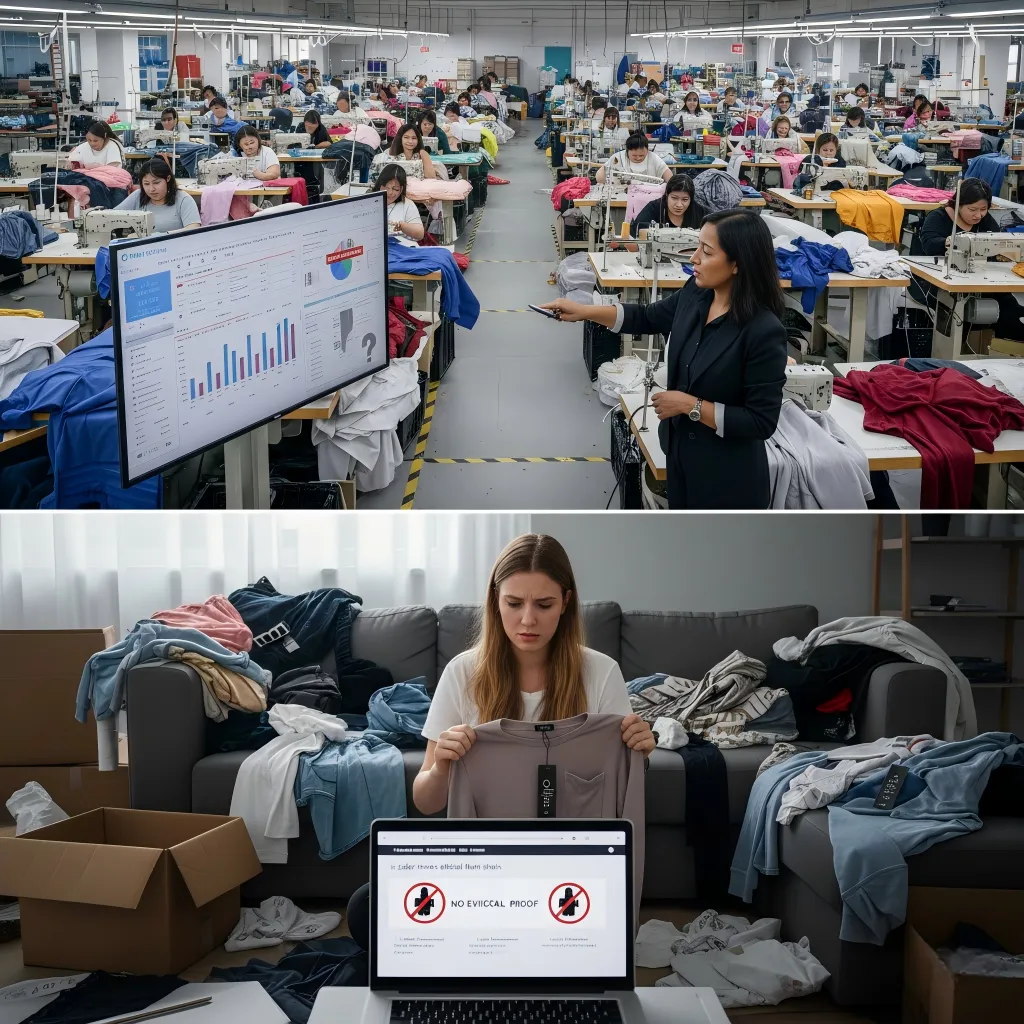
Head-to-head, using only what I can verify fast
| Topic | Cider / Cider Curve | Shein |
|---|---|---|
| Overall ethics rating in a major public directory | Lowest overall rating noted | Lowest overall rating noted, and the directory lists multiple gaps |
| Plus-size visibility | Strong marketing and selection reported by reviewers | Varies by region and category |
| Transparency style | Some information exists, but critics say it is not enough | Critics and ratings list major gaps |
| Sustainability messaging | Promotes “smart fashion,” recycled capsules, and packaging changes | Promotes various initiatives, but critics still call it ultra fast fashion |
| Core business model | Trend-led, frequent drops | Trend-led, frequent drops |
When someone asks me “is cider more ethical than shein,” I say this: I can imagine small differences in disclosure and category focus, but both models still push rapid consumption, and both still lack the level of proof I want before I use the word “ethical.”
The packaging and “green” language trap
Cider’s own blog says it planned a shift to d2w “biodegradable” bags and also promotes a recycled collection tied to GRS language. I do not ignore those steps, but I also do not treat them as a sustainability win by default. The EU has restricted oxo-degradable plastics in its single-use plastics rules, and EU documents have warned that oxo-degradable plastics can fragment and add to microplastic pollution rather than fully biodegrade in real conditions. Some industry groups argue about definitions and compliance, so the label alone does not settle it. I always ask for standards, testing conditions, and disposal reality.
If your budget is tight, I use this “least regret” plan
I tell friends and buyers to do the same three steps, because they work in every country:
- I buy fewer pieces, and I wear them more times.
- I pick fabrics that survive washing, even if the style is simple.
- I treat care as part of sustainability, so I wash cold and line dry when I can.
If you still buy from Cider, I suggest you shop like a quality inspector. You can check fabric composition, seam finish, and return policy before you cut tags. You can also avoid impulse hauls, because hauls are where fast fashion wins.
A quick note on messy search terms
People often type typos like “c i d e r,” “cidee,” “ciddr,” “cieder,” “ciderf,” or even “cider]” when they mean the same brand. I see those searches, and I answer them the same way: look for proof, not polish.
| What people type | What they usually mean | What they are really asking |
|---|---|---|
| cider | Cider clothing brand | is cider ethical / is cider fast fashion |
| c i d e r | Cider | can I trust the brand |
| cidee | Cider | is cider an ethical brand |
| ciddr | Cider | is cider clothing ethical |
| cieder | Cider | cider ethical, yes or no |
| ciderf / cider] | Cider | is cider more ethical than shein |
Conclusion
Cider Curve fits fast fashion signals, and I do not see enough public proof for strong ethical or sustainable claims. I buy less, check proof, and choose durability first.
Why I Write This
I am Lancy Chia from Truekung. I run a clothing factory in China with over 200 workers, and I support B2B wholesale and OEM/ODM for brands and supermarkets worldwide.
If you want a supplier who treats quality control, certification, logistics, and clear communication as daily work, you can reach me at [email protected], and you can visit https://truekung.com.
Views: 418