
The market is noisy. Labels shout “premium chinos,” but quality hides in small details. I use a simple checklist that saves time, money, and returns.
Good quality chinos use dense cotton or cotton-blend fabric, clean stitching, strong seams, and a stable fit after washing. I test fabric weight, weave, construction, trims, and shrinkage before I buy or approve a production run.
I keep this guide short and direct. I will share how I test fabric, how I judge construction, and how I check fit and durability. I will add stories from my factory floor. I want you to feel calm and in control before your next order of chino pants or womens chino pants.
Does the fabric feel dense and balanced without being stiff?
Many chinos look smooth in the store. Then they sag, shine, or twist after two washes. I learned that the wrong fabric wastes a whole season.
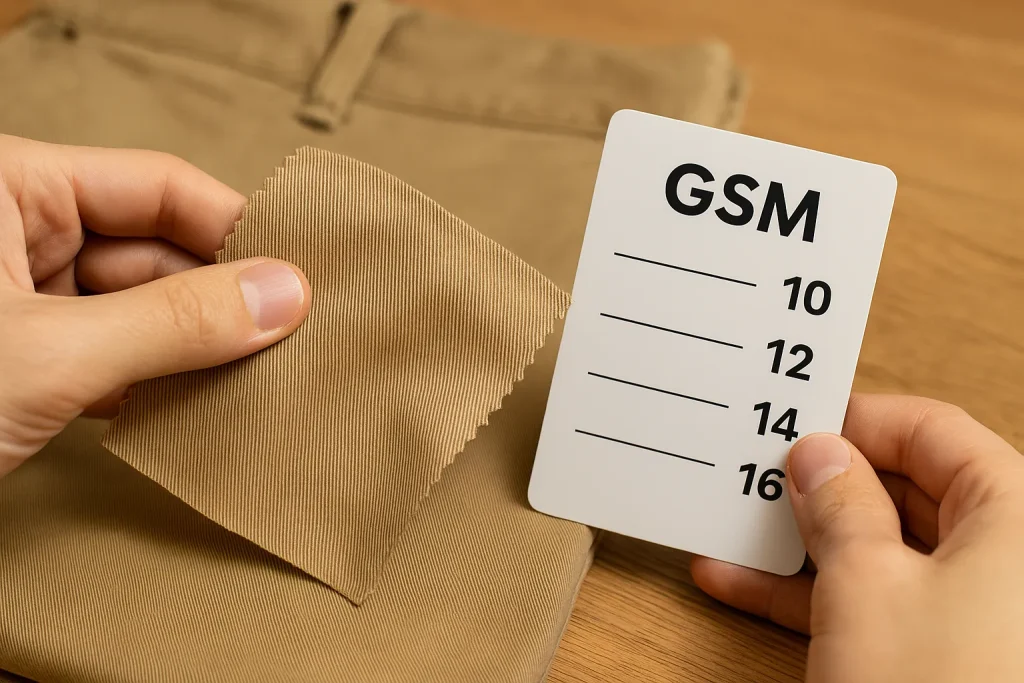
Good chinos start with a medium to heavy fabric (around 220–320 gsm) with a tight twill or broken twill. The handfeel should be soft but springy, not papery or waxy, and it should recover when I squeeze it.
I start with weight. I use grams per square meter (gsm). Light chinos at 180–200 gsm feel airy but often wear through fast at the seat and thigh. Midweight at 240–280 gsm gives the best balance for daily wear and for macys mens chinos or rapid movement chinos banana republic–style performance blends. I touch the face and the back. A good twill (3/1 or 2/1) shows a clean diagonal on the face and a flatter back. I bend the fabric. If white lines show, the yarn twist is weak or the dye is shallow. I rub with a white cloth. Heavy crocking means poor dye fixation. For premium chinos or designer chinos trousers, I also ask for mercerized or double-dyed yarns to get deeper color and better pilling resistance. For chinos for women, I check stretch blends: 1–3% elastane is enough. More stretch often means bagging. For “palitos chinos” or “chino broek” collections in Europe, I tag the fabric gsm on the spec sheet so buyers know exactly what they get.
Quick fabric checklist
| Item | Target | Why it matters |
|---|---|---|
| GSM | 240–280 | Durability without stiffness |
| Weave | Tight twill / broken twill | Drape + wrinkle control |
| Fiber | Combed cotton or cotton-modal | Smooth hand, fewer pills |
| Stretch | 1–3% elastane (optional) | Comfort without bagging |
| Color fastness | 4 grade or above | No rubbing or fading |
Are the seams straight, strong, and clean inside?
Pretty fabric fails if seams pop. I learned this the hard way on a rush order with weak thread and loose bartacks.
I look at seam density, thread quality, and reinforcement points. Good chinos use 10–12 stitches per inch, secure bartacks at stress points, and clean overlock without hanging threads.
I open the leg and check the inseam first. A chain stitch plus overlock is common, but the stitch balance must be even. I pull gently; the seam should not crack. I check the crotch seam. It needs a sturdy lockstitch and a bartack at the fly base. Pocket openings rip if the bartacks are weak or missing. I count stitches per inch (SPI). Under 8 SPI looks coarse and tends to snag. Over 13 SPI risks perforation on cheaper fabrics. I flip to the inside. I want trimmed thread ends, no bird-nesting, and no oil stains. I rub the inside seam against my wrist. If it scratches, the overlock is too rough for sensitive skin. For best chinos brand claims like incotex chinos or proper cloth chinos, I expect double-needle topstitch on the outseam and a clean waistband seam with stay tape. In our factory, I set an inline AQL for pocket shapes. Crooked pockets ruin the line and lead to returns, as I saw in a mr price chino trousers style order years ago.
Stitching targets
| Area | Spec | Common fault |
|---|---|---|
| SPI | 10–12 | Low SPI → seam cracking |
| Bartacks | Pockets, fly base, belt loops | Missing → tears |
| Overlock | 3–4 thread, trimmed | Loose threads |
| Topstitch | Even, 1/16″ from edge | Wavy lines |
Does the fit hold after washing and wearing?
Fit sells first, but fit shifts if patterns and finishing are weak. I never approve without a wash test.
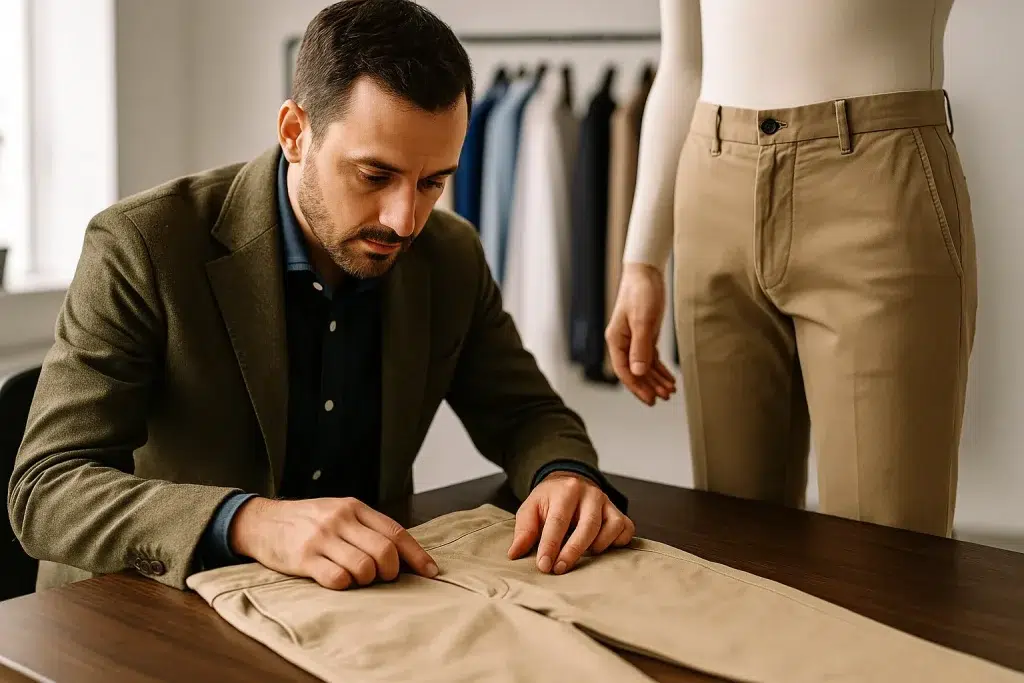
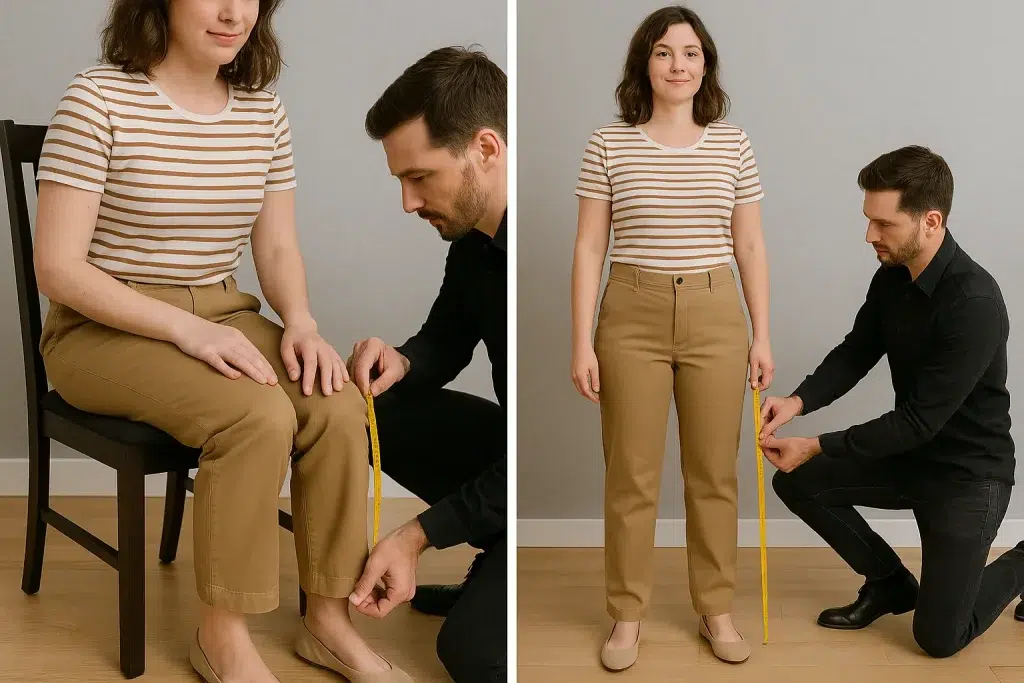
I wash and dry once on gentle, then hang. I measure waist, rise, thigh, knee, and hem. Good chinos shrink under 3% in length and under 2% in width, with no leg twist.
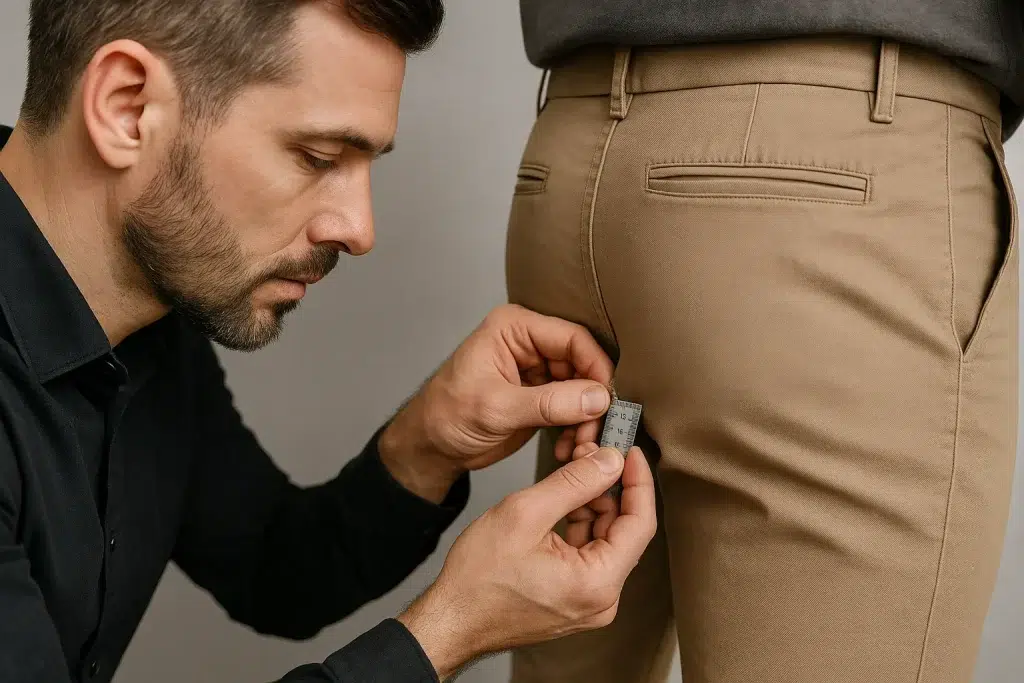
I mark the leg with a chalk line before I wash. After the wash, I check if the line spirals. A twist means skewed fabric or poor torque control. I compare pre-wash and post-wash measures. Waist should change less than 1 cm on most sizes. Length can shrink 1–2 cm; I allow it if the spec plans for it. I sit and stand ten times. If the seat bags and stays baggy, the yarn or the stretch blend is wrong. For old navy slim rotation chino pants reviews, many buyers mention knee bagging; the cure is better yarn recovery and tighter pattern at the knee. For rsq mens slim taper chino pants, the hem must stay clean and straight; floppy hems make shoes look wrong. For womens chino pants, I check that front rise does not pull when sitting. I also press once. Fabric should smooth fast with light steam. Heavy shine after pressing means low-grade resin or poor finishing.
Key fit points to measure
| Point | Tolerance after wash | Tip |
|---|---|---|
| Waist | ≤ 1% | Add stay tape in waistband |
| Inseam | ≤ 2–3% | Pre-shrink fabric |
| Thigh | ≤ 1–2% | Avoid over-stretch |
| Leg twist | 0–2° | Use skew control finish |
Are the trims and finishing built to last?
Small parts fail first. Buttons crack. Zippers jam. Labels itch. I learned to audit trims as seriously as fabric.
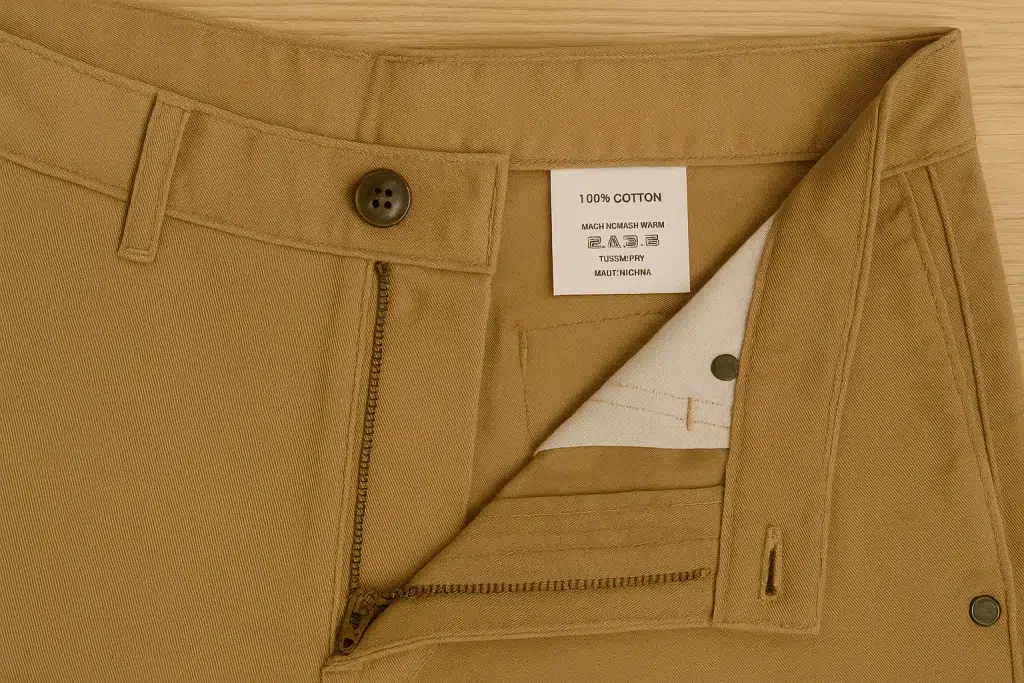
Choose branded zippers, resin or corozo buttons, tight belt loops, and pocketing that resists tearing. Good chinos use 100% cotton or poly-cotton pocketing at 120–150 gsm and lockstitch back tacks.
I pull the zipper ten times fast. It must not snag on the fly guard. Metal teeth feel classic, but a quality nylon coil is smooth and strong. I bend the button. If it flakes, it is cheap paint. I prefer corozo or thick resin for best quality chinos. I tug each belt loop. If one pops, the loop stitch path is wrong. I look at pocketing. Thin pocket bags blow out within weeks, especially on best mens chino pants worn daily. I ask for a pocketing spec. I want gram weight, fiber, and weave listed. For designer chinos trousers with a dress look, I ask for blind stitch hems and clean bar-tacks from the inside to keep the outside neat. For eddies chinos or best place to buy chinos lists, I check that hangtags match care labels and that spare buttons are attached. Fake or mismatched certifications are a red flag. I verify certificates directly with the issuer before shipment.
Trim checklist
| Trim | Good | Avoid |
|---|---|---|
| Zipper | Branded, smooth pull | Rough, off-brand |
| Button | Corozo/resin, thick | Brittle, flaking |
| Pocketing | 120–150 gsm | Sheer, tearing |
| Belt loops | Bartacked top/bottom | Single pass only |
Do brand and price match the build?
Names are loud. Value is quiet. I buy with my hands, not just with a logo or a sale sticker.
I compare spec sheets, not only price tags. A mid-priced pair with better fabric and construction beats a “designer” pair with weak details almost every time.
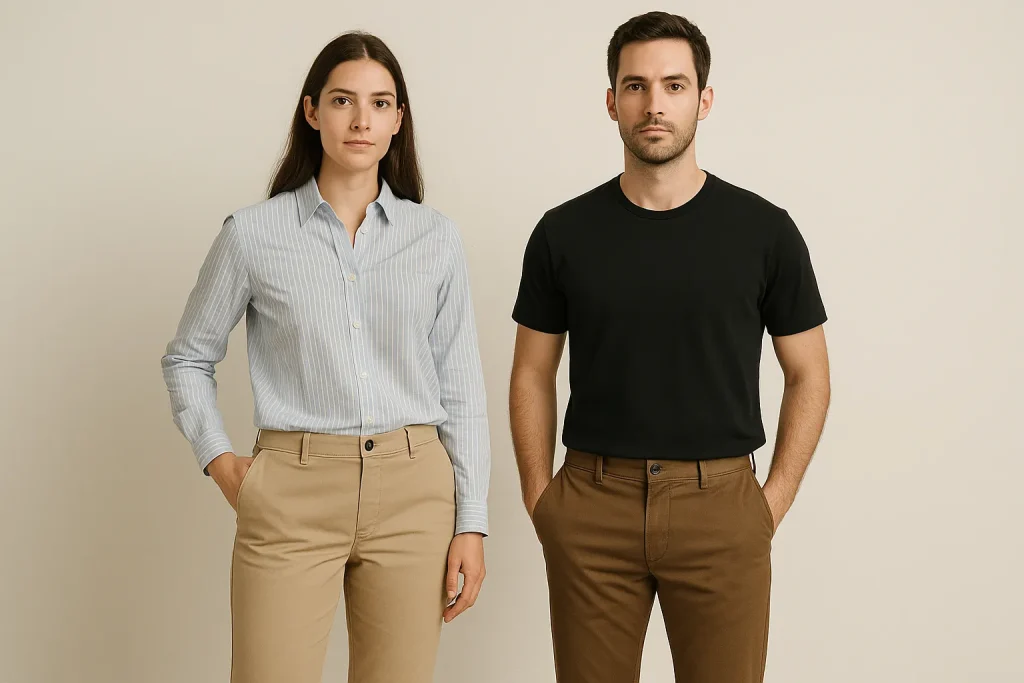
When I read perk chinos review or perk chinos reviews, I map comments to specs: fabric weight, stretch, pocket depth, seam strength. I do the same with proper cloth chinos, incotex chinos, and rapid movement chinos banana republic. For macys mens chinos or mr price chino trousers, I ignore hype and check basics. If two options look the same, I ask for test data: pilling, color fastness, seam slippage. I make a small table and decide. Often the “best place to buy chino pants” is the vendor who can show stable quality over time, not the lowest first price. For “best chinos brand” claims, I buy sample pairs and do the same wash and wear test. I track results in a simple sheet. Good chinos prove themselves in four weeks. Nice chino pants feel better on day 30 than on day 1. That is how I choose good quality chinos for repeat orders.
Comparing options (example)
| Option | Fabric (gsm) | Stretch | SPI | Trims | Verdict |
|---|---|---|---|---|---|
| Brand A (designer chinos trousers) | 260 | 2% | 11 | Branded | Strong buy |
| Brand B (value) | 220 | 0% | 9 | Generic | Skip |
| Brand C (premium chinos) | 280 | 1% | 12 | Branded | Buy if price fits |
Conclusion
Good quality chinos show in fabric, seams, fit after wash, and trims. I test these four areas. I trust the results, not the logo.
Why I write this
My Name: Lancy Chia
My email: [email protected]
Link to my website: https://truekung.com
Brand Name: Truekung
Country: China.
Products: fashion clothes
Business model: B2B, Wholesale only
Status: The factory has more than 200 workers. We provide clothing products and OEM/ODM services to different brands and supermarkets around the world. We have 20 years of experience in foreign trade clothing production and export. The main products are: fashion women’s clothing, jackets, skirts, dresses, jeans, T-shirts, sweatshirts, down jackets, windbreakers, coats, fashion bags, sportswear, children’s clothing, underwear.
Main export countries: Netherlands, Denmark, Belgium, Norway, UK, USA, Germany, Australia, Thailand, Turkey, Italy, Russia, Saudi Arabia, etc.
Views: 473