
Ich habe schon erlebt, dass Käufer Gewinnmargen verloren haben, weil sie das falsche Druckverfahren gewählt haben. Die Grafik sah gut aus, aber das Gerät... kosten und die Vorlaufzeit nicht.
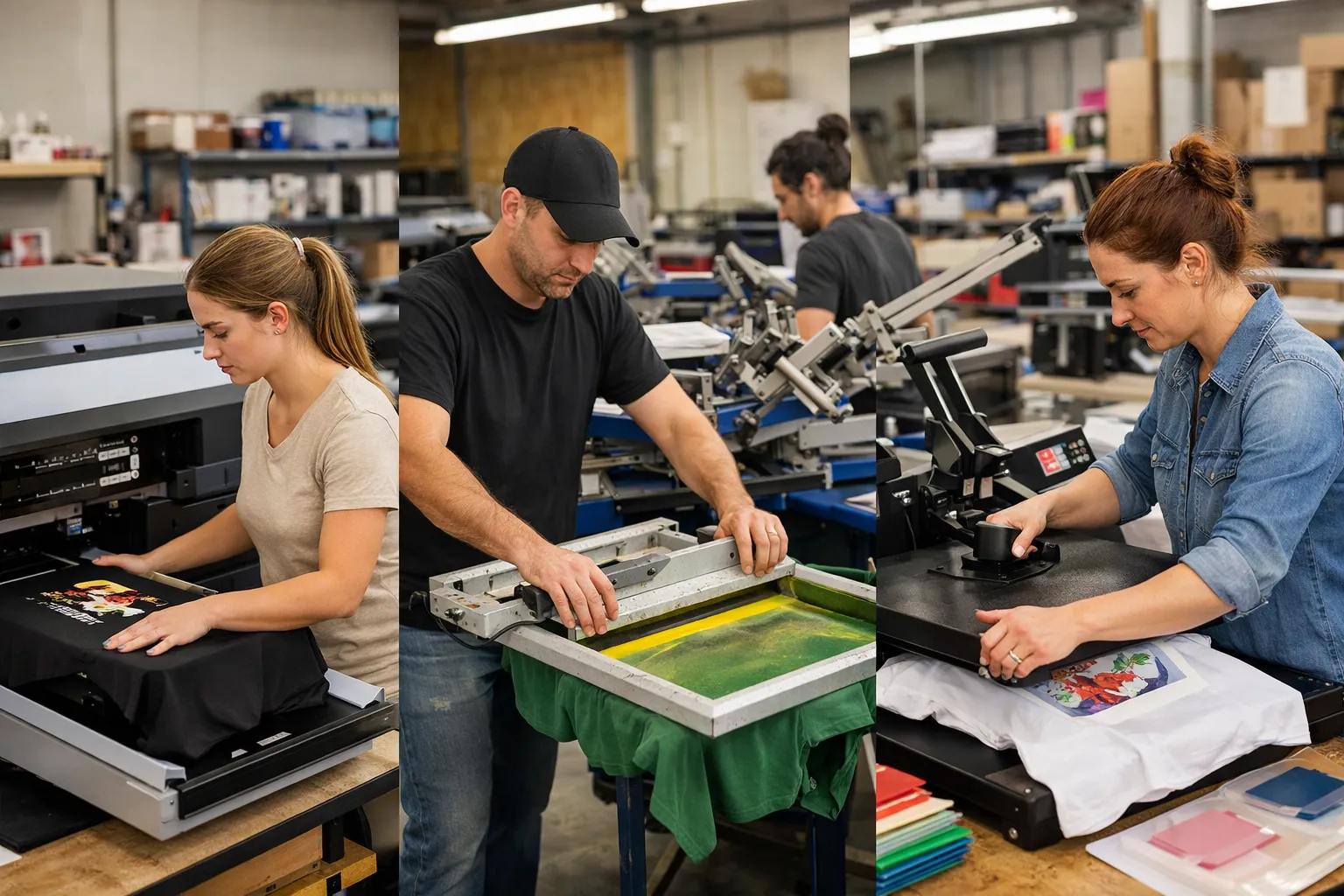
Für kleine Bestellungen, DTG und DTF DTF ist meist die bessere Wahl, da es nur wenig Einrichtungsaufwand erfordert. Bei mittleren Aufträgen bietet DTF oft ein gutes Verhältnis zwischen Kosten und Geschwindigkeit. Bei großen Aufträgen ist Screening oft die bessere Option. Drucken ist meist die beste Wahl, weil die Kosten pro Einheit schnell sinken, sobald die Einrichtungskosten bezahlt sind.
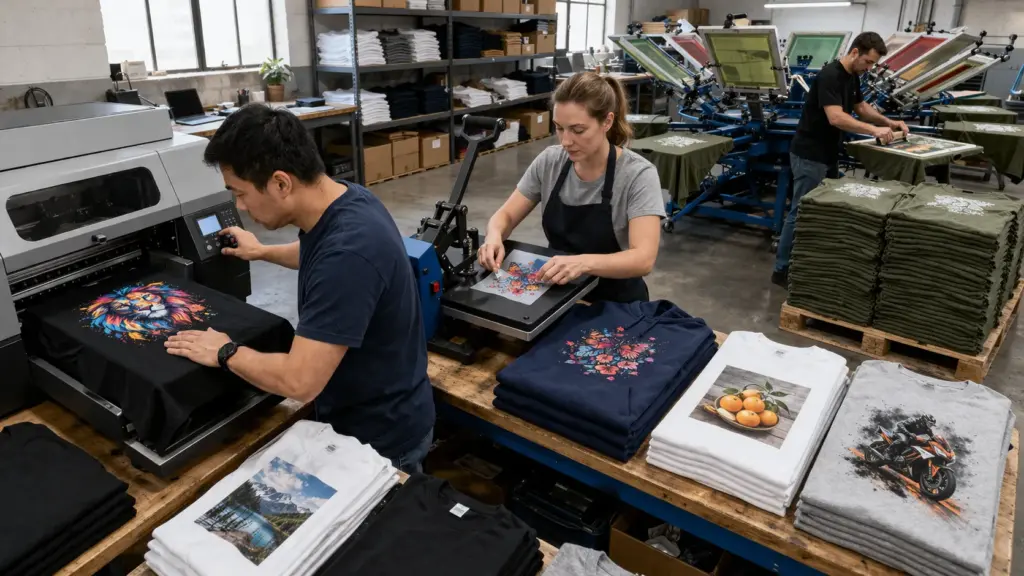
Ich beginne immer mit einer Frage: “Wie viele Teile werden gefertigt und wie viele Nachbestellungen werden folgen?” Diese eine Antwort entscheidet über die beste Vorgehensweise, das Risiko und den Endgewinn. Ich habe erlebt, wie zwei Aufträge mit demselben Design zu zwei völlig unterschiedlichen Ergebnissen führten, und ich möchte Ihnen diese Erfahrung ersparen.
Wann ist Siebdruck bei Großbestellungen dem DTG-Druck überlegen?
Ich habe erlebt, wie ein Käufer sich für DTG bei 800 Stück entschied, weil es ihm einfach erschien. Der Käufer zahlte jedoch zu viel pro Stück, und die Preisverhandlung artete in einen Streit aus.
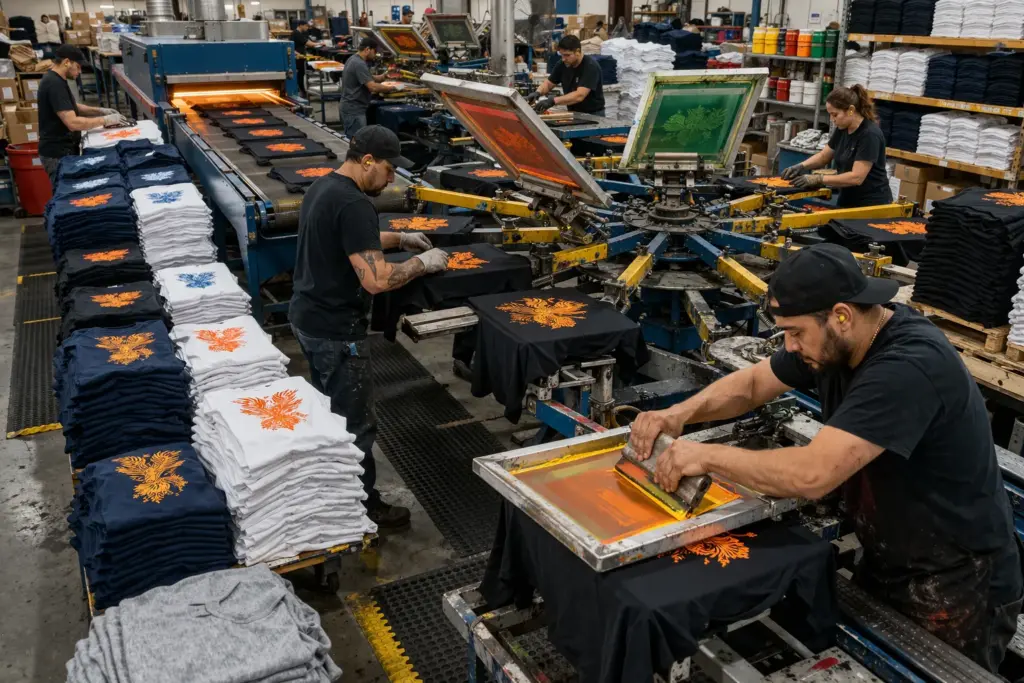
Siebdruck ist in der Regel die beste Druckmethode für Textilien in großen Mengen, wenn ein stabiles Design vorliegt und die Auflage groß genug ist, um die Einrichtungskosten zu verteilen. Sobald die Gewinnschwelle erreicht ist, kann Siebdruck die kostengünstigste Methode pro Kleidungsstück sein, bei gleichzeitig schneller Produktion von Folgeaufträgen.
Was bestimmt den Break-Even-Punkt bei den realen Bestellungen?
Ich betrachte den Vergleich von Siebdruck und Digitaldruck auf Textilien zunächst als eine mathematische und erst in zweiter Linie als eine Qualitätsfrage. Der Siebdruck verursacht fixe Einrichtungskosten. Diese umfassen Siebe, Farbtrennung und die Einrichtungszeit der Druckmaschine. DTG hingegen hat fast keine Einrichtungskosten, ist aber pro Stück teurer, da jedes Shirt wie ein Einzelauftrag bedruckt wird. Deshalb unterscheiden sich DTG und Siebdruck bei 20 Stück deutlich von denen bei 2.000 Stück. Ich achte auch auf die Anzahl der Farben und deren Platzierung. Ein einfarbiger Brustdruck amortisiert sich schneller als ein sechsfarbiger Druck auf Vorder- und Rückseite. Ich erinnere mich an eine Kundin wie Maria, die einen niedrigen Preis und kräftige Farben wünschte. Sie bestellte 1.200 Stück und nur zwei Sonderfarben. Ich empfahl ihr den Siebdruck, und sie bestellte später erneut in drei neuen Farben. Der Nachdruck zahlte sich aus, da das Verfahren stabil und schnell war.
Ein einfaches Kostenmodell, das ich für Angebotserstellungen verwende
Die folgenden Zahlen sind keine Garantie. Sie dienen als Orientierungshilfe für einen schnellen Preisvergleich. Die Preise variieren je nach Land, Tintensystem und Arbeitsaufwand, der Kurvenverlauf bleibt jedoch im Wesentlichen gleich.
| Bestellmenge (Stück) | Siebdruck (typisch) | DTG (typisch) | Was normalerweise passiert |
|---|---|---|---|
| 24 | Die Einrichtungskosten erhöhen die Stückkosten | Höhere Stückkosten, aber keine Einrichtungsgebühren | DTG fühlt sich oft billiger und schneller an. |
| 100 | Die Vorbereitungen beginnen sich auszubreiten | DTG bleibt ähnlich | Die Lücke beginnt sich zu verringern |
| 500 | Niedrige Stückkosten + Geschwindigkeit | DTG bleibt hoch | Siebdruck gewinnt meistens |
| 2000 | Sehr niedrige Stückkosten | DTG ist selten wettbewerbsfähig | Siebdruck ist oft die Standardmethode |
Wenn ich den Siebdruck auch für Massenproduktionen vermeide.
Ich verzichte auf Siebdruck, wenn sich die Motive häufig ändern. Auch wenn der Kunde fotorealistische Details, sanfte Farbverläufe oder viele Farben ohne Kompromisse wünscht, verzichte ich darauf. Zwar kann ich ein simuliertes Druckverfahren anwenden, doch das Risiko steigt und die Mustererstellung dauert länger. Ebenso verzichte ich auf Siebdruck, wenn die Saison knapp ist und der Kunde viele Designs in kleinen Mengen benötigt. In solchen Fällen nutze ich digitale Verfahren oder teile die Bestellung nach Design und Druckverfahren auf. So kann ich eine gleichbleibende Liefertreue gewährleisten und Nacharbeiten minimieren.
Ist DTG die bessere Wahl für kleine, detaillierte Auflagen auf Abruf?
Ich habe schon kleine Marken an ihren Lagerbeständen zugrunde gehen sehen. Sie hatten 300 Stück drucken lassen und nur 40 verkauft. Das Design war gut, aber die Bestellmenge stimmte nicht.
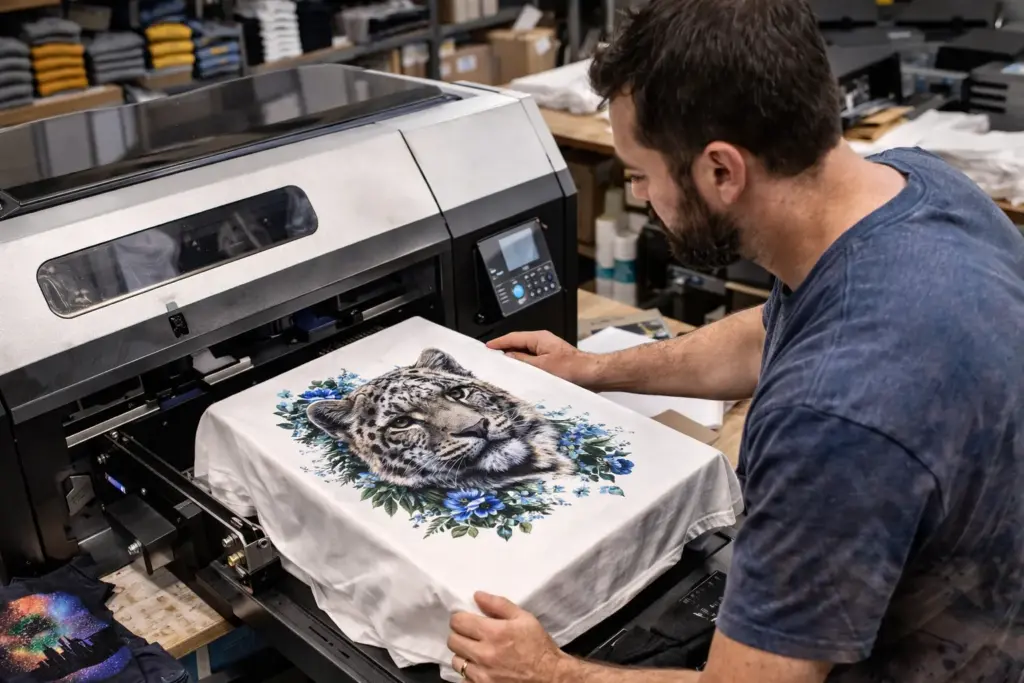
DTG eignet sich in der Regel am besten für Kleinauflagen und detailreiche Grafiken, da es direkt von der Datei druckt und nur minimale Einrichtung erfordert. Wenn Sie auf Bestellung verkaufen oder Designs testen, kann DTG das Risiko reduzieren, da Sie nur das drucken, was Sie benötigen.
Was DTG gut macht und was nicht
DTG-Druck spielt seine Stärken aus, wenn das Design viele Farben, feine Linien und detailreiche Fotos enthält. Ich verwende DTG, wenn ein Kunde bei wenigen Exemplaren ein kompromissloses Erscheinungsbild wünscht. DTG eignet sich auch hervorragend für schnelle Mustererstellung. Ich kann einen Andruck erstellen, ohne auf die Siebe warten zu müssen. Das ist wichtig, wenn eine Kundin wie Maria die Farbdetails schnell freigeben muss und die Qualität des Drucks fühlen möchte. Stoff und Druck in einem Paket. Ich kläre aber auch die Erwartungen. DTG-Druck eignet sich gut für Baumwolle und erzielt die besten Ergebnisse auf vorbehandelten Textilien. Auf Polyester oder schweren Mischgeweben kann DTG-Druck stumpf wirken, und die Waschbeständigkeit hängt von der Farbeinstellung und der Vorbehandlung ab. Ich achte auch auf die Auftragszusammensetzung. Bei 30 Designs und jeweils 10 Teilen pro Design ist DTG eine einfache Lösung. Bei einem Design und 600 Teilen kann DTG hingegen die teuerste Option sein.
Ich verwende diese Tabelle, um die Unterschiede zwischen DTG- und Siebdruck verständlich zu erklären. Ich vermeide Fachjargon, da Käufer eine Entscheidungshilfe und keine Belehrung benötigen.
| Brauchen | DTG passt normalerweise, wenn… | Siebdruck eignet sich in der Regel, wenn… |
|---|---|---|
| Menge | Niedrig bis mittel | Mittel bis hoch |
| Kunstwerk | Fotos, Farbverläufe, viele Farben | Akzentfarben, markante Formen, wiederholbare Kunst |
| Einrichtungszeit | Sehr niedrig | Mittel bis hoch |
| Wiederholungsbestellungen | Einfach, aber die Stückkosten bleiben | Sehr stark, die Stückkosten sinken bei Wiederholungskäufen. |
| Stoffsortiment | Am besten auf Baumwolle | Breit gefasst, hängt vom Tintensystem ab |
Wie DTG Ihren Lieferplan verändert
Die DTG-Produktionsgeschwindigkeit hängt von der Anzahl der Drucker, dem Können der Bediener und der Aushärtungskontrolle ab. Ich kann keine schnelle Lieferzeit für große DTG-Produktionsmengen garantieren, solange ich die Kapazität nicht kontrollieren kann. Ich plane Vorbehandlung, Trocknung, Druck und Aushärtung als vollständige Produktionskette. Wenn ein Käufer sowohl einen niedrigen Stückpreis als auch eine schnelle Lieferung fordert, bitte ich ihn, seine Priorität festzulegen. Meine Erfahrung zeigt, dass eine klare Entscheidung die Geschäftsbeziehung sichert. Benötigt der Käufer Geschwindigkeit und große Mengen, ist Siebdruck oft die bessere Wahl. Benötigt er hingegen Flexibilität und Detailgenauigkeit, ist DTG oft die bessere Lösung.
Wo genau positioniert sich DTF zwischen DTG und Siebdruck für Bekleidung?
Ich habe schon oft erlebt, wie Käufer bei der Wahl zwischen “DTF-Druck” und „Siebdruck“ für Bekleidung verunsichert waren, da beides auf Fotos gut aussehen kann. Der eigentliche Unterschied liegt jedoch im Preis und der Stoffauswahl.
DTF liegt oft zwischen DTG und Siebdruck. DTF eignet sich für kleine und mittlere Aufträge mit geringeren Einrichtungskosten als Siebdruck und kann auf mehr Stoffarten angewendet werden. Für viele Käufer ist DTF die praktische Lösung, wenn sie Flexibilität und bessere Kostenkontrolle wünschen.
Wie ich DTF in einer Minute erkläre
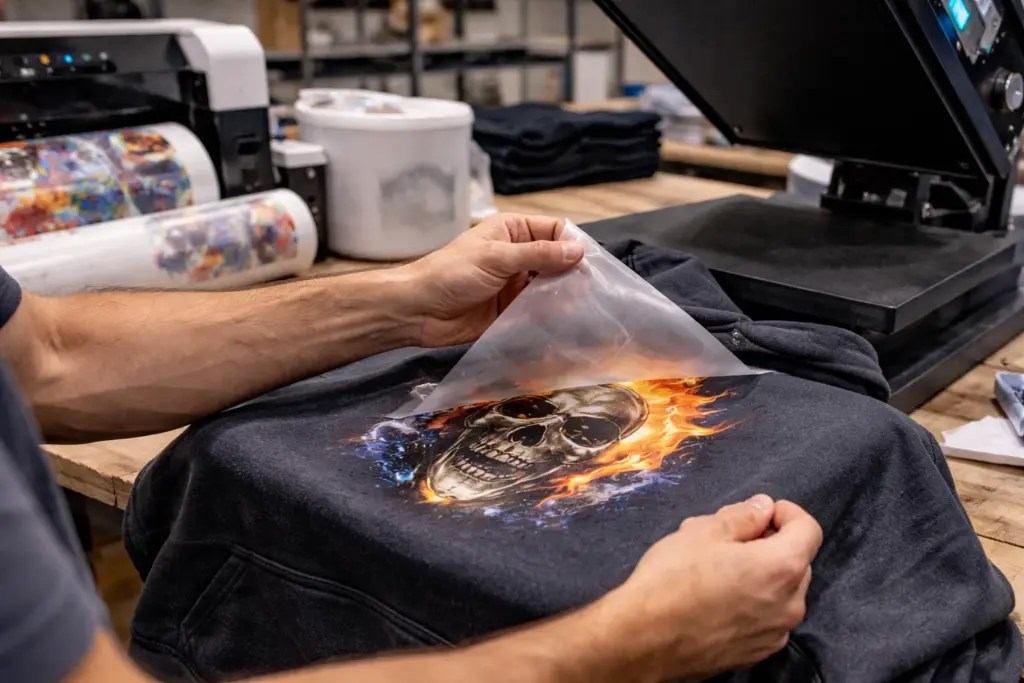
Beim DTF-Verfahren wird das Design auf eine Folie gedruckt, mit Pulverkleber versehen und anschließend per Heißpresse auf das Kleidungsstück übertragen. Ich schätze DTF, weil ich viele Designs ohne Siebe drucken und die Transfers später anbringen kann. Das ist besonders praktisch, wenn ich die Produktion auf mehrere Linien verteile. Auch wenn der Kunde dasselbe Design für T-Shirts, Hoodies und Taschen wünscht, ist DTF hilfreich. DTG-Druck kann bei manchen Stoffen Probleme bereiten, und Siebdruck erfordert für jedes Material und jede Platzierung eine neue Einrichtung. DTF bietet mir ein flexibles Werkzeug und reduziert den Abfall bei gemischten Bestellungen. Ich habe DTF schon einmal eingesetzt, um einen engen Zeitplan zu retten, als ein Kunde die Grafik kurzfristig änderte. Ich konnte die Transfers schnell drucken und auf die fertigen Kleidungsstücke aufbringen, ohne die Siebvorbereitung erneut durchführen zu müssen.
DTF- vs. DTG-Druckkosten bei typischen Bestellmengen
Ich verkaufe DTF nicht als “immer günstiger”. Ich verkaufe es als “besser berechenbar bei gemischten Aufträgen”. Diese Tabelle zeigt, wie ich sie in Angeboten vergleiche.
| Faktor | DTG | DTF | Warum es wichtig ist |
|---|---|---|---|
| Einrichtungskosten | Niedrig | Niedrig bis mittel | Beide eignen sich für kleine Bestellungen. |
| Stückkostenkurve | Bleibt ziemlich flach | Tropfen mit Chargenverarbeitung | DTF profitiert von der Durchführung von Massenüberweisungen. |
| Stoffsortiment | Am besten auf Baumwolle | Breites Sortiment | DTF eignet sich besser für Mischgewebe und Oberbekleidung. |
| Handgefühl | Weiches, faseriges Tragegefühl | Kann sich wie eine Schicht anfühlen. | Bei hochwertigen Modeartikeln kommt es auf das Gefühl an. |
| Dauerhaftigkeit | Gut, wenn es kontrolliert wird | Gut, wenn es gut angewendet wird | Anwendungsdruck und Temperatur sind wichtig |
Wenn ich DTF dem Siebdruck vorziehe
Ich wähle DTF, wenn die Bestellung viele Artikelnummern (SKUs) und kleinere Mengen pro Artikelnummer umfasst. Auch wenn der Käufer eine große Stoffauswahl und Farbstabilität wünscht, entscheide ich mich dafür. Ebenso wähle ich DTF, wenn das Design viele Farben enthält, der Käufer aber dennoch einen günstigeren Stückpreis als bei DTG anstrebt. DTF ist nicht die richtige Wahl, wenn der Käufer ein besonders weiches Tragegefühl bei leichten T-Shirts wünscht oder den niedrigstmöglichen Preis für ein einzelnes Design in großen Mengen erzielen möchte. In diesen Fällen sind DTG oder Siebdruck die bessere Option. Ich gehe auch auf die Erwartungen hinsichtlich der Oberflächenbeschaffenheit ein. Manche Käufer bevorzugen saubere Kanten, andere mögen den “Patchwork”-Effekt nicht. Um dem entgegenzuwirken, biete ich vor der endgültigen Bestellung Muster und Waschtests an.
Fazit
Ich wähle das Druckverfahren anhand der Auftragsgröße, des Designs und der Möglichkeit zur Wiederholung. DTG eignet sich für kleine und detailreiche Auflagen, DTF für gemischte und mittlere Auflagen und Siebdruck für große Mengen.
Warum ich das schreibe
Ich bin Lancy Chia und leite Truekung in China. Ich beschäftige über 200 Fabrikmitarbeiter und beliefer ausschließlich den Großhandel. Wir produzieren Mode und bieten OEM/ODM-Programme für Marken und Supermärkte weltweit an. Unser Sortiment umfasst Damenmode, Jacken, Röcke, Kleider, Jeans, T-Shirts, Sweatshirts, Daunenjacken, Windjacken, Mäntel, Taschen, Sportbekleidung, Kinderbekleidung und Unterwäsche.
Ich spreche wöchentlich mit Käuferinnen wie Maria. Ihr ist Qualität wichtig, gleichzeitig benötigt sie aber auch einen wettbewerbsfähigen Preis. Sie sorgt sich außerdem um mangelhafte Kommunikation, verspätete Lieferungen und gefälschte Zertifikate. Mein Prozess ist darauf ausgelegt, diese Risiken zu minimieren. Ich bestätige die Details der Druckvorlage frühzeitig. Den Zeitplan halte ich schriftlich fest. Produktionsmeilensteine teile ich mit Fotos. Die Druckverfahren wähle ich passend zur Bestellmenge, um die Stückkosten zu kontrollieren. Darüber hinaus unterstütze ich die Logistikplanung und biete Zahlungsmethoden an, die für den internationalen Handel geeignet sind.
Wenn Sie eine schnelle Empfehlung wünschen, kann ich Ihre Bestellmenge, den Stoff, das Design und Ihren Zielpreis prüfen. Ich kann Ihnen auch einen Musterplan vorschlagen, der Ihre Saison absichert. Sie erreichen mich unter [email protected] und können mehr über mein Unternehmen unter https://truekung.com erfahren.
Ansichten: 75