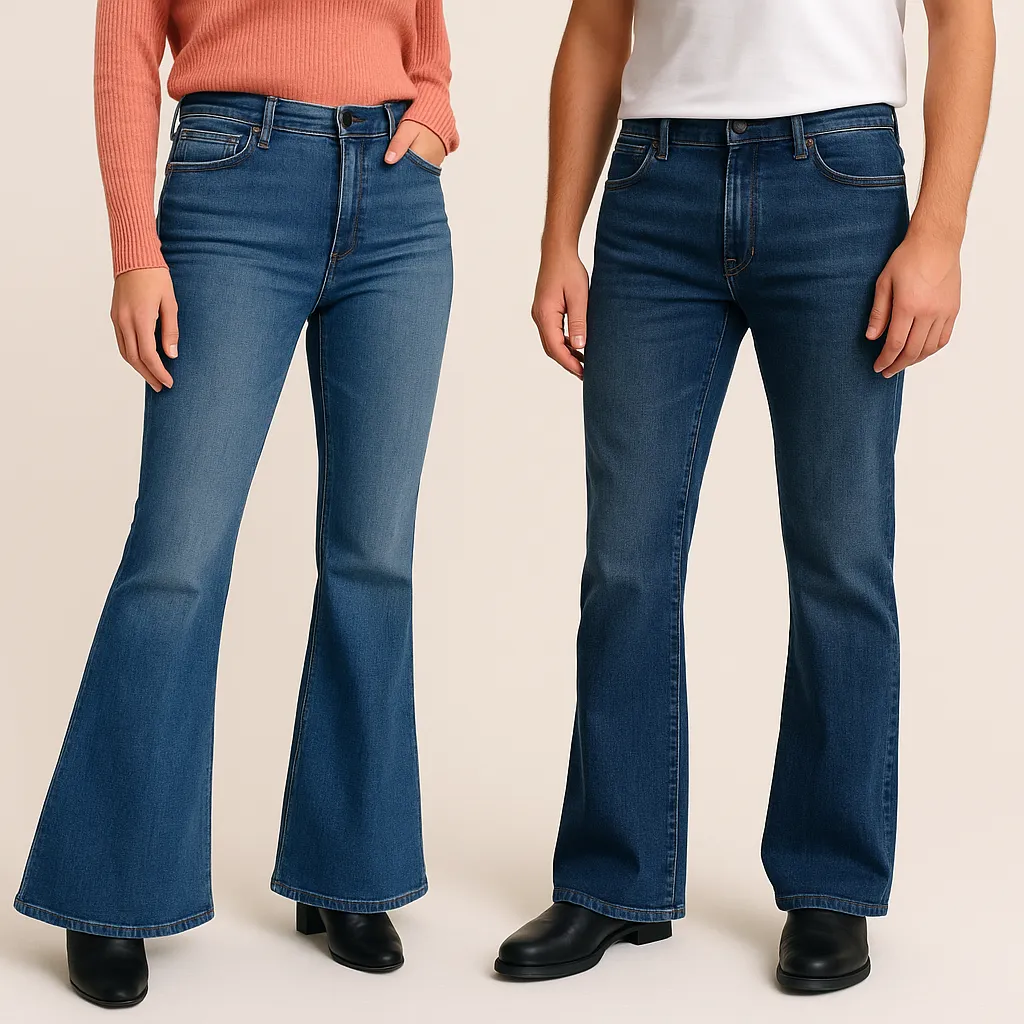

I remember hunting for the perfect pair of wide-leg denim and hitting a wall: “bell bottoms” vs “flare jeans” — what’s the real difference and which should I pick?
In short: no—they’re not exactly the same. Bell bottoms feature a very dramatic flare from the knee down, creating a pronounced “bell” shape; flared jeans widen more gradually and moderately, making them more versatile for everyday wear.
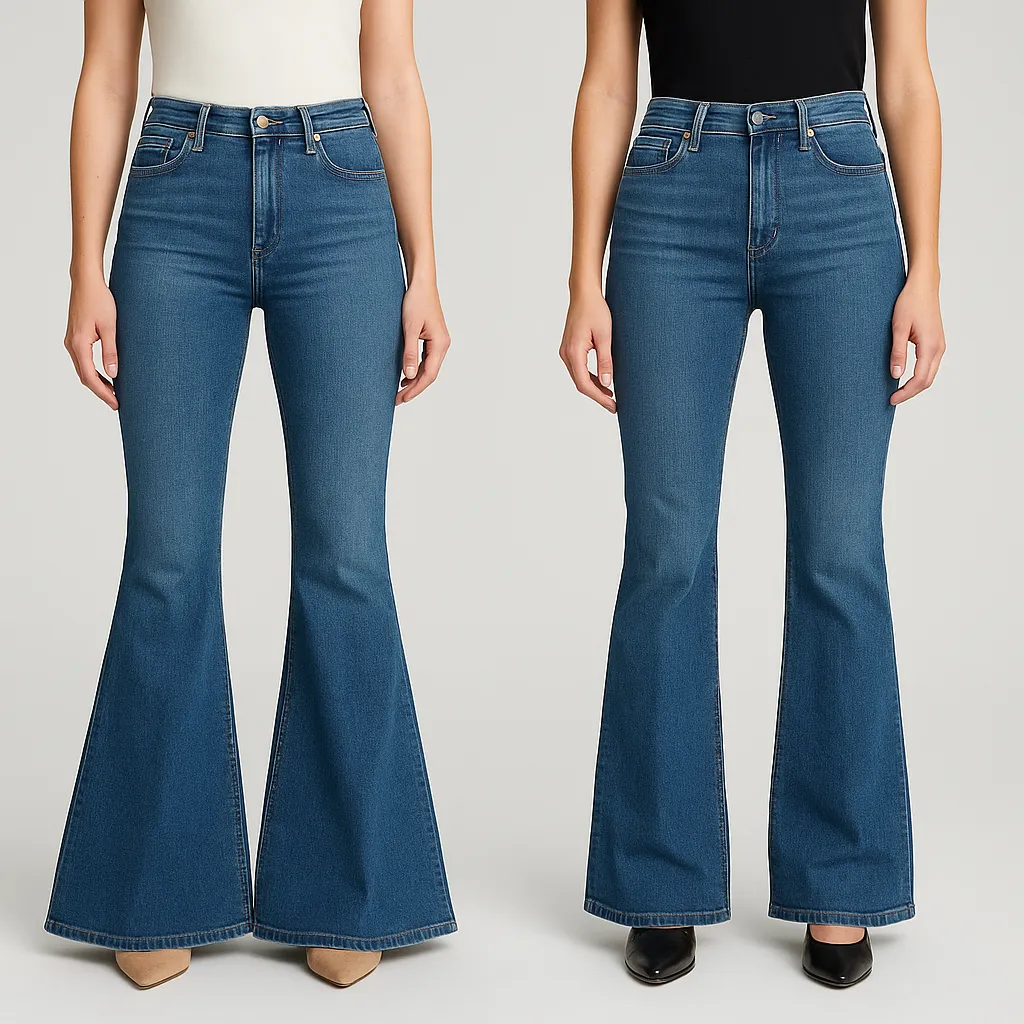
If you’ve felt unsure when browsing styles at your clothing factory or talking to suppliers about women’s wide-leg jeans, stick with me. I’ll walk through the key features, history, styling tips, and sourcing insights so you can confidently advise your clients (like Maria) on which cut fits their brand.
What are bell bottom jeans?
When I first heard “bell bottoms” I thought of disco nights and platform boots — that pretty much nails the vibe.
Bell bottom jeans are characterised by a very wide flare that begins around or just below the knee, producing a dramatic silhouette that’s heavily rooted in 1960s-70s fashion.
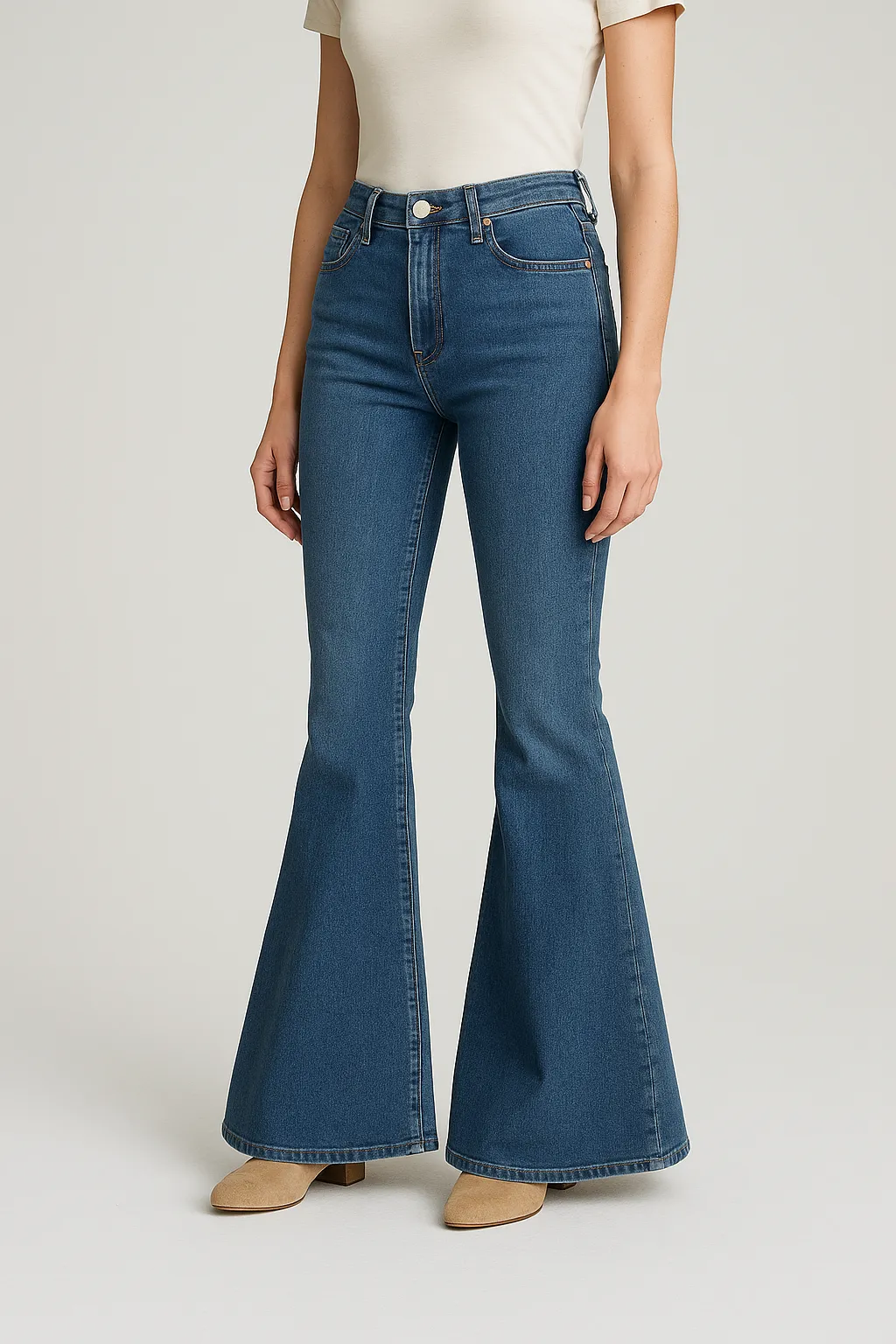
Bell bottoms trace back to practical roots (e.g., naval uniforms) and later became a symbol of freedom and counter-culture. Their defining features: a snug fit through the hips and thighs, then a flare that opens significantly at the knee and continues wide to the hem.
Today’s manufacturers (like our factory) might reproduce them for vintage-inspired lines or statement collections. The key specs to watch when sourcing: how many inches the leg opens at the ankle, where the flare begins, the rise (often high in vintage versions), and how the fabric drapes. For example, a bell bottom may flare 8–12 inches at the hem.
For quality-sensitive, price-conscious buyers like Maria, ensure the flare isn’t just visual but also well-constructed — so the hem falls evenly, doesn’t flick up, and the stitching handles extra width without puckering.
What are flared jeans?
Flared jeans feel like a more modern, everyday version of the bell-bottom idea.
Flared jeans are defined by a gradual widening from the knee down, less extreme than bell bottoms, making them easier to style and wear for many casual occasions.
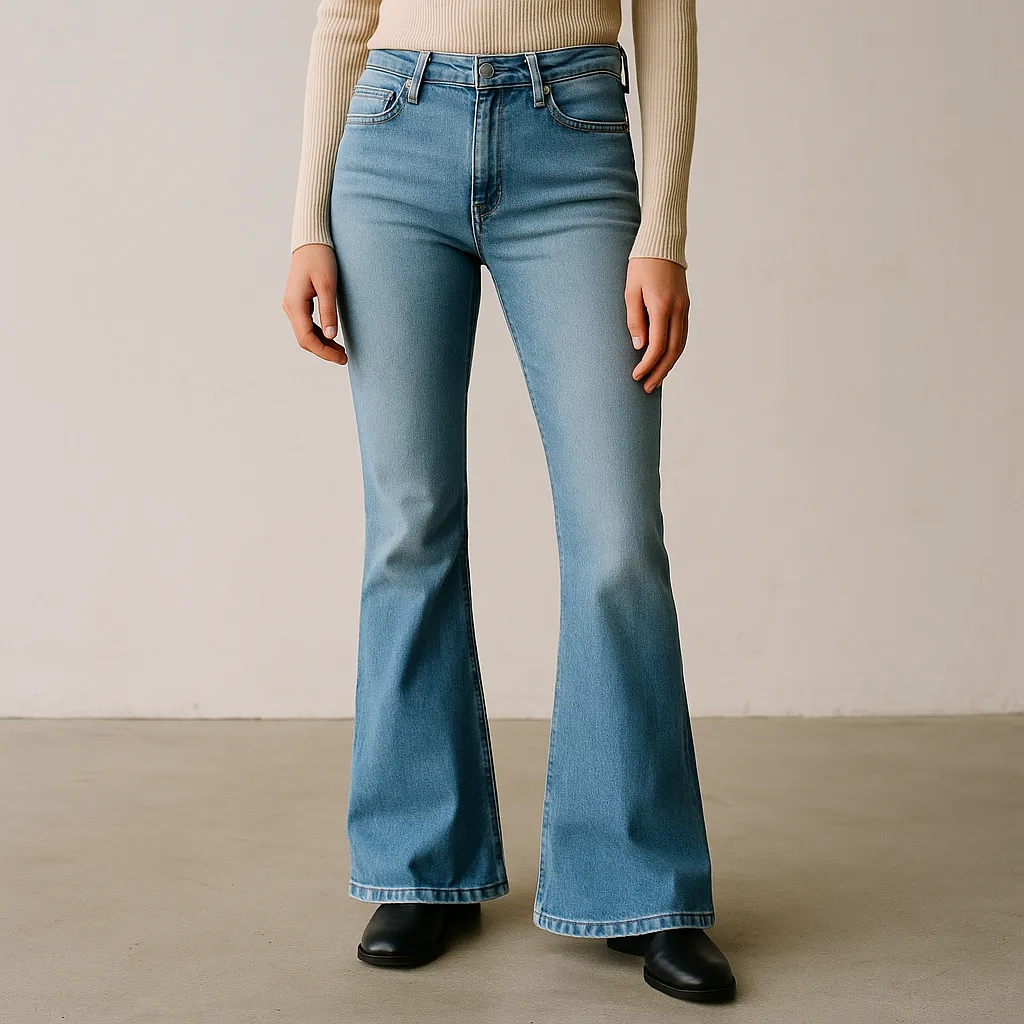
In the sourcing world, you’ll encounter flared jeans under many labels: “flare jeans”, “mid-flare”, or “kick flare”. They usually begin to flare at or just below the knee but don’t open as dramatically as bell bottoms.
This subtle difference makes flares more flexible for everyday wear: easier to pair with sneakers, flats, boots, or casual tops. As a supplier to international buyers (Netherlands, US, UK, etc.), you’ll find flared jeans appeal to a broader market segment.
Check how the flare transitions from the knee: is the wideness even, does the drape look intentional, does the hem finish match your brand expectations? Also check the fabric weight: heavier denim holds shape better, lighter denim might collapse.
Key differences: bell bottoms vs flared jeans
Let’s compare the two side-by-side so you can quickly spot what to emphasise when talking to your buyer.
The main difference lies in how wide the leg opening is and how early the flare begins: bell bottoms flare more dramatically and lower, flared jeans are gentler and more utilitarian.
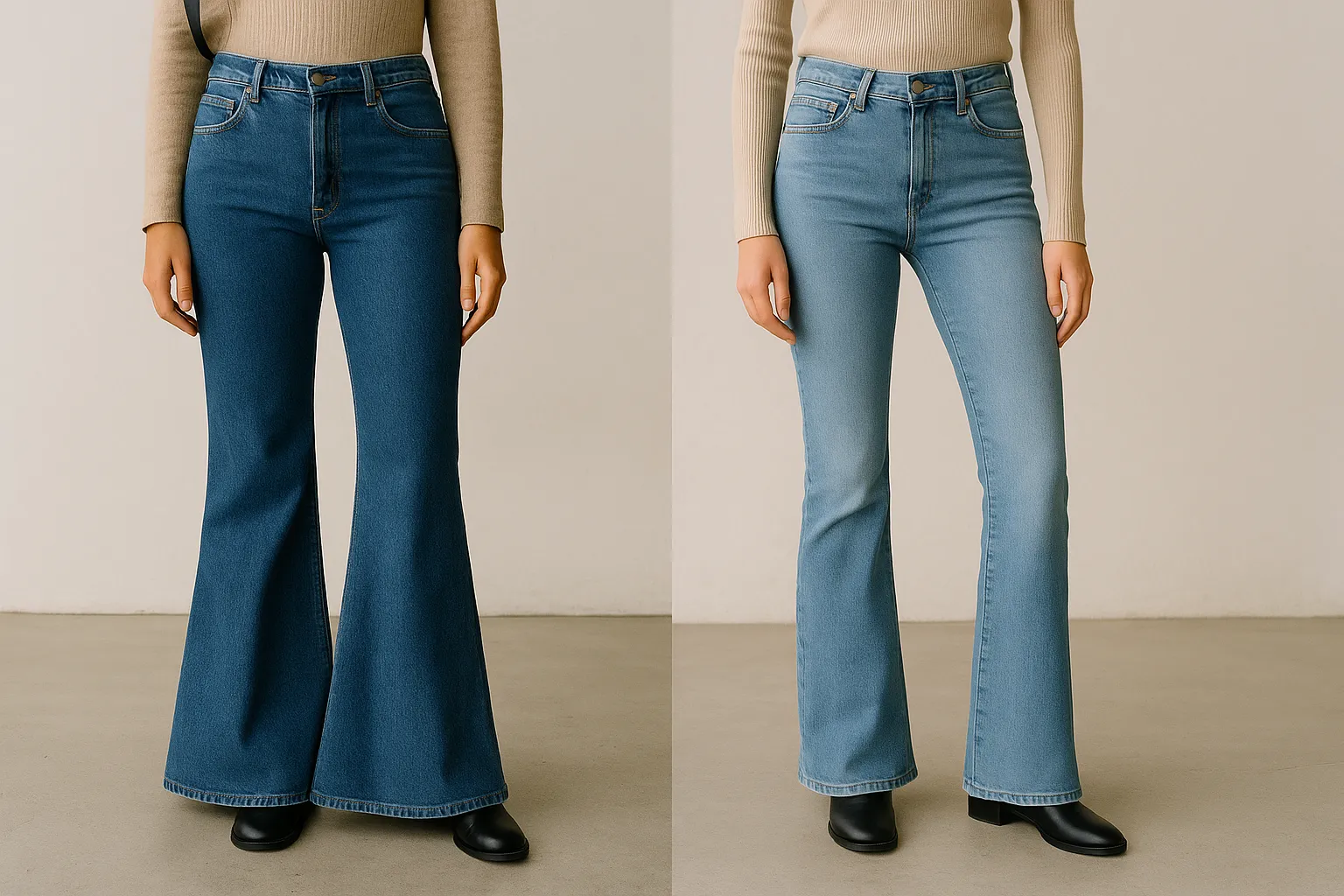
| Feature | Bell Bottom Jeans | Flared Jeans |
|---|---|---|
| Where flare begins | Just below the knee | At or just below the knee |
| Width of leg opening | Very wide, strong “bell” silhouette | Moderate widening |
| Styling feeling | Retro, statement, vintage vibe | Modern, wearable |
| Typical rise & fit | High-waisted, snug through hips and thighs | More variety in rise and fit |
| Fabric & construction | Needs strong hem and shape-holding fabric | Flexible with more fabric types |
| Market appeal | Niche, fashion-forward | Broader, more versatile |
When discussing styles with buyers like Maria — who prefers quality and competitive pricing — guide her: choose bell bottoms for retro-statement looks; choose flared jeans for wider market appeal. Our factory can tailor both based on your label’s design and price targets.
How this matters for your sourcing & quality control
As a factory and wholesale supplier, these distinctions aren’t just academic — they influence fabric yield, pattern cutting, pricing, and lead times.
Knowing whether a buyer wants bell bottoms or flared jeans helps you estimate fabric yardage, pattern complexity, and quality checkpoints (hem width, drape, length) to avoid delivery delays or mis-orders.
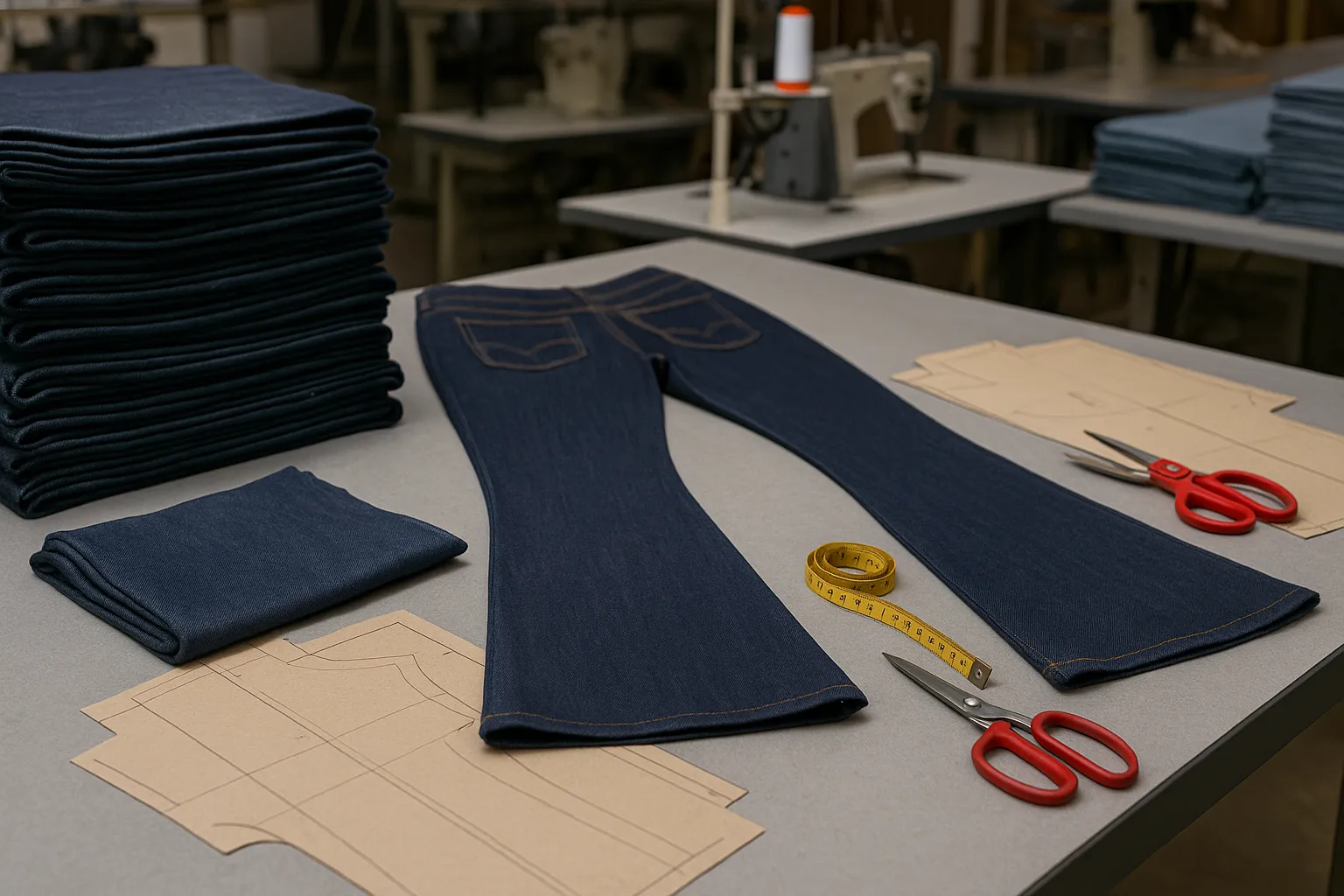
- Pattern & fabric yield: Bell bottoms require more fabric. When quoting, compare 12-inch flare vs 6-inch flare specs.
- Quality control: Ensure wide hems don’t collapse; flare must look intentional and symmetrical.
- Lead times: Exaggerated styles like bell bottoms may need longer production due to pattern complexity.
- Buyer communication: Use labeled samples to avoid misunderstandings (“bell bottom – 10” flare” vs “flare – 6” flare”).
- Certifications & consistency: Whether flare or bell, fabric and stitching quality must be consistent and certified.
- Regional insights: US and UK may prefer bold vintage styles; Nordic markets prefer subtle flares. Guide clients accordingly.
Conclusion
Bell bottom jeans and flared jeans are similar but not the same. By knowing the difference and explaining it clearly, we help buyers like Maria make better decisions and avoid costly mistakes. We also position ourselves as a trustworthy, knowledgeable supplier in the global market.
Lancy Chia
Brand: Truekung
China B2B clothing manufacturer with 200+ workers.
Offering custom designs, OEM/ODM, and wholesale fashion clothing to global brands.
Email: [email protected]
Website: https://truekung.com/ | https://www.truekung.com/
Views: 1027