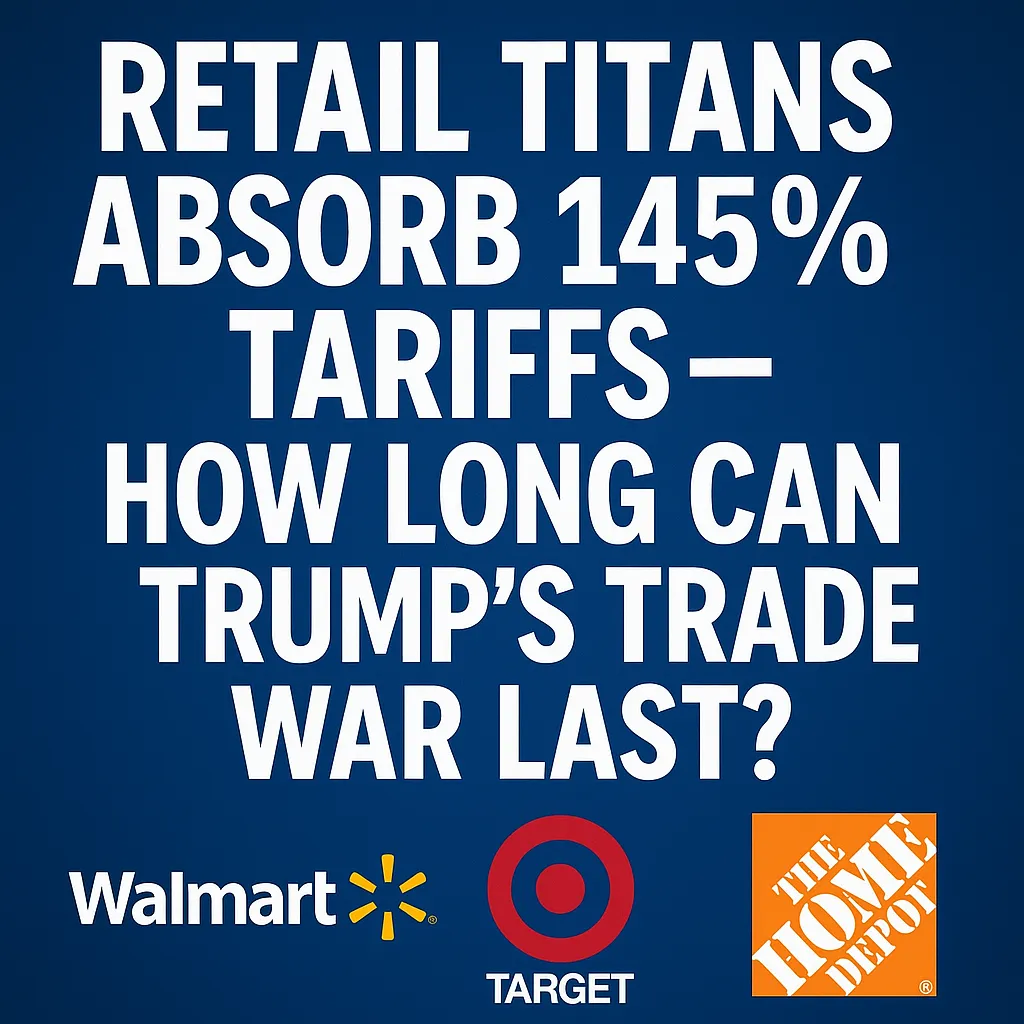

Retail Giants Take a 145% Punch – So Consumers Don’t Have To
Walmart, Target, and Home Depot just made a jaw-dropping move: faced with 145% tariffs on Chinese imports, these retail titans have decided to swallow the costs themselves instead of passing them on to customers. It’s an almost unheard-of sacrifice in an industry known for razor-thin margins—and it’s happening right now under President Trump’s sweeping tariff offensive.
Retailers Stun the Industry by Absorbing Tariffs
They’re eating a 145% cost increase – so you won’t have to.
In late April, Walmart, Target and Home Depot instructed their Chinese suppliers to resume shipments, with the American buyers footing the 145% import tariff bill. This move preserved “everyday-low-price” pledges and prevented empty shelves, even as factories in Zhejiang and Guangdong scrambled to recalibrate cost structures.
Why? At a 145% tariff, importing a $100 product now incurs a $145 tax—instantly erasing any profit. The alternatives were dire: cancel orders (empty shelves) or hike prices sky-high (drive away customers). So these giants chose a third option: take the hit themselves. Their supply chains and customers depend on those Chinese products, tariff or no tariff.
Trump’s Tariff Tsunami: Broad Policy, Few Exceptions
If retailers are taking a punch, it’s because President Trump threw a haymaker at global trade. He unveiled across-the-board import tariffs of 10% on all countries, plus punitive rates on specific nations. China was singled out for the biggest blow: a 145% levy on Chinese goods.
To be clear, these tariffs remain fully in effect. Despite pleas from import-heavy businesses, the White House has not reversed course on consumer-goods levies. Only limited exceptions were made—for example, automakers received credits to offset some auto-parts duties. But furniture, electronics, toys, apparel—all remain subject to the new elevated rates. Retailers were told to live with these tariffs—hence their bold move to absorb the costs.
Ripple Effects: What It Means for Retail and Supply Chains
Short-term relief, long-term pain. Absorbing tariffs spares consumers today, but it squeezes margins and rewrites supply-chain economics:
- Profit hits: Analysts warn of substantial margin erosion. Target’s stock is down 32% this year; Home Depot and Lowe’s are down double-digits. Only Walmart remains flat.
- Supply volatility: Whipsawing orders—halt, resume, halt—are disrupting planning. Shoes, toys, apparel, consumer electronics risk stockouts first.
- Supplier strain: Chinese exporters paused production; now orders tentatively restart. But if costs become unsustainable, retailers may demand price cuts or shift to alternate sources, trimming assortments.
Consumers haven’t felt the full impact yet—prices at checkout remain stable. But inventory buffers built before the tariff surge may deplete by summer, risking sudden price hikes or shortages. Retailers are the shock absorber; eventually, someone pays the piper.
Timeline and Outlook: High Tariffs Here to Stay
These tariffs aren’t vanishing soon.
- 90-day review: Exemptions for some countries end mid-summer 2025. China remains fully exposed.
- Political calculus: Trump’s “tough on trade” stance plays well with his base. Rolling back early would undercut his leverage.
- Economic inertia: Alternate sourcing takes time. Even a “China + 1” strategy still incurs a 10% baseline tariff on all imports.
Plan for elevated tariffs through late 2025—and possibly into 2026—unless a landmark trade deal emerges.
Strategy Session: How Retail Executives Can Respond
- Diversify sourcing (“China + 1”). Add Vietnam, India, Mexico, or domestic suppliers—but factor in a 10% baseline tariff on all imports.
- Strengthen vendor partnerships. Negotiate shared tariff burden through price cuts or extended terms.
- Protect margins creatively. Trim operational costs, adjust promotions, or raise prices on inelastic items to offset tariff drains.
- Agile inventory management. Stockpile critical items; run pricing scenarios for various tariff outcomes.
- Advocate collectively. Join trade associations, share real-world impact data with lawmakers, push for legislative limits on executive tariff powers.
- Transparent communication. Educate investors, customers, and employees about strategies and potential price adjustments.
Conclusion: Time to Act
This is a pivotal moment for retail and the broader economy. Retail giants have shielded consumers—for now—but they can’t hold the line alone. Business leaders must engage, strategize, and advocate to shape a more sustainable trade policy.
Share this article. Join the debate. Contact your trade associations and lawmakers. The future of retail—and the prices we all pay—depends on it.
Views: 99