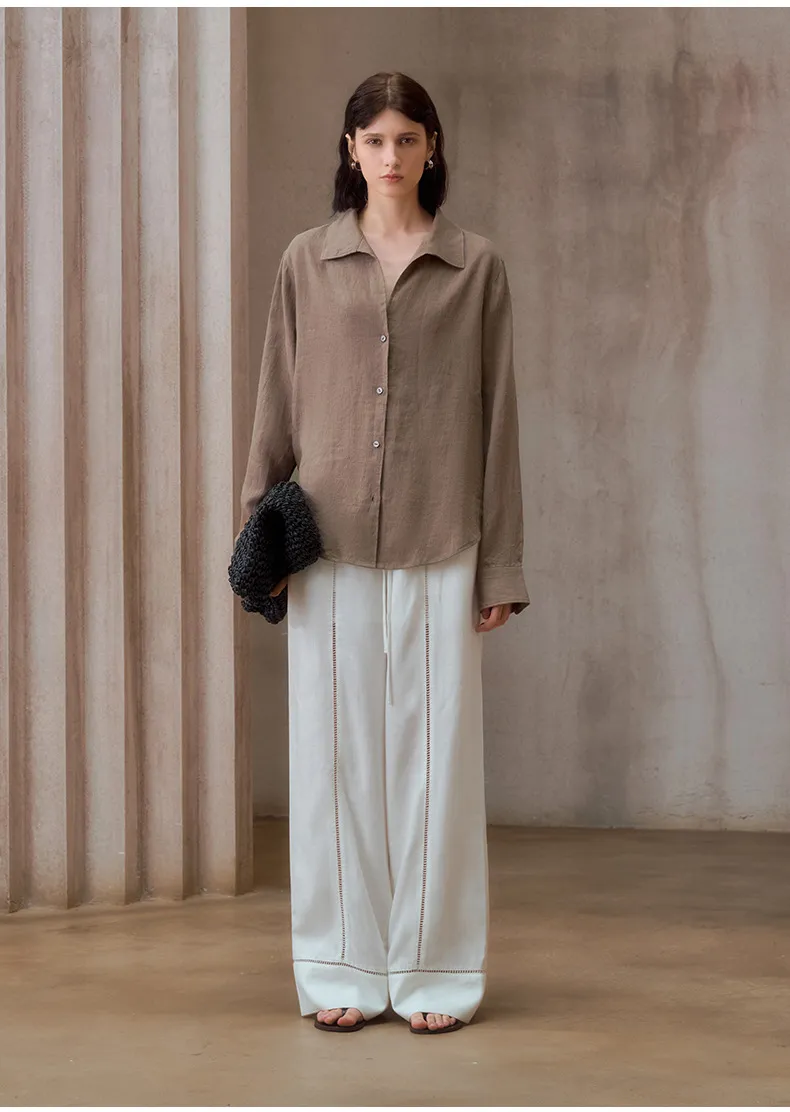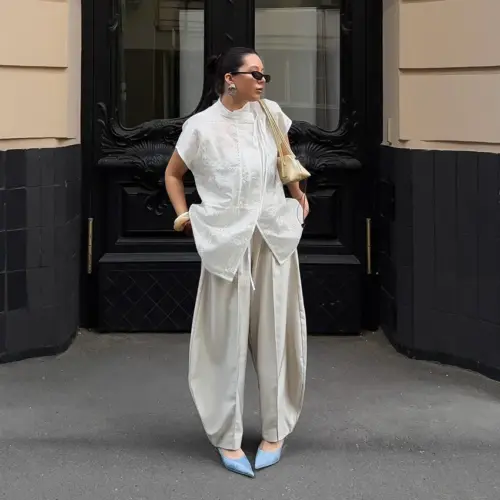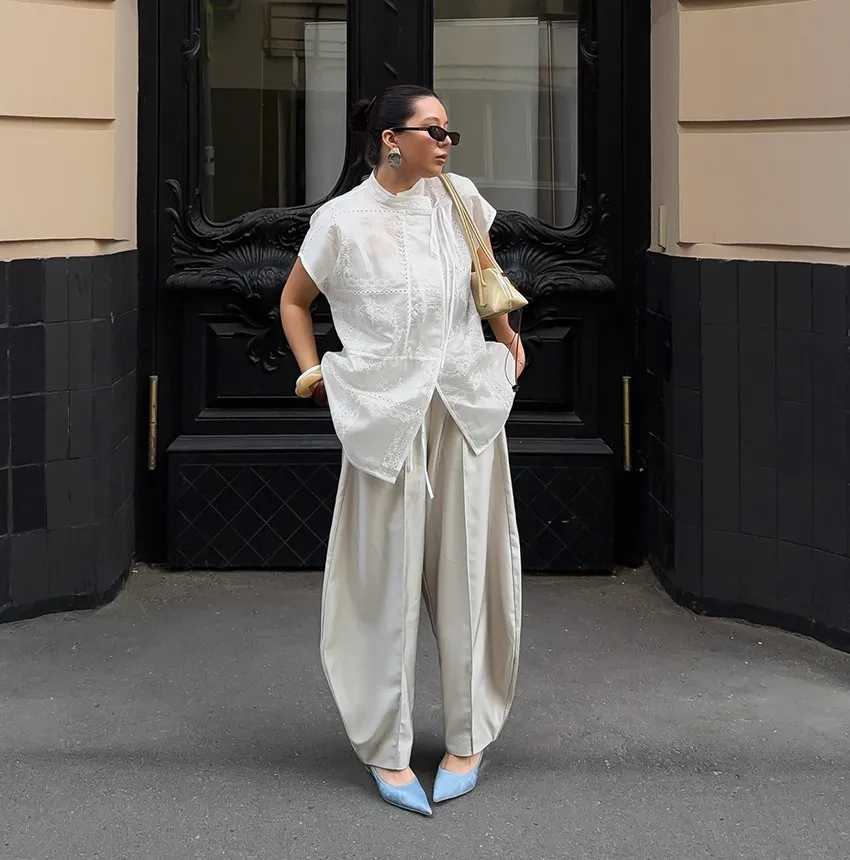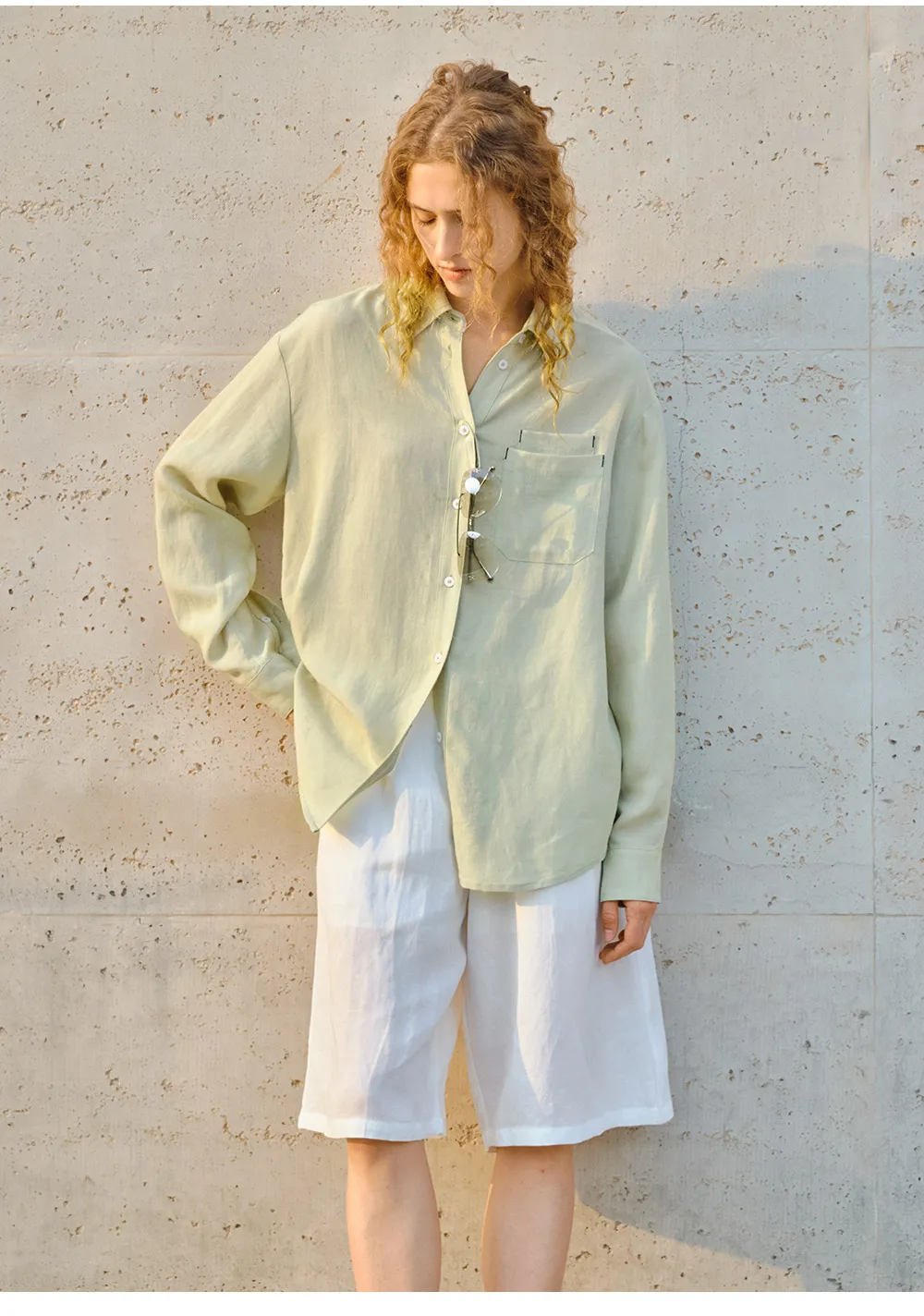

Uma gama de casacos inadequada pode parecer segura no papel. Mas, no entanto, o ajuste é crucial., tecido, e o prazo de entrega falha. Já vi compradores perderem vendas por causa de uma única semana. agasalhos plano.
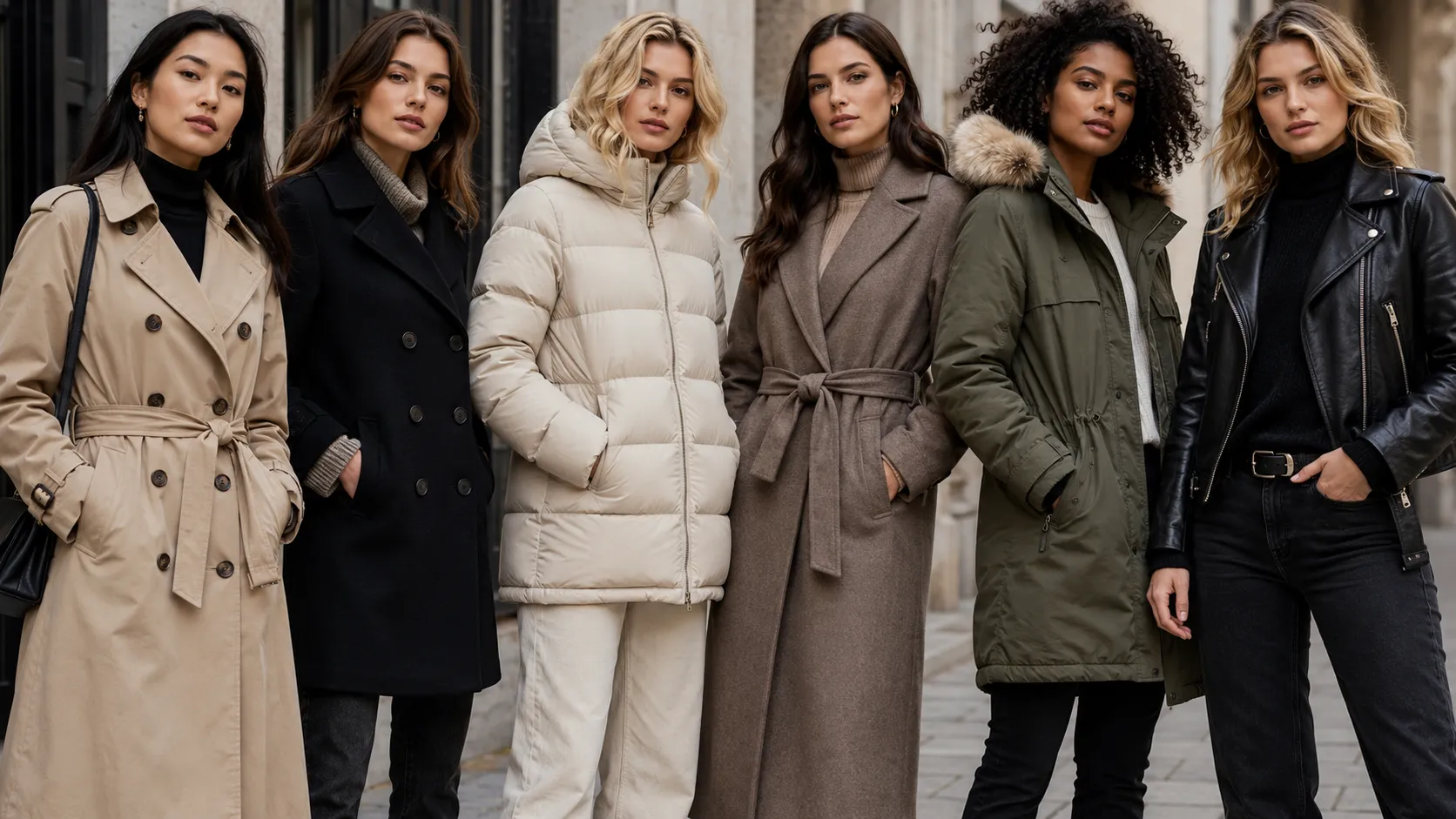
Agrupo os casacos femininos em 18 estilos práticos: trench coat, casaco de marinheiro, casaco acolchoado, casaco de lã, parka, casaco de lã polar, capa, casaco bomber, casaco de pele sintética, casaco de couro, capa de chuva, trench coat com capa, casaco acolchoado, casaco cocoon, casaco militar, jaqueta-camisa, casaco de fleece e casaco maxi. Cada estilo atende a uma estação, cliente e faixa de preço diferentes.
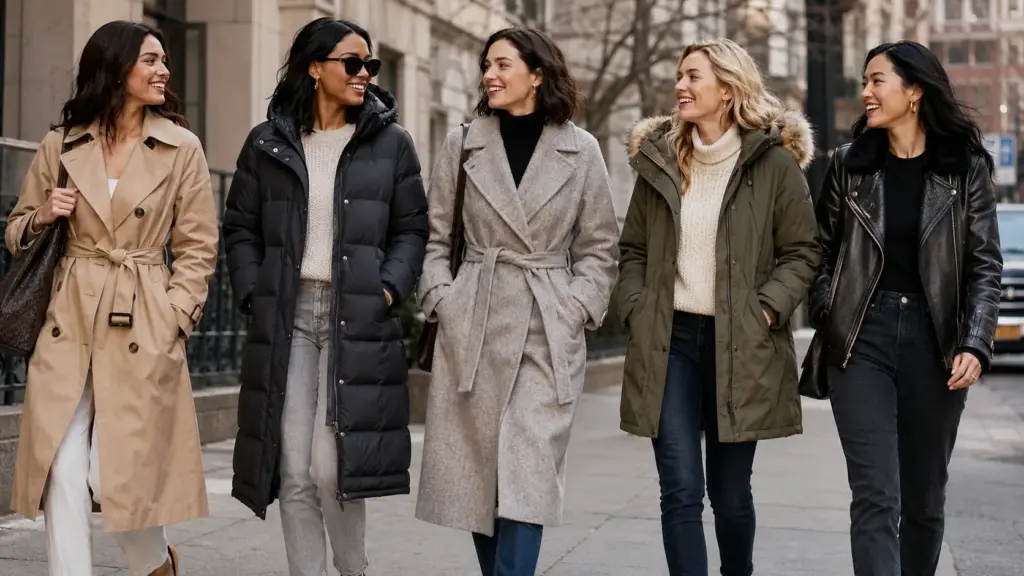
Quando trabalho com marcas e compradores de supermercados, não pergunto apenas: "Qual casaco fica bem?". Faço uma pergunta mais útil: quais casacos femininos podem ser vendidos no momento certo, combinam com o público-alvo, passam pelos controles de qualidade e ainda mantêm uma margem de lucro justa? É por isso que a seleção de casacos é tão importante. Um casaco não é uma simples peça de roupa para se sobrepor. É tecido, forro, peso, modelagem, aquecimento, acabamento, embalagem e controle de entrega, tudo em um único produto.
1. O que é um sobretudo feminino?
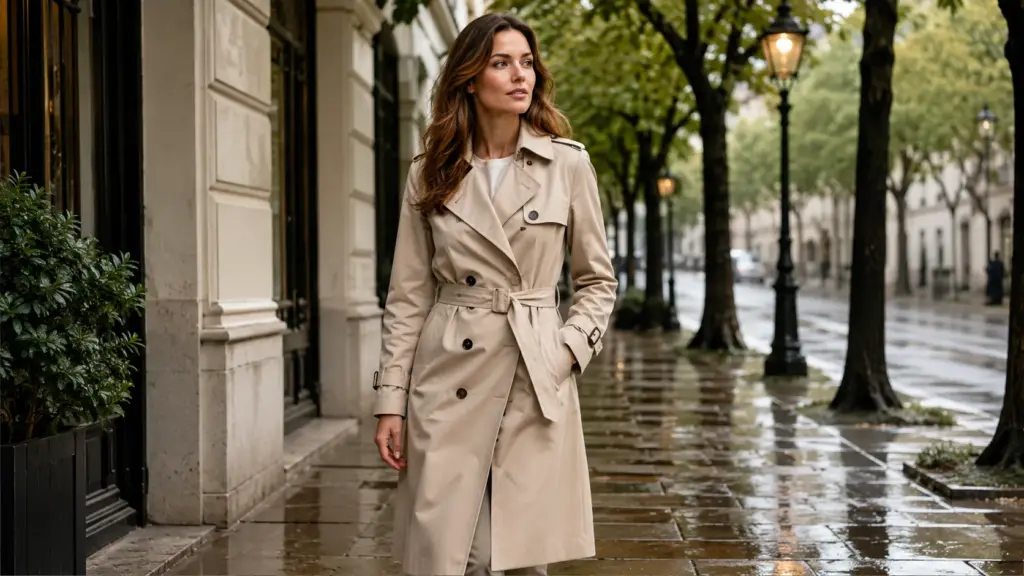
O sobretudo costuma ser o primeiro modelo que recomendo quando uma compradora deseja um casaco clássico que as mulheres possam usar na primavera, no outono e em chuvas leves.
O que eu verifico antes da produção
Considero o sobretudo um dos modelos de casaco feminino mais estáveis, pois apresenta um design com linhas bem definidas. Geralmente, possui fechamento duplo na frente, cinto, dragonas nos ombros, tiras nas mangas e uma aba de proteção contra intempéries nas costas. Para compradores B2B, esse modelo é uma ótima opção, pois pode ser confeccionado em diversos tipos de tecido. Um sobretudo leve em mistura de algodão é ideal para a primavera. Um sobretudo mais encorpado em sarja é perfeito para o outono. Um tecido impermeabilizante oferece proteção contra chuvas leves. Sempre verifico a posição do cinto, a qualidade dos botões, o comprimento das mangas e o formato da gola antes de finalizar a compra. produção em massa. Um sobretudo parece simples, mas são os pequenos detalhes que definem se ele tem um aspecto sofisticado ou barato. Para Maria, que se preocupa tanto com a qualidade quanto com o preço, eu sugeriria inicialmente uma paleta de cores neutras como bege, azul-marinho, preto ou cáqui. Essas cores são mais fáceis de vender e de repor.
| Foco no comprador | Minha sugestão |
|---|---|
| Melhor temporada | Primavera e outono |
| Tecido comum | Sarja de algodão, poliéster-algodão, tecido revestido |
| Principal risco | Posição inadequada do cinto e fixação frágil do botão. |
| Bom mercado | Roupa para o escritório, roupa para a cidade, moda de marca própria |
2. Por que o casaco de lã ainda é popular entre as mulheres?
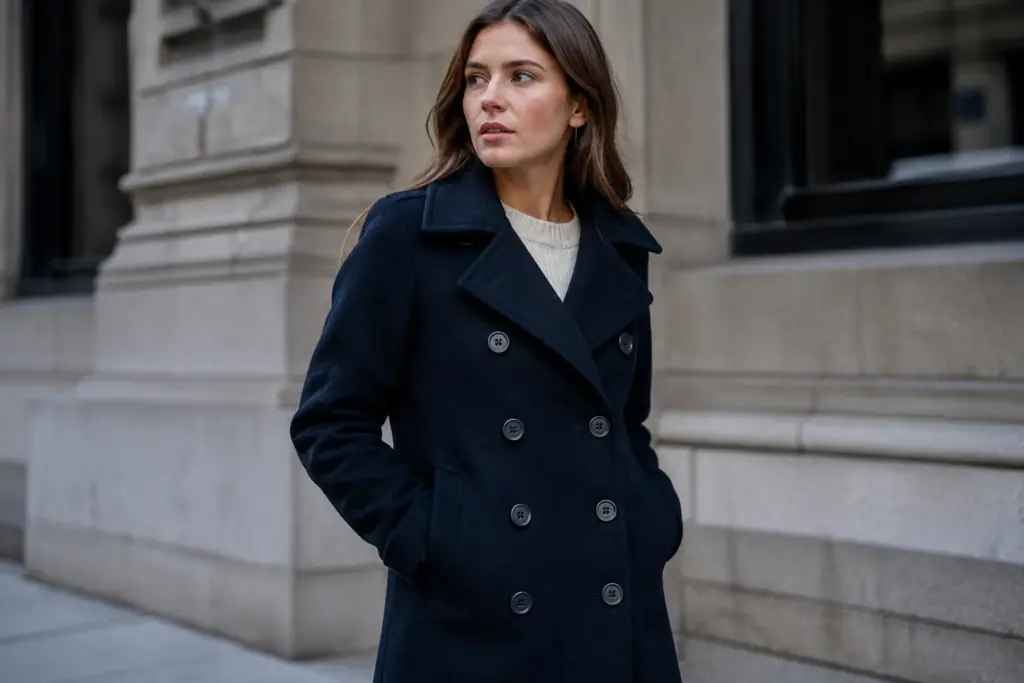
Um casaco de marinheiro é um casaco curto, estruturado e de abotoamento duplo. Eu o escolho quando um comprador deseja um casaco de inverno elegante com um visual clássico.
O que eu verifico antes da produção
Gosto do casaco de marinheiro porque ele confere uma silhueta marcante sem ser formal demais. Geralmente é confeccionado em tecido de lã mista, com lapelas largas e fechamento duplo. Isso o torna um dos modelos mais versáteis para mulheres que buscam aquecimento e um estilo impecável. Na confecção, presto muita atenção ao equilíbrio da parte frontal. Se os painéis frontais estiverem torcidos ou as lapelas não assentarem corretamente, o casaco todo fica com uma aparência desproporcional. Também verifico o toque do tecido. Um casaco de marinheiro deve ser firme, mas não áspero. Para compradores no atacado, azul-marinho, preto, camelo e cinza-carvão são cores seguras. O casaco de marinheiro também é mais fácil de embalar do que um casaco muito comprido, o que permite um melhor controle dos custos de envio. Costumo recomendá-lo para compradores que vendem para profissionais de escritório, estudantes e jovens urbanos.
| Foco no comprador | Minha sugestão |
|---|---|
| Melhor temporada | Outono e inverno |
| Tecido comum | Mistura de lã, melton, poliéster escovado |
| Principal risco | Lapelas irregulares e encolhimento acentuado do tecido |
| Bom mercado | Moda clássica, roupa para o escritório, roupa casual de inverno |
3. O que faz de um casaco puffer um sucesso de vendas no inverno?
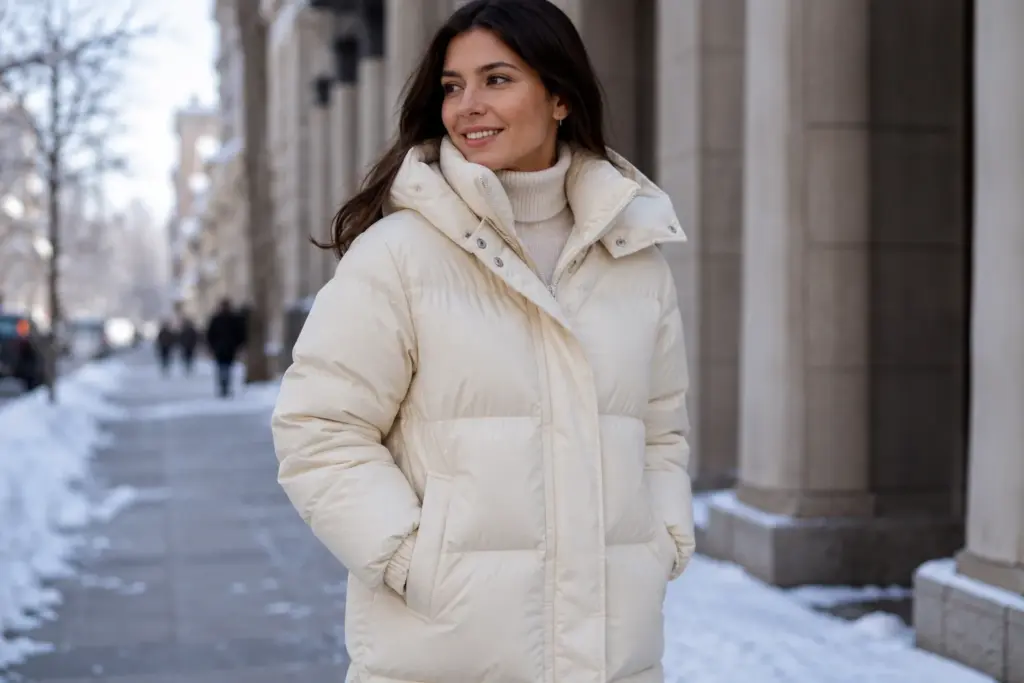
O casaco puffer é um dos tipos de casaco de inverno mais resistentes, pois oferece aquecimento, volume e um visual esportivo em diversas faixas de preço.
O que eu verifico antes da produção
Costumo chamar o casaco puffer de "produto de volume" porque os compradores podem criar diversas versões a partir de uma ideia básica. Ele pode ser curto, na altura do quadril, na altura do joelho ou um casaco longo feminino. Pode ser feito com enchimento de plumas, poliéster reciclado ou enchimento sintético comum. Também pode ter acabamento fosco, brilhante, acolchoado, com capuz, cinto ou ser oversized. Isso o torna um dos tipos de casacos de inverno mais versáteis para mulheres. Minha principal preocupação na produção é o equilíbrio do enchimento. Se o enchimento se deslocar, o casaco fica com aparência irregular e perde o calor. Também verifico furos de agulha, resistência das costuras, suavidade do zíper e qualidade do forro. Um casaco puffer pode vender bem, mas os compradores precisam controlar a amostra antes de fazer grandes encomendas. No meu trabalho na fábrica, sempre sugiro a confecção de uma amostra com tamanhos variados, pois um enchimento espesso pode alterar o caimento final mais do que os compradores esperam.
| Foco no comprador | Minha sugestão |
|---|---|
| Melhor temporada | Inverno rigoroso |
| Tecido comum | Nylon, poliéster, tecido de revestimento reciclado |
| Principal risco | Acolchoamento irregular e falha no zíper |
| Bom mercado | Moda casual para atividades ao ar livre, coleção de inverno para supermercado, moda jovem. |
4. Quando os compradores devem escolher um casaco de lã?
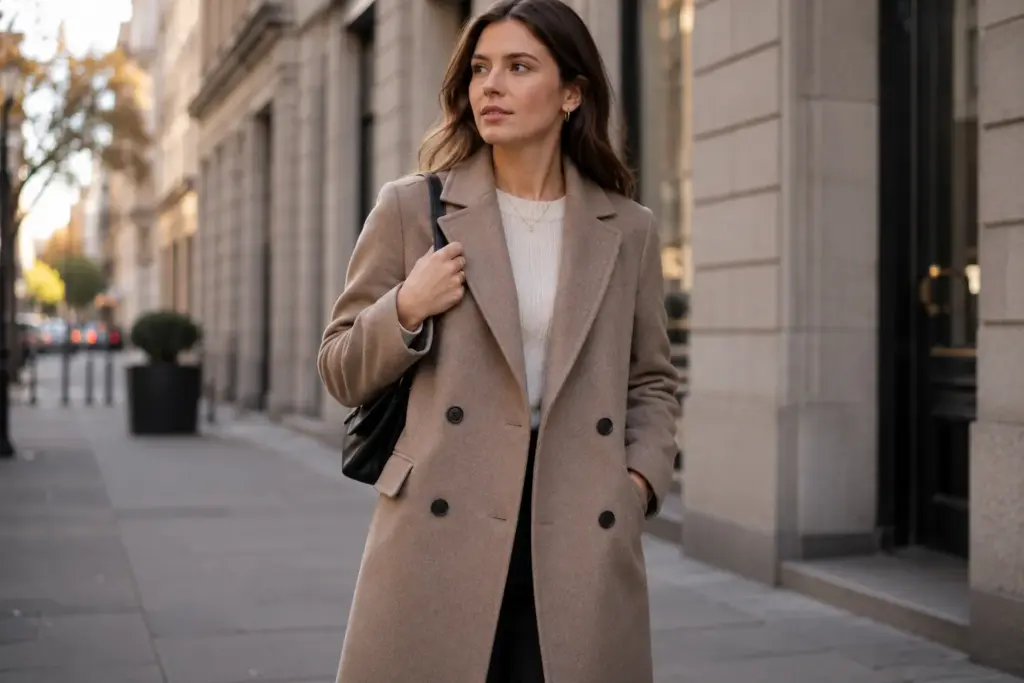
Um casaco de lã é o modelo que escolho quando uma compradora deseja um casaco feminino mais elegante para o escritório, para a cidade e para looks de inverno sofisticados.
O que eu verifico antes da produção
Considero o casaco de lã um dos modelos mais importantes que as mulheres podem usar tanto para o trabalho quanto para ocasiões sociais. Ele pode ser de abotoamento simples, duplo, com cinto, transpassado ou reto. Um bom casaco de lã não precisa de muitos enfeites. Precisa de um bom corte, passadoria impecável, forro resistente e tecido firme. Na hora de escolher o tecido, a composição é fundamental. Uma maior porcentagem de lã pode proporcionar uma sensação mais quente e sofisticada, mas também aumenta o custo. Uma mistura de lã e poliéster pode ser mais acessível e facilitar a produção em grandes quantidades para o varejo. Sempre digo aos compradores para não julgarem apenas pelo nome do tecido. Verifico o peso, a formação de bolinhas, a solidez da cor, o encolhimento e o toque. Um casaco de lã não é um produto barato, então o cliente perceberá rapidamente qualquer defeito de costura. Para um comprador de marca própria, este é um ótimo modelo para construir a confiança na marca.
| Foco no comprador | Minha sugestão |
|---|---|
| Melhor temporada | Outono e inverno |
| Tecido comum | Mistura de lã, poliéster-lã, tecido escovado |
| Principal risco | Formação de bolinhas, prensagem inadequada, colagem instável. |
| Bom mercado | Roupas para o escritório, moda premium, compradores maduros |
5. Por que um casaco parka é útil em mercados frios?
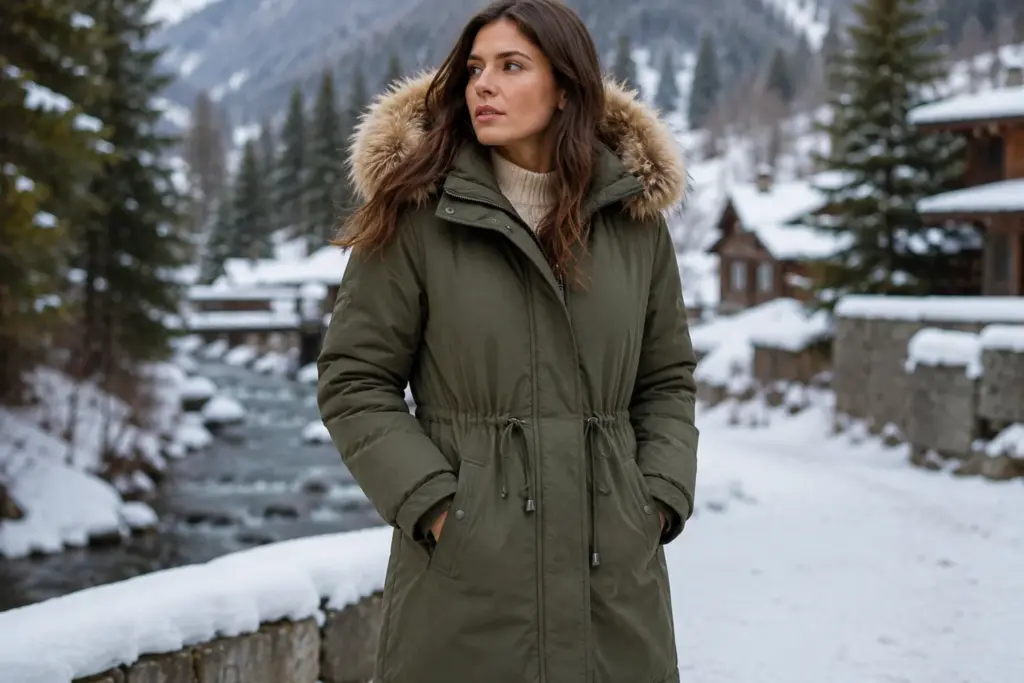
Um parka é um casaco comprido, quente e prático. Eu o recomendo quando os compradores vendem para mercados frios, com neve ou vento.
O que eu verifico antes da produção
Considero o parka um produto que prioriza a funcionalidade. Ele geralmente possui capuz, acolchoamento, cobertura longa do corpo, bolsos, cordões de ajuste e, às vezes, acabamento em pele sintética. Isso o diferencia de muitos casacos femininos da moda. Ele deve manter quem o veste aquecido e confortável. Para compradores na Rússia, no norte da Europa ou em outros mercados frios, um parka pode ser uma peça essencial para o inverno. Verifico o formato do capuz, a profundidade dos bolsos, a resistência do zíper, a segurança dos cordões de ajuste e a qualidade do forro. Também verifico se o tecido externo possui tratamento impermeabilizante, quando solicitado pelo comprador. Um parka pode ficar pesado, por isso o equilíbrio do modelo é importante. Se o caimento nos ombros estiver errado, o cliente se sentirá cansado ao usá-lo. Para pedidos no atacado, sugiro testar diferentes gramaturas de enchimento antes da produção em massa. Um preço mais baixo não adianta se o casaco perder a graça após uma temporada.
| Foco no comprador | Minha sugestão |
|---|---|
| Melhor temporada | Inverno rigoroso |
| Tecido comum | Poliéster, náilon, tecido misto de algodão e poliéster. |
| Principal risco | Corpo pesado, zíper frágil, capuz com ajuste ruim. |
| Bom mercado | Regiões frias, vestuário urbano para atividades ao ar livre, vestuário prático para o inverno |
6. O que é um casaco tipo duffle para mulheres?
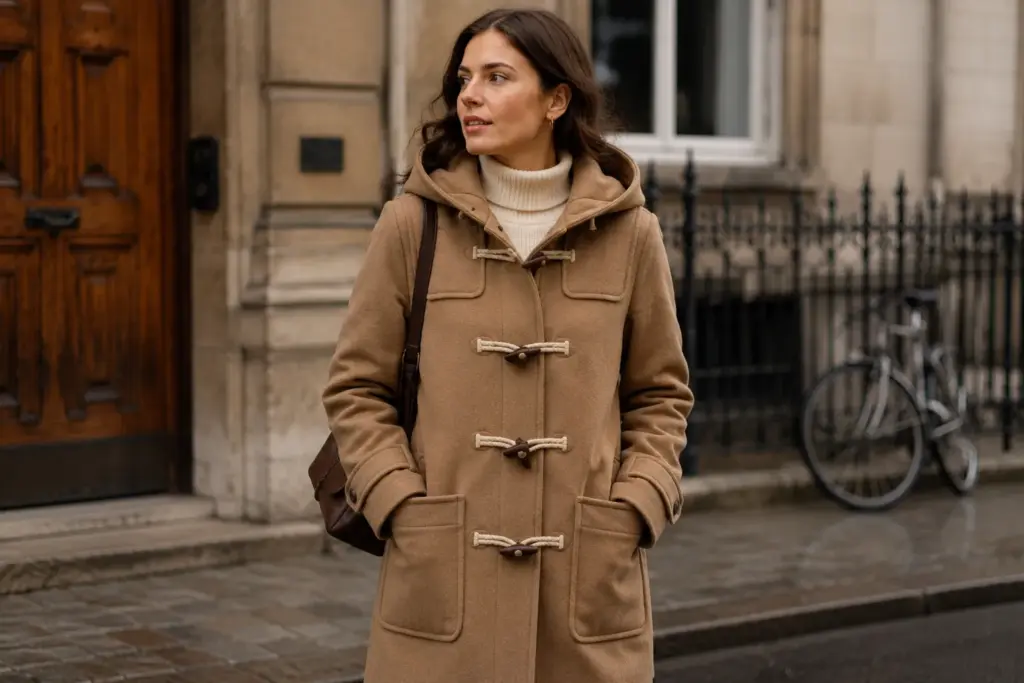
Um casaco duffle é um casaco de lã com capuz e fecho de botões. Eu o utilizo quando o comprador deseja um estilo quente com um toque casual mais suave.
O que eu verifico antes da produção
O casaco duffle tem um visual especial devido aos seus fechos de botão, bolsos aplicados, capuz e modelagem folgada. É um dos diferentes tipos de casacos que podem transmitir uma sensação jovem, clássica e prática ao mesmo tempo. Costumo recomendá-lo para compradores que desejam algo menos formal do que um casaco de lã, mas mais estruturado do que uma jaqueta de fleece. A qualidade dos fechos de botão é muito importante. Fechos baratos podem rachar, afrouxar ou dar à peça uma aparência de baixa qualidade. Também verifico a profundidade do capuz, pois muitos casacos duffle falham nesse ponto. Se o capuz for muito pequeno, não é útil. Se for muito grande, altera o formato dos ombros. Na produção em larga escala, também controlo a espessura do tecido e a espessura das costuras. Tecido grosso pode dificultar a costura da área do fechamento frontal. É aqui que uma fábrica experiente pode evitar muitos problemas.
| Foco no comprador | Minha sugestão |
|---|---|
| Melhor temporada | Outono e inverno |
| Tecido comum | Mistura de lã, melton, tecido escovado grosso |
| Principal risco | Fechos frágeis e costuras volumosas. |
| Bom mercado | Moda casual, público estudantil, vestuário clássico de inverno |
7. Quando um casaco tipo capa faz sentido?
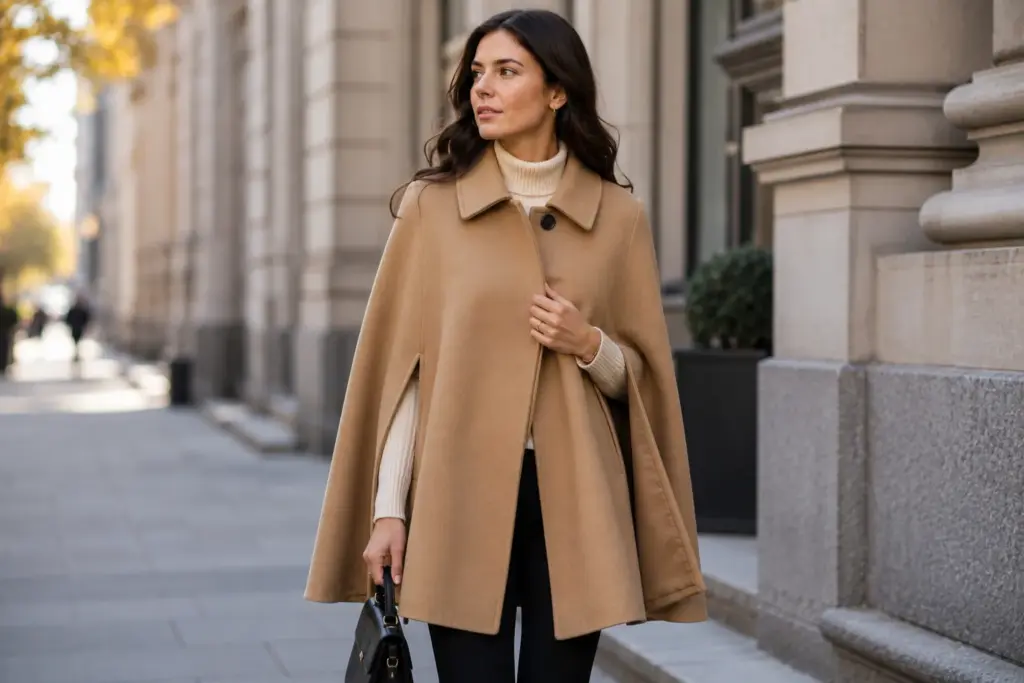
Um casaco tipo capa é um casaco sem mangas ou com mangas abertas. Eu o escolho quando o comprador deseja uma peça de moda com forte impacto visual.
O que eu verifico antes da produção
Não considero o casaco-capa uma peça básica. Vejo-o como uma peça de destaque. Ele pode dar um toque de estilo a uma coleção, mas talvez não seja adequado para todos os clientes. Um casaco-capa funciona melhor para compradores que já sabem que seus clientes desejam um visual mais elegante para o casaco. Pode ser feito de lã mista, tecido dupla face, malha ou tecido plano mais encorpado. O segredo é o caimento. Se o tecido for muito rígido, a capa fica com um aspecto quadrado. Se for muito macio, pode perder a forma. Analiso a linha dos ombros, a abertura do pescoço, a abertura das mangas e a posição do fecho. Esses pontos determinam se quem veste a peça terá boa mobilidade. Para um comprador de marca, eu sugeriria um ou dois modelos de casaco-capa em uma coleção sazonal, não muitos. Isso ajuda a criar valor de moda sem gerar estoque parado.
| Foco no comprador | Minha sugestão |
|---|---|
| Melhor temporada | Outono e inverno ameno |
| Tecido comum | Mistura de lã, tecido dupla face, malha grossa |
| Principal risco | Movimentação deficiente e caimento fraco. |
| Bom mercado | Moda boutique, roupas para ocasiões especiais, roupas elegantes para a cidade. |
8. Por que as jaquetas bomber funcionam no vestuário feminino?
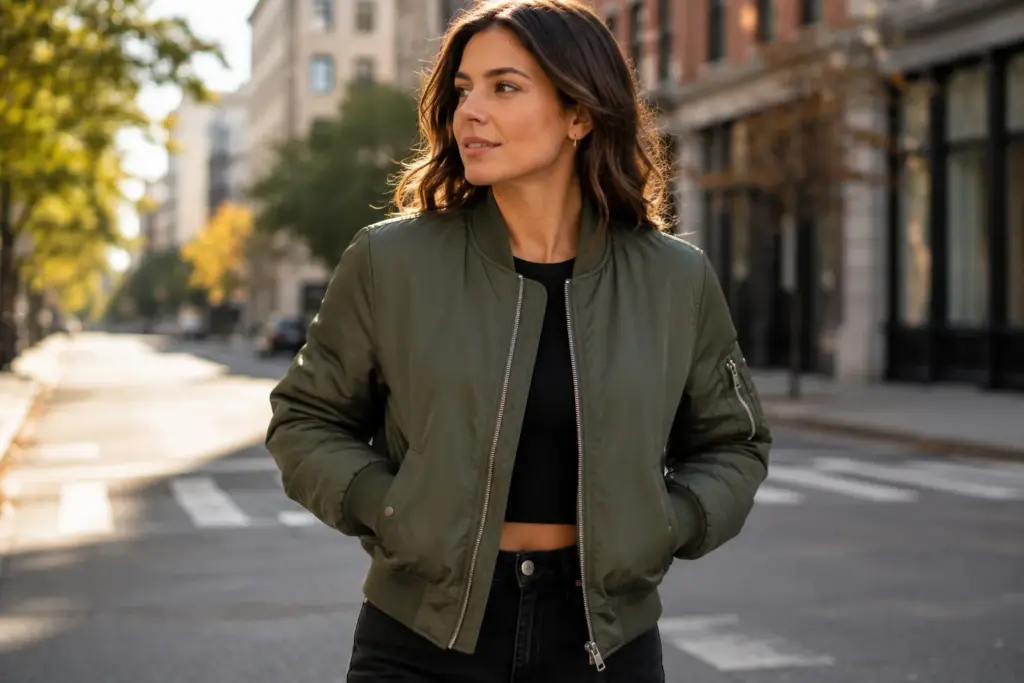
Uma jaqueta bomber é uma jaqueta curta com punhos e barra canelados. Eu a escolho quando as compradoras precisam de jaquetas femininas casuais e esportivas.
O que eu verifico antes da produção
A jaqueta bomber nem sempre é chamada de casaco, mas muitos compradores a incluem quando discutem tipos de jaquetas femininas. Ela é versátil porque pode ser confeccionada em diversos estilos. Uma bomber de nylon tem um ar esportivo. Uma bomber de cetim tem um ar mais moderno. Uma bomber de couro sintético tem um estilo mais urbano. Uma bomber acolchoada é ideal para climas mais frios. Eu sempre verifico a qualidade do tecido canelado primeiro. Tecidos canelados de baixa qualidade perdem a forma após a lavagem ou o uso. Também verifico a suavidade do zíper, a estrutura dos bolsos, o forro e o volume das mangas. Uma jaqueta bomber precisa de equilíbrio. Se a manga for muito larga, a jaqueta parece barata. Se o corpo for muito justo, perde o formato característico da bomber. Para compradores de atacado, esse estilo é útil para clientes mais jovens, lojas de departamento casuais e lançamentos promocionais de moda. Também pode ajudar a tornar uma coleção de casacos menos formal.
| Foco no comprador | Minha sugestão |
|---|---|
| Melhor temporada | Primavera, outono, inverno ameno |
| Tecido comum | Nylon, cetim, poliéster, couro sintético |
| Principal risco | Costuras soltas e zíper de má qualidade. |
| Bom mercado | Moda jovem, roupa casual, estilo de rua |
9. Os compradores devem optar por casacos de pele sintética?
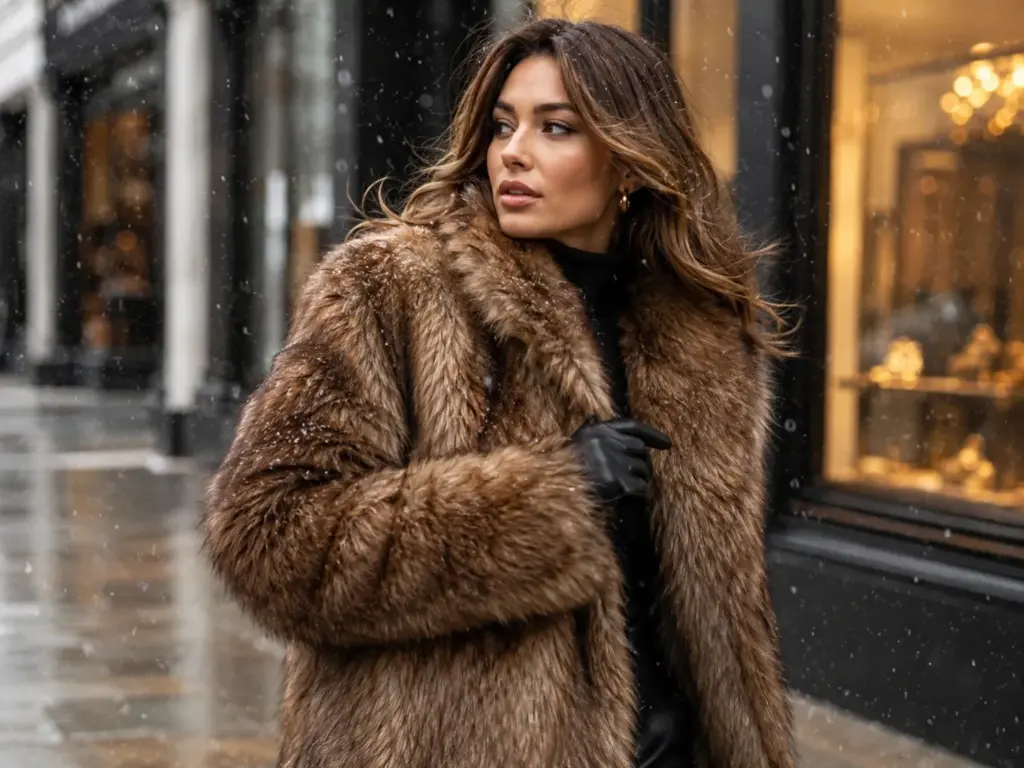
Um casaco de pele sintética é uma peça de roupa ousada para o inverno. Eu o recomendo quando o comprador busca textura, aquecimento e um visual impactante.
O que eu verifico antes da produção
Normalmente, recomendo pele sintética em vez de pele verdadeira para coleções de atacado modernas, pois é mais fácil de gerenciar para diversos mercados e grupos de clientes. Um casaco de pele sintética pode parecer caro, mas somente se o pelo, o forro e a costura forem bem controlados. Verifico a queda de pelos, a direção do pelo, a tonalidade da cor, o volume das costuras e a resistência do forro. Um casaco de pele sintética de má qualidade pode soltar pelos na caixa antes mesmo de chegar à loja. Um bom casaco pode se tornar o produto principal de uma coleção de inverno. Também sugiro modelagens simples para os primeiros pedidos. Uma jaqueta curta de pele sintética, um casaco de pele sintética na altura do quadril ou um modelo sem gola e com corte reto podem ser mais fáceis de vender do que uma peça com modelagem muito dramática. Para compradores sensíveis ao preço, o desafio é claro: precisamos de um tecido que pareça sofisticado, mas que ainda se encaixe no custo-alvo. É aqui que a escolha do tecido faz toda a diferença.
| Foco no comprador | Minha sugestão |
|---|---|
| Melhor temporada | Inverno |
| Tecido comum | Pele sintética, pelúcia, tecido estilo sherpa |
| Principal risco | Desprendimento de fibras, sombreamento de cores, costuras volumosas |
| Bom mercado | Varejo de moda, roupas de festa, peças de destaque para o inverno |
10. Como uma jaqueta de couro se encaixa nos estilos de casacos femininos?
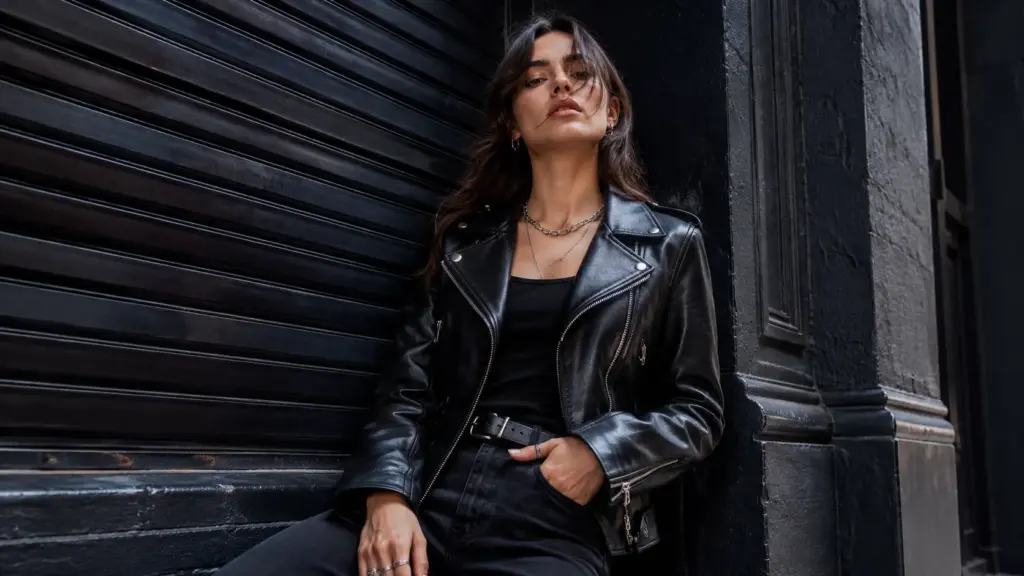
Uma jaqueta de couro confere um visual mais sofisticado do que a maioria dos casacos femininos. Eu a utilizo quando uma coleção exige atitude e um forte apelo estético.
O que eu verifico antes da produção
Uma jaqueta de couro pode ser de couro legítimo ou sintético. Em muitos programas de atacado de moda, o couro sintético é mais comum porque permite controlar o preço e oferece um fornecimento estável. Incluo jaquetas de couro na categoria de jaquetas femininas porque os compradores frequentemente as combinam com casacos e agasalhos. A jaqueta clássica de couro estilo motociclista ainda é popular, mas jaquetas com zíper e modelos cropped também vendem bem. Verifico a qualidade da superfície, o cheiro, o desgaste da cor, a resistência do zíper e a tensão das costuras. O couro sintético pode rachar se o revestimento for frágil, por isso, testar o material é importante. Também verifico a mobilidade das mangas, pois uma jaqueta de couro ajustada pode parecer boa no cabide, mas ficar apertada quando usada. Para compradores que desejam preços competitivos, sugiro começar com preto, marrom, creme ou bordô. Essas cores são mais fáceis de combinar com vestidos, calças jeans e saias.
| Foco no comprador | Minha sugestão |
|---|---|
| Melhor temporada | Primavera, outono, inverno ameno |
| Tecido comum | Couro sintético, PU, couro legítimo para pedidos premium |
| Principal risco | Rachaduras, cheiro ruim, pouca mobilidade da manga |
| Bom mercado | Moda jovem, streetwear, agasalhos de marca própria |
11. Por que uma capa de chuva é importante em uma linha de casacos?
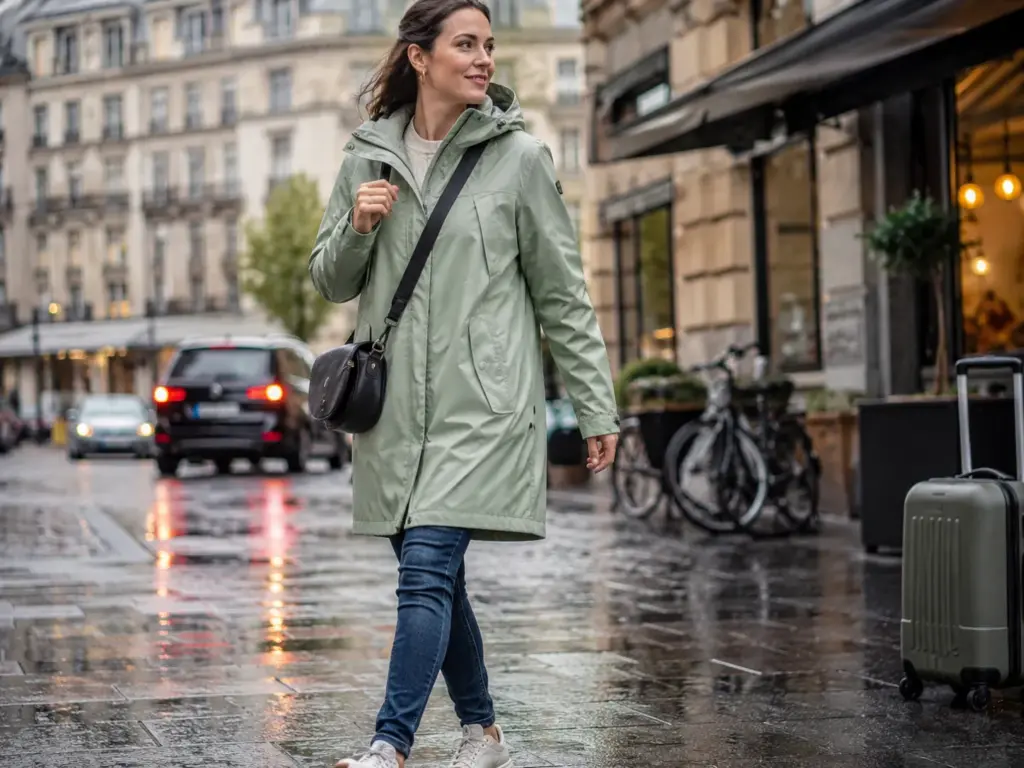
Uma capa de chuva é um casaco leve e prático. Eu a recomendo quando as compradoras precisam de casacos femininos para dias chuvosos e viagens.
O que eu verifico antes da produção
Gosto de capas de chuva porque resolvem um problema claro da cliente. Ela quer se manter seca, mas também quer estar bem vestida. Uma capa de chuva pode ser simples, com capuz, com cinto, dobrável ou inspirada em trench coats. Também pode ser feita em cores vibrantes para vitrines de lojas na primavera. Verifico a resistência à água, a qualidade das costuras, o formato do capuz, a proteção do zíper, a resistência dos botões de pressão e o método de dobragem. Para alguns compradores, um acabamento resistente à água comum é suficiente. Para outros, costuras seladas e um desempenho impermeável superior podem ser necessários. Sempre pergunto sobre o mercado de vendas antes de fazer um orçamento, pois o custo pode variar bastante. Uma capa de chuva também é útil para compradores de supermercados, pois pode ser vendida como um item prático para a estação. É um dos diferentes tipos de casacos femininos que podem ser funcionais e estilosos quando a cor e o caimento são adequados.
| Foco no comprador | Minha sugestão |
|---|---|
| Melhor temporada | Primavera e outono chuvosos |
| Tecido comum | Poliéster, náilon, tecido revestido |
| Principal risco | Baixa resistência à água e costuras com vazamento. |
| Bom mercado | Roupa para viagens, roupa para a cidade, linha sazonal para supermercados |
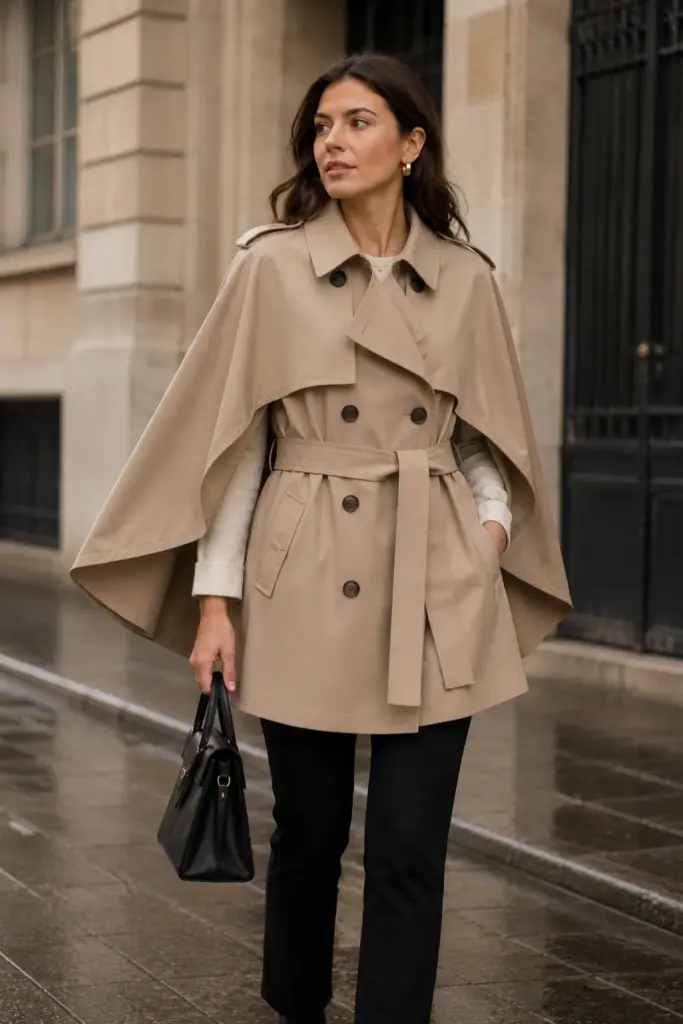
12. O que é uma capa de trincheira?
Uma capa trench coat combina os detalhes de um trench coat com o formato de uma capa. Eu a escolho quando uma compradora deseja uma versão moderna de um casaco feminino clássico.
O que eu verifico antes da produção
A capa trench coat não é um produto básico, mas pode ser útil quando uma marca deseja apresentar uma proposta de vestuário exterior mais diferenciada. Ela mantém alguns detalhes do trench coat tradicional, como a aba de proteção contra intempéries, o cinto ou o fechamento frontal duplo, mas a área dos braços e o formato do corpo conferem um ar mais dramático. Vejo-a como uma peça de moda para compradores que desejam se destacar das coleções de casacos femininos convencionais. O corte é fundamental. Uma capa trench coat deve ter um bom caimento a partir dos ombros. Também deve permitir movimento quando a usuária carrega uma bolsa ou levanta os braços. Analiso a gola, a abertura das mangas, o comprimento do cinto e a rigidez do tecido. Se o tecido for muito pesado, a capa pode ficar puxada para trás. Se for muito leve, pode parecer sem graça. Sugiro este estilo para marcas com clientes que valorizam o design, e não para qualquer linha de varejo básica.
| Foco no comprador | Minha sugestão |
|---|---|
| Melhor temporada | Primavera e outono |
| Tecido comum | Sarja de algodão, poliéster-algodão, tecido revestido |
| Principal risco | Má oclusão do ombro e movimento rígido |
| Bom mercado | Marcas de moda, compradores de boutiques, coleções com foco no design. |
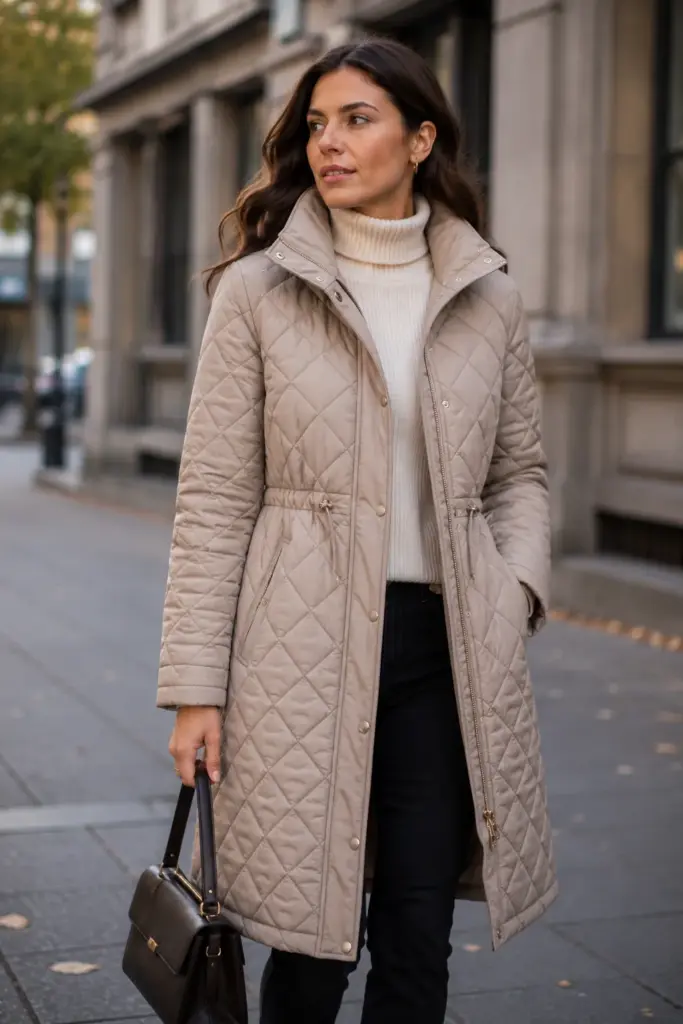
13. Quando um casaco acolchoado é melhor do que um casaco puffer?
Um casaco acolchoado oferece aquecimento com menos volume. Eu o recomendo quando os compradores precisam de uma alternativa mais elegante a um casaco puffer grande.
O que eu verifico antes da produção
Um casaco acolchoado é um dos tipos de casaco mais práticos, pois pode ter uma aparência leve, elegante e fácil de usar. Ele utiliza enchimento costurado, o que faz com que o enchimento permaneça no lugar melhor do que alguns modelos com enchimento solto. O padrão do acolchoado pode mudar completamente o visual. O acolchoado em losangos tem um ar clássico. O acolchoado horizontal tem um ar esportivo. O acolchoado com quadrados grandes tem um ar mais moderno. Eu verifico a tensão do acolchoado, a espessura do enchimento, o alinhamento das costuras e a suavidade do forro. Se o acolchoado estiver muito apertado, o tecido pode ficar amassado. Se estiver muito frouxo, o enchimento pode se deslocar. Um casaco acolchoado também é útil para compradoras que precisam de bons casacos femininos para invernos amenos, viagens e uso diário. Ele pode ser feito curto, longo, com capuz, sem gola ou com cinto. Para planejamento de vendas no atacado, gosto desse estilo porque ele se encaixa entre jaquetas leves e casacos de inverno pesados.
| Foco no comprador | Minha sugestão |
|---|---|
| Melhor temporada | Outono e inverno ameno |
| Tecido comum | Poliéster, náilon, tecido externo reciclado |
| Principal risco | Costura irregular e enchimento deslocado |
| Bom mercado | Roupa para uso diário, roupa de viagem, roupa casual de inverno para varejo |
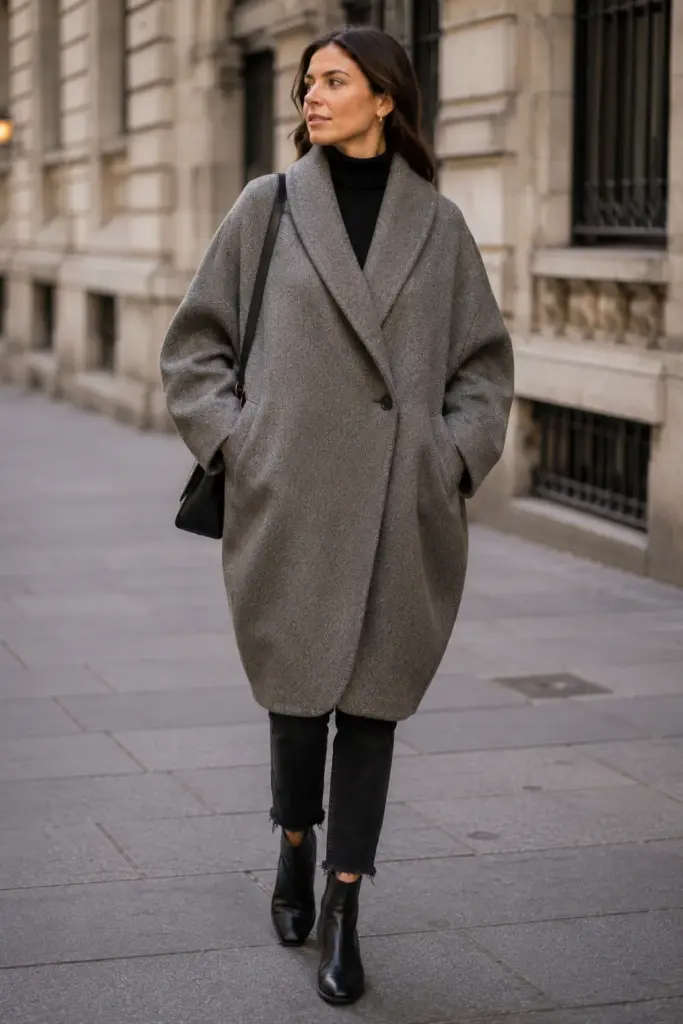
14. Por que alguns compradores gostam de casacos tipo casulo?
Um casaco tipo casulo tem um formato arredondado e amplo. Eu o escolho quando o comprador busca conforto, volume moderno e um visual elegante e descontraído.
O que eu verifico antes da produção
O casaco tipo casulo é fácil de ser mal interpretado. Alguns compradores pensam que oversized significa simples, mas eu discordo. Um casaco oversized exige um trabalho de modelagem muito cuidadoso. Ombros, mangas, barra e formato das costas devem estar em perfeita harmonia. Se o formato não for controlado, o casaco pode parecer grande demais em vez de elegante. Um casaco tipo casulo geralmente tem ombros caídos, um corte arredondado e espaço suficiente para sobreposições. É um modelo popular entre os casacos femininos, pois muitas clientes buscam conforto e modelagens mais soltas. Analiso o ângulo das mangas, a posição dos bolsos, a tensão do forro e o peso total da peça. Os bolsos devem ser fáceis de usar, mesmo em peças mais largas. Também sugiro cores sólidas para pedidos em grande quantidade, como camelo, cinza, preto e bege. Um casaco tipo casulo pode ter uma aparência sofisticada, mas a equipe de produção deve prepará-lo e embalá-lo com cuidado.
| Foco no comprador | Minha sugestão |
|---|---|
| Melhor temporada | Outono e inverno |
| Tecido comum | Mistura de lã, tecido escovado, tecido dupla face |
| Principal risco | Formato muito grande e equilíbrio ruim nas mangas |
| Bom mercado | Moda moderna, roupas urbanas, coleções focadas no conforto. |
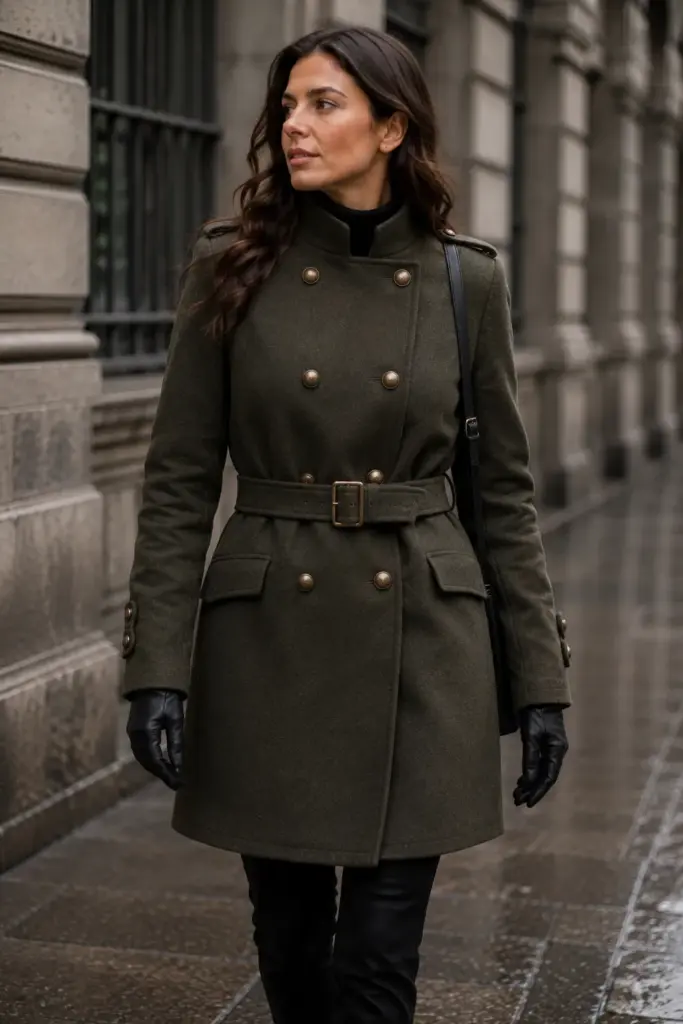
15. O que diferencia um casaco militar?
Um casaco militar utiliza detalhes inspirados em uniformes. Eu o escolho quando os compradores desejam estrutura, linhas definidas e uma silhueta de casaco mais marcante.
O que eu verifico antes da produção
Um casaco militar pode incluir botões com aparência de latão, dragonas, golas altas, bolsos com aba, ombros estruturados e fechamento frontal duplo. É um dos estilos de sobretudo feminino que pode conferir mais poder a uma coleção. Considero-o uma boa opção para compradoras cujas clientes apreciam roupas ajustadas ou estruturadas. O principal desafio de produção é a simetria. Se os botões, bolsos e dragonas não estiverem alinhados, a peça aparenta baixa qualidade. Verifico o posicionamento dos botões, a resistência dos botões, o equilíbrio frontal, a altura da gola e o formato da cava da manga. O tecido também precisa ter estrutura suficiente para sustentar o visual militar. Tecidos muito macios podem não funcionar bem. Em relação às cores, verde-oliva, azul-marinho, preto e camelo são escolhas comuns. Sugiro este estilo para compradoras que desejam um casaco com um design mais sofisticado do que um casaco de lã básico, mas que ainda seja fácil de usar.
| Foco no comprador | Minha sugestão |
|---|---|
| Melhor temporada | Outono e inverno |
| Tecido comum | Mistura de lã, sarja, mistura de poliéster pesado |
| Principal risco | Linhas de botões tortas e estrutura frágil |
| Bom mercado | Moda casual elegante, roupa para o escritório, moda estruturada |
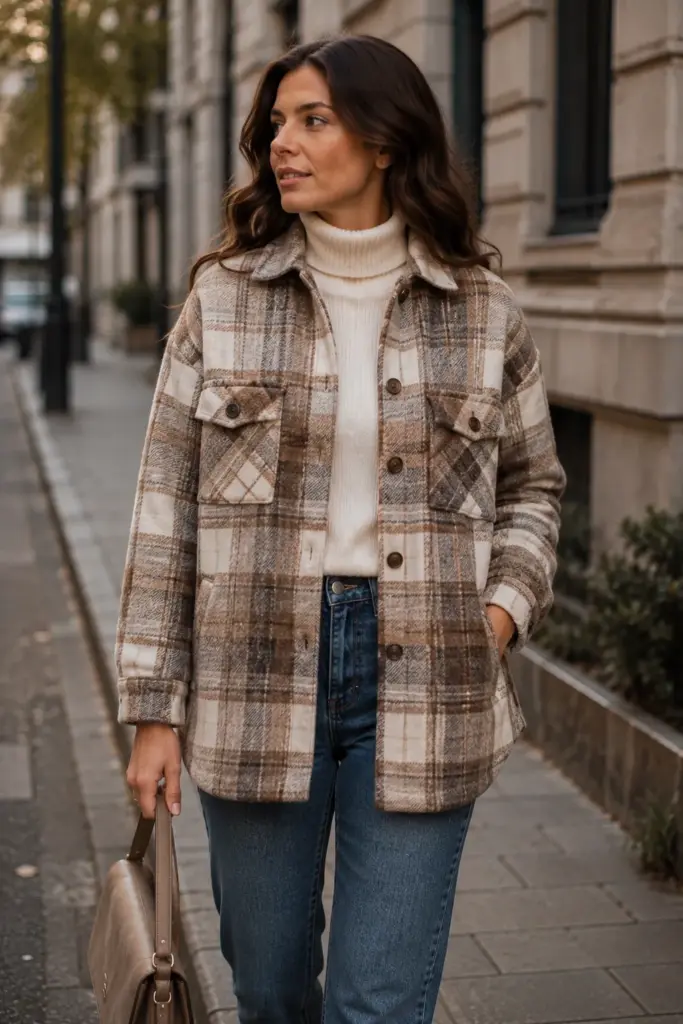
16. Por que a jaqueta Shacket é tão útil?
Uma jaqueta-camisa é um tipo de jaqueta que também funciona como camisa. Eu a recomendo quando os compradores precisam de uma peça de roupa externa leve, que sirva como intermediária entre camisas, jaquetas e casacos.
O que eu verifico antes da produção
A jaqueta-camisa é um dos tipos de jaqueta mais versáteis que as mulheres podem usar em climas instáveis. Ela se parece com uma camisa, mas é feita com um tecido mais pesado e funciona como uma camada externa. Os compradores gostam dela porque pode ser produzida em diversas faixas de preço. Uma jaqueta-camisa xadrez escovada pode ser casual. Uma jaqueta-camisa de lã mista pode ser mais elegante. Uma jaqueta-camisa de veludo cotelê pode ter um ar retrô. Uma jaqueta-camisa acolchoada é ideal para os dias mais frios. Eu verifico o formato da gola, a posição dos bolsos, a resistência dos botões, o encolhimento do tecido e o equilíbrio das costuras laterais. Como as jaquetas-camisa geralmente usam tecido xadrez, a combinação das estampas é importante. Uma combinação ruim de xadrez pode fazer a peça parecer barata, mesmo que o custo do tecido não seja baixo. Para compradores atacadistas, esse estilo é uma ótima opção porque vende antes dos casacos de inverno mais pesados. Ajuda a preencher a lacuna de agasalhos do início do outono.
| Foco no comprador | Minha sugestão |
|---|---|
| Melhor temporada | Primavera e outono |
| Tecido comum | Flanela, mistura de lã, veludo cotelê, tecido escovado |
| Principal risco | Má combinação de xadrez e encolhimento do tecido. |
| Bom mercado | Moda casual, público jovem, agasalhos de início de temporada |
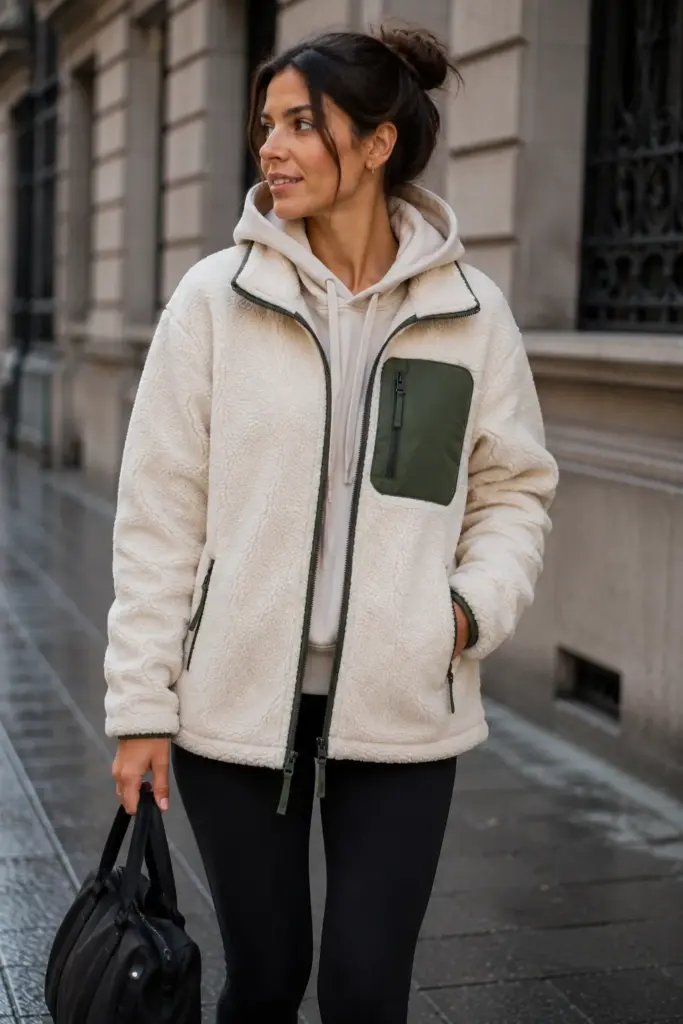
17. Quando os compradores devem adicionar jaquetas de lã polar ao carrinho?
Uma jaqueta de fleece é macia, quente e casual. Eu a recomendo para quem precisa de uma peça de roupa externa confortável a um preço acessível.
O que eu verifico antes da produção
Uma jaqueta de fleece é um dos diferentes tipos de jaquetas femininas que podem ser vendidas para vários grupos de clientes. Pode ser uma jaqueta com zíper, um pulôver, uma jaqueta sherpa, uma jaqueta com capuz ou um modelo com gola alta. Também é útil para atividades ao ar livre, viagens, uso em casa e para um look casual na cidade. Eu verifico o peso do tecido, a qualidade da textura, a suavidade do zíper, o formato dos bolsos e a resistência ao pilling. Fleece de baixa qualidade pode formar bolinhas rapidamente, e os clientes notarão isso após alguns usos. Também verifico se a peça precisa de acabamentos como viés, punhos elásticos ou cordões. Esses pequenos detalhes afetam tanto o conforto quanto o custo. Para compradores que buscam preços competitivos, o fleece pode ser uma boa opção, pois oferece uma boa sensação de aquecimento sem o custo do pluma ou da lã. Costumo sugerir a produção inicial de jaquetas de fleece em cores básicas e, em seguida, a adição de uma ou duas cores sazonais para atrair o público.
| Foco no comprador | Minha sugestão |
|---|---|
| Melhor temporada | Outono, inverno: sobreposição de camadas, uso ao ar livre |
| Tecido comum | Fleece polar, sherpa, fleece colado |
| Principal risco | Formação de bolinhas e zíper de baixa qualidade. |
| Bom mercado | Roupa casual para atividades ao ar livre, programas de supermercado, roupas de viagem |
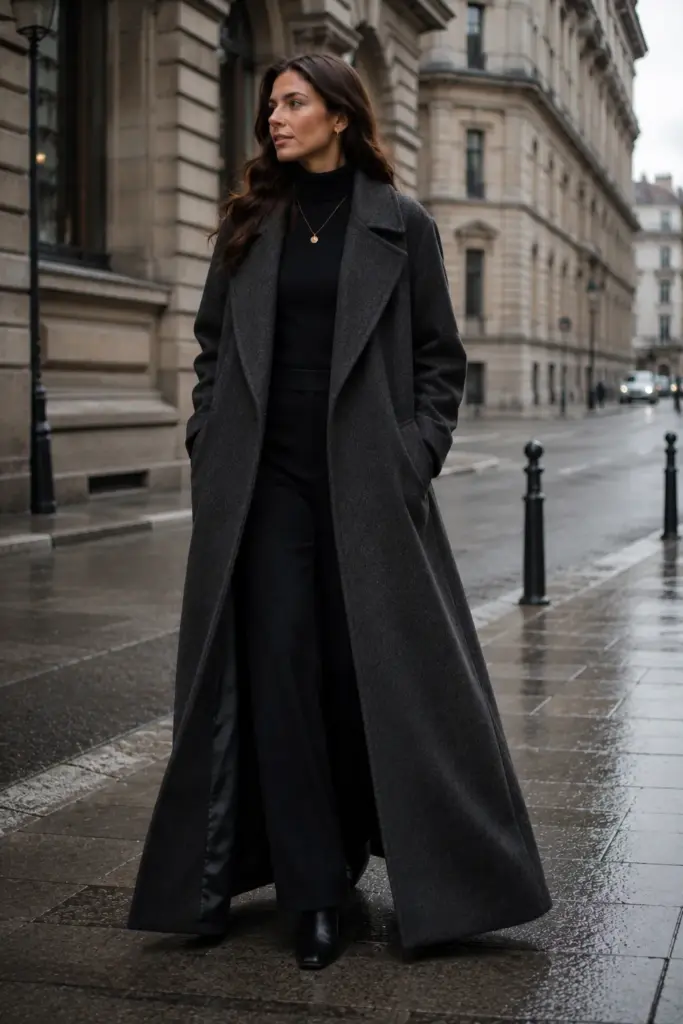
18. Como se chama um casaco maxi ou um casaco muito comprido?
Um maxi casaco é um casaco realmente comprido, geralmente na altura do tornozelo ou quase até o chão. Eu o uso quando os compradores querem um visual impactante, quentinho e com um estilo invernal marcante.
O que eu verifico antes da produção
Muitos compradores me perguntam: "Como se chama um casaco comprido?". Na maioria das discussões sobre fornecimento de moda, eu o chamo de maxi casaco, casaco longo, sobretudo longo ou casaco feminino longo, dependendo do estilo específico. Um maxi casaco oferece ótima cobertura e um visual sofisticado. Ele pode ser confeccionado em lã mista, tecido dupla face, tecido acolchoado ou tecido matelassê longo. O maior desafio é o equilíbrio. Um casaco longo não deve repuxar nos ombros, torcer na costura lateral ou ficar muito comprido para o público-alvo. Eu verifico o comprimento do corpo pelo tamanho, abertura lateral, largura da bainha, gramatura do tecido e método de embalagem. Um casaco feminino longo pode ter uma aparência muito requintada, mas também pode aumentar o custo do tecido e o tamanho da caixa. Para os compradores, sugiro usar esse estilo como uma peça-chave para o inverno, e não como o único casaco da coleção.
| Foco no comprador | Minha sugestão |
|---|---|
| Melhor temporada | Inverno |
| Tecido comum | Mistura de lã, tecido dupla face, tecido acolchoado. |
| Principal risco | Alto custo do tecido e equilíbrio corporal inadequado |
| Bom mercado | Vestuário de inverno premium, moda urbana, clientes maduros |
Como posso ajudar as compradoras a escolherem os casacos femininos certos?
Não acredito que todo comprador precise dos 18 tipos de casaco em um único pedido. Acredito que os compradores precisam da combinação certa para o seu mercado, faixa de preço e época de vendas.

Meu método simples de planejamento de alcance
Quando planejo a coleção de casacos femininos com um comprador, primeiro separo a linha em estilos básicos, sazonais, fashion e funcionais. Uma linha básica pode incluir trench coats, casacos de lã, casacos de lã merino e casacos acolchoados. Uma linha funcional de inverno pode incluir jaquetas puffer, parkas, jaquetas de fleece e capas de chuva. Uma linha fashion pode incluir capas, trench coats, casacos de pele sintética, jaquetas de couro, casacos cocoon e maxi casacos. Esse método ajuda os compradores a evitar um erro comum: escolher muitos estilos diferentes, mas que atendem à mesma necessidade do cliente. Isso gera pressão sobre o estoque. Eu prefiro um planejamento mais claro. Um casaco deve aquecer. Um casaco deve ser elegante. Um casaco deve estar alinhado com as tendências. Um casaco deve ter um preço competitivo. É assim que ajudo os compradores a criar uma coleção completa, mas que ainda assim se mantenha sob controle.
| Função de alcance | Tipos de pelagem adequados |
|---|---|
| Vendedores básicos | Trench coat, casaco de lã, casaco acolchoado |
| Vendedores de clima frio | Casaco puffer, parka, casaco maxi, jaqueta de lã |
| Declaração de moda | Casaco tipo capa, sobretudo, casaco de pele sintética, casaco casulo |
| Casaco casual | Jaqueta bomber, jaqueta-shacket, jaqueta de couro |
| Função de previsão do tempo | Capa de chuva, parka, casaco acolchoado |
Conclusão
Eu seleciono casacos femininos com base no mercado, na estação, no tecido, no caimento e na margem de lucro. A combinação certa de casacos ajuda os compradores a venderem melhor e a reduzirem o risco de fornecimento.
Procura um fabricante de casacos femininos de confiança?
Sou Lancy Chia, da Truekung, na China. Minha fábrica trabalha com compradores B2B, marcas, atacadistas e supermercados. Nós fornecemos OEM e ODM Serviço de casacos femininos, jaquetas, vestidos, saias, calças jeans, camisetas, moletons, jaquetas de plumas, corta-ventos, roupas esportivas, roupas infantis, roupas íntimas e bolsas da moda.
Se você está buscando fornecedores para diferentes tipos de casacos femininos, posso ajudá-lo(a) a desenvolver amostras, controlar a qualidade do tecido, gerenciar a produção e preparar pedidos de exportação com uma comunicação mais clara.
Entre em contato comigo pelo e-mail [email protected] ou visite https://truekung.com para discutirmos seu próximo projeto de venda por atacado de casacos femininos.
Visualizações: 126