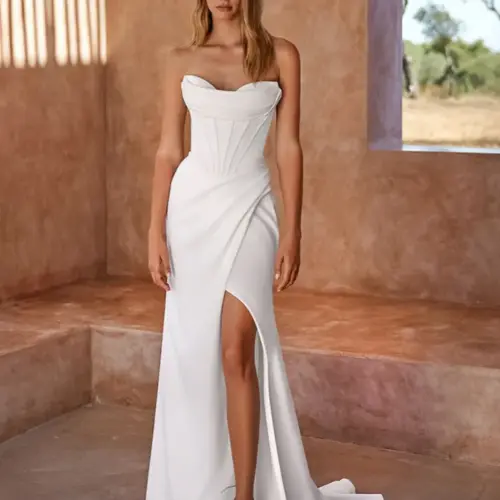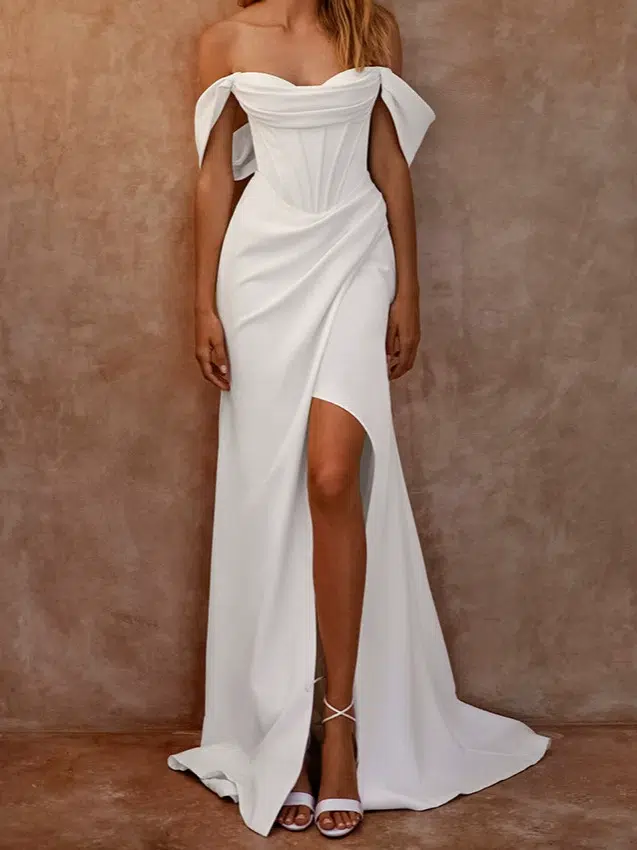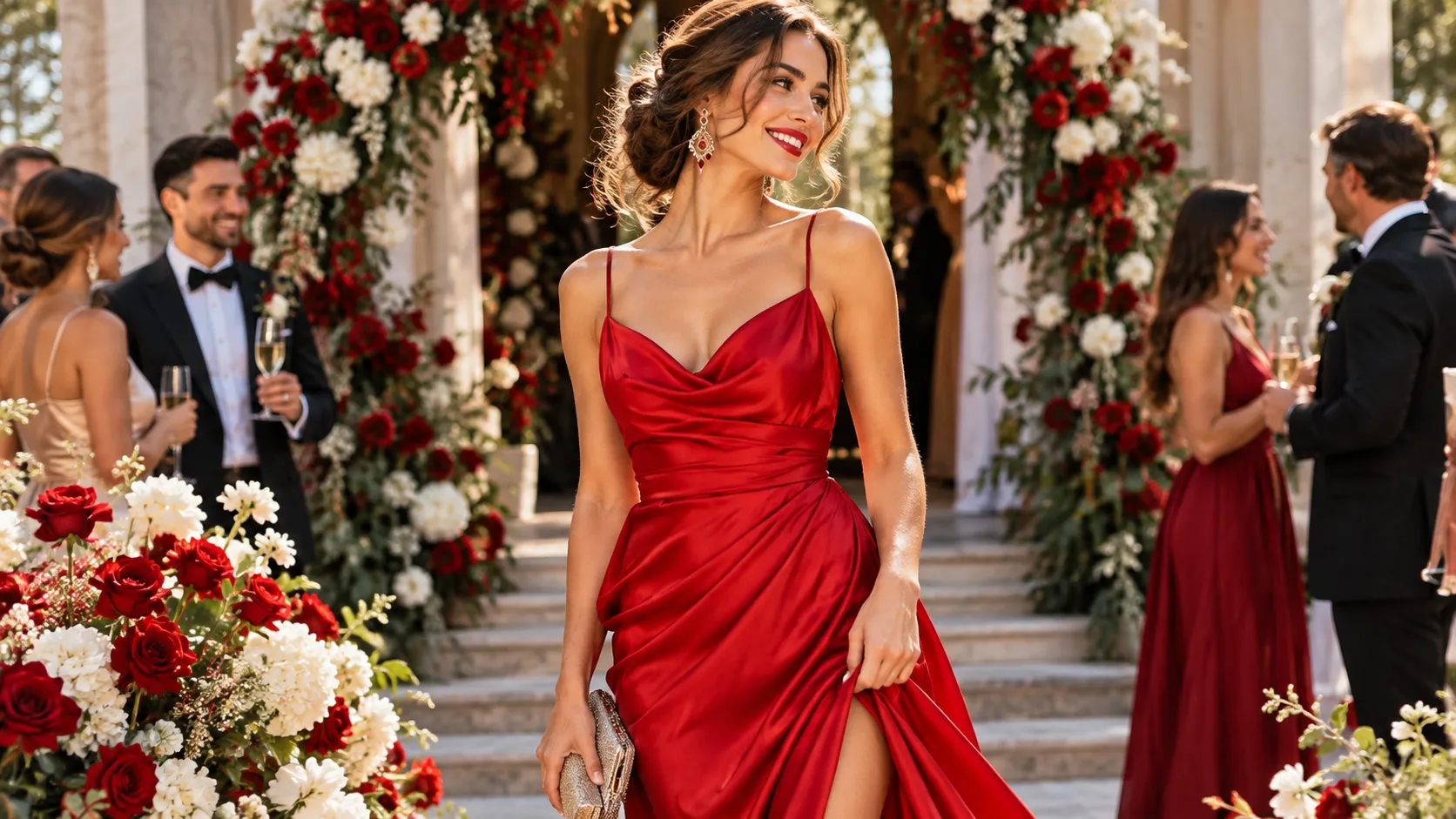

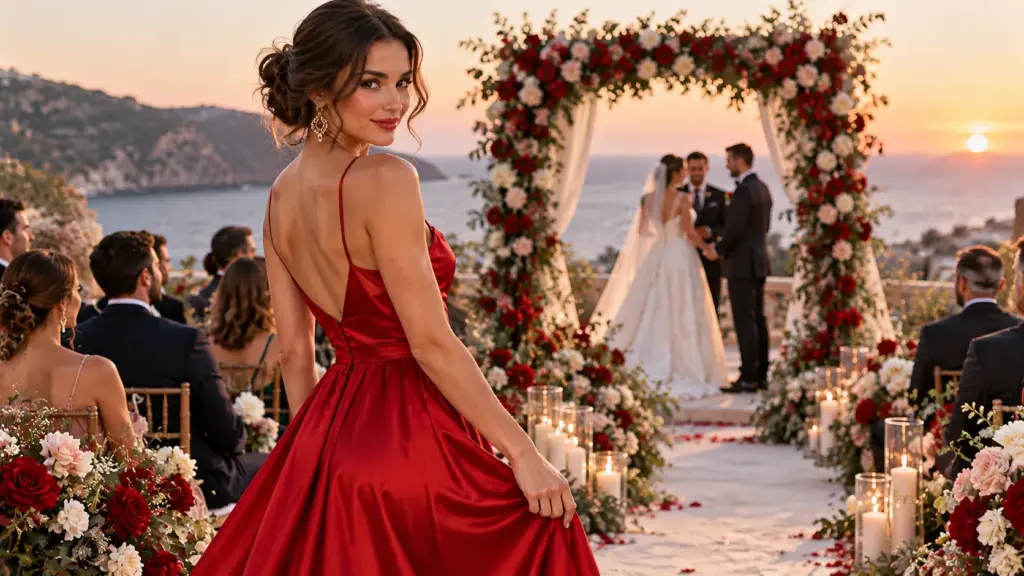
A red dress can look beautiful at a wedding, but is it always appropriate? Cultural traditions, dress codes, and bridal colors can make this choice complicated. Before choosing your outfit, understand what wearing red to a wedding means and when another color may be better.
Can you wear red to a wedding? Yes, in many modern Western weddings, red is an acceptable guest color. However, guests should consider the couple’s cultural traditions, wedding dress code, and bridal attire. If the bride plans to wear red, or the invitation requests specific colors, choosing another shade is usually more considerate.
I’m Lancy Chia from Truekung, a clothing manufacturer in China with 20 years of export experience and more than 200 workers. We work with overseas clothing brands, wholesalers, and sourcing managers on OEM/ODM production, private label clothing, sample development, and bulk manufacturing.
From the factory side, I understand how fabric, color, silhouette, and finishing can change the appearance of a dress. A red satin gown and a burgundy chiffon dress may belong to the same color family, but they create very different impressions.
For clothing buyers developing wedding guest collections, understanding these differences is important. The right red dress should match the customer’s occasion, market expectations, and preferred price range.
Let’s look at the meaning of red wedding attire, situations where guests should avoid it, and practical ways to style red dresses for different weddings.
What Does Wearing Red to a Wedding Mean?
Red is associated with love, passion, celebration, and confidence. However, its meaning changes across cultures. Some people see red as a beautiful wedding guest color, while others associate it with bridal traditions or old-fashioned superstitions.
Wearing red to a wedding does not have one universal meaning. In many Western weddings, it is simply a fashion choice. In Chinese and some South Asian wedding traditions, red can carry important bridal symbolism. The couple’s cultural background and wedding arrangements matter more than the color alone.
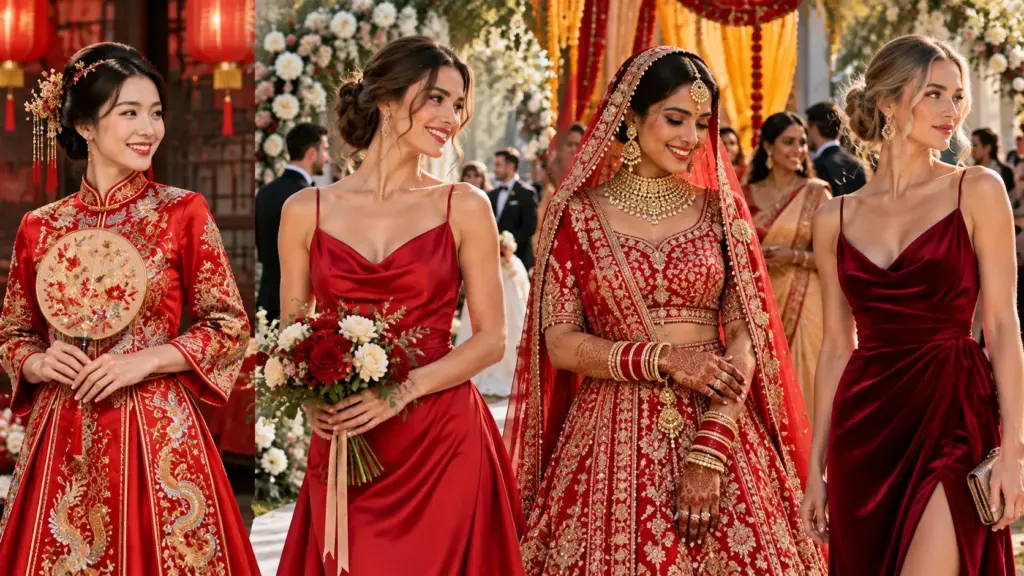
Why Red Has Different Cultural Meanings
The meaning of wearing red at weddings depends strongly on cultural traditions.
In many Western weddings, white or ivory is associated with bridal attire. Red is not normally reserved for the bride, although a particularly dramatic red gown may attract attention.
In traditional Chinese weddings, red represents happiness, good fortune, and prosperity. Brides may wear red qipao, traditional wedding outfits, or modern red dresses during different parts of the celebration.
In some Indian wedding traditions, brides wear red lehengas or sarees. Red can represent marriage, prosperity, and auspicious beginnings. However, Indian weddings vary by region, religion, family, and personal preference. Not every bride wears red.
This distinction is important for international fashion brands.
A red wedding guest dress marketed in the United States may be positioned as an elegant evening outfit. A similar garment sold in another market may be purchased for engagement ceremonies, wedding receptions, or bridal celebrations.
The product itself does not determine its cultural meaning.
Does Wearing Red Mean You Slept With the Groom?
One unusual question appears frequently in wedding etiquette discussions: what does wearing red to a wedding mean if someone believes the guest has a romantic history with the groom?
An old wives’ tale claims that wearing red to a wedding means the guest has slept with the groom.
There is no reliable basis for treating this rumor as a genuine or universal wedding tradition.
A guest wearing red does not communicate anything about their romantic history.
The superstition is better understood as an example of how social rumors can influence clothing etiquette.
Another belief suggests that wearing red brings bad luck to the wedding. Again, there is no universal rule supporting this interpretation.
Guests should focus on the couple’s actual preferences rather than assumptions about hidden messages.
For clothing brands, I would avoid using these superstitions as product marketing claims. Customers generally benefit more from practical information about the dress’s color, fit, fabric, and suitable occasions.
How Wedding Traditions Affect Color Choices
| Wedding Context | Meaning of Red | O que eu sugiro |
|---|---|---|
| Modern Western wedding | Love, confidence, celebration | Follow the invitation and dress code |
| Traditional Chinese wedding | Happiness and good fortune | Check whether red is reserved for the bride |
| Traditional Indian wedding | Often associated with bridal attire | Ask about the family’s clothing traditions |
| Western black-tie wedding | Formal and elegant | Consider burgundy or deep crimson |
| Casamento na praia | Bright and festive | Choose lightweight fabrics and softer reds |
| Wedding with a red color theme | Part of the event’s visual identity | Follow the couple’s color instructions |
Why Cultural Context Matters More Than Trends
In my factory experience, clothing buyers sometimes focus heavily on popular colors without considering where and how customers will wear the finished garments. This can become a problem when developing occasionwear for international markets. A color that works well in one market may have a different purpose in another. For example, a bright red satin maxi dress could be marketed as a wedding guest outfit for a Western evening reception. A customer attending a traditional Chinese wedding, however, may prefer not to wear a similar dress if the bride has selected red bridal attire. Neither choice makes the garment unsuitable. The difference comes from the occasion and customer expectations.
This also affects product photography and collection planning. A brand selling red wedding guest dresses should consider whether its images communicate cocktail attire, eveningwear, or bridal fashion. Long trains, heavy embellishment, and dramatic silhouettes may make a dress look more bridal than intended. Simpler designs can offer customers greater flexibility across different events.
My suggestion is to define the intended market and occasion before developing a red occasionwear collection. Do not rely only on seasonal color trends. Consider cultural expectations, dress codes, and customer questions when selecting shades, fabrics, and silhouettes.
When Should You Avoid Wearing Red to a Wedding?
Red is not automatically inappropriate, but some situations require extra consideration. A dress may be beautiful and still conflict with the wedding’s traditions, dress code, or planned color scheme.
Avoid wearing red when the bride has chosen red bridal attire, the couple has requested other colors, or the wedding follows traditions where red has a special bridal role. If you are uncertain, ask the couple or someone helping organize the wedding.
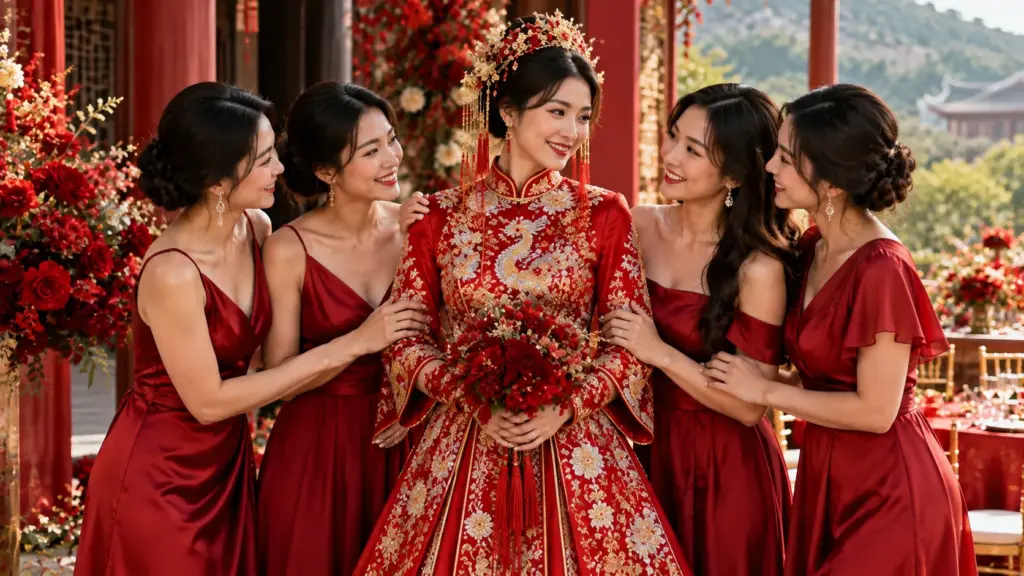
When the Bride Plans to Wear Red
A bride wearing red is an important reason to reconsider your outfit.
In Chinese weddings, the bride may wear a red qipao or another traditional red garment. Some brides also change outfits between the ceremony and reception.
Similarly, red bridal outfits are common in certain South Asian wedding traditions.
Guests should avoid assuming that the bride will wear white simply because the wedding includes Western elements.
The same principle applies to modern Western weddings where the bride has chosen a nontraditional red wedding dress.
The meaning of a red wedding dress is ultimately connected to the bride’s personal choice and cultural background.
If red is the bride’s main color, selecting another shade helps distinguish guest attire from bridal attire.
For clothing retailers, this is a useful distinction between red bridal dresses and red wedding guest dresses.
Bridal designs may feature elaborate embroidery, dramatic volume, or distinctive ceremonial details. Guest dresses generally benefit from more versatile styling.
Why Bright Red Can Attract Attention
One reason people ask why you shouldn’t wear red to a wedding is that bright red can stand out in photographs.
This is especially noticeable when other guests wear muted colors.
However, the appearance of red depends on more than the shade.
Fabric texture, surface shine, silhouette, and embellishment all influence the final result.
For example, a scarlet satin dress may reflect more light than a burgundy crepe dress. A fitted red sequined gown can also create a stronger visual statement than a simple red midi dress.
From a manufacturing perspective, these differences begin with material selection.
Satin, chiffon, velvet, and crepe can produce noticeably different appearances even when buyers request similar red shades.
This is why I usually ask buyers to check physical fabric samples rather than approve a red color from a digital photograph alone.
Lighting, camera settings, and screen differences can make color evaluation difficult.
Which Red Shades Suit Different Weddings?
| Wedding Type | Suggested Red Shade | Suitable Dress Style |
|---|---|---|
| Black-tie wedding | Burgundy, wine, deep crimson | Long evening gown |
| Cocktail wedding | Cherry red, rose red | Midi or cocktail dress |
| Summer wedding | Coral red, soft scarlet | Lightweight flowing dress |
| Autumn wedding | Rust red, burgundy | Long-sleeve midi dress |
| Casamento de inverno | Oxblood, wine red | Velvet or structured gown |
| Casamento na praia | Coral, muted red | Chiffon or relaxed maxi dress |
| Traditional wedding with red bridal attire | Alternative colors | Follow the family’s guidance |
Can You Wear Burgundy Instead of Red?
Burgundy is often a practical alternative when a guest likes red but wants a softer appearance. Its deeper tone can work well for formal evening weddings, autumn celebrations, and winter receptions. However, burgundy is still part of the red color family. If the couple has specifically requested that guests avoid red, choosing burgundy may not solve the problem. In that situation, navy, emerald green, or another approved color may be more appropriate.
For fashion buyers, burgundy also creates useful opportunities in occasionwear collections. A burgundy scoop neck dress can appeal to customers who prefer understated styling, while a red velvet gown may suit shoppers looking for winter formalwear. These garments serve different needs even when their construction is similar. Fabric weight, lining, neckline, and dress length should support the intended occasion.
Consider a retailer developing a small wedding guest collection with limited inventory. Producing several nearly identical red shades may divide demand across too many styles and colors. A smaller selection of clearly differentiated options may be easier to present to customers.
My decision rule is simple: choose the color according to the wedding requirements first, then select the fabric and silhouette. A darker shade can soften the appearance of red, but it cannot override the couple’s instructions.
How Can You Style a Red Dress for Different Weddings?
Choosing a red dress is only the beginning. Shoes, accessories, fabric, and dress length can make the same color appear casual, formal, romantic, or dramatic.
Style a red wedding guest dress according to the venue and dress code. Choose elegant fabrics, comfortable shoes, and accessories that complement the garment. Neutral heels, metallic sandals, simple jewelry, and a suitable handbag can help create a balanced outfit.
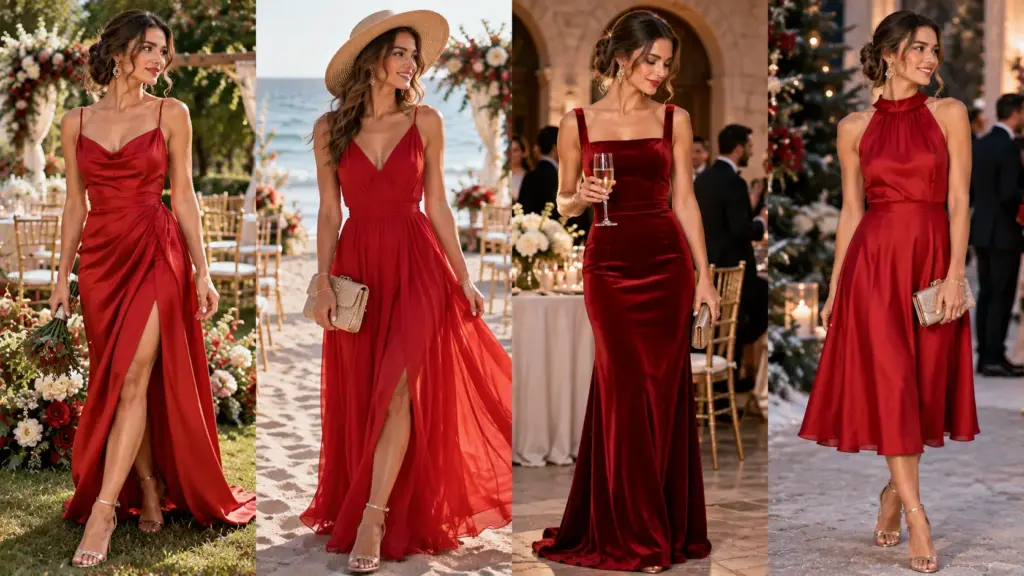
What Shoes Match a Red Dress?
Choosing the right shoes can change the overall appearance of red wedding attire.
Neutral colors are often easy to coordinate, but the best choice also depends on the dress length and wedding location.
For a formal evening wedding, gold or champagne heels can complement a deep red gown.
For a daytime celebration, beige or blush shoes can create a softer combination.
Black heels can work with burgundy, wine red, and other darker shades.
A red dress on the beach requires a different approach. Thin heels may sink into sand or become uncomfortable on uneven ground.
Flat sandals, wedges, or block heels may be more practical, depending on the venue.
For guests who prefer a coordinated look, matching a red dress with red heels is also possible. However, combining different red shades requires attention because slight color differences can be noticeable.
How Fabric Changes the Appearance of Red
Fabric selection is one of the most important factors in developing red dresses for weddings.
A red satin dress can create a smooth, polished appearance. Its reflective surface may make the color look brighter under artificial lighting.
Chiffon creates a softer effect because of its lightweight structure and flowing movement.
Velvet offers a deeper appearance and is often associated with cooler-weather formalwear.
Crepe can provide a more understated surface, making it suitable for simple midi dresses and tailored silhouettes.
These materials also have different production requirements.
For example, lightweight chiffon may require careful cutting, suitable lining, and controlled seam finishing. Velvet requires attention to fabric direction because the surface can appear different when panels are cut in opposite directions.
Satin may show puckering or uneven seams more clearly than some textured fabrics.
At Truekung, I encourage buyers to consider these construction details during sample development rather than selecting fabric only from a photograph.
A successful red dress needs suitable workmanship as well as an attractive color.
How to Match Red Dresses With Accessories
| Dress Style | Sapato | Acessórios |
|---|---|---|
| Red satin maxi dress | Champagne heels | Small clutch and simple earrings |
| Burgundy cocktail dress | Black or nude heels | Joias de ouro |
| Red chiffon beach dress | Flat sandals or wedges | Lightweight handbag |
| Red velvet gown | Black or metallic heels | Joias minimalistas |
| Rose red midi dress | Beige heels | Neutral handbag |
| Red floral dress | Nude sandals | Brincos pequenos |
| Red and white dress | Sapatos neutros | Simple accessories |
How Should Brands Develop Red Wedding Dresses?
For clothing brands and wholesalers, red occasionwear requires more planning than selecting a popular shade from a fabric card. Buyers should consider the customer’s intended occasion, preferred silhouette, target price, and quality expectations. These details influence fabric selection, pattern development, sampling, and bulk production. A red cocktail dress designed for summer weddings may need a lightweight fabric and comfortable lining. A winter red velvet gown may require different construction, packaging, and care instructions.
Consider a brand planning a collection with three red styles: a burgundy midi dress, a scarlet satin gown, and a coral chiffon maxi dress. Although all three belong to the same color family, they should not automatically use the same fabric specifications or finishing methods. The satin gown may need extra attention to seam appearance. The chiffon dress may require lining to manage transparency. The velvet garment may need careful handling to protect its surface during packing and transportation.
I also suggest checking color consistency between approved samples and bulk fabric. Red shades can appear different across dye lots, especially when production involves multiple materials.
My decision rule is to approve the complete garment, not just the color. Confirm fabric, fit, lining, stitching, accessories, and packaging before authorizing bulk production.
O que você deve preparar antes de entrar em contato com uma fábrica de roupas na China?
If you are a clothing brand owner, wholesaler, or sourcing manager planning to develop red wedding guest dresses, clear product information will help the factory understand your requirements.
You do not need to have every technical detail ready. However, providing basic information makes communication and quotation more efficient.
| Informação | Exemplo | Por que é necessário |
|---|---|---|
| Produto | Red cocktail dress, maxi dress, or evening gown | Confirma a adequação da fábrica |
| Fotos/pacote técnico | Imagens, medidas, construção | Apoia a definição de preços e o desenvolvimento. |
| Tecido | Satin, chiffon, velvet, crepe, or unknown | Afeta o custo, a quantidade mínima de encomenda e o prazo de entrega. |
| Tamanhos | XS–XL ou tabela personalizada | Afeta padrões e consumo. |
| Quantidade | Por estilo e cor | Afeta a quantidade mínima de encomenda e o preço unitário. |
| Mercado | UE, Reino Unido, EUA ou Austrália | Afeta o dimensionamento e a conformidade. |
| Nível de qualidade | Atacado ou premium | Orienta sobre materiais e mão de obra |
| Embalagem | Saco plástico, caixa ou código de barras | Afeta o custo e o prazo. |
| Etiquetas | Etiqueta para pescoço, cuidados, tamanho e preço | Afeta a arte, a quantidade mínima de encomenda e o custo. |
| Prazo final | data de chegada ao armazém | Apoia o planejamento da produção |
| Certificados | Certificados necessários | Confirma a conformidade |
| Preço alvo | FOB ou preço de entrega | Ajuda a sugerir opções realistas. |
Confirm Fabric and Color Before Sampling
Red can be challenging to evaluate through photographs alone.
A fabric may look bright crimson on one screen and slightly orange on another.
For this reason, I suggest using physical fabric swatches or an agreed color reference when precise shade matching matters.
Buyers should also consider whether the dress needs lining, stretch, or special finishing.
For example, a fitted red satin dress may require different fabric properties from a loose red chiffon dress.
If you are unsure which fabric to select, explain the desired appearance, target price, and intended customer.
The factory can then discuss suitable material options and their production implications.
Separate Essential Requirements From Preferences
Before requesting a quotation, identify which product details are essential and which are flexible.
For example, the exact red shade, dress measurements, and fabric composition may be essential to your brand.
Packaging style or minor decorative details may allow more flexibility.
This distinction helps the factory suggest alternatives when a material is unavailable or a requested customization creates an MOQ issue.
Clear information also supports more accurate pricing, realistic timelines, material suggestions, and production planning.
I have seen buyers lose time because important requirements were introduced after sample approval.
Confirming the main specifications early helps reduce unnecessary revisions.
Quando você deve solicitar um orçamento à Truekung?
If you are developing a private label wedding guest dress collection, you can contact Truekung during the early product development stage.
We work with overseas buyers who need OEM/ODM production, private label clothing, sample development, bulk manufacturing, quality control, and export communication.
Whether you are planning red cocktail dresses, burgundy evening gowns, or a broader women’s fashion collection, I suggest sharing your product requirements before requesting a final price.
Você pode enviar:
- Product images or technical packs
- Expected quantity per style and color
- Target market and size requirements
- Preferred fabric and quality level
- Requisitos de rotulagem e embalagem
- Expected delivery date
- Preço alvo, se disponível.
I can then discuss your requirements with our team and help clarify the production details that need to be confirmed.
Entre em contato com Lancy Chia na Truekung:
E-mail: [email protected]
Site: https://truekung.com
Conclusão
Can you wear red to a wedding? In many cases, yes. Respect the couple’s traditions, follow the dress code, and choose a suitable shade and silhouette. For fashion buyers, careful fabric selection, sampling, and quality control help turn red wedding dress designs into practical products.
Visualizações: 0