<p><strong>Stretch jersey is a knitted fabric engineered to move with the body and recover after extension.</strong> Cotton, modal and elastane blends are widely used for T-shirts, underwear, dresses and lightweight activewear, but fibre percentages alone do not determine quality. Buyers also need to specify knit structure, weight, stretch direction, recovery, shrinkage, spirality, pilling and colourfastness.</p>
<h2>What is stretch jersey fabric?</h2><p>Jersey is made with interconnected knit loops rather than woven warp and weft yarns. This construction naturally provides more crosswise movement than most woven fabrics. Adding elastane increases stretch and recovery, while cotton and modal influence softness, moisture behaviour, drape and surface appearance.</p>
<h2>Cotton, modal and elastane: what each fibre contributes</h2><table><thead><tr><th>Fibre</th><th>Contribution</th><th>Buyer risks to check</th></tr></thead><tbody><tr><td>Bawełna</td><td>Natural hand feel, absorbency, breathability and familiar appearance</td><td>Shrinkage, growth, pilling and colour change</td></tr><tr><td>Modalny</td><td>Softness, fluid drape, smooth surface and moisture absorption</td><td>Wet handling, fibrillation risk depending on quality, and dimensional change</td></tr><tr><td>Elastan</td><td>Stretch and shape recovery</td><td>Heat sensitivity, uneven plating, loss of recovery and chemical damage</td></tr></tbody></table>
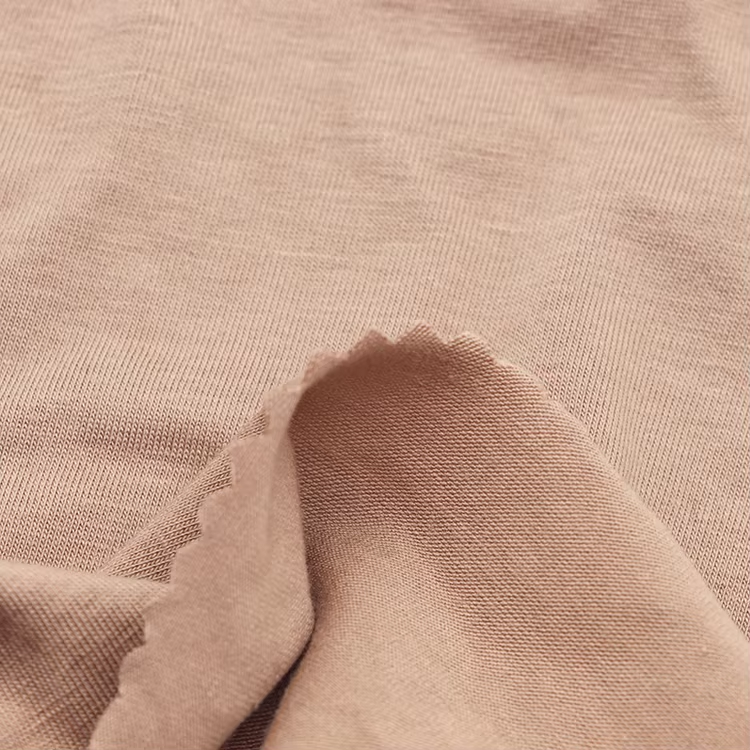
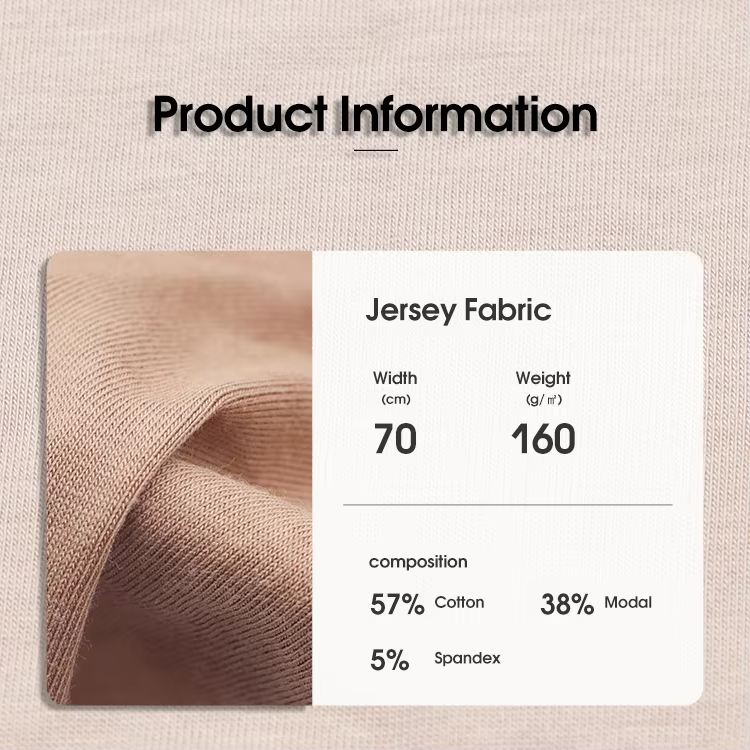
<h3>Example blend: 57% cotton, 38% modal and 5% elastane</h3><p>The original fabric on this page used this blend at approximately 160gsm. It can suit soft summer T-shirts, underwear, fitted tops and light lounge or sports garments when opacity, recovery and dimensional stability meet the product requirements. Five percent elastane is not a performance guarantee: yarn type, knitting tension, heat setting and finishing still control how the fabric behaves.</p>
<h2>How much elastane should jersey contain?</h2><ul><li><strong>0–2%:</strong> natural jersey movement with limited engineered recovery; common in relaxed silhouettes.</li><li><strong>3–5%:</strong> balanced stretch for fitted T-shirts, dresses, underwear and casual products.</li><li><strong>6–10%:</strong> higher stretch potential for close-to-body garments, depending on construction.</li><li><strong>Above 10%:</strong> used in specialised stretch products, but composition must be assessed together with yarn and knit structure.</li></ul>
<p>More elastane is not automatically better. Excessive compression, heat sensitivity, cost and sewing difficulty may increase. Approve the fabric through garment trials rather than choosing by percentage alone.</p>
<h2>One-way stretch vs four-way stretch</h2><p>Many jersey fabrics stretch mainly across the width and only slightly along the length. A fabric marketed as “four-way stretch” should show useful extension and recovery in both directions. The test method, applied load and measurement direction must be agreed because suppliers may describe stretch informally.</p>
<table><thead><tr><th>Pomiar</th><th>What it tells the buyer</th></tr></thead><tbody><tr><td>Procent rozciągnięcia</td><td>How far the fabric extends under a defined force</td></tr><tr><td>Recovery percentage</td><td>How closely it returns after the force is removed</td></tr><tr><td>Wzrost</td><td>Permanent deformation after wear or extension</td></tr><tr><td>Modulus</td><td>How much force is required to reach a given extension</td></tr></tbody></table>
<h2>Choosing the right GSM</h2><table><thead><tr><th>Przybliżona GSM</th><th>Typowe zastosowanie</th><th>Key check</th></tr></thead><tbody><tr><td>100–140gsm</td><td>Very light tops, linings and summer layers</td><td>Opacity, seam damage and curling</td></tr><tr><td>140–180gsm</td><td>T-shirts, underwear, light dresses and lounge tops</td><td>Recovery, shrinkage and silhouette</td></tr><tr><td>180–240gsm</td><td>Premium tees, fitted dresses and structured jersey garments</td><td>Bulk, drape and drying comfort</td></tr><tr><td>240gsm+</td><td>Ponte-like or heavier knit applications</td><td>Compression, seam thickness and garment weight</td></tr></tbody></table>
<p>GSM should be evaluated after conditioning and after washing. Finishing can temporarily change weight and width, so bulk tolerances must be stated.</p>
<h2>Critical quality risks in stretch jersey</h2><h3>Skurcz</h3><p>Cotton and modal can change dimensions during laundering. Specify lengthwise and widthwise limits, test cycles and drying method. Pattern compensation is only safe when shrinkage is consistent.</p>
<h3>Spirality and skew</h3><p>Single jersey can twist after washing, causing side seams to rotate toward the front or back. Test finished fabric and a complete garment rather than judging only the roll.</p>
<h3>Fabric growth and poor recovery</h3><p>Elbows, knees, seat areas and necklines may bag out when recovery is inadequate. Measure recovery after repeated extension and conduct wear trials for close-fitting products.</p>
<h3>Edge curling</h3><p>Single jersey edges naturally curl, complicating spreading, cutting and sewing. Relaxation, cutting equipment, seam choice and handling procedures should be planned before bulk production.</p>
<h3>Pilling</h3><p>Soft finishes and exposed surface fibres may pill during wear. Set the required test method and rating according to the garment’s end use.</p>
<h3>Shade and barre</h3><p>Uneven yarn, knitting tension or dye uptake can create visible horizontal bands. Inspect full-width fabric under appropriate lighting and check multiple rolls.</p>
<h2>Recommended bulk tests</h2><ul><li>Fibre composition</li><li>Fabric weight and usable width</li><li>Dimensional stability after laundering</li><li>Spirality or skew after wash</li><li>Stretch, recovery and growth in both directions</li><li>Pilling and abrasion resistance</li><li>Colourfastness to washing, rubbing and perspiration</li><li>Bursting strength</li><li>Appearance after repeated washing</li></ul>
<h2>Sewing stretch jersey</h2><ul><li>Use a ballpoint or stretch needle selected for the fabric weight.</li><li>Choose a stitch that can extend without breaking.</li><li>Control presser-foot pressure to prevent wavy seams.</li><li>Stabilise shoulders, necklines or openings where growth is unacceptable.</li><li>Test thread, seam type and differential feed on production fabric.</li><li>Avoid excessive heat that can damage elastane or create shine.</li></ul>
<p>Approve seam stretch and appearance after washing. A seam that looks flat before laundering can ripple once the body fabric contracts.</p>
<h2>RFQ specification checklist</h2><ul><li>Exact fibre composition and tolerance</li><li>Jersey structure and yarn type</li><li>Target GSM and tolerance</li><li>Open width or tubular width</li><li>Usable width and edge condition</li><li>Stretch and recovery requirements by direction</li><li>Shrinkage and spirality limits</li><li>Colour standard and colourfastness ratings</li><li>Pilling, bursting strength and wash appearance</li><li>Required certifications and supporting documents</li><li>Roll length, packing and inspection standard</li></ul>
<p>Use our <a href="/how-to-inspect-bulk-fabrics/">bulk fabric inspection guide</a> I <a href="/how-to-choose-fabric-for-bulk-production/">bulk fabric selection guide</a> when approving production.</p>
<h2>Frequently asked questions</h2><h3>Is cotton-modal jersey better than 100% cotton jersey?</h3><p>It is not universally better. Modal can add softness and drape, while cotton may provide a more familiar dry hand. The better choice depends on silhouette, care requirements, price and test performance.</p><h3>Is 5% elastane enough?</h3><p>It is common for fitted casual garments, but performance depends on the elastane yarn, knit construction and finishing. Confirm stretch, modulus, recovery and growth through testing.</p><h3>Why does a jersey T-shirt twist after washing?</h3><p>Spirality can result from yarn torque, single-jersey construction, knitting conditions and finishing. Test both fabric and finished garments after laundering.</p><h3>Can 160gsm stretch jersey be used for leggings?</h3><p>Some qualities may be too light or transparent for leggings. Check opacity under extension, recovery, bursting strength, pilling and seam performance before approval.</p><a href="/t-shirt-vs-jersey/">Tkanina dżersejowa</a> 160 g/m2 57 bawełny 38 modalu 5 spandexu barwionego <a href="/what-is-pbt-fabric/">Rozciągać się</a> Dzianina z recyklingu elastanu <a href="/interlock-fabric-guide/">Tkanina</a> do odzieży letniej
<div class="attribute-item">
<div></div>
</div>
<div class="attribute-item">
<div>
<div class="attribute-item">
<div class="left">
<table width="419">
<tbody>
<tr>
<td width="168">Tworzywo:</td>
<td width="251">Modal / Bawełna</td>
</tr>
<tr>
<td>Funkcja:</td>
<td width="251">Antypilling, organiczny, rozciągliwy, odprowadzający wilgoć, odporny na ścieranie, pochłaniający wilgoć, oddychający, antystatyczny, antybakteryjny</td>
</tr>
<tr>
<td>Wzór:</td>
<td width="251">Barwiony</td>
</tr>
<tr>
<td>Używać:</td>
<td width="251">Koszulka, Odzież sportowa, Odzież bielizna</td>
</tr>
<tr>
<td>Grubość:</td>
<td width="251">lekki</td>
</tr>
<tr>
<td>Typ:</td>
<td width="251">Tkanina dżersejowa</td>
</tr>
<tr>
<td>Szerokość:</td>
<td width="251">70/72"</td>
</tr>
<tr>
<td>Technika:</td>
<td width="251">trykotowy</td>
</tr>
<tr>
<td>Waga:</td>
<td width="251">160 g/m2</td>
</tr>
<tr>
<td>Numer modelu:</td>
<td width="251">Fred-None</td>
</tr>
<tr>
<td>Nazwa produktu:</td>
<td width="251">Model bawełnianej tkaniny jersey</td>
</tr>
<tr>
<td>Stosowanie:</td>
<td width="251">bielizna</td>
</tr>
<tr>
<td>Kompozycja:</td>
<td width="251">57% Bawełna 38%Modal 5%Spandex</td>
</tr>
<tr>
<td>Odczucie dłoni:</td>
<td width="251">Miękko i wygodnie, elastyczna w dotyku</td>
</tr>
<tr>
<td>Uszczelka:</td>
<td width="251">Pakowanie w rolki</td>
</tr>
</tbody>
</table>
</div>
</div>
<div>Bliższe dane:</div>
<div><imghttps://truekung.com/wp-content/uploads/2024/07/H4d8da17086224f0683233608552880915.avif" alt="H4d8da17086224f0683233608552880915" width="750" height="750" /> <img class="aligncenter size-full wp-image-24000" src="https://truekung.com/wp-content/uploads/2024/07/Hc92f0cbf66c74e31bf0e89b949eec13as.avif" alt="Hc92f0cbf66c74e31bf0e89b949eec13as" width="750" height="750" /></div>
</div>
</div>
Widoki: 93