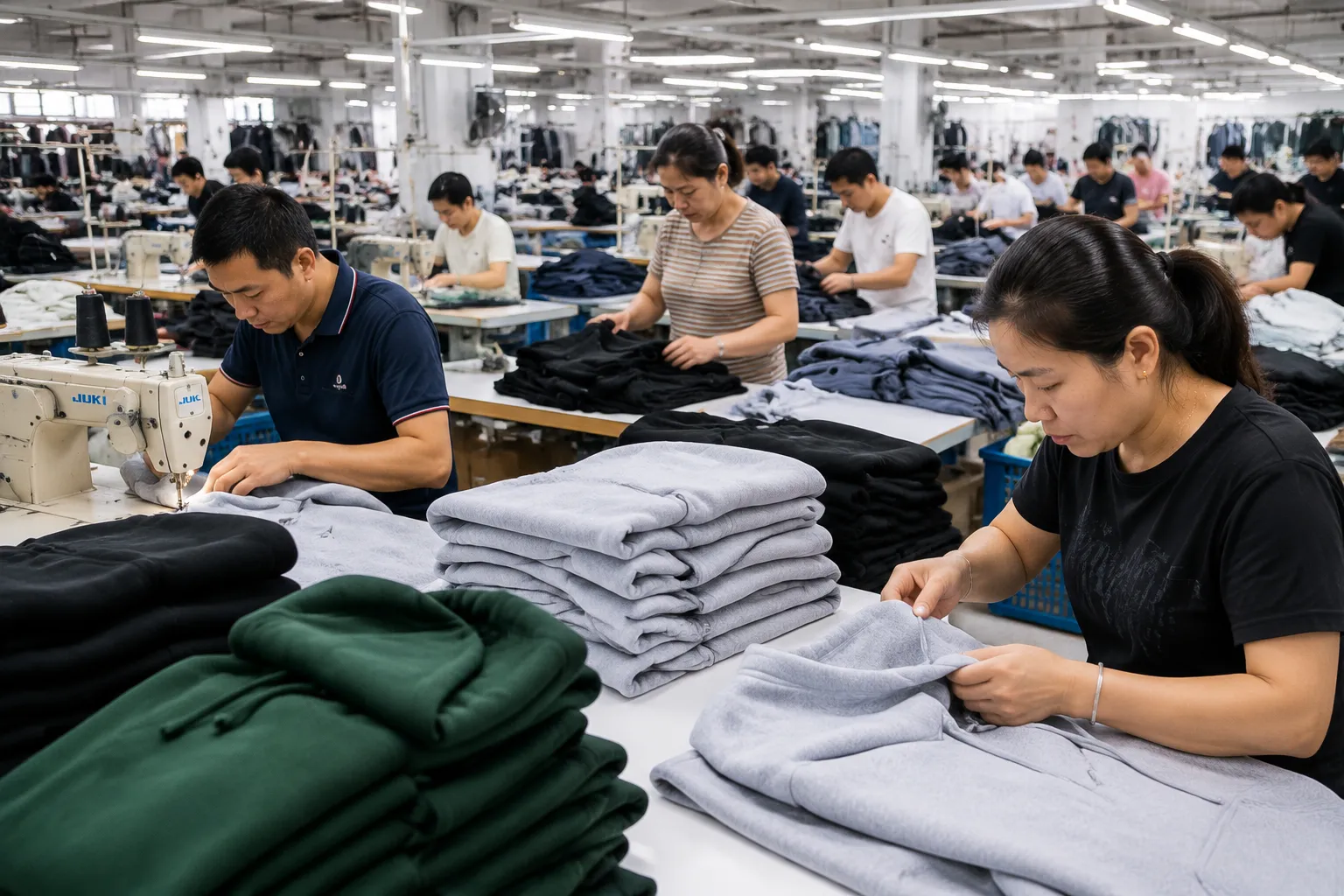

Veel kopers willen hoodies op maat, maar de verkeerde stof, onduidelijke ontwerpen en slechte communicatie met de leverancier kunnen tot kostbare problemen leiden. Ik leg het productieproces uit, zodat u vertragingen kunt voorkomen en de juiste productiepartner kunt kiezen.
Om hoodies op maat te laten maken, moet je je ontwerp voorbereiden, de stof en de decoratiemethode kiezen, de samples goedkeuren, de kwaliteit controleren en samenwerken met een fabriek die de productiedetails en exportvereisten begrijpt.
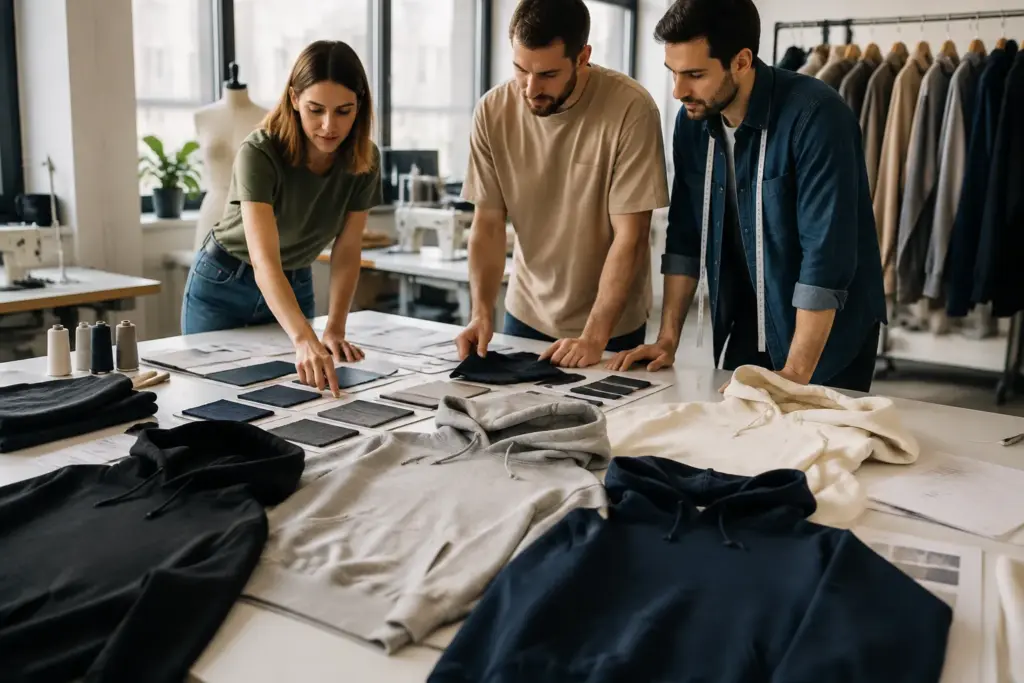
Ik ben Lancy Chia van Truekung. Tijdens mijn werk in de fabriek heb ik samengewerkt met buitenlandse afnemers die OEM/ODM-kledingproductie, private label-modeproducten en stabiele exportondersteuning nodig hebben. Een hoodie lijkt misschien simpel, maar het gewicht van de stof, de stiksels, de bedrukking, het borduurwerk, de maatvoering en de verpakking hebben allemaal invloed op het eindresultaat.
In deze handleiding laat ik zien hoe wij hoodies op maat maken vanuit het perspectief van de fabriek. Ik leg de ontwerpkeuzes, productierisico's, kwaliteitscontroles en wat kopers moeten voorbereiden voordat ze contact opnemen met een leverancier uit.
Hoe kies je het juiste ontwerp en materiaal voor een hoodie op maat?
Een ontwerp voor een hoodie op maat kan mislukken als kopers zich alleen richten op het artwork en geen rekening houden met stof, constructie en productiebeperkingen. Het juiste ontwerp begint met inzicht in het uiteindelijke doel van het product, de doelgroep en de productiemethode.
Een goed ontwerp voor een hoodie op maat combineert een geschikte stof, de juiste afmetingen, praktische decoratiemethoden en productiedetails die aansluiten bij de doelgroep en het budget van de koper.
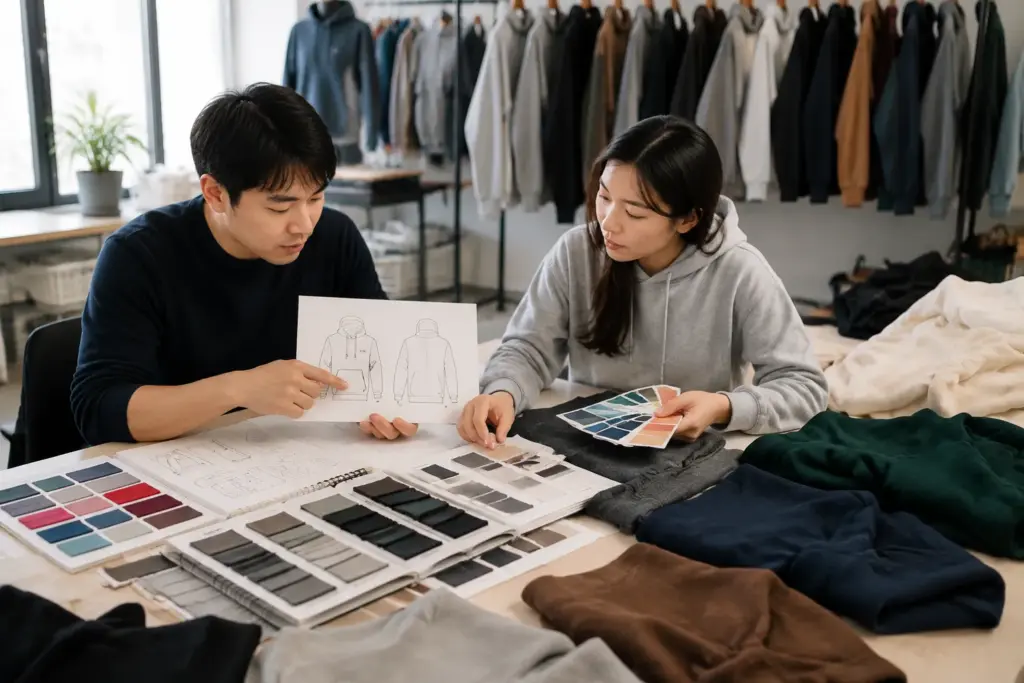
Fabrieksweergave
Als kopers me vragen hoe ze hoodies op maat kunnen maken, begin ik meestal met een paar basisvragen. Wie gaat de hoodie dragen? Is het voor een modemerk, een sportteam, bedrijfskleding, een streetwearcollectie of een promotioneel evenement?
Het antwoord heeft gevolgen voor veel productiebeslissingen.
Een streetwearmerk heeft bijvoorbeeld wellicht behoefte aan zware stof, een oversized pasvorm, verlaagde schouders en borduurwerk op maat. Een bedrijf dat werkhoodies bestelt, hecht mogelijk meer waarde aan duurzaamheid, wasgemak en lagere productiekosten.
De stofkeuze is een van de eerste beslissingen die in de fabriek worden genomen. Veelgebruikte stoffen voor hoodies zijn katoenfleece, katoen-polyester mengsels, French terry en zware fleece. Het gewicht van de stof beïnvloedt de warmte, het gevoel, de prijs en de verzendkosten.
Ik controleer het ontwerp ook vóór de productie. Sommige hoodies met borduurwerk op maat vereisen een speciale controle van de borduurdichtheid. Voor sommige hoodies met opdruk op maat is de juiste druktechniek nodig, omdat grote ontwerpen het draagcomfort van de stof kunnen beïnvloeden.
Het maken van samples is een andere belangrijke stap. Een professionele maker van hoodies op maat moet samples maken voordat de massaproductie begint. Met de samples kunnen kopers de kleur, maat, positie van het logo, stiksels en het algehele uiterlijk controleren.
Kopersrisico
Veel kopers kiezen een ontwerp van een online hoodie-configurator en verwachten dat de fabriek precies hetzelfde resultaat levert. Dit kan problemen opleveren, omdat digitale afbeeldingen niet altijd de dikte van de stof, kleurverschillen of de kwaliteit van het borduurwerk weergeven.
Ik heb gezien dat kopers tijd verloren doordat ze een ontwerp goedkeurden zonder eerst het daadwerkelijke voorbeeld te controleren.
Een andere veelgemaakte fout is het kiezen van de goedkoopste leverancier van hoodies op maat zonder de productiecapaciteit te controleren. Een lage prijs kan het gevolg zijn van goedkopere stof, zwakke stiksels, slechte drukmethoden of beperkte kwaliteitscontrole.
Kopers moeten ook rekening houden met de minimale bestelhoeveelheid (MOQ). Sommige leveranciers adverteren met hoodies op maat zonder minimale bestelhoeveelheid, maar de kosten per stuk kunnen dan veel hoger liggen. Bij grote bestellingen bieden fabrieken doorgaans betere prijzen omdat de materiaalkosten, arbeidskosten en productie-opzet efficiënter zijn.
Praktische controle
| Wat te controleren | Waarom het belangrijk is | Wat ik voorstel |
|---|---|---|
| Stofsoort en gewicht | Bepaalt comfort, prijs en marktpositie | Controleer de stofstalen vóór de massaproductie. |
| Ontwerpdetails van de hoodie | Voorkomt productiefouten | Zorg voor technische specificaties of duidelijke referentieafbeeldingen. |
| Decoratiemethode | Beïnvloedt het uiterlijk en de duurzaamheid. | Kies voor printen of borduren, afhankelijk van het ontwerp. |
| Maatspecificatie | Voorkomt klachten van klanten | Controleer de maattabel en de meettolerantie. |
Duik dieper
In mijn ervaring in de fabriek is het grootste verschil tussen een simpele hoodie-bestelling en een succesvol project voor een hoodie op maat de voorbereiding. Een koper die duidelijke informatie verstrekt, helpt de fabriek om de kosten en de kwaliteit vanaf het begin te beheersen.
Een klant kan bijvoorbeeld een oversized hoodie van hoge kwaliteit bestellen. Als de klant alleen een logoafbeelding stuurt, moet de fabriek nog steeds informatie inwinnen over de stof, pasvorm, ritsdetails, ribkwaliteit, printpositie en verpakking. De communicatie duurt daardoor langer en de offerte is mogelijk niet nauwkeurig.
Mijn suggestie is om te denken als een productontwikkelaar, niet alleen als een klant. Bepaal eerst hoe het product aanvoelt. Wil je een zachte hoodie voor dagelijks gebruik, een stevige streetwear hoodie of een sportieve hoodie? Kies vervolgens de stof en de constructie op basis van dat doel.
Een serieuze kledingleverancier moet de afweging tussen prijs en kwaliteit uitleggen. Zware stoffen verhogen meestal de materiaalkosten en het verzendgewicht. Gedetailleerd borduurwerk verbetert de uitstraling, maar kan de productietijd verlengen. Hoodies met rits op maat vereisen meer onderdelen dan hoodies die je over je hoofd aantrekt.
Een goede fabriek maakt niet alleen wat op een afbeelding te zien is. De fabriek moet helpen om een idee om te zetten in een product dat consistent geproduceerd kan worden.
Hoe produceert een fabriek hoodies op maat met bedrukking of borduurwerk?
Veel kopers willen hoodies met borduursels of prints op maat, maar elke decoratiemethode stelt andere eisen aan de productie. De verkeerde keuze kan de kwaliteit, de kosten en de levertijd beïnvloeden.
Fabrieken produceren hoodies op maat door patronen te maken, stof te knippen, kledingstukken te naaien, te bedrukken of te borduren, de kwaliteit te controleren en de verpakking te voltooien vóór export.
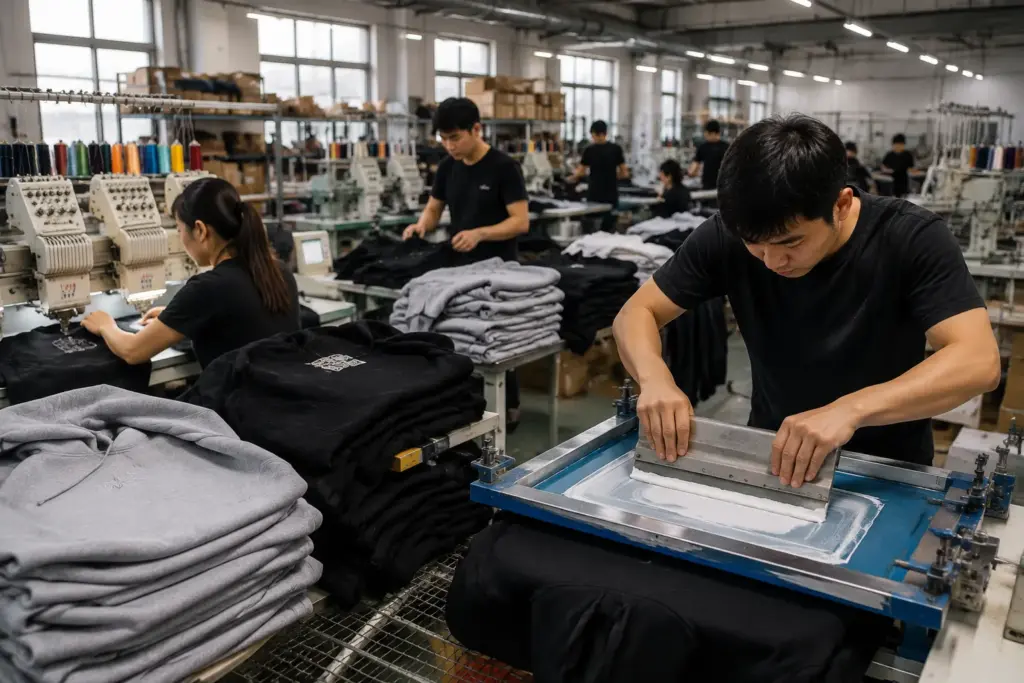
Fabrieksweergave
Het productieproces start na bevestiging van het ontwerp en goedkeuring van het prototype.
Eerst bereiden we de materialen voor. De fabriek controleert de hoeveelheid stof, de kleur, de accessoires, de labels en de verpakkingseisen. Daarna wordt de stof op maat gesneden volgens de goedgekeurde patronen.
Na het knippen zetten de naaisters de onderdelen van de hoodie in elkaar. Dit omvat de voorpanden, mouwen, capuchon, manchetten, tailleband, zakken en, indien nodig, ritsen.
Bij hoodies met borduurwerk op maat vindt het borduren meestal plaats vóór de uiteindelijke assemblage van het kledingstuk, of in een geschikt productiestadium, afhankelijk van het ontwerp. De fabriek moet de borduurdichtheid in de gaten houden, omdat te veel borduurwerk de vorm van de stof kan beïnvloeden.
Voor het bedrukken van hoodies op maat hangt de druktechniek af van het ontwerp en de oplage. Zeefdruk is een goede optie voor grotere bestellingen. Andere methoden zijn mogelijk geschikter voor gedetailleerde ontwerpen of kleinere aantallen.
Kwaliteitscontrole vindt plaats tijdens de productie, niet alleen aan het einde. We controleren de stiksels, de afmetingen, de plaatsing van het logo, de kleurconsistentie en het uiterlijk van het kledingstuk.
Exportkopers moeten ook aandacht besteden aan verpakking en logistiek. Een fabriek moet vóór verzending de afmetingen van de dozen, de etiketteringseisen, de verzenddocumenten en het leveringsschema bevestigen.
Kopersrisico
Het grootste risico is het kiezen van een leverancier uitsluitend op basis van foto's. Een mooie voorbeeldfoto geeft niet altijd een goed beeld van de werkelijke productiecapaciteit.
Sommige kopers onderschatten ook de levertijd. Hoodies op maat vereisen stofvoorbereiding, het maken van proefmonsters, productieplanning, bedrukking, inspectie en verzending. Bestellingen op het laatste moment kunnen druk creëren en de kans op fouten vergroten.
Een ander probleem is onduidelijke goedkeuring. Als de koper na aanvang van de productie de positie van het logo, de kleur van de stof of de maat wijzigt, moet de fabriek mogelijk de productie stopzetten of de producten opnieuw maken.
Praktische controle
| Wat te controleren | Waarom het belangrijk is | Wat ik voorstel |
|---|---|---|
| Goedkeuringsproces voor monsters | Vermindert fouten bij massaproductie | Een fysiek monster goedkeuren vóór massaproductie. |
| Afdrukmethode | Heeft invloed op de kosten en de duurzaamheid. | Bespreek de beste methode met de fabriek. |
| Kwaliteit van het borduurwerk | Geeft een premium uitstraling | Controleer de draaddichtheid en het backingmateriaal. |
| Productietijdlijn | Voorkomt gemiste lanceringen | Bevestig elke mijlpaal voordat u bestelt. |
Duik dieper
De keuze voor de inrichting is niet alleen een ontwerpbeslissing, maar ook een zakelijke beslissing.
Een klein modemerk dat bijvoorbeeld 300 hoodies op maat laat maken, geeft wellicht de voorkeur aan borduren omdat dit een luxere uitstraling geeft. Voor een grote promotionele bestelling is bedrukking echter mogelijk een betere optie vanwege de lagere kosten.
Ik vraag kopers meestal om drie punten te controleren voordat ze decoratie kiezen. Ten eerste, hoe gedetailleerd is het kunstwerk? Ten tweede, hoeveel stuks willen ze bestellen? Ten derde, aan welke verwachtingen van de klant moet het product voldoen?
Een hoodie met logo voor medewerkers stelt andere eisen dan een gelimiteerde streetwearcollectie. Duurzaamheid en prijs zijn wellicht de belangrijkste prioriteiten. Een sterkere visuele impact kan een tweede prioriteit zijn.
Dit lijkt misschien onbelangrijk, maar het kan de levertijd beïnvloeden. Borduurmachines hebben insteltijd nodig. Speciale prints vereisen mogelijk een test. Complexe ontwerpen vereisen meer overleg ter goedkeuring.
Een betrouwbare fabrikant van hoodies op maat moet deze details uitleggen voordat de betaling wordt geaccepteerd. De fabriek moet kopers vertellen wat realistisch is op basis van de hoeveelheid, de deadline en het budget.
Bij Truekung leggen we de nadruk op praktische communicatie tijdens de ontwikkelingsfase. We helpen kopers inzicht te krijgen in de productiemogelijkheden, zodat ze weloverwogen beslissingen kunnen nemen voordat de massaproductie van start gaat.
Waar moeten kopers op letten voordat ze grote aantallen hoodies op maat bestellen?
Grote bestellingen van hoodies op maat vereisen meer planning dan kleine, persoonlijke bestellingen. Kopers moeten de mogelijkheden van de leverancier, de kwaliteitsnormen en de leveringsvoorwaarden controleren voordat ze een productiebeslissing nemen.
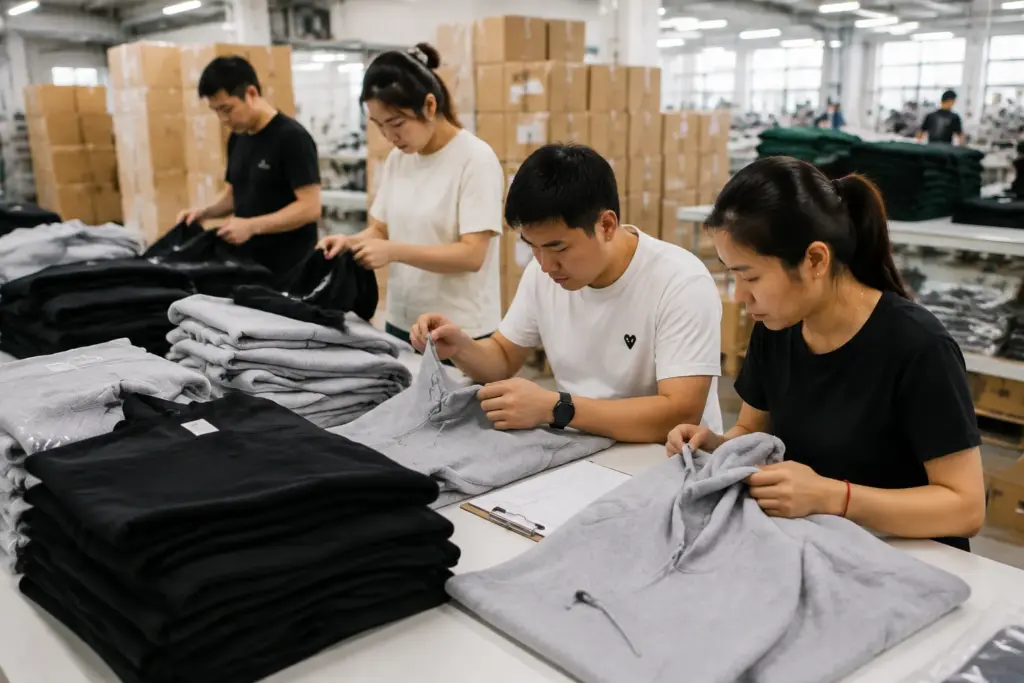
Voordat kopers grote aantallen hoodies op maat bestellen, dienen ze de voorbeelden, de minimale bestelhoeveelheid (MOQ), de kwaliteitsnormen, de productietijd, de certificaten, de verpakking en de exportondersteuning met de leverancier te bevestigen.
Fabrieksweergave
Vanuit het perspectief van een fabriek hangt het succes van massaproductie af van duidelijke communicatie vóór de start van de productie.
Ik vraag kopers doorgaans om productinformatie aan te leveren, zoals ontwerptekeningen, maattabellen, stofspecificaties, kleurreferenties, aantallen en de doelgroep.
Verschillende markten kunnen verschillende verwachtingen hebben. Een koper in Europa kan andere eisen stellen aan de afmetingen dan een koper in de Verenigde Staten. Een supermarktinkoper kan specifieke regels stellen voor etikettering en verpakking.
Kwaliteitscontrole is een ander belangrijk aspect. Een professionele leverancier moet tijdens de productie controles uitvoeren op stofdefecten, naaikwaliteit, afmetingen, nauwkeurigheid van de decoratie en de uiteindelijke verpakking.
Certificaten kunnen ook van belang zijn, afhankelijk van het product en de afzetmarkt. Kopers moeten hun eisen vroegtijdig kenbaar maken, omdat certificeringsvereisten van invloed kunnen zijn op de materiaalkeuze en de productieplanning.
Logistieke planning is ook belangrijk. Een fabriek moet de verzendmethoden, exportdocumenten en levertijden duidelijk bespreken.
Kopersrisico
Een veelgemaakte fout van kopers is dat ze alleen naar de prijs vragen. Prijs is belangrijk, maar het is slechts één aspect van het inkoopproces.
Een lagere offerte bevat mogelijk geen belangrijke details zoals betere stof, inspectienormen, verpakkingseisen of exportondersteuning.
Kopers lopen ook het risico op vertragingen als ze niet alle benodigde informatie verstrekken. Een fabriek kan geen nauwkeurige offerte uitbrengen als de koper de hoeveelheid, ontwerpdetails of leveringsverwachtingen niet bevestigt.
Een ander risico is gebrekkige communicatie na de bestelling. Kopers hebben een leverancier nodig die duidelijk reageert en de voortgang van de productie rapporteert.
Praktische controle
| Wat te controleren | Waarom het belangrijk is | Wat ik voorstel |
|---|---|---|
| Fabriekservaring | Toont productievermogen aan | Vraag naar ervaringen met vergelijkbare producten. |
| Monsterkwaliteit | Voorspelt het bulkresultaat | Controleer het monster zorgvuldig voordat u het goedkeurt. |
| Minimale bestelhoeveelheid (MOQ) en prijs | Beheersing van investeringen | Vergelijk de waarde, niet alleen de prijs per stuk. |
| Kwaliteitsinspectie | Beschermt de merkreputatie | Bevestig het kwaliteitscontroleproces vóór de productie. |
| Leveringsplan | Voorkomt gemiste verkoopkansen | Stel realistische productiedeadlines vast. |
Duik dieper
Wanneer kopers grote aantallen hoodies op maat bestellen, kopen ze niet alleen kledingstukken. Ze bouwen een leveranciersrelatie op.
Een fabriek moet de bedrijfsdoelstellingen van de koper begrijpen. Een startend merk heeft mogelijk flexibele ontwikkelingsondersteuning nodig. Een groothandel heeft wellicht een stabiele productiecapaciteit nodig. Een inkoopmanager heeft mogelijk duidelijke documenten en voorspelbare leveringen nodig.
Mijn beslissingsregel is simpel: kies een leverancier die het productieproces duidelijk kan uitleggen.
Als een leverancier geen uitleg kan geven over de stof, de goedkeuring van monsters, de kwaliteitscontrole, de levertijd of de verzenddetails, kan de koper later problemen ondervinden.
Ik heb gezien dat kopers meer geld uitgeven aan het herstellen van productiefouten dan ze in eerste instantie zouden hebben uitgegeven aan het kiezen van een geschikte leverancier.
Een goede samenwerking met een fabriek verkleint de risico's. Goede communicatie helpt beide partijen problemen sneller op te lossen. Duidelijke specificaties verminderen fouten. Grondige kwaliteitscontroles beschermen de klanten van de koper.
Voor serieuze kledingkopers draait het bij het ontwerpen van hoodies op maat niet alleen om het maken van een design. Het gaat erom een herhaalbaar product te creëren dat de verkoop op lange termijn kan ondersteunen.
Wat moet je voorbereiden voordat je contact opneemt met een Chinese kledingfabriek?
Een duidelijke aanvraag helpt de fabriek een nauwkeurigere prijsopgave, levertijd en productieplanning te geven.
| Informatie ter voorbereiding | Voorbeeld | Waarom de fabriek het nodig heeft |
|---|---|---|
| Productcategorie | Pullover hoodie, hoodie met rits, sporthoodie | Helpt bij het selecteren van de productiemethode. |
| Referentiefoto's of technisch pakket | Ontwerpafbeeldingen, afmetingen | Helpt bij het begrijpen van de bouw |
| Stof | Katoenen fleece, French terry, zware stof | Bepaalt de kosten en het comfort. |
| Maatbereik | S-XXL of aangepaste maten | Beïnvloedt de patroonontwikkeling |
| Aantal per stijl/kleur | 500 stuks in twee kleuren | Helpt bij het berekenen van de productie-efficiëntie. |
| Doelgroep | VS, Europa, Australië | Helpt bij het controleren van de vereisten |
| Kwaliteitsniveau | Basis, premium, luxe | Richtlijnen voor materiaalselectie |
| Verpakking | Individuele zakjes, dozen, etiketten | Ondersteunt de voorbereiding op export. |
| Etikettering | Merklabels, wasvoorschriften | Zorgt voor een correcte afwerking. |
| Leveringstermijn | Lanceringsdatum of verkoopschema | Helpt bij het organiseren van de productie. |
| Certificaten | Vereiste marktdocumenten | Voorkomt problemen met de naleving van regelgeving. |
| Richtprijs | Verwacht budget (indien beschikbaar) | Helpt bij het suggereren van geschikte opties |
Wanneer kopers volledige details verstrekken, kan de fabriek beter advies geven. We kunnen dan, voordat we beginnen, de stofopties, productiemethoden, realistische tijdschema's en kostenfactoren bespreken.
Wanneer moet je Truekung om een offerte vragen?
Als u OEM/ODM-kledingproductie, modeartikelen onder eigen label of een fabriekspartner met expertise in exportcommunicatie nodig heeft, kunt u contact opnemen met Truekung zodra uw productinformatie gereed is.
Wij ondersteunen kopers met monsterontwikkeling, massaproductie, kwaliteitscontrole en exportondersteuning. Voor hoodies op maat en andere kledingcategorieën richten we ons op praktische oplossingen die aansluiten op uw productdoelstellingen.
E-mail: [email protected]
Website: https://truekung.com
Conclusie
Voor het maken van hoodies op maat is meer nodig dan alleen een ontwerpidee. Een betrouwbare fabriek helpt bij het controleren van de stof, de productie, de kwaliteit, de levertijd en de communicatie, van het eerste proefexemplaar tot de uiteindelijke bestelling.
Weergaven: 82