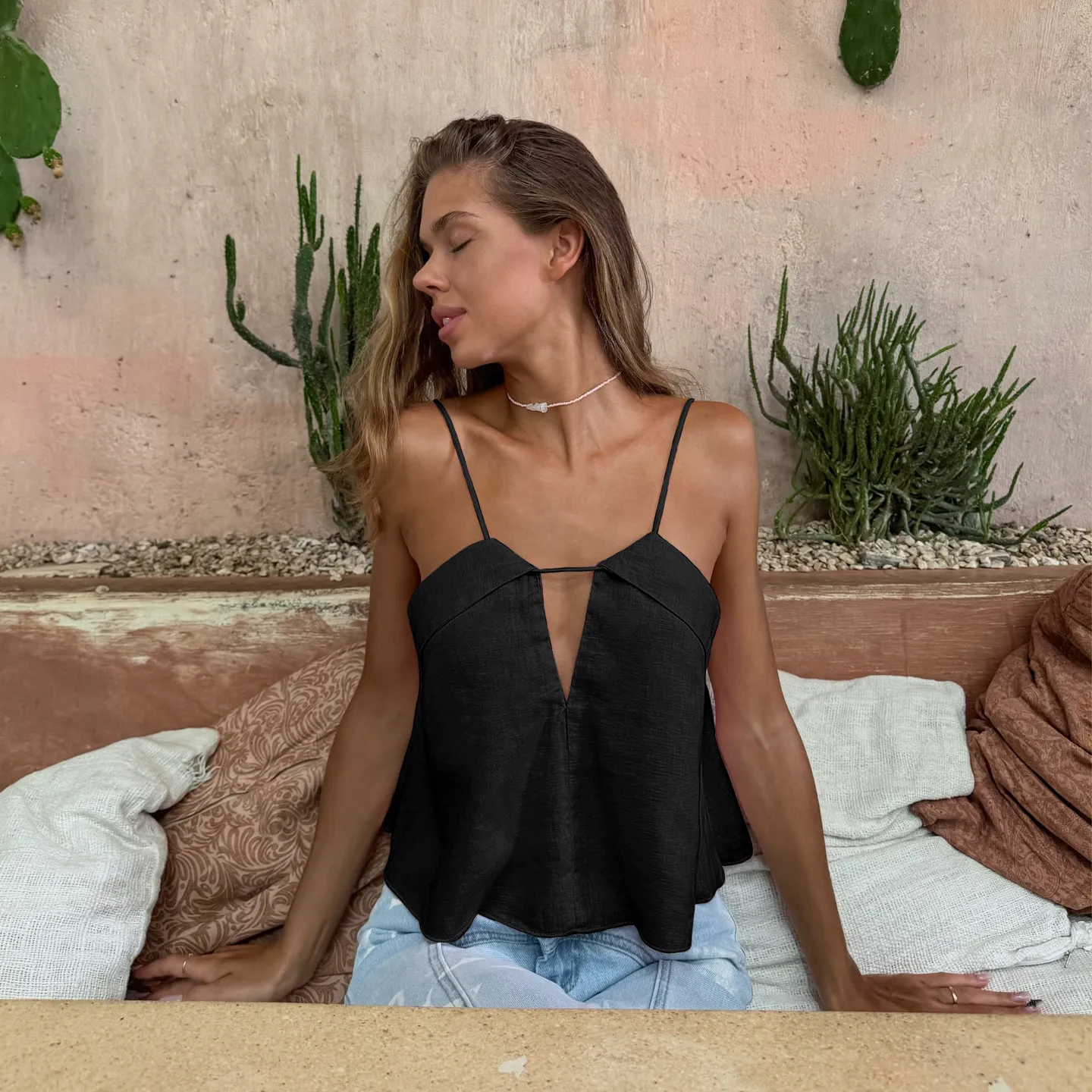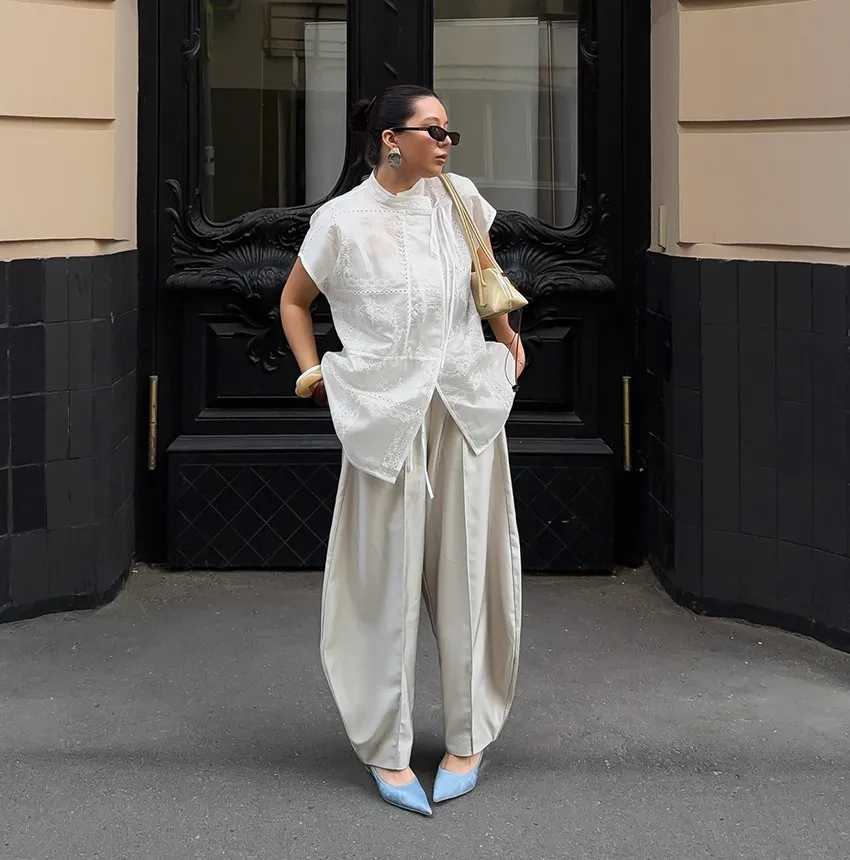

Ik zie vaak dat kopers geld verliezen omdat ze maar een bedrag gokken, waarna het T-shirt tijdens het wassen kapotgaat of te laat wordt geleverd, en het seizoen dan al voorbij is.
Een goede kwaliteit t-shirt De kosten liggen doorgaans tussen de $6 en $18 in de detailhandel en tussen de $2,20 en $6,50 in de groothandel, afhankelijk van de stof, de afwerking, de print en de bestelgrootte. Voor details over grafische T-shirts en designer shirts, kosten De kosten kunnen snel oplopen, omdat printen, snijden en kwaliteitscontrole extra werk met zich meebrengen.
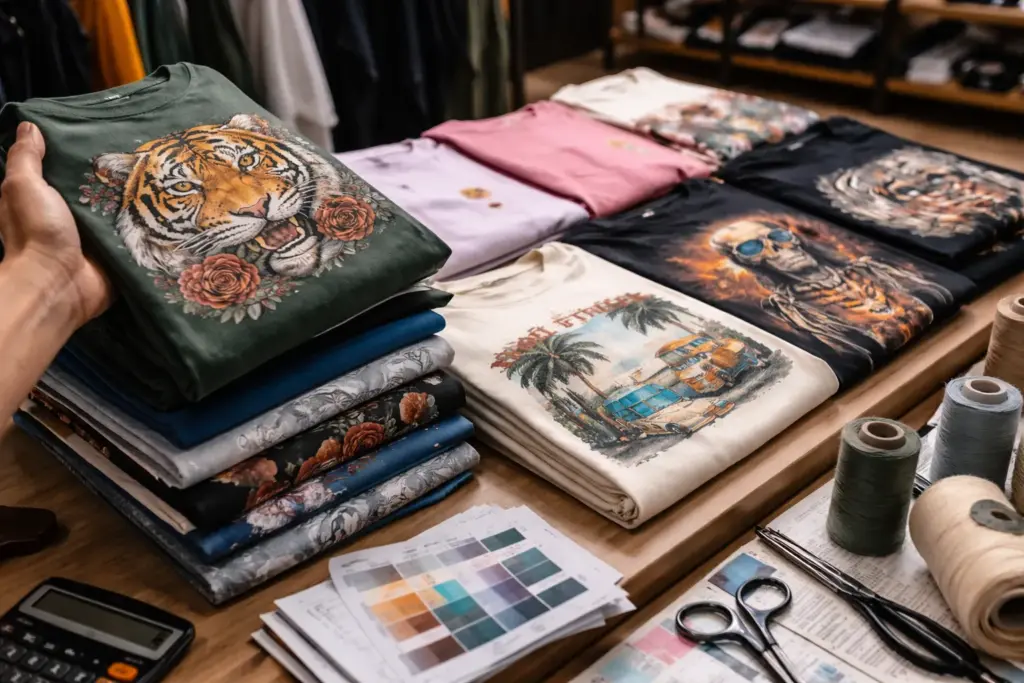
Ik herinner me een telefoongesprek met Maria, een zelfverzekerde inkoper uit Rusland, en ze vroeg me één ding: "Hoeveel kost een overhemd als ik wil dat het aanvoelt als een premium merk, maar de prijs heeft van een snel verkopend product?" Ik vertelde haar dezelfde waarheid die ik elke inkoper vertel. De prijs is geen vast getal. De prijs is een reeks keuzes. Als je verder leest, zul je zien hoe je de juiste keuzes maakt om je winstmarge en je reputatie te beschermen.
Wat bepaalt de gemiddelde t-shirtprijs in 2026?
Veel kopers zoeken naar "gemiddelde prijs van een shirt" en krijgen een bepaald bedrag te zien. Vervolgens plaatsen ze een bestelling, waarna de werkelijke kosten zich openbaren in de vorm van retouren, klachten en trage nabestellingen.
De gemiddelde prijs van een shirt wordt bepaald door vier factoren: stof, constructie, afwerking en ordergrootte. Als je er ook maar één verandert, verandert de prijs van je T-shirts, omdat elke stap tijd, machines en vakmanschap vereist.
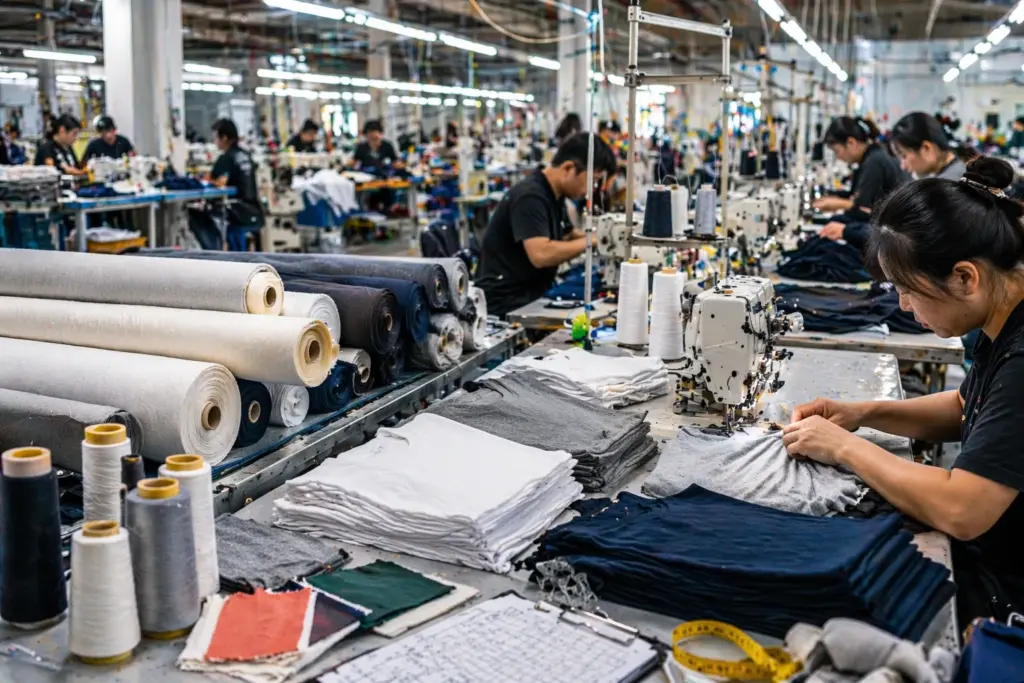
Stoffen zijn de eerste kostenpost die je betaalt.
Ik begin altijd met de stof, omdat die de textuur, het risico op krimpen en de kleurechtheid bepaalt. Een eenvoudig, effen T-shirt van open materiaal. katoen Een T-shirt kan goedkoop zijn, maar gaat vaak sneller pluizen. Gekamd katoen of compact garen is duurder, maar blijft langer schoon. Dan is er nog het gewicht. Een licht T-shirt kan goedkoop zijn, maar kan doorschijnend worden, vooral bij witte T-shirts voor heren. Een zwaarder T-shirt met ronde hals voelt luxer aan, maar er is meer garen voor nodig.
De constructie en afwerking bepalen of het "goed" blijft.“
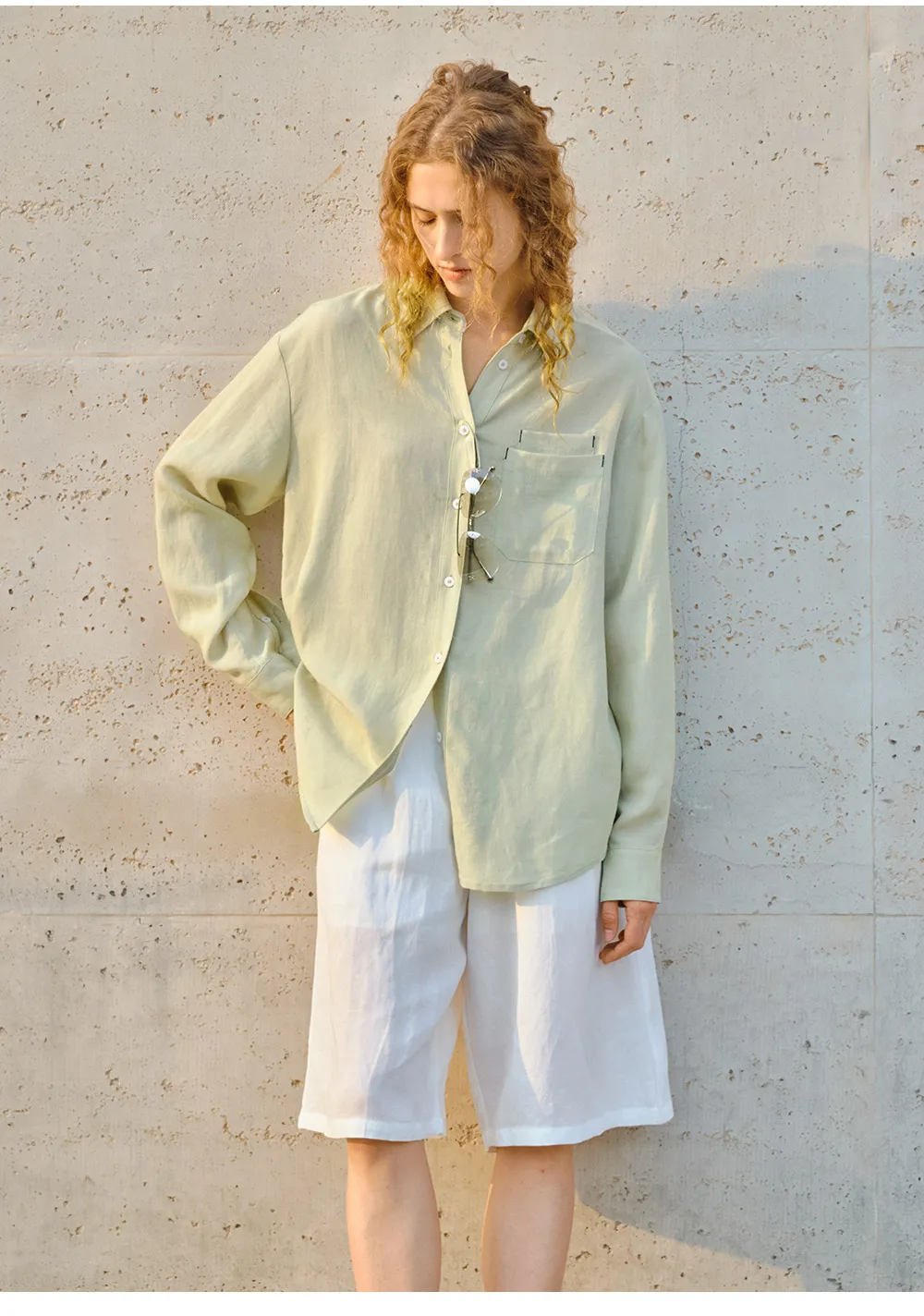
Een T-shirt is meer dan alleen stof. Het gaat ook om de stiksels, de halsboord, de afwerking en de balans van het naaiwerk. Een zwakke halslijn bij een wit designshirt kan herhaalbestellingen verpesten. Ik let ook op krimpbestendigheid en kleurechtheid. Kopers zijn dol op kleuren zoals groene, roze, crèmekleurige en bruine T-shirts met print, maar de kleurechtheid kan de prijs verhogen. Ik leg dit uit aan kopers die vragen: "Hoeveel kost een katoenen shirt?", omdat de kwaliteit van katoen niet uniform is.
| Kostenfactor | Wat verandert de kosten? | Waar ik op let bij QC |
|---|---|---|
| Stof | garensoort, GSM, verf, mengsels | krimpen, pilling, gevoel |
| Naaien | steekdichtheid, garen, arbeidstijd | naadverdraaiing, losgekomen steken |
| Nek en ribben | ribkwaliteit, band, coversteek | speknek, golving |
| Afwerking | wassen, enzymen, wasverzachter | kleurvervaging, geur, afwijking in afmetingen |
Als ik een bestelling voor een effen shirt (zonder opdruk) prijs, vraag ik altijd hoe streng de kwaliteitseisen zijn. Als een koper "goedkope T-shirts" wil, kan ik dat leveren, maar dan leg ik wel uit wat de nadelen zijn. Als een koper duurzame basics wil, verwerk ik de kosten in de prijs van het shirt in plaats van ze later te verbergen in een claim.
Hoe beïnvloeden grafische T-shirts en bedrukkingen de prijzen van shirts?
Ik heb merken zien slagen met een simpel T-shirt met print, maar ik heb ook merken zien falen omdat prints na tien wasbeurten barsten, afbladderen of vervagen.
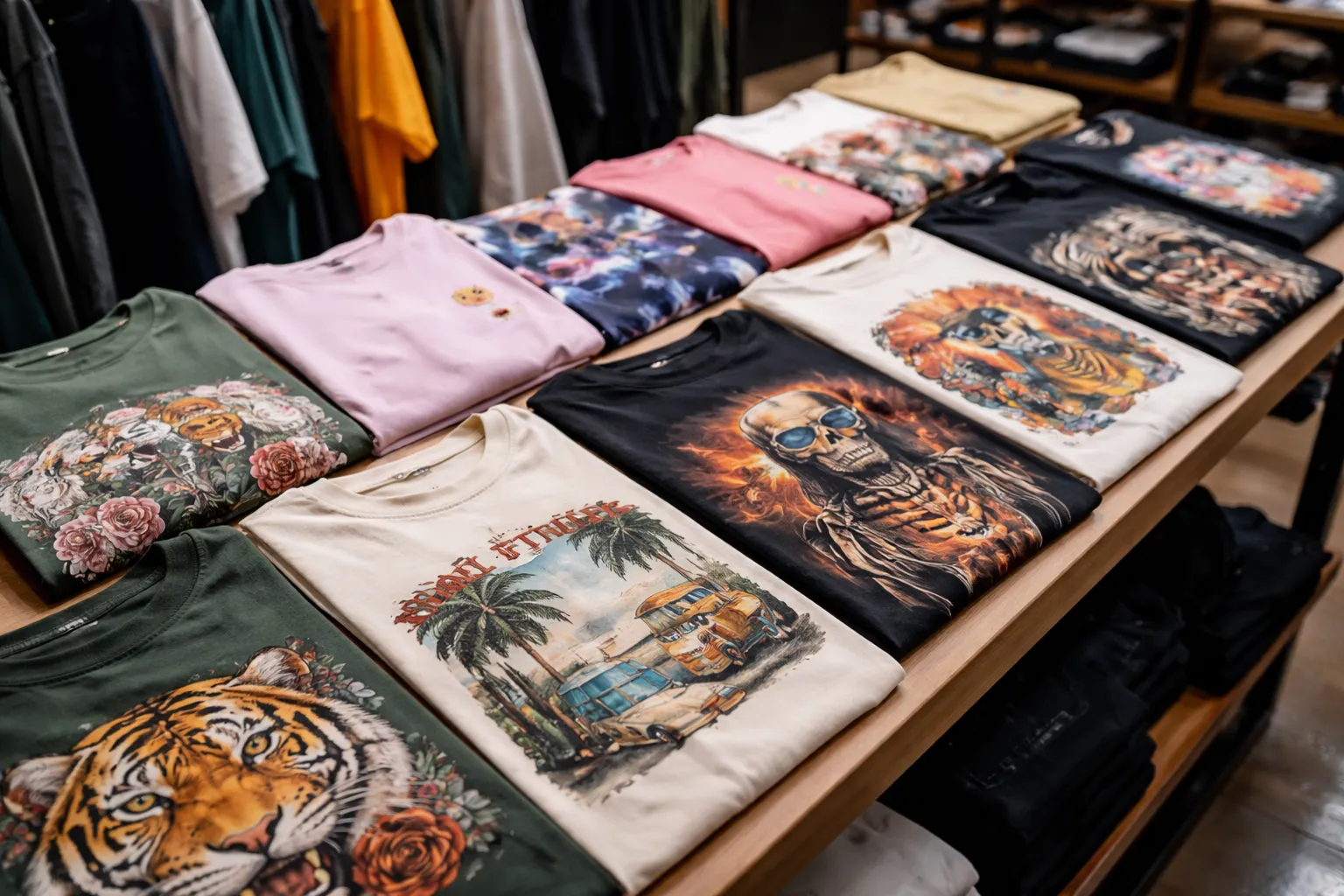
T-shirts met opdruk zijn duurder omdat het printproces extra materialen, extra stappen en extra risico's met zich meebrengt. De printmethode, het aantal kleuren en de plaatsing bepalen of een heren-T-shirt met opdruk mooi blijft of een retourprobleem wordt.
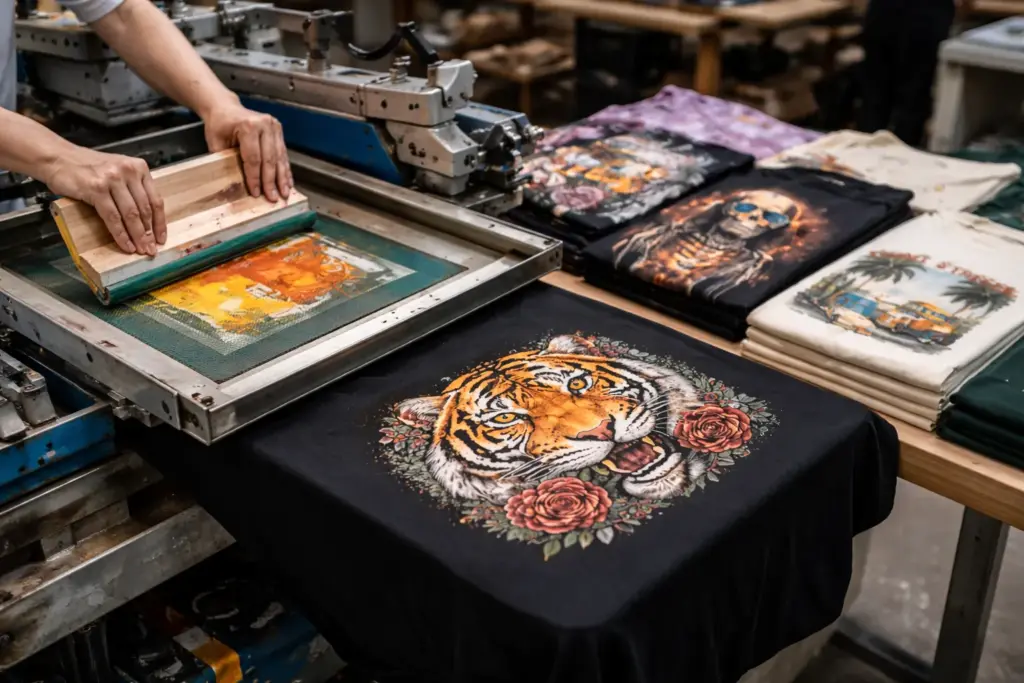
Het printproces is een mini-fabriekje in het T-shirt.
Wanneer iemand zoekt naar "graphic tshirts", "graphic ts" of zelfs "graphic tees", wil diegene een opvallende look, geen goedkope sticker. Voor grafische t-shirts voor heren zijn de meest voorkomende methoden zeefdruk, DTG (Direct-to-Garment) en hitteoverdracht. Elke methode heeft zijn eigen kostenstructuur. Zeefdruk is per stuk goedkoop bij grote oplages, maar de opstartkosten zijn aanzienlijk. DTG heeft lage opstartkosten, maar de inktkosten zijn hoger. Hitteoverdracht kan een strak resultaat opleveren, maar vereist wel de juiste pers- en wastests.
De plaatsing en de stijl van het shirt voegen werk toe.
Een grote print op de voorkant van een oversized T-shirt vereist meer inkt en tijd. Een print op de mouw én de achterkant voegt extra stappen toe. Een grijs T-shirt met print heeft vaak een goede onderlaag nodig zodat de kleuren eruit springen. Een zwart T-shirt heeft een hoge dekkingsgraad nodig. Een wit T-shirt met print is makkelijker, maar vlekken zijn er sneller op te zien, dus het inpakken vereist meer zorg. Prints op T-shirts met lange mouwen zijn ook duurder omdat het uitlijnen van de mouwen meer tijd kost. Een rood en een blauw T-shirt met lange mouwen kunnen bij sommige printmethoden ook problemen met kleurstofmigratie vertonen, dus ik test altijd eerst voordat ik een grote oplage produceer.
| Afdrukmethode | Het beste voor | Kostengedrag | Veelvoorkomende fout die ik voorkom |
|---|---|---|---|
| Zeefdruk | grafische t-shirts met grote oplage | lage prijs per eenheid, hogere installatiekosten | barsten, slechte uitharding |
| DTG | kleine oplages, fotokunst | hoger per eenheid | vervaging door wassen, strepen |
| Warmteoverdracht | snelle kunstwijzigingen | gemiddelde per eenheid | afbladderende randen |
| Borduurwerk/patch | designer overhemd gevoel | hoger per eenheid | rimpelen, zware hand |
Ik vertel kopers dat de prijs van een shirt flink verandert zodra je er afbeeldingen aan toevoegt. Als ze een Thanksgiving-shirt of -shirts voor een korte periode willen, kunnen DTG- of transferdruk de productie versnellen. Als ze een basisproduct willen dat jarenlang meegaat, kan zeefdruk de winstmarge na de eerste oplage veiligstellen.
Waarop moet ik letten om een T-shirt van "goede kwaliteit" te noemen?
Ik heb kopers ontmoet die zeggen dat ze "goede kwaliteit" willen, maar ze controleren alleen het voorbeeld op tafel, niet het shirt na echt dragen en wassen.
Een T-shirt van goede kwaliteit behoudt zijn vorm, kleur en voelt na het wassen nog steeds hetzelfde aan. Ik controleer de stevigheid van de stof, de sterkte van de stiksels, het herstelvermogen van de kraag en de duurzaamheid van de print, want dat is wat klanten als eerste voelen.
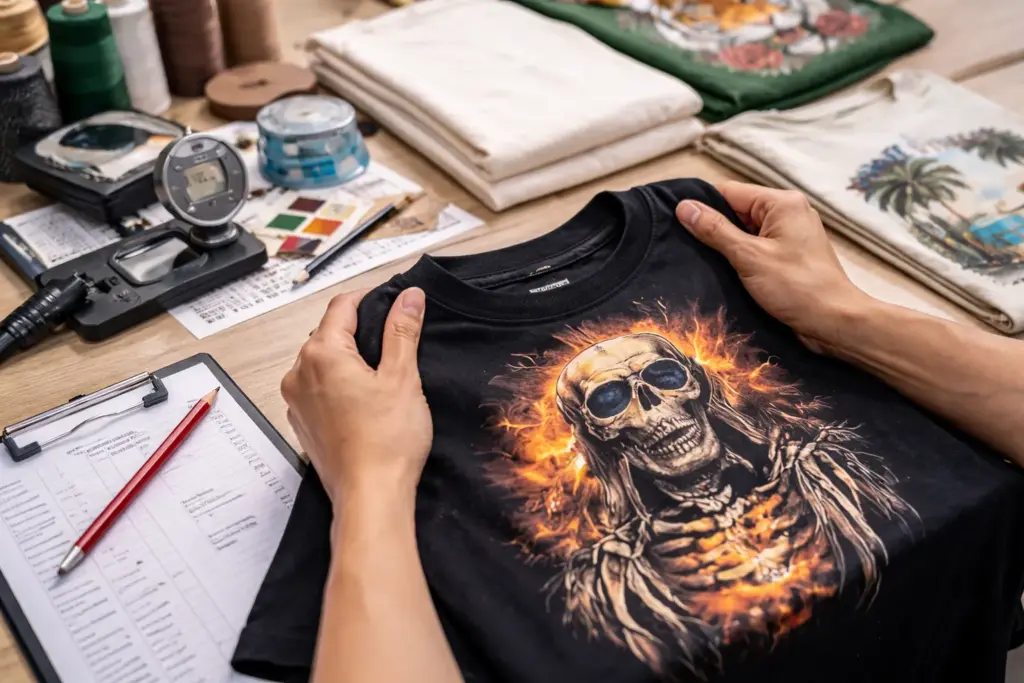
Ik gebruik een eenvoudige testset die de werkelijkheid nabootst.
Als Maria me vraagt om de kwaliteit aan te tonen, gebruik ik geen ingewikkelde woorden. Ik werk met een checklist en een duidelijke grens. Ik meet de krimp na het wassen en ik rek de kraag uit om te kijken of deze terugveert. Ik wrijf over het oppervlak om te controleren op pilling. Ik kijk naar de naden op verdraaiing, want dat geeft een T-shirt een goedkope uitstraling, zelfs als de stof in orde is. Bij witte herenoverhemden controleer ik ook of de stof na verloop van tijd geel wordt. Bij camouflage longsleeves controleer ik of het patroon goed aansluit en of de stof stevig is, want camouflage kan gebreken verbergen totdat de klant het shirt draagt.
Stijlkeuzes veranderen wat "goed" betekent.
Een poloshirt moet een stevige kraag en sluiting hebben. Een oversized T-shirt moet soepel vallen en een consistente kwaliteit hebben. Bij een T-shirt met lange mouwen moet de mouwlengte in orde zijn, anders loopt het aantal retouren snel op. Een "designershirt" heeft vaak speciale afwerkingen, geweven labels en een nette afwerking aan de binnenkant, dus voeg ik extra controlestappen toe. Zelfs een simpel T-shirt met een heksenprint, zoals een novelty product, moet getest worden op slijtage van de print, omdat de koper de scheurtjes op sociale media zal plaatsen.
| Controlepunt | Hoe ik test | Wat het beschermt |
|---|---|---|
| Krimppercentage | wassen + meten | klachten over de maatvoering |
| Halsband terugvinden | strekken + terug | “De "speknek" keert terug. |
| Naadsterkte | trek- en steekcontrole | naad scheurt |
| Kleurvast | wrijven + wassen | kleurstof loopt uit op roze/groen |
| Duurzaamheid van de print | wassen + buigen | barsten en afpellen |
| Aanraken | aanraken + vergelijken | “goedkope” perceptie |
Als iemand vraagt "hoeveel kosten t-shirts?", antwoord ik met deze checklist in gedachten. Als ze deze punten overslaan, betalen ze vandaag misschien minder, maar morgen moeten ze meer terugbetalen.
Hoe beïnvloeden groothandelsovereenkomsten en minimale bestelhoeveelheden de prijs van een shirt?
Veel mensen vergelijken de prijs van een enkele eenheid, maar in B2B draait het echt om de totale kosten inclusief transport en de snelheid waarmee bestellingen worden nabesteld.
De groothandelsprijs daalt wanneer het volume toeneemt, omdat de vaste kosten dan over meerdere artikelen worden verdeeld. Je minimale bestelhoeveelheid (MOQ), het aantal kleuren en je verpakkingskeuze bepalen of je voor hetzelfde T-shirt uitkomt op $2,50 of $5,50.
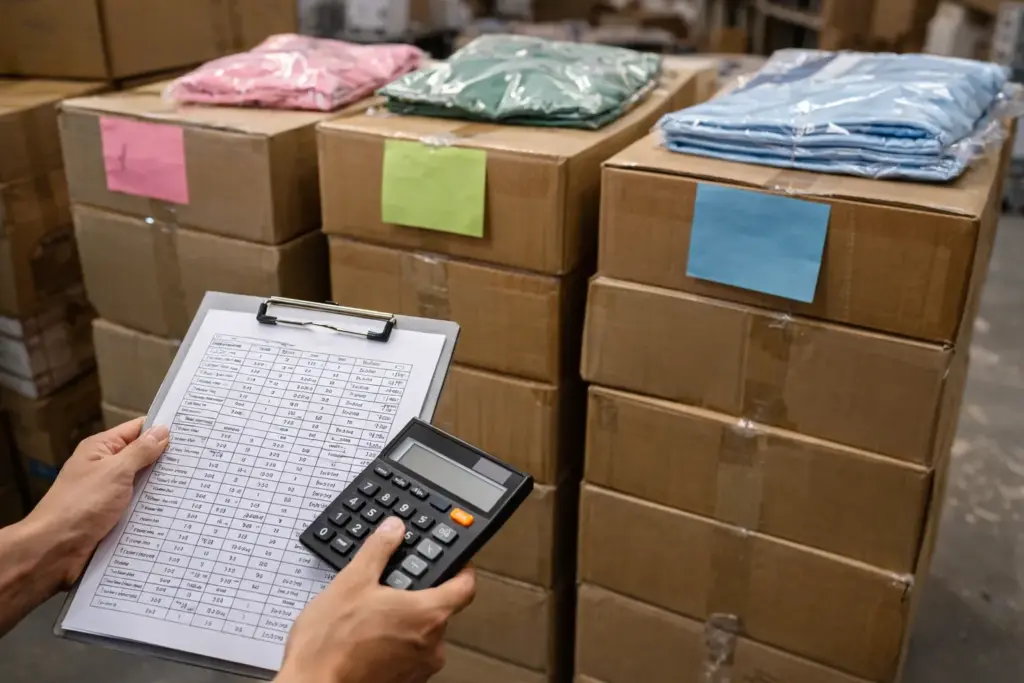
Ik hanteer drie verschillende prijzen voor hetzelfde T-shirt voor kopers.
Ik laat kopers vaak drie prijsniveaus zien, zodat ze de logica erachter begrijpen. Een kleine oplage betaalt meer voor de opzet en het afval. Een middelgrote oplage biedt een goede balans tussen risico en kosten. Een grote oplage is het voordeligst qua prijs per stuk, maar vereist wel een goede prognose. Timing is hierbij cruciaal. Als de levering te laat is, heeft een lage prijs geen zin. Ik heb dit aan den lijve ondervonden aan het begin van mijn carrière, toen een koper een bestelling plaatste voor een feestdag-release en vertragingen in de haven de lancering in de war stuurden. Nu bouw ik een buffer in mijn planning, vooral voor T-shirts voor Thanksgiving en tourshirts zoals een "Tears for Fears"-tourshirt met een vaste leverdatum.
Verpakking en naleving van regelgeving zijn onderdeel van de vraag "hoeveel kost het t-shirt?".“
Als een koper GRS-verpakkingen of speciale etiketten wil, lopen de kosten op. Als ze testrapporten nodig hebben, lopen de kosten ook op, maar dat verlaagt het risico. Als ze T-shirts willen die direct te koop zijn, voorzien van winkelklare labels en barcodes, zijn er arbeidskosten. Ik bespreek ook de betalingsvoorwaarden en de logistiek. Een lage prijs af fabriek kan na luchtvracht alsnog duur uitvallen.
| Bestelniveau | Typisch gebruik | Wat gebeurt er met de kostprijs per eenheid? | Mijn advies |
|---|---|---|---|
| 300–800 stuks | test nieuw grafisch T-shirt | hoger vanwege de instelling | Houd de kleuren laag. |
| 1.000–3.000 stuks | core heren grafische t-shirts | stabiel en efficiënt | Specificaties voor de slotmaat |
| 5.000+ stuks | basisbenodigdheden voor grote winkelketens | laagste prijs per eenheid | plan levering vroegtijdig |
Als kopers vragen "waar kan ik een shirt bij mij in de buurt kopen?", denken ze aan een winkel. Als kopers het aan mij vragen, denken ze aan een herhaalbare levering. Ik focus me op het maken van een T-shirt dat gemakkelijk opnieuw te bestellen is, want daar zit de winst.
Conclusie
De kosten van een kwalitatief goed T-shirt zijn een zorgvuldige mix van stof, afwerking, print en oplage, en ik bepaal de prijs op basis van de risico's die ik kan beheersen voordat uw klant ermee te maken krijgt.
Waarom ik dit schrijf
Ik ben Lancy Chia van Truekung in China. Ik produceer kleding in de groothandel met OEM/ODM-ondersteuning, zodat kopers basiskleding, T-shirts met prints en shirts met lange mouwen kunnen bestellen met een constante kwaliteit en levering. E-mail: [email protected]. Website: https://truekung.com
Weergaven: 84