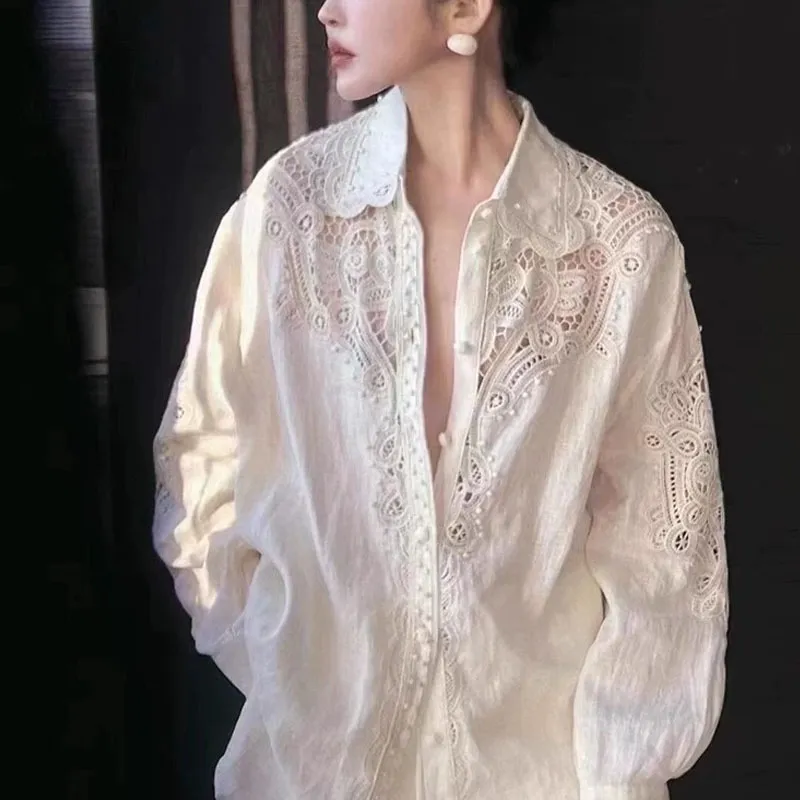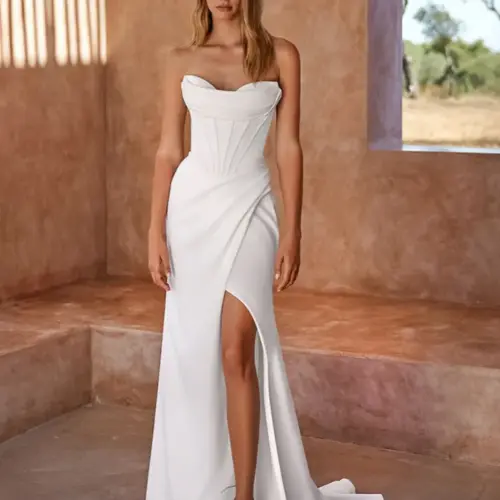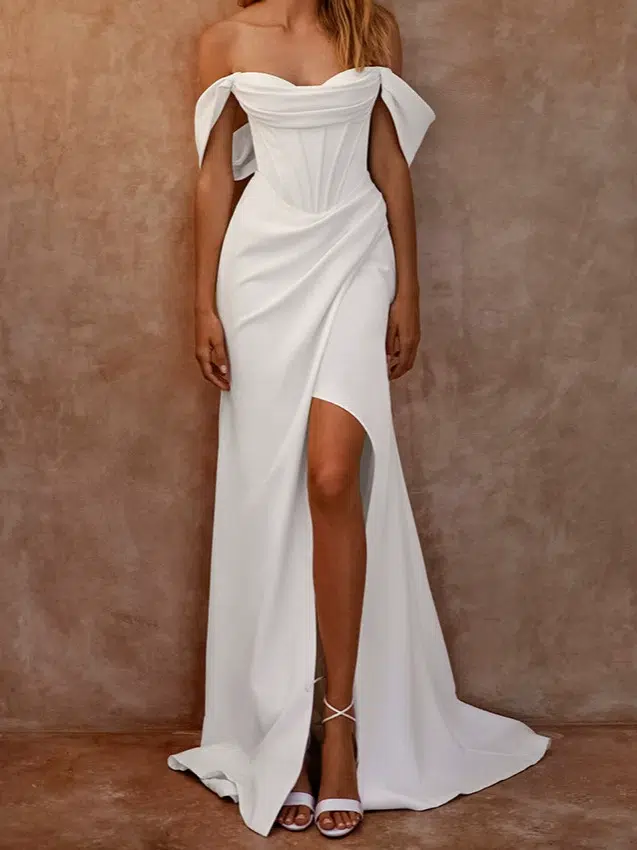

Zakelijke formele kleding lijkt misschien eenvoudig, maar de juiste keuze maken is niet altijd even makkelijk. De verkeerde stof, pasvorm, lengte of constructie kunnen er al snel voor zorgen dat professionele kleding er te casual uitziet. Voor merken en inkopers hebben deze details ook invloed op de kosten, de kwaliteit en de acceptatie door de klant.
Zakelijke formele kleding voor vrouwen bestaat doorgaans uit getailleerde blazers, pantalons, rokken, gestructureerde jurken en elegante blouses. De sleutel is een verzorgde uitstraling, voldoende bedekking, een strakke pasvorm en praktisch comfort. Voor kledingkopers zijn stof, constructie, maatvoering, afwerking en consistentie net zo belangrijk als het ontwerp zelf.

Ik ben Lancy Chia van Truekung. Wij zijn een Chinese kledingfabriek met 20 jaar exportervaring en meer dan 200 werknemers. We ondersteunen buitenlandse kopers met OEM/ODM-productie, private labels, monsterontwikkeling, massaproductie, kwaliteitscontrole en exportcommunicatie.
Mijn ervaring in de fabriek leert dat een succesvolle collectie formele bedrijfskleding meer vereist dan alleen aantrekkelijke referentiefoto's. Kopers moeten rekening houden met de pasvorm, de eigenschappen van de stof, de gewenste formele uitstraling en of de specificaties consistent kunnen worden toegepast bij massaproductie.
Hieronder leg ik de belangrijkste elementen van formele dameskleding voor in het bedrijfsleven uit en de aandachtspunten waar kopers op moeten letten voordat ze een bestelling plaatsen.
Wat is zakelijke formele kleding voor vrouwen?
Zakelijke formele kleding wordt vaak verward met algemene kantoorkleding of zakelijke casual kleding. Dit kan problemen opleveren wanneer een merk een collectie ontwikkelt zonder de doelgroep en de kledingvoorschriften duidelijk te definiëren.
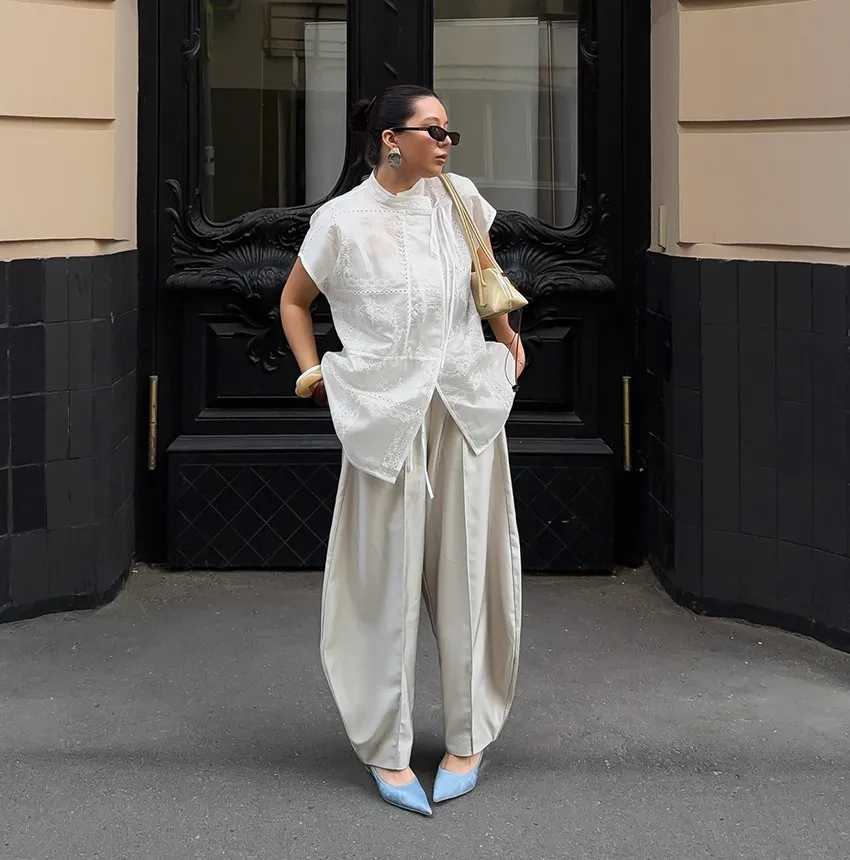
Zakelijke formele kleding voor vrouwen is een professionele kledingstandaard die gebaseerd is op verzorgde, gestructureerde en relatief conservatieve kleding. Veelvoorkomende voorbeelden zijn maatpakken, blazers, pantalons, galajurken, rokken en elegante overhemden of blouses. De precieze stijl kan variëren afhankelijk van de branche, bedrijfscultuur, gelegenheid en markt.

Structuur zorgt voor een professionele uitstraling.
Het eerste verschil tussen vrijetijdskleding en formele zakelijke kleding zit hem meestal in het silhouet.
Een zakelijke blazer moet een strakke schouderlijn en een evenwichtige revers hebben. Een formele broek moet soepel vallen vanaf de taille en heupen, zonder zichtbare verdraaiing of trekkracht. Een zakelijke jurk voor dames moet voldoende bewegingsvrijheid bieden om te zitten en te lopen, terwijl het silhouet toch gecontroleerd blijft. Ook bij rokken moet zorgvuldig worden gekeken naar de taillepositie, de bewegingsvrijheid bij de heupen, de constructie van de split en de uiteindelijke lengte.
De stof heeft een grote invloed op deze resultaten. Een te dunne stof kan lichaamscontouren accentueren, gemakkelijk kreuken of de beoogde structuur niet voldoende ondersteunen. Een te zware stof kan het kledingstuk stijf en oncomfortabel maken. Rekbaarheid kan het draagcomfort verbeteren, maar te veel rekbaarheid kan een getailleerd kledingstuk een meer casual uitstraling geven.
Ook de interne constructie is belangrijk. Afhankelijk van het ontwerp kan een blazer voering, tussenvoering, schoudervorming, zakken, knopen en strijkwerk vereisen. Een avondjurk heeft mogelijk voering of extra versteviging rond de halslijn, taille, rits of split nodig.
Ik vraag kopers meestal om het complete voorbeeld te bekijken in plaats van een ontwerp alleen op basis van een schets te beoordelen. Stof, patroon, constructie en strijkwerk werken samen om de professionele uitstraling te creëren.
Waarom kantoorkleding er soms te casual uit kan zien
Niet alle kleding die op kantoor gedragen wordt, is zakelijke formele kleding.
Een oversized jas in combinatie met een casual T-shirt kan bijvoorbeeld prima werken in een creatieve werkomgeving, maar voldoet mogelijk niet aan een strikte bedrijfskledingcode. Heel korte rokjes, transparante stoffen, diepe halslijnen, grote decoratieve elementen of zeer losvallende gebreide stoffen kunnen hetzelfde probleem opleveren.
Pasvorm is ook een belangrijke factor. Een formele damesjurk kan van goede stof en netjes afgewerkt zijn, maar er toch onprofessioneel uitzien als de schouders te breed zijn, de taille verkeerd zit of het kledingstuk te strak zit rond de buste of heupen.
Kopers moeten ook voorzichtig zijn met het wijzigen van materialen na goedkeuring van het proefexemplaar. Het vervangen van een stof door een goedkopere optie kan de valling, de dekking, de kreukbestendigheid of het gevoel van de stof beïnvloeden. Het verwijderen van de voering kan de kosten verlagen, maar het kan ook de manier waarop het kledingstuk valt veranderen.
Een serieuze kledingleverancier moet uitleggen welke wijzigingen van invloed zijn op het eindproduct, in plaats van elke vervanging simpelweg als een kostenaanpassing te beschouwen.
Dit lijkt misschien onbeduidend, maar het kan de perceptie van de klant over de gehele collectie beïnvloeden.
Wat maakt een kledingbedrijf formeel?
| Wat te controleren | Waarom het belangrijk is | Wat ik voorstel |
|---|---|---|
| Silhouet | Bepaalt de professionele uitstraling | Keur de vorm goed aan de hand van een fysiek voorbeeld. |
| Stofgewicht | Verandert de structuur en de draperie | Stem het gewicht af op het kledingstuk. |
| Opaciteit | Belangrijk voor jurken en blouses. | Controleer onder normale verlichting. |
| Fit | Beïnvloedt comfort en uiterlijk. | Controleer de afmetingen na het passen. |
| Voering | Kan de dekking en structuur verbeteren | Beslis tijdens de ontwikkeling van het proefmonster. |
| Kledinglengte | Beïnvloedt de mate van formaliteit. | Voeg de definitieve afmetingen toe aan het technische pakket. |
| Sierlijsten | Knoppen en ritsen beïnvloeden het uiterlijk. | Keur de kwaliteit, de maat en de kleur goed. |
| Drukken | Belangrijk voor maatkleding | Controleer het uiteindelijke kledingstuk tijdens de kwaliteitscontrole. |
Hoe comfort de kosten en de bouw beïnvloedt
Moderne formele zakelijke kleding voor vrouwen moet vaak een balans vinden tussen structuur en comfort. Klanten dragen een blazer, broek, rok of jurk soms wel acht uur of langer, dus een kledingstuk moet er niet alleen goed uitzien op een foto, maar ook voldoende bewegingsvrijheid en draagcomfort bieden.
Stel, een koper ontwerpt een getailleerde zakelijke avondjurk van een middelzware geweven stof met lichte stretch en, indien nodig, een voering. Na ontvangst van de offerte wil de koper de kostprijs per stuk verlagen. Een optie is om een dunnere stof te gebruiken en de voering weg te laten.
De prijs kan dalen, maar het kledingstuk kan doorschijnender worden en zijn vorm verliezen. De herziene versie is daarom niet zomaar een goedkopere variant van het originele product. Het is een ander product.
Er zijn wellicht betere manieren om de kosten te beheersen. De koper zou de decoratieve details kunnen vereenvoudigen, meer standaardafwerkingen kunnen gebruiken, een gangbare stof kunnen selecteren of de verpakkingseisen kunnen herzien.
Mijn suggestie is om de kenmerken te beschermen die klanten kunnen zien en voelen.
Een nuttige beslissingsregel is eenvoudig: als een kostenbesparing de pasvorm, de ondoorzichtigheid, de structuur, het comfort of de duurzaamheid beïnvloedt, maak dan een herzien prototype en keur dit goed voordat de massaproductie begint.
Welke kledingstukken mogen niet ontbreken in een formele zakelijke garderobe?
Een collectie formele dameskleding voor op het werk moet voldoende variatie bieden om verschillende outfits te kunnen samenstellen, maar te veel losse producten kunnen de inkoop en voorraadbeheer bemoeilijken. Inkopers zouden zich in eerste instantie moeten richten op kledingstukken die klanten gemakkelijk met elkaar kunnen combineren.
De basiscollectie formele dameskleding voor in het bedrijfsleven bestaat doorgaans uit blazers, getailleerde pantalons, rokken, gestructureerde jurken, overhemden en blouses. Afhankelijk van de positionering van het merk kunnen kopers daar ook bijpassende jassen, moderne combinaties van kledingstukken of kleding met een soepelere snit aan toevoegen, terwijl de algehele professionele uitstraling behouden blijft.

Begin met de belangrijkste formele zakelijke onderdelen.
Een blazer is een van de meest herkenbare kledingstukken in de professionele dameskleding.
Het kan enkel- of dubbelknoops zijn, getailleerd, losvallend, kort of lang. Het silhouet moet echter wel aansluiten bij de doelgroep. Een traditionele zakelijke klant geeft wellicht de voorkeur aan een strakker en meer gecontroleerd model, terwijl een eigentijds modemerk mogelijk kiest voor een soepeler model.
Formele pantalons zijn er in verschillende modellen: recht, taps toelopend, wijd of licht uitlopend. Kopers moeten letten op de taille, de kruishoogte, de ruimte bij de heupen, de vorm van de pijpen, de zakken, de sluiting en de uiteindelijke lengte.
Rokken hebben doorgaans een kokerrok-, rechte of subtiele A-lijn silhouet. Voor zakelijke formele dameskleding zijn nauwsluitende jurken, getailleerde midi-jurken en andere gestructureerde modellen geschikt, mits de halslijn, pasvorm, lengte en beweging goed op elkaar zijn afgestemd.
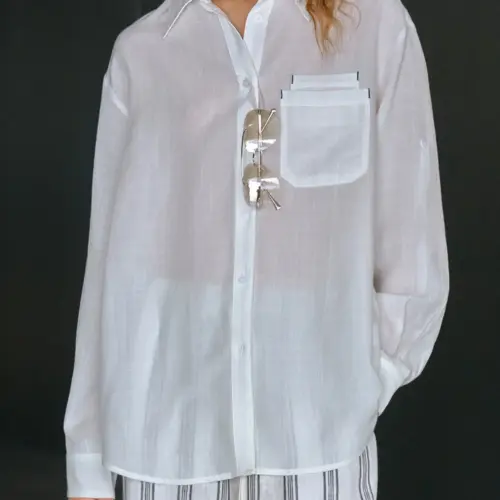
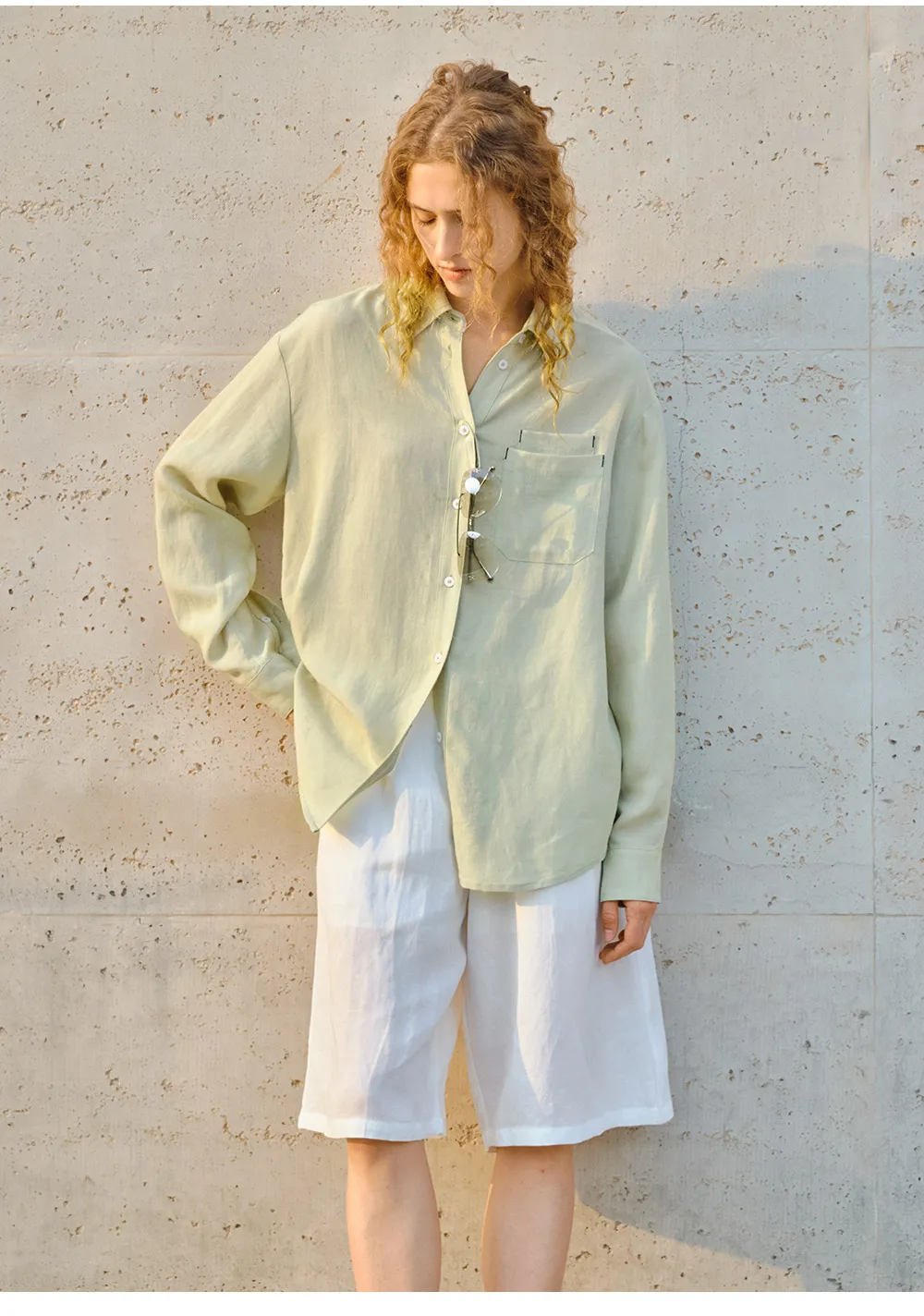
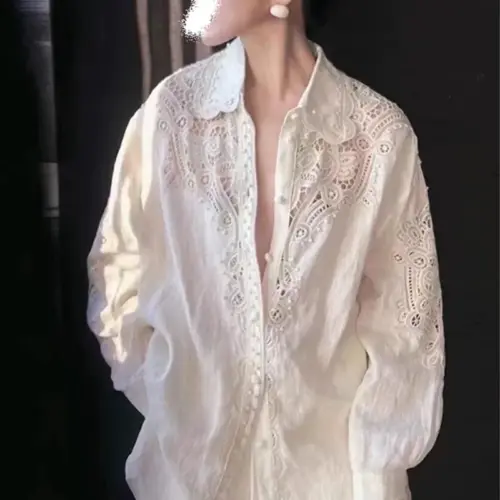
Blouses en overhemden bieden klanten meer mogelijkheden om outfits te combineren. Ze maken het ook mogelijk om kleur- en seizoensgebonden stofwisselingen door te voeren zonder de hele collectie opnieuw te hoeven ontwerpen.
Vanuit het perspectief van de fabriek hebben deze kledingstukken verschillende kostenstructuren. Een blouse kan niet op dezelfde manier worden geprijsd als een gevoerde, getailleerde blazer. Stofverbruik, voering, tussenvoering, naaiwerkzaamheden, zakken, knopen, strijken en afwerking hebben allemaal invloed op de uiteindelijke prijs.
Daarom zijn duidelijke technische specificaties of referentiemonsters belangrijk bij het aanvragen van offertes.
Waarom bijpassende pakken extra controle vereisen
Een bijpassende blazer en broek lijken misschien een eenvoudig tweedelig product, maar de productie ervan vereist zorgvuldige coördinatie.
Een mogelijk probleem is de kleurtint van de stof. Als de blazer en de broek ontworpen zijn om samen gedragen te worden, kunnen zichtbare kleurverschillen tot klachten leiden. Afhankelijk van het materiaal en het productieproces kunnen er kleine kleurverschillen optreden tussen verschillende stofproducties of verfbaden.
Om deze reden doen kopers die bijpassende formele zakelijke outfits willen samenstellen er goed aan om de stofkeuze met de leverancier te bespreken.
De pasvorm brengt weer een andere beslissing met zich mee. Sommige merken verkopen een jas en een broek als één vaste set. Dit kan de productpresentatie vereenvoudigen, maar klanten dragen niet altijd dezelfde maat voor het boven- en onderlichaam. Door de producten apart te verkopen, krijgen klanten meer flexibiliteit qua maatvoering, maar dit leidt ook tot extra artikelnummers en een complexere voorraadplanning.
Ook etiketten en onderhoudsinstructies verdienen aandacht. Verschillende materialen kunnen verschillende onderhoudsinstructies vereisen, zelfs als de producten tot dezelfde collectie behoren.
Ik heb gezien dat kopers tijd verloren doordat ze individuele stijlen goedkeurden, maar er niet bij stilstonden hoe die kledingstukken samen een collectie zouden vormen.
Controleer vóór de massaproductie de kleuren, stoffen, afwerkingen, maatbereiken, onderhoudsinstructies en de stylingmogelijkheden van de op elkaar afgestemde producten.
Wat u voor elk product moet bevestigen
| Wat te controleren | Waarom het belangrijk is | Wat ik voorstel |
|---|---|---|
| Blazer-structuur | Regelt het uiterlijk van de kleding. | Controleer de schouder, revers, voering en strijken. |
| Broekpasvorm | Beïnvloedt comfort en uiterlijk. | Controleer de taillehoogte, heupomtrek, dijomtrek en binnenbeenlengte. |
| Roklengte | Verandert de formaliteit en draagbaarheid. | Definieer de uiteindelijke afmetingen |
| Kledingconstructie | Beïnvloedt de pasvorm en beweging. | Controleer de buste, taille, heupen, split en voering. |
| Blouse-doorzichtigheid | Dunne stof kan problemen veroorzaken. | Test de geselecteerde stof. |
| Bijpassende kleuren | Belangrijk voor pakken en sets. | Controleer de stofpartijen indien nodig. |
| Maatbereik | Verandert patronen en consumptie | Controleer tijdig de volledige maattabel. |
| Labels | Vereist voor productie onder eigen label. | Inhoud en plaatsing goedkeuren |
Meer stijlen kunnen problemen met de minimale bestelhoeveelheid veroorzaken.
Een grotere collectie biedt klanten meer keuze, maar verdeelt de bestelling van de koper ook in kleinere productieaantallen.
Stel je voor dat een klant vier verschillende blazers, vier verschillende broeken, drie verschillende rokken en vijf verschillende avondjurken wil. Elk model is in zes kleuren verkrijgbaar. De totale bestelling lijkt op papier misschien groot, maar de aantallen per model en kleur kunnen in werkelijkheid vrij klein zijn.
Dit brengt uitdagingen met zich mee op het gebied van stofinkoop, verven, voering, knopen, ritsen, labels, snijden en productieplanning. De minimale bestelhoeveelheid (MOQ) moet daarom niet alleen worden besproken als één totaal ordernummer.
De daadwerkelijke minimale bestelhoeveelheid (MOQ) kan afhangen van de stijl, kleur, stof, afwerking, personalisatie en constructie. Er is geen standaard MOQ die geldt voor alle formele dameskleding.
Een praktische methode is om, waar mogelijk, dezelfde goedgekeurde stof te gebruiken voor verschillende op elkaar afgestemde stijlen. Een andere optie is om de eerste bestelling te concentreren op belangrijke commerciële kleuren zoals zwart, marineblauw, grijs of andere kleuren die bij het merk passen, en vervolgens meer kleuren toe te voegen wanneer de vraag duidelijker wordt.
Mijn ervaring in de fabriek leert dat kopers nuttigere informatie krijgen over minimale bestelhoeveelheden en prijzen als ze de aantallen per stijl en per kleur opgeven.
Mijn beslissingsregel voor kopers is: als de hoeveelheid te gefragmenteerd raakt na het toevoegen van kleuren en stijlen, verlaag dan het aantal varianten voordat je de fabriek vraagt het probleem op te lossen door alleen de minimale bestelhoeveelheid te verlagen.
Hoe kunt u het beste formele bedrijfskleding inkopen bij een kledingfabriek?
Zelfs een professioneel ontwerp kan tijdens de productie mislukken als de specificaties onduidelijk zijn. Bij formele dameskleding komen problemen met de pasvorm, stof, strijktechniek en constructie vaak sneller aan het licht dan bij eenvoudige vrijetijdskleding.
Bij de inkoop van formele bedrijfskleding moeten kopers het ontwerp, de stof, de afmetingen, het voorbeeld, de afwerking, de minimale bestelhoeveelheid (MOQ), de labels, de verpakking, de kwaliteitscontrole-eisen, de levertijd en de markteisen bevestigen voordat de massaproductie van start gaat. Een lage offerte is weinig waard als de leverancier en de koper verschillende productspecificaties hanteren.
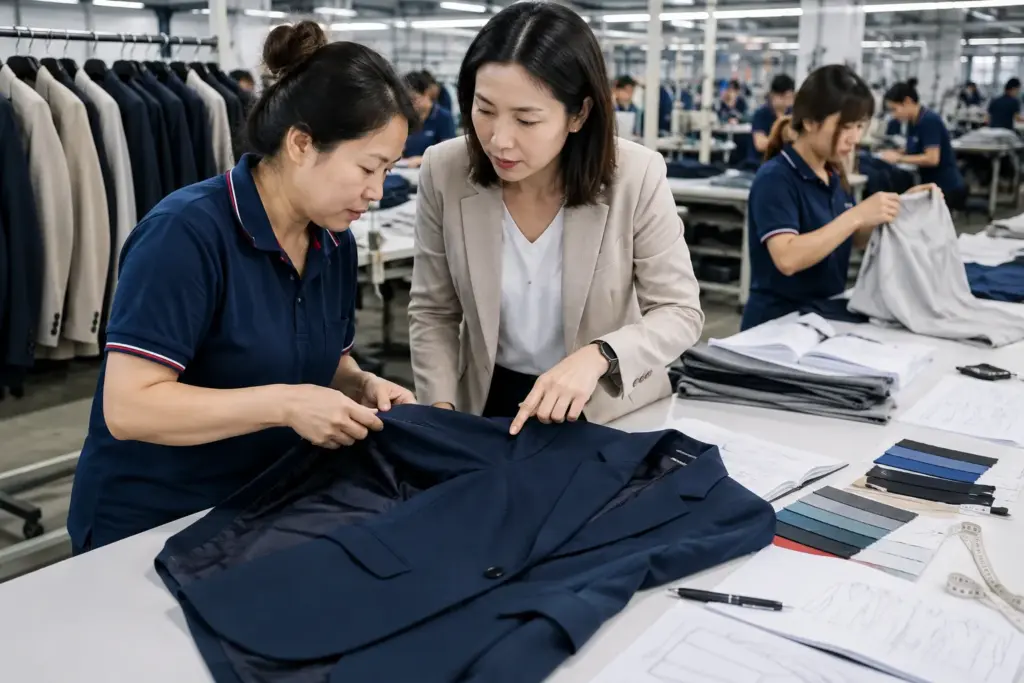
Stofselectie komt vóór massaproductie.
Bij het ontwerpen van een formele zakelijke jurk, blazer, broek of rok moet de stofkeuze al in een vroeg stadium worden besproken.
Kopers kunnen specificaties opgeven met betrekking tot de samenstelling, de gewenste textuur, het geschatte gewicht of de dikte, de rekbaarheid, kleurreferenties, het uiterlijk van het oppervlak en alle prestatieverwachtingen die voor het product relevant zijn.
Als je niet precies weet welke stof je wilt, vertel de fabriek dan welk resultaat je voor ogen hebt. Een voorbeeldkledingstuk kan ook nuttig zijn.
Visueel gelijkende stoffen presteren echter niet altijd hetzelfde. Twee zwarte geweven stoffen kunnen bijvoorbeeld verschillen in gewicht, elasticiteit, kreukgedrag, ondoorzichtigheid, krimp en valling. Deze verschillen kunnen zowel de pasvorm als de prijs beïnvloeden.
Door middel van proefproductie kan de koper deze details beoordelen voordat de massaproductie begint.
Tijdens het passen moeten opmerkingen specifiek zijn. "Maak de jurk professioneler" of "maak de taille beter" geeft het patroonteam beperkte informatie. Duidelijke opmerkingen over schouderbreedte, buste, taille, heupen, mouwlengte, lengte van het kledingstuk of andere maten zijn gemakkelijker uit te voeren en te controleren.
Na de herzieningen moeten kopers vaststellen welk voorbeeld de goedgekeurde standaard vertegenwoordigt.
Ik vraag kopers doorgaans om te controleren of de definitieve afmetingen, stof, fournituren, labels, kleuren, constructiedetails en verpakkingseisen zijn vastgelegd voordat de productie begint.
Waarom de goedkoopste offerte anders kan zijn.
Prijsvergelijkingen zijn alleen nuttig als alle leveranciers dezelfde specificaties hanteren.
Neem bijvoorbeeld een formele damesblazer voor in het zakenleven. De ene leverancier biedt een blazer aan met een bepaalde buitenstof, volledige voering, specifieke tussenvoering, functionele zakken, geselecteerde knopen en een vastgestelde verpakking. Een andere leverancier berekent de prijs mogelijk op basis van een lichtere stof, een eenvoudigere interne constructie, andere afwerkingen of een andere verpakking.
De tweede offerte kan veel goedkoper lijken, terwijl het in werkelijkheid om hetzelfde kledingstuk gaat.
Kopers moeten daarom navragen wat er bij de prijs is inbegrepen.
Hetzelfde principe geldt voor formele zakelijke jurken. Stofverbruik, voering, type rits, complexiteit van het patroon, plooien, panelen, zakken, decoratieve details, stikwerk en de bestelhoeveelheid kunnen allemaal van invloed zijn op de kosten.
Ook de verpakking kan verschillen veroorzaken. Individuele plastic zakjes, hanglabels, barcode-stickers, dozen met logo, speciale vouwmethoden of andere vereisten kunnen zowel de kosten als de voorbereidingstijd beïnvloeden.
Ik vraag kopers doorgaans om de specificaties te controleren voordat ze het uiteindelijke bedrag vergelijken.
Een lagere prijs kan nuttig zijn als die voortkomt uit een efficiënte materiaalkeuze of productieplanning. Het wordt echter riskant als er details worden weggelaten die de koper wel had verwacht.
Wat moet er goedgekeurd worden vóór de productie?
| Wat te controleren | Waarom het belangrijk is | Wat ik voorstel |
|---|---|---|
| Goedgekeurd voorbeeld | Definieert het verwachte product | Houd een duidelijke eindreferentie bij. |
| Stof | Regelt uiterlijk en kosten | Kwaliteit en kleur goedkeuren |
| Metingen | Bedieningselementen passen | Gebruik een specificatie voor de uiteindelijke afmetingen. |
| Vakmanschap | Voorkomt verschillende interpretaties | Definieer belangrijke bouwpunten |
| MOQ | Beïnvloedt de haalbaarheid en de eenheidsprijs. | Bevestig aan de hand van stijl en kleur. |
| Labels | Belangrijk voor bestellingen onder eigen label | Keur het kunstwerk en de plaatsing goed. |
| Verpakking | Heeft invloed op de kosten en de voorbereiding van de verzending. | Definieer tassen, dozen, barcodes en labels. |
| QC | Regelt de consistentie van bulkproducten | Overeenstemming bereiken over de inspectievereisten |
| Levertijd | Heeft gevolgen voor de lanceringsplanning. | Vermeld de benodigde materialen en de productietijd. |
| Certificaten | Dat hangt af van het product en de markt. | De staat heeft de vereiste documenten vroegtijdig ingediend. |
Prijs, kwaliteit en levering zijn met elkaar verbonden.
De meeste kopers willen drie dingen tegelijk: een concurrerende prijs, goede kwaliteit en snelle levering. In de kledingproductie kan een verandering in één aspect de andere beïnvloeden.
Stel je bijvoorbeeld voor dat een opdrachtgever een collectie moderne, formele zakelijke dameskleding ontwikkelt met een vaste lanceringsdatum. De goedgekeurde ontwerpen maken gebruik van een speciale stofkleur en op maat gemaakte knopen. Later heeft de opdrachtgever de productie echter eerder nodig dan oorspronkelijk gepland.
Het behouden van elk op maat gemaakt element kan de planning onder druk zetten, omdat de voorbereiding van stof en fournituren tijd kost. Het gebruik van beschikbare materialen kan de doorlooptijd verkorten, maar het eindproduct zal niet exact overeenkomen met de oorspronkelijke specificaties.
De juiste keuze hangt af van de prioriteiten van de koper.
Als de aankomstdatum in het magazijn niet kan worden verschoven, moeten sommige optionele aanpassingen mogelijk worden gewijzigd. Als de exacte stof en merkdetails essentieel zijn voor de collectie, dient de koper deze eisen te waarborgen en een realistische productieplanning mogelijk te maken.
Hetzelfde geldt bij het verlagen van de kosten. Het weglaten van belangrijke constructieonderdelen is niet de enige optie. Stoffenkeuze, afwerking, ontwerpcomplexiteit, verpakking, bestelhoeveelheid en kleurstelling kunnen allemaal worden herzien.
Mijn suggestie is om vier zaken op een rijtje te zetten voordat je een bestelling plaatst: kwaliteit, streefprijs, aanpassingsmogelijkheden en deadline. Als deze zaken conflicteren, bescherm dan eerst de eisen die het product definiëren en pas de optionele eisen daarop aan.
Wat moet je voorbereiden voordat je contact opneemt met een Chinese kledingfabriek?
Een fabriek kan een nauwkeurigere offerte uitbrengen als de aanvraag nuttige informatie bevat. Duidelijke specificaties helpen ons ook bij het inschatten van de ontwikkeltijd, het bespreken van materialen, het controleren van de productiehaalbaarheid en het plannen van de bestelling.
| Informatie | Voorbeeld | Waarom het nodig is |
|---|---|---|
| Product | Jurk, jasje of sportkleding | Bevestigt geschiktheid voor de fabriek |
| Foto's/technisch pakket | Afbeeldingen, afmetingen, constructie | Ondersteunt prijsbepaling en ontwikkeling |
| Stof | Katoen, denim, polyester of een onbekende stof. | Heeft invloed op de kosten, de minimale bestelhoeveelheid (MOQ) en de levertijd. |
| Maten | XS–XL of een aangepaste maattabel | Beïnvloedt eetpatronen en consumptiegedrag. |
| Hoeveelheid | Per stijl en kleur | Heeft invloed op de minimale bestelhoeveelheid (MOQ) en de eenheidsprijs. |
| Markt | EU, VK, VS of Australië | Heeft invloed op de maatvoering en de naleving van de voorschriften. |
| Kwaliteitsniveau | Groothandel of premium | Richtlijnen voor materialen en vakmanschap |
| Verpakking | Plastic zak, doos of barcode | Heeft invloed op de kosten en de timing. |
| Labels | Hals, onderhoud, maat en hanglabel | Heeft invloed op het artwork, de minimale bestelhoeveelheid (MOQ) en de kosten. |
| Termijn | Aankomstdatum in het magazijn | Ondersteunt de productieplanning. |
| Certificaten | Vereiste certificaten | Bevestigt naleving |
| Richtprijs | FOB- of leveringsprijs | Helpt bij het aandragen van realistische opties. |
Duidelijke informatie helpt de fabriek een nauwkeurigere prijsopgave, levertijd, materiaalsuggestie en productieplanning te leveren.
Je hoeft niet alle technische antwoorden te hebben voordat je contact opneemt met een leverancier. Als je bijvoorbeeld nog niet zeker bent van de stof, kun je een referentiefoto, de gewenste kwaliteit, de beoogde markt en het prijsniveau doorgeven, zodat de fabriek begrijpt wat je wilt ontwikkelen.
Ik raad ook aan om essentiële vereisten te scheiden van optionele voorkeuren.
De pasvorm, de gewenste kwaliteit, de vereiste naleving of de deadline van het magazijn kunnen essentieel zijn. Een speciale knop, een extra kleur, een ongebruikelijk verpakkingsdetail of een specifiek decoratief element kunnen optioneel zijn.
Door dit onderscheid vroegtijdig te maken, krijgen de koper en de fabriek meer ruimte om problemen op te lossen zonder het kernproduct te hoeven wijzigen.
Wanneer moet je Truekung om een offerte vragen?
Truekung is mogelijk geschikt voor kopers die behoefte hebben aan OEM/ODM-kledingproductie, ontwikkeling van private labels, monsterontwikkeling, massaproductie, kwaliteitscontrole, stabiele exportcommunicatie en praktische fabrieksmatige ondersteuning.
Voor zakelijke formele dameskleding geef ik er de voorkeur aan het product eerst goed te bekijken voordat ik een gedetailleerde offerte bespreek. Twee blazers of jurken die er op foto's hetzelfde uitzien, kunnen heel verschillende stoffen, patronen, interne constructies, afwerkingen en naaiprocessen vereisen.
Als u wilt dat wij een project beoordelen, stuur ons dan uw productafbeeldingen of technische specificaties, de geschatte hoeveelheid per stijl en kleur, de doelgroep, de kwaliteitseisen en de verwachte leverdatum.
U kunt ook uw voorkeursstof, maatbereik, private label, verpakkingseisen, vereiste certificaten en streefprijs vermelden, indien deze gegevens al beschikbaar zijn.
Als er nog onduidelijkheden zijn over bepaalde specificaties, laat ons dan weten welke eisen essentieel zijn en welke flexibel zijn. Zo begrijpen we beter welke opties we realistisch met u kunnen bespreken.
E-mail: [email protected]
Website: https://truekung.com
Conclusie
Goede zakelijke kleding is afhankelijk van pasvorm, stof, constructie, comfort en consistente productie. Voor inkopers die professionele dameskleding ontwikkelen, zijn duidelijke specificaties, zorgvuldige monstername, realistische minimale bestelhoeveelheid (MOQ) en een goede kwaliteitscontrole essentiële stappen voordat een grote bestelling wordt geplaatst.
Weergaven: 124