
Veel kopers vragen hoe ze een t-shirt op maat kunnen laten maken, maar ze focussen zich vaak alleen op het ontwerp. Een verkeerde stofkeuze, een onduidelijke aanvraag voor een proefexemplaar of slechte communicatie met de fabriek kunnen de kosten verhogen en de levering vertragen. De oplossing is om het volledige productieproces te begrijpen voordat je een bestelling plaatst.
Om een T-shirt op maat te laten maken, moet je het ontwerp voorbereiden, de stof en productiemethode kiezen, een proefmodel ontwikkelen, de kwaliteitsdetails controleren en samenwerken met een betrouwbare kledingfabriek voor de massaproductie.
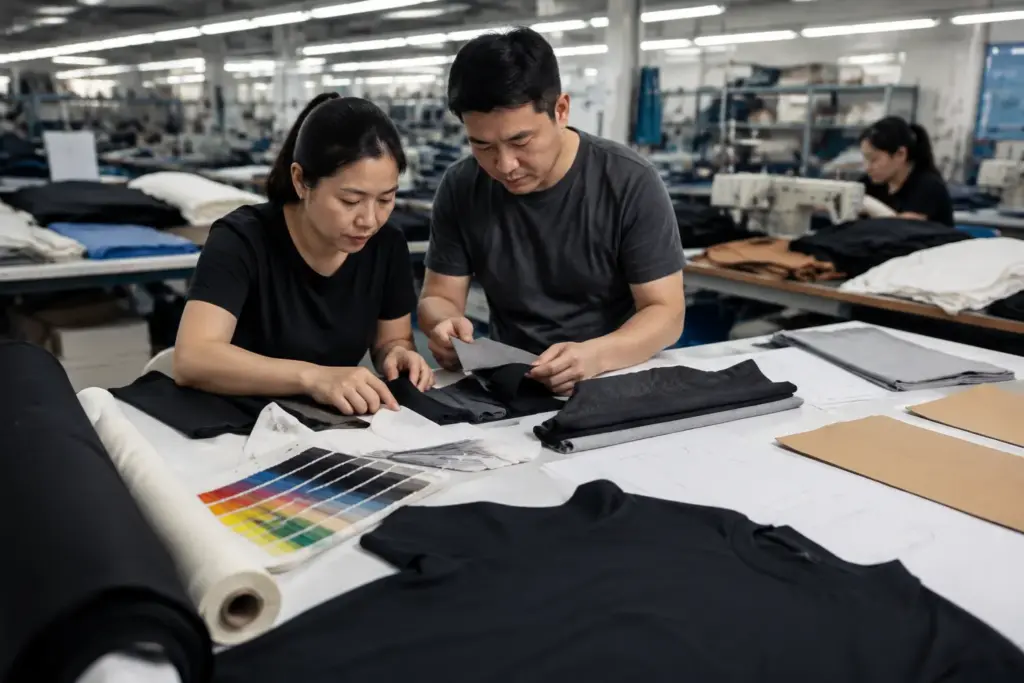
Ik ben Lancy Chia van Truekung. In mijn ervaring in de fabriek heb ik samengewerkt met buitenlandse afnemers die OEM/ODM-kledingproductie, private label-modeproducten en groothandel in kleding nodig hebben. Een T-shirt op maat lijkt eenvoudig, maar de productie ervan brengt veel beslissingen met zich mee op het gebied van stof, bedrukking, maatvoering, kwaliteitscontrole, verpakking en verzending.
In deze handleiding leg ik uit hoe je een T-shirt op maat maakt vanuit het perspectief van een fabriek. Ik behandel de voorbereiding van het ontwerp, de productiestappen, de kostenfactoren, de leveranciersselectie en veelgemaakte fouten die kopers moeten vermijden.
Hoe ontwerp je een T-shirt op maat vóór de productie?
Veel nieuwe merken beginnen met een idee, maar weten niet hoe ze dat moeten omzetten in een productieklaar product. Een simpel ontwerpprobleem kan leiden tot vertragingen bij de proefproductie en extra kosten. Een duidelijk ontwikkelingsproces helpt fouten te voorkomen.
Voordat de productie van start gaat, dient u het T-shirtconcept, het ontwerp, de stofvoorkeur, de gewenste afmetingen, de druktechniek en de kwaliteitseisen voor te bereiden. De fabriek gebruikt deze informatie om een nauwkeurig voorbeeld en een offerte te maken.
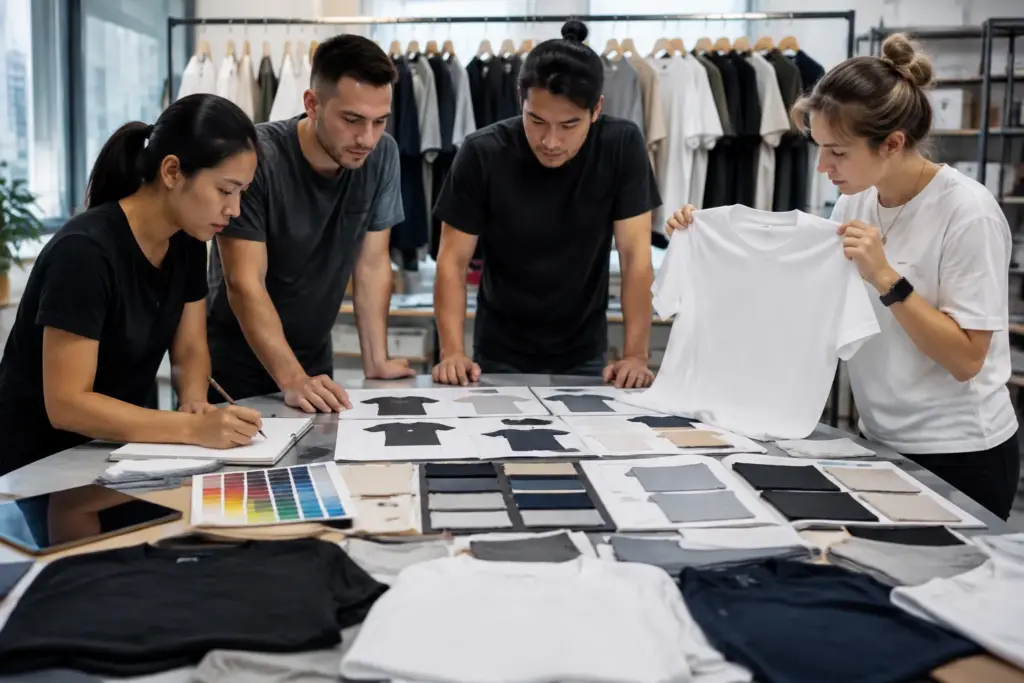
Fabrieksweergave
Als een klant vraagt hoe je een t-shirt op maat laat maken, leg ik meestal uit dat de productie al begint vóór het knippen van de stof. De eerste stap is productplanning.
Een fabriek moet het volgende begrijpen:
- T-shirtstijl en doelgroep
- Samenstelling en gewicht van de stof
- Pasvoorkeur
- Kleurvereisten
- Details voor printen of borduren
- Etiketterings- en verpakkingsbehoeften
- Bestelhoeveelheid
Een streetwearmerk heeft bijvoorbeeld misschien een oversized katoenen T-shirt nodig met een zware stof. Een inkoper van een supermarkt heeft wellicht een eenvoudig promotioneel T-shirt nodig met een lagere kostprijs. Deze twee producten verschillen in stofkeuze, productiemethode en prijs.
De stofkeuze is een van de eerste belangrijke beslissingen. Veelvoorkomende opties zijn katoen, polyester, katoenmengsels en gerecyclede stoffen. Het gewicht, de zachtheid, de krimpbestendigheid en de kleurechtheid van de stof hebben allemaal invloed op het eindproduct.
Voor T-shirts onder eigen label moeten kopers ook merkdetails aanleveren, zoals neklabels, hangtags, wasvoorschriften en verpakkingseisen.
Kopersrisico
Veel kopers sturen alleen een logo en vragen om een prijsopgave. Dit leidt tot problemen, omdat de fabriek de uiteindelijke productstandaard niet kent.
Ik heb gezien dat kopers tijd verliezen omdat ze alleen het ontwerpidee uitleggen, maar geen details geven over:
- Het verwachte gevoel van de stof
- De beoogde verkoopprijs
- De marktpositie
- De gewenste leverdatum
Een fabriek kan een monster produceren dat er acceptabel uitziet, maar niet aan de verwachtingen van de koper voldoet.
Praktische controle
| Wat te controleren | Waarom het belangrijk is | Wat ik voorstel |
|---|---|---|
| Referentiefoto's van T-shirts | Helpt bij het verklaren van de stijlrichting. | Stuur vergelijkbare producten die u leuk vindt. |
| Stofvereiste | Beïnvloedt prijs en kwaliteit | Controleer de samenstelling en het gewicht. |
| Kunstwerkbestand | Beïnvloedt de afdrukkwaliteit | Lever indien mogelijk duidelijke vectorbestanden aan. |
| Maattabel | Voorkomt pasproblemen | Controleer de metingen vóór het nemen van het monster. |
| Doelgroep | Beïnvloedt de productkeuze | Vertel de fabriek wie uw klantengroep is. |
Duik dieper
Het ontwerpen van een T-shirt op maat is een evenwicht tussen creativiteit en de realiteit van de productie. Veel nieuwe kledingmerken richten zich eerst op het ontwerp, maar fabrieken kijken naar de complete productstructuur.
In mijn ervaring in de fabriek moet bij een goed T-shirtontwerp rekening worden gehouden met de eigenschappen van de stof, de naaitechniek, de beperkingen van het drukproces en de productiekosten. Een grote, opvallende afbeelding kan er bijvoorbeeld aantrekkelijk uitzien, maar de druktechniek kan de kosten aanzienlijk beïnvloeden. Zeefdruk is geschikt voor grotere oplages, terwijl digitaal printen wellicht beter geschikt is voor kleinere bestellingen of complexe ontwerpen.
Hetzelfde ontwerp kan verschillende prijzen hebben, afhankelijk van de stofkeuze. Een T-shirt van 100%-katoen met een hoogwaardige afwerking kost meer dan een eenvoudig T-shirt van een katoen-polyester mix. Kopers moeten beslissen of ze op prijs, kwaliteit of ontwerpwaarde concurreren.
Mijn advies is om een duidelijke productomschrijving op te stellen voordat u contact opneemt met een fabriek. Hoe meer informatie een koper verstrekt, hoe makkelijker het voor de fabriek is om de juiste stof, productiemethode en prijsklasse voor te stellen. Een serieuze kledingleverancier zou deze opties moeten toelichten in plaats van alleen een lage prijs te noemen.
Hoe maakt een kledingfabriek T-shirts op maat?
Veel kopers begrijpen de ontwerpfase, maar weten niet wat er zich in een fabriek afspeelt. Zonder inzicht in de productie is het moeilijk om de capaciteit van leveranciers en hun leveringsbeloftes te beoordelen.
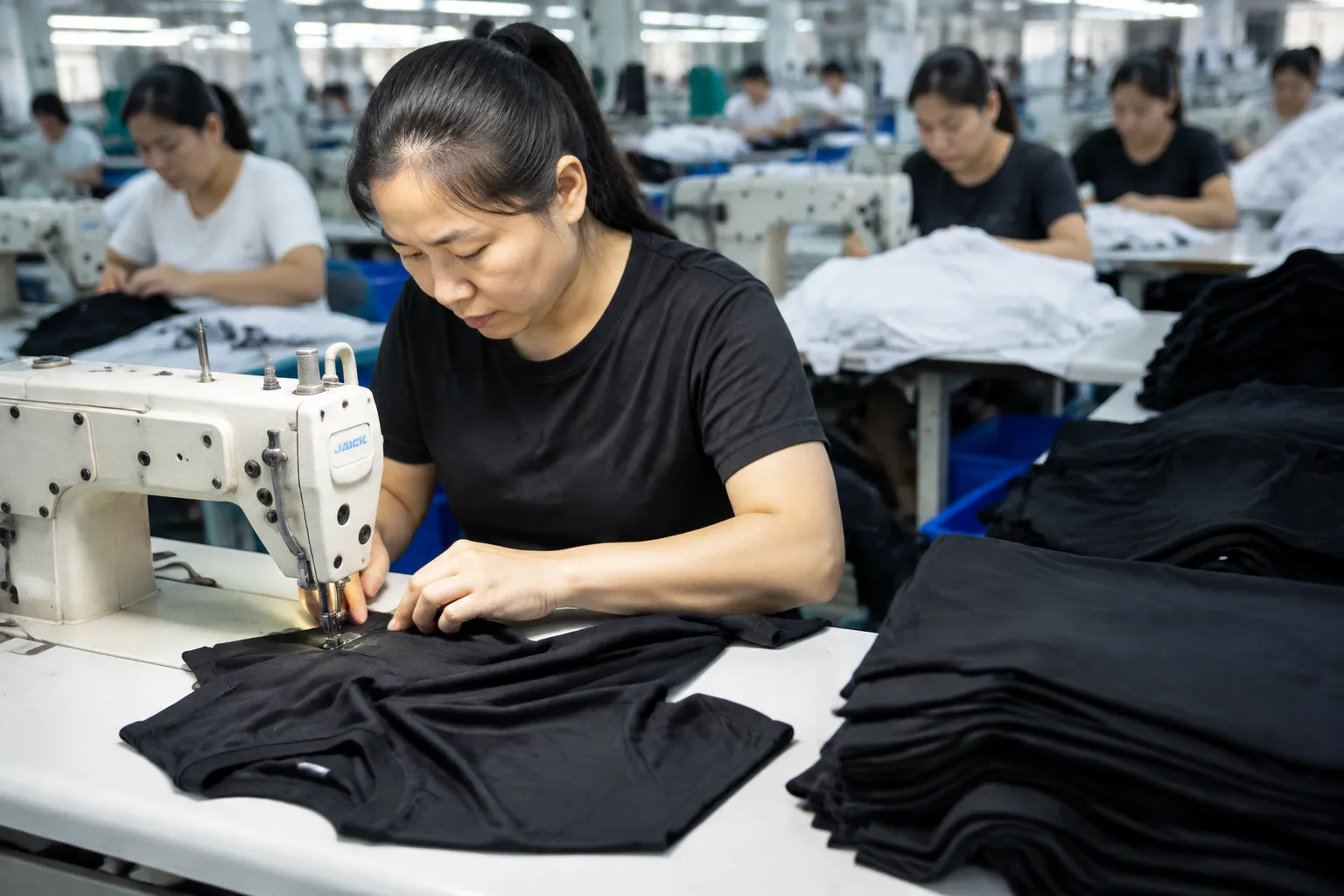
Een kledingfabriek maakt T-shirts op maat in verschillende stappen: stofselectie, patroonontwerp, prototypeontwikkeling, knippen, naaien, bedrukken of borduren, kwaliteitscontrole, verpakking en exportvoorbereiding.
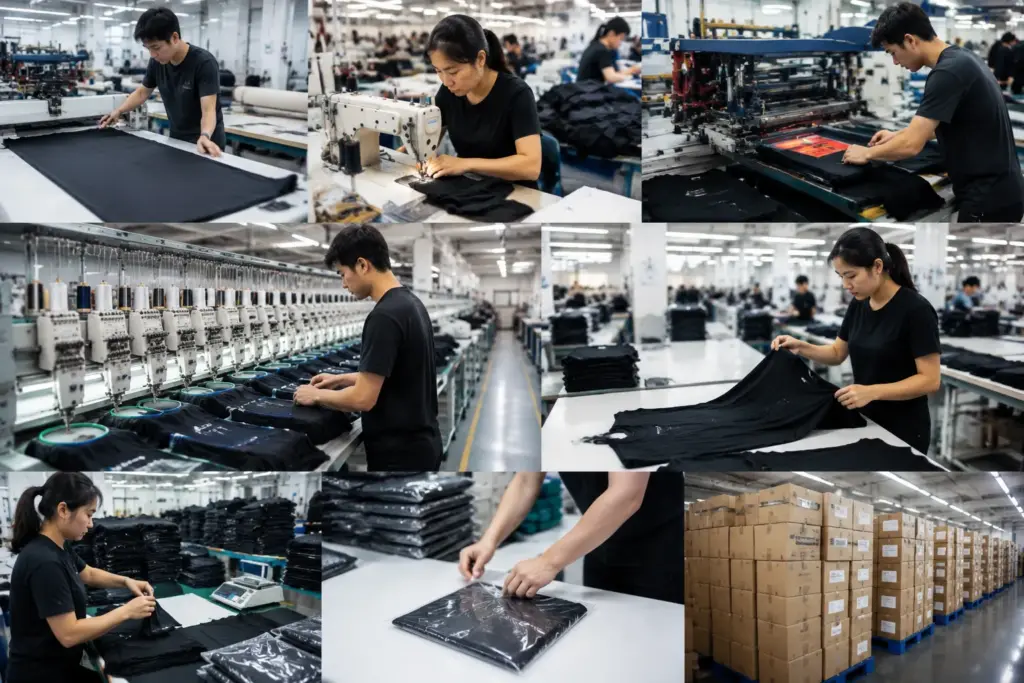
Fabrieksweergave
De productie van gepersonaliseerde T-shirts begint meestal na de goedkeuring van het proefexemplaar.
Het productieproces omvat normaal gesproken:
- Stofbevestiging
- Patroonontwikkeling
- Monstername
- Goedkeuring door de koper
- Bulkstofvoorbereiding
- Snijden
- Naaien
- Decoratieproces
- Kwaliteitscontrole
- Verpakking en verzending
Bij Truekung besteden we in elke fase veel aandacht aan communicatie, omdat kleine fouten bij massaproductie grote gevolgen kunnen hebben.
Voordat de fabriek bijvoorbeeld grote hoeveelheden stof gaat snijden, moet zij het volgende bevestigen:
- Goedgekeurd voorbeeld
- Definitieve maattabel
- Kleur standaard
- Plaatsing van het etiket
- Afdrukpositie
Dit lijkt misschien onbeduidend, maar het kan de levering beïnvloeden.
Bij de productie van kleding op maat is het maken van een proefexemplaar een cruciale stap. Met een proefexemplaar kunnen de koper en de fabriek de pasvorm, de constructie, het uiterlijk en de afwerking controleren voordat de massaproductie van start gaat.
Kopersrisico
Het grootste risico is het kiezen van een leverancier die snelle productie belooft zonder het proces uit te leggen.
Sommige leveranciers slaan mogelijk een gedetailleerde monstercontrole over of gebruiken andere materialen tijdens de massaproductie. Dit kan leiden tot kwaliteitsproblemen.
Veelvoorkomende problemen zijn onder andere:
- De stof voelt anders aan dan het voorbeeld.
- Onjuiste afdrukpositie
- Ongelijkmatige stiksels
- Onjuiste metingen
- Kleurverschillen
Een lage offerte is niet altijd een goede deal als de koper extra tijd moet besteden aan het oplossen van problemen.
Praktische controle
| Wat te controleren | Waarom het belangrijk is | Wat ik voorstel |
|---|---|---|
| Goedkeuringsproces voor monsters | Bevestigt de productienorm | Alle details goedkeuren vóór de bulkbestelling. |
| Productietijdlijn | Beheerst het leveringsrisico | Vraag naar een realistische levertijd. |
| QC-procedure | Beschermt de productkwaliteit | Controleer de inspectiepunten |
| Communicatiesnelheid | Vermindert fouten | Kies een leverancier die snel reageert. |
Duik dieper
Het verschil tussen een handelsonderneming en een echte fabriek komt vaak tot uiting in de communicatie tijdens het productieproces. Een fabriek begrijpt hoe stof, naaien en afwerking het eindproduct beïnvloeden.
Ik vraag kopers doorgaans om te controleren hoe een leverancier productieproblemen uitlegt. Een professionele leverancier moet kunnen vertellen waarom een probleem zich voordoet en hoe ze het gaan oplossen.
Als een koper bijvoorbeeld een heel zacht, oversized T-shirt voor een lage prijs bestelt, moet de fabriek de afweging uitleggen. Een zwaardere stof, een speciaal wasproces of premium katoen kunnen de kosten en de productietijd verhogen.
Een goede vuistregel is simpel: als een leverancier alleen over de prijs praat, maar geen details kan geven over de stof, het monster, de kwaliteitscontrole en de levering, moet de koper op zijn hoede zijn.
Bij de productie van gepersonaliseerde T-shirts gaat het niet alleen om het maken van een product. Het gaat erom een herhaalbaar product te creëren dat steeds opnieuw geproduceerd kan worden met een constante kwaliteit.
Wat zijn de kosten voor het laten maken van T-shirts op maat en het kiezen van een leverancier?
De prijs is een van de eerste vragen die kopers stellen, maar de goedkoopste leverancier is niet altijd de beste keuze. De werkelijke kosten hangen af van vele productiefactoren.
De kosten voor het maken van T-shirts op maat zijn afhankelijk van de stof, de hoeveelheid, de complexiteit van het ontwerp, de druktechniek, de mate van personalisatie, de verpakking en de verzendvereisten.
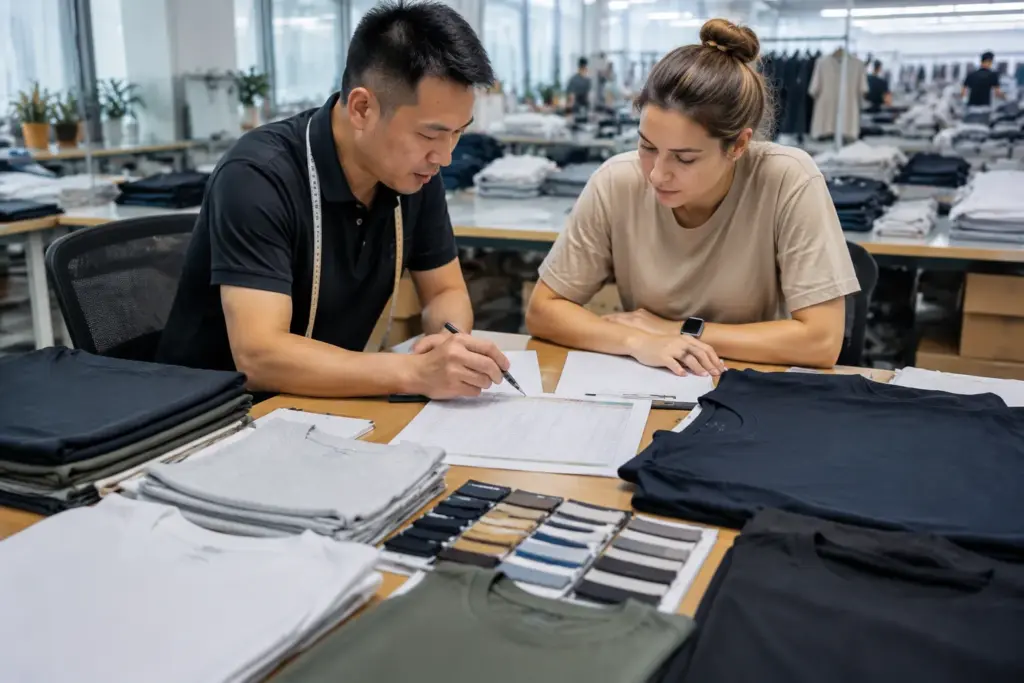
Fabrieksweergave
Als kopers een offerte aanvragen, kijk ik naar meer dan alleen het T-shirtontwerp.
Belangrijke kostenfactoren zijn onder meer:
- Stofsoort
- Stofgewicht
- Bestelhoeveelheid
- Aantal kleuren
- Afdrukmethode
- Naaidetails
- Etiketten en verpakkingen
- Kwaliteitseisen
De minimale bestelhoeveelheid (MOQ) heeft ook invloed op de prijs. Grotere bestellingen stellen fabrieken doorgaans in staat om de materiaalinkoop en de productie-efficiëntie beter te beheersen. Kleine bestellingen kunnen hogere eenheidskosten hebben, omdat de instelkosten over minder stuks verdeeld zijn.
Bij T-shirts onder eigen label moeten kopers ook rekening houden met ontwikkelingskosten zoals proefexemplaren, labels op maat en speciale verpakkingen.
Kopersrisico
Veel kopers vergelijken alleen de prijs per stuk. Dit kan later problemen opleveren.
Een zeer lage prijs kan betekenen:
- Lagere stofkwaliteit
- Beperkte aanpassingsmogelijkheden
- Zwakke kwaliteitscontrole
- Langere correctietijd
- Slechte communicatie
Ik heb gezien dat kopers leveranciers uitsluitend op basis van de prijs kiezen en later meer geld uitgeven omdat de producten niet aan hun marktverwachtingen voldoen.
Praktische controle
| Wat te controleren | Waarom het belangrijk is | Wat ik voorstel |
|---|---|---|
| Volledige offerte | Vermijd verborgen kosten. | Vraag naar gedetailleerde prijsinformatie. |
| Minimale bestelhoeveelheid (MOQ) | Beïnvloedt investeringen | Stem de hoeveelheid af op de bedrijfsfase. |
| Kosten voor een voorbeeld | Toont het ontwikkelingsproces | Bevestig voordat u begint. |
| Verzendvoorwaarden | Heeft invloed op de uiteindelijke kosten. | Bespreek de logistiek vroegtijdig. |
Duik dieper
Het kiezen van een leverancier voor gepersonaliseerde T-shirts is niet alleen een aankoopbeslissing, maar ook een zakelijke beslissing. Kopers moeten overwegen of de leverancier toekomstige groei kan ondersteunen.
Een klein merk begint misschien met één T-shirtmodel, maar heeft later behoefte aan meer kleuren, nieuwe ontwerpen, jassen, hoodies of andere kledingcategorieën. Een fabriek die verstand heeft van ontwikkeling en productie kan een partner voor de lange termijn worden.
Mijn suggestie is om leveranciers te vergelijken op basis van de kwaliteit van de communicatie, de productkennis en de kwaliteitscontrole, en niet alleen op basis van de prijs.
Een serieuze kledingleverancier moet de reden achter de offerte toelichten. Als de prijs hoger is, moet de leverancier uitleggen of dit komt door betere stof, een stevigere constructie, een gedetailleerdere kwaliteitscontrole of meer maatwerk.
Wat moet je voorbereiden voordat je contact opneemt met een Chinese kledingfabriek?
Een duidelijke aanvraag helpt de fabriek een nauwkeurigere prijsopgave, levertijd en productieplanning te geven.
| Informatie ter voorbereiding | Voorbeeld | Waarom de fabriek het nodig heeft |
|---|---|---|
| Productcategorie | T-shirt op maat | Inzicht in de productievereisten |
| Referentiefoto's of technisch pakket | Vergelijkbare stijlen of tekeningen | Bevestig de ontwerprichting |
| Stof | 100% katoen, 240 g/m² | Bereken de materiaalkosten |
| Maatbereik | S-XXL | Patroon en maatvoering voorbereiden |
| Aantal per stijl/kleur | 500 stuks per kleur | Productieplan schatten |
| Doelgroep | VS, Europa, Australië | Stel geschikte normen voor. |
| Kwaliteitsniveau | Basis of premium | Match productiemethode |
| Verpakking | Plastic zak, karton, labels | Bereken de uiteindelijke kosten |
| Etikettering | Merklabels en wasvoorschriften | Bereid de aanpassing voor |
| Leveringstermijn | Vereiste verzenddatum | Productieplanning |
| Certificaten | Vereiste marktdocumenten | Controleer de haalbaarheid |
| Richtprijs | Verwachte kostenrange | Stel geschikte opties voor. |
Een duidelijke aanvraag helpt de fabriek een nauwkeurigere prijsopgave, levertijd en productieplanning te geven.
Wanneer moet je Truekung om een offerte vragen?
Als u al een productidee, referentiemonsters, merkeisen of een groothandelsplan heeft, is dit een goed moment om contact op te nemen met Truekung.
Truekung ondersteunt kopers die behoefte hebben aan OEM/ODM-kledingproductie, modeartikelen onder eigen label, stabiele exportcommunicatie en praktische fabrieksmatige ondersteuning.
U kunt contact met mij opnemen via:
Conclusie
Leren hoe je een t-shirt op maat maakt, helpt kopers de kwaliteit, kosten en levertijd te beheersen. Met een goede voorbereiding en communicatie met de fabriek kan jouw t-shirtidee een betrouwbaar product voor jouw markt worden.
Weergaven: 132