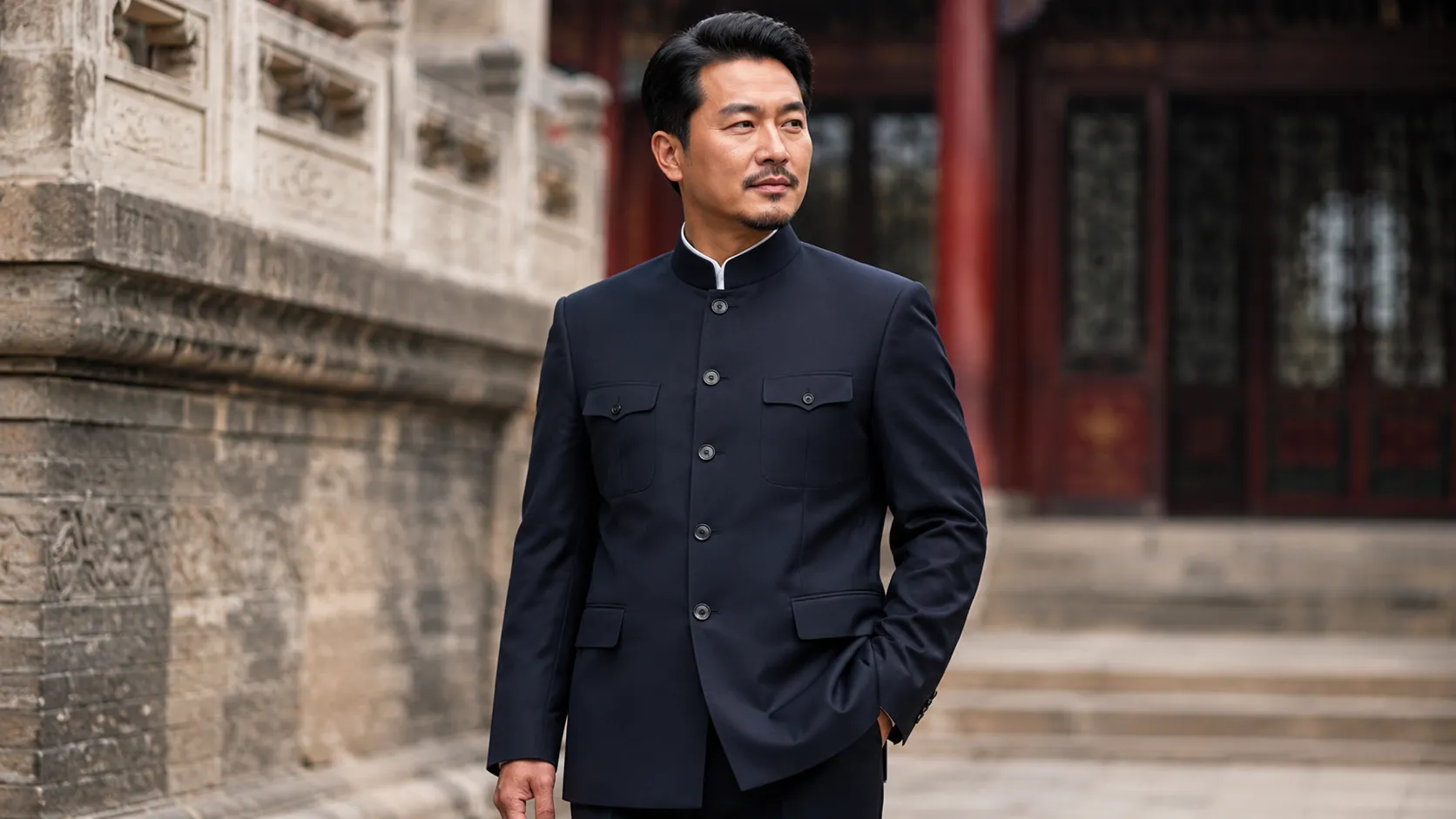
I keep seeing buyers confuse this ジャケット with random “Asian style suits,” and that leads to wrong samples, wasted time, and missed seasons.
A Mao スーツ is a Chinese tunic suit with a stand collar and a clean, straight shape. Many people also call it a Zhongshan suit, and it is often linked with Chairman Mao’s outfit in modern history.

I remember the first time a buyer wrote “mao jacket for sale” and sent me a blurry photo with no ファブリック notes. I asked one simple question: “Do you want a Zhongshan suit cut, or do you want a modern mao collar suit look?” The answer changed everything. If you keep reading, I will show you the parts that matter, so you can name the product clearly and source it with less risk.
Is a Mao suit the same as a Zhongshan suit?
People mix these names, and I see it in emails every week, so I treat the names as a sourcing problem, not a history quiz.
A Mao suit is often the Zhongshan suit, but the label changes by country, by era, and by how the customer talks about Chairman Mao suits.
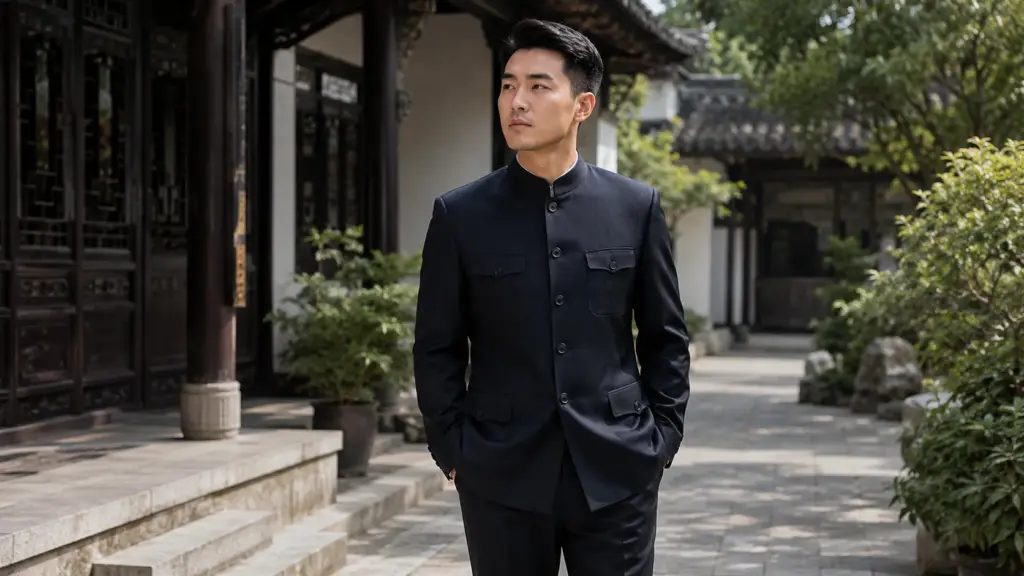
What I mean when I say “Zhongshan suit”
I usually start with the term zhongshan suit because it points to the garment type, not only the political image. I tell buyers that many Western shoppers say mao suit または maosuit, but many Chinese factories and pattern teams still say Zhongshan suits または Sun Yat Sen jacket. I have also seen buyers write “chairman mao suit” when they really mean a clean chinese tunic suit for ceremonies.
What I mean when I say “Mao suit”
私は~を使っています mao suits as a market label. It often means the same base item, but it can also mean a stricter, uniform look. Some customers want a mao uniform feel with heavier fabric and sharper lines. Some want a softer mandarin style suit that looks modern and easy.
| Term buyers use | What I ask them to confirm | What changes in production |
|---|---|---|
| zhongshan suit | pocket count, front closure, collar height | pattern and pocket placement |
| mao jacket / mao tunic | lining, shoulder shape, sleeve width | structure and comfort |
| chairman mao outfit | color, buttons, badge-free design | trims and finishing |
When I keep the names clear, I avoid sending the wrong “communist suit” style to a buyer who only wanted a simple asian style suit with a stand collar.
What makes a Mao jacket different from a mandarin-style suit?
I see buyers pick the right collar, then miss the whole silhouette, so the sample looks like a random blazer with a collar mao.
A Mao jacket is about a straight, balanced body and utility details, not only a stand collar, so I always check pockets, placket, and shoulder lines.
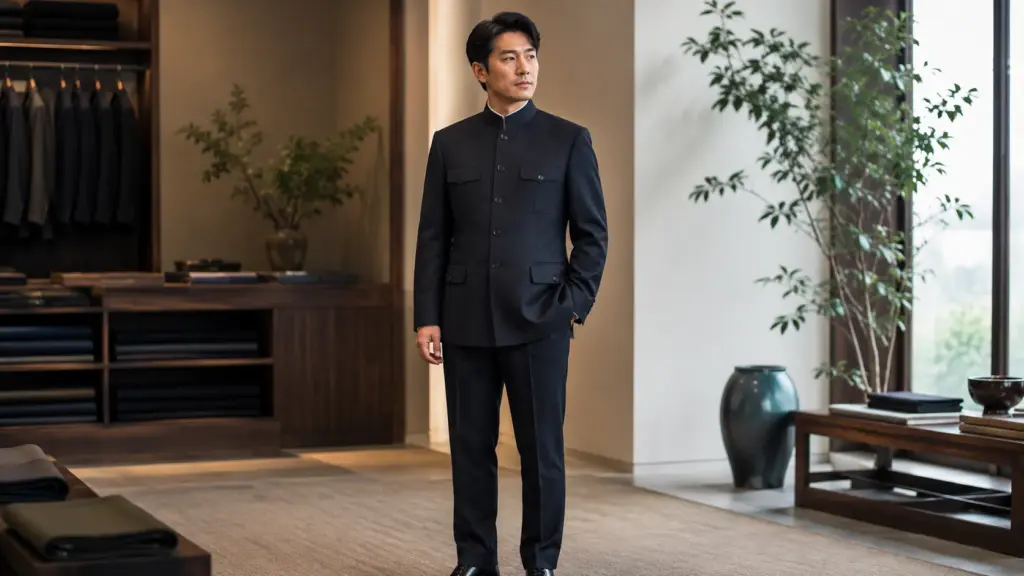
Collar and front: where most mistakes happen
I tell my team to treat the collar mao as a system. The collar height, collar curve, and collar stand stiffness must match the fabric. A thin fabric with a stiff collar will look cheap. A thick wool with a soft collar will collapse. I also check the front closure. Many classic versions use a clean button line with minimal topstitching.
Pockets and proportions: the “tunic” part
A lot of buyers forget the “tunic” in mao tunic. The jacket often uses symmetrical pockets, often four, and they sit higher than on a blazer. The length is also different. It tends to cover more hip, and it sits straighter on the body.
Fabric and structure: what I choose for different markets
When Maria-type buyers from Russia ask for sharp lines, I suggest fabrics that hold shape. When a brand wants everyday wear, I suggest softer blends.
| スタイル目標 | Typical fabric choice I suggest | 購入者と共有するメモ |
|---|---|---|
| mao uniform look | wool blend, heavier cotton twill | add light padding, stable collar |
| modern mao collar suit | ponte, mid-weight suiting | softer shoulder, easier movement |
| mao coat version | melton, woolen, padded shell | check weight, lining, warmth |
This is why I do not treat “mao coat” and “mao jacket” as the same, even if the collar looks similar.
How do I choose a Mao suit for sale without getting the quality wrong?
I have seen buyers lose a whole season because a supplier shipped the right look but the wrong build, and the returns destroyed their margin.
I reduce risk by checking measurements, fabric stability, and proof of trims, and I treat certification and QC as part of the product, not paperwork.
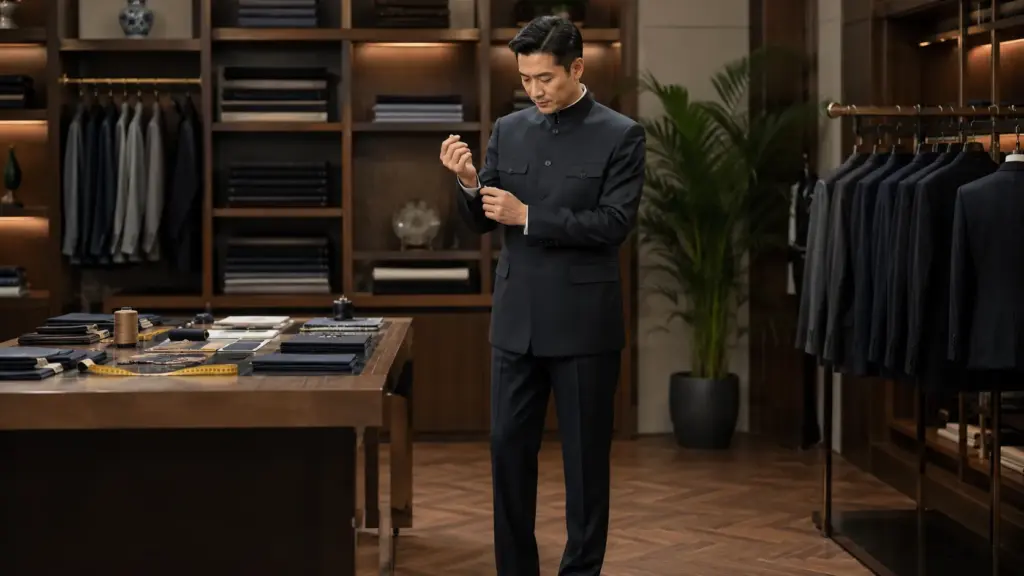
I start with a clear tech pack, not a keyword list
Keywords like mao suit for sale または mao jacket for sale help you find listings, but they do not protect you in production. I ask for a reference photo, then I lock these items: collar height, body length, chest ease, sleeve width, and pocket size. I also confirm whether the buyer wants a full set, like mao suits with matching pants, or only the jacket.
I focus on what the customer touches and what fails first. I check button strength, button spacing, and seam strength. I check lining shrinkage and fusing bubbling. I also check how the collar sits after steaming.
I build a QC plan that matches the sales channel
If a buyer sells premium uniforms, I tighten tolerance. If a buyer sells casual fashion, I keep it strict but practical.
| リスクエリア | 私がチェックするもの | How I prevent issues |
|---|---|---|
| collar shape | stand stiffness, edge roll | correct interfacing, steam test |
| pocket symmetry | left-right match, flap angle | template control, inline checks |
| color matching | dye lot, thread match | lab dip approval, bulk shade band |
| certificates | authenticity, scope, dates | verify originals, keep trace files |
I say this clearly because I know the pain point: some suppliers forge certificates. I protect my buyers by keeping traceable records and by sharing photos of labels, cartons, and inspection steps.
Can I modernize a Chairman Mao suit for brands, uniforms, or wholesale?
I often hear buyers say they want the Chairman Mao jacket look, but they also want modern comfort, so I treat it like a design update, not a copy.
I modernize the Mao suit by keeping the signature lines and updating fit, fabric, and finishing, so the result works for real customers and real seasons.
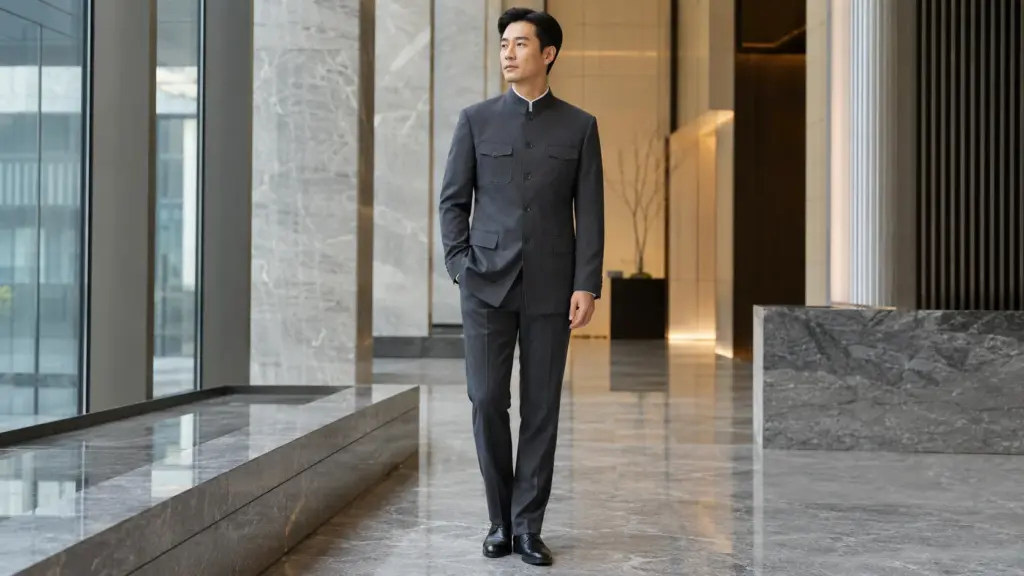
I keep the signature, then adjust fit for today
I keep the stand collar, the clean front, and the balanced pockets if the buyer wants the classic feel. Then I adjust shoulder slope, sleeve pitch, and body ease. Many customers want to sit, drive, and work in it. A stiff old pattern will fail in daily wear.
I offer options that keep the “communist chinese clothing” vibe without the costume feel
Some markets search “chinese communist outfit” and expect a costume. Some markets want a real garment that looks respectful and premium. I guide the buyer to choose the right path, so the listing is honest.
I connect the design to production reality in my factory
Because I run B2B wholesale, I think in bulk. I plan fabric lead time, lining stock, and button supply. I also plan packing, because creasing can ruin the collar look during shipping.
| Modern request | Pattern or material change I use | Buyer benefit |
|---|---|---|
| softer feel | stretch suiting, softer fusing | comfort and fewer returns |
| sharper look | stable twill, stronger collar stand | better photos and reviews |
| budget control | simpler pocket build, standard buttons | stable cost for wholesale |
| ブランドアイデンティティ | custom label, custom buttons | clear differentiation |
When I do OEM/ODM, I also help brands avoid sensitive marketing mistakes. I tell them to describe it as a chinese tunic suit または zhongshan suit if they want a neutral fashion tone, and to use “Mao jacket” only if that is the real search intent and the buyer accepts it.
結論
I define the Mao suit as a Chinese tunic suit with a stand collar and straight lines, and I source it well by naming details, not only keywords.
私がこれを書く理由
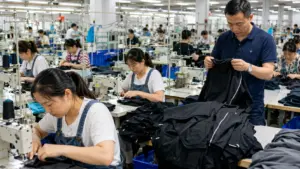
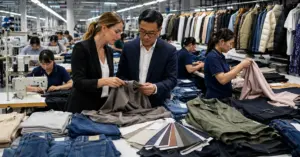
I am Lancy Chia from Truekung in China. I run a B2B wholesale clothing factory with over 200 workers, and I support OEM/ODM for brands and supermarkets worldwide. I produce fashion women’s clothing, jackets, skirts, dresses, jeans, T-shirts, sweatshirts, down jackets, windbreakers, coats, bags, sportswear, children’s clothing, and underwear. If you want to develop Zhongshan suits, Mao jackets, or modern mao collar suits with stable quality and clear QC, you can reach me at [email protected] or visit https://truekung.com.
ビュー33