
Titolo SEO: Confezioni per la moda Guida per Marche di abbigliamento: Materiali, costi, sostenibilità e Spedizione
Meta Description: Scopri come i marchi di abbigliamento dovrebbero scegliere il packaging per la moda, inclusi sacchetti per indumenti, buste per spedizioni, scatole, cartellini, sostenibile materiali, protezione della spedizione, quantità minima d'ordine (MOQ), costi e consigli dei fornitori.
Parola chiave principale: confezioni per la moda
Parole chiave secondarie: Confezionamento abbigliamento, confezionamento capi, confezionamento moda sostenibile, confezionamento indumenti, confezionamento abbigliamento personalizzato
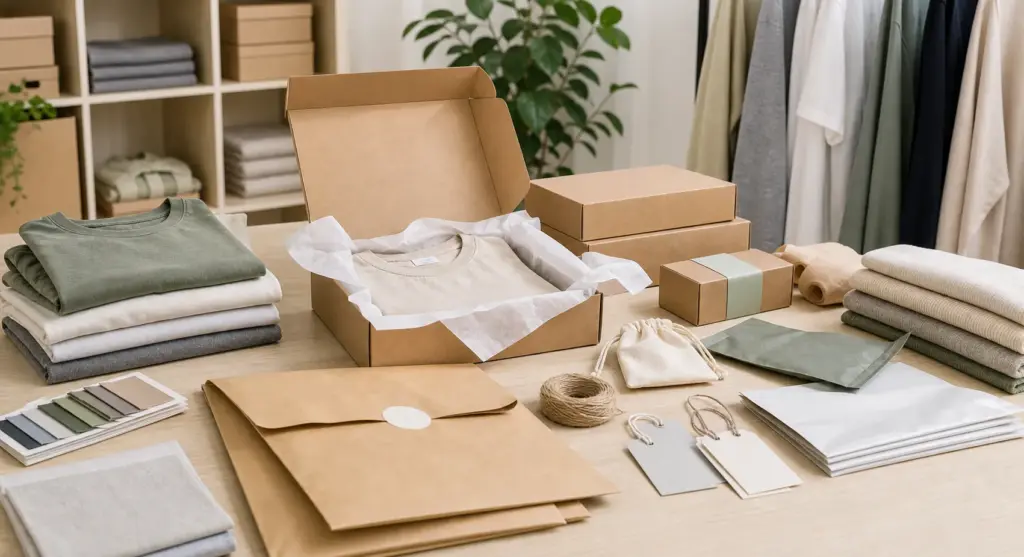
Il packaging per i prodotti di moda non è più solo la fase finale prima della spedizione.
Per i marchi di abbigliamento, l'imballaggio influisce sulla protezione del prodotto, sull'esperienza del cliente, sulla percezione del marchio, sui costi di spedizione, sulle dichiarazioni di sostenibilità e persino sui tassi di reso. Un capo bellissimo può comunque deludere il cliente se arriva stropicciato, danneggiato, piegato male o imballato in modo approssimativo.
Ma un buon packaging per la moda non significa necessariamente un packaging costoso.
La confezione migliore è quella che si adatta al tipo di capo d'abbigliamento, al canale di vendita, al cliente target, al budget, al metodo di spedizione e al posizionamento del marchio.
Questa guida spiega come gli acquirenti del settore moda e i marchi di abbigliamento dovrebbero scegliere il packaging per la produzione di capi d'abbigliamento, soprattutto quando collaborano con un produttore OEM, ODM o con un produttore di abbigliamento a marchio privato.
Che cos'è il packaging per la moda?
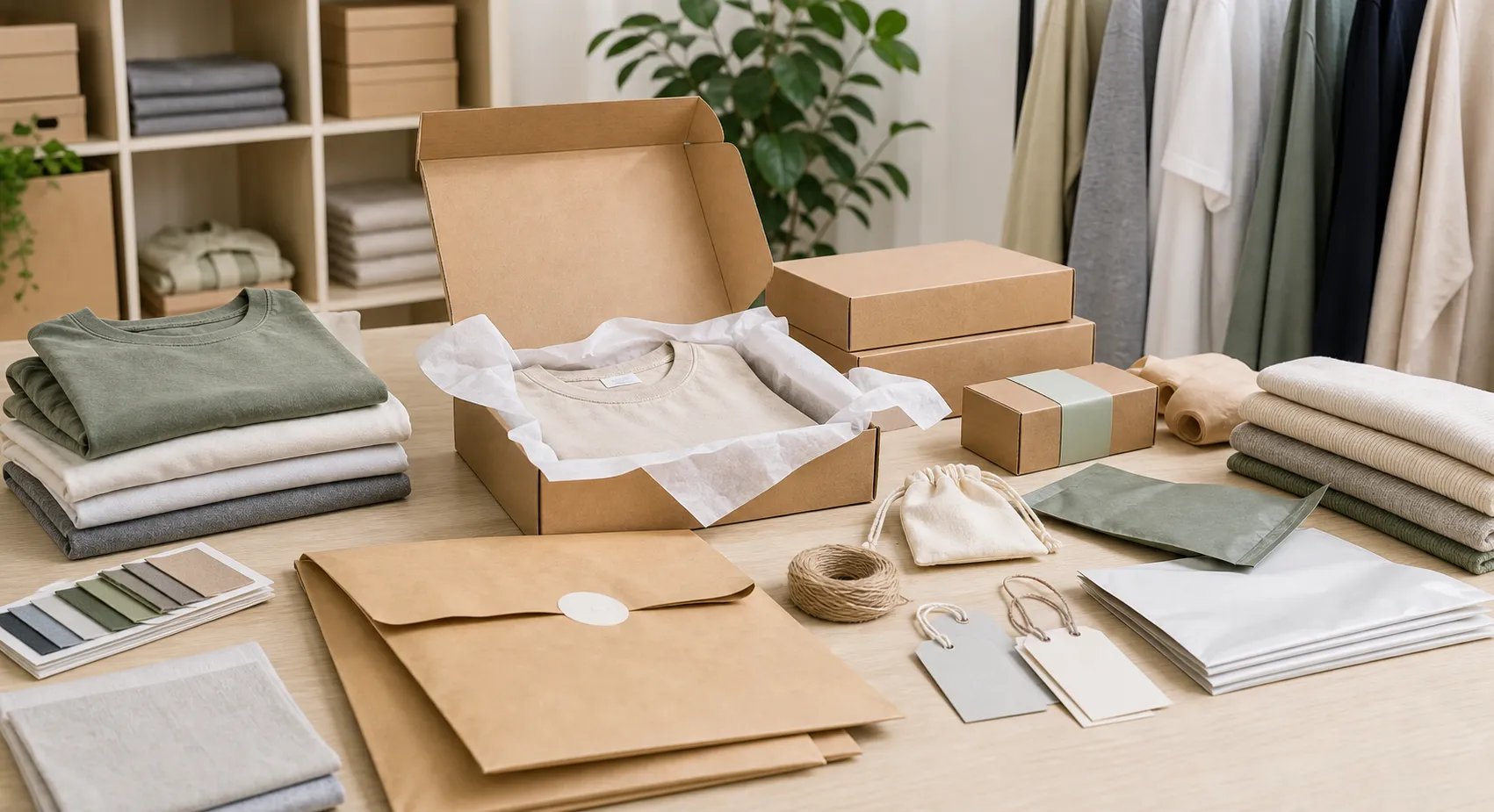
Il packaging per la moda si riferisce ai materiali e ai metodi utilizzati per proteggere, presentare, etichettare, conservare e spedire i prodotti di abbigliamento.
Può includere:
- Sacchetti interni per indumenti
- Carta velina
- Cartellini da appendere
- Etichette sul collo e etichette di cura
- Adesivi taglia
- tavole pieghevoli
- buste di carta
- Buste in polietilene
- Scatole rigide
- cartoni ondulati
- Sacchetti per la polvere
- Sacchetti riutilizzabili
- Etichette con codice a barre
- Etichette di spedizione
- Foglietti illustrativi
Per i marchi di moda online, il packaging rappresenta spesso la prima esperienza fisica con il marchio dopo l'acquisto. Per i marchi all'ingrosso e al dettaglio, il packaging influisce anche sulla movimentazione in magazzino, sull'esposizione, sulla scansione, sul controllo delle scorte e sulle spedizioni internazionali.
Perché il packaging è importante per i marchi di abbigliamento
Molti marchi emergenti si concentrano molto su tessuto, vestibilità, colore e design del logo, ma rimandano la progettazione del packaging alla fine. Questo può creare problemi.
L'imballaggio è importante perché ti aiuta a:
- Proteggere gli indumenti durante la spedizione
- Riduce le rughe e lo sporco
- Migliorare l'esperienza di unboxing
- Comunicare il posizionamento del marchio
- Supportare le operazioni di vendita al dettaglio o di e-commerce
- Organizza le informazioni relative a SKU, taglia e colore
- Ridurre i resi di prodotti danneggiati
- Migliorare il valore percepito
- Sostenere gli obiettivi di sostenibilità
- Soddisfare i requisiti del mercato, del magazzino o del rivenditore
Un capo di alta qualità confezionato in modo approssimativo può dare un'impressione di scarsa qualità. Un capo semplice, confezionato con cura, può invece apparire più professionale.
Parti dal capo d'abbigliamento, non dalla confezione.
Prima di scegliere l'imballaggio, è necessario definire il prodotto.
Una camicetta di seta, una felpa con cappuccio, un cappotto di lana, un completo da yoga, un capo di abbigliamento per bambini e un abito da sera non necessitano dello stesso imballaggio.
Prima di confermare l'imballaggio, poniti queste domande:
- Il capo è delicato o strutturato?
- Si sgualcisce facilmente?
- È pesante o leggero?
- Viene venduto online, all'ingrosso o al dettaglio?
- Deve essere appeso o piegato?
- È possibile la spedizione internazionale?
- Serve un'etichetta con codice a barre o SKU?
- Si tratta di un prodotto di alta gamma o di un articolo economico?
- Il cliente si aspetta imballaggi sostenibili?
- Il pacco deve resistere alle movimentazioni in magazzino?
La confezione deve valorizzare il capo d'abbigliamento. Non deve essere scelta solo perché ha un bell'aspetto in foto.
Tipologie comuni di imballaggi per la moda
1. Sacchetti porta abiti individuali
Le custodie per indumenti proteggono ogni capo da polvere, umidità, attrito e manipolazione durante la produzione e la spedizione.
Le opzioni più comuni includono:
- Sacchetti in polietilene trasparente
- Sacchetti di polietilene satinati
- Sacchetti biodegradabili
- Sacchetti compostabili
- Sacchetti di plastica riciclata
- Maniche di carta per indumenti
- Borse in tessuto riutilizzabili
Ideale per:
- Magliette
- Camicie
- Abiti
- Maglieria
- Pantaloni
- Abbigliamento sportivo
- Ordini all'ingrosso
- evasione degli ordini per l'e-commerce
Nota per l'acquirente: se il vostro marchio desidera ridurre l'uso della plastica, chiedete se materiali alternativi possono comunque proteggere il capo durante le spedizioni a lunga distanza.
2. Buste per spedizioni postali
Le buste per la spedizione postale sono spesso utilizzate per gli ordini di moda diretti al consumatore.
Le opzioni più comuni includono:
- Buste in polietilene
- Buste postali in polietilene riciclato
- Buste per spedizioni in carta Kraft
- Buste postali compostabili
- Buste imbottite
Ideale per:
- Abbigliamento leggero
- Ordini di e-commerce
- Magliette
- Ghette
- Abbigliamento da casa
- Piccoli accessori
Nota per l'acquirente: le buste di carta possono sembrare più ecologiche, ma potrebbero non proteggere adeguatamente i capi in caso di spedizione in condizioni di umidità, a meno che non siano progettate in modo specifico.
3. Scatole
Le scatole vengono utilizzate quando il prodotto necessita di una struttura più robusta o di una presentazione più elegante.
Le opzioni più comuni includono:
- Scatole di cartone kraft per spedizioni
- cartoni ondulati
- Scatole regalo rigide
- Scatole pieghevoli
- Cassettiere
- Scatole con chiusura magnetica
Ideale per:
- Abbigliamento di alta qualità
- Set regalo
- Maglieria
- Scarpe e accessori
- Scatole in abbonamento
- Pacchetti per influencer o PR
Nota per l'acquirente: le scatole migliorano la presentazione ma aumentano il volume e i costi di spedizione. Per i prodotti a basso margine, ciò può ridurre la redditività.
4. Carta velina e carta da regalo
La carta velina migliora la presentazione e protegge la superficie del capo.
Ideale per:
- Nozioni di base premium
- Abiti
- Camicette
- Lingerie
- Abbigliamento da resort
- Confezione regalo
Nota per l'acquirente: la carta velina personalizzata con stampa può avere un aspetto di alta qualità, ma per i marchi emergenti potrebbe essere sufficiente anche la carta velina semplice.
5. Cartellini e etichette
I cartellini, le etichette di manutenzione, le etichette delle taglie e le etichette con codice a barre fanno parte del sistema di confezionamento.
Aiutano a comunicare:
- Identità del marchio
- Misurare
- Composizione del tessuto
- Istruzioni per la cura
- SKU
- Prezzo
- Codice a barre
- Affermazione di sostenibilità
- Storia del prodotto
Nota per l'acquirente: Verificare sempre le informazioni sull'etichetta prima della produzione in serie. Etichette di manutenzione o di composizione errate possono causare problemi di conformità e di assistenza clienti.
6. Sacchetti antipolvere e custodie riutilizzabili
Le borse riutilizzabili sono spesso utilizzate per articoli di pregio o delicati.
Ideale per:
- Abbigliamento di lusso
- Indumenti di seta
- Maglieria
- Accessori
- Abbigliamento da viaggio
- Costumi da bagno
- Set regalo
Nota per l'acquirente: gli imballaggi riutilizzabili possono rafforzare il valore del marchio, ma aumentano anche i costi e il quantitativo minimo d'ordine (MOQ).
Confronto degli imballaggi per gli acquirenti di abbigliamento
| Tipo di imballaggio | Ideale per | Vantaggi | Vigilanti |
|---|---|---|---|
| Sacchetto di polietilene trasparente | Commercio all'ingrosso, magazzino, abbigliamento di base | Basso costo, pratico, facile da scansionare | Preoccupazione per la plastica, meno pregiata |
| Sacchetto in polietilene riciclato | Commercio elettronico e all'ingrosso | Un'opzione in plastica più responsabile | È ancora plastica, l'affermazione deve essere accurata |
| busta di carta kraft | Ordini di abbigliamento DTC | Aspetto naturale, buona percezione del marchio | Protezione dall'umidità inferiore |
| Busta compostabile | Marchi focalizzati sulla sostenibilità | Un forte messaggio ecologico. | Costo, durata di conservazione, dichiarazioni di certificazione |
| Scatola di cartone ondulato | Spedizione internazionale, ordini premium | Protezione forte | Maggiore volume di merci |
| Scatola regalo rigida | Lusso o regalo | Unboxing premium | Costoso, elevato ordine minimo |
| Carta velina | Livello di presentazione | Morbido, di alta qualità, leggero | Protezione limitata |
| Sacchetto antipolvere | Capi di alta qualità | Riutilizzabile, protettivo | Costo più elevato |
| Cartellino da appendere | Informazioni sul marchio e sul prodotto | Facile da personalizzare | Necessita di informazioni accurate |
Imballaggi sostenibili per la moda: a cosa devono prestare attenzione gli acquirenti
Gli imballaggi sostenibili sono importanti, ma possono facilmente generare confusione.
Molti materiali vengono commercializzati come "ecocompatibili", "biodegradabili", "riciclabili" o "compostabili". Queste parole suonano attraenti, ma gli acquirenti dovrebbero chiedersi cosa significhino realmente.
Prima di utilizzare le affermazioni sulla sostenibilità, verificare:
- Che materiale viene utilizzato?
- È riciclato, riciclabile, biodegradabile o compostabile?
- Esiste una certificazione?
- Il materiale necessita di compostaggio industriale?
- Il cliente è effettivamente in grado di smaltirlo correttamente?
- L'imballaggio protegge adeguatamente il capo d'abbigliamento?
- L'affermazione è corretta nel vostro mercato di vendita?
- L'imballaggio aumenta il rischio di danni o resi?
Un materiale di imballaggio non è veramente migliore se causa più danni ai prodotti, più resi o istruzioni di smaltimento poco chiare.
Per la maggior parte dei marchi di moda, un obiettivo pratico è:
Utilizzare la quantità minima di imballaggio necessaria, garantendo al contempo la protezione del capo e migliorando l'esperienza del cliente.
Imballaggi in plastica o in carta per l'abbigliamento
Molti marchi vogliono sostituire la plastica con la carta. Questa può essere una buona direzione, ma non è sempre semplice.
Imballaggi in plastica
Vantaggi:
- Leggero
- Resistente all'umidità
- Basso costo
- Trasparente per il controllo del magazzino
- Robusto, ideale per le spedizioni internazionali.
- Facile da etichettare con codici a barre
Svantaggi:
- Scarsa percezione da parte dei clienti
- Problema dei rifiuti di plastica
- Potrebbe non corrispondere al posizionamento premium o sostenibile
Imballaggio in carta
Vantaggi:
- Aspetto naturale
- Migliore percezione del marchio
- Una storia di sostenibilità più semplice
- Adatto a marchi di alta gamma e minimalisti
Svantaggi:
- Minore protezione dall'umidità
- Può strapparsi durante la spedizione
- Può aumentare il peso o il volume
- Potrebbero essere necessari strati protettivi aggiuntivi
Per le spedizioni internazionali di abbigliamento, molti marchi utilizzano ancora una busta protettiva interna e una scatola di cartone esterna. Se desideri ridurre l'uso della plastica, testa l'intero processo di spedizione prima di passare a questo metodo.
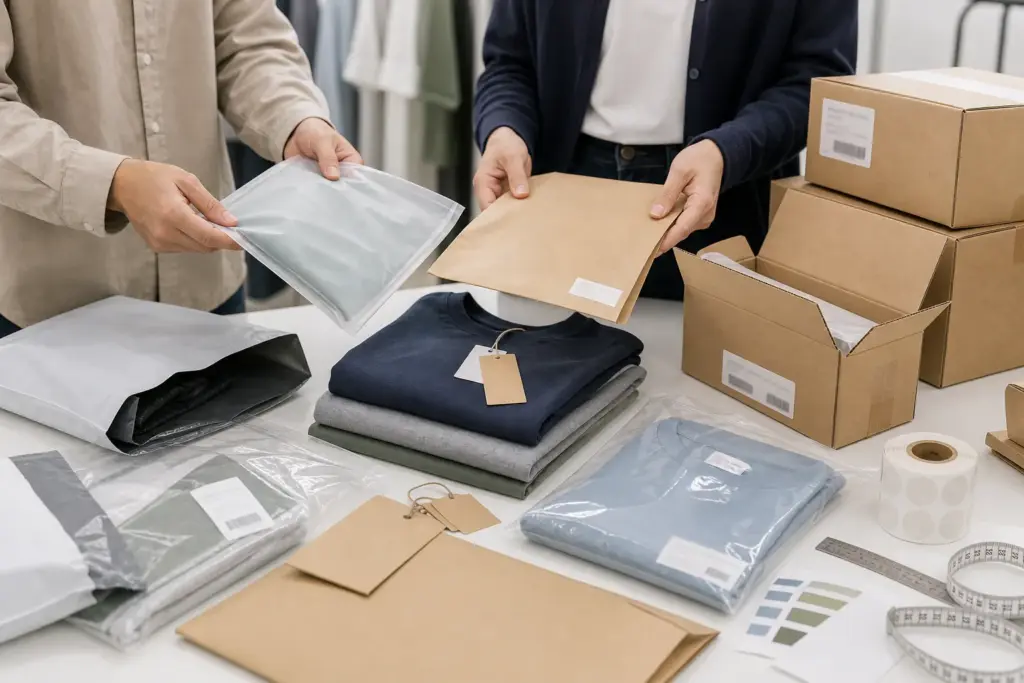
In che modo l'imballaggio influisce sui costi di spedizione?
L'imballaggio può incidere sui costi di spedizione più di quanto molti marchi si aspettino.
Il costo della spedizione è influenzato da:
- Peso del pacco
- Volume della confezione
- Dimensioni del cartone
- Numero di unità per cartone
- Spessore del materiale
- Strati di protezione
- Metodo di spedizione
- Paese di destinazione
- Requisiti del magazzino
Una scatola rigida può essere esteticamente gradevole, ma può anche aumentare il peso volumetrico. Un imballaggio più grande può ridurre il numero di unità per cartone, il che può rendere le spedizioni internazionali più costose.
Prima di approvare l'imballaggio, chiedete al produttore di fornire una stima:
- Dimensioni dell'unità di confezionamento
- Dimensioni del cartone
- Unità per cartone
- Peso lordo
- Peso netto
- Volume di spedizione
- Costo di imballaggio per unità
Questo è particolarmente importante per le startup, perché le decisioni relative al packaging possono influire direttamente sul margine di profitto.
Confezionamento per l'e-commerce, la vendita all'ingrosso e la vendita al dettaglio.
I diversi canali di vendita richiedono logiche di confezionamento differenti.
Imballaggi per l'e-commerce
Per gli ordini diretti al consumatore, l'imballaggio deve proteggere il capo e creare un'esperienza di unboxing positiva.
Dettagli importanti:
- Busta o scatola esterna
- Protezione per indumenti interni
- Imballaggio adatto al reso
- Inserire il marchio se necessario
- Etichetta con taglia e codice SKU
- Protezione dall'umidità
- Piegatura ordinata
Confezioni all'ingrosso
L'imballaggio all'ingrosso è solitamente più pratico.
Dettagli importanti:
- Etichettatura chiara di taglia/colore
- Etichetta con codice a barre
- Marchi di cartone
- Gestione semplificata del magazzino
- protezione degli indumenti
- Imballaggio efficiente in cartone
- Costo unitario inferiore
Confezioni per la vendita al dettaglio
Gli imballaggi destinati alla vendita al dettaglio potrebbero richiedere maggiori dettagli in termini di presentazione e conformità.
Dettagli importanti:
- Cartellini da appendere
- Etichette dei prezzi
- Etichette di cura
- Etichette di marca
- Adesivi taglia
- Imballaggio con grucce, se necessario
- Istruzioni di imballaggio specifiche per il rivenditore
Un marchio che vende attraverso più canali potrebbe aver bisogno di diverse versioni di confezionamento per lo stesso capo di abbigliamento.
Errori di packaging che i marchi di moda dovrebbero evitare
Errore 1: Scegliere il packaging troppo tardi
Il packaging dovrebbe essere discusso durante la fase di sviluppo del prodotto, non dopo la fine della produzione in serie. Decisioni prese in ritardo possono ritardare la spedizione e aumentare i costi.
Errore 2: Imballaggio eccessivo
Troppi strati possono aumentare i costi, gli sprechi e il volume di spedizione. Premium non significa sempre più imballaggio.
Errore 3: Utilizzare imballaggi inadeguati per le spedizioni internazionali
Se la confezione non è idonea al trasporto su lunghe distanze, il capo potrebbe arrivare danneggiato o sgualcito.
Errore 4: Fare affermazioni di sostenibilità senza prove
Non stampare affermazioni come "biodegradabile 100%" o "ecocompatibile" a meno che il materiale e la documentazione non le supportino.
Errore 5: Ignorare i requisiti del magazzino
I rivenditori, i marketplace e i centri di distribuzione potrebbero richiedere etichette con codice a barre, avvertenze sui sacchetti di plastica, etichette sui cartoni o metodi di imballaggio specifici.
Errore 6: Dimenticare i resi
Se la confezione è difficile da aprire o impossibile da riutilizzare, i resi diventano meno efficienti e meno piacevoli per il cliente.
Lista di controllo per gli acquirenti di imballaggi per la moda
Utilizzare questa lista di controllo prima di confermare l'imballaggio per la produzione in serie.
- Quale categoria di indumenti viene imballata?
- Il capo è piegato o appeso?
- Si sgualcisce facilmente?
- Ha bisogno di protezione dall'umidità?
- L'ordine è per l'e-commerce, all'ingrosso o al dettaglio?
- Qual è il costo unitario di imballaggio previsto?
- Qual è il quantitativo minimo d'ordine (MOQ) per gli imballaggi?
- È necessaria la stampa personalizzata?
- È necessaria l'etichettatura con codice a barre?
- Le etichette di manutenzione e i cartellini sono accurati?
- Le affermazioni sulla sostenibilità sono supportate da prove?
- L'imballaggio è stato testato per la spedizione?
- Qual è la dimensione della scatola?
- Quante unità possono essere contenute in una scatola?
- L'imballaggio incide sui costi di trasporto?
- La confezione è facile da aprire per i clienti?
- È idoneo al reso?
- Il campione definitivo dell'imballaggio è stato approvato?
Confezioni personalizzate: cosa si può personalizzare?
I marchi di moda possono personalizzare molti elementi del packaging.
Le opzioni di personalizzazione più comuni includono:
- Buste per spedizioni con logo stampato
- Scatole personalizzate in carta kraft
- Carta igienica di marca
- Cartellini da appendere
- Etichette di cura
- Etichette delle taglie
- Adesivi con codice a barre
- Biglietti di ringraziamento
- Sacchetti per la polvere
- Sacchetti con coulisse
- Nastro o adesivi di chiusura
- Marchi di cartone
Per le startup, di solito è meglio personalizzare prima gli elementi più visibili ed economici.
Ottimi punti di partenza:
- Cartellino da appendere
- Etichetta di cura
- Etichetta della taglia
- Semplice adesivo di marca
- Sacchetto interno pulito
- Scatola o busta semplice ma ordinata
All'inizio non serve un packaging di lusso. Serve un packaging dall'aspetto professionale, che protegga il capo e sia in linea con la fascia di prezzo.
Quantità minima d'ordine (MOQ) e considerazioni sui costi di imballaggio
Il quantitativo minimo d'ordine (MOQ) per gli imballaggi dipende dal materiale, dal metodo di stampa, dalle dimensioni, dal fornitore e dal livello di personalizzazione.
Generalmente:
- Gli imballaggi standard hanno un quantitativo minimo d'ordine (MOQ) inferiore e tempi di consegna più rapidi.
- Gli imballaggi personalizzati con stampa hanno un quantitativo minimo d'ordine (MOQ) più elevato.
- I materiali speciali potrebbero richiedere tempi di sviluppo più lunghi.
- Le scatole rigide sono generalmente più costose.
- Le diverse dimensioni degli imballaggi aumentano la complessità.
Prima di confermare l'imballaggio personalizzato, chiedi:
- Qual è il quantitativo minimo d'ordine (MOQ)?
- Qual è il costo del campione?
- Qual è il tempo di consegna?
- È possibile utilizzare prima gli imballaggi standard?
- Possiamo personalizzarlo con un adesivo o un cartellino?
- Qual è il costo unitario per diverse quantità?
- L'imballaggio verrà prodotto insieme ai capi di abbigliamento o separatamente?
Per i piccoli marchi, un sistema di confezionamento semplice è spesso preferibile a uno complicato.
Come pianificare l'imballaggio con il tuo produttore di abbigliamento
Un buon produttore di abbigliamento dovrebbe aiutarvi a collegare l'imballaggio alla produzione, al controllo qualità e alla spedizione.
Il processo in genere comprende:
- Confermare la categoria di abbigliamento e il canale di vendita.
- Scegliere la struttura di imballaggio di base.
- Verificare i requisiti relativi ad etichette e cartellini.
- Esamina le opzioni relative ai materiali.
- Verificare il quantitativo minimo d'ordine (MOQ) e il costo.
- Realizzare campioni di imballaggio.
- Verificare la piegatura e la vestibilità del capo.
- Confermare il metodo di imballaggio in cartone.
- Verifica la protezione della spedizione.
- Approvare l'imballaggio finale prima della spedizione in blocco.
L'imballaggio dovrebbe essere testato con il capo di abbigliamento vero e proprio, e non solo approvato come materiale separato.
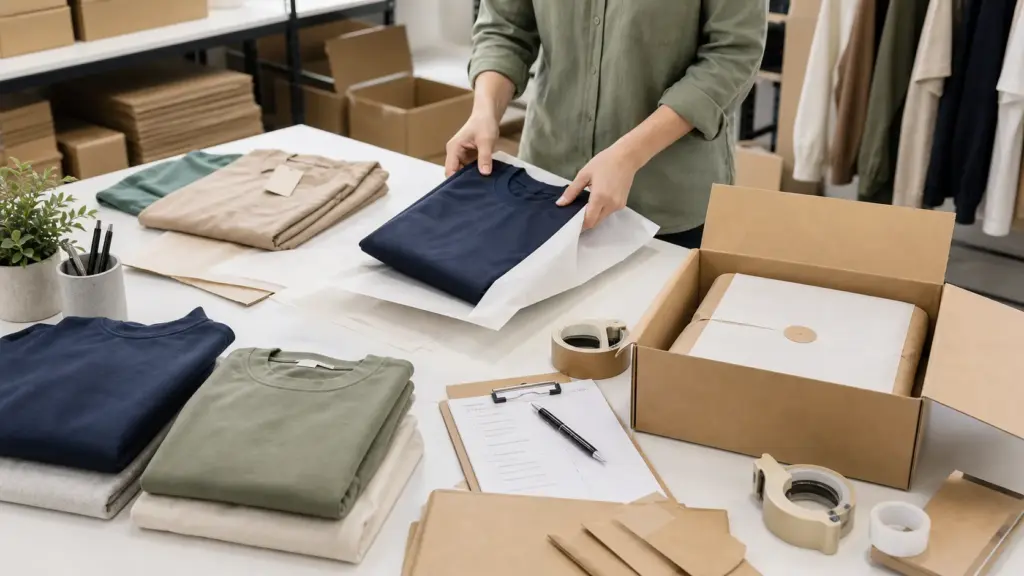
Come TrueKung aiuta i marchi con il packaging per l'abbigliamento
Per TrueKung, il packaging è parte integrante dell'intero processo di produzione dei capi di abbigliamento.
Possiamo aiutare i marchi di abbigliamento con:
- approvvigionamento di materiali di imballaggio
- Opzioni per la custodia porta abiti
- Buste e scatole
- Cartellini e etichette di manutenzione
- Etichette per le taglie ed etichette con codice a barre
- Metodo di piegatura
- Piano di imballaggio in cartone
- Recensione del packaging di esempio
- Controllo qualità prima della spedizione.
- Supporto per il confezionamento a marchio privato
- coordinamento delle spedizioni internazionali
Per i nuovi marchi, di solito consigliamo di iniziare con un packaging pratico: proteggere il capo, mantenere una presentazione pulita, controllare i costi e garantire un'esperienza cliente coerente.
Con la crescita del marchio, il packaging può diventare sempre più personalizzato.
Domande frequenti sul packaging per la moda
Che cos'è il packaging per la moda?
Il packaging per la moda è il sistema utilizzato per proteggere, presentare, etichettare, conservare e spedire i prodotti di abbigliamento. Può includere custodie per abiti, buste per spedizioni, scatole, carta velina, cartellini, etichette e cartoni per la spedizione.
Qual è il packaging migliore per i marchi di abbigliamento?
La confezione migliore dipende dal capo, dal canale di vendita, dal budget e dal metodo di spedizione. Le t-shirt potrebbero richiedere solo semplici buste protettive e imballaggi per la spedizione, mentre abiti pregiati o capi in maglia potrebbero necessitare di carta velina, scatole o sacchetti antipolvere.
Gli imballaggi sostenibili per la moda sono sempre la scelta migliore?
Non sempre. Un imballaggio sostenibile deve comunque proteggere il capo, essere adatto al metodo di spedizione e supportare dichiarazioni accurate. Un materiale che causa danni, resi o problemi di smaltimento potrebbe non essere la scelta migliore.
I marchi di abbigliamento dovrebbero utilizzare imballaggi in plastica o in carta?
La plastica offre un'ottima protezione dall'umidità e un costo contenuto. La carta conferisce un'immagine più naturale al marchio, ma potrebbe offrire una protezione inferiore in caso di spedizione in ambienti umidi. Molti marchi adottano un approccio equilibrato a seconda del prodotto e delle esigenze di spedizione.
Quanto costa un packaging personalizzato per l'abbigliamento?
Il costo dipende dal materiale, dalle dimensioni, dalla stampa, dal quantitativo minimo d'ordine (MOQ) e dalla complessità. Gli imballaggi standard sono più economici e veloci. Buste personalizzate, scatole rigide e sacchetti riutilizzabili solitamente costano di più.
Di che tipo di packaging hanno bisogno i marchi di abbigliamento emergenti?
I marchi emergenti dovrebbero generalmente iniziare con un packaging semplice e professionale: sacchetto per indumenti, cartellino, etichetta di manutenzione, etichetta della taglia, busta per la spedizione o scatola e un'etichettatura SKU chiara. Il packaging di lusso, più elaborato, può essere aggiunto in seguito.
L'imballaggio può influire sui costi di spedizione?
Sì. L'imballaggio influisce sul peso, sul volume, sulle dimensioni del cartone e sul numero di articoli per cartone. Imballaggi grandi o rigidi possono aumentare i costi di trasporto, soprattutto per le spedizioni internazionali.
Quando è opportuno pianificare il confezionamento?
La pianificazione dell'imballaggio dovrebbe essere effettuata durante la fase di sviluppo del prodotto, prima della conclusione della produzione in serie. Questo permette di avere tempo sufficiente per confermare etichette, materiali, imballaggio in cartone e requisiti di spedizione.
Quali informazioni dovrebbero essere incluse nelle etichette delle confezioni di abbigliamento?
A seconda del prodotto e del mercato, le etichette possono includere taglia, codice SKU, codice a barre, colore, composizione del tessuto, istruzioni per la cura, paese di origine e informazioni sul marchio. Verificare sempre i requisiti specifici del proprio mercato di vendita.
TrueKung può aiutarvi con il packaging personalizzato per il settore della moda?
Sì. TrueKung può supportare il confezionamento con etichetta personalizzata, cartellini, etichette di manutenzione, sacchetti per indumenti, scatole, campioni di imballaggio e preparazione per la spedizione nell'ambito della produzione di abbigliamento.
Conclusioni
Il packaging dei prodotti di moda non dovrebbe essere considerato solo un elemento decorativo.
Un buon imballaggio protegge il capo, valorizza il marchio, migliora l'esperienza del cliente, controlla i costi di spedizione e semplifica la gestione degli ordini. L'imballaggio migliore è prima di tutto pratico, poi esteticamente gradevole.
Per i marchi di abbigliamento, soprattutto per le startup, l'approccio più intelligente è quello di costruire il packaging passo dopo passo:
Iniziate con la protezione e un'etichettatura chiara.
Quindi migliora la presentazione.
Quindi aggiungi il tuo marchio personalizzato.
Successivamente, perfeziona la sostenibilità e l'esperienza del cliente man mano che il volume degli ordini aumenta.
Se stai sviluppando una collezione di abbigliamento e hai bisogno di aiuto nella scelta del packaging, TrueKung può assisterti nell'analisi del tipo di capo, del budget, del quantitativo minimo d'ordine (MOQ), dell'etichettatura, del metodo di spedizione e delle opzioni di imballaggio prima della produzione in serie.
Hai bisogno di aiuto con la produzione di abbigliamento e il packaging personalizzato? Contatta TrueKung per discutere del tuo progetto di abbigliamento, delle esigenze di imballaggio e del piano di spedizione.
Visualizzazioni: 212