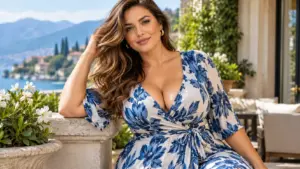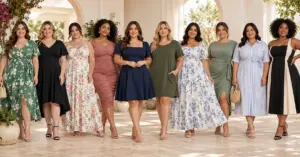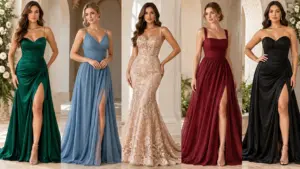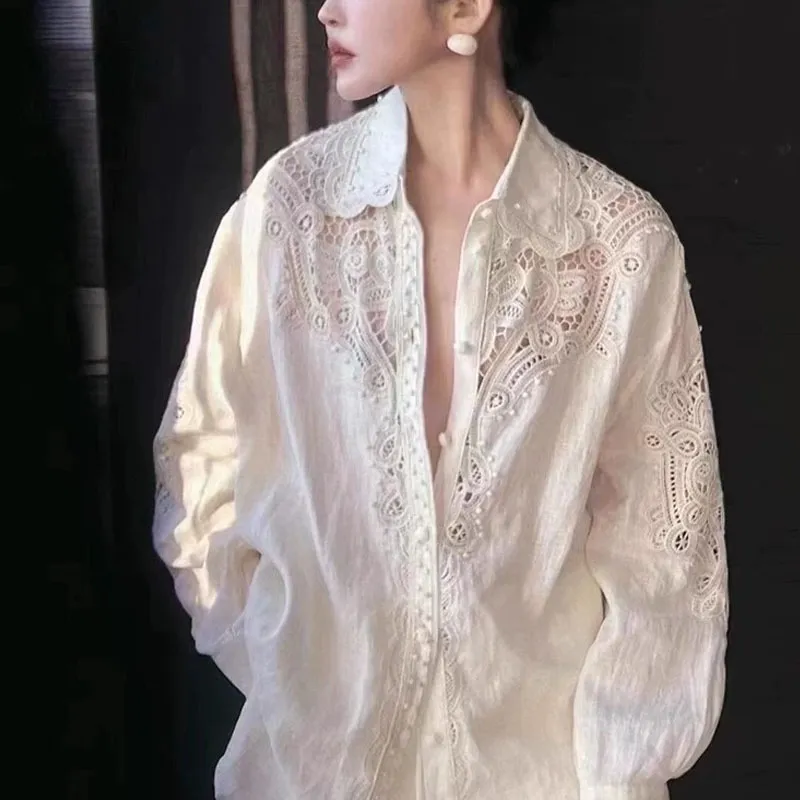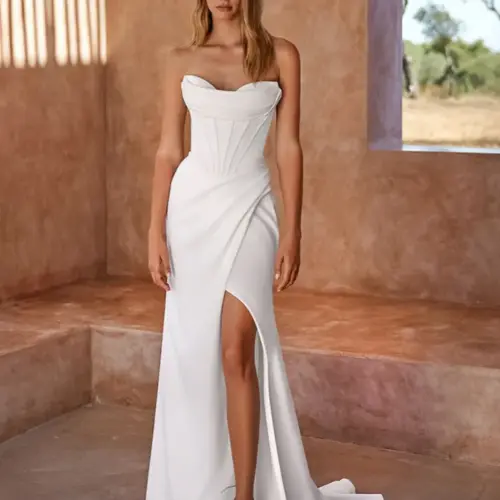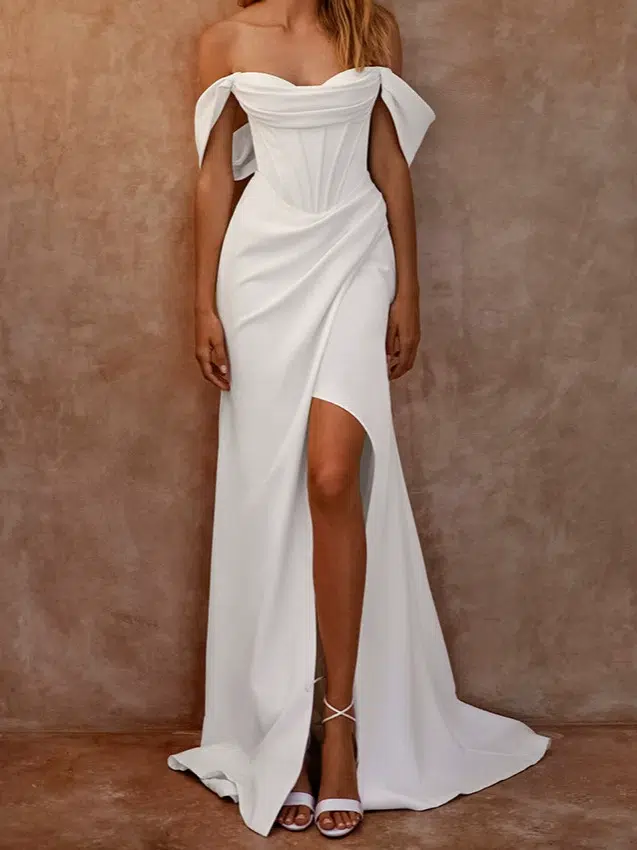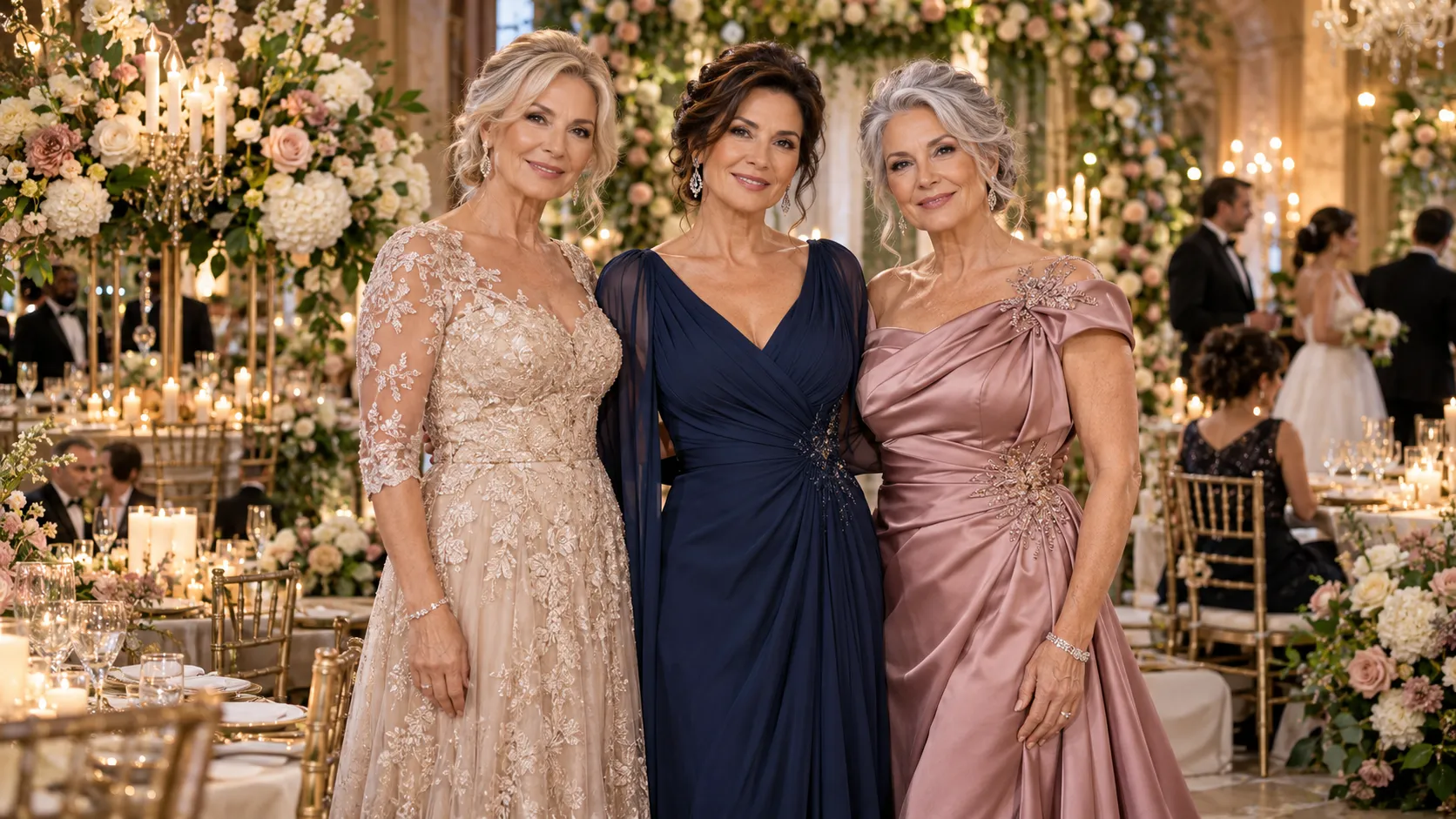

Choosing the perfect mother of the bride dress can feel overwhelming. Some gowns look outdated, while others sacrifice comfort for style. The ideal dress should complement the wedding, flatter the wearer, and offer the right balance of sophistication, personality, and comfort.
The most beautiful mother of the bride dresses combine flattering silhouettes, elegant fabrics, refined colors, and thoughtful details. Popular styles include lace evening gowns, flowing chiffon dresses, satin A-line designs, modern cape gowns, and glamorous embellished dresses. The best choice depends on the wedding’s dress code, season, venue, and personal preferences.
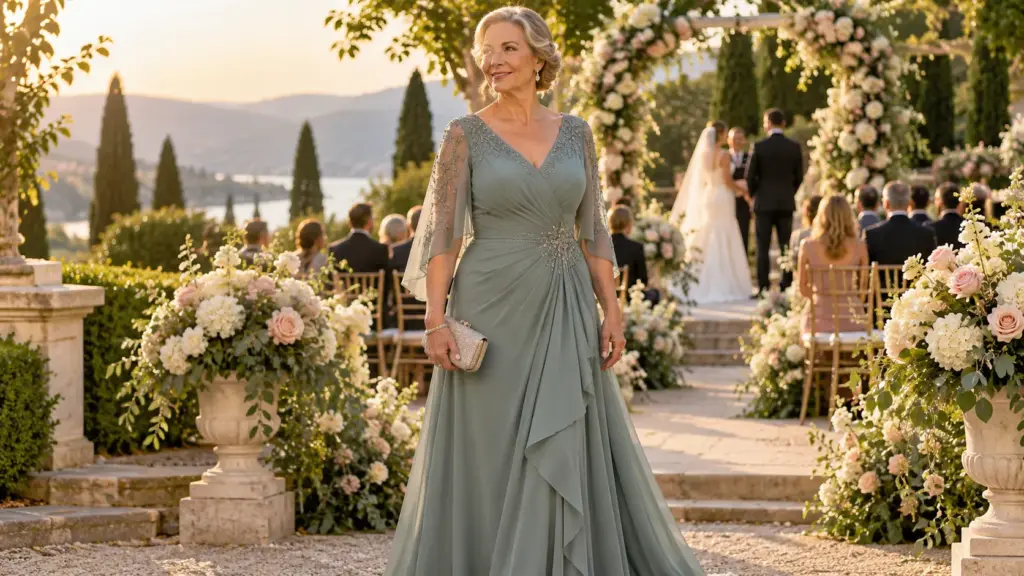
I am Lancy Chia from Truekung, a clothing manufacturer in China with 20 years of export experience and more than 200 workers. Our factory supports overseas fashion brands, wholesalers, and clothing buyers with OEM/ODM manufacturing, sample development, private label clothing, bulk production, and quality control.
From my experience in clothing manufacturing, I know that beautiful dresses require more than attractive designs. Fabric quality, pattern development, sewing construction, proper fitting, and finishing details all affect the final appearance.
Whether you are looking for inspiration for a wedding or developing a formalwear collection for your fashion business, understanding different dress styles can help you make better decisions.
Below, I will introduce 30 elegant mother of the bride dress ideas, explain what makes each style attractive, and share practical manufacturing considerations that clothing buyers should understand.
What Are the Most Elegant Mother of the Bride Dresses for a Timeless Look?
A classic gown should look sophisticated without feeling old-fashioned. However, choosing an elegant design can be difficult when so many fabrics, colors, and silhouettes are available.
Timeless mother of the bride dresses usually feature balanced proportions, flattering waistlines, beautiful draping, and refined materials. A-line gowns, lace dresses, chiffon styles, and satin evening dresses are particularly versatile because they can be adapted for different wedding settings and body shapes.
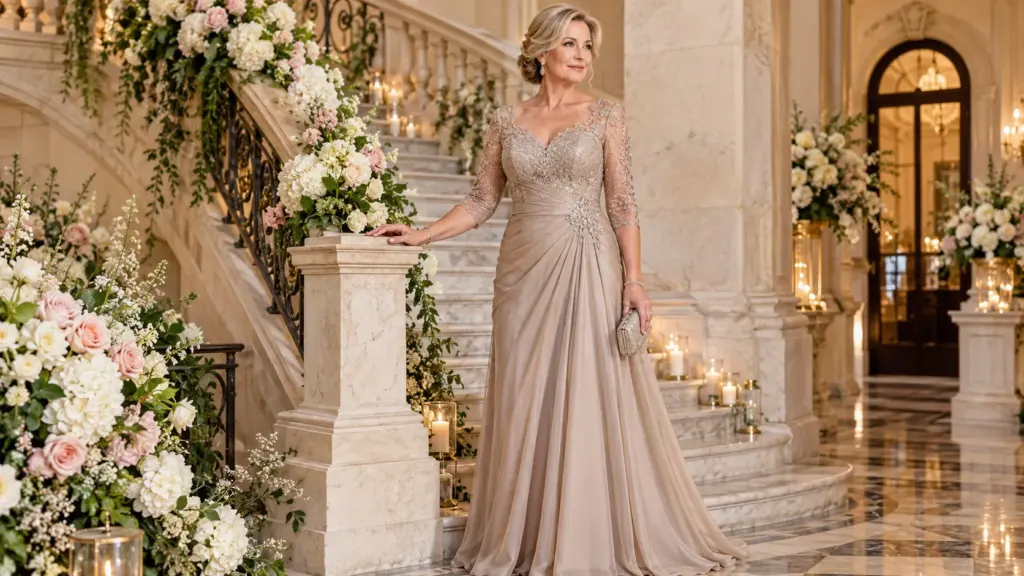
Ten Timeless Gowns That Never Feel Outdated
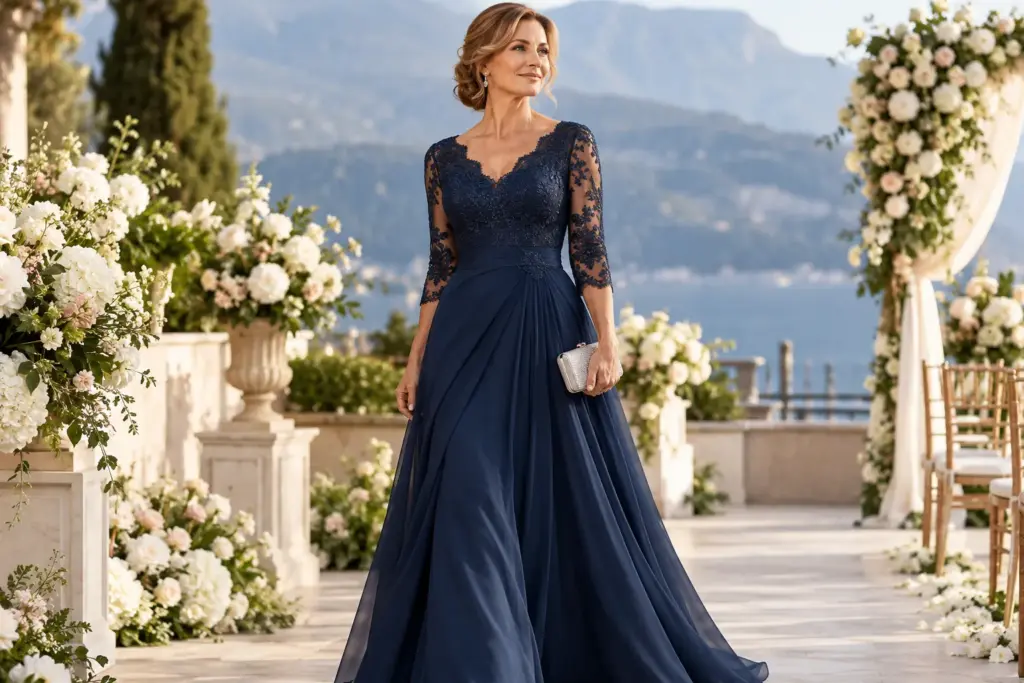
1. Classic Navy Blue A-Line Gown
A navy A-line gown is an elegant choice for formal and semi-formal weddings. Its fitted bodice and gently flared skirt create a balanced silhouette while allowing comfortable movement.
Navy blue also pairs beautifully with silver, champagne, and pearl accessories.
From a manufacturing perspective, I recommend checking the waist construction and skirt drape. These details determine whether the gown looks graceful or unnecessarily bulky.
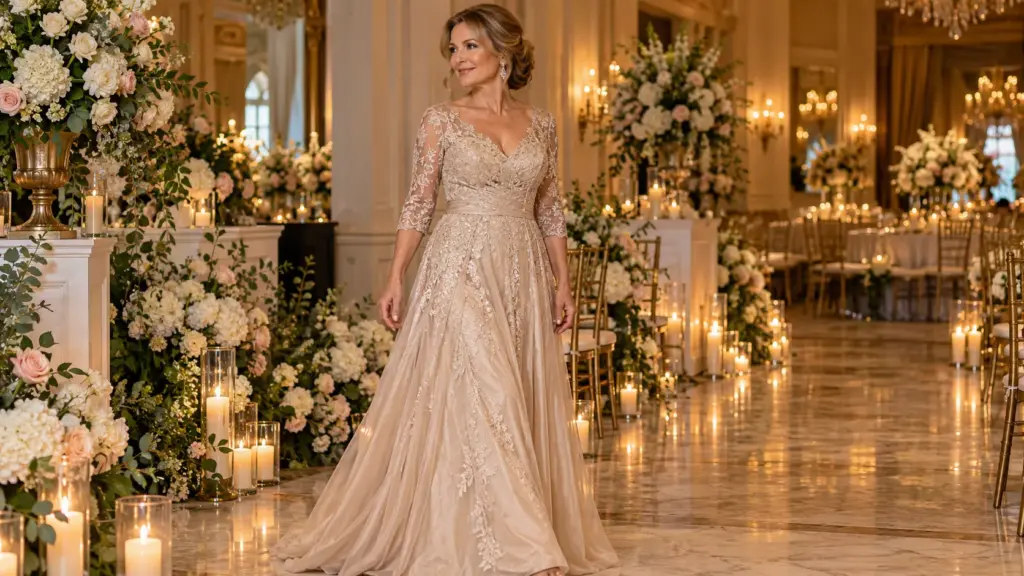
2. Champagne Lace Evening Gown
Champagne lace creates a soft, luxurious appearance without excessive decoration.
A fitted lace bodice combined with a flowing skirt works especially well for traditional indoor weddings.
The quality of the lace and the color of the lining are important. Poorly matched lining can make champagne fabric look too yellow, gray, or transparent.
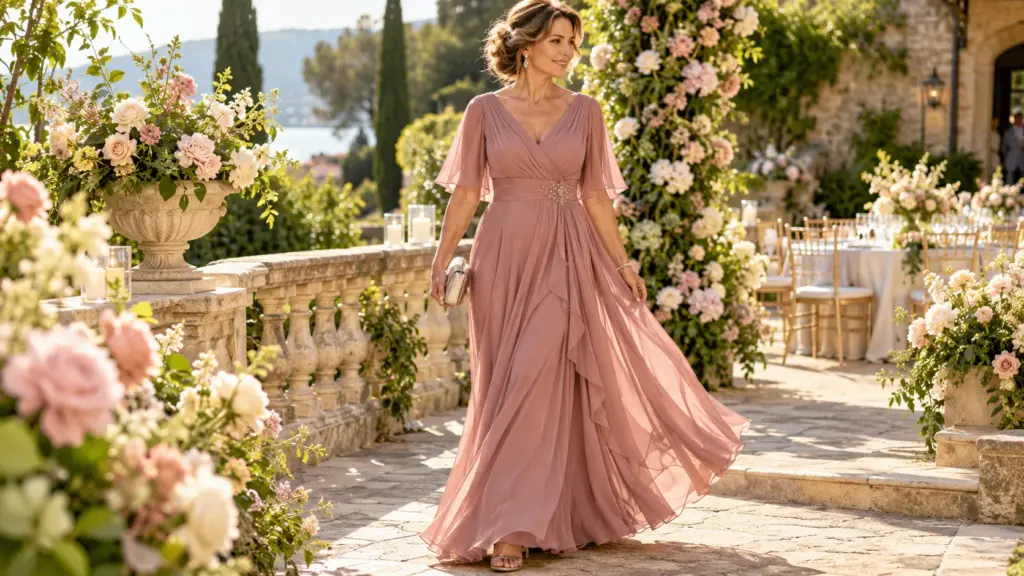
3. Dusty Rose Chiffon Maxi Dress
Dusty rose is a romantic color that complements many wedding palettes.
A flowing chiffon maxi dress with a softly gathered waist creates an elegant appearance for spring and summer celebrations.
Chiffon should have sufficient lining to provide coverage while maintaining its lightweight movement.
4. Emerald Green Satin Gown
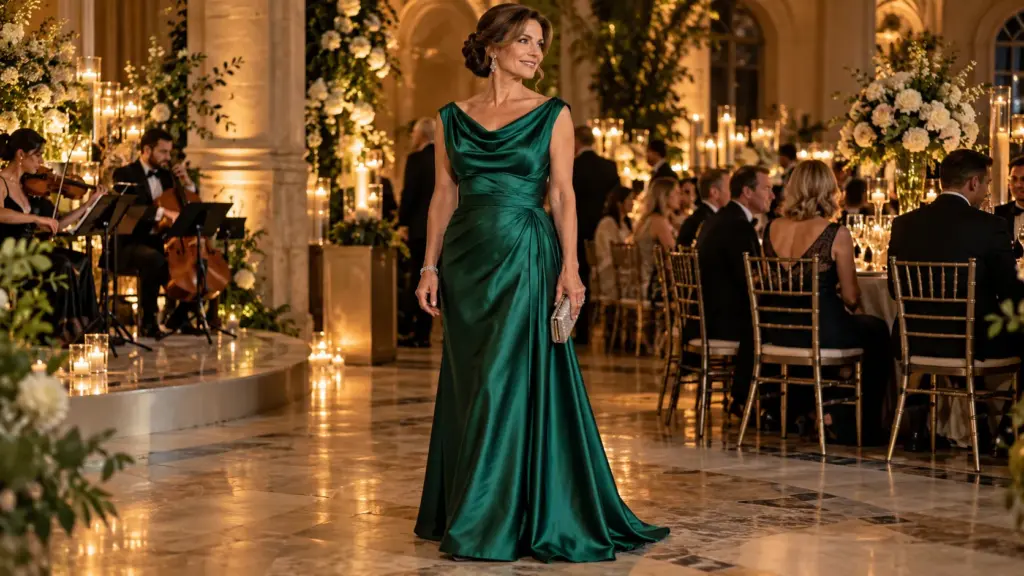
Emerald green is a sophisticated jewel tone that works beautifully for evening weddings.
A satin gown with a draped neckline or defined waist creates a polished silhouette without requiring elaborate embellishments.
Because satin reflects light, the quality of the sewing, pressing, and fabric surface becomes especially noticeable.
5. Long-Sleeve Lace Column Dress
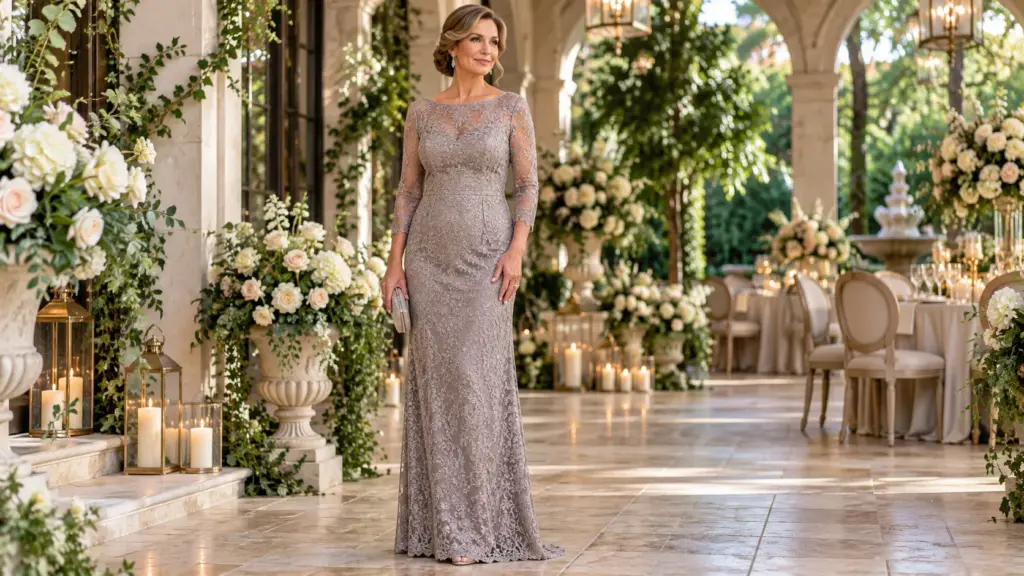
A long-sleeve lace gown is a good option for mothers who prefer additional coverage.
The straight silhouette creates a clean, elongated appearance, while sheer lace sleeves add visual interest.
Proper armhole measurements and sleeve construction are essential. Sleeves should allow the wearer to move comfortably throughout the wedding.
6. Silver Beaded Formal Gown
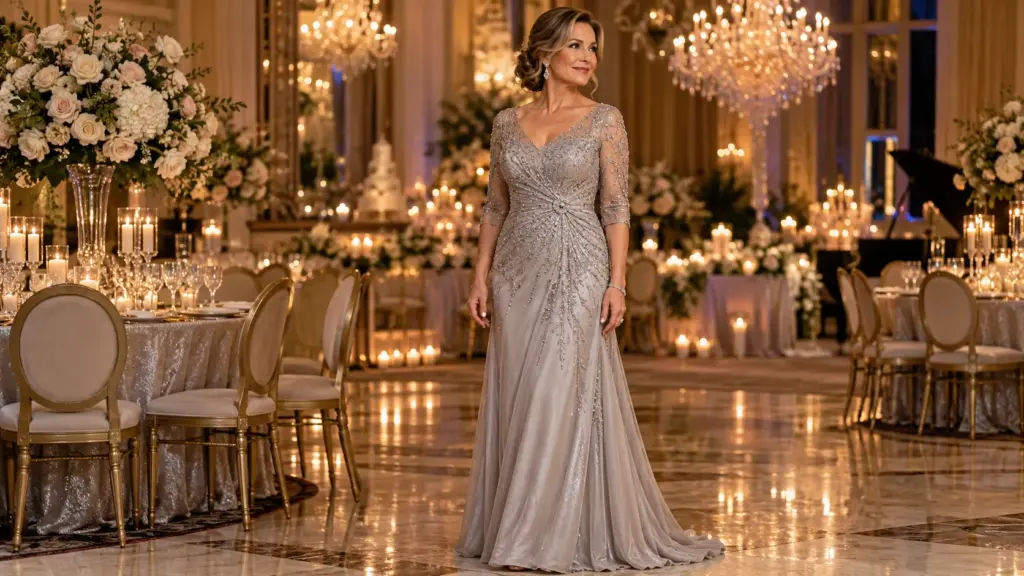
Silver mother of the bride gowns bring subtle glamour to formal celebrations.
Beaded details around the neckline, waist, or bodice can create a beautiful effect without overwhelming the design.
I suggest checking the strength of bead attachments and the weight of the finished garment. Excessive embellishment may make a dress uncomfortable.
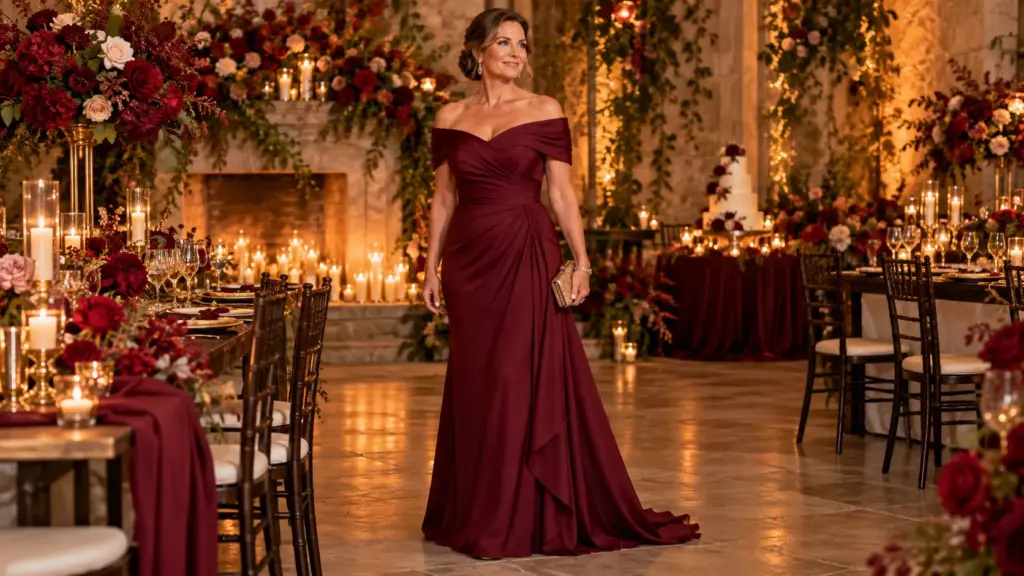
7. Burgundy Off-Shoulder Evening Dress
Burgundy offers a rich, elegant appearance for autumn and winter weddings.
An off-shoulder neckline draws attention to the shoulders and collarbone, while a fitted waist adds structure.
The neckline must be carefully developed to stay in place during movement. A beautiful dress should not require constant adjustment.
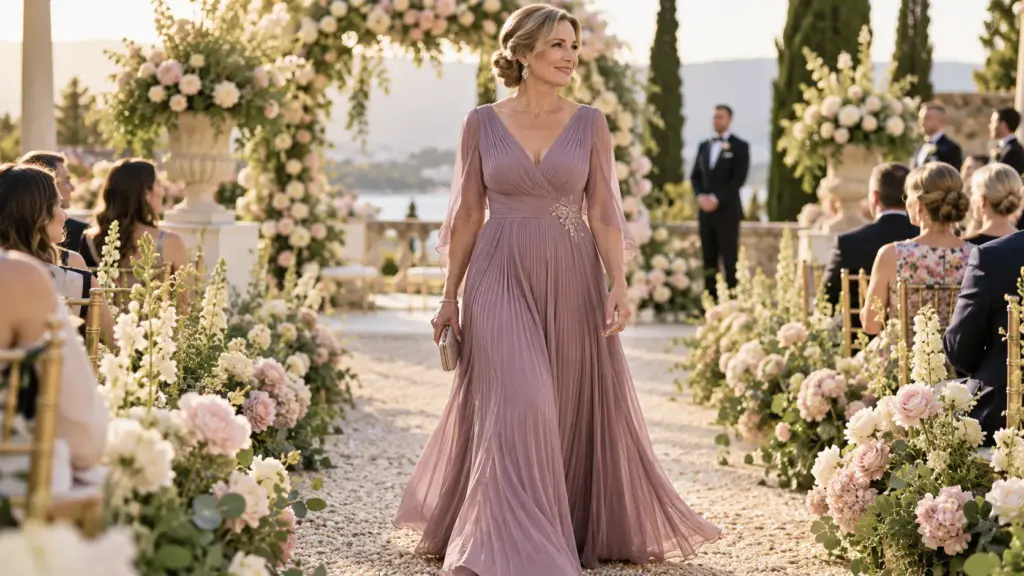
8. Mauve Pleated Maxi Dress
Mauve mother of the bride dresses offer a softer alternative to navy or burgundy.
A pleated maxi dress provides movement and texture, making it suitable for both daytime and evening ceremonies.
Fine pleats can look especially refined when the fabric maintains consistent folds throughout the skirt.
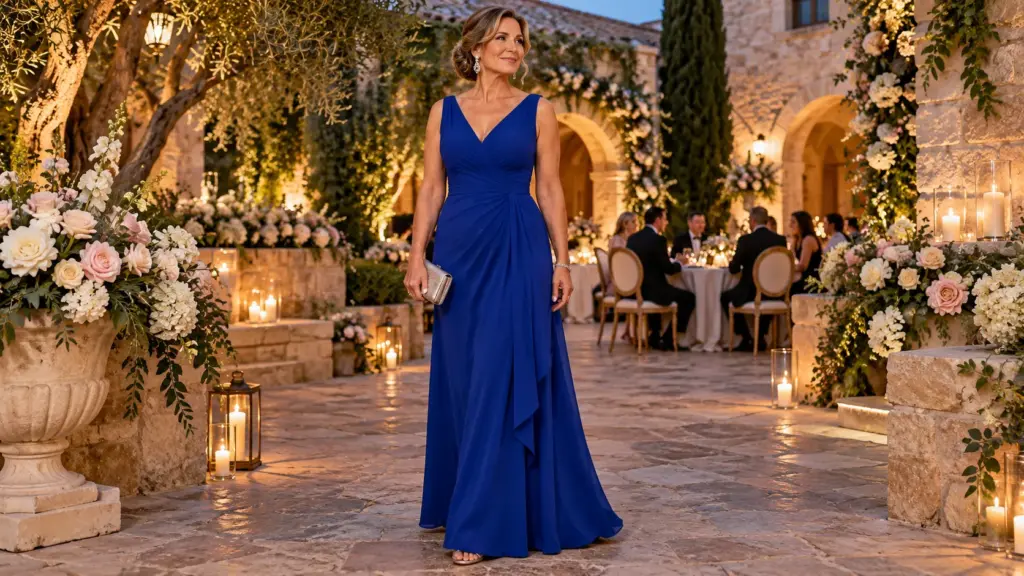
9. Royal Blue V-Neck Crepe Gown
Royal blue is a confident color that photographs beautifully.
A V-neck crepe gown with a slightly fitted waist creates an elegant appearance without elaborate decorations.
Crepe is particularly useful for designs that need a smooth drape and controlled silhouette.
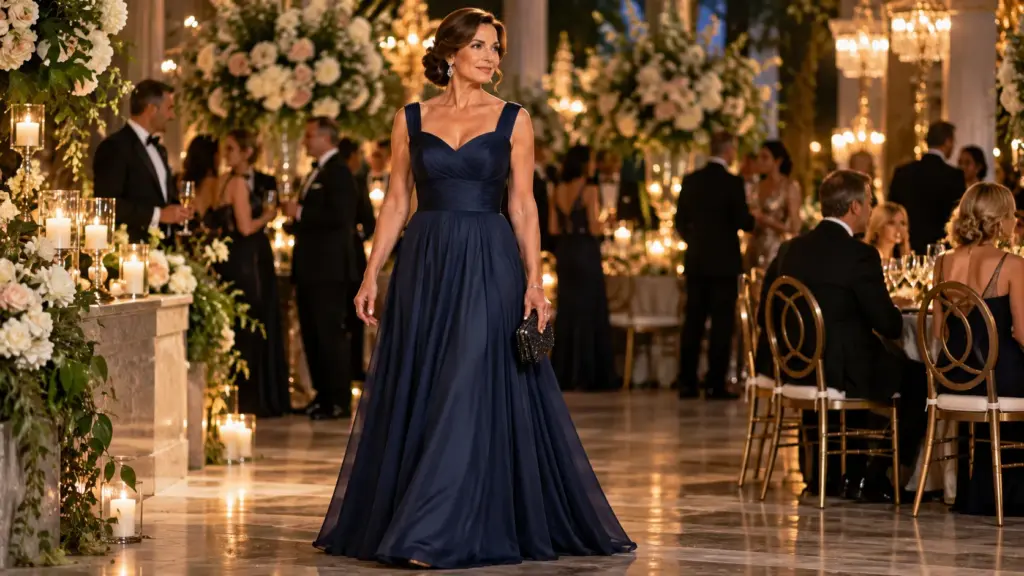
10. Midnight Blue Floor-Length Formal Dress
A midnight blue floor-length dress is an elegant option for black-tie weddings.
A structured bodice, subtle waist definition, and flowing skirt create a sophisticated look.
This style also offers flexibility for boutiques because different sleeve lengths and neckline variations can be developed from the same basic silhouette.
Why Beautiful Gowns Need Precise Construction
Even the most elegant mother of the bride dresses can lose their appeal when construction details are overlooked.
For example, a simple satin gown may look attractive in a product photograph. However, if the fabric is too thin, the zipper area can wrinkle, the lining may become visible, and the garment may not maintain its intended shape.
Lace dresses present different challenges. Decorative patterns should be positioned carefully, particularly around the neckline, center front, and visible seams.
In my factory experience, buyers should pay attention to shoulder balance, neckline symmetry, lining placement, waist measurements, and hem finishing.
A dress should also be evaluated while the wearer is standing, sitting, and walking.
These checks are especially important for fitted gowns because small measurement problems can affect comfort.
What Buyers Should Check Before Production
| Pourquoi c'est important | Pourquoi c'est important | Ce que je recommande |
|---|---|---|
| Qualité du tissu | Choisissez impression ou broderie selon le design | Review physical fabric samples |
| Waist construction | Determines silhouette and comfort | Check sample measurements |
| Lace placement | Influences visual consistency | Approve pattern positioning |
| Garniture | Provides coverage and comfort | Test under different lighting |
| Fermeture éclair | Affects fit and functionality | Inspect zipper installation |
| Skirt drape | Determines overall elegance | Review fitting photographs |
| Consistance de la couleur | Prevents shade differences | Approve a fabric color standard |
| Hem finishing | Affects appearance and movement | Check finished garment length |
How Fabric Quality Influences Price and Comfort
One of the most important decisions when developing formal mother of the bride dresses is choosing the right fabric. Two gowns can share almost identical designs but have very different production costs because of their materials. For example, a simple chiffon gown with a basic lining will usually require less manufacturing work than a dress made from embroidered lace with satin lining and decorative beadwork. The second design involves additional cutting considerations, sewing operations, and quality inspections.
However, selecting the cheapest fabric does not always provide the best value. A low-cost satin may wrinkle easily, reveal seam imperfections, or produce an appearance that does not match the intended retail positioning. A more suitable fabric can improve the drape, comfort, and overall finish of the garment.
I usually ask buyers to evaluate fabric swatches before approving sample development. The material should be checked under natural light, indoor lighting, and movement. Buyers should also consider transparency, thickness, surface texture, and cleaning requirements.
For wholesale collections, fabric availability matters as much as appearance. A beautiful material is not useful if it cannot be sourced consistently for the required order.
My suggestion is to choose fabric according to the target customer, expected retail price, and required quality level. The lowest material quotation should never be the only deciding factor.
Which Modern Mother of the Bride Dresses Look Stylish and Unique?
Not every mother wants a traditional lace gown. Some prefer contemporary silhouettes, unusual details, or more fashionable colors. The challenge is choosing a distinctive design that still feels appropriate for a wedding.
Modern mother of the bride dresses often feature asymmetrical necklines, cape sleeves, metallic fabrics, sculpted details, contemporary pleating, and elegant draping. These designs offer a fresh alternative to traditional evening gowns while maintaining the sophistication expected for an important family celebration.
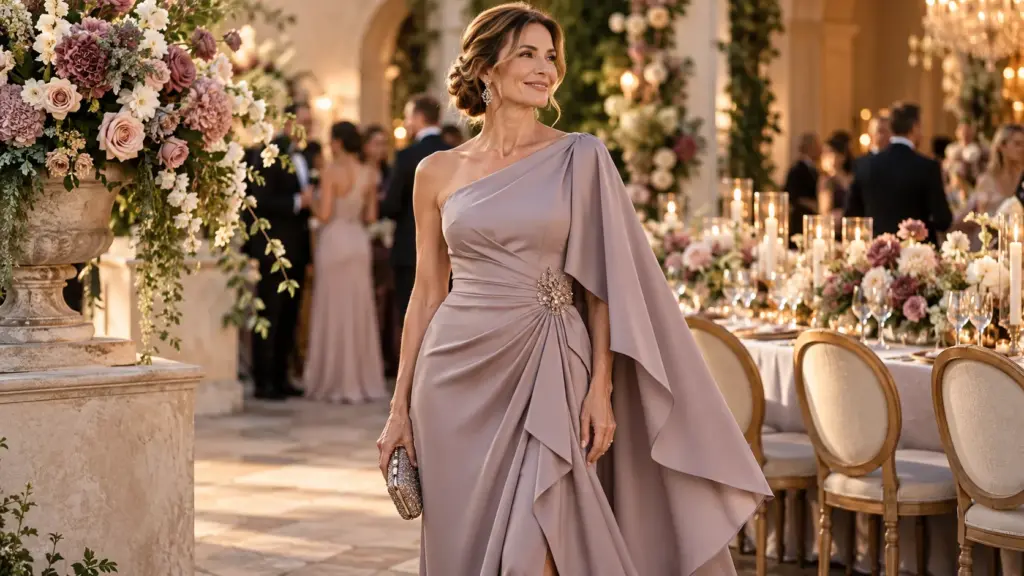
Ten Modern Dresses With Distinctive Details
11. One-Shoulder Satin Column Gown
A one-shoulder satin gown creates a clean, modern silhouette.
Its asymmetrical neckline becomes the main design feature, making excessive decoration unnecessary.
This style works particularly well in navy, emerald, champagne, and deep plum.
During production, the shoulder construction should be carefully fitted to prevent the neckline from shifting.
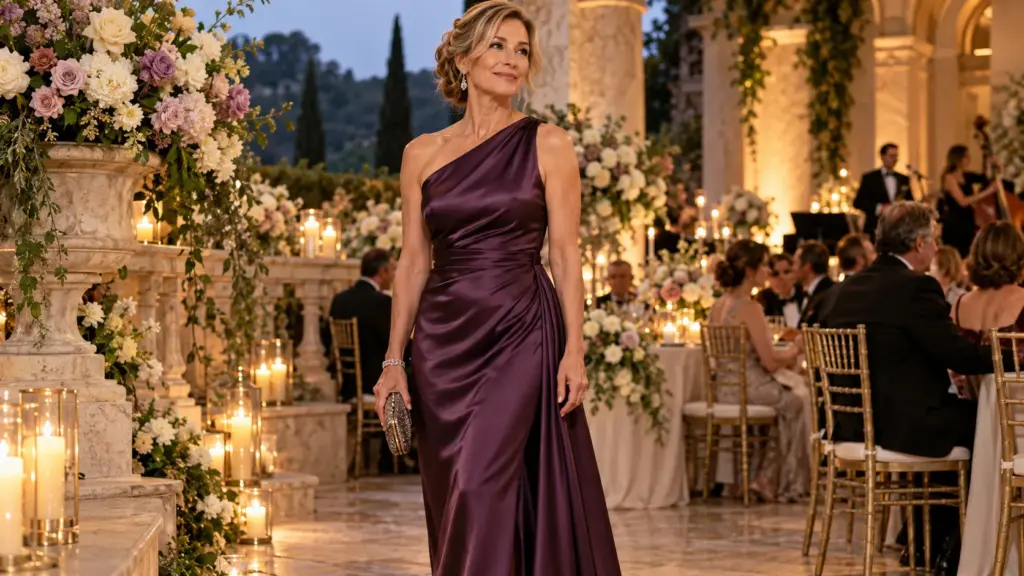
12. Elegant Cape-Sleeve Evening Gown
Cape-sleeve gowns provide an elegant combination of movement and coverage.
Flowing chiffon panels attached around the shoulders can create a graceful appearance without restricting the arms.
The cape length and attachment position must be considered during sample development to keep the garment balanced.
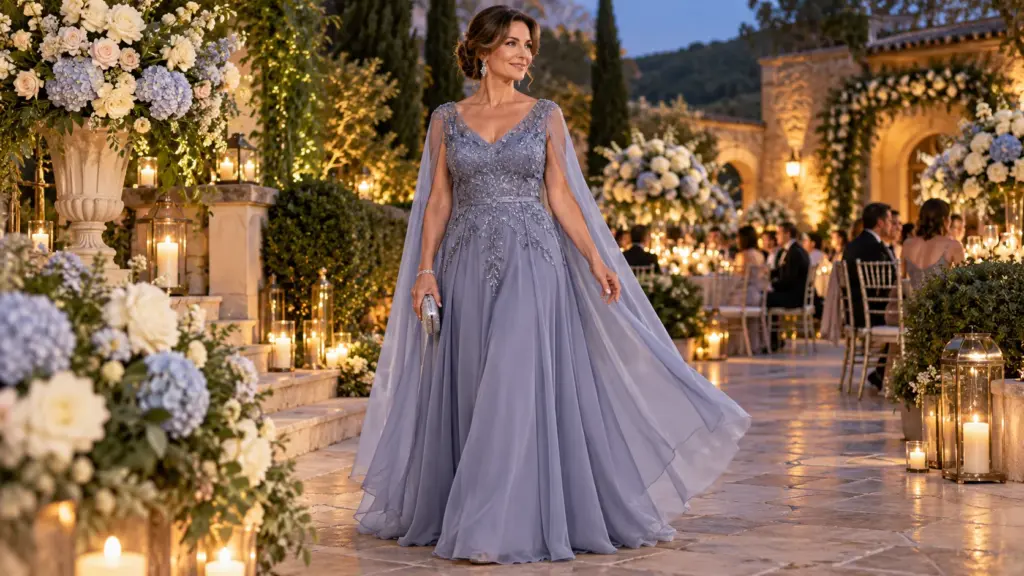
13. Gold Metallic Draped Gown
Gold mother of the bride dresses are attractive options for glamorous evening celebrations.
Champagne gold, muted bronze, and soft metallic shades can create a refined appearance.
A draped bodice is particularly suitable for metallic fabrics because the folds catch the light.
However, metallic materials require careful handling to prevent surface damage during cutting, sewing, and pressing.
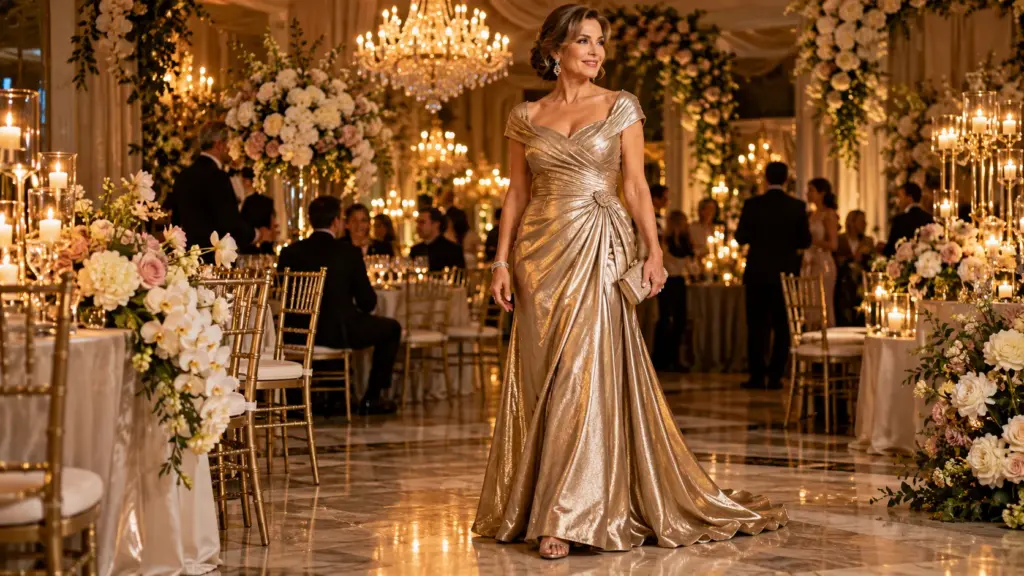
14. Peplum Mother of the Bride Dress
A peplum dress features an additional fabric section extending from the waist.
This detail creates structure and can visually define the waist.
Peplum mother of the bride dresses work well with fitted skirts and tailored silhouettes.
For manufacturing, the width, placement, and volume of the peplum should be adjusted across sizes.
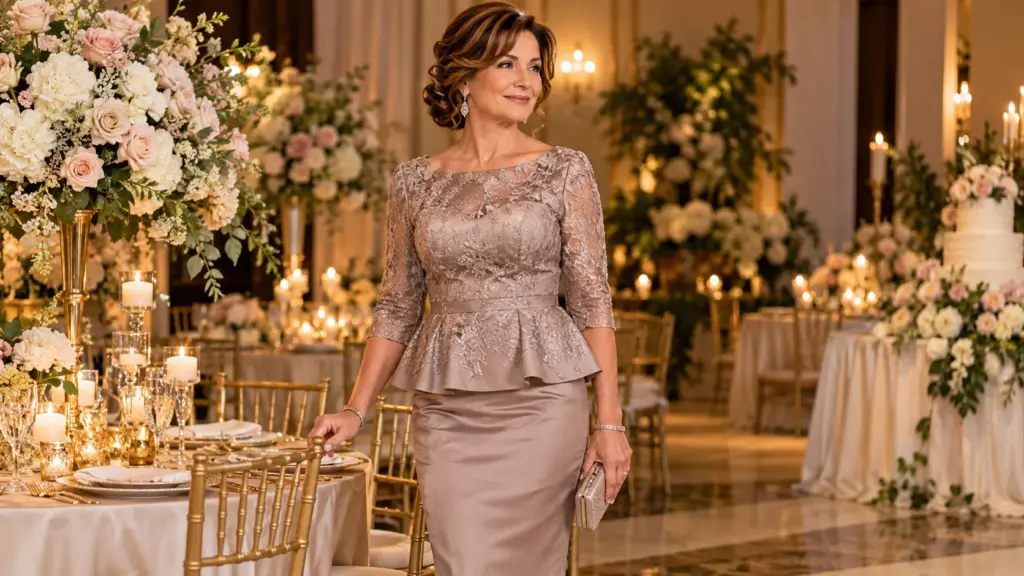
15. High-Neck Pleated Evening Gown
A high-neck pleated gown offers a contemporary alternative to low-neckline dresses.
Fine pleating adds texture, while a flowing skirt keeps the overall silhouette soft.
This design can look especially beautiful in silver-gray, dusty blue, or champagne.
Pleat consistency and neckline comfort are important quality points.
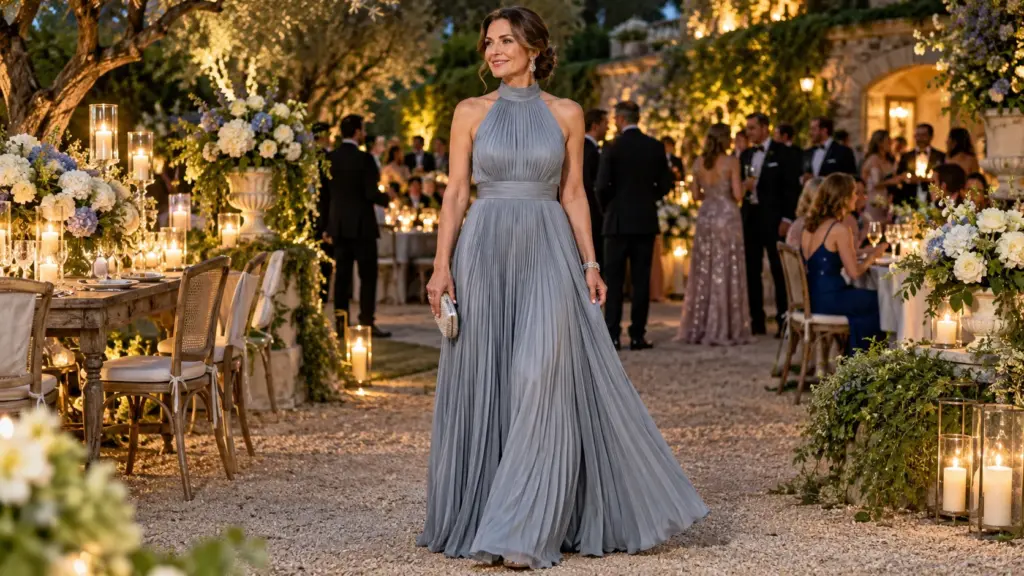
16. Off-Shoulder Mermaid Gown
A mermaid gown follows the body through the waist and hips before widening toward the hem.
This creates a dramatic and elegant silhouette.
An off-shoulder neckline adds another fashionable element.
However, the skirt should provide sufficient room for walking and sitting. A gown that looks beautiful while standing should also be practical during a long event.
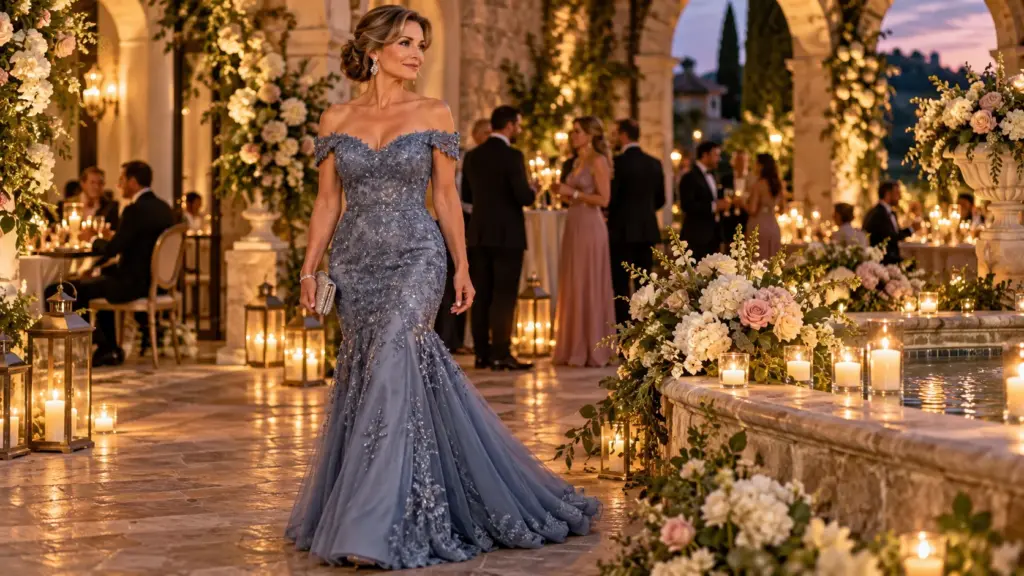
17. Asymmetrical Hem Formal Dress
An asymmetrical hem gives a classic evening dress a modern appearance.
A slightly shorter front hem can reveal elegant shoes while the longer back maintains a formal silhouette.
This style is suitable for mothers who prefer something less conventional than a floor-length gown.
Accurate cutting is important because uneven hems are immediately noticeable.
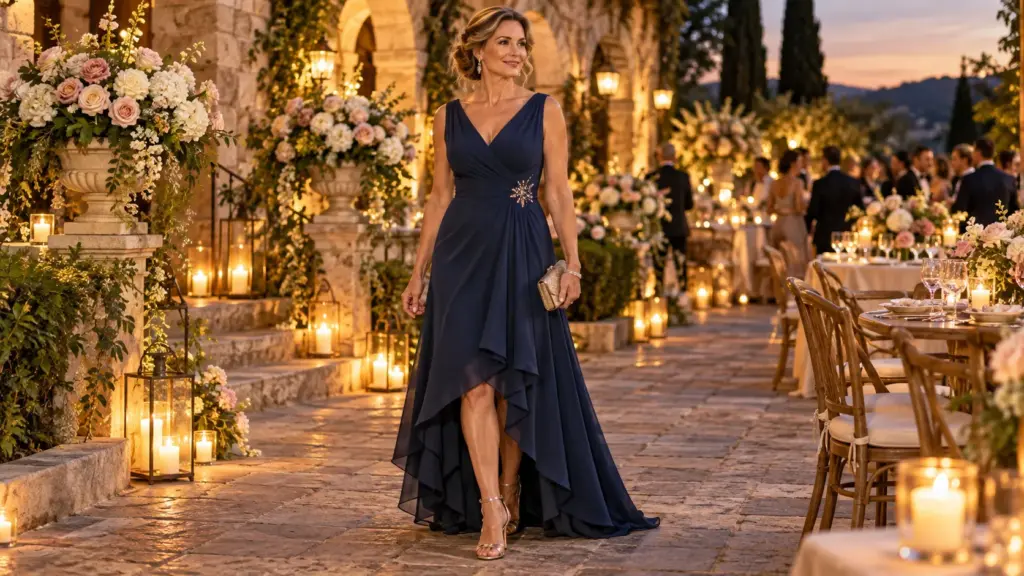
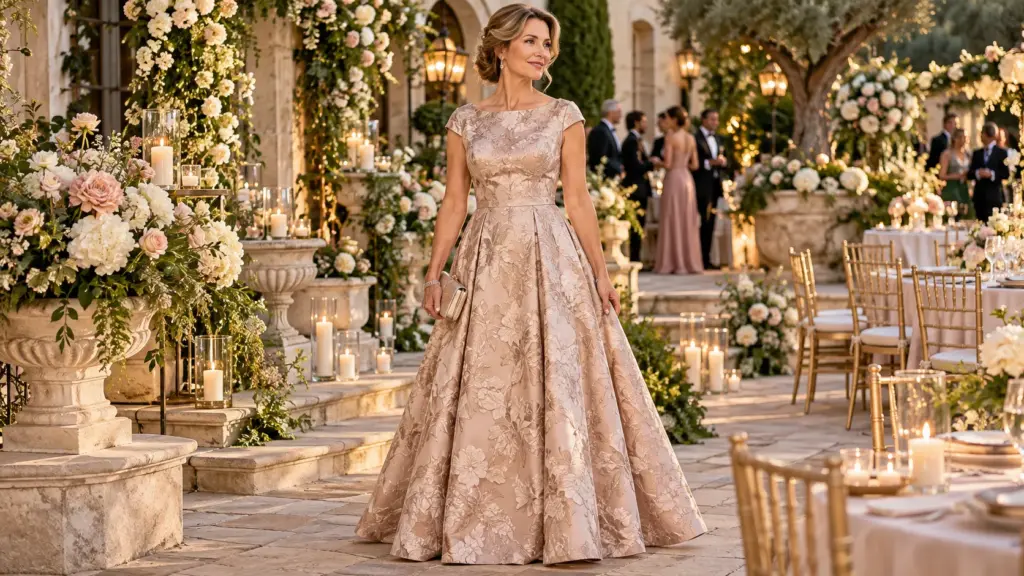
18. Floral Jacquard A-Line Dress
Floral jacquard offers a sophisticated alternative to traditional printed fabrics.
The woven pattern creates texture and visual depth.
An A-line silhouette helps balance the fabric’s structure, making the design suitable for weddings that require a polished appearance.
Buyers should consider fabric weight and pattern positioning when developing jacquard garments.
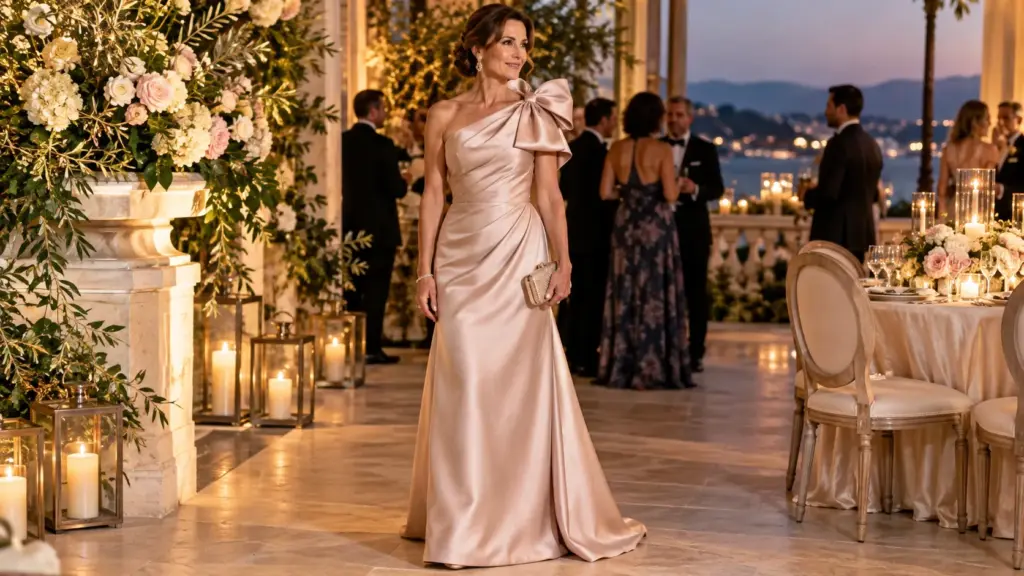
19. Structured Bow-Shoulder Gown
A decorative shoulder bow creates a fashionable statement without requiring heavy embellishment.
This design works well with smooth satin or structured crepe.
A simple skirt allows the shoulder detail to become the visual focus.
The bow should maintain its shape without adding excessive weight or stiffness.
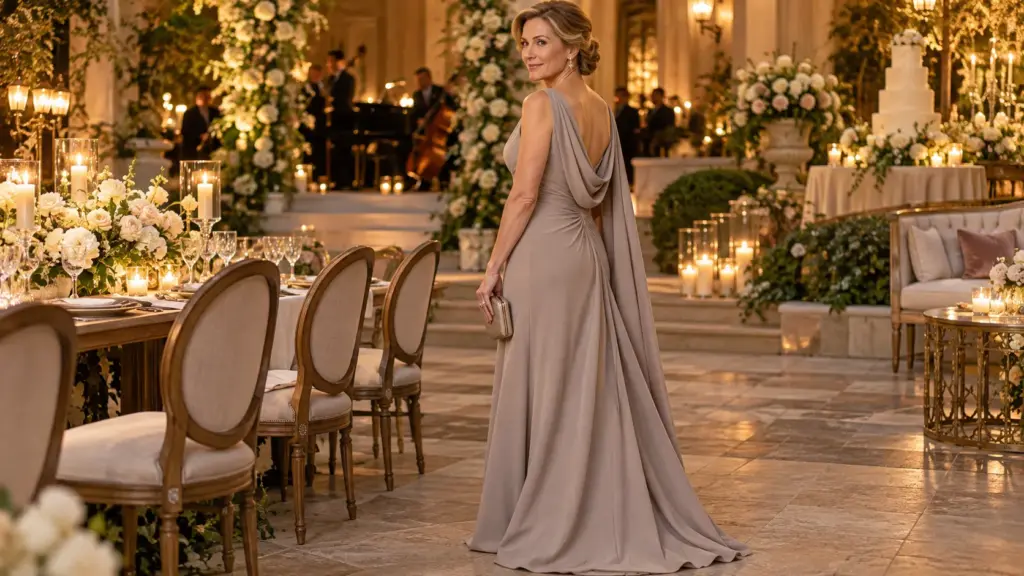
20. Minimalist Crepe Gown With Draped Back
Minimalist formalwear can look elegant when the silhouette and fabric are carefully selected.
A crepe gown with a clean front and softly draped back offers a distinctive but restrained design.
This style appeals to customers who prefer sophistication without sequins, lace, or heavy embroidery.
The back drape requires careful pattern development to ensure it hangs correctly.
Why Custom Design Details Require Better Sampling
Unique mother of the bride gowns can help fashion brands create recognizable collections, but complicated details introduce additional manufacturing challenges.
For example, an asymmetrical neckline may look balanced on a sample model but shift when the wearer moves.
A cape-sleeve design may require adjustments to shoulder placement, fabric weight, and cape length.
Decorative bows and sculpted elements need suitable internal construction to maintain their intended shape.
Another important issue is size grading. A decorative feature that works well on one sample size may look disproportionate when simply enlarged for bigger sizes.
For this reason, I recommend evaluating customized gowns across the planned size range rather than relying only on one sample.
Brands developing unique MOB dresses should discuss these details with their manufacturer before confirming bulk production.
Which Custom Design Features Affect Manufacturing
| Pourquoi c'est important | Pourquoi c'est important | Ce que je recommande |
|---|---|---|
| Asymmetrical neckline | May shift during movement | Test fitting and stability |
| Cape construction | Influence le confort | Confirm fabric weight and attachment |
| Metallic fabric | May show surface damage | Test handling and pressing |
| Decorative bows | Need structural support | Approve shape and placement |
| Pleated panels | Require consistent finishing | Review finished samples |
| Mermaid skirt | Can restrict movement | Check walking and sitting comfort |
| Embellissements | Increase sewing and inspection work | Confirm attachment methods |
| classement des tailles | Affects proportions | Review size-set measurements |
When Customization Is Worth the Additional Cost
Customization gives clothing brands an opportunity to offer more distinctive mother of the bride dresses, but every additional detail changes the production requirements. Consider a simple crepe evening gown and a second version featuring an asymmetrical shoulder, detachable cape, and decorative pleating. Although the basic silhouettes may be similar, the customized version requires additional pattern work, material preparation, sample adjustments, and inspection.
These expenses become especially important when the order quantity is limited. Development and preparation costs must be distributed across the garments produced, which can increase the unit price.
A buyer should therefore consider whether the added details create enough value for the intended customer. For a premium boutique, a carefully designed cape or distinctive neckline may support a higher retail price. For a large-volume wholesale collection, a simpler design may provide more predictable production and easier stock management.
I recommend asking the supplier to explain which features influence material costs, sewing labor, and delivery time. Buyers can then decide whether every decorative element is necessary.
Another useful approach is to develop a consistent base silhouette with a limited number of design variations. This can simplify development while maintaining variety within the collection.
My suggestion is to prioritize customization that improves appearance, comfort, or customer appeal. A well-executed design detail is more valuable than unnecessary complexity.
What Are the Most Beautiful Mother of the Bride Dresses for Different Wedding Seasons?
A dress that looks beautiful at an indoor winter wedding may not be comfortable for an outdoor summer ceremony. Season, temperature, venue, and dress code all influence which styles are suitable.
For spring and summer weddings, lightweight chiffon, soft floral prints, and pastel colors are practical choices. Autumn and winter celebrations often suit richer jewel tones, velvet, satin, long sleeves, and structured designs. Formal evening weddings may call for floor-length gowns and more decorative finishes.
Ten Beautiful Dresses for Every Wedding Season
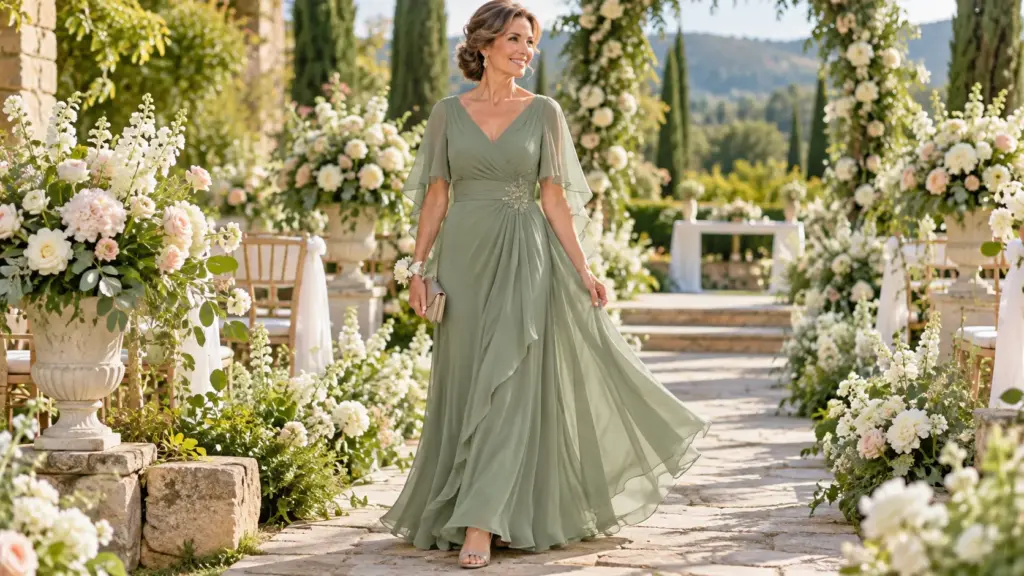
21. Sage Green Chiffon Garden Wedding Dress
Sage green is a soft, natural color that complements outdoor spring weddings.
A lightweight chiffon A-line gown creates gentle movement and an elegant silhouette.
This style works well with floral accessories and neutral shoes.
For comfort, the lining should be selected carefully so that the dress remains lightweight without becoming transparent.
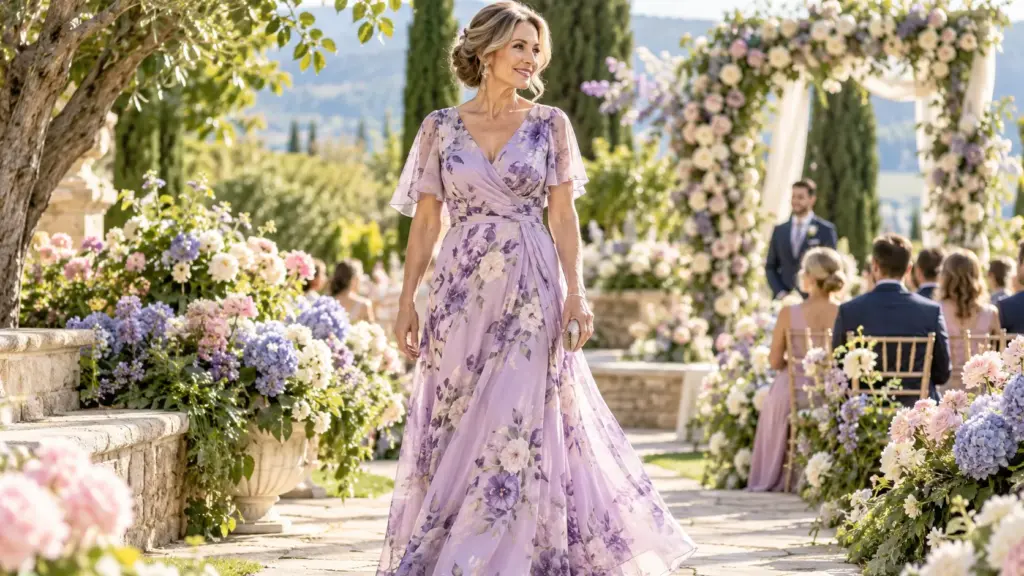
22. Lavender Floral Print Maxi Dress
A lavender floral dress is a romantic choice for spring garden celebrations.
Soft botanical patterns and flowing skirts create a relaxed but polished appearance.
This style can be particularly suitable for daytime weddings.
During production, print placement should be reviewed to avoid awkward pattern positioning around the bodice and seams.
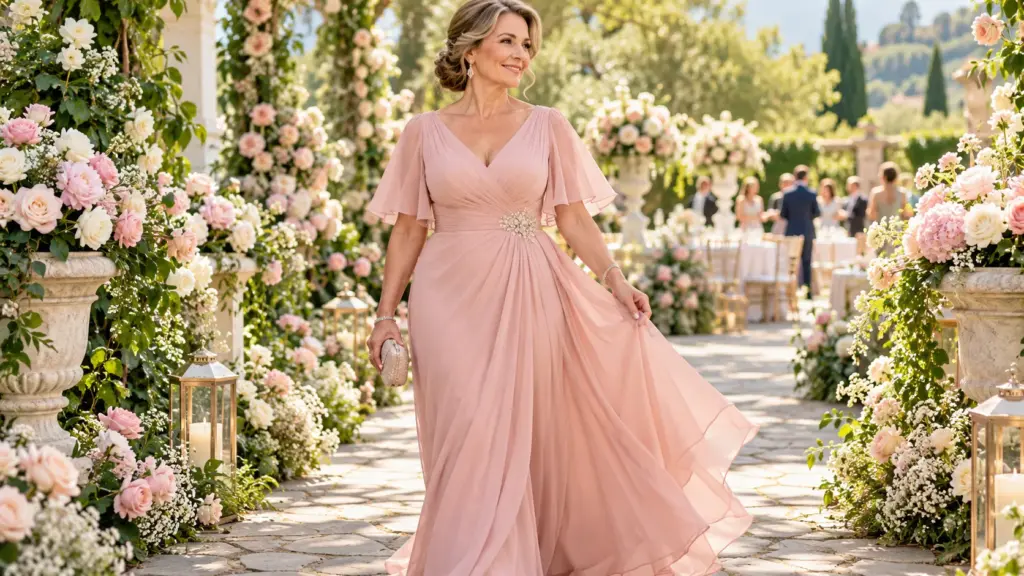
23. Blush Pink Flutter-Sleeve Gown
Blush pink offers a gentle, feminine appearance for spring and summer weddings.
Flutter sleeves add movement and provide light shoulder coverage.
A softly gathered waist can create a flattering silhouette without excessive structure.
For better comfort, sleeve openings should allow unrestricted arm movement.
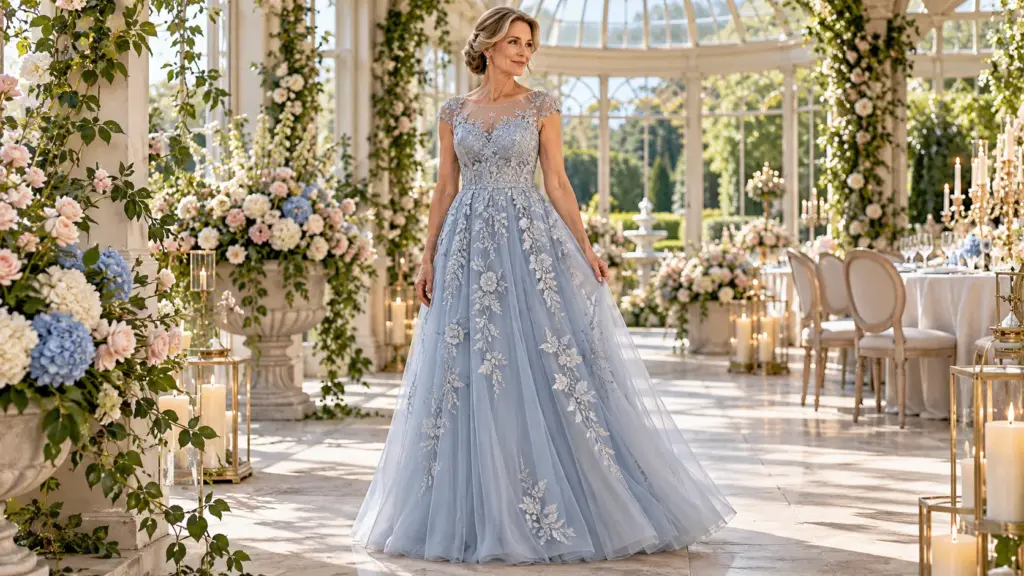
24. Powder Blue Embroidered Tulle Dress
Powder blue embroidered tulle creates a delicate and sophisticated look.
Light embroidery adds texture while maintaining the soft appearance of the fabric.
This style suits romantic indoor ceremonies and elegant garden weddings.
Buyers should inspect embroidery placement and tulle layering to ensure the finished gown looks balanced.
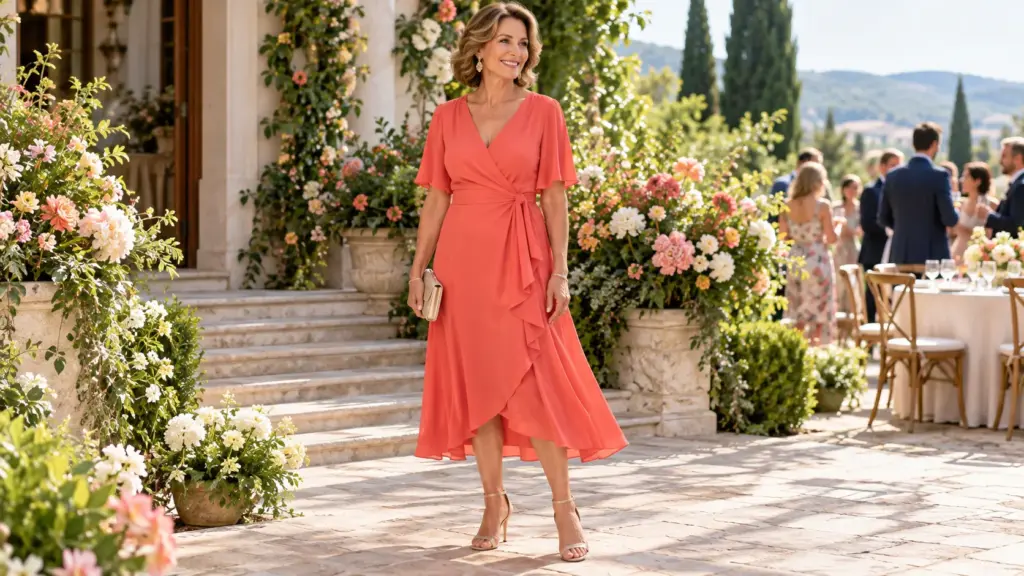
25. Coral Wrap-Style Midi Dress
A coral midi dress is suitable for warm-weather celebrations with a less formal dress code.
The wrap-style silhouette creates waist definition and offers an alternative to traditional floor-length gowns.
This design works well with lightweight crepe or other softly draping fabrics.
A secure internal fastening can help prevent the neckline or wrap opening from shifting.
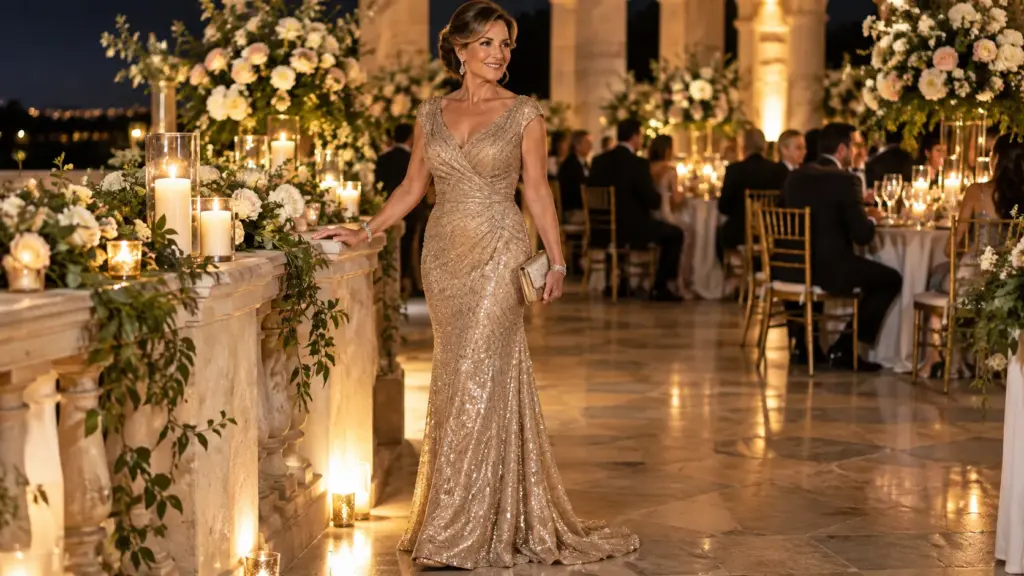
26. Champagne Gold Sequin Evening Gown
A champagne gold sequin gown creates a glamorous appearance for formal evening weddings.
The soft metallic color can look sophisticated when paired with a simple silhouette.
For production, sequins should be carefully managed around seams, zippers, and areas that contact the skin.
Comfortable lining is essential because poorly finished decorative materials can cause irritation.
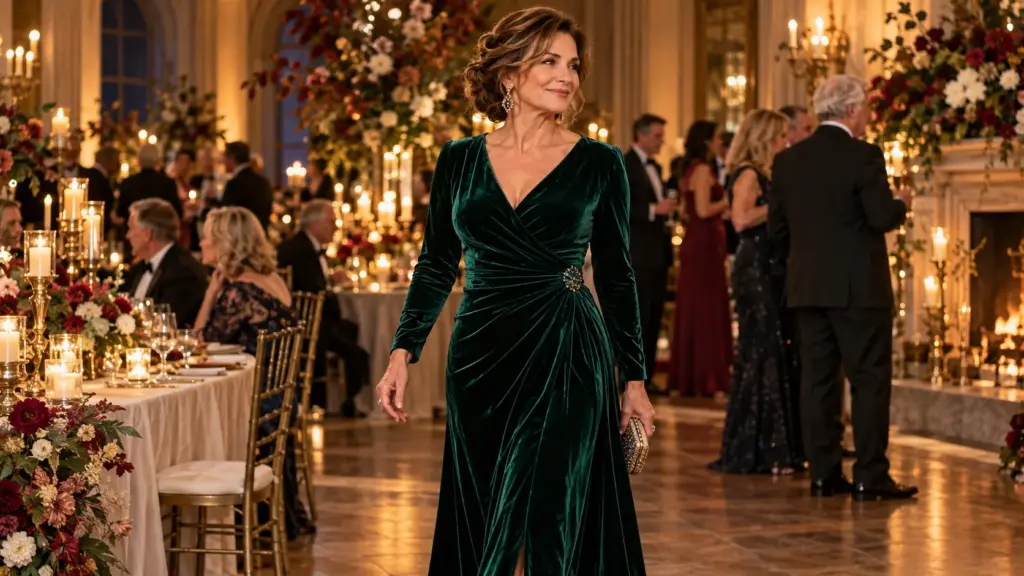
27. Forest Green Velvet Long-Sleeve Dress
Forest green velvet is a rich choice for autumn and winter weddings.
The fabric creates depth and texture, particularly under indoor lighting.
Long sleeves provide additional coverage, while a fitted waist maintains an elegant silhouette.
Velvet must be cut with consistent pile direction because the surface can appear lighter or darker depending on its orientation.
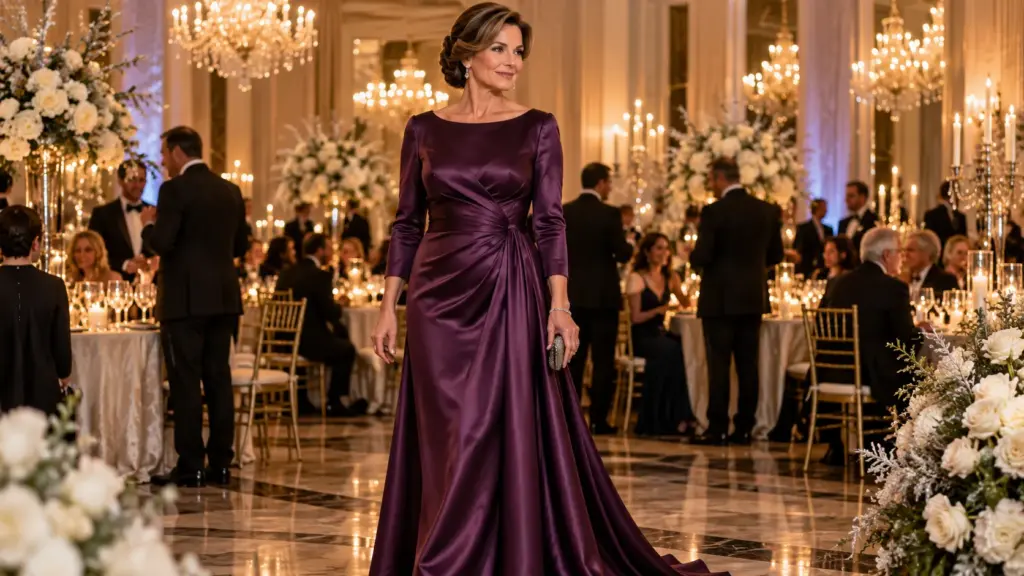
28. Deep Plum Satin Winter Gown
Deep plum is a sophisticated alternative to burgundy or black.
A satin gown with long sleeves and a softly defined waist works beautifully for formal winter celebrations.
A suitable lining improves the structure and appearance of the dress.
The fabric should be checked for wrinkling and surface marks before production approval.
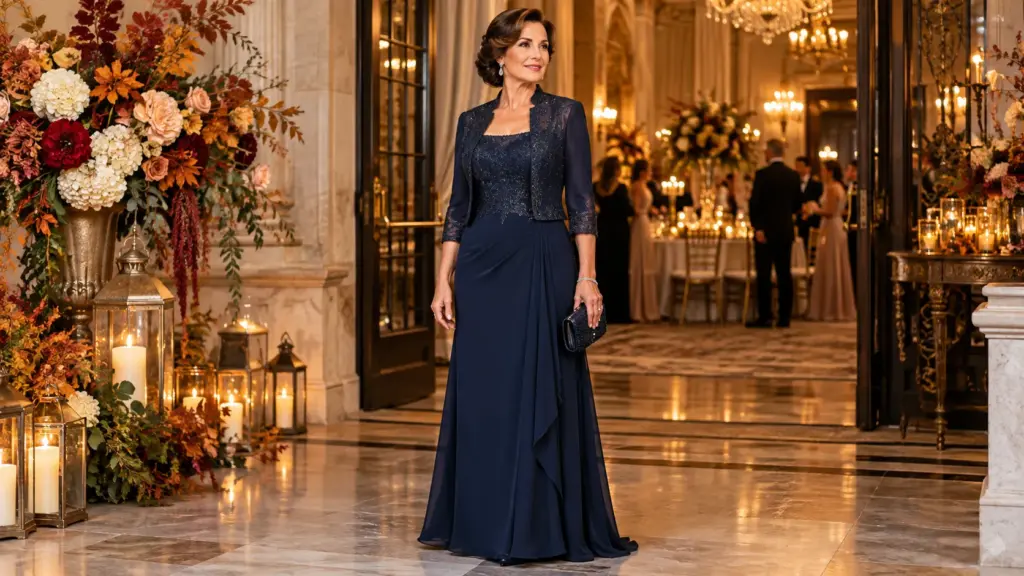
29. Navy Gown With a Matching Jacket
A gown with a matching jacket offers flexibility for weddings with changing temperatures.
The jacket provides additional coverage during the ceremony and can be removed for the reception.
This style is particularly practical for autumn weddings or indoor venues with air conditioning.
Both pieces should be fitted together to prevent excessive bulk around the shoulders.
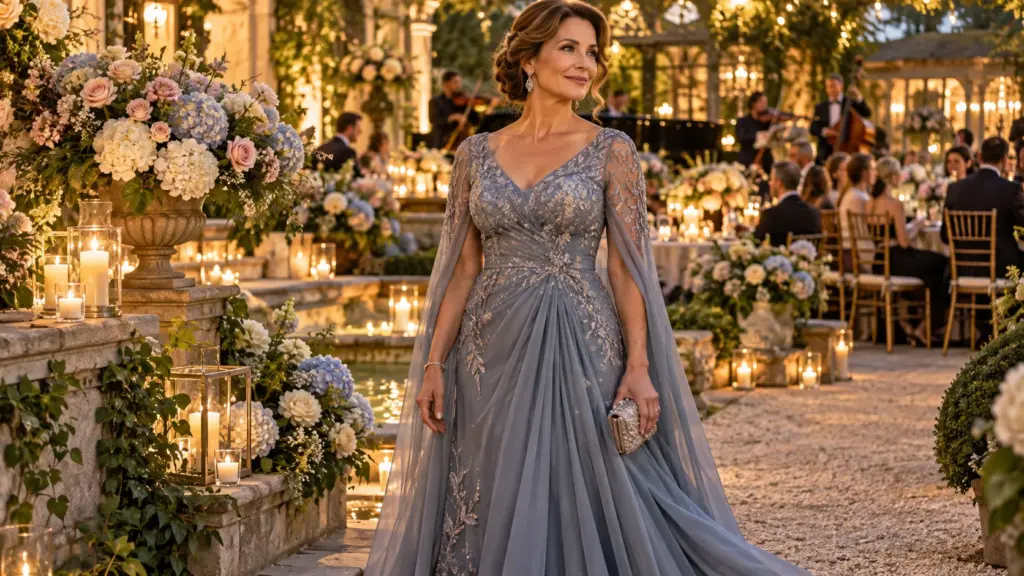
30. Midnight Blue Beaded Cape Gown
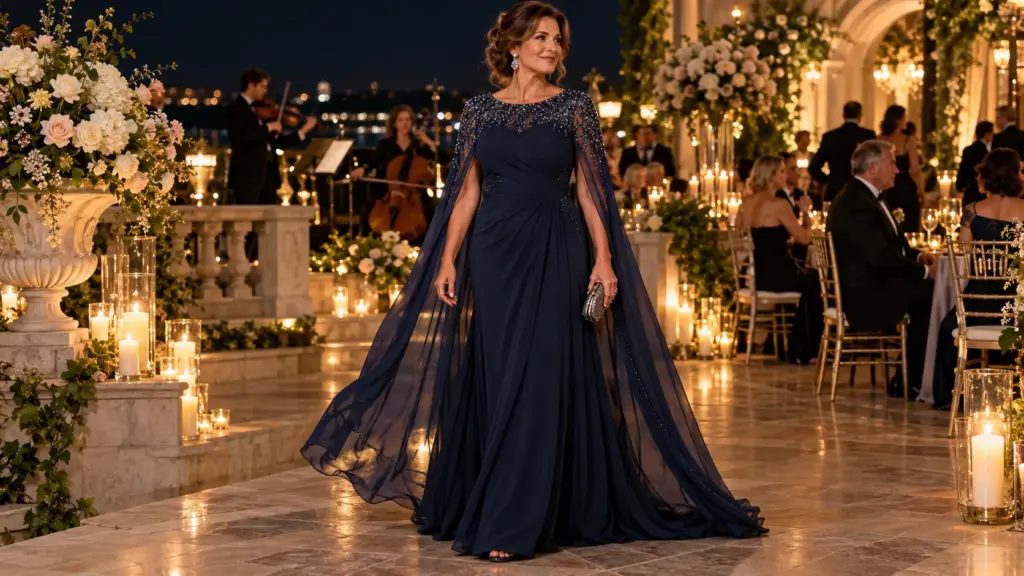
A midnight blue beaded cape gown combines formal elegance with a dramatic silhouette.
Decorative beadwork around the shoulders or neckline creates visual interest, while the flowing cape adds movement.
This style works particularly well for evening weddings and formal receptions.
The finished garment should be checked for overall weight, shoulder comfort, and secure bead attachment.
How Seasonal Fabrics Affect Wearing Comfort
Seasonal mother of the bride dresses require more consideration than simply choosing spring or winter colors.
For summer weddings, lightweight fabrics can improve comfort, but the complete garment construction matters. A chiffon dress may appear light while still feeling warm if it contains several layers of heavy lining.
Similarly, an elegant winter dress does not always need thick fabric. Indoor venues may be warm enough for lighter materials combined with a detachable jacket.
When developing seasonal formalwear, I recommend considering the actual wedding environment, expected temperature, dress code, and customer preferences.
Fabric selection should also match the intended silhouette. Lightweight chiffon works well for flowing skirts, while velvet and structured crepe may be better suited to designs that require more shape.
The same basic dress pattern may need adjustments when produced in different fabrics.
How Buyers Can Plan Seasonal Collections
| Pourquoi c'est important | Pourquoi c'est important | Ce que je recommande |
|---|---|---|
| Wedding season | Influences customer demand | Select suitable fabrics and colors |
| Poids du tissu | Affects wearing comfort | Match fabric to intended conditions |
| Garniture | Influences breathability | Test the complete garment |
| Longueur des manches | Affects coverage | Offer appropriate variations |
| Print and color | Influences visual appeal | Approve physical samples |
| Disponibilité des tissus | Affects production planning | Confirm sourcing before sampling |
| Emballage | Protects formal garments | Test packing and transportation |
| Calendrier de livraison | Determines retail readiness | Plan backward from arrival date |
Why Seasonal Collections Need Earlier Production Planning
For wholesalers and fashion retailers, seasonal mother of the bride dresses require careful production scheduling. The design may be ready, but fabric sourcing, sample development, size grading, bulk production, finishing, packing, and transportation must all be completed before the collection reaches stores.
Consider a retailer preparing a spring formalwear collection containing chiffon dresses, embroidered tulle gowns, and floral jacquard styles. These garments may share the same selling season, but their production requirements are different. A plain chiffon dress generally has simpler material preparation than a heavily embroidered gown. Jacquard fabric may also depend on the availability of a particular woven pattern.
If the buyer changes the fabric after approving the sample, additional development may be necessary. This can affect production costs and delivery planning.
I have seen buyers lose valuable preparation time because important details were confirmed too late. To reduce this risk, I recommend finalizing materials, colors, measurements, quantities, labels, and packaging requirements before starting bulk production.
For export orders, the delivery deadline should consider transportation and the required warehouse arrival date, not only the factory completion date.
My suggestion is to work backward from the planned retail launch. A collection with attractive styles is only commercially useful when it arrives at the right time and meets the expected quality standard.
Que préparer avant de contacter une usine de vêtements en Chine ?
If you are a fashion brand owner, boutique buyer, wholesaler, or sourcing manager, clear product information will help a manufacturer understand your requirements.
I recommend preparing the following details before requesting a quotation for mother of the bride dresses or other formalwear products.
| Information | Exemple | Pourquoi c'est nécessaire |
|---|---|---|
| Produit | Robe, veste ou vêtements de sport | Confirme l'adéquation de l'usine |
| Photos/dossier technique | Images, mesures, construction | Soutient la tarification et le développement |
| Tissu | Coton, denim, polyester ou inconnu | Cela influe sur le coût, la quantité minimale de commande et le calendrier. |
| Tailles | XS–XL ou tableau personnalisé | Influence les habitudes et la consommation |
| Quantité | Par style et couleur | Cela affecte la quantité minimale de commande et le prix unitaire |
| Marché | UE, Royaume-Uni, États-Unis ou Australie | Influe sur le dimensionnement et la conformité |
| Niveau de qualité | Vente en gros ou premium | Matériaux et qualité de fabrication des guides |
| Emballage | Sachet plastique, boîte ou code-barres | Cela influe sur les coûts et les délais. |
| Étiquettes | Étiquette de col, d'entretien, de taille et de suspension | Cela affecte les illustrations, la quantité minimale de commande et le coût. |
| Date limite | date d'arrivée en entrepôt | Soutient la planification de la production |
| Certificats | Certificats requis | Confirme la conformité |
| Prix cible | prix FOB ou livré | Aide à suggérer des options réalistes |
Clear information helps the factory provide a more accurate price, production timeline, material suggestion, and manufacturing plan.
For formal gowns, I also suggest providing reference photographs that show the intended neckline, sleeve shape, waist construction, skirt length, and decorative details.
If you do not know the exact fabric composition, explain the appearance and performance you want. For example, you may request a soft, flowing fabric with a matte finish or a structured satin with a smooth surface.
A manufacturer can then discuss suitable material options based on availability and production requirements.
Buyers should also separate essential requirements from optional preferences.
Essential requirements may include garment measurements, quality standards, fabric performance, labeling, and delivery expectations.
Optional preferences may include decorative trims, alternative necklines, additional colors, or specific packaging details.
This distinction gives the factory more flexibility to recommend practical production solutions without changing the most important product requirements.
Quand demander un devis à Truekung ?
If you are developing your own collection of mother of the bride dresses, planning private label formalwear, or looking for a China clothing manufacturer, you can contact Truekung to discuss your project.
At Truekung, we provide OEM/ODM clothing production, sample development, private label support, bulk manufacturing, quality control, wholesale clothing, and export assistance.
With 20 years of export experience, we understand the importance of clear communication, practical production planning, and consistent manufacturing requirements.
For formal mother of the bride gowns, I recommend discussing fabric selection, construction complexity, embellishments, order quantities, and required quality standards before starting sample development.
To help us understand your project, please send your product photographs or tech packs, estimated quantities, target market, size range, fabric preferences, quality requirements, and expected delivery date.
Vous pouvez me contacter directement :
E-mail: [email protected]
Site web: https://truekung.com
I will be happy to discuss your garment requirements and help clarify the information needed to evaluate your production project.
Conclusion
The most beautiful mother of the bride dresses balance elegance, comfort, fabric quality, and thoughtful design. Whether you prefer timeless lace gowns or modern statement styles, careful attention to fit, materials, and construction helps create a beautiful and practical formalwear collection.
Vues : 0